

Patrick Hotung Professor of Constitutional Law, Georgetown University Law Center
Randy Barnett is the Patrick Hotung Professor of Constitutional Law at Georgetown University Law Center. He has argued before the United States Supreme Court, tried murder cases to juries as a prosecutor in Chicago, and appeared as a prosecutor in the feature film Inalienable. He is the author of numerous books, including Restoring the Lost Constitution, The Structure of Liberty, Our Republican Constitution, and The Original Meaning of the Fourteenth Amendment. He has published two memoirs, A Life for Liberty: The Making of an American Originalist, and Felony Review: Tales of True Crime and Corruption in Chicago. He is currently working on a new book, Freedom and Flourishing: Libertarianism for the Real World.
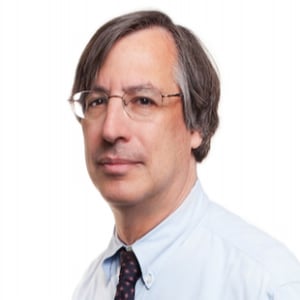
Levin, Mabie & Levin Professor of Law, University of Florida Levin College of Law
Professor Gary Lawson joined the University of Florida Levin College of Law faculty on July 1, 2024, after twenty-four years at Boston University School of Law and eleven years at Northwestern University School of Law. While at Boston University, he was named a William Fairfield Warren Distinguished Professor in 2022 – the highest faculty honor within the university. He has authored or co-authored nine editions of a textbook on administrative law, a textbook on constitutional law, five university press books, one popular press book, and more than one hundred scholarly articles on topics ranging from aspects of constitutional theory and history to the proof of legal propositions. His works have been cited in more than twenty opinions of United States Supreme Court justices. He is a founding member, and serves on the Board of Directors, of the Federalist Society for Law and Public Policy Studies and is on the Editorial Advisory Board of the Heritage Guide to the Constitution.
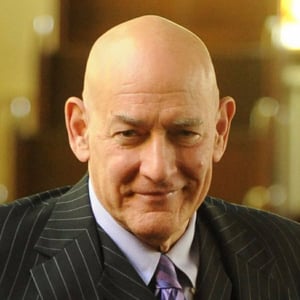
Raoul Berger Professor of Legal History at Northwestern University School of Law
Stephen Presser is a leading American legal historian and expert on shareholder liability for corporate debts. He is frequently an invited witness before committees of the U.S. Senate and House of Representatives on issues of constitutional law. He holds a joint appointment with the J. L. Kellogg Graduate School of Management and also teaches in Northwestern's history department.
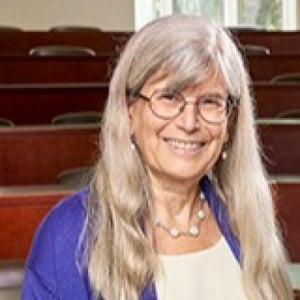
Herman O. Loewenstein Professor of Law Emerita, Vanderbilt Law School
Suzanna Sherry's work in the area of constitutional law has earned her national recognition as one of the most well-known scholars in the field. The author of more than 100 books and articles, she also writes extensively on federal courts and federal court procedures. After graduating from law school, Professor Sherry was a clerk for the Honorable John C. Godbold of the United States Court of Appeals for the Fifth Circuit in Montgomery, Alabama, and then served as an associate with the law firm of Miller Cassidy Larroca & Lewin in Washington, D.C. She joined the Vanderbilt faculty in 2000 as the inaugural holder of the Cal Turner Chair, having previously served on the faculty of the University of Minnesota Law School since 1982. She was named the Herman O. Loewenstein Professor of Law in 2006.
Patrick Hotung Professor of Constitutional Law, Georgetown University Law Center
Randy Barnett is the Patrick Hotung Professor of Constitutional Law at Georgetown University Law Center. He has argued before the United States Supreme Court, tried murder cases to juries as a prosecutor in Chicago, and appeared as a prosecutor in the feature film Inalienable. He is the author of numerous books, including Restoring the Lost Constitution, The Structure of Liberty, Our Republican Constitution, and The Original Meaning of the Fourteenth Amendment. He has published two memoirs, A Life for Liberty: The Making of an American Originalist, and Felony Review: Tales of True Crime and Corruption in Chicago. He is currently working on a new book, Freedom and Flourishing: Libertarianism for the Real World.
Levin, Mabie & Levin Professor of Law, University of Florida Levin College of Law
Professor Gary Lawson joined the University of Florida Levin College of Law faculty on July 1, 2024, after twenty-four years at Boston University School of Law and eleven years at Northwestern University School of Law. While at Boston University, he was named a William Fairfield Warren Distinguished Professor in 2022 – the highest faculty honor within the university. He has authored or co-authored nine editions of a textbook on administrative law, a textbook on constitutional law, five university press books, one popular press book, and more than one hundred scholarly articles on topics ranging from aspects of constitutional theory and history to the proof of legal propositions. His works have been cited in more than twenty opinions of United States Supreme Court justices. He is a founding member, and serves on the Board of Directors, of the Federalist Society for Law and Public Policy Studies and is on the Editorial Advisory Board of the Heritage Guide to the Constitution.
Raoul Berger Professor of Legal History at Northwestern University School of Law
Stephen Presser is a leading American legal historian and expert on shareholder liability for corporate debts. He is frequently an invited witness before committees of the U.S. Senate and House of Representatives on issues of constitutional law. He holds a joint appointment with the J. L. Kellogg Graduate School of Management and also teaches in Northwestern's history department.
Herman O. Loewenstein Professor of Law Emerita, Vanderbilt Law School
Suzanna Sherry's work in the area of constitutional law has earned her national recognition as one of the most well-known scholars in the field. The author of more than 100 books and articles, she also writes extensively on federal courts and federal court procedures. After graduating from law school, Professor Sherry was a clerk for the Honorable John C. Godbold of the United States Court of Appeals for the Fifth Circuit in Montgomery, Alabama, and then served as an associate with the law firm of Miller Cassidy Larroca & Lewin in Washington, D.C. She joined the Vanderbilt faculty in 2000 as the inaugural holder of the Cal Turner Chair, having previously served on the faculty of the University of Minnesota Law School since 1982. She was named the Herman O. Loewenstein Professor of Law in 2006.
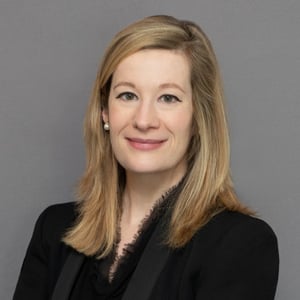
Partner, Williams & Connolly
Sarah Harris is a partner in Williams & Connolly’s Supreme Court and Appellate practice, where she represents clients in high-stakes appeals in the U.S. Supreme Court and federal and state appellate courts across the country. She has argued five cases before the U.S. Supreme Court, and she has presented many arguments in federal courts of appeals and state appellate courts. Her cases have run the gamut of substantive areas, including constitutional law—especially First Amendment and separation-of-powers issues—as well as administrative law, arbitration, class actions, antitrust, False Claims Act litigation, commercial litigation, and federal civil procedure.
Sarah is widely recognized for her appellate advocacy. Chambers USA has recognized her as “Up and Coming” in Appellate Law. She has been named to Bloomberg Law’s 40 Under 40 list of top lawyers nationwide and to Benchmark Litigation’s “40 & Under Hot List,” as well as a an appellate “Rising Star” by The National Law Journal and Law360, a “Next Generation Lawyer” by The Legal 500, and as one of Bloomberg Law’s “Five Fresh Faces to Know in Appellate.”
Sarah clerked for Justice Clarence Thomas on the Supreme Court of the United States, Judge Laurence Silberman on the United States Court of Appeals for the D.C. Circuit, and Judge Sandra Lynch on the United States Court of Appeals for the First Circuit. Before joining Williams & Connolly, she served as a Deputy Assistant Attorney General in the Department of Justice’s Office of Legal Counsel.
Sarah received her undergraduate degree summa cum laude from Princeton University, and her J.D. magna cum laude from Harvard Law School. She also holds a Ph.D. and M. Phil. from the University of Cambridge.

Executive Vice President, The Federalist Society
Dean Reuter is Executive Vice President at the Federalist Society for Law and Public Policy Studies. He has served in two federal government agency Offices of the Inspector General, as Counsel to the Inspector General and Deputy Inspector General, responsible for policing the use of federal funds granted and contracted through those agencies. As such, he helped conduct and oversee criminal investigations across the country. He is the principal author of the non-fiction book, The Hidden Nazi: The Untold Story of America's Deal with the Devil, and editor of Liberty’s Nemesis: The Unchecked Expansion of the State and Confronting Terror: 9/11 and the Future of American National Security. He was appointed by the President and served as Vice-Chairman of the Board of Directors of the Corporation for National and Community Service, and recently served as an appointee on the U.S. Commission on Presidential Scholars. He is a graduate of Hood College (BA with Honors) and the University of Maryland School of Law.
Herman O. Loewenstein Professor of Law Emerita, Vanderbilt Law School
Suzanna Sherry's work in the area of constitutional law has earned her national recognition as one of the most well-known scholars in the field. The author of more than 100 books and articles, she also writes extensively on federal courts and federal court procedures. After graduating from law school, Professor Sherry was a clerk for the Honorable John C. Godbold of the United States Court of Appeals for the Fifth Circuit in Montgomery, Alabama, and then served as an associate with the law firm of Miller Cassidy Larroca & Lewin in Washington, D.C. She joined the Vanderbilt faculty in 2000 as the inaugural holder of the Cal Turner Chair, having previously served on the faculty of the University of Minnesota Law School since 1982. She was named the Herman O. Loewenstein Professor of Law in 2006.

Professor of Law, Antonin Scalia Law School, George Mason University
ILYA SOMIN is Professor of Law at George Mason University and the B. Kenneth Simon Chair in Constitutional Studies at the Cato Institute. His research focuses on constitutional law, property law, democratic theory, federalism, and migration rights. He is the author of Free to Move: Foot Voting, Migration, and Political Freedom (Oxford University Press, revised and expanded edition, 2022), Democracy and Political Ignorance: Why Smaller Government is Smarter (Stanford University Press, revised and expanded second edition, 2016), and The Grasping Hand: Kelo v. City of New London and the Limits of Eminent Domain (University of Chicago Press, 2015, rev. paperback ed., 2016), coauthor of A Conspiracy Against Obamacare: The Volokh Conspiracy and the Health Care Case (Palgrave Macmillan, 2013), and co-editor of Eminent Domain: A Comparative Perspective (Cambridge University Press, 2017). Democracy and Political Ignorance has been translated into Italian and Japanese.
Somin’s work has appeared in numerous scholarly journals, including the Yale Law Journal, Stanford Law Review, Northwestern University Law Review, Georgetown Law Journal, Critical Review, and others. Somin has also published articles in a variety of popular press outlets, including the New York Times, Washington Post, Wall Street Journal, Los Angeles Times, CNN, NBC, The Atlantic, USA Today, Boston Globe, US News and World Report, South China Morning Post, National Law Journal and Reason. He has been quoted or interviewed by the New York Times, Washington Post, Wall Street Journal, Time, Newsweek, The Economist, the Christian Science Monitor, the Financial Times, The Guardian, the Associated Press, CBS, MSNBC, NPR, BBC, Reuters, the Canadian Broadcasting Corporation, the Australian Broadcasting Corporation, Radio Free Europe/Radio Liberty, Al Jazeera, and the Voice of America, among other media.
Somin’s writings have been cited in decisions by the United States Supreme Court, multiple state supreme courts and lower federal courts, and the Supreme Court of Israel. He is co-counsel for the plaintiffs in VOS Selections, Inc. v. Trump, a case challenging the constitutionality of President Trump’s “Liberation Day” tariffs. Somin has testified on the use of drones for targeted killing in the War on Terror before the US Senate Judiciary Subcommittee on the Constitution, Civil Rights, and Human Rights. In 2009, he testified on property rights issues at the United States Senate Judiciary Committee confirmation hearings for Supreme Court Justice Sonia Sotomayor. Somin writes regularly for the popular Volokh Conspiracy law and politics blog, now affiliated with Reason magazine (previously affiliated with the Washington Post from 2014 to 2017). From 2006 to 2013, he served as Co-Editor of the Supreme Court Economic Review, one of the country’s top-rated law and economics journals.
Somin has served as a visiting professor at the University of Pennsylvania Law School. He has also been a visiting professor or scholar at the Georgetown University Law Center, the University of Hamburg, Germany, the University of Torcuato Di Tella in Buenos Aires, Argentina, Uriel Reichman University in Israel, and Zhengzhou University in China. He is a University Affiliate of the Schar School of Policy and Government at George Mason University, and an affiliated faculty member of the George Mason University Institute for Immigration Research. Before joining the faculty at George Mason, Somin was the John M. Olin Fellow in Law at Northwestern University Law School in 2002-2003. In 2001-2002, he clerked for the Hon. Judge Jerry E. Smith of the U.S. Court of Appeals for the Fifth Circuit. Professor Somin earned his B.A., Summa Cum Laude, at Amherst College, M.A. in Political Science from Harvard University, and J.D. from Yale Law School.

Thomas M. Siebel Senior Fellow, The Hoover Institution, Stanford University; Gary T. Schwartz Distinguished Professor of Law Emeritus, UCLA School of Law
Eugene Volokh is the Thomas M. Siebel Senior Fellow at the Hoover Institution (Stanford), as well as the Gary T. Schwartz Distinguished Professor of Law Emeritus and Distinguished Research Professor at UCLA School of Law. He recently retired from teaching at UCLA, after 30 years there, and is now focusing on research.
Volokh is the author of the textbooks The First Amendment and Related Statutes (8th ed. 2023), and Academic Legal Writing (5th ed. 2016), as well as over 100 academic law journal articles, mostly on First Amendment law. He is a member of The American Law Institute; the editor-in-chief of the Journal of Free Speech Law; and the creator and coauthor of The Volokh Conspiracy, a leading legal blog founded in 2002 (hosted at the Washington Post from 2014 to 2017 and now at Reason Magazine).
Partner, Williams & Connolly
Sarah Harris is a partner in Williams & Connolly’s Supreme Court and Appellate practice, where she represents clients in high-stakes appeals in the U.S. Supreme Court and federal and state appellate courts across the country. She has argued five cases before the U.S. Supreme Court, and she has presented many arguments in federal courts of appeals and state appellate courts. Her cases have run the gamut of substantive areas, including constitutional law—especially First Amendment and separation-of-powers issues—as well as administrative law, arbitration, class actions, antitrust, False Claims Act litigation, commercial litigation, and federal civil procedure.
Sarah is widely recognized for her appellate advocacy. Chambers USA has recognized her as “Up and Coming” in Appellate Law. She has been named to Bloomberg Law’s 40 Under 40 list of top lawyers nationwide and to Benchmark Litigation’s “40 & Under Hot List,” as well as a an appellate “Rising Star” by The National Law Journal and Law360, a “Next Generation Lawyer” by The Legal 500, and as one of Bloomberg Law’s “Five Fresh Faces to Know in Appellate.”
Sarah clerked for Justice Clarence Thomas on the Supreme Court of the United States, Judge Laurence Silberman on the United States Court of Appeals for the D.C. Circuit, and Judge Sandra Lynch on the United States Court of Appeals for the First Circuit. Before joining Williams & Connolly, she served as a Deputy Assistant Attorney General in the Department of Justice’s Office of Legal Counsel.
Sarah received her undergraduate degree summa cum laude from Princeton University, and her J.D. magna cum laude from Harvard Law School. She also holds a Ph.D. and M. Phil. from the University of Cambridge.
Executive Vice President, The Federalist Society
Dean Reuter is Executive Vice President at the Federalist Society for Law and Public Policy Studies. He has served in two federal government agency Offices of the Inspector General, as Counsel to the Inspector General and Deputy Inspector General, responsible for policing the use of federal funds granted and contracted through those agencies. As such, he helped conduct and oversee criminal investigations across the country. He is the principal author of the non-fiction book, The Hidden Nazi: The Untold Story of America's Deal with the Devil, and editor of Liberty’s Nemesis: The Unchecked Expansion of the State and Confronting Terror: 9/11 and the Future of American National Security. He was appointed by the President and served as Vice-Chairman of the Board of Directors of the Corporation for National and Community Service, and recently served as an appointee on the U.S. Commission on Presidential Scholars. He is a graduate of Hood College (BA with Honors) and the University of Maryland School of Law.
Herman O. Loewenstein Professor of Law Emerita, Vanderbilt Law School
Suzanna Sherry's work in the area of constitutional law has earned her national recognition as one of the most well-known scholars in the field. The author of more than 100 books and articles, she also writes extensively on federal courts and federal court procedures. After graduating from law school, Professor Sherry was a clerk for the Honorable John C. Godbold of the United States Court of Appeals for the Fifth Circuit in Montgomery, Alabama, and then served as an associate with the law firm of Miller Cassidy Larroca & Lewin in Washington, D.C. She joined the Vanderbilt faculty in 2000 as the inaugural holder of the Cal Turner Chair, having previously served on the faculty of the University of Minnesota Law School since 1982. She was named the Herman O. Loewenstein Professor of Law in 2006.
Professor of Law, Antonin Scalia Law School, George Mason University
ILYA SOMIN is Professor of Law at George Mason University and the B. Kenneth Simon Chair in Constitutional Studies at the Cato Institute. His research focuses on constitutional law, property law, democratic theory, federalism, and migration rights. He is the author of Free to Move: Foot Voting, Migration, and Political Freedom (Oxford University Press, revised and expanded edition, 2022), Democracy and Political Ignorance: Why Smaller Government is Smarter (Stanford University Press, revised and expanded second edition, 2016), and The Grasping Hand: Kelo v. City of New London and the Limits of Eminent Domain (University of Chicago Press, 2015, rev. paperback ed., 2016), coauthor of A Conspiracy Against Obamacare: The Volokh Conspiracy and the Health Care Case (Palgrave Macmillan, 2013), and co-editor of Eminent Domain: A Comparative Perspective (Cambridge University Press, 2017). Democracy and Political Ignorance has been translated into Italian and Japanese.
Somin’s work has appeared in numerous scholarly journals, including the Yale Law Journal, Stanford Law Review, Northwestern University Law Review, Georgetown Law Journal, Critical Review, and others. Somin has also published articles in a variety of popular press outlets, including the New York Times, Washington Post, Wall Street Journal, Los Angeles Times, CNN, NBC, The Atlantic, USA Today, Boston Globe, US News and World Report, South China Morning Post, National Law Journal and Reason. He has been quoted or interviewed by the New York Times, Washington Post, Wall Street Journal, Time, Newsweek, The Economist, the Christian Science Monitor, the Financial Times, The Guardian, the Associated Press, CBS, MSNBC, NPR, BBC, Reuters, the Canadian Broadcasting Corporation, the Australian Broadcasting Corporation, Radio Free Europe/Radio Liberty, Al Jazeera, and the Voice of America, among other media.
Somin’s writings have been cited in decisions by the United States Supreme Court, multiple state supreme courts and lower federal courts, and the Supreme Court of Israel. He is co-counsel for the plaintiffs in VOS Selections, Inc. v. Trump, a case challenging the constitutionality of President Trump’s “Liberation Day” tariffs. Somin has testified on the use of drones for targeted killing in the War on Terror before the US Senate Judiciary Subcommittee on the Constitution, Civil Rights, and Human Rights. In 2009, he testified on property rights issues at the United States Senate Judiciary Committee confirmation hearings for Supreme Court Justice Sonia Sotomayor. Somin writes regularly for the popular Volokh Conspiracy law and politics blog, now affiliated with Reason magazine (previously affiliated with the Washington Post from 2014 to 2017). From 2006 to 2013, he served as Co-Editor of the Supreme Court Economic Review, one of the country’s top-rated law and economics journals.
Somin has served as a visiting professor at the University of Pennsylvania Law School. He has also been a visiting professor or scholar at the Georgetown University Law Center, the University of Hamburg, Germany, the University of Torcuato Di Tella in Buenos Aires, Argentina, Uriel Reichman University in Israel, and Zhengzhou University in China. He is a University Affiliate of the Schar School of Policy and Government at George Mason University, and an affiliated faculty member of the George Mason University Institute for Immigration Research. Before joining the faculty at George Mason, Somin was the John M. Olin Fellow in Law at Northwestern University Law School in 2002-2003. In 2001-2002, he clerked for the Hon. Judge Jerry E. Smith of the U.S. Court of Appeals for the Fifth Circuit. Professor Somin earned his B.A., Summa Cum Laude, at Amherst College, M.A. in Political Science from Harvard University, and J.D. from Yale Law School.
Thomas M. Siebel Senior Fellow, The Hoover Institution, Stanford University; Gary T. Schwartz Distinguished Professor of Law Emeritus, UCLA School of Law
Eugene Volokh is the Thomas M. Siebel Senior Fellow at the Hoover Institution (Stanford), as well as the Gary T. Schwartz Distinguished Professor of Law Emeritus and Distinguished Research Professor at UCLA School of Law. He recently retired from teaching at UCLA, after 30 years there, and is now focusing on research.
Volokh is the author of the textbooks The First Amendment and Related Statutes (8th ed. 2023), and Academic Legal Writing (5th ed. 2016), as well as over 100 academic law journal articles, mostly on First Amendment law. He is a member of The American Law Institute; the editor-in-chief of the Journal of Free Speech Law; and the creator and coauthor of The Volokh Conspiracy, a leading legal blog founded in 2002 (hosted at the Washington Post from 2014 to 2017 and now at Reason Magazine).
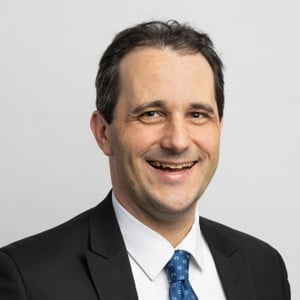
Director, Center for Judicial Engagement, Institute for Justice
Anthony Sanders is the Director of the Center for Judicial Engagement (CJE) at the Institute for Justice and a senior attorney. He joined IJ in 2010. As CJE’s director, he educates the public about the proper role of judges in enforcing constitutional limits on the size and scope of government. As a senior attorney he litigates cutting-edge constitutional cases protecting economic liberty, private property, freedom of speech and other individual liberties in both federal and state courts across the country.
One area of Anthony’s expertise is on using state constitutions to protect individual rights. He is the author of the book, published by University of Michigan Press, Baby Ninth Amendments: How Americans Embraced Unenumerated Rights and Why It Matters. He has also written several law review articles on state constitutional law, unenumerated rights, judicial review, economic liberty, property rights, international law, and other subjects. His work has appeared in publications such as the Iowa Law Review, Minnesota Law Review, American University Law Review, and Rutgers Law Review, and he has published opinion pieces in leading media outlets across the country. Further, he frequently speaks to various audiences on these matters and others, including judicial engagement, free speech, civil forfeiture, and the continuing importance of Magna Carta. Additionally, he hosts the weekly Short Circuit podcast, which often records live in front of law student audiences.
Anthony has litigated several cases in various state courts on state constitutional protections, as well as in federal courts on matters such as economic liberty, free speech, administrative law, and fines and fees abuse. Prior to joining IJ, Anthony served as a law clerk to Justice W. William Leaphart on the Montana Supreme Court. Anthony also worked for several years in private practice in Chicago where he was an active member of the Chicago Bar Association and chaired its Civil Rights Committee.
Anthony received his law degree cum laude from the University of Minnesota Law School in 2004, where he served as an articles submission editor for the Minnesota Law Review. He received his undergraduate degree from Hamline University in St. Paul, Minnesota, and his master’s degree from the University of Wisconsin-Madison. A dual U.S. and U.K. citizen, Anthony grew up on the islands of Vashon in Washington State, and Alderney in the British Channel Islands.
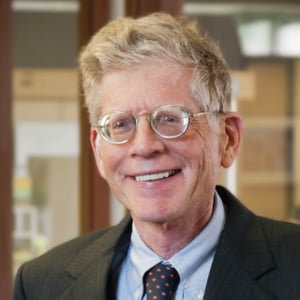
Professor of Law, University of Pittsburgh School of Law
Arthur D. Hellman, a professor of law (emeritus) at the University of Pittsburgh, is a nationally recognized scholar of the federal courts who has also written in the area of the First Amendment. His publications include numerous articles and several books, including casebooks in both areas, Federal Courts: Cases and Materials on Judicial Federalism and the Lawyering Process (5th edition 2022) (with David R. Stras, Ryan W. Scott, F. Andrew Hessick, and Derek T. Muller); and First Amendment Law: Freedom of Speech and Freedom of Religion (5th edition 2022) (with William D. Araiza, Thomas E. Baker, and Ashutosh A. Bhagwat).
In addition to his casebooks and academic writing, Processor Hellman has worked with the Judiciary Committees in the House and Senate in drafting federal courts legislation, including the most recent (2002) revision of the Judicial Conduct and Disability Act (Title 28, Chapter 16). The legislative histories of two major jurisdictional statutes – the Federal Courts Jurisdiction and Venue Clarification Act of 2011 and the “Holmes Group Fix” (enacted as part of the America Invents Act) – acknowledge his contributions.
Professor Hellman has testified as an invited witness at numerous hearings of both Judiciary Committees. His testimony has focused on a wide variety of legislative issues related to the federal courts, including the jurisdiction of the Supreme Court; proposals to divide the Ninth Circuit Court of Appeals; federal judicial discipline; unpublished appellate opinions; and the constitutionality of legislative restrictions on the powers of the federal courts.
In 2005 Professor Hellman was appointed as the inaugural holder of the Sally Ann Semenko Endowed Chair at the University. In 2002 he received the Chancellor’s Distinguished Research Award “as a faculty member who has an outstanding and continuing record of research and scholarly activity.”
Partner, Williams & Connolly
Sarah Harris is a partner in Williams & Connolly’s Supreme Court and Appellate practice, where she represents clients in high-stakes appeals in the U.S. Supreme Court and federal and state appellate courts across the country. She has argued five cases before the U.S. Supreme Court, and she has presented many arguments in federal courts of appeals and state appellate courts. Her cases have run the gamut of substantive areas, including constitutional law—especially First Amendment and separation-of-powers issues—as well as administrative law, arbitration, class actions, antitrust, False Claims Act litigation, commercial litigation, and federal civil procedure.
Sarah is widely recognized for her appellate advocacy. Chambers USA has recognized her as “Up and Coming” in Appellate Law. She has been named to Bloomberg Law’s 40 Under 40 list of top lawyers nationwide and to Benchmark Litigation’s “40 & Under Hot List,” as well as a an appellate “Rising Star” by The National Law Journal and Law360, a “Next Generation Lawyer” by The Legal 500, and as one of Bloomberg Law’s “Five Fresh Faces to Know in Appellate.”
Sarah clerked for Justice Clarence Thomas on the Supreme Court of the United States, Judge Laurence Silberman on the United States Court of Appeals for the D.C. Circuit, and Judge Sandra Lynch on the United States Court of Appeals for the First Circuit. Before joining Williams & Connolly, she served as a Deputy Assistant Attorney General in the Department of Justice’s Office of Legal Counsel.
Sarah received her undergraduate degree summa cum laude from Princeton University, and her J.D. magna cum laude from Harvard Law School. She also holds a Ph.D. and M. Phil. from the University of Cambridge.
Executive Vice President, The Federalist Society
Dean Reuter is Executive Vice President at the Federalist Society for Law and Public Policy Studies. He has served in two federal government agency Offices of the Inspector General, as Counsel to the Inspector General and Deputy Inspector General, responsible for policing the use of federal funds granted and contracted through those agencies. As such, he helped conduct and oversee criminal investigations across the country. He is the principal author of the non-fiction book, The Hidden Nazi: The Untold Story of America's Deal with the Devil, and editor of Liberty’s Nemesis: The Unchecked Expansion of the State and Confronting Terror: 9/11 and the Future of American National Security. He was appointed by the President and served as Vice-Chairman of the Board of Directors of the Corporation for National and Community Service, and recently served as an appointee on the U.S. Commission on Presidential Scholars. He is a graduate of Hood College (BA with Honors) and the University of Maryland School of Law.
Herman O. Loewenstein Professor of Law Emerita, Vanderbilt Law School
Suzanna Sherry's work in the area of constitutional law has earned her national recognition as one of the most well-known scholars in the field. The author of more than 100 books and articles, she also writes extensively on federal courts and federal court procedures. After graduating from law school, Professor Sherry was a clerk for the Honorable John C. Godbold of the United States Court of Appeals for the Fifth Circuit in Montgomery, Alabama, and then served as an associate with the law firm of Miller Cassidy Larroca & Lewin in Washington, D.C. She joined the Vanderbilt faculty in 2000 as the inaugural holder of the Cal Turner Chair, having previously served on the faculty of the University of Minnesota Law School since 1982. She was named the Herman O. Loewenstein Professor of Law in 2006.
Professor of Law, Antonin Scalia Law School, George Mason University
ILYA SOMIN is Professor of Law at George Mason University and the B. Kenneth Simon Chair in Constitutional Studies at the Cato Institute. His research focuses on constitutional law, property law, democratic theory, federalism, and migration rights. He is the author of Free to Move: Foot Voting, Migration, and Political Freedom (Oxford University Press, revised and expanded edition, 2022), Democracy and Political Ignorance: Why Smaller Government is Smarter (Stanford University Press, revised and expanded second edition, 2016), and The Grasping Hand: Kelo v. City of New London and the Limits of Eminent Domain (University of Chicago Press, 2015, rev. paperback ed., 2016), coauthor of A Conspiracy Against Obamacare: The Volokh Conspiracy and the Health Care Case (Palgrave Macmillan, 2013), and co-editor of Eminent Domain: A Comparative Perspective (Cambridge University Press, 2017). Democracy and Political Ignorance has been translated into Italian and Japanese.
Somin’s work has appeared in numerous scholarly journals, including the Yale Law Journal, Stanford Law Review, Northwestern University Law Review, Georgetown Law Journal, Critical Review, and others. Somin has also published articles in a variety of popular press outlets, including the New York Times, Washington Post, Wall Street Journal, Los Angeles Times, CNN, NBC, The Atlantic, USA Today, Boston Globe, US News and World Report, South China Morning Post, National Law Journal and Reason. He has been quoted or interviewed by the New York Times, Washington Post, Wall Street Journal, Time, Newsweek, The Economist, the Christian Science Monitor, the Financial Times, The Guardian, the Associated Press, CBS, MSNBC, NPR, BBC, Reuters, the Canadian Broadcasting Corporation, the Australian Broadcasting Corporation, Radio Free Europe/Radio Liberty, Al Jazeera, and the Voice of America, among other media.
Somin’s writings have been cited in decisions by the United States Supreme Court, multiple state supreme courts and lower federal courts, and the Supreme Court of Israel. He is co-counsel for the plaintiffs in VOS Selections, Inc. v. Trump, a case challenging the constitutionality of President Trump’s “Liberation Day” tariffs. Somin has testified on the use of drones for targeted killing in the War on Terror before the US Senate Judiciary Subcommittee on the Constitution, Civil Rights, and Human Rights. In 2009, he testified on property rights issues at the United States Senate Judiciary Committee confirmation hearings for Supreme Court Justice Sonia Sotomayor. Somin writes regularly for the popular Volokh Conspiracy law and politics blog, now affiliated with Reason magazine (previously affiliated with the Washington Post from 2014 to 2017). From 2006 to 2013, he served as Co-Editor of the Supreme Court Economic Review, one of the country’s top-rated law and economics journals.
Somin has served as a visiting professor at the University of Pennsylvania Law School. He has also been a visiting professor or scholar at the Georgetown University Law Center, the University of Hamburg, Germany, the University of Torcuato Di Tella in Buenos Aires, Argentina, Uriel Reichman University in Israel, and Zhengzhou University in China. He is a University Affiliate of the Schar School of Policy and Government at George Mason University, and an affiliated faculty member of the George Mason University Institute for Immigration Research. Before joining the faculty at George Mason, Somin was the John M. Olin Fellow in Law at Northwestern University Law School in 2002-2003. In 2001-2002, he clerked for the Hon. Judge Jerry E. Smith of the U.S. Court of Appeals for the Fifth Circuit. Professor Somin earned his B.A., Summa Cum Laude, at Amherst College, M.A. in Political Science from Harvard University, and J.D. from Yale Law School.
Thomas M. Siebel Senior Fellow, The Hoover Institution, Stanford University; Gary T. Schwartz Distinguished Professor of Law Emeritus, UCLA School of Law
Eugene Volokh is the Thomas M. Siebel Senior Fellow at the Hoover Institution (Stanford), as well as the Gary T. Schwartz Distinguished Professor of Law Emeritus and Distinguished Research Professor at UCLA School of Law. He recently retired from teaching at UCLA, after 30 years there, and is now focusing on research.
Volokh is the author of the textbooks The First Amendment and Related Statutes (8th ed. 2023), and Academic Legal Writing (5th ed. 2016), as well as over 100 academic law journal articles, mostly on First Amendment law. He is a member of The American Law Institute; the editor-in-chief of the Journal of Free Speech Law; and the creator and coauthor of The Volokh Conspiracy, a leading legal blog founded in 2002 (hosted at the Washington Post from 2014 to 2017 and now at Reason Magazine).
Director, Vanderbilt Health Policy Center, Vanderbilt University Law School
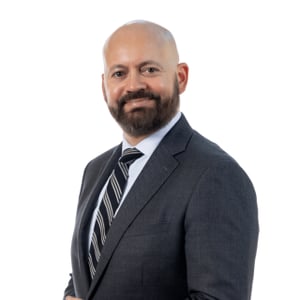
Milton R. Underwood Chair in Free Enterprise, Vanderbilt University Law School
Brian Fitzpatrick is the Milton R. Underwood Chair in Free Enterprise and Professor of Law at Vanderbilt Law School, where his research focuses on class action litigation, federal courts, judicial selection, and constitutional law. He is best known for his empirical studies of class action settlements as well as his book The Conservative Case for Class Actions (University of Chicago Press, 2019). Professor Fitzpatrick joined Vanderbilt's law faculty in 2007 after serving as the John M. Olin Fellow at New York University School of Law. He graduated first in his class from Harvard Law School and went on to clerk for Judge Diarmuid O'Scannlain on the U.S. Court of Appeals for the Ninth Circuit and Justice Antonin Scalia on the U.S. Supreme Court. After his clerkships, Professor Fitzpatrick practiced commercial and appellate litigation for several years at Sidley Austin in Washington, D.C., and served as Special Counsel for Supreme Court Nominations to U.S. Senator John Cornyn. Before earning his law degree, Fitzpatrick graduated summa cum laude with a bachelor's of science in chemical engineering from the University of Notre Dame. He has received the Hall-Hartman Outstanding Professor Award, which recognizes excellence in classroom teaching, for his Civil Procedure and Federal Courts courses.
Herman O. Loewenstein Professor of Law Emerita, Vanderbilt Law School
Suzanna Sherry's work in the area of constitutional law has earned her national recognition as one of the most well-known scholars in the field. The author of more than 100 books and articles, she also writes extensively on federal courts and federal court procedures. After graduating from law school, Professor Sherry was a clerk for the Honorable John C. Godbold of the United States Court of Appeals for the Fifth Circuit in Montgomery, Alabama, and then served as an associate with the law firm of Miller Cassidy Larroca & Lewin in Washington, D.C. She joined the Vanderbilt faculty in 2000 as the inaugural holder of the Cal Turner Chair, having previously served on the faculty of the University of Minnesota Law School since 1982. She was named the Herman O. Loewenstein Professor of Law in 2006.

Panel V: Is Originalism Possible? Historical Indeterminacy
Randy E. Barnett, Gary Lawson, Stephen B. Presser, Suzanna Sherry
On April 7-9, 1995, the Federalist Society held its fourteenth annual National Student Symposium at...
Panel V: Is Originalism Possible? Historical Indeterminacy
Randy E. Barnett, Gary Lawson, Stephen B. Presser, Suzanna Sherry
On April 7-9, 1995, the Federalist Society held its fourteenth annual National Student Symposium at...
A Seat at the Sitting - January 2022
Sarah M. Harris, Dean Reuter, Suzanna Sherry, Ilya Somin, Eugene Volokh
Join us for the fourth episode of the Federalist Society's Supreme Court Show: A Seat at...
A Seat at the Sitting - January 2022
Sarah M. Harris, Dean Reuter, Suzanna Sherry, Ilya Somin, Eugene Volokh
Join us for the fourth episode of the Federalist Society's Supreme Court Show: A Seat at...
A Seat at the Sitting - January 2022
The January Docket in 90 Minutes or Less
TeleforumWhich Rights Are We Mediating?
Anthony Sanders
A review of How Rights Went Wrong: Why Our Obsession With Rights Is Tearing America...
Topics
Scrutiny for Me, But Not For Thee? New York Times Columnist Praises Courts for "Calling out Legislators" in Abortion and Voting Rights Cases
It is not often that a progressive columnist offers full-throated praise for judicial decisions to...
The Fraudulent Joinder Prevention Act of 2016: A New Standard and a New Rationale for an Old Doctrine
Arthur D. Hellman
Note from the Editor: This article discusses the doctrine of fraudulent joinder and an ongoing attempt to...
Topics
Most Popular Student Events of 2015
The Federalist Society was born on law school campuses as a venue for debates and...
Supreme Court Roundup