

Former Chief Judge, U.S. Court of Federal Claims
Judge Braden was appointed to the United States Court of Federal Claims on July 14, 2003, by President George W. Bush, after being confirmed by unanimous consent of the United States Senate. She was sworn into office by Senator Jeff Sessions. Her investiture was conducted on October 24, 2003 by Justice Sandra Day O’Connor and Justice Ruth Bader Ginsburg.
On January 28, 2015, Judge Braden was appointed by the American Law Institute as one of seven Judicial Advisors to the Restatement of the Law on Copyright. In 2013, Judge Braden was appointed to the Judges Special Committee of the American Intellectual Property Law Association and was named as Chair of the Intellectual Property Committee of the Advisory Council of the United States Court of Federal Claims. On March 23, 2012, Judge Braden received the Linn Inn Alliance Distinguished Service Medal at the New York Intellectual Property Lawyers Association Annual Dinner for her work with the American Inns of Court, dedicated to intellectual property law. On February 7, 2012, Judge Braden was appointed as Chair of the American Bar Association’s Section of Intellectual Property Law Task Force to consider how to more efficiently adjudicate "small" patent infringement cases. During 2010-2011, Judge Braden served as President of the Giles S. Rich American Inn of Court, which is affiliated with the United States Court of Appeals for the Federal Circuit. She was recognized at a ceremony in the United States Supreme Court in November 2011, when she received the American Inns of Court’s Platinum Distinction Award. Judge Braden also served as a Member of the Editorial Board of the American Intellectual Property Law Association.
In July 2009, Judge Braden was appointed as a Member of the Standing Committee on Ethics and Professional Responsibility-Judges Advisory Committee to the American Bar Association, on which she served until 2012. On February 14, 2007, Judge Braden was elected as a Member of the American Law Institute and was active in drafting Restatement of Law Third, Restitution and Unjust Enrichment. On October 22, 2004, she was inducted as a Senior Fellow of the ABA’s Administrative Law and Regulatory Section by Justice O’Connor at a ceremony held at the United States Supreme Court.
Prior to joining the bench, Judge Braden litigated complex federal and administrative law cases in private practice in trial and appellate courts. In particular, her work in the intellectual property area received favorable notice in the Wall Street Journal, New York Times, National Law Journal, and the Journal of the American Bar Association, and was featured in Interfaces on Trial: Intellectual Property and Interoperability In The Global Software Industry. In 1996, Judge Braden was honored by the Computer Law Association for winning multiple decisions in the Eastern District of New York, the Eastern District of Texas, the Second Circuit, and a certified question to the Supreme Court of Texas in Computer Assocs. Int’l, Inc. v. Altai Inc., a landmark case that changed the application of copyright law to computer software. In 1998, she also won a companion case brought in France before the Cour de Appel de Paris.
In private practice, Judge Braden represented a wide variety of client interests before almost every major department and federal agency, testified before the United States Congress on a variety of matters, and was a principal lobbyist for the Emergency Oil and Steel Loan Guarantee Act of 1999, that established a $1 billion federal loan guarantee program to assist bankrupt and troubled steel mills and small oil companies.
Judge Braden received a B.A. degree (1970) and J. D. degree (1973) from Case Western Reserve University in Cleveland, Ohio. She also attended post graduate courses at the Harvard Law School in the summer of 1978.

James T. Jensen Endowed Professor for Transactional Law & Director of the Program on Intellectual Property and Technology Law, University of Utah S.J. Quinney College of Law
Jorge L. Contreras is a Distinguished University Professor, the James T. Jensen Endowed Professor for Transactional Law and Director of the Program on Intellectual Property and Technology Law. He teaches and researches in the areas of intellectual property, property law, technical standardization, antitrust and science policy. In 2020 he received the University of Utah's Distinguished Research Award and is an elected member of the American Law Institute. He has testified before the U.S. Senate and House Subcommittees on Intellectual Property, and was awarded the Rossman Memorial Award by the Patent & Trademark Office Society in 2022.
Professor Contreras has written or edited fourteen books and published more than 150 scholarly articles and chapters. His book, The Genome Defense: Inside the Epic Legal Battle to Determine Who Owns Your DNA (NY: Hachette/Algonquin, 2021), has been praised by the NY Times, Wall St. Journal, Nature and numerous other outlets, and was named "Best Patent Law Book of the Year" by the international IPKat blog. His scholarly articles have appeared in leading scientific, legal and policy journals including Science, Nature, NYU Law Review, Georgetown Law Journal, Iowa Law Review and Antitrust Law Journal. He has been quoted by media outlets around the world including the New York Times, Wall Street Journal, Economist, Bloomberg, Washington Post, Korea Times and has been featured on C-SPAN, NPR, PRI and BBC shows and a range of podcasts and online news programs.
Professor Contreras currently serves Co-Chair of the Interdisciplinary Division of the ABA's Section of Science & Technology Law and a member of the Advisory Board of the American Antitrust Institute. He has previously served as Co-Chair of the National Conference of Lawyers and Scientists, a member of the National Academy of Sciences (NAS) Committee on Intellectual Property Management in Standard-Setting Processes, the National Institutes of Health (NIH) Council of Councils, the Advisory Council of NIH's National Center for the Advancement of Translational Sciences (NCATS), the National Advisory Council for Human Genome Research, and the Intellectual Property Rights Policy Committee of the American National Standards Institute (ANSI). In 2021 he served as Chair of the Art Law Section of the Association of American Law Schools (AALS) and currently serves as Chair of the AALS Remedies Section.
Professor Contreras has previously taught at American University Washington College of Law and Washington University in St. Louis. Prior to entering academia he was a partner at the international law firm Wilmer Cutler Pickering Hale and Dorr LLP, where he practiced transactional and intellectual property law in Boston, London and Washington DC. He is a cum laude graduate of Harvard Law School (JD) and Rice University (BA, BSEE) and clerked for Chief Justice Thomas R. Philips of the Texas Supreme Court.

Vice President of Domestic Policy, National Association of Manufacturers
Charles Crain is the Vice President of Domestic Policy at the National Association of Manufacturers. In this role, he leads the association’s policy development and advocacy work on economic policy issues critical to the success of manufacturing in the United States, including tax, corporate governance, technology, health care, regulatory reform, and immigration. Prior to taking on the VP role, Charles led the NAM’s corporate finance policy portfolio, focused primarily on engagement with the Securities and Exchange Commission. He previously worked on Capitol Hill for members of the Senate Finance and House Financial Services Committees and was the Director of Tax and Financial Services Policy at the Biotechnology Innovation Organization.

Senior Counsel for Law and Policy, Committee for Justice
Jeff is a registered patent attorney and an intellectual property and innovation policy professional with a unique combination of training and real-world experience. Jeff is also currently a PhD candidate at the University of Pittsburgh Graduate School of Public and International Affairs (GSPIA). His dissertation is entitled “An Inquiry into the Nature and Causes of American Innovation: An Austrian Economics Perspective.”
Jeff maintains an active intellectual property law practice in the life sciences space. While counseling clients and working on his dissertation and other scholarship, Jeff remains active in the policy analysis and advocacy space. He currently serves as the President of the Association for American Innovation and a member and former Chair of the Public Policy Legal Task Force (PPLTF) for the Association of University of Technology Managers (AUTM).
Jeff has a bachelor’s degree chemical and biomedical engineering with concentrations in molecular biology and fermentation technology and from Carnegie Mellon. He also has a master’s degree in industrial administration (business) from Carnegie Mellon where he concentrated on international management, marketing and finance. He earned his law degree from the Duquesne University School of Law with a focus on intellectual property law.

Senior Partner, ACG Advocacy
Chris Israel is a Senior Partner at ACG Advocacy and is also the co-lead of the firm’s technology and intellectual property group.
He joined ACG in 2010, after serving in the George W. Bush Administration as Deputy Chief of
Staff to the Secretary of Commerce and later becoming the first U.S. International Intellectual
Property Enforcement Coordinator.
At ACG Advocacy, Chris works with a diverse range of clients including some of the largest and
most innovative companies in the world to support their efforts to build a policy environment in the U.S. that promotes and protects their investments in intellectual property. He has also
developed a unique focus leading a coalition of top venture capitalists and innovative startups to pursue a policy agenda that has led to improvements in tax policy, investments in R&D, and
strengthening patent protection.
Chris maintains a leadership profile working on IP and innovation issues and has been a frequent public speaker and has testified before Congress multiple times both as an Administration official and since he left public service. He was previously named one of the 50 “Most Influential People on IP” by Managing Intellectual Property magazine.
His international experience in government, particularly in working with China, has enabled him to successfully engage clients on global trade and technology matters ranging from the
negotiations of trade agreements, tariff policy, and engaging international organizations. His
client relationships have included automakers, global manufacturing companies, shipping
companies, and Chinese e-commerce and social media platforms seeking to better understand the U.S. market.
Chris’ experience leading coalitions has also included serving as Executive Director of the
musicFIRST Coalition during the lead-up to the passage of the landmark Music Modernization
Act. During this time he was named to Medium’s inaugural “Power 10” list of music policy
leaders.
Within ACG Advocacy, he provides guidance on the firm’s day-to-day interaction with all its
clients and helps lead ACG’s extensive policy research team. He has also launched the firm’s
podcast focused on policy trends and developments in Washington.
Earlier in his career, Chris worked on international policy issues at Time Warner where he was
part of a team that supported then-CEO, Gerald Levin, to develop the Global Business Dialogue on E-Commerce a ground-breaking global organization of CEOs from the U.S., EU, and Asia that developed industry best practices on matters such as online privacy, cross border data flows, and online taxation.
Prior to Time Warner, he served on Capitol Hill as a legislative aide to U.S. Representatives Jan
Meyers (R-KS) and Todd Tiahrt (R-KS).
Chris received his B.A. from the University of Kansas and an M.B.A. from The George
Washington University.
Former Chief Judge, U.S. Court of Federal Claims
Judge Braden was appointed to the United States Court of Federal Claims on July 14, 2003, by President George W. Bush, after being confirmed by unanimous consent of the United States Senate. She was sworn into office by Senator Jeff Sessions. Her investiture was conducted on October 24, 2003 by Justice Sandra Day O’Connor and Justice Ruth Bader Ginsburg.
On January 28, 2015, Judge Braden was appointed by the American Law Institute as one of seven Judicial Advisors to the Restatement of the Law on Copyright. In 2013, Judge Braden was appointed to the Judges Special Committee of the American Intellectual Property Law Association and was named as Chair of the Intellectual Property Committee of the Advisory Council of the United States Court of Federal Claims. On March 23, 2012, Judge Braden received the Linn Inn Alliance Distinguished Service Medal at the New York Intellectual Property Lawyers Association Annual Dinner for her work with the American Inns of Court, dedicated to intellectual property law. On February 7, 2012, Judge Braden was appointed as Chair of the American Bar Association’s Section of Intellectual Property Law Task Force to consider how to more efficiently adjudicate "small" patent infringement cases. During 2010-2011, Judge Braden served as President of the Giles S. Rich American Inn of Court, which is affiliated with the United States Court of Appeals for the Federal Circuit. She was recognized at a ceremony in the United States Supreme Court in November 2011, when she received the American Inns of Court’s Platinum Distinction Award. Judge Braden also served as a Member of the Editorial Board of the American Intellectual Property Law Association.
In July 2009, Judge Braden was appointed as a Member of the Standing Committee on Ethics and Professional Responsibility-Judges Advisory Committee to the American Bar Association, on which she served until 2012. On February 14, 2007, Judge Braden was elected as a Member of the American Law Institute and was active in drafting Restatement of Law Third, Restitution and Unjust Enrichment. On October 22, 2004, she was inducted as a Senior Fellow of the ABA’s Administrative Law and Regulatory Section by Justice O’Connor at a ceremony held at the United States Supreme Court.
Prior to joining the bench, Judge Braden litigated complex federal and administrative law cases in private practice in trial and appellate courts. In particular, her work in the intellectual property area received favorable notice in the Wall Street Journal, New York Times, National Law Journal, and the Journal of the American Bar Association, and was featured in Interfaces on Trial: Intellectual Property and Interoperability In The Global Software Industry. In 1996, Judge Braden was honored by the Computer Law Association for winning multiple decisions in the Eastern District of New York, the Eastern District of Texas, the Second Circuit, and a certified question to the Supreme Court of Texas in Computer Assocs. Int’l, Inc. v. Altai Inc., a landmark case that changed the application of copyright law to computer software. In 1998, she also won a companion case brought in France before the Cour de Appel de Paris.
In private practice, Judge Braden represented a wide variety of client interests before almost every major department and federal agency, testified before the United States Congress on a variety of matters, and was a principal lobbyist for the Emergency Oil and Steel Loan Guarantee Act of 1999, that established a $1 billion federal loan guarantee program to assist bankrupt and troubled steel mills and small oil companies.
Judge Braden received a B.A. degree (1970) and J. D. degree (1973) from Case Western Reserve University in Cleveland, Ohio. She also attended post graduate courses at the Harvard Law School in the summer of 1978.
James T. Jensen Endowed Professor for Transactional Law & Director of the Program on Intellectual Property and Technology Law, University of Utah S.J. Quinney College of Law
Jorge L. Contreras is a Distinguished University Professor, the James T. Jensen Endowed Professor for Transactional Law and Director of the Program on Intellectual Property and Technology Law. He teaches and researches in the areas of intellectual property, property law, technical standardization, antitrust and science policy. In 2020 he received the University of Utah's Distinguished Research Award and is an elected member of the American Law Institute. He has testified before the U.S. Senate and House Subcommittees on Intellectual Property, and was awarded the Rossman Memorial Award by the Patent & Trademark Office Society in 2022.
Professor Contreras has written or edited fourteen books and published more than 150 scholarly articles and chapters. His book, The Genome Defense: Inside the Epic Legal Battle to Determine Who Owns Your DNA (NY: Hachette/Algonquin, 2021), has been praised by the NY Times, Wall St. Journal, Nature and numerous other outlets, and was named "Best Patent Law Book of the Year" by the international IPKat blog. His scholarly articles have appeared in leading scientific, legal and policy journals including Science, Nature, NYU Law Review, Georgetown Law Journal, Iowa Law Review and Antitrust Law Journal. He has been quoted by media outlets around the world including the New York Times, Wall Street Journal, Economist, Bloomberg, Washington Post, Korea Times and has been featured on C-SPAN, NPR, PRI and BBC shows and a range of podcasts and online news programs.
Professor Contreras currently serves Co-Chair of the Interdisciplinary Division of the ABA's Section of Science & Technology Law and a member of the Advisory Board of the American Antitrust Institute. He has previously served as Co-Chair of the National Conference of Lawyers and Scientists, a member of the National Academy of Sciences (NAS) Committee on Intellectual Property Management in Standard-Setting Processes, the National Institutes of Health (NIH) Council of Councils, the Advisory Council of NIH's National Center for the Advancement of Translational Sciences (NCATS), the National Advisory Council for Human Genome Research, and the Intellectual Property Rights Policy Committee of the American National Standards Institute (ANSI). In 2021 he served as Chair of the Art Law Section of the Association of American Law Schools (AALS) and currently serves as Chair of the AALS Remedies Section.
Professor Contreras has previously taught at American University Washington College of Law and Washington University in St. Louis. Prior to entering academia he was a partner at the international law firm Wilmer Cutler Pickering Hale and Dorr LLP, where he practiced transactional and intellectual property law in Boston, London and Washington DC. He is a cum laude graduate of Harvard Law School (JD) and Rice University (BA, BSEE) and clerked for Chief Justice Thomas R. Philips of the Texas Supreme Court.
Vice President of Domestic Policy, National Association of Manufacturers
Charles Crain is the Vice President of Domestic Policy at the National Association of Manufacturers. In this role, he leads the association’s policy development and advocacy work on economic policy issues critical to the success of manufacturing in the United States, including tax, corporate governance, technology, health care, regulatory reform, and immigration. Prior to taking on the VP role, Charles led the NAM’s corporate finance policy portfolio, focused primarily on engagement with the Securities and Exchange Commission. He previously worked on Capitol Hill for members of the Senate Finance and House Financial Services Committees and was the Director of Tax and Financial Services Policy at the Biotechnology Innovation Organization.
Senior Counsel for Law and Policy, Committee for Justice
Jeff is a registered patent attorney and an intellectual property and innovation policy professional with a unique combination of training and real-world experience. Jeff is also currently a PhD candidate at the University of Pittsburgh Graduate School of Public and International Affairs (GSPIA). His dissertation is entitled “An Inquiry into the Nature and Causes of American Innovation: An Austrian Economics Perspective.”
Jeff maintains an active intellectual property law practice in the life sciences space. While counseling clients and working on his dissertation and other scholarship, Jeff remains active in the policy analysis and advocacy space. He currently serves as the President of the Association for American Innovation and a member and former Chair of the Public Policy Legal Task Force (PPLTF) for the Association of University of Technology Managers (AUTM).
Jeff has a bachelor’s degree chemical and biomedical engineering with concentrations in molecular biology and fermentation technology and from Carnegie Mellon. He also has a master’s degree in industrial administration (business) from Carnegie Mellon where he concentrated on international management, marketing and finance. He earned his law degree from the Duquesne University School of Law with a focus on intellectual property law.
Senior Partner, ACG Advocacy
Chris Israel is a Senior Partner at ACG Advocacy and is also the co-lead of the firm’s technology and intellectual property group.
He joined ACG in 2010, after serving in the George W. Bush Administration as Deputy Chief of
Staff to the Secretary of Commerce and later becoming the first U.S. International Intellectual
Property Enforcement Coordinator.
At ACG Advocacy, Chris works with a diverse range of clients including some of the largest and
most innovative companies in the world to support their efforts to build a policy environment in the U.S. that promotes and protects their investments in intellectual property. He has also
developed a unique focus leading a coalition of top venture capitalists and innovative startups to pursue a policy agenda that has led to improvements in tax policy, investments in R&D, and
strengthening patent protection.
Chris maintains a leadership profile working on IP and innovation issues and has been a frequent public speaker and has testified before Congress multiple times both as an Administration official and since he left public service. He was previously named one of the 50 “Most Influential People on IP” by Managing Intellectual Property magazine.
His international experience in government, particularly in working with China, has enabled him to successfully engage clients on global trade and technology matters ranging from the
negotiations of trade agreements, tariff policy, and engaging international organizations. His
client relationships have included automakers, global manufacturing companies, shipping
companies, and Chinese e-commerce and social media platforms seeking to better understand the U.S. market.
Chris’ experience leading coalitions has also included serving as Executive Director of the
musicFIRST Coalition during the lead-up to the passage of the landmark Music Modernization
Act. During this time he was named to Medium’s inaugural “Power 10” list of music policy
leaders.
Within ACG Advocacy, he provides guidance on the firm’s day-to-day interaction with all its
clients and helps lead ACG’s extensive policy research team. He has also launched the firm’s
podcast focused on policy trends and developments in Washington.
Earlier in his career, Chris worked on international policy issues at Time Warner where he was
part of a team that supported then-CEO, Gerald Levin, to develop the Global Business Dialogue on E-Commerce a ground-breaking global organization of CEOs from the U.S., EU, and Asia that developed industry best practices on matters such as online privacy, cross border data flows, and online taxation.
Prior to Time Warner, he served on Capitol Hill as a legislative aide to U.S. Representatives Jan
Meyers (R-KS) and Todd Tiahrt (R-KS).
Chris received his B.A. from the University of Kansas and an M.B.A. from The George
Washington University.
Former Chief Judge, U.S. Court of Federal Claims
Judge Braden was appointed to the United States Court of Federal Claims on July 14, 2003, by President George W. Bush, after being confirmed by unanimous consent of the United States Senate. She was sworn into office by Senator Jeff Sessions. Her investiture was conducted on October 24, 2003 by Justice Sandra Day O’Connor and Justice Ruth Bader Ginsburg.
On January 28, 2015, Judge Braden was appointed by the American Law Institute as one of seven Judicial Advisors to the Restatement of the Law on Copyright. In 2013, Judge Braden was appointed to the Judges Special Committee of the American Intellectual Property Law Association and was named as Chair of the Intellectual Property Committee of the Advisory Council of the United States Court of Federal Claims. On March 23, 2012, Judge Braden received the Linn Inn Alliance Distinguished Service Medal at the New York Intellectual Property Lawyers Association Annual Dinner for her work with the American Inns of Court, dedicated to intellectual property law. On February 7, 2012, Judge Braden was appointed as Chair of the American Bar Association’s Section of Intellectual Property Law Task Force to consider how to more efficiently adjudicate "small" patent infringement cases. During 2010-2011, Judge Braden served as President of the Giles S. Rich American Inn of Court, which is affiliated with the United States Court of Appeals for the Federal Circuit. She was recognized at a ceremony in the United States Supreme Court in November 2011, when she received the American Inns of Court’s Platinum Distinction Award. Judge Braden also served as a Member of the Editorial Board of the American Intellectual Property Law Association.
In July 2009, Judge Braden was appointed as a Member of the Standing Committee on Ethics and Professional Responsibility-Judges Advisory Committee to the American Bar Association, on which she served until 2012. On February 14, 2007, Judge Braden was elected as a Member of the American Law Institute and was active in drafting Restatement of Law Third, Restitution and Unjust Enrichment. On October 22, 2004, she was inducted as a Senior Fellow of the ABA’s Administrative Law and Regulatory Section by Justice O’Connor at a ceremony held at the United States Supreme Court.
Prior to joining the bench, Judge Braden litigated complex federal and administrative law cases in private practice in trial and appellate courts. In particular, her work in the intellectual property area received favorable notice in the Wall Street Journal, New York Times, National Law Journal, and the Journal of the American Bar Association, and was featured in Interfaces on Trial: Intellectual Property and Interoperability In The Global Software Industry. In 1996, Judge Braden was honored by the Computer Law Association for winning multiple decisions in the Eastern District of New York, the Eastern District of Texas, the Second Circuit, and a certified question to the Supreme Court of Texas in Computer Assocs. Int’l, Inc. v. Altai Inc., a landmark case that changed the application of copyright law to computer software. In 1998, she also won a companion case brought in France before the Cour de Appel de Paris.
In private practice, Judge Braden represented a wide variety of client interests before almost every major department and federal agency, testified before the United States Congress on a variety of matters, and was a principal lobbyist for the Emergency Oil and Steel Loan Guarantee Act of 1999, that established a $1 billion federal loan guarantee program to assist bankrupt and troubled steel mills and small oil companies.
Judge Braden received a B.A. degree (1970) and J. D. degree (1973) from Case Western Reserve University in Cleveland, Ohio. She also attended post graduate courses at the Harvard Law School in the summer of 1978.

National Affairs Columnist, National Review
John Fund is National Affairs Columnist for National Review magazine and a on-air analyst on the Fox News Channel. He is considered a notable expert on American politics and the nexus between politics and economics.
He previously served as a columnist and editorial board member for The Wall Street Journal. He is the author of several books, including Who's Counting: Bow Fraudsters and Bureaucrats Put Your Vote At Risk (Encounter Books, 2012); Stealing Elections: How Voter Fraud Threatens Our Democracy (Encounter Books, 2008) and The Dangers of Regulation Through Litigation (ATRA Press, 2008). He worked as a research analyst for the California Legislature in Sacramento before beginning his journalism career as a reporter for the syndicated columnists Rowland Evans and Robert Novak.
Roll Call, the newspaper of Capitol Hill, called him "the Tom Paine of the modern Congressional reform movement." He has won awards from the Institute for Justice, The School Choice Aliance and the Warren Brooks award for journalistic excellence from the American Legislative Exchange Council.
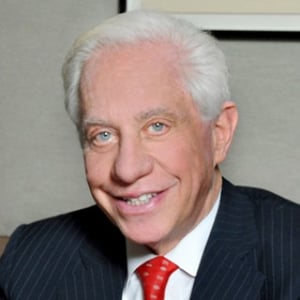
Partner, Shook, Hardy & Bacon LLP
Victor Schwartz chairs the firm's Public Policy Practice Group, which focuses on integrating litigation, government affairs and public relations. The group seeks to be the vanguard of developing public policy issues that will help improve our civil justice system. Mr. Schwartz also has an active appellate practice and advises product manufacturers on liability prevention, litigation and public relations issues.
Sought by print and broadcast media, Mr. Schwartz is frequently quoted in The Wall Street Journal, The Washington Post and The New York Times. He has appeared on Oprah, 60 Minutes and leading news programs. The Legal Times of Washington has named Mr. Schwartz one of Washington’s Top 30 “Visionary” lawyers, and The National Law Journal named Mr. Schwartz one of the 100 most influential lawyers in the United States in March 2013.
Mr. Schwartz is on the Board of Directors of the Searle Civil Justice Institute at George Mason University School of Law. He is a frequent participant in judicial education programs. Mr. Schwartz serves as General Counsel to the American Tort Reform Association.
Prior to entering the full time practice of law, Mr. Schwartz was a professor and dean at the University of Cincinnati College of Law. He currently serves on the College’s Board of Visitors. In 2012, the College established the Professor Victor E. Schwartz Chair in Tort Law.
Mr. Schwartz, while at the U.S. Department of Commerce, served as chair of the Federal Inter-Agency Task Force on Product Liability, and the Federal Inter-Agency Council on Insurance. He was the principal author of the Uniform Product Liability Act and the Federal Risk Retention Act. He received the Secretary of Commerce’s Award for Professional Excellence.
Mr. Schwartz is co-author of the most widely used torts casebook in the United States, Prosser, Wade and Schwartz’s Torts (12th ed. 2010). He is author of the leading text Comparative Negligence (5th ed. 2010).
Mr. Schwartz has been an advisor for each of the American Law Institute’s (ALI) Restatement (Third) of Torts projects; Products Liability, Apportionment of Liability, and Liability for Physical Injury and Emotional Harm. He is a life member of the ALI.
Mr. Schwartz’s law review articles have analyzed almost every major subject of modern tort and civil justice public policy issues. His articles are frequently cited by both state and federal courts.

Partner, WilmerHale and former United States Solicitor General
Universally considered to be among the country's premier Supreme Court and appellate advocates, Seth Waxman served as Solicitor General of the United States from 1997 through January 2001. In addition to leading the firm's appellate practice, Mr. Waxman engages in a broad litigation and counseling practice, with particular emphasis on complex challenges involving governments or public policy, intellectual property, regulatory, criminal and commercial issues.
A Fellow of the American College of Trial Lawyers, Mr. Waxman also is a widely respected trial litigator. In January 2016, The American Lawyer named him "Litigator of the Year." Mr. Waxman was also named Appellate/Litigation "Lawyer of the Year" for 2018, Litigation - Intellectual Property "Lawyer of the Year" for 2016 and Litigation - First Amendment Law and Regulatory Enforcement Law "Lawyer of the Year" for 2015 by Best Lawyers in America, and, in 2014, Super Lawyers deemed him the "number one" lawyer in Washington DC. Mr. Waxman has been accorded both "star" rating by Chambers USA and "leading lawyer" ranking in PLC's Global Counsel Handbook.
Mr. Waxman's practice spans both federal and state trial and appellate courts. He has delivered 80 oral arguments in the United States Supreme Court and many more in the lower federal and state courts. Mr. Waxman's clients range from financial institutions to technology, consumer, industrial and media companies, universities and Indian tribes, and he leads the firm's efforts to counsel tribal governments. He also represents a number of local, state and national governments and prominent business and government executives and professionals. The recipient of numerous professional awards and honors, Mr. Waxman is among a small handful of practicing attorneys elected to the American Academy of Arts and Sciences. He holds several honorary degrees, as well as the Jefferson Medal in Law, an honor awarded once a year and only rarely to an attorney in private practice. In recognition of exceptional service to law enforcement, Mr. Waxman holds the extraordinary status of permanent honorary Special Agent of the Federal Bureau of Investigation.

Distinguished Senior Fellow and Antonin Scalia Chair in Constitutional Studies, Ethics and Public Policy Center
Edward Whelan is a Distinguished Senior Fellow of the Ethics and Public Policy Center and holds EPPC’s Antonin Scalia Chair in Constitutional Studies. He is the longest-serving President in EPPC’s history, having held that position from March 2004 through January 2021.
Mr. Whelan directs EPPC’s program on The Constitution, the Courts, and the Culture. His areas of expertise include constitutional law and the judicial confirmation process. As a contributor to National Review Online’s Bench Memos blog, he has been a leading commentator on nominations to the Supreme Court and the lower courts and on issues of constitutional law. He has written essays and op-eds for leading newspapers—including the Wall Street Journal, the New York Times, and the Washington Post—opinion journals, and academic symposia and law reviews. The National Law Journal has named Mr. Whelan among its “Champions and Visionaries” in the practice of law in D.C.
Mr. Whelan is co-editor of three volumes of Supreme Court Justice Antonin Scalia’s work: Scalia Speaks: Reflections on Law, Faith, and Life Well Lived (Crown Forum, 2017), a New York Times bestselling collection of speeches by Justice Scalia; On Faith: Lessons from an American Believer (Crown Forum, 2019), a collection of Justice Scalia’s writings on faith and religion; and The Essential Scalia: On the Constitution, the Courts, and the Rule of Law (Crown Forum, 2020), a collection of Justice Scalia’s views on legal issues.
Mr. Whelan, a lawyer and a former law clerk to Justice Scalia, has served in positions of responsibility in all three branches of the federal government. From just before the terrorist attacks of September 11, 2001, until joining EPPC in 2004, Mr. Whelan was the Principal Deputy Assistant Attorney General for the Office of Legal Counsel in the U.S. Department of Justice. In that capacity, he advised the White House Counsel’s Office, the Attorney General and other senior DOJ officials, and departments and agencies throughout the executive branch on difficult and sensitive legal questions. Mr. Whelan previously served on Capitol Hill as General Counsel to the U.S. Senate Committee on the Judiciary. In addition to clerking for Justice Scalia, he was a law clerk to Judge J. Clifford Wallace of the U.S. Court of Appeals for the Ninth Circuit.
In 1981 Mr. Whelan graduated with honors from Harvard College and was inducted into Phi Beta Kappa. He received his J.D. magna cum laude in 1985 from Harvard Law School, where he was a member of the Board of Editors of the Harvard Law Review.
For more on Mr. Whelan’s background, see this interview.
Former Chief Judge, U.S. Court of Federal Claims
Judge Braden was appointed to the United States Court of Federal Claims on July 14, 2003, by President George W. Bush, after being confirmed by unanimous consent of the United States Senate. She was sworn into office by Senator Jeff Sessions. Her investiture was conducted on October 24, 2003 by Justice Sandra Day O’Connor and Justice Ruth Bader Ginsburg.
On January 28, 2015, Judge Braden was appointed by the American Law Institute as one of seven Judicial Advisors to the Restatement of the Law on Copyright. In 2013, Judge Braden was appointed to the Judges Special Committee of the American Intellectual Property Law Association and was named as Chair of the Intellectual Property Committee of the Advisory Council of the United States Court of Federal Claims. On March 23, 2012, Judge Braden received the Linn Inn Alliance Distinguished Service Medal at the New York Intellectual Property Lawyers Association Annual Dinner for her work with the American Inns of Court, dedicated to intellectual property law. On February 7, 2012, Judge Braden was appointed as Chair of the American Bar Association’s Section of Intellectual Property Law Task Force to consider how to more efficiently adjudicate "small" patent infringement cases. During 2010-2011, Judge Braden served as President of the Giles S. Rich American Inn of Court, which is affiliated with the United States Court of Appeals for the Federal Circuit. She was recognized at a ceremony in the United States Supreme Court in November 2011, when she received the American Inns of Court’s Platinum Distinction Award. Judge Braden also served as a Member of the Editorial Board of the American Intellectual Property Law Association.
In July 2009, Judge Braden was appointed as a Member of the Standing Committee on Ethics and Professional Responsibility-Judges Advisory Committee to the American Bar Association, on which she served until 2012. On February 14, 2007, Judge Braden was elected as a Member of the American Law Institute and was active in drafting Restatement of Law Third, Restitution and Unjust Enrichment. On October 22, 2004, she was inducted as a Senior Fellow of the ABA’s Administrative Law and Regulatory Section by Justice O’Connor at a ceremony held at the United States Supreme Court.
Prior to joining the bench, Judge Braden litigated complex federal and administrative law cases in private practice in trial and appellate courts. In particular, her work in the intellectual property area received favorable notice in the Wall Street Journal, New York Times, National Law Journal, and the Journal of the American Bar Association, and was featured in Interfaces on Trial: Intellectual Property and Interoperability In The Global Software Industry. In 1996, Judge Braden was honored by the Computer Law Association for winning multiple decisions in the Eastern District of New York, the Eastern District of Texas, the Second Circuit, and a certified question to the Supreme Court of Texas in Computer Assocs. Int’l, Inc. v. Altai Inc., a landmark case that changed the application of copyright law to computer software. In 1998, she also won a companion case brought in France before the Cour de Appel de Paris.
In private practice, Judge Braden represented a wide variety of client interests before almost every major department and federal agency, testified before the United States Congress on a variety of matters, and was a principal lobbyist for the Emergency Oil and Steel Loan Guarantee Act of 1999, that established a $1 billion federal loan guarantee program to assist bankrupt and troubled steel mills and small oil companies.
Judge Braden received a B.A. degree (1970) and J. D. degree (1973) from Case Western Reserve University in Cleveland, Ohio. She also attended post graduate courses at the Harvard Law School in the summer of 1978.
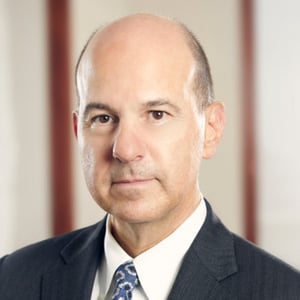
Partner, Cravath Swaine & Moore LLP
David J. Kappos is a partner at Cravath. He is widely recognized as one of the world’s foremost leaders in the field of intellectual property, including intellectual property management and strategy, the development of global intellectual property norms, laws and practices as well as commercialization and enforcement of innovation-based assets. Mr. Kappos supports the Firm’s clients with a wide range of their most complex intellectual property issues, including those pertaining to blockchain and financial technology (FinTech).
From August 2009 to January 2013, Mr. Kappos served as Under Secretary of Commerce and Director of the United States Patent and Trademark Office (USPTO). In that role, he advised the President, the Secretary of Commerce and the Administration on intellectual property policy matters. As Director of the USPTO, he led the Agency in dramatically re-engineering its entire management and operational systems as well as its engagement with the global innovation community. He was instrumental in achieving the greatest legislative reform of the U.S. patent system in generations through passage and implementation of the Leahy‑Smith America Invents Act, signed into law by President Obama in September 2011.
Prior to leading the USPTO, Mr. Kappos held several executive posts in the legal department of IBM, the world’s largest patent holder. From 2003 to 2009, he served as the company’s chief intellectual property lawyer. In that capacity, he managed global intellectual property activities for IBM, including all aspects of patent, trademark, copyright and trade secret protection. Mr. Kappos joined IBM as a development engineer. During his more than 25 years at IBM, he served in a variety of roles including litigation counsel and Asia Pacific IP counsel, based in Tokyo, Japan, where he led all aspects of intellectual property protection, including licensing, transactions support and mergers and acquisitions activity for the Asia/Pacific region.
Mr. Kappos has received numerous accolades for his contributions to the field of intellectual property, including, among others, the 2014 Global Agenda Council Vision Award for the Intellectual Property Council’s pro bono initiative from the World Economic Forum, the 2014 Jefferson Medal from the New Jersey Intellectual Property Law Association (NJIPLA), the 2013 Board of Director’s Excellence Award from the American Intellectual Property Law Association (AIPLA), the 2013 Champion of Intellectual Property Award from the District of Columbia Bar Association and the 2013 North America Government Leadership Award from Semiconductor Equipment and Materials International (SEMI). He was named one of the “Top 25 Icons of IP” by Law360, one of the “50 Most Influential People in Intellectual Property” and the “Outstanding Practitioner of the Year in IP Transactions” by Managing IP, one of the “Top 50 Intellectual Property Trailblazers & Pioneers” and one of the “100 Most Influential Lawyers in America” by The National Law Journal, “Intellectual Property Professional of the Year” by the Intellectual Property Owners Association and inducted into the Intellectual Property Hall of Fame by Intellectual Asset Management Magazine in 2012. Mr. Kappos was also recognized as a leading lawyer by IAM Strategy 300, IAM Patent 1000, World IP Review, The Legal 500 US, Who’s Who Legal: Patents, Lawdragon, Super Lawyers and The Best Lawyers in America. He is a frequent speaker and has authored many published articles on various intellectual property, innovation and leadership topics.
Mr. Kappos serves on the Boards of Directors of the Partnership for Public Service, the Center for Global Enterprise and the Intellectual Property Owners Education Foundation. He is the Chair of the Advisory Council of the Naples Roundtable, and the U.S. Chair of the U.S.-China IP Cooperation Dialogue. He is also an Adjunct Professor at Columbia Law School, where he teaches copyright litigation, and Cornell Law School, where he teaches legal advising for the start-up general counsel.
Mr. Kappos was born in Palos Verdes, California. He received a B.S. summa cum laude in Electrical and Computer Engineering from the University of California, Davis in 1983 and a J.D. from the University of California, Berkeley in 1990.
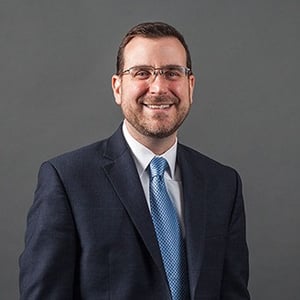
Professor of Law, Antonin Scalia Law School, George Mason University
Adam Mossoff is Professor of Law at Antonin Scalia Law School, George Mason University. He has published extensively on why patents, copyrights, and other intellectual property rights have been—and should be—legally secured to innovators and creators as property rights. His scholarship has been relied on by the United States Supreme Court, by lower federal courts, and by U.S. federal agencies. He has been invited to testify numerous times before the U.S. Senate and the House of Representatives on intellectual property legislation. His writings on intellectual property policy have also appeared in the Wall Street Journal, New York Times, Forbes, Investors Business Daily, and in other media outlets. His journal articles can be downloaded here.
Professor Mossoff is a longstanding member of the Executive Committee of the Intellectual Property Practice Group of the Federalist Society, on which he served as Chairperson from 2016-2018, and he is Chair of the Intellectual Property Working Group of the Regulatory Transparency Project of the Federalist Society. He is a Senior Fellow and Chair of the Forum for Intellectual Property at the Hudson Institute, a Visiting Intellectual Property Fellow at the Heritage Foundation, and a member of the Board of Directors of the Center for Intellectual Property Understanding. He is a member of the Intellectual Property Rights Policy Committee of ANSI and he has served as Chair and Vice-Chair of the Intellectual Property Committee of the IEEE-USA, on which he remains a member in good standing.

Partner, Gibson, Dunn & Crutcher LLP
Mark A. Perry is a partner in the Washington, D.C. office of Gibson, Dunn & Crutcher LLP and Co-Chair of the Firm’s nationwide Appellate and Constitutional Law Practice Group. His practice focuses on complex commercial litigation at both the trial and appellate levels.
Mr. Perry is an accomplished appellate lawyer who has briefed and argued many cases in the Supreme Court of the United States—including winning the landmark decisions in Lucia v. SEC, Alice Corp. v. CLS Bank, and Janus Capital Group v. First Derivative Traders—and the federal courts of appeals. (See Overview of Section 101 Patent Cases Decided After Alice v. CLS (as of March 1, 2019)). He has served as chief appellate counsel to Fortune 100 companies in significant securities, intellectual property, and employment cases. He also appears frequently in federal district courts, serving both as lead counsel and as legal strategist in complex commercial cases. He has special expertise in class actions, and teaches the upper-level course in Class Action Law and Practice at Georgetown University Law Center.
Mr. Perry is ranked by Chambers USA in Nationwide Appellate Law, which noted that he “is described as a ‘master strategist and a brilliant writer.’” He has also been recognized by Best Lawyers in America® in the fields of Appellate Practice and Securities / Capital Markets Law, by Super Lawyers in the Appellate category, and by IAM Patent—which called him “undoubtedly one of the top appellate specialists in the country”—for his work in the Federal Circuit. Mr. Perry has been named a National Litigation Star for both Appellate and General Commercial by Benchmark Litigation (which has also awarded him Appellate Lawyer of the Year), identified as a “Securities MVP” and an “Appellate MVP” by Law360, and named a Litigator of the Week by The American Lawyer. He is a Fellow of the Litigation Counsel of America.
Before joining Gibson Dunn, Mr. Perry served as a law clerk to Justice Sandra Day O’Connor of the Supreme Court of the United States, and to Judge Alex Kozinski of the United States Court of Appeals for the Ninth Circuit. He also worked as what is now called a Bristow Fellow in the Office of the Solicitor General of the United States. Mr. Perry earned his law degree with high honors from the University of Chicago Law School, where he served as Executive Editor of the Law Review. His undergraduate degree was conferred by the University of California at Berkeley.
Mr. Perry is the global co-editor, and co-author of the U.S. chapter, of the international publication Getting the Deal Through: Appeals, and he is the author of the class certification chapter in the PLI treatise Securities Litigation: A Practitioner’s Guide. Other recent publications and additional information are available below. Representative matters and references are available on request.

Professor of Law, DePaul University College of Law
Joshua D. Sarnoff is a professor of law at DePaul University and a faculty member in and former director of the Center for Intellectual Property Law & Information Technology (CIPLIT®). He teaches patent law, advanced patent law, administrative law, law and climate change, and other intellectual property law courses. He was previously a professor at the Washington College of Law, American University, in the Glushko-Samuelson Intellectual Property Law Clinic, and at the University of Arizona College of Law. In academic year 2014-2015, Professor Sarnoff was a Thomas A. Edison Distinguished Scholar at the United States Patent and Trademark Office. He is a registered patent attorney and a member of the bars of Washington D.C. and California, a former member of the board of governors of the Federal Circuit Bar Association, and a member of the boards of directors and advisory boards of various nonprofit organizations. He has written numerous articles and book chapters on patent law and climate change and has been involved in a wide range of intellectual property legal and policy disputes. He has submitted testimony on domestic patent law reform bills, has filed numerous amicus briefs in the United States Supreme Court and in the U.S. Court of Appeals for the Federal Circuit on important patent law issues, has been a pro bono mediator for the Federal Circuit, and has been a consultant to the United Nations Conference on Trade and Development on international intellectual property, trade and environmental issues. Professor Sarnoff was formerly in the private practice of intellectual property, environmental, and food and drug law in Washington, D.C. He received his BS from MIT and JD from Stanford.
Former Chief Judge, U.S. Court of Federal Claims
Judge Braden was appointed to the United States Court of Federal Claims on July 14, 2003, by President George W. Bush, after being confirmed by unanimous consent of the United States Senate. She was sworn into office by Senator Jeff Sessions. Her investiture was conducted on October 24, 2003 by Justice Sandra Day O’Connor and Justice Ruth Bader Ginsburg.
On January 28, 2015, Judge Braden was appointed by the American Law Institute as one of seven Judicial Advisors to the Restatement of the Law on Copyright. In 2013, Judge Braden was appointed to the Judges Special Committee of the American Intellectual Property Law Association and was named as Chair of the Intellectual Property Committee of the Advisory Council of the United States Court of Federal Claims. On March 23, 2012, Judge Braden received the Linn Inn Alliance Distinguished Service Medal at the New York Intellectual Property Lawyers Association Annual Dinner for her work with the American Inns of Court, dedicated to intellectual property law. On February 7, 2012, Judge Braden was appointed as Chair of the American Bar Association’s Section of Intellectual Property Law Task Force to consider how to more efficiently adjudicate "small" patent infringement cases. During 2010-2011, Judge Braden served as President of the Giles S. Rich American Inn of Court, which is affiliated with the United States Court of Appeals for the Federal Circuit. She was recognized at a ceremony in the United States Supreme Court in November 2011, when she received the American Inns of Court’s Platinum Distinction Award. Judge Braden also served as a Member of the Editorial Board of the American Intellectual Property Law Association.
In July 2009, Judge Braden was appointed as a Member of the Standing Committee on Ethics and Professional Responsibility-Judges Advisory Committee to the American Bar Association, on which she served until 2012. On February 14, 2007, Judge Braden was elected as a Member of the American Law Institute and was active in drafting Restatement of Law Third, Restitution and Unjust Enrichment. On October 22, 2004, she was inducted as a Senior Fellow of the ABA’s Administrative Law and Regulatory Section by Justice O’Connor at a ceremony held at the United States Supreme Court.
Prior to joining the bench, Judge Braden litigated complex federal and administrative law cases in private practice in trial and appellate courts. In particular, her work in the intellectual property area received favorable notice in the Wall Street Journal, New York Times, National Law Journal, and the Journal of the American Bar Association, and was featured in Interfaces on Trial: Intellectual Property and Interoperability In The Global Software Industry. In 1996, Judge Braden was honored by the Computer Law Association for winning multiple decisions in the Eastern District of New York, the Eastern District of Texas, the Second Circuit, and a certified question to the Supreme Court of Texas in Computer Assocs. Int’l, Inc. v. Altai Inc., a landmark case that changed the application of copyright law to computer software. In 1998, she also won a companion case brought in France before the Cour de Appel de Paris.
In private practice, Judge Braden represented a wide variety of client interests before almost every major department and federal agency, testified before the United States Congress on a variety of matters, and was a principal lobbyist for the Emergency Oil and Steel Loan Guarantee Act of 1999, that established a $1 billion federal loan guarantee program to assist bankrupt and troubled steel mills and small oil companies.
Judge Braden received a B.A. degree (1970) and J. D. degree (1973) from Case Western Reserve University in Cleveland, Ohio. She also attended post graduate courses at the Harvard Law School in the summer of 1978.
Partner, Cravath Swaine & Moore LLP
David J. Kappos is a partner at Cravath. He is widely recognized as one of the world’s foremost leaders in the field of intellectual property, including intellectual property management and strategy, the development of global intellectual property norms, laws and practices as well as commercialization and enforcement of innovation-based assets. Mr. Kappos supports the Firm’s clients with a wide range of their most complex intellectual property issues, including those pertaining to blockchain and financial technology (FinTech).
From August 2009 to January 2013, Mr. Kappos served as Under Secretary of Commerce and Director of the United States Patent and Trademark Office (USPTO). In that role, he advised the President, the Secretary of Commerce and the Administration on intellectual property policy matters. As Director of the USPTO, he led the Agency in dramatically re-engineering its entire management and operational systems as well as its engagement with the global innovation community. He was instrumental in achieving the greatest legislative reform of the U.S. patent system in generations through passage and implementation of the Leahy‑Smith America Invents Act, signed into law by President Obama in September 2011.
Prior to leading the USPTO, Mr. Kappos held several executive posts in the legal department of IBM, the world’s largest patent holder. From 2003 to 2009, he served as the company’s chief intellectual property lawyer. In that capacity, he managed global intellectual property activities for IBM, including all aspects of patent, trademark, copyright and trade secret protection. Mr. Kappos joined IBM as a development engineer. During his more than 25 years at IBM, he served in a variety of roles including litigation counsel and Asia Pacific IP counsel, based in Tokyo, Japan, where he led all aspects of intellectual property protection, including licensing, transactions support and mergers and acquisitions activity for the Asia/Pacific region.
Mr. Kappos has received numerous accolades for his contributions to the field of intellectual property, including, among others, the 2014 Global Agenda Council Vision Award for the Intellectual Property Council’s pro bono initiative from the World Economic Forum, the 2014 Jefferson Medal from the New Jersey Intellectual Property Law Association (NJIPLA), the 2013 Board of Director’s Excellence Award from the American Intellectual Property Law Association (AIPLA), the 2013 Champion of Intellectual Property Award from the District of Columbia Bar Association and the 2013 North America Government Leadership Award from Semiconductor Equipment and Materials International (SEMI). He was named one of the “Top 25 Icons of IP” by Law360, one of the “50 Most Influential People in Intellectual Property” and the “Outstanding Practitioner of the Year in IP Transactions” by Managing IP, one of the “Top 50 Intellectual Property Trailblazers & Pioneers” and one of the “100 Most Influential Lawyers in America” by The National Law Journal, “Intellectual Property Professional of the Year” by the Intellectual Property Owners Association and inducted into the Intellectual Property Hall of Fame by Intellectual Asset Management Magazine in 2012. Mr. Kappos was also recognized as a leading lawyer by IAM Strategy 300, IAM Patent 1000, World IP Review, The Legal 500 US, Who’s Who Legal: Patents, Lawdragon, Super Lawyers and The Best Lawyers in America. He is a frequent speaker and has authored many published articles on various intellectual property, innovation and leadership topics.
Mr. Kappos serves on the Boards of Directors of the Partnership for Public Service, the Center for Global Enterprise and the Intellectual Property Owners Education Foundation. He is the Chair of the Advisory Council of the Naples Roundtable, and the U.S. Chair of the U.S.-China IP Cooperation Dialogue. He is also an Adjunct Professor at Columbia Law School, where he teaches copyright litigation, and Cornell Law School, where he teaches legal advising for the start-up general counsel.
Mr. Kappos was born in Palos Verdes, California. He received a B.S. summa cum laude in Electrical and Computer Engineering from the University of California, Davis in 1983 and a J.D. from the University of California, Berkeley in 1990.
Professor of Law, Antonin Scalia Law School, George Mason University
Adam Mossoff is Professor of Law at Antonin Scalia Law School, George Mason University. He has published extensively on why patents, copyrights, and other intellectual property rights have been—and should be—legally secured to innovators and creators as property rights. His scholarship has been relied on by the United States Supreme Court, by lower federal courts, and by U.S. federal agencies. He has been invited to testify numerous times before the U.S. Senate and the House of Representatives on intellectual property legislation. His writings on intellectual property policy have also appeared in the Wall Street Journal, New York Times, Forbes, Investors Business Daily, and in other media outlets. His journal articles can be downloaded here.
Professor Mossoff is a longstanding member of the Executive Committee of the Intellectual Property Practice Group of the Federalist Society, on which he served as Chairperson from 2016-2018, and he is Chair of the Intellectual Property Working Group of the Regulatory Transparency Project of the Federalist Society. He is a Senior Fellow and Chair of the Forum for Intellectual Property at the Hudson Institute, a Visiting Intellectual Property Fellow at the Heritage Foundation, and a member of the Board of Directors of the Center for Intellectual Property Understanding. He is a member of the Intellectual Property Rights Policy Committee of ANSI and he has served as Chair and Vice-Chair of the Intellectual Property Committee of the IEEE-USA, on which he remains a member in good standing.
Partner, Gibson, Dunn & Crutcher LLP
Mark A. Perry is a partner in the Washington, D.C. office of Gibson, Dunn & Crutcher LLP and Co-Chair of the Firm’s nationwide Appellate and Constitutional Law Practice Group. His practice focuses on complex commercial litigation at both the trial and appellate levels.
Mr. Perry is an accomplished appellate lawyer who has briefed and argued many cases in the Supreme Court of the United States—including winning the landmark decisions in Lucia v. SEC, Alice Corp. v. CLS Bank, and Janus Capital Group v. First Derivative Traders—and the federal courts of appeals. (See Overview of Section 101 Patent Cases Decided After Alice v. CLS (as of March 1, 2019)). He has served as chief appellate counsel to Fortune 100 companies in significant securities, intellectual property, and employment cases. He also appears frequently in federal district courts, serving both as lead counsel and as legal strategist in complex commercial cases. He has special expertise in class actions, and teaches the upper-level course in Class Action Law and Practice at Georgetown University Law Center.
Mr. Perry is ranked by Chambers USA in Nationwide Appellate Law, which noted that he “is described as a ‘master strategist and a brilliant writer.’” He has also been recognized by Best Lawyers in America® in the fields of Appellate Practice and Securities / Capital Markets Law, by Super Lawyers in the Appellate category, and by IAM Patent—which called him “undoubtedly one of the top appellate specialists in the country”—for his work in the Federal Circuit. Mr. Perry has been named a National Litigation Star for both Appellate and General Commercial by Benchmark Litigation (which has also awarded him Appellate Lawyer of the Year), identified as a “Securities MVP” and an “Appellate MVP” by Law360, and named a Litigator of the Week by The American Lawyer. He is a Fellow of the Litigation Counsel of America.
Before joining Gibson Dunn, Mr. Perry served as a law clerk to Justice Sandra Day O’Connor of the Supreme Court of the United States, and to Judge Alex Kozinski of the United States Court of Appeals for the Ninth Circuit. He also worked as what is now called a Bristow Fellow in the Office of the Solicitor General of the United States. Mr. Perry earned his law degree with high honors from the University of Chicago Law School, where he served as Executive Editor of the Law Review. His undergraduate degree was conferred by the University of California at Berkeley.
Mr. Perry is the global co-editor, and co-author of the U.S. chapter, of the international publication Getting the Deal Through: Appeals, and he is the author of the class certification chapter in the PLI treatise Securities Litigation: A Practitioner’s Guide. Other recent publications and additional information are available below. Representative matters and references are available on request.
Professor of Law, DePaul University College of Law
Joshua D. Sarnoff is a professor of law at DePaul University and a faculty member in and former director of the Center for Intellectual Property Law & Information Technology (CIPLIT®). He teaches patent law, advanced patent law, administrative law, law and climate change, and other intellectual property law courses. He was previously a professor at the Washington College of Law, American University, in the Glushko-Samuelson Intellectual Property Law Clinic, and at the University of Arizona College of Law. In academic year 2014-2015, Professor Sarnoff was a Thomas A. Edison Distinguished Scholar at the United States Patent and Trademark Office. He is a registered patent attorney and a member of the bars of Washington D.C. and California, a former member of the board of governors of the Federal Circuit Bar Association, and a member of the boards of directors and advisory boards of various nonprofit organizations. He has written numerous articles and book chapters on patent law and climate change and has been involved in a wide range of intellectual property legal and policy disputes. He has submitted testimony on domestic patent law reform bills, has filed numerous amicus briefs in the United States Supreme Court and in the U.S. Court of Appeals for the Federal Circuit on important patent law issues, has been a pro bono mediator for the Federal Circuit, and has been a consultant to the United Nations Conference on Trade and Development on international intellectual property, trade and environmental issues. Professor Sarnoff was formerly in the private practice of intellectual property, environmental, and food and drug law in Washington, D.C. He received his BS from MIT and JD from Stanford.
Former Chief Judge, U.S. Court of Federal Claims
Judge Braden was appointed to the United States Court of Federal Claims on July 14, 2003, by President George W. Bush, after being confirmed by unanimous consent of the United States Senate. She was sworn into office by Senator Jeff Sessions. Her investiture was conducted on October 24, 2003 by Justice Sandra Day O’Connor and Justice Ruth Bader Ginsburg.
On January 28, 2015, Judge Braden was appointed by the American Law Institute as one of seven Judicial Advisors to the Restatement of the Law on Copyright. In 2013, Judge Braden was appointed to the Judges Special Committee of the American Intellectual Property Law Association and was named as Chair of the Intellectual Property Committee of the Advisory Council of the United States Court of Federal Claims. On March 23, 2012, Judge Braden received the Linn Inn Alliance Distinguished Service Medal at the New York Intellectual Property Lawyers Association Annual Dinner for her work with the American Inns of Court, dedicated to intellectual property law. On February 7, 2012, Judge Braden was appointed as Chair of the American Bar Association’s Section of Intellectual Property Law Task Force to consider how to more efficiently adjudicate "small" patent infringement cases. During 2010-2011, Judge Braden served as President of the Giles S. Rich American Inn of Court, which is affiliated with the United States Court of Appeals for the Federal Circuit. She was recognized at a ceremony in the United States Supreme Court in November 2011, when she received the American Inns of Court’s Platinum Distinction Award. Judge Braden also served as a Member of the Editorial Board of the American Intellectual Property Law Association.
In July 2009, Judge Braden was appointed as a Member of the Standing Committee on Ethics and Professional Responsibility-Judges Advisory Committee to the American Bar Association, on which she served until 2012. On February 14, 2007, Judge Braden was elected as a Member of the American Law Institute and was active in drafting Restatement of Law Third, Restitution and Unjust Enrichment. On October 22, 2004, she was inducted as a Senior Fellow of the ABA’s Administrative Law and Regulatory Section by Justice O’Connor at a ceremony held at the United States Supreme Court.
Prior to joining the bench, Judge Braden litigated complex federal and administrative law cases in private practice in trial and appellate courts. In particular, her work in the intellectual property area received favorable notice in the Wall Street Journal, New York Times, National Law Journal, and the Journal of the American Bar Association, and was featured in Interfaces on Trial: Intellectual Property and Interoperability In The Global Software Industry. In 1996, Judge Braden was honored by the Computer Law Association for winning multiple decisions in the Eastern District of New York, the Eastern District of Texas, the Second Circuit, and a certified question to the Supreme Court of Texas in Computer Assocs. Int’l, Inc. v. Altai Inc., a landmark case that changed the application of copyright law to computer software. In 1998, she also won a companion case brought in France before the Cour de Appel de Paris.
In private practice, Judge Braden represented a wide variety of client interests before almost every major department and federal agency, testified before the United States Congress on a variety of matters, and was a principal lobbyist for the Emergency Oil and Steel Loan Guarantee Act of 1999, that established a $1 billion federal loan guarantee program to assist bankrupt and troubled steel mills and small oil companies.
Judge Braden received a B.A. degree (1970) and J. D. degree (1973) from Case Western Reserve University in Cleveland, Ohio. She also attended post graduate courses at the Harvard Law School in the summer of 1978.
James T. Jensen Endowed Professor for Transactional Law & Director of the Program on Intellectual Property and Technology Law, University of Utah S.J. Quinney College of Law
Jorge L. Contreras is a Distinguished University Professor, the James T. Jensen Endowed Professor for Transactional Law and Director of the Program on Intellectual Property and Technology Law. He teaches and researches in the areas of intellectual property, property law, technical standardization, antitrust and science policy. In 2020 he received the University of Utah's Distinguished Research Award and is an elected member of the American Law Institute. He has testified before the U.S. Senate and House Subcommittees on Intellectual Property, and was awarded the Rossman Memorial Award by the Patent & Trademark Office Society in 2022.
Professor Contreras has written or edited fourteen books and published more than 150 scholarly articles and chapters. His book, The Genome Defense: Inside the Epic Legal Battle to Determine Who Owns Your DNA (NY: Hachette/Algonquin, 2021), has been praised by the NY Times, Wall St. Journal, Nature and numerous other outlets, and was named "Best Patent Law Book of the Year" by the international IPKat blog. His scholarly articles have appeared in leading scientific, legal and policy journals including Science, Nature, NYU Law Review, Georgetown Law Journal, Iowa Law Review and Antitrust Law Journal. He has been quoted by media outlets around the world including the New York Times, Wall Street Journal, Economist, Bloomberg, Washington Post, Korea Times and has been featured on C-SPAN, NPR, PRI and BBC shows and a range of podcasts and online news programs.
Professor Contreras currently serves Co-Chair of the Interdisciplinary Division of the ABA's Section of Science & Technology Law and a member of the Advisory Board of the American Antitrust Institute. He has previously served as Co-Chair of the National Conference of Lawyers and Scientists, a member of the National Academy of Sciences (NAS) Committee on Intellectual Property Management in Standard-Setting Processes, the National Institutes of Health (NIH) Council of Councils, the Advisory Council of NIH's National Center for the Advancement of Translational Sciences (NCATS), the National Advisory Council for Human Genome Research, and the Intellectual Property Rights Policy Committee of the American National Standards Institute (ANSI). In 2021 he served as Chair of the Art Law Section of the Association of American Law Schools (AALS) and currently serves as Chair of the AALS Remedies Section.
Professor Contreras has previously taught at American University Washington College of Law and Washington University in St. Louis. Prior to entering academia he was a partner at the international law firm Wilmer Cutler Pickering Hale and Dorr LLP, where he practiced transactional and intellectual property law in Boston, London and Washington DC. He is a cum laude graduate of Harvard Law School (JD) and Rice University (BA, BSEE) and clerked for Chief Justice Thomas R. Philips of the Texas Supreme Court.
Vice President of Domestic Policy, National Association of Manufacturers
Charles Crain is the Vice President of Domestic Policy at the National Association of Manufacturers. In this role, he leads the association’s policy development and advocacy work on economic policy issues critical to the success of manufacturing in the United States, including tax, corporate governance, technology, health care, regulatory reform, and immigration. Prior to taking on the VP role, Charles led the NAM’s corporate finance policy portfolio, focused primarily on engagement with the Securities and Exchange Commission. He previously worked on Capitol Hill for members of the Senate Finance and House Financial Services Committees and was the Director of Tax and Financial Services Policy at the Biotechnology Innovation Organization.
Senior Counsel for Law and Policy, Committee for Justice
Jeff is a registered patent attorney and an intellectual property and innovation policy professional with a unique combination of training and real-world experience. Jeff is also currently a PhD candidate at the University of Pittsburgh Graduate School of Public and International Affairs (GSPIA). His dissertation is entitled “An Inquiry into the Nature and Causes of American Innovation: An Austrian Economics Perspective.”
Jeff maintains an active intellectual property law practice in the life sciences space. While counseling clients and working on his dissertation and other scholarship, Jeff remains active in the policy analysis and advocacy space. He currently serves as the President of the Association for American Innovation and a member and former Chair of the Public Policy Legal Task Force (PPLTF) for the Association of University of Technology Managers (AUTM).
Jeff has a bachelor’s degree chemical and biomedical engineering with concentrations in molecular biology and fermentation technology and from Carnegie Mellon. He also has a master’s degree in industrial administration (business) from Carnegie Mellon where he concentrated on international management, marketing and finance. He earned his law degree from the Duquesne University School of Law with a focus on intellectual property law.
Senior Partner, ACG Advocacy
Chris Israel is a Senior Partner at ACG Advocacy and is also the co-lead of the firm’s technology and intellectual property group.
He joined ACG in 2010, after serving in the George W. Bush Administration as Deputy Chief of
Staff to the Secretary of Commerce and later becoming the first U.S. International Intellectual
Property Enforcement Coordinator.
At ACG Advocacy, Chris works with a diverse range of clients including some of the largest and
most innovative companies in the world to support their efforts to build a policy environment in the U.S. that promotes and protects their investments in intellectual property. He has also
developed a unique focus leading a coalition of top venture capitalists and innovative startups to pursue a policy agenda that has led to improvements in tax policy, investments in R&D, and
strengthening patent protection.
Chris maintains a leadership profile working on IP and innovation issues and has been a frequent public speaker and has testified before Congress multiple times both as an Administration official and since he left public service. He was previously named one of the 50 “Most Influential People on IP” by Managing Intellectual Property magazine.
His international experience in government, particularly in working with China, has enabled him to successfully engage clients on global trade and technology matters ranging from the
negotiations of trade agreements, tariff policy, and engaging international organizations. His
client relationships have included automakers, global manufacturing companies, shipping
companies, and Chinese e-commerce and social media platforms seeking to better understand the U.S. market.
Chris’ experience leading coalitions has also included serving as Executive Director of the
musicFIRST Coalition during the lead-up to the passage of the landmark Music Modernization
Act. During this time he was named to Medium’s inaugural “Power 10” list of music policy
leaders.
Within ACG Advocacy, he provides guidance on the firm’s day-to-day interaction with all its
clients and helps lead ACG’s extensive policy research team. He has also launched the firm’s
podcast focused on policy trends and developments in Washington.
Earlier in his career, Chris worked on international policy issues at Time Warner where he was
part of a team that supported then-CEO, Gerald Levin, to develop the Global Business Dialogue on E-Commerce a ground-breaking global organization of CEOs from the U.S., EU, and Asia that developed industry best practices on matters such as online privacy, cross border data flows, and online taxation.
Prior to Time Warner, he served on Capitol Hill as a legislative aide to U.S. Representatives Jan
Meyers (R-KS) and Todd Tiahrt (R-KS).
Chris received his B.A. from the University of Kansas and an M.B.A. from The George
Washington University.
Former Chief Judge, U.S. Court of Federal Claims
Judge Braden was appointed to the United States Court of Federal Claims on July 14, 2003, by President George W. Bush, after being confirmed by unanimous consent of the United States Senate. She was sworn into office by Senator Jeff Sessions. Her investiture was conducted on October 24, 2003 by Justice Sandra Day O’Connor and Justice Ruth Bader Ginsburg.
On January 28, 2015, Judge Braden was appointed by the American Law Institute as one of seven Judicial Advisors to the Restatement of the Law on Copyright. In 2013, Judge Braden was appointed to the Judges Special Committee of the American Intellectual Property Law Association and was named as Chair of the Intellectual Property Committee of the Advisory Council of the United States Court of Federal Claims. On March 23, 2012, Judge Braden received the Linn Inn Alliance Distinguished Service Medal at the New York Intellectual Property Lawyers Association Annual Dinner for her work with the American Inns of Court, dedicated to intellectual property law. On February 7, 2012, Judge Braden was appointed as Chair of the American Bar Association’s Section of Intellectual Property Law Task Force to consider how to more efficiently adjudicate "small" patent infringement cases. During 2010-2011, Judge Braden served as President of the Giles S. Rich American Inn of Court, which is affiliated with the United States Court of Appeals for the Federal Circuit. She was recognized at a ceremony in the United States Supreme Court in November 2011, when she received the American Inns of Court’s Platinum Distinction Award. Judge Braden also served as a Member of the Editorial Board of the American Intellectual Property Law Association.
In July 2009, Judge Braden was appointed as a Member of the Standing Committee on Ethics and Professional Responsibility-Judges Advisory Committee to the American Bar Association, on which she served until 2012. On February 14, 2007, Judge Braden was elected as a Member of the American Law Institute and was active in drafting Restatement of Law Third, Restitution and Unjust Enrichment. On October 22, 2004, she was inducted as a Senior Fellow of the ABA’s Administrative Law and Regulatory Section by Justice O’Connor at a ceremony held at the United States Supreme Court.
Prior to joining the bench, Judge Braden litigated complex federal and administrative law cases in private practice in trial and appellate courts. In particular, her work in the intellectual property area received favorable notice in the Wall Street Journal, New York Times, National Law Journal, and the Journal of the American Bar Association, and was featured in Interfaces on Trial: Intellectual Property and Interoperability In The Global Software Industry. In 1996, Judge Braden was honored by the Computer Law Association for winning multiple decisions in the Eastern District of New York, the Eastern District of Texas, the Second Circuit, and a certified question to the Supreme Court of Texas in Computer Assocs. Int’l, Inc. v. Altai Inc., a landmark case that changed the application of copyright law to computer software. In 1998, she also won a companion case brought in France before the Cour de Appel de Paris.
In private practice, Judge Braden represented a wide variety of client interests before almost every major department and federal agency, testified before the United States Congress on a variety of matters, and was a principal lobbyist for the Emergency Oil and Steel Loan Guarantee Act of 1999, that established a $1 billion federal loan guarantee program to assist bankrupt and troubled steel mills and small oil companies.
Judge Braden received a B.A. degree (1970) and J. D. degree (1973) from Case Western Reserve University in Cleveland, Ohio. She also attended post graduate courses at the Harvard Law School in the summer of 1978.
National Affairs Columnist, National Review
John Fund is National Affairs Columnist for National Review magazine and a on-air analyst on the Fox News Channel. He is considered a notable expert on American politics and the nexus between politics and economics.
He previously served as a columnist and editorial board member for The Wall Street Journal. He is the author of several books, including Who's Counting: Bow Fraudsters and Bureaucrats Put Your Vote At Risk (Encounter Books, 2012); Stealing Elections: How Voter Fraud Threatens Our Democracy (Encounter Books, 2008) and The Dangers of Regulation Through Litigation (ATRA Press, 2008). He worked as a research analyst for the California Legislature in Sacramento before beginning his journalism career as a reporter for the syndicated columnists Rowland Evans and Robert Novak.
Roll Call, the newspaper of Capitol Hill, called him "the Tom Paine of the modern Congressional reform movement." He has won awards from the Institute for Justice, The School Choice Aliance and the Warren Brooks award for journalistic excellence from the American Legislative Exchange Council.
Partner, Shook, Hardy & Bacon LLP
Victor Schwartz chairs the firm's Public Policy Practice Group, which focuses on integrating litigation, government affairs and public relations. The group seeks to be the vanguard of developing public policy issues that will help improve our civil justice system. Mr. Schwartz also has an active appellate practice and advises product manufacturers on liability prevention, litigation and public relations issues.
Sought by print and broadcast media, Mr. Schwartz is frequently quoted in The Wall Street Journal, The Washington Post and The New York Times. He has appeared on Oprah, 60 Minutes and leading news programs. The Legal Times of Washington has named Mr. Schwartz one of Washington’s Top 30 “Visionary” lawyers, and The National Law Journal named Mr. Schwartz one of the 100 most influential lawyers in the United States in March 2013.
Mr. Schwartz is on the Board of Directors of the Searle Civil Justice Institute at George Mason University School of Law. He is a frequent participant in judicial education programs. Mr. Schwartz serves as General Counsel to the American Tort Reform Association.
Prior to entering the full time practice of law, Mr. Schwartz was a professor and dean at the University of Cincinnati College of Law. He currently serves on the College’s Board of Visitors. In 2012, the College established the Professor Victor E. Schwartz Chair in Tort Law.
Mr. Schwartz, while at the U.S. Department of Commerce, served as chair of the Federal Inter-Agency Task Force on Product Liability, and the Federal Inter-Agency Council on Insurance. He was the principal author of the Uniform Product Liability Act and the Federal Risk Retention Act. He received the Secretary of Commerce’s Award for Professional Excellence.
Mr. Schwartz is co-author of the most widely used torts casebook in the United States, Prosser, Wade and Schwartz’s Torts (12th ed. 2010). He is author of the leading text Comparative Negligence (5th ed. 2010).
Mr. Schwartz has been an advisor for each of the American Law Institute’s (ALI) Restatement (Third) of Torts projects; Products Liability, Apportionment of Liability, and Liability for Physical Injury and Emotional Harm. He is a life member of the ALI.
Mr. Schwartz’s law review articles have analyzed almost every major subject of modern tort and civil justice public policy issues. His articles are frequently cited by both state and federal courts.
Partner, WilmerHale and former United States Solicitor General
Universally considered to be among the country's premier Supreme Court and appellate advocates, Seth Waxman served as Solicitor General of the United States from 1997 through January 2001. In addition to leading the firm's appellate practice, Mr. Waxman engages in a broad litigation and counseling practice, with particular emphasis on complex challenges involving governments or public policy, intellectual property, regulatory, criminal and commercial issues.
A Fellow of the American College of Trial Lawyers, Mr. Waxman also is a widely respected trial litigator. In January 2016, The American Lawyer named him "Litigator of the Year." Mr. Waxman was also named Appellate/Litigation "Lawyer of the Year" for 2018, Litigation - Intellectual Property "Lawyer of the Year" for 2016 and Litigation - First Amendment Law and Regulatory Enforcement Law "Lawyer of the Year" for 2015 by Best Lawyers in America, and, in 2014, Super Lawyers deemed him the "number one" lawyer in Washington DC. Mr. Waxman has been accorded both "star" rating by Chambers USA and "leading lawyer" ranking in PLC's Global Counsel Handbook.
Mr. Waxman's practice spans both federal and state trial and appellate courts. He has delivered 80 oral arguments in the United States Supreme Court and many more in the lower federal and state courts. Mr. Waxman's clients range from financial institutions to technology, consumer, industrial and media companies, universities and Indian tribes, and he leads the firm's efforts to counsel tribal governments. He also represents a number of local, state and national governments and prominent business and government executives and professionals. The recipient of numerous professional awards and honors, Mr. Waxman is among a small handful of practicing attorneys elected to the American Academy of Arts and Sciences. He holds several honorary degrees, as well as the Jefferson Medal in Law, an honor awarded once a year and only rarely to an attorney in private practice. In recognition of exceptional service to law enforcement, Mr. Waxman holds the extraordinary status of permanent honorary Special Agent of the Federal Bureau of Investigation.
Distinguished Senior Fellow and Antonin Scalia Chair in Constitutional Studies, Ethics and Public Policy Center
Edward Whelan is a Distinguished Senior Fellow of the Ethics and Public Policy Center and holds EPPC’s Antonin Scalia Chair in Constitutional Studies. He is the longest-serving President in EPPC’s history, having held that position from March 2004 through January 2021.
Mr. Whelan directs EPPC’s program on The Constitution, the Courts, and the Culture. His areas of expertise include constitutional law and the judicial confirmation process. As a contributor to National Review Online’s Bench Memos blog, he has been a leading commentator on nominations to the Supreme Court and the lower courts and on issues of constitutional law. He has written essays and op-eds for leading newspapers—including the Wall Street Journal, the New York Times, and the Washington Post—opinion journals, and academic symposia and law reviews. The National Law Journal has named Mr. Whelan among its “Champions and Visionaries” in the practice of law in D.C.
Mr. Whelan is co-editor of three volumes of Supreme Court Justice Antonin Scalia’s work: Scalia Speaks: Reflections on Law, Faith, and Life Well Lived (Crown Forum, 2017), a New York Times bestselling collection of speeches by Justice Scalia; On Faith: Lessons from an American Believer (Crown Forum, 2019), a collection of Justice Scalia’s writings on faith and religion; and The Essential Scalia: On the Constitution, the Courts, and the Rule of Law (Crown Forum, 2020), a collection of Justice Scalia’s views on legal issues.
Mr. Whelan, a lawyer and a former law clerk to Justice Scalia, has served in positions of responsibility in all three branches of the federal government. From just before the terrorist attacks of September 11, 2001, until joining EPPC in 2004, Mr. Whelan was the Principal Deputy Assistant Attorney General for the Office of Legal Counsel in the U.S. Department of Justice. In that capacity, he advised the White House Counsel’s Office, the Attorney General and other senior DOJ officials, and departments and agencies throughout the executive branch on difficult and sensitive legal questions. Mr. Whelan previously served on Capitol Hill as General Counsel to the U.S. Senate Committee on the Judiciary. In addition to clerking for Justice Scalia, he was a law clerk to Judge J. Clifford Wallace of the U.S. Court of Appeals for the Ninth Circuit.
In 1981 Mr. Whelan graduated with honors from Harvard College and was inducted into Phi Beta Kappa. He received his J.D. magna cum laude in 1985 from Harvard Law School, where he was a member of the Board of Editors of the Harvard Law Review.
For more on Mr. Whelan’s background, see this interview.
Former Chief Judge, U.S. Court of Federal Claims
Judge Braden was appointed to the United States Court of Federal Claims on July 14, 2003, by President George W. Bush, after being confirmed by unanimous consent of the United States Senate. She was sworn into office by Senator Jeff Sessions. Her investiture was conducted on October 24, 2003 by Justice Sandra Day O’Connor and Justice Ruth Bader Ginsburg.
On January 28, 2015, Judge Braden was appointed by the American Law Institute as one of seven Judicial Advisors to the Restatement of the Law on Copyright. In 2013, Judge Braden was appointed to the Judges Special Committee of the American Intellectual Property Law Association and was named as Chair of the Intellectual Property Committee of the Advisory Council of the United States Court of Federal Claims. On March 23, 2012, Judge Braden received the Linn Inn Alliance Distinguished Service Medal at the New York Intellectual Property Lawyers Association Annual Dinner for her work with the American Inns of Court, dedicated to intellectual property law. On February 7, 2012, Judge Braden was appointed as Chair of the American Bar Association’s Section of Intellectual Property Law Task Force to consider how to more efficiently adjudicate "small" patent infringement cases. During 2010-2011, Judge Braden served as President of the Giles S. Rich American Inn of Court, which is affiliated with the United States Court of Appeals for the Federal Circuit. She was recognized at a ceremony in the United States Supreme Court in November 2011, when she received the American Inns of Court’s Platinum Distinction Award. Judge Braden also served as a Member of the Editorial Board of the American Intellectual Property Law Association.
In July 2009, Judge Braden was appointed as a Member of the Standing Committee on Ethics and Professional Responsibility-Judges Advisory Committee to the American Bar Association, on which she served until 2012. On February 14, 2007, Judge Braden was elected as a Member of the American Law Institute and was active in drafting Restatement of Law Third, Restitution and Unjust Enrichment. On October 22, 2004, she was inducted as a Senior Fellow of the ABA’s Administrative Law and Regulatory Section by Justice O’Connor at a ceremony held at the United States Supreme Court.
Prior to joining the bench, Judge Braden litigated complex federal and administrative law cases in private practice in trial and appellate courts. In particular, her work in the intellectual property area received favorable notice in the Wall Street Journal, New York Times, National Law Journal, and the Journal of the American Bar Association, and was featured in Interfaces on Trial: Intellectual Property and Interoperability In The Global Software Industry. In 1996, Judge Braden was honored by the Computer Law Association for winning multiple decisions in the Eastern District of New York, the Eastern District of Texas, the Second Circuit, and a certified question to the Supreme Court of Texas in Computer Assocs. Int’l, Inc. v. Altai Inc., a landmark case that changed the application of copyright law to computer software. In 1998, she also won a companion case brought in France before the Cour de Appel de Paris.
In private practice, Judge Braden represented a wide variety of client interests before almost every major department and federal agency, testified before the United States Congress on a variety of matters, and was a principal lobbyist for the Emergency Oil and Steel Loan Guarantee Act of 1999, that established a $1 billion federal loan guarantee program to assist bankrupt and troubled steel mills and small oil companies.
Judge Braden received a B.A. degree (1970) and J. D. degree (1973) from Case Western Reserve University in Cleveland, Ohio. She also attended post graduate courses at the Harvard Law School in the summer of 1978.
Partner, Cravath Swaine & Moore LLP
David J. Kappos is a partner at Cravath. He is widely recognized as one of the world’s foremost leaders in the field of intellectual property, including intellectual property management and strategy, the development of global intellectual property norms, laws and practices as well as commercialization and enforcement of innovation-based assets. Mr. Kappos supports the Firm’s clients with a wide range of their most complex intellectual property issues, including those pertaining to blockchain and financial technology (FinTech).
From August 2009 to January 2013, Mr. Kappos served as Under Secretary of Commerce and Director of the United States Patent and Trademark Office (USPTO). In that role, he advised the President, the Secretary of Commerce and the Administration on intellectual property policy matters. As Director of the USPTO, he led the Agency in dramatically re-engineering its entire management and operational systems as well as its engagement with the global innovation community. He was instrumental in achieving the greatest legislative reform of the U.S. patent system in generations through passage and implementation of the Leahy‑Smith America Invents Act, signed into law by President Obama in September 2011.
Prior to leading the USPTO, Mr. Kappos held several executive posts in the legal department of IBM, the world’s largest patent holder. From 2003 to 2009, he served as the company’s chief intellectual property lawyer. In that capacity, he managed global intellectual property activities for IBM, including all aspects of patent, trademark, copyright and trade secret protection. Mr. Kappos joined IBM as a development engineer. During his more than 25 years at IBM, he served in a variety of roles including litigation counsel and Asia Pacific IP counsel, based in Tokyo, Japan, where he led all aspects of intellectual property protection, including licensing, transactions support and mergers and acquisitions activity for the Asia/Pacific region.
Mr. Kappos has received numerous accolades for his contributions to the field of intellectual property, including, among others, the 2014 Global Agenda Council Vision Award for the Intellectual Property Council’s pro bono initiative from the World Economic Forum, the 2014 Jefferson Medal from the New Jersey Intellectual Property Law Association (NJIPLA), the 2013 Board of Director’s Excellence Award from the American Intellectual Property Law Association (AIPLA), the 2013 Champion of Intellectual Property Award from the District of Columbia Bar Association and the 2013 North America Government Leadership Award from Semiconductor Equipment and Materials International (SEMI). He was named one of the “Top 25 Icons of IP” by Law360, one of the “50 Most Influential People in Intellectual Property” and the “Outstanding Practitioner of the Year in IP Transactions” by Managing IP, one of the “Top 50 Intellectual Property Trailblazers & Pioneers” and one of the “100 Most Influential Lawyers in America” by The National Law Journal, “Intellectual Property Professional of the Year” by the Intellectual Property Owners Association and inducted into the Intellectual Property Hall of Fame by Intellectual Asset Management Magazine in 2012. Mr. Kappos was also recognized as a leading lawyer by IAM Strategy 300, IAM Patent 1000, World IP Review, The Legal 500 US, Who’s Who Legal: Patents, Lawdragon, Super Lawyers and The Best Lawyers in America. He is a frequent speaker and has authored many published articles on various intellectual property, innovation and leadership topics.
Mr. Kappos serves on the Boards of Directors of the Partnership for Public Service, the Center for Global Enterprise and the Intellectual Property Owners Education Foundation. He is the Chair of the Advisory Council of the Naples Roundtable, and the U.S. Chair of the U.S.-China IP Cooperation Dialogue. He is also an Adjunct Professor at Columbia Law School, where he teaches copyright litigation, and Cornell Law School, where he teaches legal advising for the start-up general counsel.
Mr. Kappos was born in Palos Verdes, California. He received a B.S. summa cum laude in Electrical and Computer Engineering from the University of California, Davis in 1983 and a J.D. from the University of California, Berkeley in 1990.
Professor of Law, Antonin Scalia Law School, George Mason University
Adam Mossoff is Professor of Law at Antonin Scalia Law School, George Mason University. He has published extensively on why patents, copyrights, and other intellectual property rights have been—and should be—legally secured to innovators and creators as property rights. His scholarship has been relied on by the United States Supreme Court, by lower federal courts, and by U.S. federal agencies. He has been invited to testify numerous times before the U.S. Senate and the House of Representatives on intellectual property legislation. His writings on intellectual property policy have also appeared in the Wall Street Journal, New York Times, Forbes, Investors Business Daily, and in other media outlets. His journal articles can be downloaded here.
Professor Mossoff is a longstanding member of the Executive Committee of the Intellectual Property Practice Group of the Federalist Society, on which he served as Chairperson from 2016-2018, and he is Chair of the Intellectual Property Working Group of the Regulatory Transparency Project of the Federalist Society. He is a Senior Fellow and Chair of the Forum for Intellectual Property at the Hudson Institute, a Visiting Intellectual Property Fellow at the Heritage Foundation, and a member of the Board of Directors of the Center for Intellectual Property Understanding. He is a member of the Intellectual Property Rights Policy Committee of ANSI and he has served as Chair and Vice-Chair of the Intellectual Property Committee of the IEEE-USA, on which he remains a member in good standing.
Partner, Gibson, Dunn & Crutcher LLP
Mark A. Perry is a partner in the Washington, D.C. office of Gibson, Dunn & Crutcher LLP and Co-Chair of the Firm’s nationwide Appellate and Constitutional Law Practice Group. His practice focuses on complex commercial litigation at both the trial and appellate levels.
Mr. Perry is an accomplished appellate lawyer who has briefed and argued many cases in the Supreme Court of the United States—including winning the landmark decisions in Lucia v. SEC, Alice Corp. v. CLS Bank, and Janus Capital Group v. First Derivative Traders—and the federal courts of appeals. (See Overview of Section 101 Patent Cases Decided After Alice v. CLS (as of March 1, 2019)). He has served as chief appellate counsel to Fortune 100 companies in significant securities, intellectual property, and employment cases. He also appears frequently in federal district courts, serving both as lead counsel and as legal strategist in complex commercial cases. He has special expertise in class actions, and teaches the upper-level course in Class Action Law and Practice at Georgetown University Law Center.
Mr. Perry is ranked by Chambers USA in Nationwide Appellate Law, which noted that he “is described as a ‘master strategist and a brilliant writer.’” He has also been recognized by Best Lawyers in America® in the fields of Appellate Practice and Securities / Capital Markets Law, by Super Lawyers in the Appellate category, and by IAM Patent—which called him “undoubtedly one of the top appellate specialists in the country”—for his work in the Federal Circuit. Mr. Perry has been named a National Litigation Star for both Appellate and General Commercial by Benchmark Litigation (which has also awarded him Appellate Lawyer of the Year), identified as a “Securities MVP” and an “Appellate MVP” by Law360, and named a Litigator of the Week by The American Lawyer. He is a Fellow of the Litigation Counsel of America.
Before joining Gibson Dunn, Mr. Perry served as a law clerk to Justice Sandra Day O’Connor of the Supreme Court of the United States, and to Judge Alex Kozinski of the United States Court of Appeals for the Ninth Circuit. He also worked as what is now called a Bristow Fellow in the Office of the Solicitor General of the United States. Mr. Perry earned his law degree with high honors from the University of Chicago Law School, where he served as Executive Editor of the Law Review. His undergraduate degree was conferred by the University of California at Berkeley.
Mr. Perry is the global co-editor, and co-author of the U.S. chapter, of the international publication Getting the Deal Through: Appeals, and he is the author of the class certification chapter in the PLI treatise Securities Litigation: A Practitioner’s Guide. Other recent publications and additional information are available below. Representative matters and references are available on request.
Professor of Law, DePaul University College of Law
Joshua D. Sarnoff is a professor of law at DePaul University and a faculty member in and former director of the Center for Intellectual Property Law & Information Technology (CIPLIT®). He teaches patent law, advanced patent law, administrative law, law and climate change, and other intellectual property law courses. He was previously a professor at the Washington College of Law, American University, in the Glushko-Samuelson Intellectual Property Law Clinic, and at the University of Arizona College of Law. In academic year 2014-2015, Professor Sarnoff was a Thomas A. Edison Distinguished Scholar at the United States Patent and Trademark Office. He is a registered patent attorney and a member of the bars of Washington D.C. and California, a former member of the board of governors of the Federal Circuit Bar Association, and a member of the boards of directors and advisory boards of various nonprofit organizations. He has written numerous articles and book chapters on patent law and climate change and has been involved in a wide range of intellectual property legal and policy disputes. He has submitted testimony on domestic patent law reform bills, has filed numerous amicus briefs in the United States Supreme Court and in the U.S. Court of Appeals for the Federal Circuit on important patent law issues, has been a pro bono mediator for the Federal Circuit, and has been a consultant to the United Nations Conference on Trade and Development on international intellectual property, trade and environmental issues. Professor Sarnoff was formerly in the private practice of intellectual property, environmental, and food and drug law in Washington, D.C. He received his BS from MIT and JD from Stanford.

NIST’s Proposed Framework for a New Approach to Bayh-Dole March-in: What You Need to Know
Susan G. Braden, Jorge L. Contreras, Charles Crain, Jeffrey E. Depp, Chris Israel
The National Institute of Standards and Technology (NIST) seeks comments on the Draft Interagency Guidance...
NIST’s Proposed Framework for a New Approach to Bayh-Dole March-in: What You Need to Know
Susan G. Braden, Jorge L. Contreras, Charles Crain, Jeffrey E. Depp, Chris Israel
The National Institute of Standards and Technology (NIST) seeks comments on the Draft Interagency Guidance...
NIST’s Proposed Framework for a New Approach to Bayh-Dole March-in: What You Need to Know
ALI: Unbiased Analyzer or Agenda Driver?
Susan G. Braden, John Fund, Victor E. Schwartz, Seth P. Waxman, Edward Whelan
On June 5, 2019, the Federalist Society's Litigation Practice Group hosted a panel at the...
ALI: Unbiased Analyzer or Agenda Driver?
Litigation Practice Group Event
Washington, DCIntellectual Property: Courts vs. Congress: What is a Patentable Invention?
Susan G. Braden, David J. Kappos, Adam Mossoff, Mark A. Perry, Joshua Sarnoff
In the past six years, there has been a momentous shift in what can be...
Intellectual Property: Courts vs. Congress: What is a Patentable Invention?
Susan G. Braden, David J. Kappos, Adam Mossoff, Mark A. Perry, Joshua Sarnoff
In the past six years, there has been a momentous shift in what can be...
Intellectual Property: Courts vs. Congress: What is a Patentable Invention?
2016 National Lawyers Convention
Washington, DC