

Professor of Law, Stanford Law School
Orin S. Kerr is a Professor of Law at Stanford Law School, where he teaches and writes in the areas of criminal procedure and computer crime law. Kerr earned mechanical engineering degrees from Princeton University and Stanford University before graduating with a J.D. from Harvard Law School. He is a former law clerk to Justice Anthony M. Kennedy at the United States Supreme Court and Judge Leonard I. Garth of the U.S. Court of Appeals for the Third Circuit.
Professor of Law, Sturm College of Law - University of Denver
Laurent Sacharoff’s research focuses on criminal procedure, especially the history of the Fourth and Fifth Amendments. He has a particular interest in the history of pre-trial criminal procedure including search and arrest warrants, preliminary examinations, and pre-trial commitment. He also writes on computer law and crime, including the Computer Fraud and Abuse Act, and the Fourth and Fifth Amendments as applied to digital searches.
His work has appeared or will appear in the Stanford Law Review, the University of Chicago Law Review, the Texas Law Review, the Iowa Law Review, and the Fordham Law Review, as well as popular press articles in Politico and The Washington Post. His work has been regularly cited by courts, particularly on the issue of compelled passwords for digital devices and encryption.
Professor Sacharoff joined the Denver faculty in fall 2022, where he teaches or will teach criminal law, criminal procedure, and cybercrime. Before that, he was a professor at the University of Arkansas School of Law for 12 years, where he was named outstanding professor of the year in 2015, and the University-wide Rising Teacher of the year in 2016.
Before academia, Prof. Sacharoff clerked for the Honorable John S. Martin, Jr. in the Southern District of New York and then joined the law firm of Sullivan & Cromwell, where he was the pro-bono fellow handling prison litigation, as well as a litigation associate. Professor Sacharoff also worked as a public defender at the Legal Aid Society in Brooklyn, New York.

Milton R. Underwood Chair in Free Enterprise, Vanderbilt University Law School
Brian Fitzpatrick is the Milton R. Underwood Chair in Free Enterprise and Professor of Law at Vanderbilt Law School, where his research focuses on class action litigation, federal courts, judicial selection, and constitutional law. He is best known for his empirical studies of class action settlements as well as his book The Conservative Case for Class Actions (University of Chicago Press, 2019). Professor Fitzpatrick joined Vanderbilt's law faculty in 2007 after serving as the John M. Olin Fellow at New York University School of Law. He graduated first in his class from Harvard Law School and went on to clerk for Judge Diarmuid O'Scannlain on the U.S. Court of Appeals for the Ninth Circuit and Justice Antonin Scalia on the U.S. Supreme Court. After his clerkships, Professor Fitzpatrick practiced commercial and appellate litigation for several years at Sidley Austin in Washington, D.C., and served as Special Counsel for Supreme Court Nominations to U.S. Senator John Cornyn. Before earning his law degree, Fitzpatrick graduated summa cum laude with a bachelor's of science in chemical engineering from the University of Notre Dame. He has received the Hall-Hartman Outstanding Professor Award, which recognizes excellence in classroom teaching, for his Civil Procedure and Federal Courts courses.

Partner, BakerHostetler, Adjunct Fellow, The Manhattan Institute
Andrew Grossman leads BakerHostetler’s Appellate and Major Motion team. He has appeared before the U.S. Supreme Court, nearly all the federal courts of appeals, as well as some state appellate courts, litigating high-profile and complex commercial, administrative and constitutional issues.
Andrew works with practice groups across BakerHostetler to identify and tackle complex issues, advise on administrative law and strategy, tee up issues for appeal and tackle appeals. He has developed and implemented litigation and administrative strategies for clients in several fields and industries.
In addition to his practice, Andrew advises members of Congress on matters of constitutional and administrative law, having testified more than a dozen times before the House and Senate Judiciary Committees. He has been a frequent legal commentator on radio and television, having appeared on Fox News, CNN, MSNBC, CNBC, NPR and its affiliates, CBN and elsewhere. His legal commentary has also appeared in dozens of magazines and newspapers, including The Wall Street Journal, USA Today, The Washington Post, The Washington Times and many others.
Andrew is a Senior Legal Fellow at the Buckeye Institute, an Adjunct Fellow the Manhattan Institute and a member of the leadership of the Federalist Society. He previously served as an adjunct scholar at the Cato Institute’s Robert A. Levy Center for Constitutional Studies and a legal fellow at the Heritage Foundation’s Meese Center for Legal and Judicial Studies. He clerked for Judge Edith H. Jones on the U.S. Court of Appeals for the Fifth Circuit.
Supreme Court & Appellate Litigation Chair, Lex Politica; Of Counsel, Alliance Defending Freedom
Erin Morrow Hawley serves as Chair of Lex Politica's Supreme Court and Appellate Practice overseeing the firm’s strategic appellate litigation and critical motions practice in the trial courts. Erin is an experienced litigator who represents clients in constitutional, regulatory, and appellate matters in federal and state courts throughout the country.
Erin has represented dozens of clients before the Supreme Court of the United States, served as lead counsel in high-profile cases raising novel constitutional and statutory issues, and authored numerous successful petitions for certiorari and briefs in opposition. She has argued in state and federal appellate and trial courts throughout the country, including the Supreme Court of the United States. Erin represents diverse clients in high-stakes litigation from state governments to faith-based nonprofits to Fortune 100 companies. She possesses expertise on a wide range of subject matters including administrative law, the First Amendment, religious liberty, federal jurisdiction, federal preemption, equitable jurisdiction, tax law, the Affordable Care Act, and Title IX.
Erin represents clients in cases where public communications strategy is paramount. She is a sought-after speaker and writer, has testified multiple times before Congress, and is a frequent presenter on constitutional and administrative law issues, including at the Oxford Union, the National Federalist Society Convention, and university campuses across the country. She is a frequent commentator to media outlets, including Fox News, MSNBC, the Wall Street Journal, WORLD, USA Today, the Federalist, and the Hill.
Erin previously oversaw Alliance Defending Freedom’s--where she still serves as Of Counsel--litigation strategies to empower women and protect the dignity of life, defend pregnancy centers’ First Amendment rights from government overreach, and safeguard Americans’ freedoms from the ever-encroaching administrative state.

Executive Vice President, The Federalist Society
Dean Reuter is Executive Vice President at the Federalist Society for Law and Public Policy Studies. He has served in two federal government agency Offices of the Inspector General, as Counsel to the Inspector General and Deputy Inspector General, responsible for policing the use of federal funds granted and contracted through those agencies. As such, he helped conduct and oversee criminal investigations across the country. He is the principal author of the non-fiction book, The Hidden Nazi: The Untold Story of America's Deal with the Devil, and editor of Liberty’s Nemesis: The Unchecked Expansion of the State and Confronting Terror: 9/11 and the Future of American National Security. He was appointed by the President and served as Vice-Chairman of the Board of Directors of the Corporation for National and Community Service, and recently served as an appointee on the U.S. Commission on Presidential Scholars. He is a graduate of Hood College (BA with Honors) and the University of Maryland School of Law.
Former Senator, State of Alabama
Luther J. Strange, III is a former Republican member of the U.S. Senate from the state of Alabama. Strange was first appointed to the Senate position by Gov. Robert Bentley on February 9, 2017. He replaced Jeff Sessions, who was confirmed as United States Attorney General.
Strange is the former Republican Attorney General of Alabama. He was first elected to the statewide position in 2010 and assumed office on January 17, 2011. Strange's first four-year term ended on January 19, 2015, and he won re-election to a second term on November 4, 2014.
Prior to his election as Attorney General, Luther Strange practiced law in Birmingham, Alabama. In 2010, U.S. News-Best Lawyers "Best Law Firms" gave his firm a first-tier ranking, and the firm was named as one of the Top Ten Law Firms that Understand Economic Development by Southern Business & Development magazine.
Before establishing his own law firm, Strange was a partner with Bradley Arant Boult Cummings LLP. During his time in private practice, he was recognized in Best Lawyers in America® , named Best of the Bar by the Birmingham Business Journal, and called one of the "Best Lawyers" in Alabama by Birmingham magazine.
His tenure in office was marked by a strong emphasis on fighting public corruption, including the conviction and removal from office of the Alabama House Speaker in June 2016. He was also a leader in opposing costly overregulation and the expansion of the federal government at the expense of the states.
Luther Strange served as the court-appointed Coordinating Counsel for the Gulf Coast States in the historic Deepwater Horizon Oil spill litigation. Strange was actively involved in trying the case, which led to a landmark settlement agreement to compensate Alabama for both economic and environmental damages as a result of that disaster.
Among many civic commitments, he has served on the Advisory Board of the United States Merchant Marine Academy and as a Trustee of Talladega College, Alabama’s oldest historically black college.
An Eagle Scout since he was 13 and a recipient of the Distinguished Eagle Scout Award from the Boy Scouts of America in 2011, Strange is passionate about encouraging young people in Alabama to become involved in public service.
Strange received both his undergraduate and law degrees from Tulane University. He was a scholarship basketball player while earning his undergraduate degree at Tulane. In June of 2016, he was inducted into the Tulane Law School Hall of Fame.
Partner, Dentons LLP
Former Florida Attorney General and Congressman Bill McCollum Co-Chairs Dentons' US State Attorney General Practice. His practice focuses on corporate compliance and investigations; complex state legal, regulatory and legislative matters; state anti-trust law enforcement; multi-state investigations and litigation; public policy; and advising and assisting companies with disruptive new technologies. He has represented and consulted for companies from a variety of industries with manufacturing and other business interests in Asia, Europe, the Middle East and Latin America
Bill served as the 36th Attorney General of Florida from 2007-2011. During his term of office he led the challenge by a large group of state attorneys general to the constitutionality of the Affordable Care Act, positioned Florida as a national leader in the fight against child pornography and internet child predators, and championed a wide range of consumer protection causes from claims coming out of the Deepwater Horizon oil spill to combatting mortgage fraud and Medicaid fraud. Since developing, advocating for and gaining enactment of a law in Florida capping contingency fees in state litigation outsourced to private attorneys, Bill has championed enactment of similar Transparency in Private Attorney Contracting legislation in many other states.
As a member of the Florida Cabinet, Bill was one of only four statewide elected officials who shared executive power over the state pension fund, the Financial Services Commission (insurance, banks and securities), the Division of Bond Finance, the Department of Revenue, the Land and Water Adjudicatory Commission, the Florida Highway Patrol and the Florida Department of Law Enforcement.
A Republican, Bill represented Florida’s 8th Congressional District in the US House of Representatives from 1981-2001, serving on the Judiciary, Banking and Financial Services and Intelligence Committees. He held a number of leadership positions including Chairman of the Judiciary Subcommittee on Crime; Chairman of the Subcommittee on Human Intelligence, Analysis and Counterintelligence; Vice Chairman of the Banking and Financial Services Committee; Ranking Member of the subcommittee overseeing the Federal Reserve; Founder and Chairman of the House Task Force on Terrorism; and served as Vice Chairman of the House Republican Conference for three terms. He was one of 15 Members selected to serve on the House Committee to Investigate the Iran-Contra Affair and was a House Manager for President Clinton’s impeachment trial.
Since 2013, Bill has served as Chairman of the Republican State Leadership Committee, a Section 527 organization dedicated to gaining and maintaining Republican control of state legislative bodies across the country and electing Republican lieutenant governors and secretaries of state.
Bill served on active duty in the US Navy from 1969-1972, and in 1992 retired from the Naval Reserve as a Commander, having served 23 years as an officer in the Judge Advocate General’s Corps (JAG). Prior to his election to Congress he was a litigation partner with the Orlando law firm Pitts, Eubanks & Ross. After retiring from Congress in 2001 until assuming office as Florida Attorney General in 2007 Bill was a partner with Baker & Hostetler, LLP. He was Chairman of Healthy Florida Foundation which in 2003 held a series of five professionally facilitated retreats with over 100 delegates representing a cross section of healthcare stakeholders who analyzed America’s health care delivery system, reached consensus and published 14 recommendations for reform. In 2005-2006, he served as a member of the State University System of Florida Board of Governors.

Professor of Law and Executive Director, Law and Economics Center, Antonin Scalia Law School, George Mason University
Donald Kochan is Professor of Law and Executive Director of the Law & Economics Center (LEC). Professor Kochan is an elected member of the American Law Institute (ALI) and serves as an Adviser to ALI's Restatement of the Law Fourth, Property project. Professor Kochan is a Nonresident Scholar at the Center for the Constitution at Georgetown University Law Center, where he was a Visiting Scholar in residence during Fall 2018. Before joining the Antonin Scalia Law School faculty, he was the Parker S. Kennedy Professor in Law at Chapman University’s Dale E. Fowler School of Law from 2004 to 2020. From 2003 to 2004, Professor Kochan was an Olin Fellow at the University of Virginia School of Law. During 2002-2003, he was a Visiting Assistant Professor of Law at George Mason’s Scalia Law School.
Professor Kochan’s scholarship focuses on areas of property law, constitutional law, administrative law, local government law, natural resources and environmental law, and law & economics. He has published several books and more than 50 scholarly articles and essays in well-regarded law journals. His work has been cited in more than a dozen state and federal court opinions, in more than 75 briefs filed in state and federal courts including more than 25 filed in the U.S. Supreme Court, in dozens of books and treatises, and in more than 800 scholarly articles.
Professor Kochan received his JD from Cornell Law School, where he was a John M. Olin Scholar in Law and Economics and managing editor of the Cornell International Law Journal. During law school, he also served as editor and executive editor of the Harvard Journal of Law & Public Policy symposium issues in 1997 and 1998. He received his BA from Western Michigan University, magna cum laude, with majors in both political science and philosophy, where he studied as the John W. Gill Medallion Scholar and was honored as the Presidential Scholar (awarded to the top graduate in the political science department).
After graduating from law school, Professor Kochan was a law clerk to The Honorable Richard F. Suhrheinrich of the United States Court of Appeals for the Sixth Circuit. Following his clerkship, Professor Kochan was an associate with the firm of Crowell & Moring LLP in Washington, D.C., where he specialized in natural resources & environmental law as well as tort, products, and consumer civil litigation & legislative affairs.
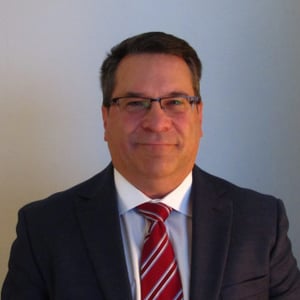
Executive Director and Vice President of Legal Studies , Washington Legal Foundation
Glenn G. Lammi is Executive Director and Vice President of Legal Studies at Washington Legal Foundation (WLF), a national public-interest law firm and policy center. He was a law clerk to WLF’s Legal Studies Division in 1990 and began in January 1992 as the division’s Chief Counsel. Glenn assumed leadership of the Legal Studies Division in 1995, and WLF’s Board appointed him Executive Director in 2021. In his Executive Director role, Glenn has a direct hand in fundraising, donor relations, communications, and the group’s strategic vision. As leader of its publishing and programs division, Glenn monitors legal-policy developments in federal and state courts, regulatory agencies, and legislatures, manages all aspects of WLF’s educational publications and its WLF Legal Pulse blog, and designs and moderates its programming. He is a member of the International Association of Defense Counsel. Glenn earned his bachelor’s degree from Pennsylvania State University in 1988 and graduated from American University’s Washington College of Law in 1991.
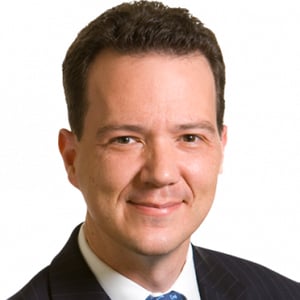
Senior Research Fellow in Anglo-American Relations, Margaret Thatcher Center for Freedom, The Heritage Foundation
Theodore "Ted" R. Bromund studies and writes on Anglo-American relations, U.S. and British relations with Europe and the European Union, America’s leadership role in the world, and international organizations and treaties as senior research fellow in The Heritage Foundation’s Margaret Thatcher Center for Freedom.
Bromund, who joined Heritage in 2008, previously served nine years as associate director of International Security Studies at Yale University, a center dedicated to the study and teaching of diplomatic history and grand strategy. He was a lecturer in history beginning in 1999, and in international affairs for the master of arts program beginning in 2004.
A columnist for Newsday, Forbes, and Great Britain’s Yorkshire Post, Bromund also writes regularly for National Review, The Weekly Standard, and FoxNews.com, and, in Britain, CapX. He has been interviewed or cited by BBC News, CBS News, Fox News Channel, CNN, Fox Business, Politifact, Radio Free Europe, The Christian Science Monitor, Time, and Financial Times, among others.
Besides contributing articles to scholarly journals, Bromund is the author of a chapter on former British Prime Minister Tony Blair and the fall of Iraqi dictator Saddam Hussein in the book The Blair Legacy: Politics, Policy, Governance, and Foreign Affairs (Palgrave Macmillan, 2009).
In 2013, Bromund was recognized by the Second Amendment Foundation as its Scholar of the Year for his analysis of the Arms Trade Treaty.
Bromund received his doctorate in history in 1999 from Yale. His thesis on Britain’s first application to the European Economic Community won the Samuel H. Beer Dissertation Prize from the American Political Science Association’s British Politics Group. In 2016, he received Heritage’s Joseph Shattan Award in recognition of the quality of his writing.
He is an adjunct professor of strategic studies in the Strategic Studies Program at the Johns Hopkins University School of Advanced International Studies, where he teaches courses on grand strategy. He also holds two master’s degrees in history from Yale as well as a bachelor of arts degree from Iowa’s Grinnell College.
A native of Wooster, Ohio, he currently resides in Washington, D.C.
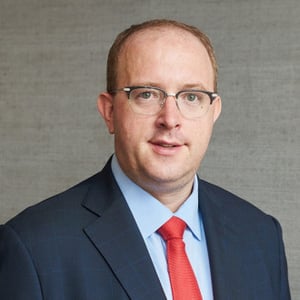
Partner, Sullivan & Cromwell LLP
Ben Perry practices primarily English law and advises on a wide range of corporate and finance transactions including cross-border mergers and acquisitions, private equity, leveraged and project finance and capital markets. He is recommended in the 2015, 2016, 2017 and 2018 editions of IFLR1000, the 2014, 2015, 2016 and 2017 editions of The Legal 500 United Kingdom, and the 2013 and 2014 editions of Super Lawyers for his M&A and private equity work.
Since 2010, Ben has overseen the development of a trainee solicitor programme in the London office, which welcomed its first trainee solicitors in 2013. Ben was named “Best Training Principal” at the LawCareers.Net Training and Recruitment Awards in 2014 and 2016. He is also a member of the Training Committee of the City of London Law Society.
Commentary Writer, The Washington Examiner
Tom Rogan is a commentary writer for the Washington Examiner. An American writer based in the Washington area, he grew up in London, England. He’s a former columnist for the National Review and Opportunity Lives, a former book reviewer for The Washington Free Beacon, and a Senior Fellow at The Steamboat Institute. Tom was educated at King’s College London, the School of Oriental and African Studies, and the College of Law, London.
Partner, Gibson, Dunn & Crutcher LLP
Randy M. Mastro, a partner in the New York office of Gibson, Dunn & Crutcher, is Co-Chair of the Firm’s Litigation Practice Group, which The American Lawyer has named “Litigation Department of the Year” three out of its last five competitions and a finalist five times in a row – both unprecedented achievements. He also serves on the Firm’s Management and Executive Committees.
Mr. Mastro routinely ranks among the nation’s leading litigators and trial lawyers in surveys of corporate counsel and other practitioners. Last year, Mr. Mastro was named “Trial Lawyer of the Year” by Chambers USA, a “Litigation Trailblazer” by The National Law Journal, and a “Trial Lawyer MVP” by Law360. Indeed, in each of the last four years, he has been nominated “Trial Lawyer of the Year” by Chambers USA or Benchmark or both, receiving top honors twice. The National Law Journal named him among the “100 Most Influential Lawyers in America,” recognizing him as one of the “100 lawyers in the United States who have shaped the legal world through their work,” and noting that “his ease in the courtroom, delivery of arguments and command of the law have made Randy one of the most in-demand attorneys in the country by big-name clients.” The American Lawyer cited him among “the best known, most-respected litigators in the country.” In Chambers USA, he is described as “one of the top litigators” and “trial lawyers” “in the country,” praised for his “exceptional public reputation” as a “tough, smart,” “outstanding” trial lawyer who is “in a class by himself,” “masters the facts of a case quicker than anyone I’ve ever met,” “delivers fantastically well in court,” “can take on anyone,” is “so persuasive,” and “has a great mind.” In The Legal 500—US Edition, he has been featured among the “Leading Trial Lawyers” in the country, with corporate counsel saying he is “immensely impressive,” “simply excellent,” “flawless,” “captivating,” “in a league of his own” in the courtroom, and “deserves an Academy Award” for “bringing a sense of drama and theater to his courtroom appearances.” Benchmark has described him as a “brilliant and effective litigator” who is “perennially revered” and “always brings a fresh perspective and will fight you to the end,” with peers noting, “You do not want to meet Randy down a dark alley, but you REALLY don’t want to meet him in a lighted courtroom,” and “I’ve seen him at work and I can only imagine that going against him must be like wrestling an alligator.” Benchmark also honored his achievements in “National Impact Cases” in 2015, 2017 and 2018. The New York Times has called him “the go-to lawyer for companies” suing the government, a “household name,” and a “fierce and combative litigator;” and The New Yorker has described him as a “merciless litigator,” “even by the pugilistic standards of the New York bar,” who “springs to life” and “is transfixing” in “the courtroom.”
Among many high-profile matters, Mr. Mastro won a two-month RICO trial barring the enforcement of a $9 billion Ecuadorian judgment against Chevron that The American Lawyer called “The Case of the Century.” Moreover, he won a month-long trial against the SEC, obtaining the dismissal of all charges against high-profile entrepreneur, Lynn Tilton, and thereby defeating the largest individual enforcement action the SEC ever brought before its in-house tribunal, where it typically wins 90 percent of the time. Mr. Mastro also led the successful effort to defeat New York City’s controversial West Side Stadium project, and he represented the State of New Jersey in conducting a high-profile investigation into allegations concerning the “Bridgegate” controversy. He has tried dozens of cases in private practice and as a federal prosecutor, and he has also argued more than 100 appeals in federal and state appellate courts throughout the country.
Mr. Mastro has represented such clients as AIG, Chevron, Amazon, Empire Blue Cross Blue Shield, Estee Lauder, Madison Square Garden, Cablevision, Dow Jones, Verizon, Dart, DraftKings, Home Depot, Daimler, Wynn, JPMorgan, GE Capital, Park Place/Caesar’s, Quest Diagnostics, IAC, Bear Stearns, Bank of New York Mellon, Empire Merchants, Edison Schools, Lynn Tilton, Peter Kalikow, Vornado, LeFrak Organization, Saks, Ziff Davis, UBS Financial Services, Octagon, Martina Hingis, Anna Kournikova, and Steffi Graf.
Before returning to Gibson Dunn in 1998, Mr. Mastro served as Mayor Rudolph Giuliani’s Chief of Staff and then as New York City’s Deputy Mayor for Operations. In that capacity, he was responsible for overseeing all of the City’s operating agencies and budget, and served as the Mayor’s chief liaison with elected officials. In the Mayor’s absence, he was authorized to act on the Mayor’s behalf. While in the Giuliani administration from 1994 to 1998, Mr. Mastro spearheaded City initiatives to remove organized crime from the Fulton Fish Market, private carting industry, and San Gennaro Festival. For two consecutive years, NY1-TV named Mr. Mastro one of City government’s “Winners of the Year,” and Manhattan File magazine featured him among the “45 Most Powerful New Yorkers 45 and Under.”
In the early 1990s, Mr. Mastro was a Gibson Dunn litigation partner. In 1990, he served as Associate Counsel on the Independent Counsel investigation of HUD Secretary Samuel Pierce. In 1991, he was appointed Special Master and Monitor of the assets of a Saudi tycoon implicated in the BCCI scandal.
From 1985 to 1989, Mr. Mastro served as Assistant United States Attorney and Deputy Chief of the Civil Division in the U.S. Attorney’s Office for the Southern District of New York, where he specialized in organized crime cases and spearheaded the federal government’s landmark racketeering suit that put the International Brotherhood of Teamsters into court supervision. Seven Days magazine named him one of “the 25 prosecutors and defenders other lawyers most admire, fear and talk about.” From 1982 to 1985, Mr. Mastro was a litigation associate at Cravath, Swaine & Moore, where he was part of the successful libel defense trial team in Westmoreland v. CBS. Before that, upon graduating cum laude from Yale College and the University of Pennsylvania Law School, where he was the school’s moot court champion, Mr. Mastro clerked for Justice Alan B. Handler of the New Jersey Supreme Court.
During his tenure as a federal prosecutor, Mr. Mastro received the Attorney General’s Distinguished Service Award, the John Marshall Award for Outstanding Legal Achievement, and the Director’s Award for Superior Performance, among other honors. Since then, he has been honored many times, receiving, for example, the Simon Rifkind Award from the Jewish Theological Seminary, the Civic Leadership Award from the Citizens Union of the City of New York, and the Lumbard Bowl, awarded annually by the U.S. Attorney for the Southern District of New York (in consultation with prior U.S. Attorneys) to distinguished alumni.
Mr. Mastro has taught as an adjunct professor at the University of Pennsylvania and Fordham Law Schools. He authored articles in the Federal Communications Law Journal, Fordham Law Review, University of Michigan Journal of Law Reform, and Seton Hall Law Review. His op-ed pieces have appeared in The New York Times, Daily News, and New York Post, and he also wrote for the Washington Post and Time. He co-authored the chapters, “White Collar Crime,” in Business and Commercial Litigation in Federal Courts, and, “Energy,” in Commercial Litigation in New York State Courts.
Mr. Mastro has been a member of the bars of New York, New Jersey, Pennsylvania, and many federal courts, including the U.S. Supreme Court. He chaired two New York City Charter Revision Commissions. In addition, Mr. Mastro serves as Chair of the Citizens Union of the City of New York, Co-Chair of the Hamptons International Film Festival, and Vice Chair of the Legal Aid Society of New York City, as well as on the Board of Overseers of the University of Pennsylvania Law School.
Professor, Jagiellonian University
Prof. Bryk is the director of the Institute of American Studies, Krakow Academy as well as a professor of constitutional law and history, political philosophy at the Krakow Academy and the Jagiellonian University in Krakow. He is also a visiting professor at such institutions as: Harvard University, Marquette University, Amherst College, University of New Hampshire, Institute of the European Studies, Vienna.
Vice President, Kathryn and Shelby Cullom Davis Institute for National Security and Foreign Policy, and the E. W. Richardson Fellow, The Heritage Foundation
James Jay Carafano, a leading expert in national security and foreign policy challenges, is the vice president of Heritage's Kathryn and Shelby Cullom Davis Institute for National Security and Foreign Policy and the E. W. Richardson Fellow.
Carafano is an accomplished historian and teacher as well as a prolific writer and researcher. His most recent publication is an e-book, “Surviving the End”, which addresses emergency preparedness. He also authored “Wiki at War: Conflict in a Socially Networked World” (Texas A&M University Press, 2012), a survey of the revolutionary impact of the Internet age on national security. He was selected from thousands to speak on cyber warfare at the 2014 South by Southwest (SXSW) Interactive Conference in Austin, Texas, the nation’s premier tech and social media conference.
Before assuming responsibility for Heritage’s entire defense and foreign policy team in December 2012, Carafano had served as deputy director of the Davis Institute as well as director of its Douglas and Sarah Allison Center for Foreign Policy Studies since 2009.
His recent research has focused on developing the national security required to secure the long-term interests of the United States -- protecting the public, providing for economic growth and preserving civil liberties.
He is editor of a book series, The Changing Face of War, which examines how emerging political, social, economic and cultural trends will affect the nature of armed conflict. From 2012 to 2014, he served on the Homeland Security Advisory Council convened by the secretary of the U.S. Department of Homeland Security.
Carafano, a 25-year Army veteran with a master’s and doctorate from Georgetown University, joined Heritage in 2003 as a senior research fellow in homeland security and missile defense. He worked with Kim R. Holmes, his predecessor as vice president and director of Davis Institute, to produce Heritage’s groundbreaking documentary film “33 Minutes: Protecting America in the New Missile Age.”
Carafano now directs Heritage's team of foreign and defense policy experts in three centers on the front lines of international affairs: the Allison Center, the Asian Studies Center, the Margaret Thatcher Center for Freedom, and the Center for National Defense.
Carafano also is president of a nonprofit organization, Esprit de Corps, which educates the public about veteran affairs. In this capacity he co-produced and co-wrote the documentary “Veteran Nation,” an official selection of the 2013 G.I. Film Festival.
Before coming to Heritage, Carafano was a senior fellow at the Center for Strategic and Budgetary Assessments, a Washington policy institute dedicated to defense issues.
In his Army career, Carafano rose to the rank of lieutenant colonel. He served in Europe, Korea and the United States. His assignments included head speechwriter for the Army Chief of Staff, the service's highest-ranking officer. Before retiring, Carafano was executive editor of Joint Force Quarterly, the Defense Department's premiere professional military journal.
A graduate of West Point, Carafano holds a master's degree and a doctorate from Georgetown University as well as a master's degree in strategy from the U.S. Army War College.
He is an adjunct professor at Georgetown University and serves as a visiting professor at National Defense University. He currently sits on the Board of Advisors for Daniel Morgan Academy. He previously served as an assistant professor at the U.S. Military Academy in West Point, N.Y., and as director of military studies at the Army's Center of Military History. He taught at Mount Saint Mary College in New York and was a fleet professor at the U.S. Naval War College.
He is the co-author with Paul Rosenzweig of Winning the Long War: Lessons from the Cold War for Defeating Terrorism and Preserving Freedom (2005). The authors, first to coin the term “the long war,” argued that a successful strategy requires a balance of prudent military and security measures, continued economic growth, zealous protection of civil liberties and prevailing in the “war of ideas” against terrorist ideologies.
Carafano also co-authored a textbook, Homeland Security (McGraw-Hill, second edition 2012), designed as a practical introduction to everyday life in the era of terrorism. The textbook addresses such key details as the roles of first responders and volunteers, family preparedness techniques and in-depth looks at weapons of mass destruction.
His other works include Private Sector/Public Wars: Contracting in Combat--Iraq, Afghanistan and Future Conflicts (2008); G.I. Ingenuity: Improvisation, Technology and Winning World War II (2006); Waltzing Into the Cold War (2002); and After D-Day (2000), a Military Book Club main selection.
As an expert on foreign affairs, defense, intelligence and homeland security issues, Carafano has testified many times before Congress.
He is a regular guest analyst for the major U.S. network and cable television news organizations, from ABC to Fox to MSNBC to PBS, as well as such outlets as National Public Radio, Pajamas TV, Voice of America and the History Channel. From SkyNews to Al Jazeera, he also has appeared on TV news programs originating in Australia, Austria, Canada, China, Estonia, France, Great Britain, Greece, Hong Kong, Ireland, Iran, Japan, Norway, Poland, Portugal, Russia, Spain, Sweden and Vietnam.
Carafano’s op-ed columns and commentary are published widely, including the Baltimore Sun, Boston Globe, New York Post, Philadelphia Inquirer, USA Today and Washington Times in addition to Forbes.
He served on the board of trustees of the Marine Corps University Foundation and advisory boards for the West Point Center of Oral History, the Hamilton Society, the Spirit of America, and the Operation Renewed Hope Foundation, which serves homeless veterans. He formerly was a senior fellow at George Washington University's Homeland Security Policy Institute. He also previously served on the congressionally-mandated Advisory Panel on Department of Defense Capabilities for Support of Civil Authorities, the National Academy's Board on Army Science and Technology and the Department of the Army Historical Advisory Committee.
In 2005, he received Heritage's prestigious W. Glenn and Rita Ricardo Campbell Award. The honor goes to the staff member determined to have made “an outstanding contribution to the analysis and promotion of the free society.”
Associate Professor, Catholic University of America
Jakub Grygiel is an associate professor at the Catholic University of America (Washington, DC). In 2017-2018 he was a senior advisor to the Secretary of State in the Office of Policy Planning working on European affairs. Previously, he was a Senior Fellow at the Center for European Policy Analysis and on the faculty of SAIS-Johns Hopkins University in Washington DC. He is the author of Return of the Barbarians (Cambridge University Press, 2018), Great Powers and Geopolitical Change (JHU Press, 2006), and co-author with Wess Mitchell of The Unquiet Frontier (Princeton University Press, 2016). His writings on international relations and security studies have appeared in Foreign Affairs, The American Interest, Security Studies, Journal of Strategic Studies, Orbis, Commentary, Parameters, as well as several U.S. and foreign newspapers. He earned a Ph.D., M.A. and an MPA from Princeton University, and a BSFS Summa Cum Laude from Georgetown University.

Laurence A. Tisch Professor of Law and Director, Classical Liberal Institute, New York University School of Law; Senior Fellow, The Civitas Institute, University of Texas at Austin
Richard A. Epstein is the inaugural Laurence A. Tisch Professor of Law at NYU School of Law. Prior to his joining the faculty, he was a visiting law professor at NYU from 2007 through 2009. He served as the Peter and Kirstin Bedford Senior Fellow at the Hoover Institution from 2000 to 2024. Since 2024 to the present he is a senior lecturer at the Civitas Institute at the University of Texas—Austin. Epstein is also the James Parker Hall Distinguished Service Professor of Law Emeritus and a senior lecturer at the University of Chicago. His initial law school appointment was at the University of Southern California from 1968 to 1972. Epstein received an LL.D., h.c. from the University of Ghent, 2003. He has been a member of the American Academy of Arts and Sciences since 1985 and was a Senior Fellow of the Center for Clinical Medical Ethics at the University of Chicago Division of Biological Sciences, also from 1983. to 2022 He served as editor of the Journal of Legal Studies from 1981 to 1991, and of the Journal of Law and Economics from 1991-2001. From 2001 to 2010 he was a director of the John M. Olin Program in Law and Economics at the University of Chicago.
His newest book, The Myth of Birthright Citizenship: What the Fourteenth Amendment Really Says was published in 2026 (Encounter Books). Prior to that he has published many books including, The Dubious Morality of the Modern Administrative State (Roman & Littlefield 2020).Earlier he published th Classical Liberal Constitution: The Uncertain Quest for Limited Government (Harvard 2014) iHis previous books include Design for Liberty: Private Property, Public Administration and the Rule of Law (Harvard 2011); The Case Against the Employee Free Choice Act (Hoover 2009); Supreme Neglect: How to Revive the Constitutional Protection of Property Rights (Oxford 2008); Antitrust Decrees in Theory and Practice: Why Less is More (AEI 2007); Overdose: How Excessive Government Regulation Stifles Pharmaceutical Innovation (Yale University Press. 2006); How Progressives Rewrote the Constitution (Cato 2006); Cases and Materials on Torts (Aspen Law & Business; 8th ed. 2004); Skepticism and Freedom: A Modern Case for Classical Liberalism (University of Chicago, 2003); Torts (Aspen Law & Business 1999); Principles for a Free Society: Reconciling Individual Liberty with the Common Good (Perseus Books, 1998): Mortal Peril: Our Inalienable Rights to Health Care (Addison-Wesley, 1997); Simple Rules for a Complex World (Harvard, 1995); Bargaining With the State (Princeton, 1993); Forbidden Grounds: The Case Against Employment Discrimination Laws (Harvard , 1992); Takings: Private Property and the Power of Eminent Domain (Harvard, 1985); and Modern Products Liability Law (Greenwood Press, 1980). He has also edited(with Catherine M. Sharkey) Cases and Materials on the Law of Torts (10th edition 2012).
Professor Epstein has written numerous articles on a wide range of legal and interdisciplinary subjects. He has taught courses in administrative law, antitrust law, civil procedure, communications, constitutional law, contracts, corporations, criminal law, employment discrimination law, environmental law, food and drug law health law and policy, legal history, labor law, property, real estate development and finance, jurisprudence, labor law; land use planning, patents, individual, estate and corporate taxation, Roman Law; torts, and workers' compensation.
Professor Epstein also writes a regular column for Civitas Institute, which also sponsors his podcast, The Libertarian with Charles C.W. Cooke, and Law Talk, with Cooke and John Yoo. He also does a podcast with John Batchelor. And appears regularly on the Freedom File with Judge Andrew Napolitano.
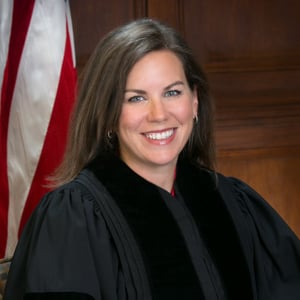
Judge, United States Court of Appeals, Eleventh Circuit
Britt C. Grant is a judge on the U.S. Court of Appeals for the Eleventh Circuit. Judge Grant was appointed to the federal bench in August 2018 after serving as a Justice on the Supreme Court of Georgia. Prior to her judicial appointment, she served as the Solicitor General of Georgia and practiced in the Washington, D.C. office of Kirkland & Ellis. Upon graduation from law school, Judge Grant served as a law clerk to then-Judge Brett M. Kavanaugh of the U.S. Court of Appeals for the District of Columbia Circuit. She earned her J.D., with distinction, from Stanford Law School, where she was the Co-Founder of the Stanford National Security and the Law Society, and the President of the Stanford Law chapter of the Federalist Society. Before enrolling in law school, Judge Grant served in The White House in a variety of domestic policy roles as well as on the staff of Congressman Nathan Deal. Judge Grant earned her B.A., summa cum laude, from Wake Forest University, where she was inducted into Phi Beta Kappa. She now lives in Atlanta, Georgia with her husband and three children.

Maurice and Hilda Friedman Professor of Law, Columbia Law School; CEO, New Civil Liberties Alliance
Philip Hamburger is the Maurice and Hilda Friedman Professor of Law at Columbia Law School, and Chief Executive Officer at the New Civil Liberties Alliance. Before coming to Columbia, he was the John P. Wilson Professor at the University of Chicago Law School.
He writes on constitutional law and its history—with particular emphasis on religious liberty, freedom of speech and the press, judicial office, administrative power, and unconstitutional conditions.
His books are Separation of Church and State (Harvard 2002), Law and Judicial Duty (Harvard 2008), Is Administrative Law Unlawful? (Chicago 2014), The Administrative Threat (Encounter 2017), and Liberal Suppression: Section 501(c)(3) and the Taxation of Speech (Chicago 2018). A forthcoming book is Purchasing Submission: Conditions, Power, and Freedom (Harvard 2021).
He is a member of the American Academy of Arts and Sciences, and he has served on the board of directors of the American Society for Legal History. He has twice received the Sutherland Prize for the most significant contribution to English legal history, and has been awarded the Henry Paolucci - Walter Bagehot Book Award, the Hayek Book Prize, and the Bradley Prize.
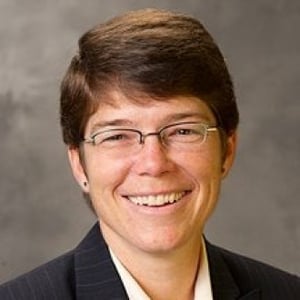
Professor of Law, Rutgers Law School
Professor Kovacs teaches Administrative Law, Natural Resources Law, Environmental Law, and Property.
Prior to joining the Rutgers faculty in 2011, she spent twelve years in the U.S. Department of Justice’s Environment and Natural Resources Division, Appellate Section. She wrote more than 100 appellate and Supreme Court briefs and argued more than sixty appeals in all thirteen of the federal circuit courts of appeals, twice en banc, and in three state supreme courts. Her cases covered a wide range of areas including environmental, administrative, and constitutional law, both civil and criminal. Among other cases, Professor Kovacs defended the Navy's use of low frequency active sonar and the display of a Latin cross in the Mojave National Preserve; she prosecuted crimes under the Bald and Golden Eagle Protection Act; she pursued a claim to compensate the Oneida Indians for the State of New York's unlawful purchase of their land in the early 19th Century; and she defended the Endangered Species Act against Fifth Amendment takings claims.
In 2016, Professor Kovacs was a political appointee serving as Senior Advisor to the Director of the Bureau of Land Management in the U.S. Department of the Interior. She also spent three years litigating primarily constitutional claims as an attorney in the Baltimore City Law Department, and she clerked for the Honorable Robert C. Murphy, former Chief Judge of the Maryland Court of Appeals. Professor Kovacs is a cum laude graduate of Yale University and the Georgetown University Law Center.
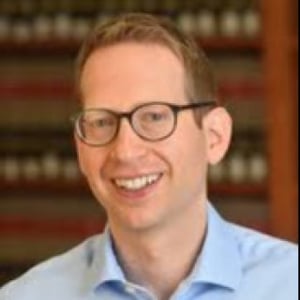
Professor of Law, UCLA Law
Jon Michaels is Professor of Law at UCLA School of Law. His scholarly and teaching interests include constitutional law, administrative law, national security law, the separation of powers, presidential power, regulation, bureaucracy, and privatization.
Michaels (view CV) is a graduate of Williams College, Oxford University, where he was a Marshall Scholar, and Yale Law School, where he served as an articles editor for the Yale Law Journal. Michaels clerked first for Judge Guido Calabresi of the U.S. Court of Appeals for the Second Circuit and then for Justice David Souter of the U.S. Supreme Court. Immediately prior to his appointment at UCLA, Michaels worked as an associate in Arnold & Porter’s National Security Law and Public Policy Group in Washington, DC.
A two-time winner of the American Constitution Society’s Cudahy Award for scholarly excellence in administrative law, Michaels is a frequent legal affairs commentator for national and local media outlets and contributes regularly to the Take Care blog.
His book, Constitutional Coup: Privatization’s Threat to the American Republic, was published by Harvard University Press in October 2017. (Read the Introduction. Read reviews and interviews.)
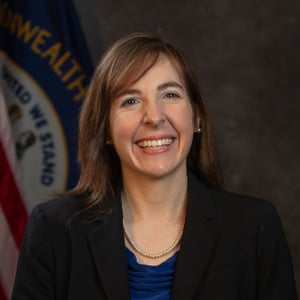
Auditor of Public Accounts, Commonwealth of Kentucky
Allison Ball is the 48th Auditor of Public Accounts for the Commonwealth of Kentucky. Prior to being elected Auditor, Ball served two terms as Kentucky State Treasurer. Before that, she spent four years as Assistant Floyd County Attorney, prosecuting child abuse and juvenile delinquency cases. When first appointed to office, Ball was the youngest statewide elected official in the country.
Ball has a rich Kentucky history; her family has been in Eastern Kentucky since the 1790s, and she holds a degree from the University of Kentucky College of Law.
She is a fierce watchdog for Kentucky taxpayer dollars. As Auditor, Ball protects against waste, fraud, and abuse.
As Treasurer, she returned more unclaimed property than any Treasurer in state history and established a savings and investment program for people with disabilities. She has been a national leader for improved financial literacy; Ball established the Kentucky Financial Empowerment Commission, and she successfully advocated for a financial literacy high school graduation requirement.
A Floyd County native, Ball and her husband, Dr. Asa James Swan, have two children, Levi and Marigold. Upon birth of her son, she was the first Kentucky Constitutional Officer to give birth while in office.
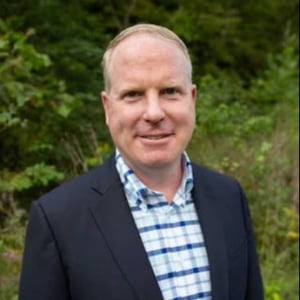
Bilby Law PLLC
Joe Bilby is a proud veteran of the U.S. Marine Corps. A graduate of the University of Virginia and the University of Kentucky College of Law, Joe began his legal career working in at a large law firm in Louisville and focusing on workplace law, business litigation, and trust/estate litigation.
Having spent seven years serving as general counsel to the Kentucky Department of Agriculture, Joe has extensive experience serving Kentucky’s farmers and agribusinesses.
Joe especially enjoys working with churches and religious organizations.
Joe provides affordable estate planning services for individuals and families across Kentucky.
He also has a specialty practice that serves employers across the nation who rely on the H-2A and H-2B temporary visa programs to meet their workforce needs.
Joe lives in central Kentucky with his wife and two children.
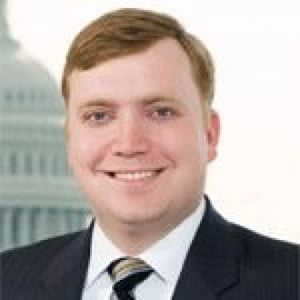
Solicitor General of Kentucky
Matt Kuhn serves as the Solicitor General of Kentucky. As Solicitor General, he oversees the office's civil and criminal appellate litigation and supervises the office's filing of amicus briefs. Since joining the Attorney General's office, he has argued in the Supreme Court of the United States, the United States Court of Appeals for the Sixth Circuit, and the Supreme Court of Kentucky. Before joining the Attorney General's office, he served as Chief Deputy General Counsel to the Governor of Kentucky. He also worked in private practice at Jones Day in Washington, D.C. and Stoll Keenon Ogden in Louisville, and served as a law clerk for Judge Raymond Gruender of the United States Court of Appeals for the Eighth Circuit. He is a graduate of Furman University and Columbia Law School.
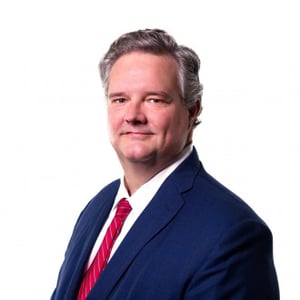
Partner, Dinsmore & Shohl LLP
Eric has more than two decades of experience providing strategic counsel to a broad range of industries, organizations, candidates and public officials on law and public policy, including campaign and issue advocacy, government ethics and regulatory compliance. He advises clients how to make their voices heard by policymakers, through engagement in the policymaking process and through direct and grassroots advocacy in support of issues and candidates.
He has extensive experience with complex litigation business disputes and appellate matters. He brought a case on behalf of the Commonwealth that resulted in the largest judgment in Kentucky history, in the amount of $870 million against an unregulated offshore Internet gambling operation. Eric also advises clients in industries such distilled spirits, breweries and energy industry clients on corporate and transactional matters, and before regulatory agencies on licensing, enforcement and compliance matters.
Eric was counsel for U.S. Senate Majority Leader Mitch McConnell’s 2014 reelection effort. He is currently general counsel to the Republican Party of Kentucky and the Kentucky House Republican Leadership. He has advised gubernatorial campaigns in Kentucky, Ohio, and other states, and legislative caucuses across the nation, including Kentucky, Ohio, Pennsylvania and West Virginia. Eric serves as counsel to multiple campaigns, super PACs, trade associations and non-profit organizations, including one spending over $10 million in support of Senator Ted Cruz in the 2016 Presidential primary.
With his experience and knowledge of how policy is made and regulators make decisions, Eric is effective at counseling businesses and industries how to cut through the red tape and obtain a positive result for their operations.
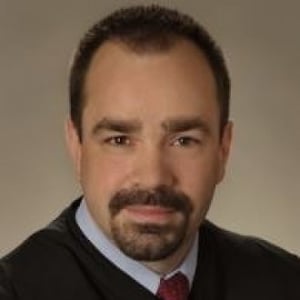
Judge, Commonwealth Court of Pennsylvania
Kevin Brobson is a Justice on the Pennsylvania Supreme Court. He was elected on November 4, 2021, effective January 2022. His current term will expire in January 2032.
Attorney, Law Offices of Linda A. Kerns, LLC
Judge, Superior Court of Pennsylvania
Victor P. Stabile is a judge on the Pennsylvania Superior Court. He was elected to bench on November 5, 2013, and took office in January 2014 for a term that expires in January 2024.
Shareholder, Littler Mendelson PC
Matthew J. Hank practices employment law, including issues arising under the common law and various statutes:
He particularly focuses on disputes concerning (1) wage and hour class actions (including cases involving independent contractor relationships, overtime claims, and payroll debit cards) and (2) noncompetition agreements and trade secrets.
Matthew served as a law clerk to the Hon. Daniel Manion of the U.S. Court of Appeals for the Seventh Circuit and the Hon. Paul V. Gadola of the U.S. District Court for the Eastern District of Michigan. Before attending law school, he served for four years on active duty in the United States Army as an Armor officer.

Compelled Decryption
Orin S. Kerr, Laurent Sacharoff
Encryption, once the domain of intelligence operatives, is now ubiquitous. Nearly every personal electronic device can now be...
Third Party Litigation Financing: A Distorting or Reinforcing Practice?
Brian T. Fitzpatrick, Andrew Grossman, Erin M. Hawley, Dean Reuter, Luther Johnson Strange
On June 11, 2019, the Federalist Society's Litigation Practice Group hosted a panel titled "Third...
Climate Change Public Nuisance Lawsuits
Bill McCollum
On April 26, 2019, The Federalist Society's Palm Beach Lawyers Chapter hosted an event on...
Percolating in Washington State: Export-Terminal Permit-Denial Suit Implicates Federalism and Foreign Commerce
Donald J. Kochan, Glenn G. Lammi
When state regulators block approval of construction projects, disappointed businesses routinely challenge the decision in...
Understanding Brexit – Facts, Law, Policy, and Principle
Ted R. Bromund, Ben Perry, Tom Rogan
On March 29, Britain will exit the European Union. That simple statement raises a seemingly...
A Texas Trade Secrets Case May Have Broader Implications for U.S. Companies
Randy M. Mastro
Last year, a jury in Texas awarded California-based startup HouseCanary a $706 million verdict, one...
Poland: Renegade or Exemplar?
Andrzej Bryk, James Jay Carafano, Jakub Grygiel
Poland holds a position of economic, strategic, and political importance in Europe. While some former...
Showcase Panel I: What is Regulation For?
Richard A. Epstein, Britt C. Grant, Philip A. Hamburger, Kathryn Kovacs, Jon D. Michaels
The administrative state, with roots over a century old, was founded on the premise that...
Kentucky Constitution: Features, Quirks, and Practice Pointers
Allison Joy Ball, Joe Bilby, Matthew Kuhn, David Eric Lycan
On October 29, 2018, the Federalist Society's Kentucky lawyers chapters hosted the second annual Kentucky...
Panel 2: Hot Topics in Pennsylvania Courts
P. Kevin Brobson, Linda A. Kerns, Victor P. Stabile, Matthew J. Hank
On October 19, 2018, the Federalist Society's Pennsylvania chapters hosted the 2018 Pennsylvania Chapters Conference...