
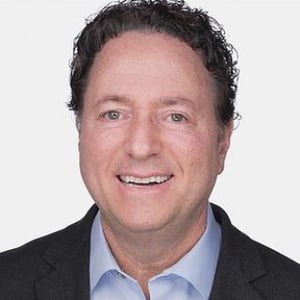
President, Committee for Justice
Curt Levey is President of the Committee For Justice, an organization devoted to advancing constitutionally limited government and individual liberty. He is a veteran of Supreme Court and other judicial confirmation battles and serves on the executive committee of the Federalist Society's Civil Rights Practice Group.
After graduating Harvard Law School with honors and clerking for the U.S. Court of Appeals for the Sixth Circuit, Mr. Levey served as Director of Legal & Public Affairs at the Center for Individual Rights (CIR). There he worked on landmark Supreme Court cases, including the University of Michigan affirmative action cases and the successful constitutional challenge to the Violence Against Women Act. After CIR, Mr. Levey headed the Title IX policy group at the U.S. Department of Education.
Before attending law school, Mr. Levey earned an M.S. and B.A. in computer science from Brown University and worked in the field of artificial intelligence (AI). He invented a new type of AI technology, for which he wrote a successful patent application.
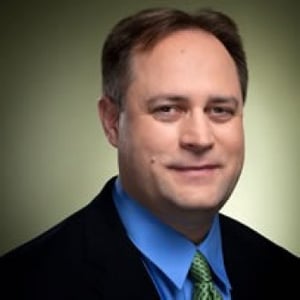
Vice President, Cornerstone Research, Economic and Financial Consulting and Expert Testimony
Greg Eastman analyzes complex economic and accounting issues related to tax, mergers, securities and financial products, and healthcare. He has extensive trial and arbitration expertise and directs large teams supporting multiple experts. As a testifying expert, Dr. Eastman has addressed profitability, cost efficiencies, class certification, valuation and damages, and unjust enrichment issues. He has provided testimony before the Commodity Futures Trading Commission, the Department of Justice (DOJ), and the Federal Bureau of Investigation. Dr. Eastman has more than twenty years of experience consulting in a range of industries, including electric utilities, energy, financial institutions, insurance, medical services, nuclear utilities, oil, private equity, and transportation.
In his tax controversy work, Dr. Eastman has analyzed the economic substance and business purpose of transactions. He has reviewed structured transactions, assessed a multinational company’s debt capacity, analyzed guarantee fee payments, and evaluated the risk management functions of a multinational financial institution. In addition, he has worked on cases involving transfer pricing, the relative value of software components, and the manufacturing and Food and Drug Administration approval processes for medical devices.
Dr. Eastman’s tax accounting work has covered stock option awards, uncertain tax benefits, deferred tax assets, and net operating loss carryforwards. He supported experts on tax accounting and poison pill issues in the Selectica, Inc. v. Versata Enterprises, Inc., and Trilogy, Inc. trial in the Delaware Court of Chancery.
Dr. Eastman has been retained as a testifying expert to assess merger-specificity and verifiability of claimed efficiencies in multiple industries. He helped to estimate the profitability of the individual commercial health insurance business in the Aetna–Humana merger. Dr. Eastman has also been retained to perform profitability analyses and to assess whether firms are failing and their assets are likely to exit the relevant market. He was the DOJ’s testifying expert in United States v. EnergySolutions Inc. et al.
Dr. Eastman has led a variety of consulting projects involving accounting and financial reporting issues. In these matters, he has evaluated the adequacy of disclosures, fair value and asset impairments, materiality, goodwill, accounting for loan losses, concentrations of risk, revenue recognition, and other issues pertaining to whether financial statements were prepared in accordance with generally accepted accounting principles (GAAP) and whether audit and review procedures complied with generally accepted auditing standards (GAAS).
Dr. Eastman has conducted liability and damages analyses in securities class actions, including In re Vivendi Securities Litigation, In re Omnicom Securities Litigation, and In re Williams Securities Litigation. In financial cases, he has analyzed issues related to debt and equity securities, derivative contracts, mutual fund trading, cost of capital, real estate investments, private equity investments, and valuation. He worked with experts on insider trading and failure to report transactions in the SEC v. Samuel E. Wyly et al. trial. Dr. Eastman also supported multiple experts in a trial involving risks and investment returns in a large portfolio of high-yield bonds.
Dr. Eastman has performed drug valuations in multiple contexts, including in appraisal and breach of contract cases. As the testifying expert in an international arbitration, he estimated damages related to allegations of breach of contract to market a drug. He has also analyzed medical devices, cord blood services, cancer treatment services, and other healthcare-related industries. Dr. Eastman worked on firm profitability and cost efficiencies issues in the Aetna–Humana and Anthem–Cigna proposed mergers. He was retained as a testifying expert to analyze cost efficiencies and failing firm defenses in a hospital and physician practice merger.
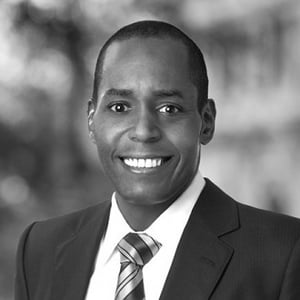
Partner, White & Case
Mr. Grannon helps clients with antitrust matters, including civil and criminal defense as well as counseling for mergers and acquisitions and settlements of pharmaceutical patent litigation. Since 2001, he also has helped clients with concerns under the Foreign Corrupt Practices Act (FCPA) and other anti-corruption issues. Mr. Grannon began at the firm as a summer associate in 1997 and has been a partner since 2007.
A former prosecutor, Mr. Grannon returned to White & Case after serving as Counsel to the Assistant Attorney General in charge of the Antitrust Division of the United States Department of Justice (DOJ) in 2003-04, where he helped formulate US antitrust enforcement policy and manage the civil and criminal investigations and court cases brought by the Antitrust Division. He ended his DOJ service with a detail as a Special Assistant US Attorney in the District of Columbia, trying twenty bench and jury trials as lead counsel.
In private practice, Mr. Grannon has argued on behalf of clients in district courts across the country, including a successful verdict for defendants in an antitrust jury trial, argued appeals in the Eleventh and DC Circuits, and worked on eleven matters before the US Supreme Court, ten of which were antitrust cases.
Mr. Grannon clerked for the Honorable Walter K. Stapleton, US Court of Appeals for the Third Circuit, 1999-2000, and the Honorable Federico A. Moreno, US District Court for the Southern District of Florida, 1998-99.
He is a member of the Legal Policy Board of the Washington Legal Foundation.
Mr. Grannon served a three-year term, 2015-18, on the American Bar Association's Standing Committee on Amicus Curiae Briefs.
He previously served as Vice-Chair of the Health Care and Pharmaceuticals Committee of the American Bar Association Section of Antitrust Law, and prior to that as Vice-Chair of its Compliance and Ethics Committee.
Mr. Grannon has served as an adjunct faculty member at the Howard University School of Law, where he taught a seminar on advanced antitrust law.
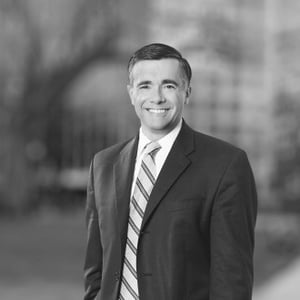
Partner,, White & Case LLP
George Paul is an antitrust lawyer who advises clients on a range of international competition issues, with a particular focus on merger clearances, cartel defense and litigation.
As reported by The Legal 500 US, clients said George's "'depth of experience, ability to make the complex simple and business-oriented and succinct approach' make him 'an in-house lawyer's dream.'" Further acclaimed as a "world-class" practitioner, George's reputation is based on his "impressive track record", spanning more than 20 years. He has played a key role in numerous high-profile cases, which have often involved multiple competition agencies across the globe. George provides clarity to clients in a complex area that requires highly detailed and technical knowledge, and where regulations change rapidly and can even conflict across jurisdictions.
Merger Clearances
George is regularly involved in antitrust counseling and litigation arising from US and cross-border mergers and joint ventures. He advises clients on merger control filings for cross-border transactions and coordinates their HSR and international filings efforts. George has handled complex antitrust issues across an array of industries, including retail/consumer goods, healthcare and medical devices, paper and pulp, petrochemicals, broadcasting and electronics. His work on complex, cutting edge matters has received Deal of the Year recognition by numerous publications, such as the Financial Times, the American Lawyer Legal Awards, The Deal and M&A Advisor.
George has particular experience advising clients on global transactions with multiple merger clearance requirements. He is co-editor of Worldwide Merger Notification Requirements, a comprehensive survey of merger notification and control laws across 217 jurisdictions, and regularly writes and speaks on antitrust and competition law matters.
Cartels
George regularly counsels companies and individuals on criminal antitrust matters before enforcement agencies around the world, including the US Department of Justice (DOJ), US Commodity Futures Trading Commission, the EU, Australia, Japan and South Korea. He was counsel to Stolt-Nielsen in its landmark action against the DOJ, which revoked Stolt's amnesty and indicted the company and its senior executives. The case was the first time a court enforced an antitrust amnesty agreement.
Litigation/Anticompetitive Practices
George has represented clients before the competition agencies as plaintiffs and defendants in federal and state courts in the US. He has been involved in a number of US agency merger challenges, and has successfully defended clients in non-merger investigations related to alleged market allocation, consumer protection requirements and monopolization. George has represented overseas manufacturers against charges of an alleged global price-fixing cartel, and has also represented clients in numerous antitrust class action proceedings.
Vice President, Cornerstone Research, Economic and Financial Consulting and Expert Testimony
Greg Eastman analyzes complex economic and accounting issues related to tax, mergers, securities and financial products, and healthcare. He has extensive trial and arbitration expertise and directs large teams supporting multiple experts. As a testifying expert, Dr. Eastman has addressed profitability, cost efficiencies, class certification, valuation and damages, and unjust enrichment issues. He has provided testimony before the Commodity Futures Trading Commission, the Department of Justice (DOJ), and the Federal Bureau of Investigation. Dr. Eastman has more than twenty years of experience consulting in a range of industries, including electric utilities, energy, financial institutions, insurance, medical services, nuclear utilities, oil, private equity, and transportation.
In his tax controversy work, Dr. Eastman has analyzed the economic substance and business purpose of transactions. He has reviewed structured transactions, assessed a multinational company’s debt capacity, analyzed guarantee fee payments, and evaluated the risk management functions of a multinational financial institution. In addition, he has worked on cases involving transfer pricing, the relative value of software components, and the manufacturing and Food and Drug Administration approval processes for medical devices.
Dr. Eastman’s tax accounting work has covered stock option awards, uncertain tax benefits, deferred tax assets, and net operating loss carryforwards. He supported experts on tax accounting and poison pill issues in the Selectica, Inc. v. Versata Enterprises, Inc., and Trilogy, Inc. trial in the Delaware Court of Chancery.
Dr. Eastman has been retained as a testifying expert to assess merger-specificity and verifiability of claimed efficiencies in multiple industries. He helped to estimate the profitability of the individual commercial health insurance business in the Aetna–Humana merger. Dr. Eastman has also been retained to perform profitability analyses and to assess whether firms are failing and their assets are likely to exit the relevant market. He was the DOJ’s testifying expert in United States v. EnergySolutions Inc. et al.
Dr. Eastman has led a variety of consulting projects involving accounting and financial reporting issues. In these matters, he has evaluated the adequacy of disclosures, fair value and asset impairments, materiality, goodwill, accounting for loan losses, concentrations of risk, revenue recognition, and other issues pertaining to whether financial statements were prepared in accordance with generally accepted accounting principles (GAAP) and whether audit and review procedures complied with generally accepted auditing standards (GAAS).
Dr. Eastman has conducted liability and damages analyses in securities class actions, including In re Vivendi Securities Litigation, In re Omnicom Securities Litigation, and In re Williams Securities Litigation. In financial cases, he has analyzed issues related to debt and equity securities, derivative contracts, mutual fund trading, cost of capital, real estate investments, private equity investments, and valuation. He worked with experts on insider trading and failure to report transactions in the SEC v. Samuel E. Wyly et al. trial. Dr. Eastman also supported multiple experts in a trial involving risks and investment returns in a large portfolio of high-yield bonds.
Dr. Eastman has performed drug valuations in multiple contexts, including in appraisal and breach of contract cases. As the testifying expert in an international arbitration, he estimated damages related to allegations of breach of contract to market a drug. He has also analyzed medical devices, cord blood services, cancer treatment services, and other healthcare-related industries. Dr. Eastman worked on firm profitability and cost efficiencies issues in the Aetna–Humana and Anthem–Cigna proposed mergers. He was retained as a testifying expert to analyze cost efficiencies and failing firm defenses in a hospital and physician practice merger.
Partner, White & Case
Mr. Grannon helps clients with antitrust matters, including civil and criminal defense as well as counseling for mergers and acquisitions and settlements of pharmaceutical patent litigation. Since 2001, he also has helped clients with concerns under the Foreign Corrupt Practices Act (FCPA) and other anti-corruption issues. Mr. Grannon began at the firm as a summer associate in 1997 and has been a partner since 2007.
A former prosecutor, Mr. Grannon returned to White & Case after serving as Counsel to the Assistant Attorney General in charge of the Antitrust Division of the United States Department of Justice (DOJ) in 2003-04, where he helped formulate US antitrust enforcement policy and manage the civil and criminal investigations and court cases brought by the Antitrust Division. He ended his DOJ service with a detail as a Special Assistant US Attorney in the District of Columbia, trying twenty bench and jury trials as lead counsel.
In private practice, Mr. Grannon has argued on behalf of clients in district courts across the country, including a successful verdict for defendants in an antitrust jury trial, argued appeals in the Eleventh and DC Circuits, and worked on eleven matters before the US Supreme Court, ten of which were antitrust cases.
Mr. Grannon clerked for the Honorable Walter K. Stapleton, US Court of Appeals for the Third Circuit, 1999-2000, and the Honorable Federico A. Moreno, US District Court for the Southern District of Florida, 1998-99.
He is a member of the Legal Policy Board of the Washington Legal Foundation.
Mr. Grannon served a three-year term, 2015-18, on the American Bar Association's Standing Committee on Amicus Curiae Briefs.
He previously served as Vice-Chair of the Health Care and Pharmaceuticals Committee of the American Bar Association Section of Antitrust Law, and prior to that as Vice-Chair of its Compliance and Ethics Committee.
Mr. Grannon has served as an adjunct faculty member at the Howard University School of Law, where he taught a seminar on advanced antitrust law.
Partner,, White & Case LLP
George Paul is an antitrust lawyer who advises clients on a range of international competition issues, with a particular focus on merger clearances, cartel defense and litigation.
As reported by The Legal 500 US, clients said George's "'depth of experience, ability to make the complex simple and business-oriented and succinct approach' make him 'an in-house lawyer's dream.'" Further acclaimed as a "world-class" practitioner, George's reputation is based on his "impressive track record", spanning more than 20 years. He has played a key role in numerous high-profile cases, which have often involved multiple competition agencies across the globe. George provides clarity to clients in a complex area that requires highly detailed and technical knowledge, and where regulations change rapidly and can even conflict across jurisdictions.
Merger Clearances
George is regularly involved in antitrust counseling and litigation arising from US and cross-border mergers and joint ventures. He advises clients on merger control filings for cross-border transactions and coordinates their HSR and international filings efforts. George has handled complex antitrust issues across an array of industries, including retail/consumer goods, healthcare and medical devices, paper and pulp, petrochemicals, broadcasting and electronics. His work on complex, cutting edge matters has received Deal of the Year recognition by numerous publications, such as the Financial Times, the American Lawyer Legal Awards, The Deal and M&A Advisor.
George has particular experience advising clients on global transactions with multiple merger clearance requirements. He is co-editor of Worldwide Merger Notification Requirements, a comprehensive survey of merger notification and control laws across 217 jurisdictions, and regularly writes and speaks on antitrust and competition law matters.
Cartels
George regularly counsels companies and individuals on criminal antitrust matters before enforcement agencies around the world, including the US Department of Justice (DOJ), US Commodity Futures Trading Commission, the EU, Australia, Japan and South Korea. He was counsel to Stolt-Nielsen in its landmark action against the DOJ, which revoked Stolt's amnesty and indicted the company and its senior executives. The case was the first time a court enforced an antitrust amnesty agreement.
Litigation/Anticompetitive Practices
George has represented clients before the competition agencies as plaintiffs and defendants in federal and state courts in the US. He has been involved in a number of US agency merger challenges, and has successfully defended clients in non-merger investigations related to alleged market allocation, consumer protection requirements and monopolization. George has represented overseas manufacturers against charges of an alleged global price-fixing cartel, and has also represented clients in numerous antitrust class action proceedings.
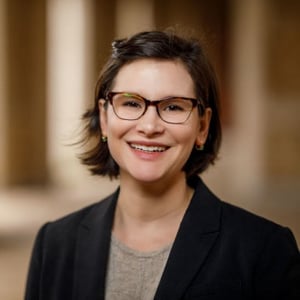
Associate Professor of Law, Notre Dame Law School
Sadie Blanchard teaches and writes about contracts and international business law. Her research examines how legal institutions interact with social forces to shape behavior, especially in markets. Before coming to Notre Dame 2018, she was the Fellow in Private Law at Yale Law School, a research fellow at the Max Planck Institute on International Procedural Law in Luxembourg, and a law clerk to The Hon. Charles N. Brower of the Iran-United States Claims Tribunal, in his capacity as an independent arbitrator in foreign direct investment disputes. She also practiced law in Paris in the international arbitration group of King & Spalding.
Blanchard earned a B.A. in economics summa cum laude from Louisiana State University and a J.D. from Yale Law School.

Tazewell Taylor Professor of Law and William H. Cabell Research Professor, William & Mary Law School
Jonathan H. Adler joined the William & Mary law faculty as the Tazwell Taylor Professor of Law and William H. Cabell Research Professor in 2025. Prior to joining the faculty, he was the inaugural Johan Verheij Memorial Professor of Law and the founding Director of the Coleman P. Burke Center for Environmental Law at the Case Western Reserve University School of Law.
Professor Adler is the author or editor of seven books, including Climate Liberalism: Perspectives on Liberty, Property and Pollution (Palgrave, 2023), Marijuana Federalism: Uncle Sam and Mary Jane (Brookings Institution Press, 2020), Business and the Roberts Court (Oxford University Press, 2016) and Rebuilding the Ark: New Perspectives on Endangered Species Act Reform (AEI Press, 2011).
His articles have appeared in publications ranging from the Harvard Environmental Law Review and Yale Journal on Regulation to the Wall Street Journal, New York Times, and Washington Post. He has testified before Congress a dozen times, and his work has been cited in the U.S. Supreme Court. A 2024 study identified Professor Adler as the seventh most cited legal academic in administrative and environmental law from 2019 to 2023.
Professor Adler is a contributing editor to Civitas Outlook and a regular contributor to the popular legal blog, The Volokh Conspiracy. A regular commentator on constitutional and regulatory issues, he has appeared on numerous radio and television programs, ranging from the PBS Newshour and National Public Radio to the Fox News Channel and Entertainment Tonight.
Professor Adler is a senior fellow at the Property & Environment Research Center in Bozeman, Montana. In 2018, Professor Adler was elected to membership in the American Law Institute and helped co-found the organization Checks and Balances. In 2024, Professor Adler was appointed a public member of the Administrative Conference of the United States.
Professor Adler clerked for the Honorable David B. Sentelle on the U.S. Court of Appeals for the District of Columbia Circuit.
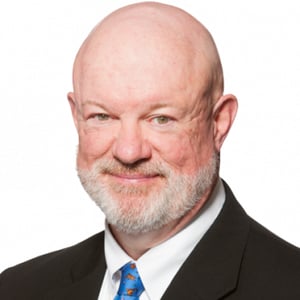
Senior Legal Fellow, the Meese Institute for the Rule of Law, Advancing American Freedom
Paul J. Larkin is a Senior Legal Fellow in the Meese Institute for the Rule of Law at Advancing American Freedom. Paul has held various positions in the federal and state governments throughout his career, such as being an attorney in the Organized Crime and Racketeering Section of the Criminal Division at the U.S. Department of Justice, an Assistant to the Solicitor General in the Office of the Solicitor General at the U.S. Department of Justice, Special Agent-in-Charge and Acting Director of the Criminal Investigation Division at the Environmental Protection Agency, and a member of the Parole Abolition and Sentencing Reform Commission and of the Juvenile Justice Reform Commission in the Office of Virginia Governor George Allen.
He has also worked at Verizon Communications and two law firms in Washington, D.C. His current research is principally in the fields of drug policy, criminal justice policy, and administrative law and policy. He has published numerous articles in law and public policy journals, both in print and online.

Topics
Changing attitudes put police-union reform on the table
As we explained recently in the Sacramento Bee, many Americans have been stunned by the...
Courthouse Steps Decision Teleforum: Title VII Cases
TeleforumThe Antitrust "Failing Firm” Defense in the Wake of the COVID-19 Crisis
Greg Eastman, Eric Grannon, George L. Paul
Since 1930, the Supreme Court has recognized a failing firm defense to an otherwise unlawful...
COVID-19 and the 2020 Elections
GE Energy Power Conversion France v. Outokumpu Stainless - Post-Argument SCOTUScast
Sadie Rose Blanchard
On June 1, 2020, the U.S. Supreme Court issued its decision, in GE Energy Power...
Topics
A Fulfillment of Judicial Prophecy: The Clash Between Religious Liberty and Nondiscrimination Law Reaches the Supreme Court
Catholic Social Services (CSS) of Philadelphia has offered services to needy children and families since...
Book Review: Marijuana Federalism: Uncle Sam and Mary Jane
Jonathan H. Adler, Paul James Larkin
A majority of states have legalized the sale and possession of marijuana for medicinal purposes....
Aurelius Investment, LLC v. Puerto Rico - Post-Decision SCOTUScast
On June 1, 2020, the Supreme Court issued the decision in the case Aurelius Investment,...
Former Attorney General Meese Op-Ed on Fulton v. Philadelphia
Today, former Attorney General Ed Meese published an op-ed with Newsweek concerning a...
The Antitrust "Failing Firm” Defense in the Wake of the COVID-19 Crisis
Corporations, Antitrust, & Securities Practice Group Teleforum
Teleforum