

Senior Litigation Counsel, New Civil Liberties Alliance
Jacob Huebert is Senior Litigation Counsel at the New Civil Liberties Alliance. He previously served as President and Director of Litigation of the Liberty Justice Center, where he successfully litigated cases to protect constitutional rights, including the landmark Janus v. AFSCME case, in which the U.S. Supreme Court upheld government employees’ First Amendment right to choose for themselves whether to pay money to a union. Jacob was also previously a Senior Attorney at the Goldwater Institute, where he litigated cases on free speech, property rights, and the Second Amendment.
Jacob and his work have appeared in numerous national media outlets, including the Wall Street Journal, New York Times, and Fox News Channel. He is also the author of a book, Libertarianism Today.
Jacob holds a B.A. in economics from Grove City College and a J.D. from the University of Chicago Law School. After law school, he served as a clerk to Judge Deborah Cook of the U.S. Court of Appeals for the Sixth Circuit. Jacob has served as an adjunct law professor at several law schools, teaching courses in advanced appellate advocacy, the law of payments, legal writing, and jurisprudence. Before working in public interest law, Jacob was a litigator in private practice.
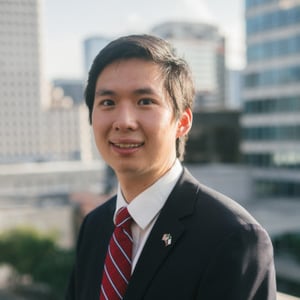
State District Judge, Austin, Texas
Cory Liu is a state district judge in Austin, Texas. He previously served as assistant general counsel to Texas Governor Greg Abbott. Mr. Liu clerked for Judge Andrew Oldham on the U.S. Court of Appeals for the Fifth Circuit and Judge Danny Boggs on the U.S. Court of Appeals for the Sixth Circuit. He was Editor-in-Chief of the Harvard Journal of Law & Public Policy and is a graduate of Harvard Law School and the University of Chicago.
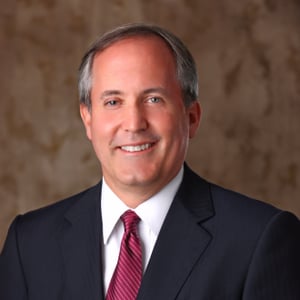
State Attorney General, Texas
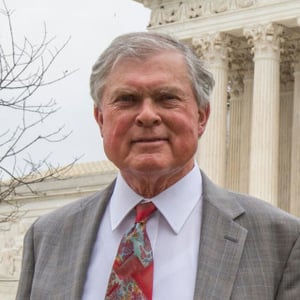
Senior Fellow, Independent Institute
Dr. Stephen P. Halbrook is a Senior Fellow at the Independent Institute. He has taught legal and political philosophy at George Mason University, Howard University, and Tuskegee Institute, and he received his J.D. from the Georgetown University Law Center and Ph.D. in social philosophy from Florida State University.
The winner of three cases before the U.S. Supreme Court (Printz v. United States, United States v. Thompson/Center Arms Company, and Castillo v. United States), he has testified before the Subcommittee on the Constitution of the Senate Judiciary Committee, Senate Subcommittee on the Constitution, Subcommittee on Crime of the House Judiciary Committee, Senate Governmental Affairs Committee, and House Committee on the District of Columbia.
A contributor to numerous scholarly volumes, he is the author of the books, Gun Control in Nazi-Occupied France: Tyranny and Resistance; Gun Control in the Third Reich: Disarming the Jews and “Enemies of the State”; The Founders’ Second Amendment: Origins of the Right to Bear Arms; That Every Man Be Armed: Evolution of a Constitutional Right; A Right to Bear Arms; Firearms Law Deskbook: Federal and State Criminal Practice; Securing Civil Rights: Freedmen, the Fourteenth Amendment, and the Right to Bear Arms; State and Federal Bills of Rights and Constitutional Guarantees; and Target Switzerland: Swiss Armed Neutrality in World War II. Dr. Halbrook’s scholarly articles have appeared in such journals as the Arizona Journal of International and Comparative Law, Drug Law Report, George Mason University Law Review, Journal of Air Law and Commerce, Journal of Law and Policy, Law & Contemporary Problems, National Law Journal, Northern Kentucky Law Review, St. John’s Journal of Legal Commentary; Seton Hall Constitutional Law Journal, Tennessee Law Review, University of Dayton Law Review, Valparaiso University Law Review, Vermont Law Review, and William & Mary Bill of Rights Journal.
Dr. Halbrook's popular articles have appeared in such publications as the Wall Street Journal, Newsday, San Francisco Chronicle, National Review, Investor’s Business Daily, Kansas City Star, Washington Examiner, Shreveport Times, Sacramento Bee, Providence Journal, Tampa Tribune, Pittsburgh Tribune-Review, History News Network, San Antonio Express-News, The Daily Caller, Detroit News, Honolulu Star Advertiser, Birmingham News, Environmental Forum, USA Today, and Washington Times. He has also appeared on numerous national TV/radio programs on CNN, Fox News Channel, Fox Business Network, Court TV, NewsMax TV, CBN, Voice of America, and C-SPAN.
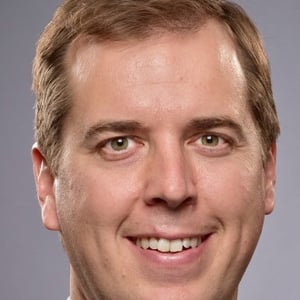
Texas Supreme Court
Justice Jimmy Blacklock was appointed to the Texas Supreme Court in January 2018 by Governor Greg Abbott. Before that, Jimmy served as Governor Abbott’s General Counsel and in the Attorney General’s Office under then-AG Abbott. While at the AG’s Office, he handled appeals and trials of constitutional cases in state and federal court involving matters such as federalism, religious liberty, and the separation of powers. As Deputy Attorney General for Legal Counsel, he oversaw the Open Records and Opinions divisions of the AG’s Office. Earlier in his career, Jimmy was appointed by President George W. Bush to serve in the Civil Rights Division of the U.S. Department of Justice, and he worked in private practice in Houston and Austin. He clerked for Judge Jerry Smith on the U.S. Court of Appeals for the 5th Circuit after graduating from U.T.-Austin (B.A., Plan II/History) and Yale Law School. He was born in Houston and now lives in Austin with his wife and three daughters.

Partner, Clement & Murphy, PLLC
Erin Murphy is founding partner of Clement & Murphy, PLLC. She is widely recognized as one of the nation’s leading Supreme Court and appellate advocates. She has argued dozens of cases in appellate and trial courts throughout the country, including the Supreme Court and nearly all of the federal courts of appeals. Erin has long been ranked by Chambers & Partners rankings as a leading appellate practitioner, and the National Law Journal has named her one of the nation’s “Outstanding Women Lawyers.” Erin also has an active pro bono practice, through which she has successfully represented many religious organizations and adherents, criminal defendants, asylum applicants, adoptive parents, and more.
Erin is an adjunct professor at her alma mater the Georgetown University Law Center, a member and former officer of the Edward Coke Appellate Inn of Court, and a frequent speaker on topics relating to the Supreme Court and appellate advocacy. In her spare time, Erin serves on the board of directors of Street Law.

CEO, Ainsley Shea and Senior Consultant, National Popular Vote Campaign
Patrick Rosenstiel is a nationally recognized figure in the world of public affairs, international relations, public relations and market research. Having cut his teeth in the campaign world, including the Forbes for President campaign, Pat brings nearly two decades of senior level public affairs expertise to the table.
With a proactive philosophy toward public affairs, he has advanced initiatives related to defense, Social Security reform, Medicare Part D and drug re-importation. He has won impressive brand victories for Pfizer, Progress for America, Business Roundtable, Recombinetics, Inc., the United States Chamber of Commerce and countless Fortune 500 companies that compete in regulated industries.
As Executive Director of the Trade Alliance to Promote Prosperity (TAPP), Rosenstiel led a national public affairs, public relations and citizen lobbying effort against the Section 421 (Trade Act of 1974) petition asking the Obama administration to impose a 35% tariff on low-cost tires manufactured in China. As a direct result, the eventual tariff was reduced by 20 points and shortened.
As a political field director, Rosenstiel successfully directed grassroots efforts across the West and Midwest to garner Senate support for U.S. Supreme Court candidates John Roberts and Samuel Alito.
As a media relations professional, he has placed his clients in The Washington Post, Fox News, The New York Times, Business 2.0 and The Wall Street Journal, as well as hundreds of regional broadcast, local and trade media relevant to the geo-specific needs of the client.
In addition to his work as the CEO of Ainsley Shea, a Twin Cities-based public affairs firm with a worldwide impact, Rosenstiel presently serves as a senior consultant to the National Popular Vote campaign.
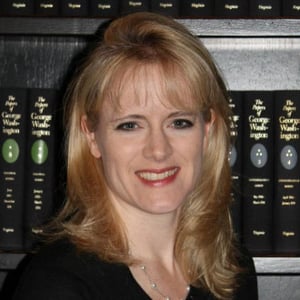
Author, The Indispensable Electoral College: How the Founders’ Plan Saves Our Country from Mob Rule and Enlightened Democracy: The Case for the Electoral College
Tara Ross is nationally recognized for her expertise on the Electoral College. She is the author of Why We Need the Electoral College (2019), The Indispensable Electoral College: How the Founders’ Plan Saves Our Country from Mob Rule (2017), We Elect A President: The Story of our Electoral College (2016), and Enlightened Democracy: The Case for the Electoral College (2d ed. 2012). She is also the author of She Fought Too: Stories of Revolutionary War Heroines (2019), and a co-author of Under God: George Washington and the Question of Church and State (2008) (with Joseph C. Smith, Jr.). Her Prager University video, Do You Understand the Electoral College?, is Prager’s most-viewed video ever, with more than 60 million views.
Tara often appears as a guest on a variety of talk shows nationwide, and she regularly addresses civic, university, and legal audiences. She’s contributed to several law reviews and newspapers, including the National Law Journal, USA Today, the Washington Examiner, The Hill, The Washington Times, and FoxNews.com. She’s appeared before institutions such as the Cooper Union, Brown University, the Dole Institute of Politics, and Mount Vernon. She’s appeared on Fox News, CSPAN, NPR, and a variety of other national and local shows.
Tara is a retired lawyer and a former Editor-in-Chief of the Texas Review of Law & Politics. She obtained her B.A. from Rice University and her J.D. from the University of Texas School of Law. She resides in Dallas with her husband and children.
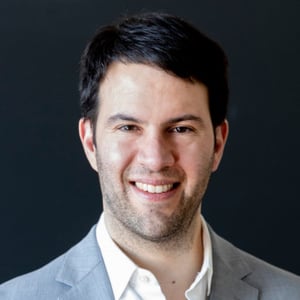
Professor of Law, Harvard Law School
Nicholas Stephanopoulos’s research and teaching interests include election law, constitutional law, administrative law, legislation, and comparative law. His work is particularly focused on the intersection of democratic theory, empirical political science, and the American electoral system. His academic articles have appeared in, among others, the Columbia Law Review, Duke Law Journal, Harvard Law Review, Northwestern University Law Review, New York University Law Review, Stanford Law Review, University of Chicago Law Review, University of Pennsylvania Law Review, Virginia Law Review, and Yale Law Journal. He has also written for popular publications including the New York Times, Los Angeles Times, Chicago Tribune, Atlantic, New Republic, Slate, and Vox. He has been involved in several litigation efforts as well, including two partisan gerrymandering cases based on his scholarship and decided by the Supreme Court.
Before joining the Harvard Law School faculty, Stephanopoulos was a Professor of Law at the University of Chicago Law School. He was previously an Associate-in-Law at Columbia Law School and an Associate in the Washington, DC office of Jenner & Block LLP. Before entering private practice, he clerked for Judge Raymond C. Fisher of the Ninth Circuit Court of Appeals.
A graduate of Yale Law School, Stephanopoulos also holds an M.Phil. in European Studies from Cambridge University and an A.B. in Government from Harvard College, graduating summa cum laude. While at Yale, he served as Editor-in-Chief of the Yale Journal of International Law, received the Jewell Prize for best second-year student contribution to a law journal, and was a finalist in both the moot court and mock trial competitions.
Stephanopoulos is a frequent television and radio commentator on legal issues. He is a co-founder of PlanScore, a website evaluating past, present, and proposed district plans. He is a member of policy reform initiatives including the Campaign Legal Center’s Litigation Strategy Council and the Committee for the Study of Digital Platforms. He has been named to The Politico 50 list as well as the National Law Journal’s “Chicago’s 40 Under 40.”
Texas Supreme Court
Justice Jimmy Blacklock was appointed to the Texas Supreme Court in January 2018 by Governor Greg Abbott. Before that, Jimmy served as Governor Abbott’s General Counsel and in the Attorney General’s Office under then-AG Abbott. While at the AG’s Office, he handled appeals and trials of constitutional cases in state and federal court involving matters such as federalism, religious liberty, and the separation of powers. As Deputy Attorney General for Legal Counsel, he oversaw the Open Records and Opinions divisions of the AG’s Office. Earlier in his career, Jimmy was appointed by President George W. Bush to serve in the Civil Rights Division of the U.S. Department of Justice, and he worked in private practice in Houston and Austin. He clerked for Judge Jerry Smith on the U.S. Court of Appeals for the 5th Circuit after graduating from U.T.-Austin (B.A., Plan II/History) and Yale Law School. He was born in Houston and now lives in Austin with his wife and three daughters.
Partner, Clement & Murphy, PLLC
Erin Murphy is founding partner of Clement & Murphy, PLLC. She is widely recognized as one of the nation’s leading Supreme Court and appellate advocates. She has argued dozens of cases in appellate and trial courts throughout the country, including the Supreme Court and nearly all of the federal courts of appeals. Erin has long been ranked by Chambers & Partners rankings as a leading appellate practitioner, and the National Law Journal has named her one of the nation’s “Outstanding Women Lawyers.” Erin also has an active pro bono practice, through which she has successfully represented many religious organizations and adherents, criminal defendants, asylum applicants, adoptive parents, and more.
Erin is an adjunct professor at her alma mater the Georgetown University Law Center, a member and former officer of the Edward Coke Appellate Inn of Court, and a frequent speaker on topics relating to the Supreme Court and appellate advocacy. In her spare time, Erin serves on the board of directors of Street Law.
CEO, Ainsley Shea and Senior Consultant, National Popular Vote Campaign
Patrick Rosenstiel is a nationally recognized figure in the world of public affairs, international relations, public relations and market research. Having cut his teeth in the campaign world, including the Forbes for President campaign, Pat brings nearly two decades of senior level public affairs expertise to the table.
With a proactive philosophy toward public affairs, he has advanced initiatives related to defense, Social Security reform, Medicare Part D and drug re-importation. He has won impressive brand victories for Pfizer, Progress for America, Business Roundtable, Recombinetics, Inc., the United States Chamber of Commerce and countless Fortune 500 companies that compete in regulated industries.
As Executive Director of the Trade Alliance to Promote Prosperity (TAPP), Rosenstiel led a national public affairs, public relations and citizen lobbying effort against the Section 421 (Trade Act of 1974) petition asking the Obama administration to impose a 35% tariff on low-cost tires manufactured in China. As a direct result, the eventual tariff was reduced by 20 points and shortened.
As a political field director, Rosenstiel successfully directed grassroots efforts across the West and Midwest to garner Senate support for U.S. Supreme Court candidates John Roberts and Samuel Alito.
As a media relations professional, he has placed his clients in The Washington Post, Fox News, The New York Times, Business 2.0 and The Wall Street Journal, as well as hundreds of regional broadcast, local and trade media relevant to the geo-specific needs of the client.
In addition to his work as the CEO of Ainsley Shea, a Twin Cities-based public affairs firm with a worldwide impact, Rosenstiel presently serves as a senior consultant to the National Popular Vote campaign.
Author, The Indispensable Electoral College: How the Founders’ Plan Saves Our Country from Mob Rule and Enlightened Democracy: The Case for the Electoral College
Tara Ross is nationally recognized for her expertise on the Electoral College. She is the author of Why We Need the Electoral College (2019), The Indispensable Electoral College: How the Founders’ Plan Saves Our Country from Mob Rule (2017), We Elect A President: The Story of our Electoral College (2016), and Enlightened Democracy: The Case for the Electoral College (2d ed. 2012). She is also the author of She Fought Too: Stories of Revolutionary War Heroines (2019), and a co-author of Under God: George Washington and the Question of Church and State (2008) (with Joseph C. Smith, Jr.). Her Prager University video, Do You Understand the Electoral College?, is Prager’s most-viewed video ever, with more than 60 million views.
Tara often appears as a guest on a variety of talk shows nationwide, and she regularly addresses civic, university, and legal audiences. She’s contributed to several law reviews and newspapers, including the National Law Journal, USA Today, the Washington Examiner, The Hill, The Washington Times, and FoxNews.com. She’s appeared before institutions such as the Cooper Union, Brown University, the Dole Institute of Politics, and Mount Vernon. She’s appeared on Fox News, CSPAN, NPR, and a variety of other national and local shows.
Tara is a retired lawyer and a former Editor-in-Chief of the Texas Review of Law & Politics. She obtained her B.A. from Rice University and her J.D. from the University of Texas School of Law. She resides in Dallas with her husband and children.
Professor of Law, Harvard Law School
Nicholas Stephanopoulos’s research and teaching interests include election law, constitutional law, administrative law, legislation, and comparative law. His work is particularly focused on the intersection of democratic theory, empirical political science, and the American electoral system. His academic articles have appeared in, among others, the Columbia Law Review, Duke Law Journal, Harvard Law Review, Northwestern University Law Review, New York University Law Review, Stanford Law Review, University of Chicago Law Review, University of Pennsylvania Law Review, Virginia Law Review, and Yale Law Journal. He has also written for popular publications including the New York Times, Los Angeles Times, Chicago Tribune, Atlantic, New Republic, Slate, and Vox. He has been involved in several litigation efforts as well, including two partisan gerrymandering cases based on his scholarship and decided by the Supreme Court.
Before joining the Harvard Law School faculty, Stephanopoulos was a Professor of Law at the University of Chicago Law School. He was previously an Associate-in-Law at Columbia Law School and an Associate in the Washington, DC office of Jenner & Block LLP. Before entering private practice, he clerked for Judge Raymond C. Fisher of the Ninth Circuit Court of Appeals.
A graduate of Yale Law School, Stephanopoulos also holds an M.Phil. in European Studies from Cambridge University and an A.B. in Government from Harvard College, graduating summa cum laude. While at Yale, he served as Editor-in-Chief of the Yale Journal of International Law, received the Jewell Prize for best second-year student contribution to a law journal, and was a finalist in both the moot court and mock trial competitions.
Stephanopoulos is a frequent television and radio commentator on legal issues. He is a co-founder of PlanScore, a website evaluating past, present, and proposed district plans. He is a member of policy reform initiatives including the Campaign Legal Center’s Litigation Strategy Council and the Committee for the Study of Digital Platforms. He has been named to The Politico 50 list as well as the National Law Journal’s “Chicago’s 40 Under 40.”

Professor of Political Science, University of Pittsburgh
Chris W. Bonneau is Professor of Political Science at the University of Pittsburgh, where he has been since 2002. His research is primarily in the areas of judicial selection (specifically, judicial elections) and judicial decisionmaking. Professor Bonneau’s work has been supported by the National Science Foundation and he has published numerous articles, including in the American Journal of Political Science and Journal of Politics. He is also the coauthor of three books: Strategic Behavior and Policy Choice on the U.S. Supreme Court (2005), In Defense of Judicial Elections (2009), and the award-winning Voters’ Verdicts: Citizens, Campaigns, and Institutions in State Supreme Court Elections (2015).
Professor Bonneau teaches undergraduate classes in constitutional law, judicial politics, and research methods, as well as graduate classes in judicial politics and research design.
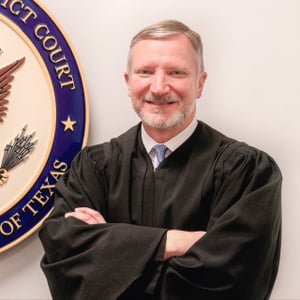
United States District Court, Southern District of Texas
Prior to joining TXSE, Jeff served as acting general counsel of Charles Schwab and led its Office of Legislative and Regulatory Affairs in Washington, D.C. for the past two decades, managing the company's response to public policy initiatives and advocating for policies that aid individual investors. He has over four decades of securities markets experience, starting his career as an options trader at the Philadelphia Stock Exchange, then founding his own trading firm, and later serving on the exchange's Board of Governors. He also served as senior counsel in the Division of Market Regulation at the U.S. Securities and Exchange Commission. Jeff's additional experience in the securities industry includes serving as vice president for regulation and general counsel at the Cincinnati Stock Exchange and as chairman of the Operating Committee of the National Market System Plan governing Nasdaq securities. Jeff holds degrees from the Wharton School of the University of Pennsylvania and Ohio Northern School of Law.

Milton R. Underwood Chair in Free Enterprise, Vanderbilt University Law School
Brian Fitzpatrick is the Milton R. Underwood Chair in Free Enterprise and Professor of Law at Vanderbilt Law School, where his research focuses on class action litigation, federal courts, judicial selection, and constitutional law. He is best known for his empirical studies of class action settlements as well as his book The Conservative Case for Class Actions (University of Chicago Press, 2019). Professor Fitzpatrick joined Vanderbilt's law faculty in 2007 after serving as the John M. Olin Fellow at New York University School of Law. He graduated first in his class from Harvard Law School and went on to clerk for Judge Diarmuid O'Scannlain on the U.S. Court of Appeals for the Ninth Circuit and Justice Antonin Scalia on the U.S. Supreme Court. After his clerkships, Professor Fitzpatrick practiced commercial and appellate litigation for several years at Sidley Austin in Washington, D.C., and served as Special Counsel for Supreme Court Nominations to U.S. Senator John Cornyn. Before earning his law degree, Fitzpatrick graduated summa cum laude with a bachelor's of science in chemical engineering from the University of Notre Dame. He has received the Hall-Hartman Outstanding Professor Award, which recognizes excellence in classroom teaching, for his Civil Procedure and Federal Courts courses.

Partner, Jackson Walker
Arthur offers clients a winning combination of trial and appellate experience gained as a federal prosecutor and more than 20 years of experience in handling patent, copyright, trademark, and trade secrets litigation.
While his practice concentrates on intellectual property litigation, Arthur also has significant experience in internal investigations, False Claims Act suits, partnership and breach of fiduciary duty, breach of contract, and employment litigation. Arthur also has represented clients testifying before Congressional committees.
Arthur writes and speaks frequently on topics ranging from the case against Boston bomber Dzhokhar Tsarnaev to patent litigation reform.
Prior to joining Michael Best, Arthur served as an Assistant United States Attorney in the Southern District of New York, where he was the lead prosecutor in criminal trials, including federal intellectual property crimes. He also argued numerous appeals.
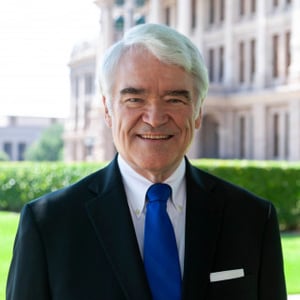
Chief Justice, Texas Supreme Court
Nathan L. Hecht is the 27th Chief Justice of the Supreme Court of Texas. He has been elected to the Court six times, first in 1988 as a Justice, and most recently in 2014 as Chief Justice. He is the longest-serving Member of the Court in Texas history and the senior Texas appellate judge in active service. Throughout his service on the Court, Chief Justice Hecht has overseen revisions to the rules of administration, practice, and procedure in Texas courts, and was appointed by the Chief Justice of the United States to the federal Advisory Committee on Civil Rules. Chief Justice Hecht is also active in the Court's efforts to assure that Texans living below the poverty level, as well as others with limited means, have access to basic civil legal services.
Chief Justice Hecht was appointed to the district court in 1981 and was elected to the court of appeals in 1986. Before taking the bench, he was a partner in the Locke firm in Dallas. Chief Justice Hecht holds a B.A. degree with honors in philosophy from Yale University, and a J.D. degree cum laude from the SMU School of Law, where he was a Hatton W. Sumners Scholar. He clerked for Judge Roger Robb on the U.S. Court of Appeals for the District of Columbia Circuit and was a Lieutenant in the U.S. Navy Reserve Judge Advocate General Corps.
Chief Justice Hecht is First Vice President of the national Conference of Chief Justices. He is a Life Member of the American Law Institute and a member of Council. He is also a member of the Texas Philosophical Society.
His current term ends December 31, 2020.

General Counsel, Texans for Lawsuit Reform
Lee Parsley has worked with TLR since 2002, and now serves as its general counsel. Lee leads a team of attorneys who help identify and research solutions to the challenges facing Texas’ legal system. Lee’s background in civil and appellate law has given him firsthand experience in navigating Texas’ courts. His experience in the legislative process helps TLR engage with lawmakers and stakeholders to ensure Texas is passing principled laws for a fair and efficient legal system.

Partner, Baker Botts L.L.P.
Thomas R. Phillips is a partner in the Austin office of Baker Botts L.L.P.,
concentrating in general litigation, including appellate, trial strategy, and alternate
dispute resolution. He was appointed and then elected Chief Justice of the Supreme
Court of Texas in 1988, being one of the first four Republicans (along with Kent Hance,
Eugene Cook, and Bathan Hecht) to win a down-ballot statewide race since
Reconstruction. He was re-elected in 1990, 1996, and 2002 before leaving the Court in
2004.
While in office, Phillips served as president of the Conference of Chief Justices in
1997-98 and as a member of the Federal-State Relations Committee of the
Administrative Conference of the United States and the Institutions of Democracy
Judicial Branch Commission of the Annenberg Public Policy Center. After returning to
private life, he served on the Carter-Baker Commission on Federal Election Reform, the
Texas Historical Commission, the Texas State Historical Society, and the Judicial
Districts Board.
A native of Dallas, Phillips earned a B.A. from Baylor University in 1971 and a
J.D. from Harvard Law School in 1974. He has been awarded honorary doctoral
degrees from St. Edward’s University and Texas Tech University. Prior to becoming
Chief Justice, he practiced law in Houston and served as judge of the 280th District
Court in Harris County. Texas.
He resides with his wife, Dr. Lyn B. Phillips, in a historic home in Bastrop.

State Court Docket Watch: State v. Arevalo
Jacob H. Huebert
People who want to challenge a state or federal law for violating their constitutional rights...
State Court Docket Watch: In Re State of Texas
Cory R. Liu
In In re State of Texas, the Texas Supreme Court held that a voter’s lack...
State Court Docket Watch: In re Salon a la Mode, et al
Ken Paxton
In response to the global pandemic caused by COVID-19, local authorities in Texas, like local...
Topics
State Supreme Courts Protect Economic Liberty
This has been a big week for fans of state constitutional law. Georgia and Pennsylvania...
To Bear Arms for Self-Defense: A “Right of the People” or a Privilege of the Few? Part 2
Stephen P. Halbrook
Note from the Editor: The Federalist Society takes no positions on particular legal and public...
Topics
Protecting Institutional Rights: The First Amendment Religion Clauses from a Different Perspective
The Supreme Court is seriously considering doing something it almost never does: take a case...
Atticus Finch and Civil Discourse
Dallas, TXPanel Three: Election Issues Roundtable
James Davis Blacklock, Erin E. Murphy, Patrick Rosenstiel, Tara Ross, Nicholas Stephanopoulos
On September 14, 2019, The Federalist Society held a roundtable on election issues during its...
Panel Three: Election Issues Roundtable
James Davis Blacklock, Erin E. Murphy, Patrick Rosenstiel, Tara Ross, Nicholas Stephanopoulos
On September 14, 2019, The Federalist Society held a roundtable on election issues during its...
Panel One: Proposed Reforms to Texas Judicial Selection
Chris W. Bonneau, Jeffrey Vincent Brown, Brian T. Fitzpatrick, Arthur Gollwitzer, Nathan L. Hecht, E. Lee Parsley, Thomas R. Phillips
On September 14, 2019, The Federalist Society held a panel on Proposed Reforms to Texas...