

Attorney, Institute for Justice
Anya Bidwell (née Cherkasova) leads IJ’s Project on Immunity and Accountability (“PIA”). Through this project, Anya works to promote judicial engagement and ensure that government officials are held to account when they violate individuals’ constitutional rights. Anya also serves as an adviser on the American Law Institute’s Restatement of the Law, Constitutional Torts project.
One of Anya’s PIA cases—Gonzalez v. Trevino—was heard by the United States Supreme Court on March 20, 2024. She argued the case for the petitioner, with the goal of convincing the Justices that retaliatory arrests not involving on-the-spot decisions by police officers should be actionable under the First Amendment regardless of probable cause. The decision is expected in June.
This was Anya’s third appearance before the U.S. Supreme Court. She second-chaired Brownback v. King (an excessive force case) and Tennessee Wine & Spirits Retailers Association v. Thomas (a commerce clause case) in November 2020 and January 2019 respectfully.
Before joining IJ, Anya worked for a top national law firm, handling cases in trial and appellate courts. She earned her J.D. with honors from the University of Texas. Two years prior to entering law school, Anya received a master’s degree in Global Policy Studies, also from the University of Texas, and wrote a thesis on asymmetric warfare.
Anya spent her childhood in Ukraine and Kyrgyzstan. At 16, she left her family behind and came to America on a university scholarship. Her upbringing motivated her to study law and become an advocate for a strong, independent judiciary.
Anya’s work has been featured in numerous publications, including the Washington Post, the Wall Street Journal, the New York Times, USA Today, and the Guardian. She is also the host of live recordings of our Short Circuit podcast and a co-producer of our documentary-style podcast Bound by Oath.

Shareholder, Brownstein, Hyatt, Farber, Shreck
With more than 20 years of experience both as a first-chair litigator and in public service, Greg Brower’s practice focuses on civil and criminal litigation, as well as regulatory and enforcement actions, corporate investigations, cybersecurity matters and federal and state government relations.
Most recently, Greg served as the assistant director for the Office of Congressional Affairs at the Federal Bureau of Investigation (FBI), serving as the FBI’s chief liaison to Congress on a wide range of critical oversight and investigative matters. He previously served as the FBI’s Deputy General Counsel, managing a diverse portfolio of legal matters, including litigation, privacy, procurement, compliance and ethics. During his time as a senior FBI executive, spanning two administrations, he worked closely with high-ranking officials in the U.S. Department of Justice (DOJ), the U.S. intelligence community and with key leaders on Capitol Hill. Greg is a regular commentator and contributor on national security, legal and cybersecurity issues, regularly appearing on CNN and MSNBC, and he is the featured contributor on white collar crime and corporate compliance for the Washington Legal Foundation’s Legal Pulse blog.
Greg has a long history of public service. At the federal level, he previously served as the U.S. Attorney for the District of Nevada, and as both General Counsel and Inspector General at the U.S. Government Publishing Office. Greg also served at DOJ as Legislative Counsel in the Executive Office for U.S. Attorneys. At the state level, he has served in a variety of public policy roles, including five terms in the Nevada Legislature, where he was chairman of the Senate Judiciary Committee. He has also served on the Nevada Gaming Policy Committee, the Nevada Advisory Commission on the Administration of Justice, the Nevada Sentencing Commission and the Nevada Juvenile Justice Commission.
Throughout his career, Greg has served the Nevada legal community as an adjunct professor of law at the William S. Boyd School of Law at the University of Nevada, Las Vegas, where he has taught courses in national security law and trial advocacy. Before attending law school, Greg served in the U.S. Navy as a Surface Warfare Officer.
Executive Director, National Association of Criminal Defense Lawyers
Norman Reimer is the Executive Director of the National Association of Criminal Defense Lawyers (NACDL). Prior to assuming this post, he practiced as a criminal defense lawyer for 28 years, most recently at Gould Reimer Walsh Goffin Cohn LLP in New York City.
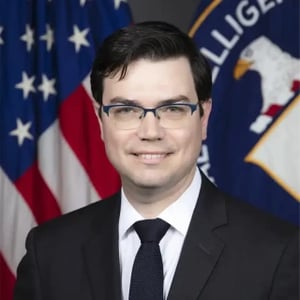
Deputy Director, Central Intelligence Agency
Michael Ellis was sworn in as Deputy Director of the Central Intelligence Agency on February 10, 2025. Deputy Director Ellis has held a variety of senior national security positions, including General Counsel of the National Security Agency and Senior Director for Intelligence Programs at the National Security Council.
Deputy Director Ellis previously served in the White House Counsel's Office, providing legal advice on national security and foreign relations. Prior to the White House, he was General Counsel of the U.S. House of Representatives Permanent Select Committee on Intelligence and served as an intelligence officer in the U.S. Navy Reserve.
Before returning to government, Deputy Director Ellis was the General Counsel of Rumble, a publicly traded video sharing platform and cloud services provider.
Deputy Director Ellis is a graduate of Yale Law School and Dartmouth College. Following law school, he served as a clerk to two federal judges. He is a "Jeopardy!" champion.

Distinguished University Professor, Antonin Scalia Law School, George Mason University
University Professor Nelson Lund is the author of Rousseau’s Rejuvenation of Political Philosophy: A New Introduction. He has also written widely in the field of constitutional law, including articles on constitutional interpretation, federalism, separation of powers, the Second Amendment, the Commerce Clause, the Speech or Debate Clause, the Equal Protection Clause, and the Uniformity Clause. In addition, he has published articles in the fields of employment discrimination and civil rights, the legal regulation of medical ethics, and the application of economic analysis to legal institutions and legal ethics.
Professor Lund graduated from St. John's College in Annapolis, Maryland, after which he received an MA in philosophy from the Catholic University of America and a PhD in political science from Harvard University. He left the faculty of the University of Chicago to attend its law school, where he served as executive editor of the University of Chicago Law Review and chapter chairman of the Federalist Society for Law and Public Policy Studies. After law school, he held positions at the United States Department of Justice in the Office of the Solicitor General and the Office of Legal Counsel. He also served as a law clerk to the Honorable Patrick E. Higginbotham of the United States Court of Appeals for the Fifth Circuit and to the Honorable Sandra Day O'Connor of the United States Supreme Court. Following his clerkship with Justice O'Connor, Professor Lund served in the White House as associate counsel to the president from 1989 to 1992.
Since joining the faculty at George Mason University's Antonin Scalia Law School, Professor Lund has taught Constitutional Law, Legislation, Federal Election Law, Employment Discrimination, State and Local Government, and seminars on the Second Amendment and on a variety of topics in Jurisprudence.
Professor of Law, Quinnipiac University School of Law
Stephen G. Gilles joined the Quinnipiac School of Law faculty in 1995. He teaches courses in tort, insurance, administrative, and advanced constitutional law and in law and economics. His research interests include tort law, especially negligence and strict liability, and constitutional law, especially parental and abortion rights. His recent publications include “The Judgment-Proof Society,” in the Washington & Lee Law Review and “Parental (and Grandparental) Rights after Troxel v Granville” in the Supreme Court Economic Review. Before joining the School of Law, he clerked for Judge Robert Bork and U.S. Supreme Court Justice Sandra Day O’Connor, practiced as an appellate litigator, and taught at the University of Chicago Law School. He is married and has six children.


Topics
New From FedSoc: State Court Docket Watch Newsletter
Federalism is a central feature of our American system of government. In recognition of the...
State Court Docket Watch: In re: D.D.
Anya Bidwell
Hard cases make bad law.[1] In re: D.D.[2]—a Maryland policing case involving the odor of...
Topics
Privileges or Immunities: More Than a Nullity, But Not Boundless
The Federalist Society is pleased to announce its Student Blog Initiative, a project of the...
Maryland v. King: Possibly The Most Important Criminal Procedure Case in Decades
Greg Brower, Norman Reimer
Maryland v. King: Possibly The Most Important Criminal Procedure Case in Decades An Exchange Between...
Maryland Court of Appeals Limits Asbestos Liability
Michael J. Ellis
For decades, asbestos cases have wound their way through state and federal courts. The first...
2013 ABA Awards
ABA Watch previews some of the key honorees at this year’s ABA Annual Meeting in...
Mandatory Liability Insurance for Firearm Owners: Design Choices and Second Amendment Limits
Nelson Lund, Stephen G. Gilles
Some twenty-five years ago, one of us sketched out a rationale for using mandatory liability...
Coleman v. Maryland Court of Appeals - Post-Decision SCOTUScast
Elizabeth Price Foley
On March 20, 2012, the Supreme Court announced its decision in Coleman v. Maryland Court of...
Coleman v. Maryland Court of Appeals - Post-Argument SCOTUScast
Elizabeth Price Foley
On January 11, 2012, the Supreme Court heard oral argument in Coleman v. Maryland Court of...
Appellate Practice
Baltimore, Maryland