
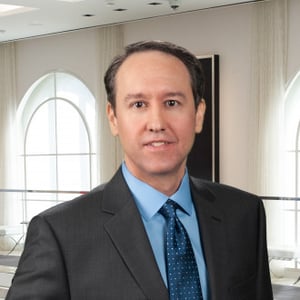
Senior Counsel, Alston & Bird, LLP
A former Justice of the Supreme Court of Georgia, Keith Blackwell is senior counsel with Alston & Bird LLP in Atlanta. His practice is focused principally on the representation of clients in federal and state courts in appeals and litigation involving issues of first impression, the application of settled law to emerging industries and technologies, novel constitutional questions, conflicting precedents, and other complex legal issues. He also represents law firms and lawyers in professional liability matters, and he represents clients in connection with criminal and regulatory investigations and proceedings.
Justice Blackwell served for more than eight years on the Supreme Court, and he previously served as a Judge of the Court of Appeals of Georgia. In the course of his judicial service, he authored more than 400 published opinions and participated in the disposition of approximately 4,500 appeals, as well as 8,000 petitions for writs of certiorari and other applications for leave to appeal. In addition, Justice Blackwell served as the liaison between the Supreme Court and the State Bar of Georgia, the Office of Bar Admissions, the Board of Bar Examiners, and the Board to Determine the Fitness of Bar Applicants. Justice Blackwell retired from judicial service in November 2020 to return to the private practice of law.
Prior to his judicial service, Justice Blackwell practiced law with Parker, Hudson, Rainer & Dobbs LLP in Atlanta, where his practice was focused on complex business litigation. He also served for several years as an assistant district attorney in Cobb County, Georgia, where he was responsible for hundreds of felony prosecutions and appeared regularly as lead trial counsel. In addition, he served as a law clerk for Judge J.L. Edmondson at the U.S. Court of Appeals for the Eleventh Circuit. Justice Blackwell graduated summa cum laude from the University of Georgia School of Law as first honor graduate in 1999. He also received a degree in political science from the University of Georgia in 1996.
Justice Blackwell is a member of the Board of Advisors and a former president of the Atlanta Lawyers’ Chapter of the Federalist Society.
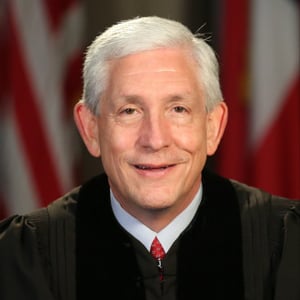
Chief Justice, Supreme Court of Georgia
Chief Justice David E. Nahmias (pronounced “NAH-mee-iss”) has served on the Georgia Supreme Court since his appointment by Governor Sonny Perdue in August 2009, winning election to six-year terms in 2010 and 2016. He became the Court’s Presiding Justice in September 2018 and its Chief Justice in July 2021. As Chief Justice, he leads the State’s judicial branch and chairs the Judicial Council of Georgia, the policy-making body for the judicial branch. Chief Justice Nahmias also chairs the Court’s Justice for Children Committee and the Chief Justice’s Commission on Professionalism. Before taking the bench, he was a federal prosecutor for almost 15 years, including service as a line prosecutor and as the United States Attorney in Atlanta, where he prosecuted and supervised many high-profile cases, and service as a senior Justice Department official in Washington, where he oversaw terrorism cases and other matters for three years after the 9/11 attacks.
Chief Justice Nahmias is a graduate of Briarcliff High School in DeKalb County, where he was the state’s STAR Student in 1982; Duke University, where he finished second in his class; and Harvard Law School, where he served on the Law Review with former President Barack Obama. He was a law clerk to U.S. Supreme Court Justice Antonin Scalia. Chief Justice Nahmias has received numerous local, state, and national awards and honors for his public service, and he has served on several committees and boards that work to improve the legal system and the community. Chief Justice Nahmias has two teenage sons. His wife, Catherine O’Neil, was a partner at King & Spalding before she passed away in 2017.

Judge, United States Court of Appeals, District of Columbia Circuit
Judge Katsas was appointed to the D.C. Circuit in December 2017. He graduated from Princeton University and Harvard Law School, where he was an executive editor on the Harvard Law Review. Between 1989 and 1992, he served as a law clerk to Judge Edward Becker on the Third Circuit, to then-Judge Clarence Thomas on the D.C. Circuit, and to Justice Thomas on the Supreme Court. Between 1992 and 2001, he was an associate and then partner in the Washington office of Jones Day, where he specialized in appellate and complex civil litigation. Between 2001 and 2009, he served in many senior positions in the Department of Justice, including as Assistant Attorney General for the Civil Division and as Acting Associate Attorney General. In 2009, he returned to Jones Day. From January to December 2017, he served as Deputy Assistant to the President and Deputy Counsel to the President.
Before joining the bench, Judge Katsas argued more than 75 appeals, including three cases in the Supreme Court, 13 cases in the D.C. Circuit, and cases in every other federal court of appeals. By appointment of the Chief Justice, he served on the Advisory Committee on Appellate Rules from 2013 to 2017. In 2016, he was elected to membership in the American Academy of Appellate Lawyers.

United States District Judge, United States District Court for the Middle District of Florida
In November 2020, the Senate confirmed Kathryn Kimball Mizelle as a United States District Judge for the Middle District of Florida. At age 33, she became the youngest Article III judge in the country. Prior to her confirmation, Judge Mizelle was in private practice at Jones Day, where she focused on complex civil and criminal litigation and appeals. Judge Mizelle previously served at the United States Department of Justice in the Office of the Associate Attorney General, in the Southern Criminal Enforcement Section of the Tax Division, and in the United States Attorney’s Office for the Eastern District of Virginia. Judge Mizelle has also taught as an adjunct professor of law at the University of Florida Levin College of Law and at George Mason University’s Antonin Scalia Law School.
Judge Mizelle earned her B.A., summa cum laude, from Covenant College, and her J.D., summa cum laude, from the University of Florida Levin College of Law. After graduation, Judge Mizelle served as a law clerk at every level of the federal judiciary: at the Supreme Court for Justice Clarence Thomas, at the D.C. Circuit for Judge Gregory G. Katsas, at the Eleventh Circuit for Chief Judge William H. Pryor Jr., and at the Middle District of Florida for Judge James S. Moody Jr.
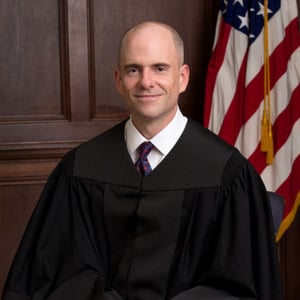
Judge, United States Court of Appeals, Eleventh Circuit
Judge Kevin C. Newsom is a member of the United States Court of Appeals for the Eleventh Circuit. He sits in Birmingham, Alabama.
Before his appointment to the bench, Judge Newsom was the head of the appellate practice group at Bradley Arant Boult Cummings LLP and, before that, the Solicitor General of Alabama. As a practicing lawyer, Judge Newsom argued four cases in the Supreme Court of the United States, and nearly 40 more in the United States Courts of Appeals and state supreme and appellate courts.
Judge Newsom graduated summa cum laude from Samford University and magna cum laude from Harvard Law School, where he was an articles editor on the Harvard Law Review. Following law school, Judge Newsom clerked for Judge Diarmuid F. O’Scannlain of the United States Court of Appeals for the Ninth Circuit and Justice David H. Souter of the Supreme Court of the United States.
Judge Newsom teaches at Harvard Law School, Yale Law School, Stanford Law School, and the University of Chicago Law School. His published work has appeared in the Yale Law Journal and the Harvard Law Review.
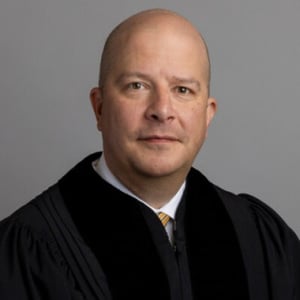
Chief Justice, Supreme Court of Georgia
Chief Justice Nels Peterson was appointed to the Georgia Supreme Court in 2016, and was elected to full six-year terms in 2018 and 2024. He previously served in a variety of other roles in Georgia state government, including as judge on the Georgia Court of Appeals, general counsel for the University System of Georgia, Georgia’s first solicitor general in the Attorney General’s Office, and executive counsel to the Governor.
Before entering state government, Nels practiced at King & Spalding LLP in Atlanta and clerked for Chief Judge William H. Pryor Jr. of the United States Court of Appeals for the Eleventh Circuit. He is a graduate of Kennesaw State University and Harvard Law School. Nels and his wife Jennifer have two children and live in Cobb County, where they teach adult Sunday school at Johnson Ferry Baptist Church.
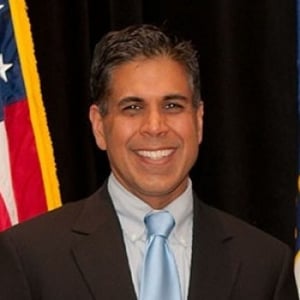
Judge, United States Court of Appeals, Sixth Circuit
Amul R. Thapar serves as a judge on the United States Court of Appeals for the Sixth Circuit. His judicial career began in 2007 when President George W. Bush nominated him to serve on the Eastern District of Kentucky, making him the first South Asian Article III judge in American history. In 2017, he became President Donald J. Trump’s first appellate court nominee.
Before joining the bench, Judge Thapar served as the United States Attorney for the Eastern District of Kentucky. While United States Attorney, Judge Thapar worked on the Attorney General’s Advisory Committee (“AGAC”) and chaired the AGAC’s Controlled Substances and Asset Forfeiture subcommittee. He also served on the Terrorism and National Security subcommittee, the Violent Crime subcommittee, and the Child Exploitation working group.
Judge Thapar has worked in private practice, at Williams & Connolly in Washington, D.C., and Squire, Sanders & Dempsey in Cincinnati, Ohio. He also served as an Assistant United States Attorney in both the Southern District of Ohio and the District of Columbia.
Judge Thapar received his undergraduate degree from Boston College and his law degree from the University of California, Berkeley. After graduating, Judge Thapar worked as a law clerk to the Honorable S. Arthur Spiegel of the United States District Court for the Southern District of Ohio, and the Honorable Nathaniel R. Jones of the United States Court of Appeals for the Sixth Circuit.
Judge Thapar has also published in the Yale Law Journal, Michigan Law Review, and Catholic University Law Review. He teaches courses on originalism, the Federalists and Anti-Federalists, and legal writing at Notre Dame Law School, the University of Virginia School of Law, and Vanderbilt Law School.
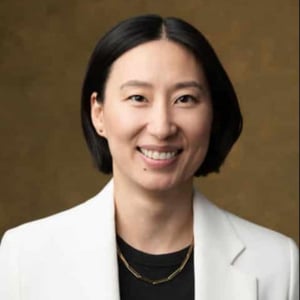
Senior State Policy Counsel, Pacific Legal Foundation
Jaimie Cavanaugh is senior state policy counsel at Pacific Legal Foundation, where she works with legislators around the country to end burdensome laws and create opportunities for individuals to thrive.
Jaimie’s prior work as a litigator led to the recognition of the right to economic liberty by the Georgia Supreme Court and ended New Jersey’s ban on selling cottage food. In Minnesota, she secured a victory for vintners who wanted to make wine with ingredients from other states and eased needlessly restrictive continuing legal education requirements for attorneys.
But there are many ways to advance liberty, and Jaimie has also spent several years assisting legislators in reforming or repealing certificate of need laws, which make it difficult or impossible to open healthcare facilities. She has published reports on certificate of need laws and written extensively about their harms. Her experience has established her as a national policy expert.
Growing up outside of Detroit, Jaimie learned that people, not government, know what’s best for themselves and their families. That’s why her work also promotes protections for private property, equality, and economic opportunity.
Jaimie studied linguistics and German at the University of Michigan before earning her J.D. from the University of Colorado. After law school, she completed a judicial fellowship with Justice Monica Márquez before spending five years as an attorney with Mountain States Legal Foundation and five years as an attorney with Institute for Justice.
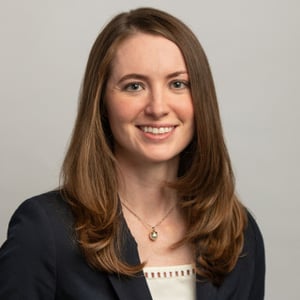
Renée Flaherty is an attorney with the Institute for Justice. She joined the Institute in 2013 and litigates cases to secure property rights, economic liberty and school choice in federal and state courts.
Renée successfully represented families in defense of North Carolina’s Opportunity Scholarship Program, which was upheld by the North Carolina Supreme Court in July 2015.
Renée’s views have been published in USA Today and The Wall Street Journal.
Prior to joining the Institute for Justice, Renée worked in private practice as a tax controversy associate at the Washington, D.C., office of Bingham McCutchen, LLP. She received her law degree from Harvard Law School in 2011, where she was an editor of the Harvard Negotiation Law Review and served on the Executive Board of the Federalist Society. Renée graduated from the University of Texas at Austin with a Bachelor of Arts in Philosophy and a Bachelor of Business Administration. Renée is originally from Odessa, Texas.
Renée Flaherty is a member of the D.C. bar.

Associate, Wheeler Trigg O'Donnell LLP
Daniel Nightingale is an appellate attorney at a law firm in Denver. He specializes in high-stakes appeals and commercial litigation nationwide, helping clients navigate challenging cases on appeal and through major motions practice. Dan has briefed and argued cases in courts across the country, including the U.S. Supreme Court and several federal circuit courts. In addition to his appellate practice, Dan also regularly supports trial teams with high level strategy, pre- and post-trial briefing, and complex legal analysis. He has a vibrant pro bono practice as well, which focuses on free speech and life issues.
Before entering private practice, Dan clerked for then-Justice Allison Eid of the Colorado Supreme Court and Judge Joseph Bianco then of the Eastern District of New York. He graduated with honors from the University of Chicago Law School.

Legal Counsel, Alliance Defending Freedom
Julia Payne serves as legal counsel for Alliance Defending Freedom’s Center for Life. In this role, she defends the sanctity of life by litigating both beginning and end of life issues.
Before joining ADF, Payne worked at the Office of the Indiana Attorney General as a deputy attorney general for five years. While at the AG’s office, she managed all of Indiana’s pro-life litigation and also worked on cases concerning immigration, religious liberty, federalism, the Commerce Clause, criminal procedure, federal habeas corpus procedures, civil asset forfeiture, local and special laws, and the common law powers of the attorney general. She has argued cases before the U.S. Court of Appeals for the 7th Circuit, the Southern District of Indiana, and Indiana state courts.
Payne graduated cum laude from Indiana University Maurer School of Law in 2017, where she served as an editor on the Indiana Law Journal and won best brief in the Sherman Minton Moot Court Competition. During law school, Payne interned as a clerk for Indiana Solicitor General Tom Fisher and as a Blackstone Fellow with ADF’s Center for Academic Freedom in Atlanta. She also served as president of the Christian Legal Society and as an officer for the Advocates for Life and the Federalist Society.
Before law school, Payne graduated summa cum laude from Western Kentucky University with a B.A. in History and a B.A. in Spanish. As an undergraduate, Payne studied abroad in both Spain and China. On campus, she served on the Student Government Association Judicial Council, led the music ministry for the Catholic Campus Center, and was an active member of Omega Phi Alpha Service Sorority. Payne was also a founding member of the Hilltoppers for Life, which helped spur her interest in First Amendment and pro-life issues. Payne is a member of the bars of the Indiana Supreme Court, the Northern and Southern Districts of Indiana, and the Seventh Circuit.
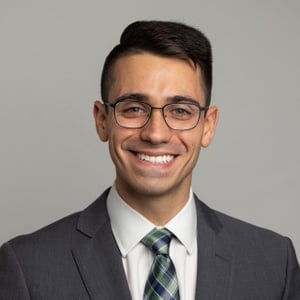
Litigation Fellow, Institute for Justice

Legal Fellow, Edwin Meese III Center for Legal and Judicial Studies, The Heritage Foundation
Jack Fitzhenry is a Legal Fellow in the Edwin Meese III Center for Legal and Judicial Studies.
He previously served as a law clerk for the Hon. Madeline H. Haikala on the United States District Court for the Northern District of Alabama and for the Hon. Patrick E. Higginbotham on the United States Court of Appeals for the Fifth Circuit. Between clerkships, he litigated a variety of commercial disputes as an associate with Quinn Emanuel Urquhart & Sullivan LLP.
Fitzhenry received his law degree from the University of Michigan Law School and his bachelor’s degree in English Literature from Williams College.
Senior State Policy Counsel, Pacific Legal Foundation
Jaimie Cavanaugh is senior state policy counsel at Pacific Legal Foundation, where she works with legislators around the country to end burdensome laws and create opportunities for individuals to thrive.
Jaimie’s prior work as a litigator led to the recognition of the right to economic liberty by the Georgia Supreme Court and ended New Jersey’s ban on selling cottage food. In Minnesota, she secured a victory for vintners who wanted to make wine with ingredients from other states and eased needlessly restrictive continuing legal education requirements for attorneys.
But there are many ways to advance liberty, and Jaimie has also spent several years assisting legislators in reforming or repealing certificate of need laws, which make it difficult or impossible to open healthcare facilities. She has published reports on certificate of need laws and written extensively about their harms. Her experience has established her as a national policy expert.
Growing up outside of Detroit, Jaimie learned that people, not government, know what’s best for themselves and their families. That’s why her work also promotes protections for private property, equality, and economic opportunity.
Jaimie studied linguistics and German at the University of Michigan before earning her J.D. from the University of Colorado. After law school, she completed a judicial fellowship with Justice Monica Márquez before spending five years as an attorney with Mountain States Legal Foundation and five years as an attorney with Institute for Justice.
Renée Flaherty is an attorney with the Institute for Justice. She joined the Institute in 2013 and litigates cases to secure property rights, economic liberty and school choice in federal and state courts.
Renée successfully represented families in defense of North Carolina’s Opportunity Scholarship Program, which was upheld by the North Carolina Supreme Court in July 2015.
Renée’s views have been published in USA Today and The Wall Street Journal.
Prior to joining the Institute for Justice, Renée worked in private practice as a tax controversy associate at the Washington, D.C., office of Bingham McCutchen, LLP. She received her law degree from Harvard Law School in 2011, where she was an editor of the Harvard Negotiation Law Review and served on the Executive Board of the Federalist Society. Renée graduated from the University of Texas at Austin with a Bachelor of Arts in Philosophy and a Bachelor of Business Administration. Renée is originally from Odessa, Texas.
Renée Flaherty is a member of the D.C. bar.
Senior State Policy Counsel, Pacific Legal Foundation
Jaimie Cavanaugh is senior state policy counsel at Pacific Legal Foundation, where she works with legislators around the country to end burdensome laws and create opportunities for individuals to thrive.
Jaimie’s prior work as a litigator led to the recognition of the right to economic liberty by the Georgia Supreme Court and ended New Jersey’s ban on selling cottage food. In Minnesota, she secured a victory for vintners who wanted to make wine with ingredients from other states and eased needlessly restrictive continuing legal education requirements for attorneys.
But there are many ways to advance liberty, and Jaimie has also spent several years assisting legislators in reforming or repealing certificate of need laws, which make it difficult or impossible to open healthcare facilities. She has published reports on certificate of need laws and written extensively about their harms. Her experience has established her as a national policy expert.
Growing up outside of Detroit, Jaimie learned that people, not government, know what’s best for themselves and their families. That’s why her work also promotes protections for private property, equality, and economic opportunity.
Jaimie studied linguistics and German at the University of Michigan before earning her J.D. from the University of Colorado. After law school, she completed a judicial fellowship with Justice Monica Márquez before spending five years as an attorney with Mountain States Legal Foundation and five years as an attorney with Institute for Justice.
Renée Flaherty is an attorney with the Institute for Justice. She joined the Institute in 2013 and litigates cases to secure property rights, economic liberty and school choice in federal and state courts.
Renée successfully represented families in defense of North Carolina’s Opportunity Scholarship Program, which was upheld by the North Carolina Supreme Court in July 2015.
Renée’s views have been published in USA Today and The Wall Street Journal.
Prior to joining the Institute for Justice, Renée worked in private practice as a tax controversy associate at the Washington, D.C., office of Bingham McCutchen, LLP. She received her law degree from Harvard Law School in 2011, where she was an editor of the Harvard Negotiation Law Review and served on the Executive Board of the Federalist Society. Renée graduated from the University of Texas at Austin with a Bachelor of Arts in Philosophy and a Bachelor of Business Administration. Renée is originally from Odessa, Texas.
Renée Flaherty is a member of the D.C. bar.

Principles of Georgia Constitutional Interpretation: A Panel of Former Georgia Supreme Court Justices Discuss Presiding Justice Peterson's Groundbreaking New Article
Atlanta Young Lawyers Chapter
Atlanta, GAGeorgia Supreme Court Rules that State’s Heartbeat Law Is Not Void Ab Initio
Daniel Nightingale, Julia Payne Koon
In Georgia v. SisterSong Women of Color Reproductive Justice Collective,[1] the Georgia Supreme Court ruled that...
Georgia Supreme Court Rejects Sex Offender Registration Challenge, Re-Affirms Originalism Commitment
Nicholas DeBenedetto
In May, the Supreme Court of Georgia unanimously rejected a facial and as-applied challenge to...
Georgia Supreme Court Carves Its Own Path on Due Process to Strike Down Occupational Licensing Law
Jack Fitzhenry
A unanimous Georgia Supreme Court held in Raffensperger v. Jackson that an occupational licensing law...
Topics
The Georgia Fake Electors Scheme: What Does Legal and Political History Tell Us About These Charges?
Five of the 19 defendants indicted by Fulton County District Attorney Fani Willis are alleged...
Atlanta Rooftop Happy Hour
Atlanta Young Lawyers Chapter
Atlanta, GAPanel Three: Originalism Advancing? Perspectives from the Bench
Birmingham, ALLitigation Update: Jackson v. Raffensperger
Jaimie N. Cavanaugh, Renée Flaherty
In Jackson v. Raffensperger, 316 Ga. 383 (2023), the Supreme Court of Georgia struck down...
Litigation Update: Jackson v. Raffensperger
Jaimie N. Cavanaugh, Renée Flaherty
In Jackson v. Raffensperger, 316 Ga. 383 (2023), the Supreme Court of Georgia struck down...
Litigation Update: Jackson v. Raffensperger
Teleforum