
Associate, Quinn Emanuel Urquhart & Sullivan, LLP
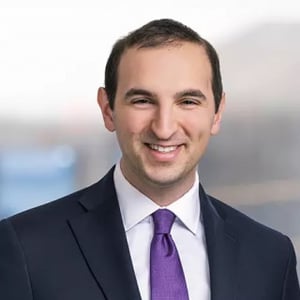
Associate, Covington & Burling LLP
Eli Nachmany is an associate at Covington & Burling LLP in the Washington, DC, office. He clerked for Judge Steven J. Menashi of the U.S. Court of Appeals for the Second Circuit. Eli graduated magna cum laude from Harvard Law School, where he was Editor-in-Chief of the Harvard Journal of Law & Public Policy. Prior to law school, Eli served as the speechwriter to the U.S. Secretary of the Interior and as a domestic policy aide in the White House Office of American Innovation. He graduated summa cum laude from New York University with a B.S. in Sports Management. Eli’s scholarship on administrative law and executive power has appeared in the BYU Law Review, George Mason Law Review, Wake Forest Law Review, and Yale Law Journal Forum.

Prof. Sheley joined the College of Law in 2018. Before coming to OU she was an Assistant Professor at the University of Calgary Faculty of Law. She has also served as a Visiting Associate Professor at the George Washington University Law School and an Olin-Searle Fellow at Georgetown University Law Center. Prior to academia she practiced for several years in the litigation group of the Washington, D.C. offices of Gibson, Dunn & Crutcher LLP. While in practice she was commended by the Humane Society of the United States for her pro bono work in the prosecution of dog fighting sponsors. She is proud to have served on the Board of Directors of the Alberta Animal Rescue Crew Society.

Vice President for Litigation & General Counsel, Goldwater Institute
Jon Riches is the Vice President for Litigation for the Goldwater Institute’s Scharf-Norton Center for Constitutional Litigation and General Counsel for the Institute. He litigates in federal and state trial and appellate courts in the areas of economic liberty, regulatory reform, free speech, taxpayer protections, public labor issues, government transparency, and school choice, among others.
Jon has developed and authored several pieces of legislation, including the landmark Right to Earn a Living Act, which provides some of the greatest protections in the country to job-seekers and entrepreneurs facing arbitrary licensing regulations. He also developed legislation eliminating deference to administrative agencies in Arizona—a first-of-its-kind regulatory reform that can serve as a model for the rest of the country.
His work at the Institute has been covered by national media, including the Wall Street Journal, New York Times, CBS This Morning, Bloomberg News, and Politico. Jon is also a member of the Federalist Society’s Regulatory Transparency Project: State and Local Working Group.
Prior to joining the Goldwater Institute, Jon served on active duty in the U.S. Navy Judge Advocate General’s (JAG) Corps. While on active duty, Jon represented hundreds of clients, litigated dozens of court-martial cases, and advised commanders on a vast array of legal issues.
He previously clerked for Sen. Jon Kyl on the U.S. Senate Judiciary Committee, worked for the Rules Committee in the Arizona State Senate, and clerked in the Office of Counsel to the President at the White House. Jon received his B.A. from Boston College, where he graduated magna cum laude and Phi Beta Kappa. He earned his J.D. from the University of Arizona, James E. Rogers College of Law.
Jon served as a presidentially appointed Panel Member on the Federal Service Impasses Panel. He is an officer in the U.S. Navy Reserve and an Adjunct Professor at Arizona State University School of Law. Jon is a native of Phoenix.

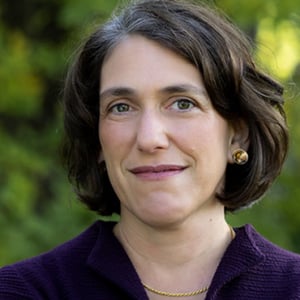
Donald Phillip Rothschild Research Professor, George Washington University Law School
Renée Lettow Lerner is Donald Phillip Rothschild Research Professor of Law at George Washington University Law School.
Professor Lerner works in the fields of U.S. and English legal history, civil and criminal procedure, and comparative law. She advises judges, lawyers, and government officials from the United States and countries in Europe, Latin America, and Asia about the differences between adversarial and nonadversarial legal systems.
She writes extensively about the history of American juries. Her work includes not only scholarly articles, but also online publications intended for a broader audience of legal professionals and the public. In many different settings, she has debated the role of juries with other academics and with lawyers. She has a book forthcoming with Oxford University Press in the Very Short Introduction Series entitled “The Jury.” She is also working on a book about the American civil jury, from the colonial period to the present.
She is the author, with John Langbein and Bruce Smith, of the book History of the Common Law: The Development of Anglo-American Legal Institutions (2009).
Her recent writings include a book review of Amalia D. Kessler’s Inventing American Exceptionalism: The Origins of American Adversarial Legal Culture, 1800-1877, 67 J. Legal Ed. 888 (2018); “How the Creation of Appellate Courts in England and the United States Limited Judicial Comment on Evidence to the Jury,” 40 Journal of the Legal Profession 215 (2016); “The Troublesome Inheritance of Americans in Magna Carta and Trial by Jury,” in Magna Carta and its Modern Legacy 77-98 (Robert Hazell and James Melton eds., Cambridge University Press 2015); and “The Failure of Originalism in Preserving Constitutional Rights to Civil Jury Trial,” 22 William & Mary Bill of Rights Journal 811 (2014).
Professor Lerner received an A.B. summa cum laude in history from Princeton University. She was a Rhodes Scholar at Oxford University, where she studied English legal history. At Yale Law School, she was Articles Editor of the Yale Law Journal. She served as a law clerk to Justice Anthony M. Kennedy of the U.S. Supreme Court and to Judge Stephen F. Williams of the U.S. Court of Appeals for the District of Columbia Circuit. From 2003 to 2005, she served as Deputy Assistant Attorney General in the Office of Legal Counsel at the U.S. Department of Justice.

Professor & Chair, History, Language & Global Culture, Suffolk University
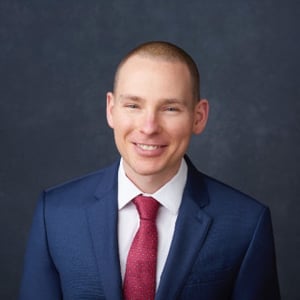
Shareholder & Co-Chair of the Workplace Policy Institute, Littler Mendelson P.C.
Alexander T. MacDonald advises employers on all aspects of the employment and labor landscape, focusing on emerging legislation and regulation. He has extensive experience advising businesses on worker classification, arbitration, the administrative and regulatory process, and the future of work. He frequently writes, publishes, and speaks on these subjects. His work has been cited by scholars and appellate courts. He is a recognized voice for the management perspective.
Alexander is a co-chair of the Workplace Policy Institute (WPI) team. With WPI, he advises employers on legislative, administrative, and regulatory developments at the state and federal level. He advocates for employers in the regulatory and administrative process. He also helps employers protect their businesses by understanding and anticipating cutting-edge legal developments.
Alexander also has extensive experience in traditional labor law. He represents management in all aspects of labor-management relations, including unfair labor practice charges, grievance arbitrations, representation elections, contract negotiations, and related litigation, including litigation in the U.S. courts of appeals.
Before joining Littler, Alexander served as the director, future of work, for a major technology company. He also worked in a national labor and employment law firm and a major public-sector general counsel’s office. He was a law clerk to the senior judges in the District of Columbia Court of Appeals.
He is also a veteran of the U.S. Air Force. He served in Operations Enduring Freedom and Iraqi Freedom. In law school, he graduated first in his class

Associate Attorney, Criminal Justice Legal Foundation
Kymberlee C. Stapleton is an Associate Attorney at the Criminal Justice Legal Foundation.
Ms. Stapleton attended California State University, Chico where she graduated with a Bachelor of Arts degree in Social Science in 1997. While at Chico, Ms. Stapleton was a member of the Gamma Phi Beta International Sorority, the Golden Key National Honor Society, and the National Order of Omega. She received her J.D. in 2000 from Willamette University College of Law in Salem, Oregon, where she served as the Note/Comment Editor of - and was published in - the Willamette Law Review. While at Willamette, she worked as a law clerk for the Oregon Department of Justice - Trial Division, Special Litigation Unit.
After graduating from Willamette, Ms. Stapleton worked as a Judicial Clerk for the Honorable Robert Wollheim at the Oregon Court of Appeals in Salem, Oregon. In 2002, she returned to California and was a Fellowship Attorney at CJLF. When her year-long fellowship term at CJLF came to an end, she worked as a Judicial Clerk for the Honorable Christopher M. Klein at the U.S. Bankruptcy Court, E.D. of California. While there, she primarily researched and wrote bench memoranda and proposed draft opinions for the Ninth Circuit’s Bankruptcy Appellate Panel. Ms. Stapleton returned to CJLF as an Associate Attorney in January 2016.
Ms. Stapleton is a member of the Oregon State Bar (inactive) and the California State Bar.
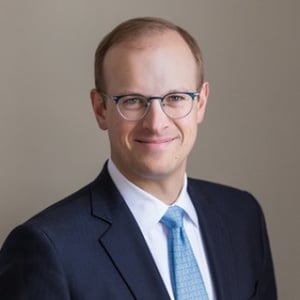
Partner, Consovoy McCarthy Park PLLC
Jeffrey Harris is an experienced litigator who focuses on constitutional, appellate, and regulatory matters. He is currently a partner at Consovoy McCarthy Park PLLC. In 2015, he was named to the Legal Times list of “D.C.’s Rising Stars,” which identified “some of the most accomplished young attorneys in the D.C. area.” Mr. Harris previously served as Associate Administrator of the Office of Information and Regulatory Affairs (OIRA). In that role, he was second in charge of the 50-person office within the Executive Office of the President that reviews all significant federal regulatory actions and coordinates regulatory policy across the federal government.
Before his government service, Mr. Harris was a partner at Bancroft PLLC and Kirkland & Ellis LLP, where his practice focused on Supreme Court, appellate, and complex litigation. Mr. Harris has extensive experience litigating before the U.S. Supreme Court. He has been the lead drafter of more than 100 merits briefs, amicus briefs, and certiorari-stage briefs, and he has contributed to 10 wins in cases before the Court.
Mr. Harris has also litigated numerous high-profile cases in the federal courts of appeals, federal and state trial courts, administrative agencies, and arbitral tribunals. He has successfully argued before the U.S. Courts of Appeals for the Sixth, Ninth, Eleventh, and D.C. Circuits, achieving wins on behalf of airlines, telecommunications providers, and pro bono clients. He has also argued numerous dispositive motions in federal district court and has participated in the trial of a significant voting rights case.
Mr. Harris served as a law clerk to Chief Justice John G. Roberts, Jr., of the U.S. Supreme Court, and Judges David Sentelle and Laurence Silberman of the U.S. Court of Appeals for the D.C. Circuit. He earned his J.D. magna cum laude from Harvard Law School and his A.B. magna cum laude from Georgetown University. He is a member of the District of Columbia and Virginia bars.

PA Supreme Court Embraces “Per-Defendant” Basis for Calculating Punitive-to-Compensatory Damages Ratio
Michael J. Schneekloth
The U.S. Supreme Court has repeatedly declined to articulate a bright line rule capping the...
Massachusetts Supreme Judicial Court Sides with Government in Nondelegation Case
Eli Nachmany
In Robinhood Financial LLC v. Secretary of Commonwealth, the Massachusetts Supreme Judicial Court sided...
Pennsylvania Supreme Court holds GPS Data is not Hearsay
Erin Sheley
In Pennsylvania v. Wallace, the Supreme Court of Pennsylvania held that GPS data collected from...
Administrative Appeals in Arizona: Does Form Prevail over Substance?
Jonathan Riches
The Arizona Supreme Court’s decision in Shea v. Maricopa County[1] turns on whether form prevails...
Son of Liberty, Man of Law: John Adams and the Boston Massacre Trial
Renée Lettow Lerner, Serena Zabin, Robert Allison
Watch our newest film “Son of Liberty, Man of Law: John Adams and the Boston...
Law of War
Phoenix, AZBargaining Rights Gone Wrong: How State Courts Invented a Constitutional Duty to Bargain and How It Harms Individual Workers
Alexander T. MacDonald
Constitutions often give you the right to do things. They give you the right to...
Topics
Connecticut Holds Public Comment Period on Version of ABA Model Rule 8.4(g)
The Connecticut Rules Committee of the Superior Court has extended its public comment period through...
State Court Docket Watch: Foster v. Commissioner of Correction
Kymberlee Stapleton
Correctional facilities across the United States house and employ large numbers of people. Keeping these...
An Unconstitutional Attempt to Address Affordable Housing
Jeffrey M. Harris
Note from the Editor: The Federalist Society takes no positions on particular legal and public...