
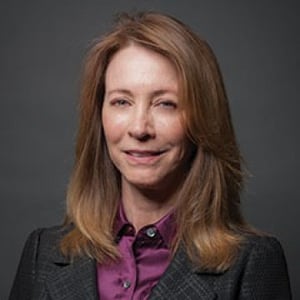
Founder, Libertas-West Project
Karen Lugo is a constitutional law consultant and national security analyst. She was Director of the Center for Tenth Amendment at Texas Public Policy Foundation from 2013 to 2015. When living in California, she was Co-Director of the Center for Constitutional Jurisprudence Center. From 2005 – 2012, she was a clinical visiting and adjunct professor at Chapman University School of Law where she co-taught the advanced Constitutional Law Clinic. Karen has co-authored and written circuit-level and Supreme Court amicus briefs on such issues as FISA Surveillance, Healthcare Reform, Arizona’s Border Security, Gay Marriage, The Ten Commandments, Eminent Domain, Christian Clubs on University Campuses, and Material Support for Terrorists.
Karen is the founder of the Libertas-West Project, a center for study Islamic integration and radicalization issues. In this capacity, she consulted with the Center for Security Policy to write a book on local over-watch of mosque construction and community engagement called: Mosques in America: A Guide to Accountable Permit Hearings and Continuing Citizen Oversight.
Karen writes and speaks for European and American groups on the importance of basing assimilation efforts on principles of Western exceptionalism. She presented a policy brief to the French Conseil d’Etat analyzing the legal implications of banning the burqa. Ms. Lugo has written one of the most comprehensive overviews of sharia law in American courts, American Family Law and Sharia-Compliant Marriages, for the Federalist Society law journal, Engage. She has written several white papers on the American Law for American Courts legislation and sharia tribunals in America.
Ms. Lugo was an appointee to the California Advisory Committee to the U.S. Commission on Civil Rights. She also taught a Human Rights law course on the contrast between French and English Enlightenment theories in Strasbourg, France.
Until moving from California, Ms. Lugo was a member of the David Horowitz Freedom Center Board of Directors. She was also a regular guest on the Orange County PBS local issues debate program, Inside OC, and she is a contributor to Pajamas Media, National Review Online, City Journal, American Spectator, American Greatness, Townhall.com, American Thinker, Daily Caller, and Family Security Matters. She has been interviewed by dozens of radio hosts and has spoken for civic groups on constitutional and cultural concerns.
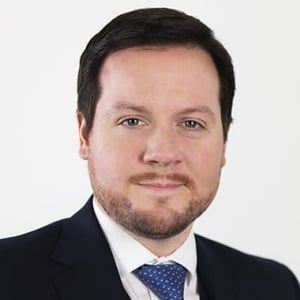
Legal Counsel, Alliance Defending Freedom International
Lorcán Price is legal counsel with ADF International in Strasbourg, France, where he heads litigation efforts at the European Court of Human Rights and handles needs that involve the Council of Europe and the Venice Commission. Prior to joining ADF International in 2015, Lorcán worked at the Irish Parliament as a speechwriter and then as a practicing barrister in Dublin, Ireland. He received his B.A. in philosophy from the National University of Ireland–Galway, achieved the degree of Barrister Advocate at the Honourable Society of the Kings Inns–Dublin, and obtained his Masters in Law degree from Trinity College–Dublin with an emphasis on European competition law and commercial insolvency law. He also is a well-known speaker and author for the pro-life movement in Ireland.

Partner, Steptoe & Johnson LLP
Stewart Baker is a partner in the law firm of Steptoe & Johnson in Washington, D.C. From 2005 to 2009, he was the first Assistant Secretary for Policy at the Department of Homeland Security. His law practice covers cybersecurity, data protection, homeland security, and travel and foreign investment regulation; he has been awarded one patent.
Mr. Baker has been General Counsel of the National Security Agency and General Counsel of the commission that investigated WMD intelligence failures prior to the Iraq war. He is the author of Skating on Stilts, a book on terrorism, cybersecurity, and other technology issues; he also hosts the weekly Cyberlaw Podcast.
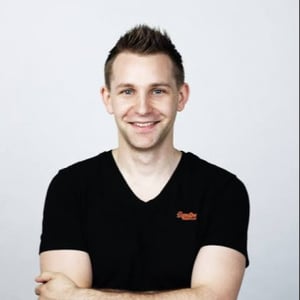
Founder, NOYB
Max Schrems is an Austrian activist, lawyer, and author who is widely known for his campaigns against Facebook for its privacy infringements, including violations of European privacy laws and the alleged transmission of personal data to the US National Security Agency (NSA) as part of the NSA's PRISM program. Schrems is the founder of None of Your Business (NOYB), a European non-profit organization that focuses on privacy issue and privacy violations in the private sector. NOYB initiatives support the EU's General Data Protection Regulation (GDPR), the ePrivacy Regulation, and information privacy in general.

Executive Vice President, Chief Legal Officer, Gates Corporation
Matthew R. A. Heiman joined the Company in May 2026 and has served as the Company’s Chief Legal Officer and Corporate Secretary since June 2026. As Chief Legal Officer, Mr. Heiman is responsible for all legal functions for Gates, including securities and corporate governance, M&A, litigation, commercial, regulatory, compliance, patents and trademarks, real estate, employment and labor, sustainability and environmental matters. Prior to joining Gates, Mr. Heiman held senior legal leadership roles at Waystar, where he served as Chief Legal & Administrative Officer from 2023 to 2025 and as General Counsel and Corporate Secretary from 2020 to 2023. Prior to that, he was with Johnson Controls, where he served as Vice President, Corporate Secretary, and Associate General Counsel. Mr. Heiman has been a Senior Fellow for the National Security Institute at George Mason University’s Antonin Scalia School of Law since 2018.
Partner, Steptoe & Johnson LLP
Stewart Baker is a partner in the law firm of Steptoe & Johnson in Washington, D.C. From 2005 to 2009, he was the first Assistant Secretary for Policy at the Department of Homeland Security. His law practice covers cybersecurity, data protection, homeland security, and travel and foreign investment regulation; he has been awarded one patent.
Mr. Baker has been General Counsel of the National Security Agency and General Counsel of the commission that investigated WMD intelligence failures prior to the Iraq war. He is the author of Skating on Stilts, a book on terrorism, cybersecurity, and other technology issues; he also hosts the weekly Cyberlaw Podcast.
Executive Vice President, Chief Legal Officer, Gates Corporation
Matthew R. A. Heiman joined the Company in May 2026 and has served as the Company’s Chief Legal Officer and Corporate Secretary since June 2026. As Chief Legal Officer, Mr. Heiman is responsible for all legal functions for Gates, including securities and corporate governance, M&A, litigation, commercial, regulatory, compliance, patents and trademarks, real estate, employment and labor, sustainability and environmental matters. Prior to joining Gates, Mr. Heiman held senior legal leadership roles at Waystar, where he served as Chief Legal & Administrative Officer from 2023 to 2025 and as General Counsel and Corporate Secretary from 2020 to 2023. Prior to that, he was with Johnson Controls, where he served as Vice President, Corporate Secretary, and Associate General Counsel. Mr. Heiman has been a Senior Fellow for the National Security Institute at George Mason University’s Antonin Scalia School of Law since 2018.
Founder, NOYB
Max Schrems is an Austrian activist, lawyer, and author who is widely known for his campaigns against Facebook for its privacy infringements, including violations of European privacy laws and the alleged transmission of personal data to the US National Security Agency (NSA) as part of the NSA's PRISM program. Schrems is the founder of None of Your Business (NOYB), a European non-profit organization that focuses on privacy issue and privacy violations in the private sector. NOYB initiatives support the EU's General Data Protection Regulation (GDPR), the ePrivacy Regulation, and information privacy in general.
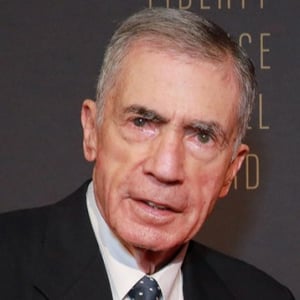
Former Governor of Virginia and United States Senator
Charles Spittal Robb is an American politician from Virginia and former officer in the United States Marine Corps. A member of the Democratic Party, he served as the 64th Governor of Virginia from 1982 to 1986 and a United States Senator from 1989 until 2001. In 2004, he co-chaired the Iraq Intelligence Commission.
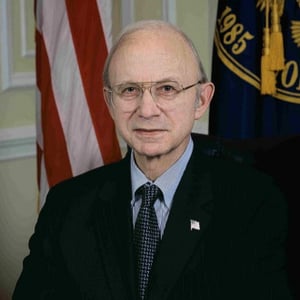
Former Archivist of the United States
Allen Weinstein (September 1, 1937 – June 18, 2015) was an American historian, educator, and federal official who served in several different offices. He was, under the Reagan administration, cofounder of the National Endowment for Democracy in 1983. He served as the Archivist of the United States from February 16, 2005, until his resignation on December 19, 2008. After his resignation, he returned to the International Foundation for Electoral Systems as a senior strategist and was a visiting faculty member at the University of Maryland.
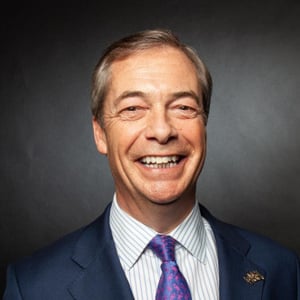
Former Member of the European Parliament, South East England Constituency

Professor Emeritus of Law, Antonin Scalia Law School, George Mason University
Jeremy A. Rabkin is a Professor Emeritus of Law at the Antonin Scalia Law School, George Mason University. Before joining the faculty in June 2007, he was for over two decades a professor in the Department of Government at Cornell University. Professor Rabkin serves on the board of directors of the Center for Individual Rights, a public interest law firm based in Washington, D.C. Previously he was a board member of the U.S. Institute of Peace and the board of academic advisors of the American Enterprise Institute.
Professor Rabkin’s books include Law Without Nations? (Princeton University Press, 2005). He authored “If You Need a Friend, Don’t Call a Cosmopolitan,” a chapter in Varieties of Sovereignty and Citizenship (Sigal R. Ben-Porath & Rogers M. Smith eds., University of Pennsylvania Press, 2012). His articles have appeared in major law reviews and political science journals and his journalistic contributions in a range of magazines and newspapers, including the Washington Post and the Wall Street Journal.
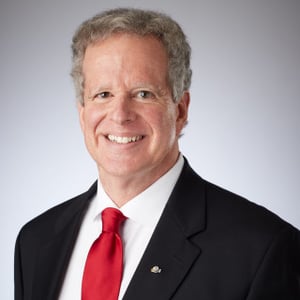
Director, Global Engagement; Vincent de Paul Professor of Law, DePaul University College of Law
Before joining DePaul, Dr. Alberto R. Coll served for five years as dean of the Center for Naval Warfare Studies, the U.S. Navy’s foremost strategic research center. A cum laude graduate from Princeton University in history, he earned his JD and PhD in government and foreign affairs from the University of Virginia. In 1982, Professor Coll joined the faculty at Georgetown University, and in 1986 was appointed secretary of the Navy Senior Research Fellow at the Naval War College. In 1989, he became the youngest holder of the Charles H. Stockton Chair of International Law, the college’s oldest chair. From 1990 to 1993, Professor Coll was principal deputy assistant secretary of defense, serving in the Pentagon office that oversaw the Defense Department’s policy, strategy and $3 billion budget for special operations forces and “low-intensity” conflict, including counterterrorism. For his work, he received the Secretary of Defense Medal for Outstanding Public Service. Professor Coll is the author of The Wisdom of Statecraft and editor of several other books on international relations and law. He is the author of prize-winning articles in the American Journal of International Law and the Naval War College Review, as well as articles in Foreign Policy, Washington Quarterly, Harvard Journal of International Law, the University of Pennsylvania Journal of International Law, and the UCLA Journal of International Law and Foreign Affairs. In 2004, Professor Coll received the Antonio Jose Irisarri Medal for his contribution to strengthening the rule of law and civilian control over the military in Guatemala. He has served as consultant to the Pew Charitable Trusts, the Ford Foundation, the Carnegie Council on Ethics and International Affairs, the Rand Corp., the United States Information Agency, and numerous defense and intelligence organizations. He is a frequent commentator on American foreign policy, U.S. relations with Cuba and Latin America, and international legal and political issues. Over the past 28 years he has lectured at more than 120 universities, think tanks, government agencies, and public forums in the United States, Latin America, Europe, Asia and South Africa. Professor Coll is a member of the Virginia Bar, the Council on Foreign Relations, and the Instituto de Estudios Juridicos y Politicos at the Universidad Complutense de Madrid. At DePaul, he teaches courses on international law, international human rights, U.S. foreign relations, terrorism, international trade and Latin America.

George C. Dix Professor in Constitutional Law, Northwestern University Pritzker School of Law
John O. McGinnis is a graduate of Harvard College and Harvard Law School where he was an editor of the Harvard Law Review. He also has an MA degree from Balliol College, Oxford, in philosophy and theology. Professor McGinnis clerked on the U.S. Court of Appeals for the District of Columbia. From 1987 to 1991, he was deputy assistant attorney general in the Office of Legal Counsel at the Department of Justice. He is the author of Accelerating Democracy: Transforming Government Through Technology (Princeton 2013) and Originalism and the Good Constitution (Harvard 2013) (with M. Rappaport). He is a past winner of the Paul Bator award given by the Federalist Society to an outstanding academic under 40. He has been listed by the United States on the roster of panelists who may be called upon to decide World Trade Organization Disputes.
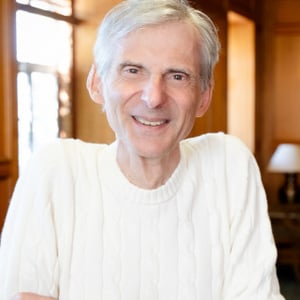
Professor of Law, University of San Diego School of Law
Maimon Schwarzschild is Professor of Law at the University of San Diego, where he has taught
since 1982. He has published extensively on constitutional law, jurisprudence, law and religion,
and civil rights. He is an English barrister and an American lawyer: he was an attorney in the
Civil Rights Division of the US Department of Justice from 1976 to 1981 and practised as a
barrister in London in the 1980s. He was a visiting professor at the Sorbonne for several years,
and has been a visiting professor at the Hebrew University in Jerusalem. He is a Director of the
Institute of Law and Religion at the University of San Diego and a member of the editorial board
of Law and Philosophy. With Gail Heriot he recently co-edited a volume entitled “A Dubious
Expediency: How Race Preferences Damage Higher Education”, published by Encounter Books.

Partner, Arnold & Porter LLP
John Bellinger heads the firm's Global Law and Public Policy practice. He joined the firm in 2009, after holding several senior Presidential appointments in the US government, including as the Senate-confirmed Legal Adviser to the Department of State and Senior Associate Counsel to the President and Legal Adviser to the National Security Council (NSC) at the White House in the George W. Bush Administration.
Mr. Bellinger represents individuals, corporations, and sovereign governments in litigation in US courts and before international institutions. He has extensive experience in US foreign relations litigation involving the Alien Tort Statute, the Foreign Sovereign Immunities Act, the Anti-Terrorism Act, and the diplomatic and official immunities of foreign governments and government officials. He advises clients on other public international law matters, including treaties and international agreements as well as international humanitarian law and human rights law. He also counsels US and foreign clients on national security legal and policy issues, including US and multilateral financial sanctions and asset controls, the extraterritorial application of US criminal and civil laws, and transactions reviewed by the Committee on Foreign Investment in the United States (CFIUS).
Chambers Global ranks Mr. Bellinger among the best international lawyers in the world, reporting that he has "second-to-none experience in public international law, international litigation and foreign sovereign immunity" and that his "experience at the highest levels of the Executive branch...gives him a distinct and important vantage point on legal issues." Chambers adds: "For any cross border work he's just extraordinary, he knows the area inside-out."
Mr. Bellinger was the State Department Legal Adviser–the most senior international lawyer in the US Government–from 2005 to 2009, serving under Secretary of State Condoleezza Rice. He directed more than 170 lawyers on domestic and international law matters affecting US foreign relations. Before joining the State Department, Mr. Bellinger managed Secretary Rice's Senate confirmation process and co-directed her State Department transition team. In 2009, Mr. Bellinger received the Secretary of State's Distinguished Service Award.
Mr. Bellinger has argued cases before the International Court of Justice (Mexico v. United States–(Medellin)) and the Iran-United States Claims Tribunal in The Hague. He has appeared on numerous briefs in US federal courts, including the Supreme Court, in litigation involving international law issues.
As Legal Adviser to the NSC from 2001 to 2005, Mr. Bellinger advised President Bush, Cabinet officials, National Security Advisor Rice, and NSC staff on a wide range of national security and international law issues, including counterterrorism issues after the 9-11 attacks. He was one of the principal drafters of the legislation that created the Director of National Intelligence.
Prior to his service in the Bush Administration, Mr. Bellinger served as Counsel for National Security Matters in the Criminal Division at the US Department of Justice (1997-2001); Of Counsel to the Senate Select Committee on Intelligence (1996); General Counsel of the Commission on the Roles and Capabilities of the US Intelligence Community (1995-1996); and Special Assistant to Director of Central Intelligence William Webster (1988-1991). Mr. Bellinger is an Adjunct Senior Fellow in International and National Security Law at the Council on Foreign Relations. He has testified before Congress on numerous occasions, is quoted regularly in the media on international and national security law matters, and has lectured at numerous US and foreign universities and law schools. He is the author of many law review articles and op-eds on international law, including op-eds in The Washington Post, The New York Times, and The Wall Street Journal. Mr. Bellinger is a senior contributor to the Lawfare blog.
Mr. Bellinger is a member of the Secretary of State's Advisory Committee on International Law. He served from 2005-2019 as one of four US Members of the Permanent Court of Arbitration in The Hague and a member of the US "National Group", which nominates judges to the International Court of Justice. He is also a member of the Council on Foreign Relations and the American Society of International Law. He is a member of the Council of the American Law Institute; the boards of directors of the American Ditchley Foundation, the Salzburg Global Seminar, and the Stimson Center; and the advisory committee of Foreign Affairs magazine.
Mr. Bellinger is a graduate of Princeton University's Woodrow Wilson School of Public and International Affairs, and he holds an MA in Foreign Affairs from the University of Virginia and a JD from Harvard Law School, where he was an editor of the Harvard International Law Journal.
Associate Dean, Graduate Programs & Professor of Law, Georgetown University Law Center
Rosa Brooks teaches courses on international law, national security, constitutional law, and other subjects. She also writes a weekly column for Foreign Policy, and serves as a Senior Fellow at New America.
From 2009-2011, Prof. Brooks served as Counselor to Under Secretary of Defense for Policy Michele Flournoy. During her time at the Defense Department, Brooks also founded the Office for Rule of Law and International Humanitarian Policy, and also led a major overhaul of the Defense Department's strategic communication and information operations efforts. In July 2011, she received the Secretary of Defense Medal for Outstanding Public Service.
From 2005-2009, Prof. Brooks was a weekly op-ed columnist for the Los Angeles Times, and served as faculty director of GULC's Human Rights Institute. In 2006-2007, Prof. Brooks served as Special Counsel to the President at the Open Society Institute in New York. From 2001-2006, she was an associate professor at the University of Virginia School of Law, where she taught human rights law, constitutional law, and criminal law.
Prof. Brooks has also served as a senior advisor at the US Department of State, a consultant for Human Rights Watch, a fellow at the Carr Center at Harvard's Kennedy School of Government, a board member of Amnesty International USA, a Term Member of the Council on Foreign Relations, a lecturer at Yale Law School, a member of the Executive Council of the American Society of International Law, a member of the World Economic Forum's Global Agenda Council on Fragile States, the board of the National Security Network and the Steering Committee of the White Oak Foreign Policy Leaders Project.
In addition to her popular writing, Prof. Brooks has written numerous scholarly articles on international law, failed states, post-conflict reconstruction and the rule of law, human rights, terrorism and the law of war.
Her most recent book, How Everything Became War and the Military Became Everything, was published in 2016 by Simon and Schuster. She is also the author of Can Might Make Rights? The Rule of Law After Military Interventions (with Jane Stromseth and David Wippman), published in 2006 by Cambridge University Press. Her government and NGO work has involved field research in Iraq, Afghanistan, Indonesia, Israel, Palestine, Kosovo, China, Russia, Ghana, Kenya, Uganda, South Africa, and Sierra Leone, among other places.
Brooks received her A.B. from Harvard in 1991 (history and literature), followed by a master's degree from Oxford in 1993 (social anthropology) and a law degree from Yale in 1996.
Co-Director, Global Law Scholars Program; Co-Director, Center on, Georgetown University Law Center
Professor Stewart joined the faculty as Visiting Professor of Law following his retirement from the U. S. Department of State, where he served as Assistant Legal Adviser for Private International Law. Previously he had been Assistant Legal Adviser for Diplomatic Law and Litigation, for African Affairs, for Human Rights and Refugees, for Law Enforcement and Intelligence, and for International Claims and Investment Disputes, as well as Special Assistant to the Legal Adviser. Before joining the government, he was in private practice with Donovan Leisure Newton &Irvine in commercial and antitrust litigation. He was Adjunct Professor for over 25 years and received Georgetown's Charles Fahy award for distinguished adjunct faculty teaching in 2003-2004.
Prof. Stewart is President of the American Branch of the International Law Association and a member of the Board of Editors of the American Journal of International Law and the Secretary of State's Advisory Committee on Private International Law. The American Law Institute has selected him to serve as one of the reporters working on the Restatement (Fourth), Foreign Relations Law of the United States. He previously served on the Executive Council of the ABA's Section of International Law and the Executive Council of the American Society of International Law. In 2012 he was re-elected to the Inter-American Juridical Committee, which advises the Organization of American States on juridical matters of an international nature and promotes the progressive development and codification of international law.
Professor Stewart co-directs the Global Law Scholars Program, directs the Center on Transnational Business and the Law, and teaches courses in public and private international law, foreign relations law, international immunities, international criminal law and civil litigation. He co-edited the multi-volume Digest of U.S. Practice in International Law for the years 1990-2003.With Professors Luban and O'Sullivan, he co-authored International and Transnational Criminal Law (Aspen 2nd ed., 2014).

Judge, United States Court of Appeals, Ninth Circuit
Judge Carlos Bea serves as a judge on the United States Court of Appeals for the Ninth Circuit. He received his Bachelor's Degree from Stanford University in 1956 and his J.D. from Stanford Law School in 1958. Judge Bea was born in San Sebastian, Spain, and immigrated with his family to Cuba in 1939. In 1952, he represented Cuba on the Cuban National basketball team in the Helsinki Olympics. Judge Bea became a naturalized citizen of the United States in 1958. He engaged in private practice in San Francisco, principally in the area of civil trials (jury and non-jury), from 1959-75 at Dunne, Phelps & Mills and from 1975-90 at Carlos Bea, A Law Corporation. He taught courses in civil litigation advocacy at Hastings College of Law and Stanford Law School. From 1990 to 2003, Judge Bea served as a judge of the San Francisco Superior Court. He was nominated by President George W. Bush to the United States Court of Appeals for the Ninth Circuit and was confirmed in 2003.
Judge Bea and his wife Louise reside in San Francisco, where they raised their four sons, Sebastian, Alexander, Nicholas, and Dominic.
Partner, Arnold & Porter LLP
John Bellinger heads the firm's Global Law and Public Policy practice. He joined the firm in 2009, after holding several senior Presidential appointments in the US government, including as the Senate-confirmed Legal Adviser to the Department of State and Senior Associate Counsel to the President and Legal Adviser to the National Security Council (NSC) at the White House in the George W. Bush Administration.
Mr. Bellinger represents individuals, corporations, and sovereign governments in litigation in US courts and before international institutions. He has extensive experience in US foreign relations litigation involving the Alien Tort Statute, the Foreign Sovereign Immunities Act, the Anti-Terrorism Act, and the diplomatic and official immunities of foreign governments and government officials. He advises clients on other public international law matters, including treaties and international agreements as well as international humanitarian law and human rights law. He also counsels US and foreign clients on national security legal and policy issues, including US and multilateral financial sanctions and asset controls, the extraterritorial application of US criminal and civil laws, and transactions reviewed by the Committee on Foreign Investment in the United States (CFIUS).
Chambers Global ranks Mr. Bellinger among the best international lawyers in the world, reporting that he has "second-to-none experience in public international law, international litigation and foreign sovereign immunity" and that his "experience at the highest levels of the Executive branch...gives him a distinct and important vantage point on legal issues." Chambers adds: "For any cross border work he's just extraordinary, he knows the area inside-out."
Mr. Bellinger was the State Department Legal Adviser–the most senior international lawyer in the US Government–from 2005 to 2009, serving under Secretary of State Condoleezza Rice. He directed more than 170 lawyers on domestic and international law matters affecting US foreign relations. Before joining the State Department, Mr. Bellinger managed Secretary Rice's Senate confirmation process and co-directed her State Department transition team. In 2009, Mr. Bellinger received the Secretary of State's Distinguished Service Award.
Mr. Bellinger has argued cases before the International Court of Justice (Mexico v. United States–(Medellin)) and the Iran-United States Claims Tribunal in The Hague. He has appeared on numerous briefs in US federal courts, including the Supreme Court, in litigation involving international law issues.
As Legal Adviser to the NSC from 2001 to 2005, Mr. Bellinger advised President Bush, Cabinet officials, National Security Advisor Rice, and NSC staff on a wide range of national security and international law issues, including counterterrorism issues after the 9-11 attacks. He was one of the principal drafters of the legislation that created the Director of National Intelligence.
Prior to his service in the Bush Administration, Mr. Bellinger served as Counsel for National Security Matters in the Criminal Division at the US Department of Justice (1997-2001); Of Counsel to the Senate Select Committee on Intelligence (1996); General Counsel of the Commission on the Roles and Capabilities of the US Intelligence Community (1995-1996); and Special Assistant to Director of Central Intelligence William Webster (1988-1991). Mr. Bellinger is an Adjunct Senior Fellow in International and National Security Law at the Council on Foreign Relations. He has testified before Congress on numerous occasions, is quoted regularly in the media on international and national security law matters, and has lectured at numerous US and foreign universities and law schools. He is the author of many law review articles and op-eds on international law, including op-eds in The Washington Post, The New York Times, and The Wall Street Journal. Mr. Bellinger is a senior contributor to the Lawfare blog.
Mr. Bellinger is a member of the Secretary of State's Advisory Committee on International Law. He served from 2005-2019 as one of four US Members of the Permanent Court of Arbitration in The Hague and a member of the US "National Group", which nominates judges to the International Court of Justice. He is also a member of the Council on Foreign Relations and the American Society of International Law. He is a member of the Council of the American Law Institute; the boards of directors of the American Ditchley Foundation, the Salzburg Global Seminar, and the Stimson Center; and the advisory committee of Foreign Affairs magazine.
Mr. Bellinger is a graduate of Princeton University's Woodrow Wilson School of Public and International Affairs, and he holds an MA in Foreign Affairs from the University of Virginia and a JD from Harvard Law School, where he was an editor of the Harvard International Law Journal.
Anne and Joel Ehrenkranz Professor of Law, New York University School of Law
Ryan Goodman is Professor of Law and Co-Chair of the Center for Human Rights and Global Justice. Prior to moving to NYU, Goodman was the inaugural Rita E. Hauser Professor of Human Rights and Humanitarian Law and Director of the Human Rights Program at Harvard Law School. He received his J.D. from Yale Law School, where he served as an articles editor of the Yale Law Journal. He received a Ph.D. in Sociology from Yale University. After law school, he clerked for Judge Stephen Reinhardt of the U.S. Court of Appeals for the Ninth Circuit. He is a member of the Board of Editors of the American Journal of International Law, the Board of Editors of International Theory, and the US Naval War College’s Board of Advisors for International Law Studies. He is a member of the United States Department of State’s Advisory Committee on International Law and a member of the Council on Foreign Relations. He is also the Co-Editor-in-Chief of the civil liberties and national security blog, Just.Security.org
His book, Socializing States: Promoting Human Rights through International Law (with Derek Jinks) was awarded the American Society of International Law’s 2014 Certificate of Merit for a Preeminent Contribution to Creative Scholarship and has recently been nominated by Oxford University Press for the 2015 Grawemeyer Award for Ideas Improving World Order.
Ella A. and Ernest H. Fisher Professor of Law, Ohio Northern University Claude W. Pettit College of Law
Professor Lewis joined the Ohio Northern faculty in August, 2006. Lewis flew F-14's for the United States Navy in Operation Desert Shield, conducted strike planning for Desert Storm and was deployed to the Persian Gulf to enforce the no-fly zone over Iraq. He was a Topgun graduate in 1992 and was featured in a NOVA documentary on Topgun and aircraft carriers.
After his naval service, Lewis graduated from Harvard Law School, cum laude, was a management consultant with McKinsey and Company, and served as a litigation associate with McGuireWoods, LLP, in Norfolk, Virginia.
Professor Lewis published more than a dozen articles and essays on various aspects of the law of war and the conflict between the US and al Qaeda. His work has been cited by the Seventh, Ninth and Eleventh Circuit Courts of Appeals. He has testified before Congress on the legality of drone strikes in Pakistan and Yemen and on the civil liberties tradeoffs associated with trying some Al Qaeda members or terrorist suspects before military commissions. His op-eds have appeared in numerous media outlets including the LA Times and the New York Post and he has appeared on Public Radio International to discuss the increasing use of armed drones in warfare. He delivered scores of presentations and panel presentations before military and law school audiences alike including presentations to the international Military Operations Law conference in Queensland, Australia, the US Army's JAG School in Charlottesville, VA and law school events at Stanford, Chicago, Columbia, Penn, Duke, Texas and Northwestern among others.
Professor Lewis received the Award for Excellence in Classroom Teaching for the 2007-08 academic year.
He taught Commercial Law, International Law, a Law of War Seminar and Torts. He also taught Corporate Finance and Accounting for Lawyers. His other teaching interests included Civil Procedure and Contracts.
George C. Dix Professor in Constitutional Law, Northwestern University Pritzker School of Law
John O. McGinnis is a graduate of Harvard College and Harvard Law School where he was an editor of the Harvard Law Review. He also has an MA degree from Balliol College, Oxford, in philosophy and theology. Professor McGinnis clerked on the U.S. Court of Appeals for the District of Columbia. From 1987 to 1991, he was deputy assistant attorney general in the Office of Legal Counsel at the Department of Justice. He is the author of Accelerating Democracy: Transforming Government Through Technology (Princeton 2013) and Originalism and the Good Constitution (Harvard 2013) (with M. Rappaport). He is a past winner of the Paul Bator award given by the Federalist Society to an outstanding academic under 40. He has been listed by the United States on the roster of panelists who may be called upon to decide World Trade Organization Disputes.

Emanuel S. Heller Professor of Law, University of California at Berkeley; Thomas Smith Senior Research Fellow, The Civitas Institute, University of Texas at Austin
John Yoo is the Emanuel Heller Professor of Law at the University of California at Berkeley. He is also the Thomas Smith Senior Research Fellow, Civitas Institute, at the University of Texas at Austin. He is also a Nonresident Senior Fellow at the American Enterprise Institute.
His most recent book, The Politically Incorrect Guide to the Supreme Court, co-authored with Robert Delahunty, was published in 2023. Professor Yoo’s other books include Defender-in-Chief: Trump’s Fight for Presidential Power; Striking Power: How Cyber, Robots, and Space Weapons Change the Rules for War; Point of Attack: Preventive War, International Law, and Global Welfare; and Crisis and Command: A History of Executive Power from George Washington to George Bush.
He is a co-author of volumes 1 and 2 of R. Rossum, G. Tarr, V. Munoz & J. Yoo American Constitution Law (Routledge, 2026), and a co-editor of the eight-volume series on the 250th anniversary of the American Revolution, We Hold These Truths, with Yuval Levin and Adam White of the American Enterprise Institute.
Professor Yoo has published more than 100 articles in academic journals on subjects including national security, constitutional law, international law, and the Supreme Court. He also regularly contributes to the editorial pages of the Wall Street Journal, New York Times, Washington Post, Los Angeles Times, and National Review, among others.
Professor Yoo has served in all three branches of government. He was an official in the U.S. Department of Justice, where he worked on national security and terrorism issues after the 9/11 attacks. He served as general counsel of the U.S. Senate Judiciary Committee. He has been a law clerk for Supreme Court Justice Clarence Thomas and federal appeals Judge Laurence Silberman. He has been a visiting professor at the University of Texas at Austin’s School of Civic Leadership, Seoul National University, the Interdisciplinary Center Herzliya, Keio University, Trento University, the University of Chicago, and the Free University of Amsterdam.
Professor Yoo supervises the Public Law and Policy Program and the California Constitution Center. He also serves on the boards of Founding Forward, the Washington Legal Foundation, the Pacific Legal Foundation, the Ulysses Grant Institute, the Federalist Society’s Separation of Powers and Federalism Division, the Universidad Cientifica del Sur Law School, and the Asia-Pacific Law Institute at Seoul National University. He is a winner of the Federalist Society’s Paul Bator award and the Heritage Foundation’s Edwin Meese III Originalism Lectureship.
Professor Yoo graduated from Yale Law School and summa cum laude from Harvard College.
Of Counsel, Christian Legal Society's Center for Law & Religious Freedom
Kim Colby has worked for Christian Legal Society’s Center for Law and Religious Freedom since graduating from Harvard Law School in 1981. She has represented religious groups in several appellate cases, including two cases heard by the United States Supreme Court. She has filed numerous amicus briefs in federal and state courts. In 1984, she assisted in congressional passage of the Equal Access Act, 20 U.S.C. § 4071, et seq., which protects the right of secondary school students to meet for prayer and Bible study on campus. Ms. Colby has prepared several CLS publications addressing issues about religious expression in public schools, including released time programs, implementation of the Equal Access Act, and teachers’ religious expression.
Ms. Colby graduated summa cum laude from the University of Illinois with a major in American History and a particular interest in slavery in colonial North America.

William Rand Kenan, Jr. Distinguished Professor of Law, University of North Carolina School of Law
William (Bill) Marshall joined the Carolina Law faculty in 2001 and serves as the William R. Kenan Jr. Distinguished Professor of Law. His teaching and research interests include the first amendment, presidential power, election law, federal jurisdiction, federal judicial selection, civil procedure, and media law. Marshall is the author of numerous book chapters, articles, and essays on free speech, separation of powers, the Establishment Clause, and the Free Exercise Clause. His work has appeared in the Harvard Law Review, the Yale Law Journal, the Supreme Court Review, and the University of Chicago Law Review, among others.
Marshall received his law degree from the University of Chicago and his undergraduate degree from the University of Pennsylvania. Marshall was Deputy Counsel to the President and Deputy Assistant to the President during the Clinton Administration and also served as the Solicitor General for the State of Ohio. He has taught at the Northwestern, Boston University, Vanderbilt, Ohio State, DePaul, Case Western Reserve, William and Mary, and the University Connecticut law schools. Prior to beginning his teaching career, Marshall was a Special Assistant Attorney General for the State of Minnesota.
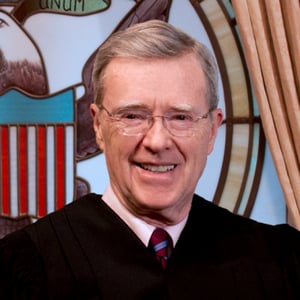
Judge, United States Court of Appeals, Ninth Circuit
Judge O’Scannlain was appointed United States Circuit Judge for the Ninth Circuit by President Reagan on September 26, 1986. He received a J.D. degree in 1963 from Harvard Law School and a B.A. in 1957 from St. John’s University. He also earned the LL.M. (Judicial Process) degree at University of Virginia Law School in 1992. He was awarded the LL.D. (honoris causa) degree by the University of Notre Dame in 2002, the LL.D. (honoris causa) degree by Lewis & Clark College in 2003 and the LL.D. (honoris causa) degree by the University of Portland in 2011.
As a judge on the U.S. Court of Appeals for the Ninth Circuit, Judge O’Scannlain has participated in over 6,000 federal cases and has written hundreds of published opinions on a broad range of subjects including constitutional law, international law, securities law, administrative law, and criminal law. He hears appeals in San Francisco (court headquarters), as well as in Los Angeles (Pasadena), Portland, Seattle, Anchorage and Honolulu. The late Chief Justice Rehnquist appointed Judge O'Scannlain to the Federal Judicial Center's Advisory Committee on Appellate Judge Education. In 2009, Chief Justice Roberts appointed Judge O’Scannlain to the International Judicial Relations Committee of the U.S. Judicial Conference and subsequently appointed him Chairman in 2010.
President George W. Bush appointed Judge O’Scannlain to the Board of Trustees of the James Madison Memorial Fellowship Foundation in 2004. Pope Benedict XVI conferred the Order of Saint Gregory the Great on Judge and Mrs. O’Scannlain in 2007.
Judge O’Scannlain’s professional interests also include judicial administration and reform, and continuing legal education. Judge O’Scannlain is former Chair of the Judicial Division of the American Bar Association and has previously chaired the ABA’s Appellate Judges Conference, its Committee on Appellate Practice, and its 9th Appellate Practice Institute. He has testified before the Senate Judiciary Committee on several occasions, the House Judiciary Subcommittee on Courts and Intellectual Property, and the Commission on Structural Alternatives for the Federal Courts of Appeals on the subject of court reorganization. In addition to serving as a faculty member at numerous federal appellate practice seminars for judges and attorneys, including New York University Law School’s Institute for Judicial Administration, Judge O’Scannlain is an Adjunct Professor at Lewis & Clark Law School where he teaches a seminar on the Supreme Court. He has served as a Moot Court Judge at distinguished law schools across the United States including Harvard, Yale Stanford, Boalt Hall (Berkeley Law), Virginia, Cornell, Notre Dame, Fordham, Alabama, University of Southern California, King Hall (U.C. Davis) and Loyola Marymount University and in China at Xiamen and Renmin Universities.
Between graduation from Harvard and investiture as a federal judge, Judge O’Scannlain was primarily engaged in private law practice. Between 1969 and 1974, he was consecutively the Deputy Attorney General of Oregon, the Public Utility Commissioner of Oregon, and Director of the Oregon Department of Environmental Quality. He retired from the U.S. Army Reserve in 1978 as a Major after 23 years Reserve and National Guard service, including four years as an enlisted man.
A first generation Irish-American son of immigrant parents from Sligo and Derry, Judge O’Scannlain is married to the former Maura Nolan and has eight children: Sean, Jane, Brendan, Kevin, Megan, Christopher, Anne, and Kate, and nineteen grandchildren. His chambers are in the Pioneer Courthouse in Portland, Oregon.

Director of the Program in Human Rights, Catholic University of America
William L. Saunders is Chair Emeritus of the Religious Liberties Practice Group of the Federalist Society. He is also a religious liberty and human rights scholar as well as director of the Center for Human rights at The Catholic University of America. He is Law Fellow with the Institute for Human Ecology, Professor and Director of the Program in Human Rights in the School of Arts & Sciences and Co-director of the Center for Religious Liberty at the Columbus School of Law. Before joining The Catholic University of America, Mr. Saunders served as Senior Vice President and Senior Counsel with Americans United for Life for ten years. From 1999 to 2009, he was Senior Fellow in Bioethics and Human Rights Counsel at the Family Research Council.
Mr. Saunders attended the University of North Carolina at Chapel Hill on a Morehead scholarship. He obtained his degree in law from the Harvard Law School.
Mr. Saunders was featured in Harvard’s first Guide to Conservative Public Interest Law in 2003 and again in the 2008 edition. He served on Harvard’s Advisory Committee for its 2008 celebration of public interest law. A member of the Supreme Court bar, he has authored numerous legal briefs in state, federal, foreign, and international courts.
Mr. Saunders’ book, Unborn Human Life and Fundamental Rights: Leading Constitutional Cases Under Scrutiny, was published in 2019. His articles and book chapters have been published by the university presses of Harvard, Villanova, Brigham Young, Fordham, Georgetown, Houston, Scranton, and the Catholic University of America, as well as by the Intercollegiate Studies Institute, Freedom House, Greenhaven Press, Rowan & Littlefield, Praeger, St. Augustine’s, and Intervarsity press. He has given lectures and participated in debates at many colleges, universities, and law schools, including Princeton, Harvard, Georgetown, and Notre Dame. He delivered the annual J. Michael Miller Lecture at the University of St. Thomas (on international law) in February 2007, the annual R. Wayne Kraft Memorial Lecture (on bioethics) at DeSales University in February 2004 and the annual James Moore Lecture (on human rights violations in Sudan) at Millikin University in 1999. He has also lectured, and/or has been published, in many foreign countries, including Italy, Germany, Poland, Austria, Spain, Greece, Slovakia, Mexico, Qatar, Malaysia, Romania, the Philippines, Hong Kong, and the United Kingdom.
In addition to speaking and writing frequently on bioethics topics, Mr. Saunders has submitted testimony to the President’s Council on Bioethics, as well as to UNESCO’s Committee on Bioethics, and has briefed Congressional staff and state legislatures. He is a regular columnist for the National Catholic Bioethics Quarterly.
Mr. Saunders has appeared often in the media, including BBC World News, CNN, Fox News, Vatican Radio, and National Public Radio. His articles on issues have appeared in a variety of journals, such as First Things, Human Events, Human Life Review, The Legal Times, Communio, The Family in America: A Journal of Public Policy, Ethics & Medics, and Touchstone.
Mr. Saunders served on the official United States delegation to the UN Special Session on Children in 2001/02. In 2011, he was a speaker at an official briefing at the UN, addressing the topic, why euthanasia is not a human right.
In 2004, he served on the NGO Working Committee in connection with the Doha Intergovernmental Conference for the Family.
Mr. Saunders is Senior Fellow with the Religious Freedom Institute, and Affiliated Scholar with the Pellegrino Center for Clinical Ethics at the Georgetown University School of Medicine. He is President of the Fellowship of Catholic Scholars and a member of the boards of the International Association of Catholic Bioethicists, the International Right to Life Federation, the Institute on Religion and Democracy, and the Society of Catholic Social Scientists.
In 1999, Mr. Saunders founded Sudan Relief and Rescue, Inc., to aid the persecuted church in Sudan. He has worked for and written on behalf of the persecuted church for many years.
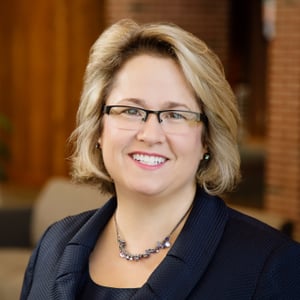
Professor, University of Illinois College of Law
Robin Fretwell Wilson is the Mildred Van Voorhis Jones Chair in Law at the University of Illinois College of Law.
A scholar in family law, bioethics and law and religion, Professor Wilson has worked extensively on behalf of state and federal law reform efforts in each realm.
Across two decades, she has worked to secure laws protecting the autonomy of patients to decide when they will be used to teach intimate exams to medical students, laws now in place in 22 states—sixteen of which have been enacted since 2019.
Professor Wilson is known for bridging differences in the culture war. In 2015, she spent a month in residence with the Utah legislature, helping Utah state lawmakers to pass anti-discrimination legislation that balances religious liberty and LGBT rights. In 2019, Professor Wilson assisted the governor of Utah to craft regulations banning gay conversion therapy. In 2019, she also aided U.S. Representative Chris Stewart with portions of the “Fairness for All” he introduced in Congress. A member of the American Law Institute and a Fulbright Specialist, Professor Wilson has served as a consultant to the United Arab Emirates’ Judicial Department as they sought to create a parallel court system for the adjudication by expatriates of family law matters using the laws of their home country or of their faith traditions.
Professor Wilson is the author of 20 books, including her 2018 book, Religious Freedom, LGBT Rights, and the Prospects for Common Ground, with Yale University Professor William Eskridge, Jr., which is now in paperback at Cambridge University Press. Her other books include: The Contested Place of Religion in Family Law (Cambridge University Press, 2018, ed.), Reconceiving the Family: Critical Reflections on the American Law Institute’s Principles of the Law of Family Dissolution (Cambridge University Press, 2006, ed.); The Handbook of Children, Culture & Violence (Sage Publications, 2006, with Nancy Dowd and Dorothy Singer, eds.); Same-Sex Marriage and Religious Liberty: Emerging Conflicts (Rowman & Littlefield, 2008, with Douglas Laycock and Anthony Picarello, eds.); Health Law and Bioethics: Cases in Context (Aspen, 2008, with Joan Krause, Sandra Johnson, and Richard Saver, eds.); Domestic Relations: Cases and Materials, 8th edition (Foundation Press, 2017, with Walter Wadlington and Raymond C. O’Brien); and Understanding Family Law, 4th edition (LexisNexis, 2013, with John DeWitt Gregory and Peter N. Swisher). Her articles have appeared in the Boston College Law Review, Cornell Law Review, Emory Law Journal, Illinois Law Review, North Carolina Law Review, San Diego Law Review, U.C. Davis Law Review, and Washington and Lee Law Review, as well as in numerous peer-reviewed journals.
In 2010 and again in 2016, Professor Wilson was ranked among the Top Ten Family Law Scholars in the United States for scholarly impact. She ranks among the Top 10% of Authors in all time downloads on the Social Science Research Network. Professor Wilson’s scholarship has been cited by the Fifth, Seventh and Tenth Circuit Court of Appeals, the Minnesota Court of Appeals, lower federal courts, and the Supreme Courts of Delaware, Illinois, Iowa, and Washington.
Professor Wilson’s work has been featured in the New York Times, Wall Street Journal, National Public Radio’s All Things Considered, Washington Post, Los Angeles Times, The Atlantic Monthly, U.S. News and World Report, ABA Journal, Chronicle of Higher Education, Chicago Tribune, CNN Headline News, Good Morning America, ABC News, CBS News, Philadelphia Inquirer, Essence Magazine, The American Prospect, People Magazine, The American Conservative, The Australian, and Al Jazeera, among others. She has presented her research across the world, including the United Nations in Geneva, Switzerland, as well as in Argentina, Brazil, Peru, Chile, China, Israel, Qatar, the Netherlands, Italy, England, Wales, Poland, Spain, Serbia, Japan, Canada, Norway, Denmark, Australia, New Zealand, South Africa, Turkey, and France.
Professor Wilson has seven times been honored for her work on innovative laws that respect all persons. In 2007, she received the Citizen’s Legislative Award for her work on changing Virginia’s informed consent law. In 2018, Professor Wilson received the Thomas L. Kane Religious Freedom Award from the J. Reuben Clark Law Society, which is presented annually to an individual who exemplifies the spirit of religious liberty for all and who has contributed in significant ways to the defense of religious freedom in the public square.
In 2018, Professor Wilson was honored as one of the 150 for 150: Celebrating the Accomplishments of Women at the University of Illinois at Urbana-Champaign for its sesquicentennial celebration. In 2020, Professor Wilson received the 2020 Larine Y. Cowan Make a Difference Award for Advocacy for LGBTQ Affairs, a university-wide honor given by the Office of Diversity, Equity and Inclusion at the University of Illinois at Urbana-Champaign.
Director of Legal Affairs, Center for Political Studies
Jacob Mchangama is director of legal affairs at the Center for Political Studies, a think tank based in Copenhagen, where he focuses on advocacy and academic research in the fields of human rights with a specific focus on freedom of expression. He is also an external lecturer in international human rights law at the University of Copenhagen. He has published numerous articles in academic journals as well as in international newspapers such as Wall Street Journal Europe, Globe and Mail, National Review, Reason, The Australian, South China Morning Post, Jerusalem Post, Hürriet Daily News, Voice of Russia, China Post, and Daily News (Egypt). His work has been mentioned in international media including the Economist, Courrier International and CBS.com. He is a frequent commentator for Danish TV and radio. In 2010 he was voted the most influential Danish public intellectual under the age of 40 by Danish newspaper Politiken.

Litigation Update: Prosecutor v. Päivi Räsänen
Karen J. Lugo, Lorcán Price
Päivi Räsänen, a Finnish parliamentarian, has been criminally prosecuted for expressing her Christian beliefs on marriage...
Deep Dive Episode 279 – Transatlantic Debate: Evaluating the EU-US Data Privacy Framework
Stewart A. Baker, Max Schrems, Matthew R. A. Heiman
In October 2022, President Biden issued an executive order regarding the European Union - U.S....
Transatlantic Debate: Evaluating the EU-US Data Privacy Framework
Stewart A. Baker, Matthew R. A. Heiman, Max Schrems
In October 2022, President Biden issued an executive order regarding the European Union - U.S....
Opening Address by Senator Charles Robb [Archive Collection]
Charles S. Robb, Allen Weinstein
On January 19-20, 1990, The Federalist Society hosted a conference at the Mayflower Hotel in...
World Politics After Brexit: A Conversation with Nigel Farage
Nigel Farage, Jeremy A. Rabkin
Nigel Farage has been campaigning for Britain’s withdrawal from the European Union since 1999, when...
British Turmoil After Brexit
Alberto R. Coll, John O. McGinnis, Maimon Schwarzschild
In December, 2019, the British people voted to return an historic Tory majority to Parliament...
Will International Law Matter to the Trump Administration?
John B. Bellinger, Rosa Brooks, David Stewart
The Federalist Society's Practice Group and Student Divisions and the American Branch of the International Law...
Who Defines International Law?
Carlos T. Bea, John B. Bellinger, Ryan Goodman, Michael W. Lewis, John O. McGinnis, Deborah Pearlstein, John C. Yoo
This panel will consider the process for determining the content of international law, including the...
Religious Liberty after Hobby Lobby
Kim Colby, William P. Marshall, Diarmuid F. O'Scannlain, William L. Saunders, Robin Fretwell Wilson
The U.S. Supreme Court’s 2013-14 Term included two major religion cases, Town of Greece v. Galloway and Burwell...
The European Court of Human Rights - A European Constitutional Court?
Jacob Mchangama
Legal discussions of constitutionalism will typically focus on national developments and differences between various national...