
Henry St. George Tucker III Research Professor of Law, The George Washington University Law School
 Professor Cunningham teaches Contracts, Corporations and Law & Accounting. He is the author of Introductory Accounting, Finance and Auditing for Lawyers (West 5th ed. 2009); co-editor of Corporations and Other Business Organizations (LEXIS 7th ed. 2009); and, from 1993 to 1999, was co-editor of the treatise, Corbin on Contracts. He has written more than 40 articles on those and other subjects, which have appeared in Columbia, Cornell, GW, Michigan, Minnesota, UCLA, Vanderbilt and Virginia Law Reviews. His dozen books include The Essays of Warren Buffett: Lessons for Corporate America. Professor Cunningham has also written op-ed pieces for The National Law Journal, The New York Times and The Financial Times and is a permanent writer for the blog, Concurring Opinions.

Milton R. Underwood Chair in Free Enterprise, Vanderbilt University Law School
Brian Fitzpatrick is the Milton R. Underwood Chair in Free Enterprise and Professor of Law at Vanderbilt Law School, where his research focuses on class action litigation, federal courts, judicial selection, and constitutional law. He is best known for his empirical studies of class action settlements as well as his book The Conservative Case for Class Actions (University of Chicago Press, 2019). Professor Fitzpatrick joined Vanderbilt's law faculty in 2007 after serving as the John M. Olin Fellow at New York University School of Law. He graduated first in his class from Harvard Law School and went on to clerk for Judge Diarmuid O'Scannlain on the U.S. Court of Appeals for the Ninth Circuit and Justice Antonin Scalia on the U.S. Supreme Court. After his clerkships, Professor Fitzpatrick practiced commercial and appellate litigation for several years at Sidley Austin in Washington, D.C., and served as Special Counsel for Supreme Court Nominations to U.S. Senator John Cornyn. Before earning his law degree, Fitzpatrick graduated summa cum laude with a bachelor's of science in chemical engineering from the University of Notre Dame. He has received the Hall-Hartman Outstanding Professor Award, which recognizes excellence in classroom teaching, for his Civil Procedure and Federal Courts courses.

Executive Vice President and Senior Counselor to the President, The Federalist Society for Law and Public Policy Studies
B.A., Yale; J.D., University of Chicago. Lee Liberman Otis is the Executive Vice President and Senior Counselor to the President at the Federalist Society. She also serves as a member of the American Law Institute (ALI), a senior fellow of the Administrative Conference (ACUS), and as the co-chair of the National Constitution Center's Coalition of Freedom Advisory Board. She previously was a special assistant and an Associate Deputy Attorney General at the U.S. Department of Justice, General Counsel of the Department of Energy, an associate in the appellate section of Jones, Day, Reavis & Pogue, an associate counsel to President George H.W. Bush, and a law clerk to Associate Justice Antonin Scalia. She also served as an assistant professor of law at George Mason, where she taught legislation, federal jurisdiction, constitutional law, civil procedure, and appellate advocacy. Ms. Otis has been an important member of the Federalist Society team since the organization’s beginnings. Together with David McIntosh, she led the effort to start what became the Chicago chapter of the Society. She also helped organize the Society’s first conference at Yale, its second conference at Chicago, and its first Lawyers Division chapter in Washington DC, as well as the effort to incorporate the Society, recruit its permanent staff, and obtain its early funding. She was a Founding Director of the Federalist Society.

Professor of Law, Benjamin N. Cardozo School of Law, Yeshiva University
Before coming to Cardozo, Professor Sebok was the Centennial Professor of Law and the associate dean for research at Brooklyn Law School, where he taught for 15 years. In 2005-06, Professor Sebok was a Fellow in the Program in Law and Public Affairs at Princeton University, and in 1999 he was a Fellow at the American Academy in Berlin. After completing law school, he clerked for Chief Judge Edward N. Cahn of the US District Court for the Eastern District of Pennsylvania. He has authored numerous articles about mass restitution litigation, including lawsuits involving tobacco, handguns, and slavery reparations. Professor Sebok has also written extensively on the differences between the European and American tort systems, and is currently writing a book with Mauro Bussani of the University of Trieste on comparative tort law that will be published by Oxford University Press. Sebok is the author of Legal Positivism in American Jurisprudence, articles and essays on jurisprudence, and is the coeditor ofThe Philosophy of Law: A Collection of Essays. His casebook, Tort Law: Responsibilities and Redress, which he coauthored with John Goldberg and Benjamin Zipursky, is used at several leading law schools. Professor Sebok is frequently quoted in the national media on timely legal issues, such as the September 11 Victim Compensation Fund. He is a regular columnist forFindlaw, a popular legal Web site.
Frank Edwards Tyler Distinguished Professor of Law, University of Kansas School of Law
Stephen Ware is the author of five books, over 60 law review articles and many other publications. His writings have been cited by the Supreme Court of the United States and in at least 37 other cases. Ware teaches and writes on:
each with an international or comparative dimension. An experienced teacher of lawyering skills exercises in which student groups negotiate, mediate, and draft legal documents, Professor Ware takes this approach in his Transnational Dispute Resolution course, which he has customized for universities from Beijing to Istanbul to Kansas.
Ware has testified before both houses of the U.S. Congress, several state legislatures and, as an expert witness, in court. He is a frequent guest lecturer and speaker at academic and professional conferences—having given such presentations throughout the U.S. and in several other countries. He has appeared on numerous television and radio stations and been quoted in The New York Times, Wall Street Journal, USA Today, Financial Times, National Law Journal and many other news outlets. He is an elected member of the American Law Institute (ALI) and has served, at various times in his career, on the editorial board of the Journal of Legal Education and as an arbitrator for the American Arbitration Association.
Ware was named as the Frank Edwards Tyler Distinguished Professor of Law in 2019.
Attorney, Spiro Moss LLP
Mr. Leviant is a civil litigation attorney with over 11 years of experience (10 as an attorney) handling complex and class action matters. Over the last five years, Mr. Leviant litigated class actions at several large plaintiffs' firms. Before that, Mr. Leviant worked at the small civil litigation firm Stanbury & Fishelman, Inc., where he handled increasingly sophisticated matters, including complex commercial litigations, class actions, appellate matters and civil trials.
Mr. Leviant has obtained several published appellate decisions, including Ghazaryan v. Diva Limousine, Ltd. 169 Cal. App. 4th 1524 (2009), which reversed a denial of class certification and obtained an Order of the Court of Appeal directing certification of the proposed class, Laliberte v. Pacific Mercantile Bank, 147 Cal. App. 4th 1 (2007), which reversed an adverse trial court ruling and reaffirmed the expansive nature of the “community of interest” concept in California class actions, andJohnson v. Glaxosmithkline, Inc., 166 Cal. App. 4th 1497 (2008), as modified (October 14, 2008), rev. denied, which reversed an adverse trial court ruling and questioned the rationale and viability of Alvarez v. May Dept. Stores Co., 143 Cal. App. 4th 1223 (2006).
Mr. Leviant is also the founder, primary author and Editor-in-Chief of The Complex Litigator, a legal blog focusing on developments in the areas of class action practice, complex litigation, and technology for small firms. In addition to his blog, Mr. Leviant has authored or co-authored various published articles.
Mr. Leviant is in his third year of service on the Board of Governors for the Consumer Attorneys of California.
Mr. Leviant is admitted to practice before the United States Supreme Court, the United States Court of Appeals for the Eighth and Ninth Circuits, the United States District Courts for the Central, Southern and Northern Districts of California and all California Courts.
Mr. Leviant received his undergraduate degree from Occidental College. Graduating cum laude, Mr. Leviant majored in economics and received a “minor” emphasis in mathematics. Along with his study of economics and mathematics, he also had an emphasis in physics. This combination of scientific and economic education has been of assistance during his litigation of complex civil actions. Mr. Leviant received his law degree from the University of Southern California Law Center.
University of San Diego School of Law
Former San Diego Superior Court Judge
Hon. Michael B. Orfield (Ret.) was a jurist for 20 years, mostly as a civil independent calendar judge. His experience and expertise as a civil judge spread widely across such diverse areas as catastrophic personal injury, medical and legal malpractice, product and construction defects, breach of warranties, easements, breach of contract, wrongful death and a variety of business disputes. His strength as a mediator "...comes from being able to call upon a broad plain of knowledge, coupled with an attention to detail, empathy for the participants, and a conviction that the resolution should be their own."
Judge Orfield retired as a member of the statewide Continuing Judicial Education Committee, and still has a passion for teaching. He currently teaches "Trying the Complicated Case: From Trial Readiness to Verdict" as well as the LexisNexis Jury Instruction computer program for both civil and criminal jury instructions. He has also taught "Leading Organizational Change" as well as the week long "Civil Overview for Judges".
Judge Orfield was appointed by Chief Justice Ronald George to the original Task Force on Civil Jury Instructions and then to the Advisory Committee on Civil Jury Instructions. Justice George also appointed him a member of the prestigious Judicial Council of the State of California. Judge Orfield has served as a member of the Judicial Council Presiding Judges and Court Executives Advisory Committee and the Judicial Needs Advisory Committee.
Judge Orfield has served on the Board of the San Diego Humane Society and chaired the North County "Bridging the Gap" program for new lawyers. Before transferring to the Vista Courthouse, he co-moderated the San Diego County Bar Association Bridging the Gap program.
In 1972, Judge Orfield earned his Bachelor of Arts degree in Biology from the University of California at San Diego, and obtained his law degree from California Western School of Law in 1977. Judge Orfield also completed one year of graduate study in Microbiology and Immunology at Duke University in 1974.
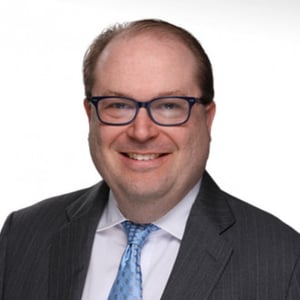
Partner, Horvitz & Levy LLP
Jeremy Rosen is nationally renowned for his proficiency in numerous issues arising under the First Amendment and California’s anti-SLAPP law. Using that knowledge, Jeremy has helped a wide variety of clients – including churches, private businesses, and individuals – defeat lawsuits that seek to impose liability on clients for exercising their rights of petition, free speech, and free exercise of religion. He has also handled hundreds of appeals in numerous appellate courts, including the Ninth Circuit Court of Appeals, the California Supreme Court, and California’s intermediate appellate courts. In addition to First Amendment and anti-SLAPP cases, his cases have involved numerous important issues regarding anti-trust, class actions, wage and hour law, employment law, breach of contract, California’s Unfair Competition Law, CEQA, the enforceability of arbitration clauses, hospital peer review, the scope of public employee whistleblower protection, and the application of the primary assumption of risk doctrine.
Jeremy is a partner at the firm, which he joined in 2001. He is a California State Bar Certified Appellate Specialist and a member of the California Academy of Appellate Lawyers.
Jeremy directed the Pepperdine University School of Law Ninth Circuit Appellate Advocacy Clinic for 6 years. The Clinic represents individuals in the Ninth Circuit who are identified by the court as needing pro bono counsel. Jeremy also previously served a three-year term where he was appointed by the Ninth Circuit to serve as one of 18 appellate lawyer representatives to the court.
Jeremy is a member of the National Chamber Litigation Center’s California Litigation Advisory Committee. Before joining the firm, Jeremy was a Litigation Associate with Munger, Tolles & Olson.
Partner, Morrison & Foerster LLP
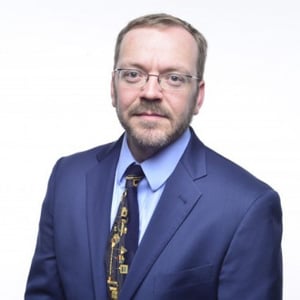
Vice President for Legal Affairs, Goldwater Institute

Panel 1: Class Actions, Arbitration, and Alternative Litigation Finance
Lawrence A. Cunningham, Brian T. Fitzpatrick, Lee Liberman Otis, Anthony Sebok, Stephen J. Ware
Prof. Lawrence A. Cunningham, The George Washington University Law School Prof. Anthony Sebok, Cardozo School...
California’s 17200 – Its Use and Abuse
Scott Leviant, Shaun P. Martin, Michael Orfield, Jeremy B. Rosen, William L. Stern, Adam Van Susteren
Prop 64, also known as California 17200, was adopted by initiative in 2004 and was...
Stolt-Nielsen S. A. v. AnimalFeeds Int’l Corp. – Post-Decision SCOTUScast
Timothy Sandefur
On April 27, 2010, the Supreme Court announced its decision in Stolt-Nielsen S.A. v. AnimalFeeds...