
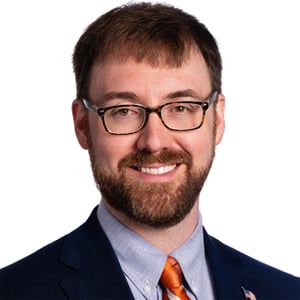
Senior Legal Fellow, Courts and the Constitution, Legal Policy Center, The Heritage Foundation
Zack is a Senior Legal Fellow of Courts and the Constitution at The Heritage Foundation.
He previously served for several years as an Assistant United States Attorney in the Northern District of Florida. Prior to that, he spent two years as an associate in the Washington, D.C. office of Cleary Gottlieb Steen & Hamilton, which he joined after clerking for the Hon. Emmett R. Cox on the United States Court of Appeals for the Eleventh Circuit.
Smith received his undergraduate, master’s, and law degrees from the University of Florida. During law school, Smith served as the Editor in Chief of the Florida Law Review and served on the executive boards of several student organizations, including the UF Chapter of the Federalist Society.
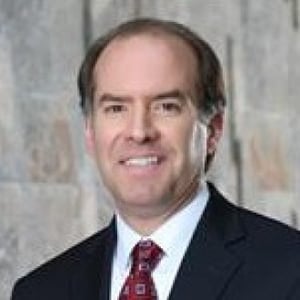
Founder & CEO, Strategic Policy Counsel, PLLC
Alex Dahl has nearly three decades of experience in law and advocacy, having served in all three branches of the federal government as counsel to the Senate Judiciary Committee, a federal prosecutor, and a law clerk to a federal district court judge, as well as working in private practice as a lobbyist and civil litigator.
Alex serves as outside General Counsel to Lawyers for Civil Justice, a national coalition of corporations, law firms and defense lawyer organizations, promoting excellence and fairness in the civil justice system. LCJ is the corporate and defense bar voice for reforms aimed at securing the just, speedy and inexpensive determination of civil cases, notably including the 2015 Amendments to the Federal Rules of Civil Procedure which established “proportionality” in the scope of discovery and created a uniform standard for judicial handling of the loss of electronically stored information (ESI). Alex works with LCJ’s member experts to: (1) promote balance and fairness in the civil justice system; (2) reduce costs and burdens associated with litigation; and (3) promote more predictability and efficiency in litigation.
Prior to founding the firm, Alex was a shareholder at Brownstein Hyatt Farber Schreck, the second largest lobbying firm in Washington, D.C., for over 11 years. Alex represented companies and associations before Congress and the Executive Branch on a variety of policy issues.
Alex served as the Deputy Staff Director and Senior Counsel to the Senate Judiciary Committee, where he spent five years working for then-Chairman Orrin G. Hatch (R-UT) on legislative strategy concerning a wide variety of bills and constitutional amendments within the Committee's jurisdiction, which includes legal reform, antitrust, intellectual property, immigration policy and criminal law.
Alex also worked as an Assistant U.S. Attorney in the District of Columbia, where he prosecuted felony drug distribution and firearms cases in DC Superior Court. He was specially assigned to handle criminal intellectual property cases involving illegal sales of pirated DVD movies and music CDs.
Prior to his government service, Alex was a commercial litigator at Parsons Behle & Latimer in Salt Lake City, Utah, where he handled a variety of civil matters relating to electric utilities, securities and contract disputes.
Alex began his legal career as a law clerk for the Honorable Dee V. Benson, U.S. District Court Judge for the District of Utah.
Alex currently serves on the Board of Trustees of the University of Utah’s S.J. Quinney College of Law.

Director of Litigation and Senior Attorney, Hamilton Lincoln Law Institute
Theodore H. Frank is director at the Hamilton Lincoln Law Institute and the Center for Class Action Fairness. Frank founded and ran CCAF as a non-profit, public interest law firm in 2009.
Frank has won several landmark appeals and tens of millions of dollars for consumers and other plaintiffs through his class action work. Adam Liptak of The New York Times calls Frank “the leading critic of abusive class action settlements” and the American Lawyer Litigation Daily referred to him as “the indefatigable scourge of underwhelming class action settlements.”
Previously, Frank clerked for the Honorable Frank H. Easterbrook on the Seventh Circuit Court of Appeals, and was a litigator at firms in Washington and Los Angeles and a resident fellow at the American Enterprise Institute. Frank is a frequent public speaker and has testified before Congress multiple times on legal issues. He has been profiled by The Wall Street Journal, Forbes, GQ, and the ABA Journal, among other publications.
In 2008, Frank was elected to membership in the American Law Institute. He also serves on the Executive Committee of the Federalist Society Litigation Practice Group. Frank graduated from The University of Chicago Law School in 1994 with high honors and as a member of the Order of the Coif and the Law Review. He is a member of the District of Columbia Bar and the state bars of California and Illinois.
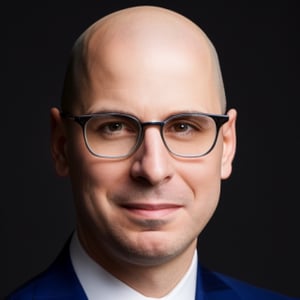
Partner and Lecturer
Adam Mortara graduated from the University of Chicago in 1996 with a B.Sc. in chemistry. He then attended Magdalene College, Cambridge, where he received a masters degree in astrophysics on a British Marshall Scholarship.
Mr. Mortara graduated from the University of Chicago Law School with highest honors in 2001. Following graduation, he clerked for Judge Patrick Higginbotham of the U.S. Court of Appeals for the Fifth Circuit and then for Justice Clarence Thomas of the Supreme Court of the United States. After his clerkships, he was a Temple Bar Scholar of the American Inns of Court.
From 2003 to 2020, Mr. Mortara was with Bartlit Beck LLP where he tried high stakes intellectual property cases and, more notably, Students For Fair Admissions v. Harvard. He retired from Bartlit Beck and founded Lawfair LLC, a civil and voting rights firm. He has been a Lecturer in Law at the University of Chicago Law School since 2007, where he teaches Federal Habeas Corpus, Federal Jurisdiction, Criminal Procedure, and Writing for the Judiciary.
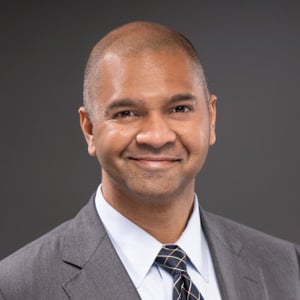
Senior Fellow, Stand Together Trust
Vikrant Reddy is a senior fellow at Stand Together Trust, specializing in the area of criminal justice reform. Reddy previously served as a senior policy analyst at the Texas Public Policy Foundation (TPPF), where he managed the launch of TPPF’s national Right on Crime initiative in 2010. He has worked as a research assistant at the Cato Institute, as a judicial clerk to the Hon. Gina M. Benavides in Texas, and as an attorney in private practice. He is a member of the State Bar of Texas, and he serves on the Executive Committee of the Criminal Law Practice Group of the Federalist Society. He is also an appointee to the U.S. Commission on Civil Rights Texas State Advisory Committee.
Reddy’s research and scholarly opinions have appeared in a range of national media outlets, including USA Today, National Review, The Federalist, and others.
Reddy earned his law degree from the Southern Methodist University School of Law. He received his undergraduate degree from the University of Texas at Austin.

Legal Director & General Counsel, Criminal Justice Legal Foundation
Kent S. Scheidegger has been the Legal Director of the Criminal Justice Legal Foundation since December 1986. He also served as Chairman of the Criminal Law Practice Group of the Federalist Society 2003 to 2005. His articles on criminal and constitutional law have been published in law reviews, national legal publications, and congressional reports. Legal arguments authored by Mr. Scheidegger have been cited and incorporated in several precedent-setting United States Supreme Court decisions.
After receiving a degree in physics with honors from New Mexico State University in 1976, Mr. Scheidegger served for six years in the United States Air Force as a Nuclear Research Officer. He took his law degree with distinction from the University of the Pacific, McGeorge School of Law in 1982 and practiced civil law in Northern California. He was general counsel of California Cooler, Inc. from 1984 until 1986, when he joined the Foundation.

Chief Policy Counsel, Council on Criminal Justice and Senior Advisor, Right on Crime
Marc A. Levin is the Chief Policy Counsel for the Council on Criminal Justice (counciloncj.org) and Senior Advisor for Right on Crime.
An attorney and accomplished author on legal and public policy issues, Marc began the Foundation’s criminal justice program in 2005. This work contributed to nationally praised policy changes that have been followed by dramatic declines in crime and incarceration in Texas. Building on this success, in 2010, Levin developed the concept for the Right on Crime initiative, a TPPF project in partnership with Prison Fellowship and the American Conservative Union Foundation. Right on Crime has become the national clearinghouse for conservative criminal justice reforms and has contributed to the adoption of policies in dozens of states that fight crime, support victims, and protect taxpayers.
In 2014, Levin was named one of the “Politico 50” in the magazine’s annual “list of thinkers, doers, and dreamers who really matter in this age of gridlock and dysfunction.”
Marc has testified on criminal justice policy on four occasions before Congress and has testified before legislatures in states including Texas, Nevada, Kansas, Wisconsin, and California. He also has met personally with leaders such as U.S. Presidents, Speakers of the House, and the Justice Commtitee of the United Kingdom Parliament to share his ideas on criminal justice reform. In 2007, he was honored in a resolution unanimously passed by the Texas House of Representatives that stated, “Mr. Levin’s intellect is unparalleled and his research is impeccable.”
Since 2005, Marc has published dozens of policy papers on topics such as sentencing, probation, parole, reentry, and overcriminalization which are available on the TPPF website. Levin’s articles on law and public policy have been featured in publications such as the Wall Street Journal, USA Today, Texas Review of Law & Politics, National Law Journal, New York Daily News, Jerusalem Post, Toronto Star, Atlanta Journal-Constitution, Philadelphia Inquirer, San Francisco Chronicle, Washington Times, Los Angeles Daily Journal, Charlotte Observer, Dallas Morning News, Houston Chronicle, Austin American-Statesman, San Antonio Express-News and Reason Magazine.
In 1999, Marc graduated with honors from the University of Texas with a B.A. in Plan II Honors and Government. In 2002, Marc received his J.D. with honors from the University of Texas School of Law. Marc was a Charles G. Koch Summer Fellow in 1996. He served as a law clerk to Judge Will Garwood on the U.S. Court of Appeals for the Fifth Circuit and Staff Attorney at the Texas Supreme Court.

Vice President, Edwin Meese III Institute for the Rule of Law, Advancing American Freedom
John G. Malcolm oversees Advancing American Freedom’s work to increase understanding of the Constitution and the rule of law as Vice President of the organization’s Edwin Meese III Institute for the Rule of Law. Malcolm brings to the challenge a wealth of legal expertise and experience in both the public and private sectors.
Prior to joining Advancing American Freedom in 2025, Malcolm was the Vice President of the Institute for Constitutional Government and the Director of the Meese Center for Legal and Judicial Studies at the Heritage Foundation. Prior to joining Heritage in 2012, Malcolm was general counsel at the U.S. Commission on International Religious Freedom, as well as a distinguished practitioner in residence at Pepperdine Law School. From 2004 to 2009, Malcolm was executive vice president and director of worldwide anti-piracy operations for the Motion Picture Association.
Malcolm served as a deputy assistant attorney general in the Department of Justice’s Criminal Division from 2001 to 2004, where he oversaw sections on computer crime and intellectual property, domestic security, child exploitation and obscenity, and special investigations. Immediately prior to that, he was a founding partner in the Atlanta law firm of Malcolm & Schroeder, LLP.
From 1990 to 1997, Malcolm was an assistant U.S. attorney in Atlanta, assigned to the fraud and public corruption section, and also an associate independent counsel, investigating fraud and abuse in the Department of Housing and Urban Development. He was honored with the Director’s Award for Superior Performance for his work in connection with the successful prosecution of Walter Leroy Moody Jr., who assassinated an 11th Circuit judge and the head of the Savannah chapter of the NAACP.
A graduate of Harvard Law School and Columbia College, Malcolm began his career as a law clerk to a federal district court judge and a federal appellate court judge, and as an associate at the Atlanta-based law firm of Sutherland, Asbill & Brennan (new Eversheds Sutherland).
Malcolm, who resides in Washington, D.C., serves on the Board of Trustees of the Washington National Opera and is a Senate-confirmed member of the Board of Directors of the Legal Services Corporation, the largest funder of civil legal aid in the United States.

Former United States Attorney General
Michael B. Mukasey is the former Attorney General of the United States, the nation’s chief law enforcement officer. As Attorney General from November 2007 to January 2009, he oversaw the U.S. Department of Justice and advised on critical issues of domestic and international law.
From 1988 to 2006, Judge Mukasey served as a district judge in the United States District Court for the Southern District of New York, becoming Chief Judge in 2000.
From 1972 to 1976, Judge Mukasey served as an Assistant United States Attorney for the Southern District of New York, and as Chief of the Official Corruption Unit from 1975 to 1976. His practice consisted of criminal litigation on behalf of the government, including investigation and prosecution of narcotics, bank robbery, interstate theft, securities fraud, fraud on the government and bribery. From 1976 to 1987 and from 2006 to 2007 he was in private practice.
Judge Mukasey has received numerous honors, including the Federal Bar Council’s Learned Hand Medal for Excellence in Federal Jurisprudence. He served as Chairman of the Committee on Public Access to Information and Proceedings of the New York Bar Association from 1984 to 1987. He served on the Federal Courts Committee of the Association of the Bar of the City of New York from 1979 to 1982 and its Communications Law Committee from 1983 to 1986. Judge Mukasey was also a part-time lecturer at Columbia School of Law from January 1993 to May 2007, teaching trial advocacy.
He received his LL.B. from Yale Law School in 1967 and his B.A. from Columbia College in 1963.

Former Adjunct Professor of Law; former Special Counsel to the President; former federal prosecutor, Georgetown Law (ret.)
Bill Otis is a former Adjunct Professor of Law at Georgetown University, a one-time federal prosecutor, and a former Special White House Counsel for President George H. W. Bush. After graduating from Stanford Law School, he started his career in the Criminal Division of the Justice Department, then became chief of appeals for the US Attorney's Office for the Eastern District of Virginia. In the 1980's he served on the Department's "Train the Trainer" team, which taught US Attorneys Offices across the county how to implement the then-new Sentencing Reform Act. He has held several posts in the federal government, including Special Assistant to the Secretary of Energy and Counselor to the head of the Drug Enforcement Administration, in addition to the White House post. He has testified before Congress on issues in criminal procedure, illegal drugs, the US Sentencing Commission, and the death penalty, and has given numerous media interviews on those and other subjects. He currently teaches a seminar at Georgetown Law titled "Conservatism in Law in America" with his wife, Federalist Society co-founder Lee Liberman Otis.

Chief Judge, United States Court of Appeals, Eleventh Circuit
William H. Pryor Jr. serves as Chief Circuit Judge on the United States Court of Appeals for the Eleventh Circuit.
In 2013–18, he served on the United States Sentencing Commission and, in 2017–18, served as Acting Chair.
He has taught as a visiting professor at the University of Alabama School of Law and previously taught as an adjunct professor at the Cumberland School of Law of Samford University.
He served as the 45th Attorney General of Alabama from 1997 to 2004. When he took office, he was the youngest attorney general in the nation. In his reelection, he received the highest percentage of votes of any statewide candidate.
He graduated magna cum laude from Tulane Law School where he finished first in the common-law curriculum and was editor in chief of the Tulane Law Review. He then served as a law clerk for Judge John Minor Wisdom of the U.S. Court of Appeals for the Fifth Circuit.
He is a member of The American Law Institute and an Adviser for the RESTATEMENT OF THE LAW THIRD, CONFLICT OF LAWS. He is a coauthor with Bryan Garner, Justices Gorsuch and Kavanaugh, and several other judges of a treatise, THE LAW OF JUDICIAL PRECEDENT. He has published in the Yale Law Journal, Columbia Law Review, Virginia Law Review, Notre Dame Law Review, Harvard Journal of Law & Public Policy, Yale Law & Policy Review, George Mason Law Review, Florida Law Review, Alabama Law Review, Case Western Reserve Law Review, and Tulane Law Review. He has published op-eds in The Wall Street Journal, The New York Times, National Review, and USA Today. He has debated at National Lawyers’ Conventions of the Federalist Society (including on National Public Radio) and at the Oxford Union in the United Kingdom. And he is listed among several “widely admired judicial writers” in Bryan Garner’s The Redbook: A Manual on Legal Style.
He is a member of the Tulane Law School Hall of Fame and has received the Defender of the Constitution Award from the Heritage Foundation, the Jurist of the Year Award from the Texas Review of Law & Politics, and the St. Thomas More Award from the St. Thomas More Society of Atlanta. Judge Pryor is also a proud member of the National Society of the Sons of the American Revolution.
Vice President, Edwin Meese III Institute for the Rule of Law, Advancing American Freedom
John G. Malcolm oversees Advancing American Freedom’s work to increase understanding of the Constitution and the rule of law as Vice President of the organization’s Edwin Meese III Institute for the Rule of Law. Malcolm brings to the challenge a wealth of legal expertise and experience in both the public and private sectors.
Prior to joining Advancing American Freedom in 2025, Malcolm was the Vice President of the Institute for Constitutional Government and the Director of the Meese Center for Legal and Judicial Studies at the Heritage Foundation. Prior to joining Heritage in 2012, Malcolm was general counsel at the U.S. Commission on International Religious Freedom, as well as a distinguished practitioner in residence at Pepperdine Law School. From 2004 to 2009, Malcolm was executive vice president and director of worldwide anti-piracy operations for the Motion Picture Association.
Malcolm served as a deputy assistant attorney general in the Department of Justice’s Criminal Division from 2001 to 2004, where he oversaw sections on computer crime and intellectual property, domestic security, child exploitation and obscenity, and special investigations. Immediately prior to that, he was a founding partner in the Atlanta law firm of Malcolm & Schroeder, LLP.
From 1990 to 1997, Malcolm was an assistant U.S. attorney in Atlanta, assigned to the fraud and public corruption section, and also an associate independent counsel, investigating fraud and abuse in the Department of Housing and Urban Development. He was honored with the Director’s Award for Superior Performance for his work in connection with the successful prosecution of Walter Leroy Moody Jr., who assassinated an 11th Circuit judge and the head of the Savannah chapter of the NAACP.
A graduate of Harvard Law School and Columbia College, Malcolm began his career as a law clerk to a federal district court judge and a federal appellate court judge, and as an associate at the Atlanta-based law firm of Sutherland, Asbill & Brennan (new Eversheds Sutherland).
Malcolm, who resides in Washington, D.C., serves on the Board of Trustees of the Washington National Opera and is a Senate-confirmed member of the Board of Directors of the Legal Services Corporation, the largest funder of civil legal aid in the United States.
Former Adjunct Professor of Law; former Special Counsel to the President; former federal prosecutor, Georgetown Law (ret.)
Bill Otis is a former Adjunct Professor of Law at Georgetown University, a one-time federal prosecutor, and a former Special White House Counsel for President George H. W. Bush. After graduating from Stanford Law School, he started his career in the Criminal Division of the Justice Department, then became chief of appeals for the US Attorney's Office for the Eastern District of Virginia. In the 1980's he served on the Department's "Train the Trainer" team, which taught US Attorneys Offices across the county how to implement the then-new Sentencing Reform Act. He has held several posts in the federal government, including Special Assistant to the Secretary of Energy and Counselor to the head of the Drug Enforcement Administration, in addition to the White House post. He has testified before Congress on issues in criminal procedure, illegal drugs, the US Sentencing Commission, and the death penalty, and has given numerous media interviews on those and other subjects. He currently teaches a seminar at Georgetown Law titled "Conservatism in Law in America" with his wife, Federalist Society co-founder Lee Liberman Otis.
Gary R. Trombley Family White-Collar Crime Research Professor, Stetson University College of Law
A former deputy prosecutor and criminal defense attorney, Professor Ellen S. Podgor teaches in the areas of white collar crime, criminal law and international criminal law. She has previously taught other courses, such as professional responsibility, criminal procedure, law and sexual orientation seminar, and advocacy. She served as Stetson's inaugural Associate Dean of Faculty Development and Electronic Education and also served as a LeRoy Highbaugh Sr. Research Chair. She is the co-author of numerous books including White Collar Crime in a Nutshell,Understanding International Criminal Law, and Mastering Criminal Law. She has authored more than 50 law review articles and essays in the areas of computer crime, international criminal law, lawyer's ethics, criminal discovery, prosecutorial discretion, corporate criminality, and other white collar crime topics. These have been published in journals such as the Hastings Law Journal, Washington & Lee Law Review, Harvard Civil Rights-Civil Liberties Law Review, Yale Law Journal Pocket Part, Washington University Law Review, Fordham Law Review, Cardozo Law Review, U.C. Davis Law Review, American University Law Review, Georgetown Journal of Legal Ethics, American Criminal Law Review, Vanderbilt En Banc, Journal of Criminal Law and Criminology, and many others.
Podgor has been interviewed on National Public Radio and been quoted in newspapers across the country, including the New York Times, Wall Street Journal, Washington Post, LA Times, National Law Journal, Chicago Tribune, andBusiness Week. She is the editor of the highly ranked White Collar Crime Prof Blog. She is the chair of the Advisory Committee of the NACDL White-Collar Criminal Defense College at Stetson.
She has taught at other law schools including Georgia State University College of Law and St. Thomas University College of Law, and been a visiting professor at University of Georgia School of Law, George Washington University Law School and held a visiting endowed chair position at University of Alabama School of Law. She also was a visiting scholar at Yale Law School. Podgor served for six years as a member of the board of directors of the National Association of Criminal Defense Lawyers (NACDL) and presently serves on the board of directors of the International Society for the Reform of Criminal Law (ISRCL) and the board of trustees for the Southeastern Association of Law Schools (SEALS). She is a past chair of the Criminal Justice Section of the Association of American Law Schools (AALS) and is an honorary member of the American Board of Criminal Lawyers. Professor Podgor is a member of the American Law Institute.
In 2010, Podgor received the Robert C. Heeney Award, the highest honor given by the National Association of Criminal Defense Lawyers. She is also the recipient of the Dickerson-Brown Award for Excellence in Faculty Scholarship.

Executive Vice President, The Federalist Society
Dean Reuter is Executive Vice President at the Federalist Society for Law and Public Policy Studies. He has served in two federal government agency Offices of the Inspector General, as Counsel to the Inspector General and Deputy Inspector General, responsible for policing the use of federal funds granted and contracted through those agencies. As such, he helped conduct and oversee criminal investigations across the country. He is the principal author of the non-fiction book, The Hidden Nazi: The Untold Story of America's Deal with the Devil, and editor of Liberty’s Nemesis: The Unchecked Expansion of the State and Confronting Terror: 9/11 and the Future of American National Security. He was appointed by the President and served as Vice-Chairman of the Board of Directors of the Corporation for National and Community Service, and recently served as an appointee on the U.S. Commission on Presidential Scholars. He is a graduate of Hood College (BA with Honors) and the University of Maryland School of Law.
H.H. Macaulay Endowed Professor of Economics, Clemson College of Business
Thomas Hazlett is the Hugh H. Macaulay Endowed Professor of Economics at Clemson University. He has previously held faculty positions at George Mason University, the University of California, Davis, and the Wharton School, and served as Chief Economist of the Federal Communications Commission. A noted expert in regulatory economics and information markets, his research has appeared in academic forums such as the Journal of Law & Economics, RAND Journal of Economics, the Journal of Financial Economics, the University of Pennsylvania Law Review and the Columbia Law Review. He has also written for such popular periodicals as the Wall Street Journal, The Economist, Slate, the N.Y. Times, N.Y. Daily News, Reuters.com, Business Week, The New Republic and the Financial Times. His most recent book, The Political Spectrum: The Tumultuous Liberation of Wireless Technology, from Herbert Hoover to the Smartphone, (Yale, 2017), was featured as one of the top tech books of the year at CES 2018.

Partner, Schaerr | Jaffe LLP
Erik Jaffe has been involved in appeals on a broad range of legal issues, including First Amendment challenges to campaign finance reform, Commerce Clause challenges to Health Care Reform and other federal legislation, Equal Protection Clause challenges to affirmative action in education, First Amendment challenges to school vouchers, Fifth Amendment challenges to takings of property, Second Amendment challenges to restrictions on gun ownership, and a wide variety of cases involving patents, copyrights, ERISA, securities fraud, federal preemption, environmental regulation, and other state and federal constitutional and statutory matters. He has represented businesses and non-profit groups, Judges, Senators, former government officials, Nobel Prize winners, and a broad cross-section of private individuals. Mr. Jaffe has been involved in over 120 Supreme Court matters, including filing over 30 cert. petitions, representing half-a-dozen parties on the merits, and filing over 70 amicus briefs at both the cert. and merits stages.
A 1990 graduate of the Columbia University School of Law, Mr. Jaffe was a law clerk to Judge Douglas H. Ginsburg of the United States Court of Appeals for the District of Columbia Circuit from 1990 to 1991. Following that clerkship he spent five years in litigation practice with the Washington, D.C. law firm of Williams & Connolly. In the summer of 1996 he left Williams & Connolly to clerk for Supreme Court Justice Clarence Thomas. At the end of that clerkship he started his own practice, and he was a sole practitioner from 1997 to 2018. He joined the firm of Schaerr | Jaffe LLP in 2018.

The Myth of Mass Incarceration Remains Strong—Despite All Evidence to the Contrary
Zack Smith
A review of Jeffrey Bellin, Mass Incarceration Nation: How the United States Became Addicted to...
Does Litigation Finance Disclosure Threaten National Security? A Debate from the Right
Alexander R. Dahl, Theodore "Ted" Frank, Adam K. Mortara
Arguments over third-party litigation funding are nothing new. Opponents have argued the funding promotes frivolous...
Two Views on Criminal Justice Reform: The Author and a Critic on Locked In
Vikrant P. Reddy, Kent Scheidegger
A Debate About: Locked In: The True Causes of Mass Incarceration—and How to Achieve Real...
Criminal Sentencing Reform: A Conversation among Conservatives
Marc Levin, John G. Malcolm, Michael B. Mukasey, William G. Otis, William H. Pryor
Although prison populations at the federal level have very recently declined for the first time...
Smarter Sentencing Act - Podcast
John G. Malcolm, William G. Otis
Numerous proposals in Congress, the Justice Department, and the Sentencing Commission would bring down the...
Is American Justice Blind, Or Blind To A "Prosecutocracy"? - Podcast
Conrad Lord Black, William G. Otis, Ellen S. Podgor, Dean Reuter
Federal convict Conrad Lord Black argued at National Review Online last fall in "Blind Justice" that America's...
Allocating Radio Spectrum for the "Mobile Data Tsunami"
Thomas Hazlett
I. A Mobile Data Tsunami? The mobile sector is said to face a looming spectrum...
Public Financing of Campaigns - Event Audio
Michael P. McDonald, David M. Primo, Erik S. Jaffe
With the federal government and most states restricting individual, corporate, and union contributions to campaigns,...