

Tazewell Taylor Professor of Law and William H. Cabell Research Professor, William & Mary Law School
Jonathan H. Adler joined the William & Mary law faculty as the Tazwell Taylor Professor of Law and William H. Cabell Research Professor in 2025. Prior to joining the faculty, he was the inaugural Johan Verheij Memorial Professor of Law and the founding Director of the Coleman P. Burke Center for Environmental Law at the Case Western Reserve University School of Law.
Professor Adler is the author or editor of seven books, including Climate Liberalism: Perspectives on Liberty, Property and Pollution (Palgrave, 2023), Marijuana Federalism: Uncle Sam and Mary Jane (Brookings Institution Press, 2020), Business and the Roberts Court (Oxford University Press, 2016) and Rebuilding the Ark: New Perspectives on Endangered Species Act Reform (AEI Press, 2011).
His articles have appeared in publications ranging from the Harvard Environmental Law Review and Yale Journal on Regulation to the Wall Street Journal, New York Times, and Washington Post. He has testified before Congress a dozen times, and his work has been cited in the U.S. Supreme Court. A 2024 study identified Professor Adler as the seventh most cited legal academic in administrative and environmental law from 2019 to 2023.
Professor Adler is a contributing editor to Civitas Outlook and a regular contributor to the popular legal blog, The Volokh Conspiracy. A regular commentator on constitutional and regulatory issues, he has appeared on numerous radio and television programs, ranging from the PBS Newshour and National Public Radio to the Fox News Channel and Entertainment Tonight.
Professor Adler is a senior fellow at the Property & Environment Research Center in Bozeman, Montana. In 2018, Professor Adler was elected to membership in the American Law Institute and helped co-found the organization Checks and Balances. In 2024, Professor Adler was appointed a public member of the Administrative Conference of the United States.
Professor Adler clerked for the Honorable David B. Sentelle on the U.S. Court of Appeals for the District of Columbia Circuit.
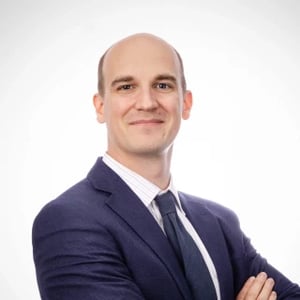
Managing Partner, Boyden Gray PLLC
Michael Buschbacher is the managing partner of Boyden Gray PLLC. He represents public and private companies, trade associations, non-profits, and individuals in high-stakes litigation and administrative proceedings, with a particular focus on environmental and energy matters.
In addition to trial-level work, Mr. Buschbacher maintains an active appellate practice, both as merits counsel and as counsel for amici curiae. He has written amicus briefs quoted by the Seventh and Ninth Circuits. And his Supreme Court advocacy has been cited by The New Yorker, The New York Times, and E&E News. Mr. Buschbacher’s commentary on legal issues has been published in The Wall Street Journal, Newsweek, and The American Conservative.
Before joining the firm, Mr. Buschbacher served at the U.S. Department of Justice as counsel to the Assistant Attorney General for the Environment and Natural Resources Division. There, he advised senior Department leadership, served as the lead attorney on several lawsuits, and helped draft policy memoranda for the Department on the proper scope and procedure for environmental enforcement. Prior to serving in the government, Mr. Buschbacher was an associate in the D.C. office of Sidley Austin.
Mr. Buschbacher is a former clerk to Judge Alice M. Batchelder of the U.S. Court of Appeals for the Sixth Circuit and to Magistrate Judge Paul R. Cherry of the U.S. District Court for the Northern District of Indiana.
Mr. Buschbacher holds a B.A. in Music and Germanic Studies from Indiana University and a J.D., magna cum laude, from Notre Dame Law School.
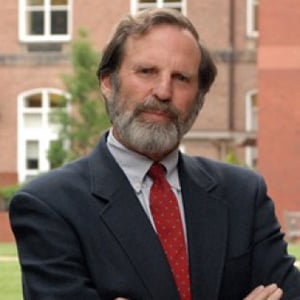
Adjunct Professor, George Washington University Law School
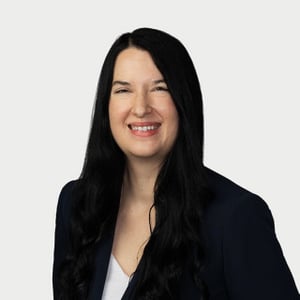
Associate Attorney, Gibson, Dunn & Crutcher LLP
Laura Stanley is an associate in the Washington, D.C. office of Gibson, Dunn & Crutcher. She practices in the firm’s Litigation Department and is a member of the Environmental Litigation and Mass Tort Practice Group. Laura previously served as an economist at the U.S. Environmental Protection Agency where she developed regulations under the Resource Conservation and Recovery Act and the Comprehensive Environmental Response, Compensation, and Liability Act.
Laura graduated with high honors from The George Washington University Law School and was awarded Order of the Coif. Laura served as an Articles Editor of the George Washington Law Review, and she was awarded the ABA Gellhorn-Sargentich Award for the best student essay in administrative law. Laura received a Master of Arts degree in Economics from George Mason University and a Bachelor of Arts degree in Economics from James Madison University.
She previously served as a law clerk to the Honorable Ryan D. Nelson of the United States Court of Appeals for the Ninth Circuit and the Honorable Stephen S. Schwartz of the United States Court of Federal Claims.
She is admitted to practice law in the District of Columbia and before the United States Court of Appeals for the Ninth Circuit.

Sterling Professor of Law and Political Science, Yale Law School
Akhil Reed Amar is Sterling Professor of Law and Political Science at Yale University, where he teaches constitutional law in both Yale College and Yale Law School. After graduating from Yale College, summa cum laude, in 1980 and from Yale Law School in 1984, and clerking for Judge (later Justice) Stephen Breyer, Amar joined the Yale faculty in 1985 at the age of 26. He is Yale’s only living professor to have won the University’s unofficial triple crown — the Sterling Chair for scholarship, the DeVane Medal for teaching, and the Lamar Award for alumni service.
Amar’s work has won awards from both the American Bar Association and the Federalist Society, and he has been cited by Supreme Court justices across the spectrum in more than 50 cases — tops among scholars under age 70. According to both Fred Shapiro’s landmark 2021 study of lifetime scholarly citations and Heinonline’s most recent tabulation of lifetime law-review citations, Amar is America’s second most-cited legal scholar still under age 70. He is a member of the American Academy of Arts and Sciences and has written widely for popular publications, including The New York Times, The Washington Post, The Wall Street Journal, Time, and The Atlantic. He was an informal consultant to the popular TV show The West Wing and his scholarship has been showcased on many broadcasts, including The Colbert Report, Morning Joe, AC360, Velshi, Fox News @ Night with Shannon Bream, Fareed Zakaria GPS, Erin Burnett Outfront, and Constitution USA with Peter Sagal.
He is the author of more than a hundred law review articles and several books, including The Bill of Rights (1998 — winner of the Yale University Press Governors’ Award), America’s Constitution (2005 — winner of the ABA’s Silver Gavel Award), America’s Unwritten Constitution (2012 — named one of the year’s 100 best nonfiction books by The Washington Post), and The Constitution Today (2016 — named one of the year’s top ten nonfiction books by Time magazine). The first volume of his ambitious trilogy on American constitutional history from the Founding to the present, The Words That Made Us: America’s Constitutional Conversation, 1760-1840, came out in May 2021. The second volume, Born Equal: Remaking America’s Constitution, 1840-1920, will be published in September 2025 and is already available for pre-order. All together, his nonfiction books have won two starred reviews from Publishers Weekly and three starred reviews from Kirkus—tops, it is believed, among legal scholars under age 70. Together with Vikram David Amar (YLS ’88), he has a bi-weekly column on the Supreme Court on the distinguished website SCOTUSblog. Along with Andy Lipka, he co-hosts a popular and free weekly podcast, Amarica’s Constitution, whose listeners are eligible for CLE credit in most American jurisdictions. A wide assortment of his articles and op-eds and video links to many of his public lectures and free online courses may be found at akhilamar.com.

Anne Fleming Research Professor and Professor of Law, Georgetown University Law Center; Faculty Director, Georgetown Center for the Constitution
Stephanie Barclay is a Professor of Law at Georgetown Law School, and the Faculty Director of the Georgetown Center for the Constitution. Her research focuses on the role our different democratic institutions play in protecting minority rights, particularly at the intersection of free speech and religious exercise. Barclay‘s work is published or is forthcoming in leading journals such as the Harvard Law Review, the Chicago Law Review, the University of Pennsylvania Law Review, and the Yale Law Journal Forum. One of her articles was also selected for the 2020 Stanford/Harvard/Yale Junior Faculty Forum. Her work has been featured in many media outlets, including The New York Times, The Wall Street Journal, The Washington Post, USA Today, Bloomberg BNA, The Hill, and Law 360. And her work has also been cited by the U.S. Supreme Court.
Prior to joining Georgetown, Barclay was twice voted Professor of the Year. Barclay has also litigated constitutional cases at both the trial and appellate level, including before the U.S. Supreme Court. Barclay served as a law clerk to Judge N. Randy Smith on the U.S. Court of Appeals for the Ninth Circuit, and to Justice Neil M. Gorsuch of the U.S. Supreme Court.
Barclay is a Faculty Affiliate at the Constitutional Law Center at Stanford Law School; and she is a Nootbaar Fellow at the Nootbaar Institute on Law, Religion, and Ethics at Pepperdine University. She currently serves as the Chair for the AALS Law and Religion Section and as a Member of the Executive Committee for the AALS Constitutional Law Section. She graduated summa cum laude from BYU Law School, where she was elected to the Order of the Coif. She is completing a Ph.D. in Law at Oxford University as a Clarendon Scholar and a Tang Scholar.
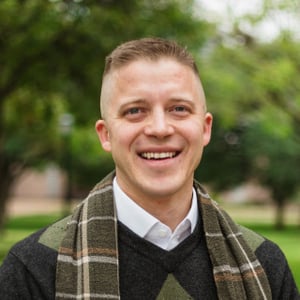
Deputy General Counsel, Office of Texas Governor Greg Abbott
Trevor serves as General Counsel to Governor Greg Abbott. In that role he provides strategic counseling to the State’s Chief Executive Officer on a range of issues under both state and federal law, including litigation involving the Governor.
Before returning to Texas, Trevor worked in private practice in the Washington, D.C. area. At Clement & Murphy, he focused on complex litigation in federal and state courts—from deposing key witnesses before trial to briefing legal issues on appeal—in disputes that presented constitutional law, regulatory, products liability, and contracts issues.
Trevor has also spent years in government service. He previously served as an Assistant Attorney General for the State of Texas, where he represented clients before every level of the United States and Texas judiciaries in a range of areas spanning election law, state sovereign immunity, federal preemption, criminal procedure, and the Establishment Clause. And he has clerked for federal judges on the Fifth Circuit, the Sixth Circuit, and the Supreme Court of the United States.
For several years, Trevor taught as an adjunct professor a 2-credit course on the writ of habeas corpus, with course material covering the Suspension Clause, wartime detention, immigration, and post-conviction review.
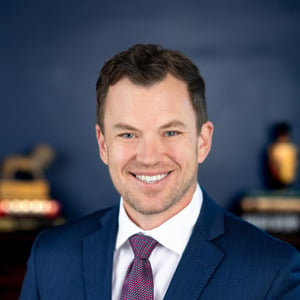
President and Co-Founder, America First Legal Foundation
Gene Hamilton is the President of America First Legal, which he co-founded, and where he was previously the Executive Director, Executive Vice President, and General Counsel. He most recently served as Deputy White House Counsel to President Donald Trump. Earlier in his career, Gene served as Counselor to Attorney General at the U.S. Department of Justice and as Senior Counselor to the Secretary of Homeland Security. He also served as General Counsel on the Senate Judiciary Committee and held several roles at the Department of Homeland Security, including with U.S. Immigration Enforcement, U.S. Customs and Border Protection and the Office of the General Counsel. He holds a B.A. from the University of Georgia and a J.D. from Washington and Lee University School of Law.
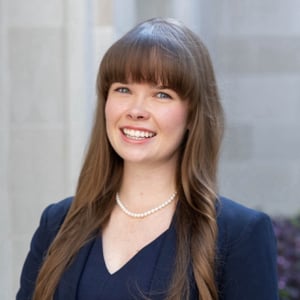
Editor in Chief, Texas Review of Law & Politics, The University of Texas School of Law
Jordan Lamb is a third-year law student at the University of Texas School of Law and the Editor in Chief of the Texas Review of Law & Politics. She previously served as President of the Texas Law Federalist Society.
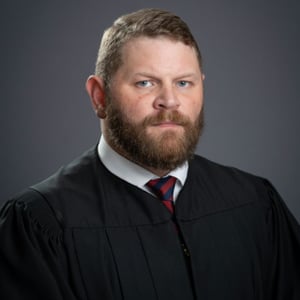
Justice, Texas Supreme Court
James P. Sullivan was appointed to the Texas Supreme Court by Governor Greg Abbott on January 7, 2025, after serving as his General Counsel. He is the proud husband of Alithea and father of Conan. Growing up in Austin, Judge Sully was an extra in the movie "Dazed & Confused." He was a highly unrecruited walk-on at Rice University, until an injury turned him into a debater. Once in law school, he met his wife, Alithea, on the Harvard Law Review. After graduating, he clerked on the D.C. Circuit for Judge Thomas B. Griffith. He also worked under then-Attorney General Abbott in the Office of the Solicitor General, in addition to stints as an adjunct professor at George Mason University and an appellate litigator in private practice.

Vice President, Edwin Meese III Institute for the Rule of Law, Advancing American Freedom
John G. Malcolm oversees Advancing American Freedom’s work to increase understanding of the Constitution and the rule of law as Vice President of the organization’s Edwin Meese III Institute for the Rule of Law. Malcolm brings to the challenge a wealth of legal expertise and experience in both the public and private sectors.
Prior to joining Advancing American Freedom in 2025, Malcolm was the Vice President of the Institute for Constitutional Government and the Director of the Meese Center for Legal and Judicial Studies at the Heritage Foundation. Prior to joining Heritage in 2012, Malcolm was general counsel at the U.S. Commission on International Religious Freedom, as well as a distinguished practitioner in residence at Pepperdine Law School. From 2004 to 2009, Malcolm was executive vice president and director of worldwide anti-piracy operations for the Motion Picture Association.
Malcolm served as a deputy assistant attorney general in the Department of Justice’s Criminal Division from 2001 to 2004, where he oversaw sections on computer crime and intellectual property, domestic security, child exploitation and obscenity, and special investigations. Immediately prior to that, he was a founding partner in the Atlanta law firm of Malcolm & Schroeder, LLP.
From 1990 to 1997, Malcolm was an assistant U.S. attorney in Atlanta, assigned to the fraud and public corruption section, and also an associate independent counsel, investigating fraud and abuse in the Department of Housing and Urban Development. He was honored with the Director’s Award for Superior Performance for his work in connection with the successful prosecution of Walter Leroy Moody Jr., who assassinated an 11th Circuit judge and the head of the Savannah chapter of the NAACP.
A graduate of Harvard Law School and Columbia College, Malcolm began his career as a law clerk to a federal district court judge and a federal appellate court judge, and as an associate at the Atlanta-based law firm of Sutherland, Asbill & Brennan (new Eversheds Sutherland).
Malcolm, who resides in Washington, D.C., serves on the Board of Trustees of the Washington National Opera and is a Senate-confirmed member of the Board of Directors of the Legal Services Corporation, the largest funder of civil legal aid in the United States.

Judge, United States Court of Appeals, Sixth Circuit
Judge Readler earned his undergraduate and law degrees from the University of Michigan. After graduating, he served as a law clerk to Judge Alan Norris of the United States Court of Appeals for the Sixth Circuit. Judge Readler then began practicing law in the Columbus office of the international law firm Jones Day, eventually spending ten years as a partner in the firm’s Issues and Appeals Practice Group. While at Jones Day, Judge Readler appeared in state and federal trial and appellate courts around the country, most frequently the Supreme Court of Ohio and the Sixth Circuit. Judge Readler also successfully argued before the United States Supreme Court in McQuiggin v. Perkins on behalf of an inmate claiming actual innocence. His other pro bono representations include representing capital defendants before the Tenth Circuit and the Supreme Court of Ohio, as well as representing defendants sentenced to life in prison before the Sixth Circuit. While at Jones Day, Judge Readler traveled to Nairobi with Lawyers Without Borders to train Kenyan lawyers in prosecuting domestic violence cases, and he was also a recipient of the American Marshall Memorial Fellowship awarded by the German Marshall Fund of the United States. Following his career in private practice, Judge Readler served as Acting Assistant Attorney General for the Civil Division of the United States Department of Justice from 2017 to 2019. In that role, Judge Readler led and supervised over 1,000 lawyers in the Department’s largest litigating division, briefing and arguing several cases on behalf of the United States in federal courts across the country, including high-profile cases significant to the Administration and the Department. In March 2019, Judge Readler was confirmed to serve as a Circuit Judge on the Sixth Circuit. He resides in Columbus.

Agnes Williams Sesquicentennial Professor of Federal Courts, Georgetown Law
Stephen I. Vladeck is a professor of law at the Georgetown University Law Center, and is a nationally recognized expert on the federal courts; the Supreme Court; national security law; and military justice.
Vladeck is author of the New York Times bestselling book, “The Shadow Docket: How the Supreme Court Uses Stealth Rulings to Amass Power and Undermine the Republic,” which won the 2023 Writers’ League of Texas Book Award for Non-Fiction and was a finalist for the 2024 ABA Silver Gavel Award for Media and the Arts. Vladeck is also a highly regarded appellate advocate, having argued three cases before the U.S. Supreme Court and over a dozen before various lower federal civilian and military courts. He has received numerous awards for his influential and widely cited legal scholarship, his prolific popular writing, his teaching, and his service to the legal profession—including the 2024 University of Texas President’s Research Impact Award and his selection by the Order of the Coif to serve as its Distinguished Visiting Professor for 2025.
Vladeck is CNN’s Supreme Court analyst and editor and author of “One First,” a popular weekly newsletter about the Supreme Court. Together with Bobby Chesney, Vladeck co-hosts the popular and award-winning “National Security Law Podcast.” He is also a co-author of Aspen Publishers’ leading national security law and counterterrorism law casebooks. And he is a member of the Board of Trustees of EarthJustice—the nation’s premier nonprofit public interest environmental law organization.
Vladeck graduated from Yale Law School in 2004—where he was executive editor of the Yale Law Journal and won the Harlan Fiske Stone Prize for outstanding moot court oralist and shared the Potter Stewart Prize for best moot court team performance. After law school, he clerked for the Honorable Marsha S. Berzon on the U.S. Court of Appeals for the Ninth Circuit and the Honorable Rosemary Barkett on the U.S. Court of Appeals for the Eleventh Circuit. He earned a B.A. summa cum laude with Highest Distinction in History and Mathematics from Amherst College in 2001—where he wrote his senior thesis on “Leipzig’s Shadow: The War Crimes Trials of the First World War and Their Implications from Nuremberg to the Present.” A native New Yorker and hopeless Mets fan, Vladeck lives in the District with his wife, Karen (Founder and Managing Partner of Risepoint Search Partners); their daughters, Madeleine and Sydney; and their eleven-year-old pug, Roxanna.
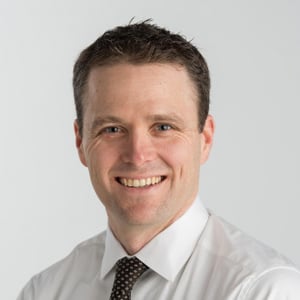
Professor of Law, University of Michigan Law School
Professor Nicholas Bagley teaches and writes in the areas of administrative law, regulatory theory, and health law. Prior to joining the Law School faculty, he was an attorney with the appellate staff in the Civil Division at the U.S. Department of Justice, where he argued a dozen cases before the U.S. Courts of Appeals and acted as lead counsel in many more. Professor Bagley also served as a law clerk to Justice John Paul Stevens of the U.S. Supreme Court and to the Hon. David S. Tatel of the U.S. Court of Appeals, District of Columbia Circuit. Professor Bagley holds a BA in English from Yale University and received his JD, summa cum laude, from New York University School of Law. Before entering law school, he joined Teach For America and taught eighth-grade English at a public school in South Bronx. Professor Bagley's work has appeared in the Harvard Law Review, the Columbia Law Review, the Georgetown Law Journal, the New England Journal of Medicine, and the Journal of Health Politics, Policy, and Law. In 2012, he was the recipient of the Law School's L. Hart Wright Award for Excellence in Teaching. He is a frequent contributor to The Incidental Economist, a prominent health policy blog.
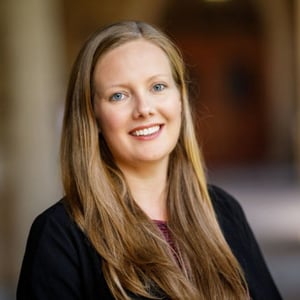
Professor of Law, University of Notre Dame Law School
Emily Bremer teaches and writes in the areas of administrative law, regulatory process, and civil procedure. Her scholarship focuses primarily on matters of procedural design, with a recent focus on the history and interpretation of the Administrative Procedure Act (APA). She is a recipient of the AALS’s award for the year’s best administrative law scholarship by a junior scholar and the AALL’s Joseph L. Andrew’s Legal Literature Award for her contribution to the Bremer-Kovacs Collection of Historical Documents Related to the APA (HeinOnline). Bremer’s articles include a defense forthcoming in the Virginia Law Review of the constitutionality of the APA’s regime for ensuring the competence and impartiality of Administrative Law Judges; a plea in the Yale Journal on Regulation for administrative law to take greater account of the on-the-ground reality of administration; twin articles uncovering the intellectual foundation and meaning of the APA’s adjudication and rulemaking provisions; and three separate studies that served as the basis of recommendations of the Administrative Conference of the United States (ACUS) on the subjects of agency declaratory orders, incorporation by reference, and statutory limitations on the jurisdiction of the Court of Federal Claims. Bremer serves as a Senior Fellow of ACUS, a co-editor of the administrative law section of Jotwell, and a regular contributor to the Yale Journal on Regulation’s Notice & Comment blog.
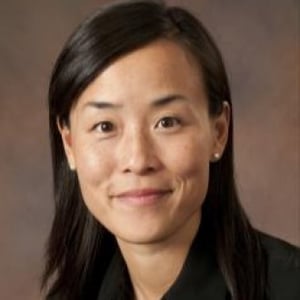
Professor of Law, University of Chicago Law School
Jennifer Nou is Professor of Law at the University of Chicago Law School. Nou’s main research interests are in administrative law, executive branch dynamics, regulatory policy, and constitutional separation-of-powers. Prior to joining the faculty, she was a Public Law Fellow at the Law School and also worked as a policy analyst and special assistant at the Office of Information and Regulatory Affairs. Nou is a graduate of Yale College and Yale Law School, and received an MPhil in Politics from Oxford University as a Marshall Scholar. After law school, she was a law clerk to Judge Richard Posner of the US Court of Appeals for the Seventh Circuit and then to Justice Stephen Breyer of the US Supreme Court. She is currently a public member of the Administrative Conference of the United States.

Judge, United States Court of Appeals, District of Columbia Circuit
Judge Rao was appointed to the United States Court of Appeals for the District of Columbia Circuit in March 2019. She graduated from Yale College in 1995 and the University of Chicago Law School in 1999. Following graduation, she served as a law clerk to Judge J. Harvie Wilkinson III of the U.S. Court of Appeals for the Fourth Circuit and, in the 2001 October Term, as law clerk to Justice Clarence Thomas of the U.S. Supreme Court. Between her clerkships, Judge Rao served as counsel for nominations and constitutional law to the U.S. Senate Committee on the Judiciary. In 2002, she joined the international arbitration group of Clifford Chance LLP in London, England. From 2005-2006, she served as Special Assistant and Associate White House Counsel to President George W. Bush. From 2006 to 2017, Judge Rao was a professor at the Antonin Scalia Law School at George Mason University, where she taught constitutional law, legislation and statutory interpretation, and the history and foundations of the administrative state. In 2014, she founded the Center for the Study of the Administrative State, a non-profit Center that promotes academic scholarship and public policy debates about administrative law. In July 2017, she was appointed to serve as the Administrator of the Office of Information and Regulatory Affairs in the Office of Management and Budget. She served in this position until her appointment to the D.C. Circuit.

Of Counsel, Covington & Burling LLP
The Honorable Paul J. Ray is currently Of Counsel at Covington & Burling LLP where he advises clients on regulatory opportunities and challenges and helps them formulate and execute advocacy strategies for their regulatory policy priorities before the executive branch and Congress.
During the first Trump Administration, Paul held various senior positions at the Office of Information and Regulatory Affairs (OIRA) within the White House’s Office of Management and Budget, including as acting, and then Senate-confirmed, head of the office. As OIRA Administrator (the "regulations czar"), Paul supervised the review of hundreds of regulations from across the government, drafted numerous executive orders governing the regulatory process, and led the Administration’s regulatory reform effort. As a result of this experience, Paul is well-positioned to help clients understand and achieve regulatory policy priorities in the context of the government’s regulatory agenda and ongoing reform efforts.
Most recently, Paul was also the Director of the Roe Institute for Economic Policy Studies at The Heritage Foundation. In that role, he supervised the formulation of the Foundation’s economic and regulatory policy recommendations and provided technical assistance to congressional committees and staff regarding legislative changes to the regulatory process. In addition to his role at The Heritage Foundation, Paul also served as a Senior Advisor at a strategic advisory firm. Before his time in government, Paul practiced law at a law firm in Washington, specializing in administrative law matters.
Prior to his role at the White House, Paul was Counselor to the Secretary at the U.S. Department of Labor. There he led departmental efforts in high-profile rulemakings and helped formulate the Department’s legal positions and strategy.
Paul served as a law clerk to Supreme Court Justice Samuel Alito and as a law clerk to the Honorable Debra Livingston of the U.S. Court of Appeals for the Second Circuit.
Paul is a thought leader in the conservative legal movement and is a frequent commentator and speaker on regulatory policy and reform matters, including at law schools, professional gatherings, and other venues. He is the Chairman of Innovations in Peacebuilding International and the Regulatory Process Working Group of the Federalist Society’s Regulatory Transparency Project and a public member of the Administrative Conference of the United States. Paul is also an adjunct lecturer at the Hillsdale College School of Government.

Judge, United States Court of Appeals, Fifth Circuit
Judge Duncan received his B.A. from Louisiana State University in 1994, his J.D. from the Paul M. Hebert Law Center at Louisiana State University in 1997, and his LL.M. from Columbia Law School in 2004.
After graduating from law school, he clerked for Louisiana-based Circuit Judge John Malcolm Duhé Jr. of the United States Court of Appeals for the Fifth Circuit.
From 2008–2012, Duncan served as Appellate Chief for Louisiana's Attorney General's office. From 2012–2014, he served as general counsel of the Becket Fund for Religious Liberty. From 2004-2008, he was an assistant professor of law at the University of Mississippi School of Law.
Before becoming a judge, Duncan practiced at the Washington, D.C. firm of Schaerr Duncan LLP, where he was a founding partner. He was appointed by President Trump to the United States Court of Appeals for the Fifth Circuit on May 1, 2018.

Senior Fellow and Director of Constitutional Studies, Manhattan Institute
Ilya Shapiro is a senior fellow and director of constitutional studies at the Manhattan Institute and a contributing editor of City Journal. Previously he was executive director and senior lecturer at the Georgetown Center for the Constitution, and before that a vice president of the Cato Institute.
Shapiro is the author of Lawless: The Miseducation of America’s Elites (2025) and Supreme Disorder: Judicial Nominations and the Politics of America’s Highest Court (2020), coauthor of Religious Liberties for Corporations? (2014), and editor of 11 volumes of the Cato Supreme Court Review (2008-18). He has contributed to a variety of academic, popular, and professional publications, including the Wall Street Journal, Harvard Journal of Law & Public Policy, Washington Post, Los Angeles Times, USA Today, National Review, and Newsweek. He also regularly provides commentary for various media outlets, writes the Shapiro’s Gavel newsletter on Substack, and once appeared on the Colbert Report.
Shapiro has testified many times before Congress and state legislatures and has filed more than 500 amicus curiae “friend of the court” briefs in the Supreme Court. He lectures regularly on behalf of the Federalist Society, is a member of the board of fellows of the Jewish Policy Center, was an inaugural Washington Fellow at the National Review Institute, and has been an adjunct law professor at the George Washington University and University of Mississippi. He is also the chairman of the board of advisers of the Mississippi Justice Institute, a barrister in the Edward Coke Appellate Inn of Court, and a former member of the Virginia Advisory Committee to the U.S. Commission on Civil Rights.
Earlier in his career, Shapiro was a special assistant/adviser to the Multi-National Force in Iraq on rule-of-law issues and practiced at Patton Boggs and Cleary Gottlieb. Before entering private practice, he clerked for Judge E. Grady Jolly of the U.S. Court of Appeals for the Fifth Circuit. He holds an AB from Princeton University, an MSc from the London School of Economics, and a JD from the University of Chicago Law School.
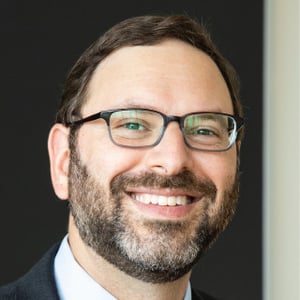
Antonin Scalia Professor of Law, Harvard Law School
Stephen E. Sachs is the Antonin Scalia Professor of Law at Harvard Law School, where he teaches civil procedure, conflict of laws, and seminars on constitutional law. His research focuses on the law and theory of constitutional interpretation, the jurisdiction of state and federal courts, the history of procedure and private law, and the role of the general common law in the U.S. legal system.
Sachs has authored numerous articles, essays, and book chapters. He is an elected member of the American Law Institute, an adviser to the ALI’s project on the Restatement of the Law (Third), Conflict of Laws, a former member of the Judicial Conference’s Advisory Committee on Appellate Rules, and a founding member of the Academic Freedom Alliance.
In 2020, Sachs received the Federalist Society’s Joseph Story Award, which recognizes a young academic who has demonstrated excellence in legal scholarship, a commitment to teaching, a concern for students, and who has made a significant public impact in a manner that advances the rule of law in a free society.
Sachs previously taught at Duke University School of Law and as a visiting professor at the University of Chicago Law School. Before entering academia, he practiced in the Washington, D.C., litigation group of Mayer Brown LLP, and he clerked for Chief Justice John G. Roberts Jr. as well as for Judge Stephen F. Williams of the U.S. Court of Appeals for the D.C. Circuit.
Sachs received his J.D. from Yale Law School, where he was executive editor of the Yale Law Journal and served both as executive editor and articles editor of the Yale Law & Policy Review. A Rhodes Scholar, he graduated from Oxford University with a first-class BA (Hons) degree in philosophy, politics, and economics. He received his A.B. degree summa cum laude in history from Harvard University, earning the Sophia Freund Prize.
Sachs is a licensed attorney in Massachusetts and the District of Columbia, and he is authorized to practice before the D.C. Circuit, the Second Circuit, the Seventh Circuit, and the Supreme Court of the United States.
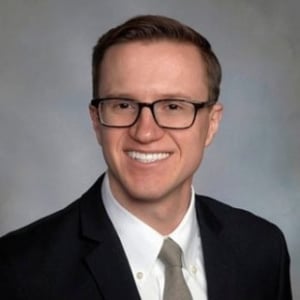
Chief Counsel for the Administrative State, Regulatory Reform, and Antitrust, House Committee on the Judiciary
Adam Cella is currently the Chief Counsel for the Administrative State, Regulatory Reform, and Antitrust at the House Committee on the Judiciary. Formerly, he was an attorney-advisor at the U.S. Federal Trade Commission. Prior to joining the FTC, he was an associate at Axinn, Veltrop & Harkrider LLP.
Chief Counsel, Senate Judiciary Committee
Thomas DeMatteo is Chief Counsel on the Senate Judiciary Committee to Senator Mike Lee. He previously served as counsel to the Assistant Attorney General of the Department of Justice Antitrust Division, where he worked closely with leadership and staff on civil merger and non-merger matters across numerous industries including, large technology platforms, defense, finance, and consumer products.
Mr. DeMatteo joined the Antitrust Division through the Attorney General’s Honors Program as a Trial Attorney and previously worked at an international law firm, where he advised clients on antitrust and competition matters. He is a graduate of Washington and Lee University School of Law and the University of Rochester, where he was a member of the football team and selected to the Liberty League All-Academic Team.

Chief Judge, United States Court of Appeals, Fifth Circuit
Jennifer Walker Elrod is the Chief Judge of the United States Court of Appeals for the Fifth Circuit. She was nominated to the Fifth Circuit in 2007, and she served as a Circuit Judge on the court until assuming the role of Chief Judge in October 2024. Prior to serving as a Circuit Judge, Chief Judge Elrod was appointed and then twice elected Judge of the 190th District Court of Harris County, Texas, where she spent over five years presiding over more than 200 jury and non-jury trials.
Chief Judge Elrod graduated cum laude from Harvard Law School, where she was an active member of the Harvard Federalist Society, an Ames Moot Court finalist, and a Senior Editor of the Harvard Journal of Law & Public Policy. She clerked for the Honorable Sim Lake in the Southern District of Texas. Before serving as a judge, Chief Judge Elrod worked in private practice, focusing on civil litigation, antitrust, and employment matters.
She has been repeatedly recognized for her work as a jurist, as well as for her pro bono work and contributions to the community. She has been named the 2022 Texas Review of Law & Politics’ Jurist of the Year, the 2018 Harvard Federalist Society’s Alumni of the Year, the 2016–17 Texas Association of Civil Trial and Appellate Specialists’ Appellate Judge of the Year, and the 2008 Mexican-American Bar Association of Texas’s Judge of the Year.
Chief Judge Elrod is actively engaged in the academic and legal communities. Chief Judge Elrod currently serves on the Board of Directors and as the Jurist-in-Residence at the South Texas College of Law, where she teaches civil procedure and First Amendment law. She is also a member of the American Law Institute and of the Board of Advisors for the Harvard Journal of Law & Public Policy, and she is a former member of the Board of Regents of her alma mater, Baylor University, and the Board of Visitors at Brigham Young University Law School. She previously served as the Chair of the Codes of Conduct Committee for the Judicial Conference of the United States. She has also served as the M.D. Anderson Visiting Public Service Professor at the Texas Tech University School of Law and as Jurist-in-Residence at Brigham Young University Law School, and she has taught legal writing at the University of Houston Law Center. She presented the Lewis F. Powell, Jr. Distinguished Lecture at the Washington and Lee University School of Law and is a frequent speaker on the topics of trial and appellate procedure, ethics, employment law, and constitutional law. Chief Judge Elrod also serves on the board of the Garland R. Walker Inn of Court, and co-produces an annual musical CLE, for which her pupilage group has won multiple national awards.
Chief Judge Elrod’s publications include: Trial by Siri: AI Comes to the Courtroom; Don’t Mess with Texas Judges: In Praise of the State Judiciary; For Good: Enriching Your Practice and Your Life Through Pro Bono and Community Service; Is the Jury Still Out?: A Case for the Continued Viability of the American Jury; and W(h)ither the Jury? The Diminishing Role of the Jury Trial in our Legal System.
Deputy Assistant Attorney General, Antitrust Division, United States Department of Justice
Michael Kades is a Deputy Assistant Attorney General for the Antitrust Division with a focus on civil enforcement.
Prior to coming to the US Department of Justice, Michael was director for markets and competition policy at the Washington Center for Equitable Growth. His research focused on competition and antitrust enforcement, with an emphasis on consumers, wages, equality, and innovation. He testified before Congress multiple times and authored several reports and articles on antitrust policy.
Prior to joining Equitable Growth, Michael worked as antitrust counsel for Sen. Amy Klobuchar (D-MN), on detail to the from the Federal Trade Commission. He worked on the CREATES Act, the Holocaust Expropriated Art Recovery Act, and the Trade Secrets Protection Act, all of which Congress enacted. He was also the primary staffer on the Merger Filing Fee Modernization Act and the Consolidation Prevention and Competition Protection Act.
Michael spent 20 years investigating and litigating antitrust actions as an attorney at the Federal Trade Commission. From 2013-15, he was the Deputy Chief Trial Counsel for the Bureau of Competition where he participated in a number of merger investigations and litigations. From 2006-2013, served as attorney advisor to Chairman Jon Leibowitz. He oversaw the Commission’s strategy to address anticompetitive patent settlements, worked on the 2010 horizontal merger guidelines, and advised the Chairman on antitrust issues. From 1997-2006, he was an attorney in the Health Care Products Services. He argued In re Schering Plough and In re South Carolina Board of Dentistry before the Commission as well as appearing in federal court. He played a leading role in FTC v. Mylan in which the Commission obtained $100 million in disgorgement. While at the Commission, he received the Chairman’s Award and the Paul Rand Dixon Award.
Kades is a graduate of Yale University and the University of Wisconsin Law School.
Director, Bureau of Consumer Protection, Federal Trade Commission
Chris Mufarrige served in the first Trump Administration as a Senior Adviser to the Director and Deputy Director of the Consumer Financial Protection Bureau, advising on enforcement, rulemaking, and supervisory exams relating to the country’s largest banks and nonbank financial institutions. Most recently, he was Commissioner Melissa Holyoak’s Chief of Staff and Attorney Adviser. He has also worked at private law firms and as an in-house lawyer. In his free time, Mufarrige taught a class on financial services and consumer protection at George Mason University’s Antonin Scalia Law School.
Chair, Global Antitrust Law Practice Group, Morrison Foerster
Alex Okuliar is Co-Chair of Morrison Foerster’s Global Antitrust Law Practice Group. He is the former Deputy Assistant Attorney General for Civil Antitrust Enforcement at the U.S. Department of Justice and a former advisor at the Federal Trade Commission.
Alex’s practice spans merger review, civil litigation, and criminal investigations. Over his twenty-five-year career, Alex has worked on nearly one thousand deals. He has deep experience guiding clients through the complex global merger clearance process and has litigated agency merger challenges through trial. He has also helped clients succeed in a wide range of federal and state cases, including class actions and private party disputes alleging price fixing, monopolization, group boycotts, market allocation, and tying. His understanding of the agency processes from the inside allows him to offer expert, timely, and practical advice to clients navigating merger and conduct investigations by the U.S. Department of Justice, the Federal Trade Commission, state Attorneys General, and foreign agencies. Alex’s work has been recognized by leading industry publications such as Chambers, The Legal 500 U.S., and Global Competition Review.
Outside of client work, Alex is a prolific thought leader and was recognized as a 2024 Top Author for Antitrust & Trade Regulation by JD Supra’s Readers’ Choice Awards. He currently serves as the co-chair of the ABA Antitrust Law Section’s Joint Conduct Committee and is the former chair of the Section’s Intellectual Property Committee and co-chair of the 2023 Antitrust Fall Forum on Artificial Intelligence. He is also a member of the Corporations, Securities & Antitrust Executive Committee of The Federalist Society for Law and Public Policy Studies.
Before law school, Alex co-founded and sold an online technology company. Alex received his B.S. in economics and B.A. with distinction in history from the Wharton School of the University of Pennsylvania and his J.D. from Vanderbilt University Law School.

Judge, United States Court of Appeals, Eleventh Circuit
Judge Kevin C. Newsom is a member of the United States Court of Appeals for the Eleventh Circuit. He sits in Birmingham, Alabama.
Before his appointment to the bench, Judge Newsom was the head of the appellate practice group at Bradley Arant Boult Cummings LLP and, before that, the Solicitor General of Alabama. As a practicing lawyer, Judge Newsom argued four cases in the Supreme Court of the United States, and nearly 40 more in the United States Courts of Appeals and state supreme and appellate courts.
Judge Newsom graduated summa cum laude from Samford University and magna cum laude from Harvard Law School, where he was an articles editor on the Harvard Law Review. Following law school, Judge Newsom clerked for Judge Diarmuid F. O’Scannlain of the United States Court of Appeals for the Ninth Circuit and Justice David H. Souter of the Supreme Court of the United States.
Judge Newsom teaches at Harvard Law School, Yale Law School, Stanford Law School, and the University of Chicago Law School. His published work has appeared in the Yale Law Journal and the Harvard Law Review.

Emerging Applications of the Congressional Review Act
Jonathan H. Adler, Michael Buschbacher, Alan B. Morrison, Laura Stanley
This panel will explore the evolving use of the Congressional Review Act, with particular attention...
Showcase Panel 2: Immigration and Originalism
Akhil Reed Amar, Stephanie Barclay, Trevor W. Ezell, Gene P. Hamilton, Jordan J. Lamb, James P. Sullivan
CLE credit for this event is available at On-Demand CLE. What do the tools of originalism...
Daniel Webster Debate Series: Do Nationwide Injunctions Undermine the President's Lawful Authority?
John G. Malcolm, Chad A. Readler, Stephen I. Vladeck
The Federalist Society's Georgetown Law Chapter'sDaniel Webster Debate Series presents Daniel Webster Debate Series:Do...
Panel III: Congress and the Administrative State: Prospects for Regulatory Reform
Nicholas Bagley, Emily Bremer, Jennifer Nou, Neomi Rao, Paul J. Ray
Featuring: Prof. Nicholas Bagley, Thomas G. Long Professor of Law, University of Michigan Law School...
The Corruption of Law Schools and the Health of Our Democracy
Stuart Kyle Duncan
A review of Ilya Shapiro, Lawless: The Miseducation of America’s Elites (2025) The legal scholar...
The Federalist Paper, Winter 2025
Dear Friend, The Federalist Society’s year is off to an exciting start as we welcome...
Lawless: The Miseducation of America's Elites
Ilya Shapiro
Event Audio: Lawless: The Miseducation of America's Elites
Hon. Robert H. Bork Memorial Lecture
Stephen E. Sachs
The 2024 National Lawyers Convention will take place November 14-16, 2024 at the Washington Hilton in...
Corporations, Securities, & Antitrust: The Future of Antitrust
Adam Cella, Thomas DeMatteo, Jennifer Walker Elrod, Michael Kades, Christopher Mufarrige, Alexander P. Okuliar
Critics have raised concerns about the inadequacy of the consumer welfare standard for the 21st...
Reflections on Justice Breyer's "Reading the Constitution"
Columbia Student Chapter
New York, NY