
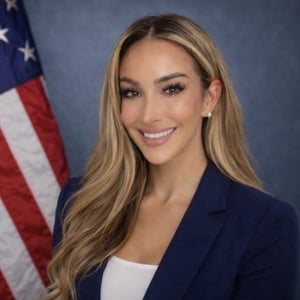
Senior Appellate Counsel, U.S. Navy
Stephanie Fisher recently completed six years as an active-duty Navy Judge Advocate and now serves in the Reserves. She will begin as a Trial Attorney in the Department of Justice’s National Security Division, Counterintelligence and Export Control Section, this summer (2026).
As a Judge Advocate, Stephanie served in numerous roles, including Senior Appellate Government Counsel, Legal Advisor to the Convening Authority for Military Commissions, Adjunct Professor of Law at the United States Naval Academy, and Trial Defense Counsel. She also completed temporary duty assignments with Naval Special Warfare Group 4, Submarine Squadron 6, and Commander, Navy Region Mid-Atlantic.
In her most recent role as Senior Appellate Government Counsel, she briefed and argued cases before the Navy-Marine Corps Court of Criminal Appeals and the Court of Appeals for the Armed Forces, where the courts affirmed more than 95% of the convictions she defended.
Before joining the JAG Corps, Stephanie clerked on the Arizona Supreme Court for the Honorable Justice William Montgomery. She earned her J.D. from Arizona State University’s Sandra Day O’Connor College of Law, where she served as a two-time Vice President of the Federalist Society student chapter. She earned her dual bachelor’s degree from the University of Michigan, where she was a four-year member of the varsity cheerleading team.
Stephanie currently serves on the DC Young Lawyer Chapter Board and the Armed Services Legal Network Executive Committee. In her free time, she enjoys skydiving, weightlifting, hiking, and traveling.
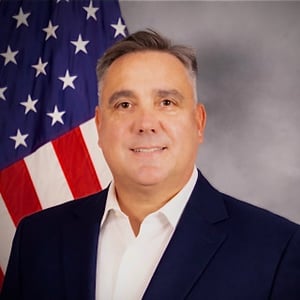
Deputy General Counsel, Office of the General Counsel, National Guard Bureau
Colonel Michael Mark Majors serves as Deputy General Counsel for the Office of the General Counsel, National Guard Bureau, with more than 27 years of military legal experience advising senior military leaders and government officials on military justice, administrative law, operational law, national security, and strategic policy. Throughout his career, he has served as a trusted legal advisor on complex issues spanning governance, risk management, compliance, homeland defense, and military operations.
As Deputy General Counsel, Colonel Majors advises senior National Guard leadership on legal and policy matters affecting more than 430,000 Soldiers and Airmen serving across the 54 states, territories, and the District of Columbia. In his primary role as Chief of the Strategic Engagement Division, he directs nationwide military legal professional development, accessions, and strategic engagement for more than 1,100 National Guard Judge Advocates and Legal Advisors. He develops and teaches National Guard legal education programs, authoring policy and regulatory guidance, and works closely with the Judge Advocate General's Corps, State Judge Advocates, and military legal organizations to strengthen legal readiness throughout the National Guard.
Colonel Majors has deployed in support of multinational operations in Bosnia-Herzegovina, Iraq, Bahrain, and Kosovo. His operational assignments include serving as Chief Deputy Legal Advisor for the NATO-led Kosovo Force (KFOR), advising senior commanders on the law of armed conflict, rules of engagement, international agreements, fiscal law, claims, and operational legal issues during a period of heightened regional instability following Russia's expanded invasion of Ukraine.
Colonel Majors is currently pursuing a Master of Laws (LL.M.) in Air and Space Law at the University of Mississippi School of Law, with a concentration in national security, space operations, commercial remote sensing, and international space law. He holds Master of Arts degrees in Defense and Strategic Studies from both the U.S. Army War College and the U.S. Naval War College, a Juris Doctor from Mississippi College School of Law, and a Bachelor of Science in Public Administration from Samford University.
He is admitted to practice law in the District of Columbia, Mississippi, and Alabama, as well as before the U.S. Court of Appeals for the Armed Forces and multiple federal courts. Colonel Majors serves on the Board of Directors of the Judge Advocate Association, is a Fellow of the Mississippi Bar, and is a frequent lecturer on military law, national security law, operational law, leadership, and emerging issues in air and space law. His military decorations include the Legion of Merit, the Defense Meritorious Service Medal (two awards), the Meritorious Service Medal (four awards), and the Combat Action Badge.
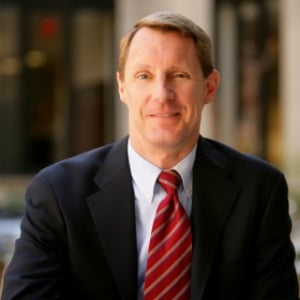
Director, International Legal Studies Program, Vanderbilt Law School
Michael Newton is an expert on terrorism, accountability, transnational justice, and conduct of hostilities issues. Over the course of his career, he has published more than 90 books, articles, op-eds and book chapters. He has been an expert witness in terrorism related trials and is admitted to the counsel list of the International Criminal Court, where, in 2018, he helped prepare the appeal of Jean-Pierre Bemba and participated in oral arguments in the Appeals Chamber. At Vanderbilt, he developed and teaches the innovative International Law Practice Lab, which provides expert assistance to judges, lawyers, legislatures, governments, and policy makers around the world. Professor Newton is most recently the editor of The United States Department of Defense Law of War Manual: Commentary and Critique, forthcoming from Cambridge University Press.
An authority on the law of armed conflict, Professor Newton served as the senior adviser to the Ambassador-at-Large for War Crimes Issues in the U.S. State Department from January 1999 to August 2002, during which he implemented a wide range of policy positions, including U.S. support to accountability mechanisms worldwide. He negotiated the “Elements of Crimes” for the International Criminal Court, and was the senior member of the team teaching international law to the first group of Iraqis who began to think about accountability mechanisms and a constitutional structure in November 2000. He shuttled to Baghdad repeatedly to aid international and Iraqi lawyers and jurists in drafting the Statute of the Iraqi High Tribunal while serving as the International Law Adviser to the Judicial Chambers from 2006 to 2008. He began assisting Iraqi officials, victims and civil society groups on legal issues associated with documentation and investigation of crimes committed by Da’esh on Iraqi soil days after Yazidi victims fled towards Mount Sinjar. He was the U.S. representative on the U.N. Planning Mission for the Sierra Leone Special Court and a founding member of its academic consortium. He is an elected member of the International Institute of Humanitarian Law and on the expert roster of Justice Rapid Response. In addition to teaching the Practice Lab, he develops and coordinates externships and educational opportunities for students interested in international legal issues, having supervised more than 150 such opportunities.
Professor Newton has served on the executive council of the American Society of International Law and as an invited expert for the Genocide Prevention Task Force established by the U.S. Holocaust Memorial Museum and the U.S. Institute of Peace. He is currently on the Advisory Board of the ABA International Criminal Court Project.
Professor Newton served in the U.S. Army more than 21 years, beginning with his commission from the U.S. Military Academy in May 1984 as an armor officer in the 4th Battalion, 68th Armor at Fort Carson, Colorado. After his selection for the Funded Legal Education Program, Newton served as chief of operational law with the Army Special Forces Command (Airborne) during Operation Desert Storm, and as the group judge advocate for the 7th Special Forces Group (Airborne). His deployments include Northern Iraq on Operation Provide Comfort to assist Kurdish civilians, and Haiti with 194th Armored Brigade (Separate), where he organized and led human rights and rules of engagement education for multinational forces, including police. He has taught international and operational law at the Judge Advocate General's School and Center in Charlottesville, Virginia, and taught international law at the United States Military Academy at West Point.
Senior Appellate Counsel, U.S. Navy
Stephanie Fisher recently completed six years as an active-duty Navy Judge Advocate and now serves in the Reserves. She will begin as a Trial Attorney in the Department of Justice’s National Security Division, Counterintelligence and Export Control Section, this summer (2026).
As a Judge Advocate, Stephanie served in numerous roles, including Senior Appellate Government Counsel, Legal Advisor to the Convening Authority for Military Commissions, Adjunct Professor of Law at the United States Naval Academy, and Trial Defense Counsel. She also completed temporary duty assignments with Naval Special Warfare Group 4, Submarine Squadron 6, and Commander, Navy Region Mid-Atlantic.
In her most recent role as Senior Appellate Government Counsel, she briefed and argued cases before the Navy-Marine Corps Court of Criminal Appeals and the Court of Appeals for the Armed Forces, where the courts affirmed more than 95% of the convictions she defended.
Before joining the JAG Corps, Stephanie clerked on the Arizona Supreme Court for the Honorable Justice William Montgomery. She earned her J.D. from Arizona State University’s Sandra Day O’Connor College of Law, where she served as a two-time Vice President of the Federalist Society student chapter. She earned her dual bachelor’s degree from the University of Michigan, where she was a four-year member of the varsity cheerleading team.
Stephanie currently serves on the DC Young Lawyer Chapter Board and the Armed Services Legal Network Executive Committee. In her free time, she enjoys skydiving, weightlifting, hiking, and traveling.
Deputy General Counsel, Office of the General Counsel, National Guard Bureau
Colonel Michael Mark Majors serves as Deputy General Counsel for the Office of the General Counsel, National Guard Bureau, with more than 27 years of military legal experience advising senior military leaders and government officials on military justice, administrative law, operational law, national security, and strategic policy. Throughout his career, he has served as a trusted legal advisor on complex issues spanning governance, risk management, compliance, homeland defense, and military operations.
As Deputy General Counsel, Colonel Majors advises senior National Guard leadership on legal and policy matters affecting more than 430,000 Soldiers and Airmen serving across the 54 states, territories, and the District of Columbia. In his primary role as Chief of the Strategic Engagement Division, he directs nationwide military legal professional development, accessions, and strategic engagement for more than 1,100 National Guard Judge Advocates and Legal Advisors. He develops and teaches National Guard legal education programs, authoring policy and regulatory guidance, and works closely with the Judge Advocate General's Corps, State Judge Advocates, and military legal organizations to strengthen legal readiness throughout the National Guard.
Colonel Majors has deployed in support of multinational operations in Bosnia-Herzegovina, Iraq, Bahrain, and Kosovo. His operational assignments include serving as Chief Deputy Legal Advisor for the NATO-led Kosovo Force (KFOR), advising senior commanders on the law of armed conflict, rules of engagement, international agreements, fiscal law, claims, and operational legal issues during a period of heightened regional instability following Russia's expanded invasion of Ukraine.
Colonel Majors is currently pursuing a Master of Laws (LL.M.) in Air and Space Law at the University of Mississippi School of Law, with a concentration in national security, space operations, commercial remote sensing, and international space law. He holds Master of Arts degrees in Defense and Strategic Studies from both the U.S. Army War College and the U.S. Naval War College, a Juris Doctor from Mississippi College School of Law, and a Bachelor of Science in Public Administration from Samford University.
He is admitted to practice law in the District of Columbia, Mississippi, and Alabama, as well as before the U.S. Court of Appeals for the Armed Forces and multiple federal courts. Colonel Majors serves on the Board of Directors of the Judge Advocate Association, is a Fellow of the Mississippi Bar, and is a frequent lecturer on military law, national security law, operational law, leadership, and emerging issues in air and space law. His military decorations include the Legion of Merit, the Defense Meritorious Service Medal (two awards), the Meritorious Service Medal (four awards), and the Combat Action Badge.
Director, International Legal Studies Program, Vanderbilt Law School
Michael Newton is an expert on terrorism, accountability, transnational justice, and conduct of hostilities issues. Over the course of his career, he has published more than 90 books, articles, op-eds and book chapters. He has been an expert witness in terrorism related trials and is admitted to the counsel list of the International Criminal Court, where, in 2018, he helped prepare the appeal of Jean-Pierre Bemba and participated in oral arguments in the Appeals Chamber. At Vanderbilt, he developed and teaches the innovative International Law Practice Lab, which provides expert assistance to judges, lawyers, legislatures, governments, and policy makers around the world. Professor Newton is most recently the editor of The United States Department of Defense Law of War Manual: Commentary and Critique, forthcoming from Cambridge University Press.
An authority on the law of armed conflict, Professor Newton served as the senior adviser to the Ambassador-at-Large for War Crimes Issues in the U.S. State Department from January 1999 to August 2002, during which he implemented a wide range of policy positions, including U.S. support to accountability mechanisms worldwide. He negotiated the “Elements of Crimes” for the International Criminal Court, and was the senior member of the team teaching international law to the first group of Iraqis who began to think about accountability mechanisms and a constitutional structure in November 2000. He shuttled to Baghdad repeatedly to aid international and Iraqi lawyers and jurists in drafting the Statute of the Iraqi High Tribunal while serving as the International Law Adviser to the Judicial Chambers from 2006 to 2008. He began assisting Iraqi officials, victims and civil society groups on legal issues associated with documentation and investigation of crimes committed by Da’esh on Iraqi soil days after Yazidi victims fled towards Mount Sinjar. He was the U.S. representative on the U.N. Planning Mission for the Sierra Leone Special Court and a founding member of its academic consortium. He is an elected member of the International Institute of Humanitarian Law and on the expert roster of Justice Rapid Response. In addition to teaching the Practice Lab, he develops and coordinates externships and educational opportunities for students interested in international legal issues, having supervised more than 150 such opportunities.
Professor Newton has served on the executive council of the American Society of International Law and as an invited expert for the Genocide Prevention Task Force established by the U.S. Holocaust Memorial Museum and the U.S. Institute of Peace. He is currently on the Advisory Board of the ABA International Criminal Court Project.
Professor Newton served in the U.S. Army more than 21 years, beginning with his commission from the U.S. Military Academy in May 1984 as an armor officer in the 4th Battalion, 68th Armor at Fort Carson, Colorado. After his selection for the Funded Legal Education Program, Newton served as chief of operational law with the Army Special Forces Command (Airborne) during Operation Desert Storm, and as the group judge advocate for the 7th Special Forces Group (Airborne). His deployments include Northern Iraq on Operation Provide Comfort to assist Kurdish civilians, and Haiti with 194th Armored Brigade (Separate), where he organized and led human rights and rules of engagement education for multinational forces, including police. He has taught international and operational law at the Judge Advocate General's School and Center in Charlottesville, Virginia, and taught international law at the United States Military Academy at West Point.
Senior Appellate Counsel, U.S. Navy
Stephanie Fisher recently completed six years as an active-duty Navy Judge Advocate and now serves in the Reserves. She will begin as a Trial Attorney in the Department of Justice’s National Security Division, Counterintelligence and Export Control Section, this summer (2026).
As a Judge Advocate, Stephanie served in numerous roles, including Senior Appellate Government Counsel, Legal Advisor to the Convening Authority for Military Commissions, Adjunct Professor of Law at the United States Naval Academy, and Trial Defense Counsel. She also completed temporary duty assignments with Naval Special Warfare Group 4, Submarine Squadron 6, and Commander, Navy Region Mid-Atlantic.
In her most recent role as Senior Appellate Government Counsel, she briefed and argued cases before the Navy-Marine Corps Court of Criminal Appeals and the Court of Appeals for the Armed Forces, where the courts affirmed more than 95% of the convictions she defended.
Before joining the JAG Corps, Stephanie clerked on the Arizona Supreme Court for the Honorable Justice William Montgomery. She earned her J.D. from Arizona State University’s Sandra Day O’Connor College of Law, where she served as a two-time Vice President of the Federalist Society student chapter. She earned her dual bachelor’s degree from the University of Michigan, where she was a four-year member of the varsity cheerleading team.
Stephanie currently serves on the DC Young Lawyer Chapter Board and the Armed Services Legal Network Executive Committee. In her free time, she enjoys skydiving, weightlifting, hiking, and traveling.
Deputy General Counsel, Office of the General Counsel, National Guard Bureau
Colonel Michael Mark Majors serves as Deputy General Counsel for the Office of the General Counsel, National Guard Bureau, with more than 27 years of military legal experience advising senior military leaders and government officials on military justice, administrative law, operational law, national security, and strategic policy. Throughout his career, he has served as a trusted legal advisor on complex issues spanning governance, risk management, compliance, homeland defense, and military operations.
As Deputy General Counsel, Colonel Majors advises senior National Guard leadership on legal and policy matters affecting more than 430,000 Soldiers and Airmen serving across the 54 states, territories, and the District of Columbia. In his primary role as Chief of the Strategic Engagement Division, he directs nationwide military legal professional development, accessions, and strategic engagement for more than 1,100 National Guard Judge Advocates and Legal Advisors. He develops and teaches National Guard legal education programs, authoring policy and regulatory guidance, and works closely with the Judge Advocate General's Corps, State Judge Advocates, and military legal organizations to strengthen legal readiness throughout the National Guard.
Colonel Majors has deployed in support of multinational operations in Bosnia-Herzegovina, Iraq, Bahrain, and Kosovo. His operational assignments include serving as Chief Deputy Legal Advisor for the NATO-led Kosovo Force (KFOR), advising senior commanders on the law of armed conflict, rules of engagement, international agreements, fiscal law, claims, and operational legal issues during a period of heightened regional instability following Russia's expanded invasion of Ukraine.
Colonel Majors is currently pursuing a Master of Laws (LL.M.) in Air and Space Law at the University of Mississippi School of Law, with a concentration in national security, space operations, commercial remote sensing, and international space law. He holds Master of Arts degrees in Defense and Strategic Studies from both the U.S. Army War College and the U.S. Naval War College, a Juris Doctor from Mississippi College School of Law, and a Bachelor of Science in Public Administration from Samford University.
He is admitted to practice law in the District of Columbia, Mississippi, and Alabama, as well as before the U.S. Court of Appeals for the Armed Forces and multiple federal courts. Colonel Majors serves on the Board of Directors of the Judge Advocate Association, is a Fellow of the Mississippi Bar, and is a frequent lecturer on military law, national security law, operational law, leadership, and emerging issues in air and space law. His military decorations include the Legion of Merit, the Defense Meritorious Service Medal (two awards), the Meritorious Service Medal (four awards), and the Combat Action Badge.
Director, International Legal Studies Program, Vanderbilt Law School
Michael Newton is an expert on terrorism, accountability, transnational justice, and conduct of hostilities issues. Over the course of his career, he has published more than 90 books, articles, op-eds and book chapters. He has been an expert witness in terrorism related trials and is admitted to the counsel list of the International Criminal Court, where, in 2018, he helped prepare the appeal of Jean-Pierre Bemba and participated in oral arguments in the Appeals Chamber. At Vanderbilt, he developed and teaches the innovative International Law Practice Lab, which provides expert assistance to judges, lawyers, legislatures, governments, and policy makers around the world. Professor Newton is most recently the editor of The United States Department of Defense Law of War Manual: Commentary and Critique, forthcoming from Cambridge University Press.
An authority on the law of armed conflict, Professor Newton served as the senior adviser to the Ambassador-at-Large for War Crimes Issues in the U.S. State Department from January 1999 to August 2002, during which he implemented a wide range of policy positions, including U.S. support to accountability mechanisms worldwide. He negotiated the “Elements of Crimes” for the International Criminal Court, and was the senior member of the team teaching international law to the first group of Iraqis who began to think about accountability mechanisms and a constitutional structure in November 2000. He shuttled to Baghdad repeatedly to aid international and Iraqi lawyers and jurists in drafting the Statute of the Iraqi High Tribunal while serving as the International Law Adviser to the Judicial Chambers from 2006 to 2008. He began assisting Iraqi officials, victims and civil society groups on legal issues associated with documentation and investigation of crimes committed by Da’esh on Iraqi soil days after Yazidi victims fled towards Mount Sinjar. He was the U.S. representative on the U.N. Planning Mission for the Sierra Leone Special Court and a founding member of its academic consortium. He is an elected member of the International Institute of Humanitarian Law and on the expert roster of Justice Rapid Response. In addition to teaching the Practice Lab, he develops and coordinates externships and educational opportunities for students interested in international legal issues, having supervised more than 150 such opportunities.
Professor Newton has served on the executive council of the American Society of International Law and as an invited expert for the Genocide Prevention Task Force established by the U.S. Holocaust Memorial Museum and the U.S. Institute of Peace. He is currently on the Advisory Board of the ABA International Criminal Court Project.
Professor Newton served in the U.S. Army more than 21 years, beginning with his commission from the U.S. Military Academy in May 1984 as an armor officer in the 4th Battalion, 68th Armor at Fort Carson, Colorado. After his selection for the Funded Legal Education Program, Newton served as chief of operational law with the Army Special Forces Command (Airborne) during Operation Desert Storm, and as the group judge advocate for the 7th Special Forces Group (Airborne). His deployments include Northern Iraq on Operation Provide Comfort to assist Kurdish civilians, and Haiti with 194th Armored Brigade (Separate), where he organized and led human rights and rules of engagement education for multinational forces, including police. He has taught international and operational law at the Judge Advocate General's School and Center in Charlottesville, Virginia, and taught international law at the United States Military Academy at West Point.

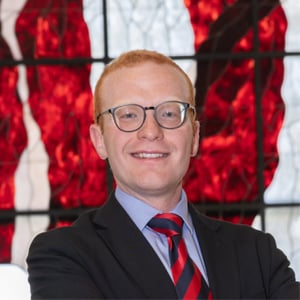
Exploring the Landscape of Military Law and Best Practices for JAGs
Jesse Burbank, Stephanie Fisher, Mark Majors, Michael A. Newton
Military law encompasses a wide range of legal disciplines, including criminal law, national security, government...
Exploring the Landscape of Military Law and Best Practices for JAGs
Jesse Burbank, Stephanie Fisher, Mark Majors, Michael A. Newton
Military law encompasses a wide range of legal disciplines, including criminal law, national security, government...
Exploring the Landscape of Military Law and Best Practices for JAGs