
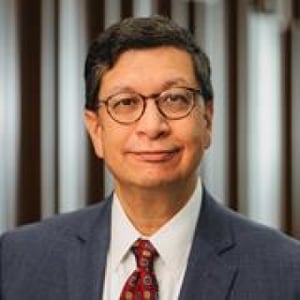
James T. Jensen Endowed Professor for Transactional Law & Director of the Program on Intellectual Property and Technology Law, University of Utah S.J. Quinney College of Law
Jorge L. Contreras is a Distinguished University Professor, the James T. Jensen Endowed Professor for Transactional Law and Director of the Program on Intellectual Property and Technology Law. He teaches and researches in the areas of intellectual property, property law, technical standardization, antitrust and science policy. In 2020 he received the University of Utah's Distinguished Research Award and is an elected member of the American Law Institute. He has testified before the U.S. Senate and House Subcommittees on Intellectual Property, and was awarded the Rossman Memorial Award by the Patent & Trademark Office Society in 2022.
Professor Contreras has written or edited fourteen books and published more than 150 scholarly articles and chapters. His book, The Genome Defense: Inside the Epic Legal Battle to Determine Who Owns Your DNA (NY: Hachette/Algonquin, 2021), has been praised by the NY Times, Wall St. Journal, Nature and numerous other outlets, and was named "Best Patent Law Book of the Year" by the international IPKat blog. His scholarly articles have appeared in leading scientific, legal and policy journals including Science, Nature, NYU Law Review, Georgetown Law Journal, Iowa Law Review and Antitrust Law Journal. He has been quoted by media outlets around the world including the New York Times, Wall Street Journal, Economist, Bloomberg, Washington Post, Korea Times and has been featured on C-SPAN, NPR, PRI and BBC shows and a range of podcasts and online news programs.
Professor Contreras currently serves Co-Chair of the Interdisciplinary Division of the ABA's Section of Science & Technology Law and a member of the Advisory Board of the American Antitrust Institute. He has previously served as Co-Chair of the National Conference of Lawyers and Scientists, a member of the National Academy of Sciences (NAS) Committee on Intellectual Property Management in Standard-Setting Processes, the National Institutes of Health (NIH) Council of Councils, the Advisory Council of NIH's National Center for the Advancement of Translational Sciences (NCATS), the National Advisory Council for Human Genome Research, and the Intellectual Property Rights Policy Committee of the American National Standards Institute (ANSI). In 2021 he served as Chair of the Art Law Section of the Association of American Law Schools (AALS) and currently serves as Chair of the AALS Remedies Section.
Professor Contreras has previously taught at American University Washington College of Law and Washington University in St. Louis. Prior to entering academia he was a partner at the international law firm Wilmer Cutler Pickering Hale and Dorr LLP, where he practiced transactional and intellectual property law in Boston, London and Washington DC. He is a cum laude graduate of Harvard Law School (JD) and Rice University (BA, BSEE) and clerked for Chief Justice Thomas R. Philips of the Texas Supreme Court.

Laurence A. Tisch Professor of Law and Director, Classical Liberal Institute, New York University School of Law; Senior Fellow, The Civitas Institute, University of Texas at Austin
Richard A. Epstein is the inaugural Laurence A. Tisch Professor of Law at NYU School of Law. Prior to his joining the faculty, he was a visiting law professor at NYU from 2007 through 2009. He served as the Peter and Kirstin Bedford Senior Fellow at the Hoover Institution from 2000 to 2024. Since 2024 to the present he is a senior lecturer at the Civitas Institute at the University of Texas—Austin. Epstein is also the James Parker Hall Distinguished Service Professor of Law Emeritus and a senior lecturer at the University of Chicago. His initial law school appointment was at the University of Southern California from 1968 to 1972. Epstein received an LL.D., h.c. from the University of Ghent, 2003. He has been a member of the American Academy of Arts and Sciences since 1985 and was a Senior Fellow of the Center for Clinical Medical Ethics at the University of Chicago Division of Biological Sciences, also from 1983. to 2022 He served as editor of the Journal of Legal Studies from 1981 to 1991, and of the Journal of Law and Economics from 1991-2001. From 2001 to 2010 he was a director of the John M. Olin Program in Law and Economics at the University of Chicago.
His newest book, The Myth of Birthright Citizenship: What the Fourteenth Amendment Really Says was published in 2026 (Encounter Books). Prior to that he has published many books including, The Dubious Morality of the Modern Administrative State (Roman & Littlefield 2020).Earlier he published th Classical Liberal Constitution: The Uncertain Quest for Limited Government (Harvard 2014) iHis previous books include Design for Liberty: Private Property, Public Administration and the Rule of Law (Harvard 2011); The Case Against the Employee Free Choice Act (Hoover 2009); Supreme Neglect: How to Revive the Constitutional Protection of Property Rights (Oxford 2008); Antitrust Decrees in Theory and Practice: Why Less is More (AEI 2007); Overdose: How Excessive Government Regulation Stifles Pharmaceutical Innovation (Yale University Press. 2006); How Progressives Rewrote the Constitution (Cato 2006); Cases and Materials on Torts (Aspen Law & Business; 8th ed. 2004); Skepticism and Freedom: A Modern Case for Classical Liberalism (University of Chicago, 2003); Torts (Aspen Law & Business 1999); Principles for a Free Society: Reconciling Individual Liberty with the Common Good (Perseus Books, 1998): Mortal Peril: Our Inalienable Rights to Health Care (Addison-Wesley, 1997); Simple Rules for a Complex World (Harvard, 1995); Bargaining With the State (Princeton, 1993); Forbidden Grounds: The Case Against Employment Discrimination Laws (Harvard , 1992); Takings: Private Property and the Power of Eminent Domain (Harvard, 1985); and Modern Products Liability Law (Greenwood Press, 1980). He has also edited(with Catherine M. Sharkey) Cases and Materials on the Law of Torts (10th edition 2012).
Professor Epstein has written numerous articles on a wide range of legal and interdisciplinary subjects. He has taught courses in administrative law, antitrust law, civil procedure, communications, constitutional law, contracts, corporations, criminal law, employment discrimination law, environmental law, food and drug law health law and policy, legal history, labor law, property, real estate development and finance, jurisprudence, labor law; land use planning, patents, individual, estate and corporate taxation, Roman Law; torts, and workers' compensation.
Professor Epstein also writes a regular column for Civitas Institute, which also sponsors his podcast, The Libertarian with Charles C.W. Cooke, and Law Talk, with Cooke and John Yoo. He also does a podcast with John Batchelor. And appears regularly on the Freedom File with Judge Andrew Napolitano.

U.S. Court of Federal Claims and Jurist-In-Residence Professor of Law, The University of Akron School of Law
Judge Ryan T. Holte was sworn in as a judge on the United States Court of Federal Claims in July 2019. Prior to confirmation he served as the David L. Brennan Professor of Law and Director of the Center for Intellectual Property Law and Technology at The University of Akron School of Law (2017-2019) and an assistant professor of law at Southern Illinois University School of Law (2013-2017). Judge Holte has written and presented widely on patent law subjects and empirical legal studies of Federal Circuit and district court patent law cases. His most recent articles were published in the Iowa Law Review (2019), George Mason Law Review (2018), and Washington Law Review (2017).
In practice, Judge Holte served for six years as general counsel and partner of an electrical engineering technology company and is co-inventor of multiple patents related to Systems and Methods for Countering Satellite-Navigated Munitions. Prior to entering academia, Judge Holte practiced as a litigation attorney at the Federal Trade Commission and an associate in the Intellectual Property Practice Group at Jones Day. Prior to practice, he served as a law clerk to Judge Stanley F. Birch, Jr. on the United States Court of Appeals for the Eleventh Circuit and as a law clerk to Judge Loren A. Smith on the United States Court of Federal Claims.
Judge Holte received his JD from the University of California Davis School of Law and his BS, magna cum laude, in engineering from the California Maritime Academy where he was a First Class graduate of the Corps of Cadets Third Engineering Division and sailed as a U.S. Merchant Marine oiler.
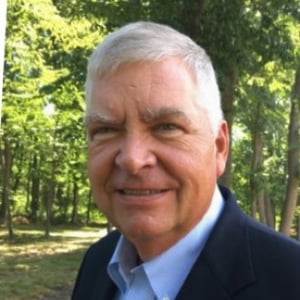
Founder and Principal, Johnson-IP Strategy & Consulting
Philip S. Johnson is Founder and Principal of Johnson-IP Strategy & Consulting. He previously served as Senior Vice President - Law Department and Chief Intellectual Property Counsel of Johnson & Johnson, having joined the corporation in January 2000 after 27 years in private practice. In this position, he managed about 110 patent and trademark attorneys worldwide. Phil is Chair of the Board of Directors of the American Intellectual Property Law Education Foundation, Vice President and President Elect of the Intellectual Property Owners Association, and a member of the Board of the Intellectual Property Owners Association Education Foundation (Past President). He is also a member of the Steering Committee of the Coalition for 21st Century Patent Reform, of the Association of Corporate Patent Counsel (Past President) and of PhRMA’s IP Focus Group (Chair Emeritus). Previously, Phil served as President of INTERPAT.
Before joining Johnson & Johnson, Phil was a senior partner and co-chair of IP litigation at Woodcock Washburn in Philadelphia, where he specialized in intellectual property issues affecting major pharmaceutical, medical device and consumer product companies. Phil has served as trial counsel in over 100 patent cases, including over 50 resulting in reported decisions of the federal district courts and/or of the Federal Circuit Court of Appeals. Phil regularly testifies before both the House and Senate Judiciary Committees on the subject of patent law reform and, more recently, abusive patent litigation. Phil served as a member of Chief Judge Michel’s Advisory Council on Patent Reform, and was recognized in the Congressional Record as a member of the Minority Whip’s “Kitchen Cabinet” for the America Invents Act. Thereafter, Phil served as IPO’s representative on the ABA-AIPLA-IPO committee of six experts (“COSE”) formed at Director Kappos’ request to propose to the USPTO implementing regulations for the PGR-IPR post-grant proceedings created by the AIA.
Phil co-authored “Compensatory Damages Issues In Patent Infringement Cases, A Pocket Guide for Federal District Court Judges,” published by the Federal Judicial Center, and has served that Center as a faculty member on its IP-related judicial education programming. Phil was also featured in the Landslide Publication March/April 2013 issue. The New Jersey Intellectual Property Law Association awarded Phil with its 2013 Jefferson Medal, presented on June 7, 2013.
Phil received his Bachelor of Science degree, cum laude with distinction in biology from Bucknell University, and his J.D. degree from Harvard Law School, where his third year advisor was now-Supreme Court Justice Stephen Breyer.
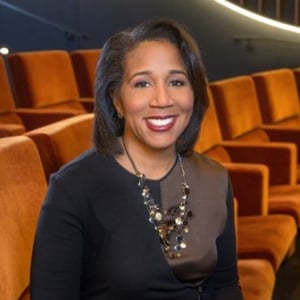
Senior Executive Vice President and Global General Counsel, Motion Picture Association
Karyn A. Temple is Senior Executive Vice President and Global General Counsel for the Motion Picture Association. One of the world’s leading authorities on copyright, Ms. Temple oversees all of the Association’s legal affairs and content protection efforts around the world.
Prior to joining the Motion Picture Association, Ms. Temple served more than eight years in the U.S. Copyright Office, most recently as the Register of Copyrights, where she led the 400-person agency and its eight divisions. Prior to leading the U.S. Copyright Office, Ms. Temple headed its Office of Policy and International Affairs, as well as served in policy and litigation roles at the U.S. Department of Justice; she most recently served in the Obama Administration as Senior Counsel to the Deputy Attorney General of the United States.
Ms. Temple received her J.D. from Columbia University School of Law and her B.A. in English from the University of Michigan.

Senior Fellow, National Review
Bestselling author Andrew C. McCarthy is a contributing editor at National Review, a senior fellow at National Review Institute, and a Fox News contributor. He is a former Chief Assistant United States Attorney in the Southern District of New York and led the terrorism prosecution against the “Blind Sheikh” (Omar Abdel Rahman) and eleven other jihadists for conducting a war of urban terrorism against the United States that included the 1993 World Trade Center bombing and a plot to bomb New York City landmarks. During is 20-year career as a prosecutor, he received numerous honors, including the Justice Department’s highest awards. Andy speaks and writes widely on law and national security, radical Islam, politics, and culture. He has testified before Congress as an expert on issues of constitutional law, counterterrorism, and law-enforcement. He is a columnist for The Hill, and his essays and book reviews appear frequently at The New Criterion. His most recent New York Times bestselling book is Ball of Collusion (Encounter Books, 2019), about the Russiagate controversy (an updated version was published in 2020). His other books include Willful Blindness (2008), The Grand Jihad (2010), Spring Fever: The Illusion of Islamic Democracy (2012), and Faithless Execution (2014). He has also written several pamphlets in the Broadside series published by Encounter Books, most recently Islam and Free Speech (2015).
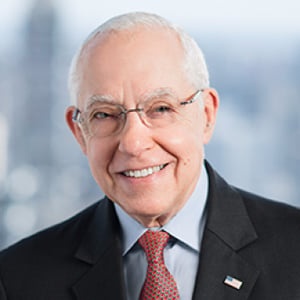
Former United States Attorney General
Michael B. Mukasey is the former Attorney General of the United States, the nation’s chief law enforcement officer. As Attorney General from November 2007 to January 2009, he oversaw the U.S. Department of Justice and advised on critical issues of domestic and international law.
From 1988 to 2006, Judge Mukasey served as a district judge in the United States District Court for the Southern District of New York, becoming Chief Judge in 2000.
From 1972 to 1976, Judge Mukasey served as an Assistant United States Attorney for the Southern District of New York, and as Chief of the Official Corruption Unit from 1975 to 1976. His practice consisted of criminal litigation on behalf of the government, including investigation and prosecution of narcotics, bank robbery, interstate theft, securities fraud, fraud on the government and bribery. From 1976 to 1987 and from 2006 to 2007 he was in private practice.
Judge Mukasey has received numerous honors, including the Federal Bar Council’s Learned Hand Medal for Excellence in Federal Jurisprudence. He served as Chairman of the Committee on Public Access to Information and Proceedings of the New York Bar Association from 1984 to 1987. He served on the Federal Courts Committee of the Association of the Bar of the City of New York from 1979 to 1982 and its Communications Law Committee from 1983 to 1986. Judge Mukasey was also a part-time lecturer at Columbia School of Law from January 1993 to May 2007, teaching trial advocacy.
He received his LL.B. from Yale Law School in 1967 and his B.A. from Columbia College in 1963.

Topics
An Ambitious SEC Tackles Cryptocurrency
In a webinar hosted by the Federalist Society’s Financial Services & E-Commerce Practice Group, a...
FedSoc Summer Party 2021
Jefferson City Lawyers Chapters
Columbia, MOIntellectual Property: Intellectual Property Rights and the Rule of Law
Jorge L. Contreras, Richard A. Epstein, Ryan T. Holte, Philip Johnson, Karyn A. Temple
On November 11, 2020, The Federalist Society's Intellectual Property Practice Group hosted a virtual panel...
Jefferson City FedSoc Summer Reception
Jefferson City Lawyers Chapter
Jefferson City, MONew York City Federalist Society 25th Anniversary Dinner
New York, New YorkCritical Infrastructure Protection: A New Era of National Security
Walter Gary Sharp
Computers and computer-dependent systems permeate everyone's daily life. From local, state, and federal government decision...