
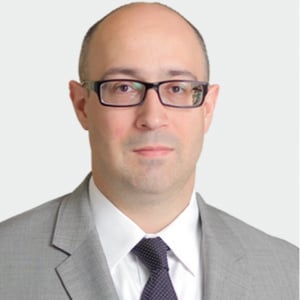
Partner, Baker & Hostetler LLP
Mark DeLaquil is a first-chair trial and appellate advocate who focuses on complex environmental and regulatory proceedings, First Amendment practice and political law.
Mark has been recognized by Chambers USA for environmental litigation (2015 to 2024) and has been named by Law360 as one of the "Top 5 Environmental Attorneys Under the Age of 40" on two occasions.
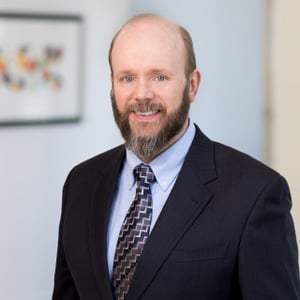
Partner, Crowell & Moring LLP, Crowell & Moring LLP
Trevor K. Copeland is a partner in the law firm of Crowell & Moring LLP (formerly Brinks Gilson & Lione PC).
His patent prosecution experience includes work on medical devices, sunglasses, footwear, sprinklers and irrigation equipment, decorative statuary and water gardens, biotechnology and general mechanical arts. He works closely with clients having products in these areas to develop intellectual property acquisition and management strategies, as well as to protect new ideas and products while respecting the rights of others.
Mr. Copeland's further practice includes design protection, whereby clients are able to protect the unique and valuable ornamental designs of their products using patent, copyright, and/or trademark. He has also litigated utility patents on clients' behalf, and has worked on preliminary injunction lawsuits for both design and utility patents, including winning a preliminary injunction against a foreign company preparing to launch an infringing laser-level device with a suction base.
Mr. Copeland has former experience as a high school biology and chemistry teacher, and as a visiting scientist with a Fungal Biochemistry and Molecular Genetics Laboratory Group.

U.S. Court of Federal Claims and Jurist-In-Residence Professor of Law, The University of Akron School of Law
Judge Ryan T. Holte was sworn in as a judge on the United States Court of Federal Claims in July 2019. Prior to confirmation he served as the David L. Brennan Professor of Law and Director of the Center for Intellectual Property Law and Technology at The University of Akron School of Law (2017-2019) and an assistant professor of law at Southern Illinois University School of Law (2013-2017). Judge Holte has written and presented widely on patent law subjects and empirical legal studies of Federal Circuit and district court patent law cases. His most recent articles were published in the Iowa Law Review (2019), George Mason Law Review (2018), and Washington Law Review (2017).
In practice, Judge Holte served for six years as general counsel and partner of an electrical engineering technology company and is co-inventor of multiple patents related to Systems and Methods for Countering Satellite-Navigated Munitions. Prior to entering academia, Judge Holte practiced as a litigation attorney at the Federal Trade Commission and an associate in the Intellectual Property Practice Group at Jones Day. Prior to practice, he served as a law clerk to Judge Stanley F. Birch, Jr. on the United States Court of Appeals for the Eleventh Circuit and as a law clerk to Judge Loren A. Smith on the United States Court of Federal Claims.
Judge Holte received his JD from the University of California Davis School of Law and his BS, magna cum laude, in engineering from the California Maritime Academy where he was a First Class graduate of the Corps of Cadets Third Engineering Division and sailed as a U.S. Merchant Marine oiler.

Partner, Jackson Walker
Arthur offers clients a winning combination of trial and appellate experience gained as a federal prosecutor and more than 20 years of experience in handling patent, copyright, trademark, and trade secrets litigation.
While his practice concentrates on intellectual property litigation, Arthur also has significant experience in internal investigations, False Claims Act suits, partnership and breach of fiduciary duty, breach of contract, and employment litigation. Arthur also has represented clients testifying before Congressional committees.
Arthur writes and speaks frequently on topics ranging from the case against Boston bomber Dzhokhar Tsarnaev to patent litigation reform.
Prior to joining Michael Best, Arthur served as an Assistant United States Attorney in the Southern District of New York, where he was the lead prosecutor in criminal trials, including federal intellectual property crimes. He also argued numerous appeals.

Judge, United States Court of Appeals, Fifth Circuit
Judge Duncan received his B.A. from Louisiana State University in 1994, his J.D. from the Paul M. Hebert Law Center at Louisiana State University in 1997, and his LL.M. from Columbia Law School in 2004.
After graduating from law school, he clerked for Louisiana-based Circuit Judge John Malcolm Duhé Jr. of the United States Court of Appeals for the Fifth Circuit.
From 2008–2012, Duncan served as Appellate Chief for Louisiana's Attorney General's office. From 2012–2014, he served as general counsel of the Becket Fund for Religious Liberty. From 2004-2008, he was an assistant professor of law at the University of Mississippi School of Law.
Before becoming a judge, Duncan practiced at the Washington, D.C. firm of Schaerr Duncan LLP, where he was a founding partner. He was appointed by President Trump to the United States Court of Appeals for the Fifth Circuit on May 1, 2018.
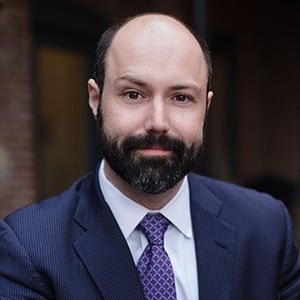
Senior Counsel, Compass Legal Group
Andrew Kloster is Senior Counsel at the nonprofit Compass Legal Group. He is a long-time fixture of the conservative movement, advising clients on the new right on a wide variety of matters criminal, civil, political / electoral, and administrative. Recently, he served as Chief of Staff to the Wisconsin Office of Special Counsel investigation into election administration. Prior to that, he served in the Trump administration, including concurrently as Associate Director in the White House Office of Presidential Personnel and as Deputy General Counsel (and later, Acting General Counsel) in the United States Office of Personnel Management. He has also served in senior positions in regulatory and legal positions at the United States Department of Transportation and the Environmental Protection Agency, and was appointed by President Trump to serve a three-year term on the Council of the Administrative Conference of the United States. Previously, he worked at the Heritage Foundation, the Scalia Law School, and other movement groups. He is a graduate of the University of Miami and the New York University School of Law, and he served as a law clerk on the United States Court of Appeals for the Seventh Circuit.
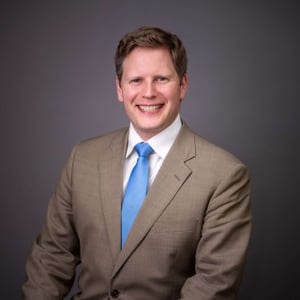
Director, Center for American Freedom, America First Policy Institute
James Sherk was born in Ontario, Canada, and immigrated with his family to Midland, Michigan while in middle school. He serves as AFPI’s Director of the Center for American Freedom. Sherk previously served as Special Assistant to the President for Domestic Policy on the White House Domestic Policy Council under President Donald Trump. James served as the Administration’s top civil service reform and labor policy advisor from 2017 to 2021. At the White House, he was the principal author of and/or policy lead for approximately two dozen executive orders and presidential memoranda. Sherk also served as a member of the President’s Council on Improving Federal Civic Architecture. Prior to his White House service, Sherk was a Research Fellow at the Heritage Foundation, where he was a nationally recognized expert on the civil service and labor policy. Sherk received a Bachelor of Science in Mathematics and Economics from Hillsdale College and an Master of Arts in Economics from the University of Rochester. Sherk and his wife, Jill, live in Northern Virginia with three beloved children who teach their parents to ponder inscrutable questions like “how much drawing can go on the walls before we have to repaint them?”
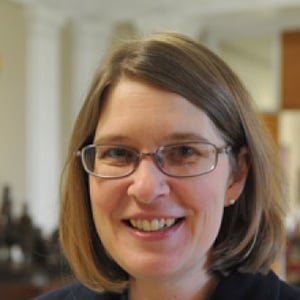
Professor of Law, University of Louisville Brandeis School of Law
Ariana R. Levinson is a nationally acclaimed and internationally recognized labor and employment law scholar and focuses her teaching on practical legal skills. She has often presented her research, including at Berkeley Law School, Fordham Law School, University of Leeds, and Universidad Carlos II de Madrid. Levinson’s work has been published in the Columbia Business Law Review and the Cornell Journal of Law and Public Policy. She has a forthcoming student co-authored article in the Harvard Journal on Legislation and is working on a hornbook on arbitration.
Professor Levinson received a Corey Rosen Research Fellowship from the Rutgers School of Management and Labor Relations for the 2012-13 academic year, and a Michael W. Huber Fellowship for the 2013-14 academic year. In conjunction with the fellowships, she published "Founding Worker Cooperatives: Social Movement Theory and the Law" in the Nevada Law Journal and is working on a research project about the Cincinnati Union Co-op Initiative. Her article "What the Awards Tell Us about Labor Arbitration of Employment Discrimination Claims", published in the University of Michigan Journal of Law Reform was selected by blind review by Vanderbilt Law School faculty for presentation at the Branstetter New Voices in Civil Justice Workshop in May 2012.
In addition to writing about worker ownership and arbitration, Professor Levinson has also written a number of articles about workplace technology and privacy. Her most recent publications on this topic include a book chapter in the Research Handbook on Electronic Commerce Law.
Professor Levinson is the faculty liaison to the Peggy Browning Fund and a co-planner of the Warns-Render Labor and Employment Law Institute, an annual labor and employment law continuing legal education program. She coaches the mock arbitration team and advises the Wagner moot court team. She is a Reviewer for the American Business Law Journal. Professor Levinson is admitted to practice in Indiana and California.
Prior to teaching at Brandeis School of Law, Professor Levinson taught at USC Gould School of Law and at UCLA School of Law. She clerked for the Honorable John G. Davies (United States District Court, Central District of California) and for the Honorable Myra C. Selby (Supreme Court of Indiana) and practiced labor law, including serving as a fellow for the AFL-CIO's Legal Department.
She graduated magna cum laude from the University of Michigan Law School. During law school, she served as a contributing editor on the Michigan Law Review and was awarded the Robert S. Feldman Labor Law Award for the most outstanding work in that field. She also received a 2014-15 faculty favorite award from the University of Louisville Delphi Center for Teaching and Learning.
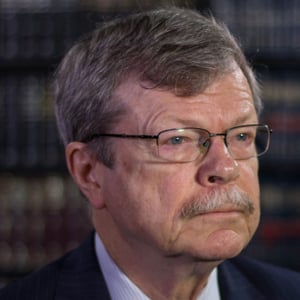
Vice President & Legal Director, National Right To Work Legal Defense Foundation
Raymond J. LaJeunesse, Jr., is Vice President and Legal Director of the National Right to Work Legal Defense Foundation, a non-profit legal aid organization. He was the first Staff Attorney employed by the Foundation and has more than forty-five years of experience helping workers in litigation in federal and state courts and administrative agencies over the abuses of compulsory unionism.
Mr. LaJeunesse has argued four cases in the United States Supreme Court. Those cases include Lehnert v. Ferris Faculty Ass’n, 500 U.S. 507 (1991), which limited the purposes for which compulsory union fees collected from public employees may lawfully be spent; Air Line Pilots Ass’n v. Miller, 523 U.S. 866 (1998), which established that unions cannot compel nonmembers to exhaust union-established remedies before going to court to challenge compulsory union fees; and Marquez v. Screen Actors Guild, 525 U.S. 33 (1998), in which the Court recognized that unions must notify employees that they can satisfy the “membership” requirement of “union shop” agreements by just paying fees for union bargaining activities and need not join and pay full dues to keep their jobs. He also was lead attorney in Hohe v. Casey, 956 F.2d 399 (3d Cir. 1992), in which more than $8.3 million in compulsory agency fees was recovered from the American Federation of State, County and Municipal Employees for a class of 57,000 nonmembers.
Mr. LaJeunesse is the author of several published articles about labor law, has testified before Congressional committees several times, and was an Advisor on the Transition Team for Labor- Related Agencies, Office of the President-Elect, in 1980-81 and a legislative aide to a member of the Virginia state legislature. He is a Vice Chairman of the Federalist Society’s Labor and Employment Law Practice Group and has spoken or debated at the Society’s National Lawyers Convention and at many Lawyers and Student Chapters on such topics as Right to Work laws, compulsory unionism arrangements, the misuse of union dues for politics, union organizing tactics (“card check” vs. secret-ballot elections), and the future of the union movement.

James Monroe Distinguished Professor of Law and Albert Clark Tate, Jr., Professor of Law, University of Virginia School of Law
Professor Saikrishna Prakash’s scholarship focuses on separation of powers, particularly executive powers. He teaches Constitutional Law, Foreign Relations Law and Presidential Powers at the Law School.
Prakash’s most recent book, “The Living Presidency: An Originalist Argument Against Its Ever-Expanding Powers,” was published by Harvard Belknap Press in 2020. He also authored “Imperial from the Beginning: The Constitution of the Original Executive” (Yale University Press, 2015). The former book focuses on the modern presidency while the latter considers the presidency of the Founders.
Prakash has authored over 75 law review articles. Among them are “Of Synchronicity and Supreme Law” in the Harvard Law Review, “The Indefensible Duty to Defend” in the Columbia Law Review, and “50 States, 50 Attorneys General and 50 Approaches to the Duty to Defend” and “The Executive Power Over Foreign Affairs” in the Yale Law Journal.
Prakash has published op-eds in The New York Times, The Wall Street Journal and the Los Angeles Times. At the request of Democrats and Republicans, he has testified before Congress on matters of presidential removal, the Mueller Report and how Congress might better check the presidency. He is currently a Miller Center Senior Fellow. In 2015, he received the Roger Traynor award for faculty scholarship. In the same year, he received an honorable mention from the American Society of Legal Writers for his book “Imperial from the Beginning.” He has given named lectures at William & Mary Law School, Princeton University and Toledo Law School, and keynote addresses at several conferences.
Prakash majored in economics and political science at Stanford University. At Yale Law School, he served as senior editor of the Yale Law Journal and received the John M. Olin Fellowship in Law, Economics and Public Policy. He subsequently clerked for Judge Laurence H. Silberman of the U.S. Court of Appeals for the District of Columbia Circuit and for Justice Clarence Thomas of the U.S. Supreme Court. After practicing in New York for two years, he served as a visiting professor at the University of Illinois College of Law and as an associate professor at Boston University School of Law. He then spent several years at the University of San Diego School of Law as the Herzog Research Professor of Law. Prakash has been a visiting professor at Northwestern University and the University of Chicago. He also has served as a James Madison Fellow at Princeton University and Visiting Research Fellow at the Hoover Institution of War & Peace at Stanford University.

Associate Dean for Research and Intellectual Life, McKnight Presidential Professor in Law, Distinguished McKnight University Professor, Harlan Albert Rogers Professor in Law, Associate Director, Corporate Institute, University of Minnesota Law School
Professor Kristin E. Hickman is the McKnight Presidential Professor in Law, a Distinguished McKnight University Professor, and Harlan Albert Rogers Professor in Law at the University of Minnesota Law School. She also has taught at Harvard Law School and Northwestern University School of Law. Professor Hickman teaches and writes primarily in the areas of administrative law, tax administration, and statutory interpretation. Her articles on these topics have appeared in the Columbia Law Review, Cornell Law Review, Virginia Law Review, Duke Law Journal, and other publications. She also co-authors the Administrative Law Treatise with Richard J. Pierce, Jr., and a casebook on federal administrative law with Pierce and Christopher J. Walker. Her scholarly work has been cited several times in opinions of the United States Supreme Court as well as regularly in lower court judicial opinions and court briefs.
In 2018-19, Professor Hickman served as Special Adviser to the Administrator of the Office of Information and Regulatory Affairs in Washington, D.C. She presently serves as a Senior Fellow, and previously served as a public member and chair of the judicial review committee, for the Administrative Conference of the United States. She also is a Fellow of the American College of Tax Counsel.
Professor Hickman received her B.S. degree in business administration with a concentration in accounting and a secondary major in history from Trinity University in San Antonio, Texas. After practicing for several years as a certified public accountant, Professor Hickman earned her J.D. degree, magna cum laude, from Northwestern University School of Law, where she was awarded the Raoul Berger Prize and the Lowden Wigmore Prize for her scholarly writings. Following law school, Professor Hickman clerked for The Honorable David B. Sentelle of the United States Court of Appeals for the District of Columbia Circuit and practiced law as an associate with the Chicago office of Skadden, Arps, Slate, Meagher & Flom, concentrating on corporate and international tax transactions and matters.
Robert A. Lucas Chair of Law and Director of the Center for Inte, Indiana University
Mark D. Janis teaches courses in patents, trademarks, and other areas of intellectual property law. He is the Robert A. Lucas Chair of Law and the Director of the Center for Intellectual Property Research. Janis has authored a number of books, including the treatise IP and Antitrust (with Hovenkamp, Lemley and Leslie), Trademarks and Unfair Competition in a Nutshell, two casebooks (Trademarks and Unfair Competition: Law and Policy (3d ed.), and Trade Dress and Design Law, both with Dinwoodie) and other books on trademark law (with Dinwoodie). He has published numerous law review articles and book chapters on patent law, intellectual property and antitrust, trademark law, intellectual property protection for plants, plant biotechnology and intellectual property protection for designs.
Janis is the winner of a Collegiate Teaching Award and a Faculty Scholar Award (both from the University of Iowa College of Law), and INTA's Ladas Award in 2008. At Indiana Law, he was the recipient of the Leon H. Wallace Teaching Award, the highest teaching honor given to law faculty.
Prior to joining the faculty at Indiana, Professor Janis was the H. Blair & Joan V. White Chair in Intellectual Property Law at the University of Iowa College of Law. He practiced patent law at Barnes & Thornburg (Indianapolis) from 1989 to 1995.
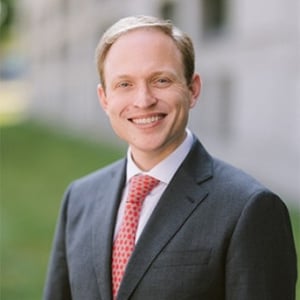
Dean; J. Gilbert Reese Chair in Contract Law, Moritz College of Law, The Ohio State University
Kent Barnett is the 21st dean of the Michael E. Moritz College of Law at The Ohio State University and the J. Gilbert Reese Chair in Contract Law. He is focused on bringing people in—by enriching the College’s inclusive community and increasing financial support for students—and then bringing them up—by focusing on community-building, career development, and rigorous legal training.
As a scholar of separation of powers and administrative law, his scholarship has been published in, among other places, the New York University, Michigan, Duke, Vanderbilt, and Notre Dame Law Reviews. Barnett’s work has been cited by leading administrative law casebooks, federal district and appellate courts, and the U.S. Supreme Court. He has taught contracts and sales, consumer law, legal ethics, and administrative law.
Prior to joining Ohio State, Barnett served as the Associate Dean for Academic Affairs and the J. Alton Hosch Professor at the University of Georgia School of Law. He received the C. Ronald Ellington Award for Excellence in Teaching, the school’s highest teaching honor, and was selected to serve as a faculty marshal by three graduating classes for commencement ceremonies. Barnett also clerked for Judge John Rogers of the U.S. Court of Appeals for the Sixth Circuit and practiced law at Weil, Gotshal & Manges in its complex commercial litigation and appellate groups.
After years as an appointed public member, Barnett is a Senior Fellow of the Administrative Conference of the United States (ACUS) and was the chair of AALS Administrative Law Section.

Professor of Law, University of Michigan Law School
Christopher J. Walker is a Professor of Law at the University of Michigan. Prior to joining Michigan law faculty in 2022, he spent a decade teaching at The Ohio State University Moritz College of Law. He previously clerked for Justice Anthony Kennedy of the U.S. Supreme Court, worked on the Civil Appellate Staff at the U.S. Department of Justice, and served on the Senate Judiciary Committee staff for the Gorsuch Supreme Court confirmation. Professor Walker’s research focuses on administrative law, regulation, and law and policy at the agency level. Outside the law school, he chaired the American Bar Association’s Section of Administrative Law and Regulatory Practice in 2020-21 and served as one of forty Public Members of the Administrative Conference of the United States from 2016-2022, and he continues to serve in both organizations in various capacities. He also works of counsel at the U.S. Chamber Litigation Center. In 2022, he received the Federalist Society’s Joseph Story Award.

Deputy Secretary of Agriculture, U.S. Department of Agriculture
Judge Stephen Alexander Vaden was appointed as the Deputy Secretary of the U.S. Department of Agriculture on July 7, 2025. Alongside Secretary Brooke L. Rollins, Deputy Secretary Vaden leads the Department’s operations and implements policies that support America’s food and farm systems. A native of Union City, Tennessee, Deputy Secretary Vaden brings expertise in agricultural policy, law, and rural development. Previously, he served as a judge on the U.S. Court of International Trade and as General Counsel of USDA. Throughout Deputy Secretary Vaden’s time as General Counsel, he led successful Supreme Court litigation, advanced regulatory reform, and supported the implementation of the 2018 Farm Bill. He is a graduate of Yale Law School and Vanderbilt University. A public servant with strong agricultural roots, Deputy Secretary Vaden is committed to revitalizing rural America and ensuring an abundant, affordable, and safe U.S. food supply.

The Clean Power Plan: The EPA & Climate Change Policy
Mark DeLaquil
What is the origin of the Clean Power Plan, and is it lawful? Mark DeLaquil...
TC Heartland LLC v. Kraft Foods Group Brands LLC - Post-Argument SCOTUScast
J Hartline
On March 27, 2017, the Supreme Court heard oral argument in TC Heartland LLC v....
Courthouse Steps: Samsung v. Apple: Design Patents at the Supreme Court - Podcast
Trevor K. Copeland, Ryan T. Holte, Arthur Gollwitzer
The Federalist Society will host a one hour Teleforum to discuss the recent Supreme Court...
Courthouse Steps: Gloucester County School Board v. G.G. - Podcast
Stuart Kyle Duncan
In late October the Supreme Court accepted a petition from the School Board of Gloucester County,...
Statewide vs. Local Right to Work Laws - Podcast
Andrew Kloster, James Sherk, Ariana R. Levinson, Raymond J. LaJeunesse
In 1957, an article in the Stanford Law Review asked the question: can counties and cities pass...
Topics
Justice Scalia's Influence On Display in Apple v. Samsung decision
Most discussions about the Supreme Court’s 8-0 decision in Samsung Electronics, Ltd. v. Apple Inc....
Justice Scalia & Legislative History
Saikrishna Prakash
Prof. Saikrishna Prakash, James Monroe Distinguished Professor of Law, University of Virginia School of Law,...
National Labor Relations Board v. SW General, Inc. - Post-Argument SCOTUScast
Kristin E. Hickman
On November 7, 2016, the Supreme Court heard oral argument in National Labor Relations Board...
Samsung Electronics Co. v. Apple - Post-Argument SCOTUScast
Mark Janis
On October 5, 2016, the Supreme Court heard oral argument in Samsung Electronics Co. v....
Chevron in the Circuit Courts - Podcast
Kent Barnett, Christopher J. Walker, Stephen Alexander Vaden
Recent opinions from the Supreme Court and policy debates within the halls of Washington have...