
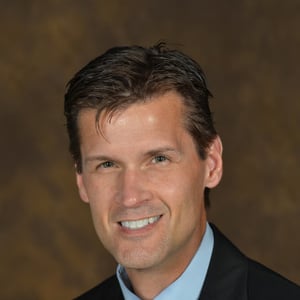
Member, Federal Service Impasses Panel, Federal Labor Relations Authority
Thomas Beck was appointed as a member of the Federal Service Impasses Panel (FSIP) on July 9, 2026. Previously, he was Senior Adviser to Littler Mendelson’s Workplace Policy Institute. He spent 13 years as Vice President, Labor and Employee Relations for HCA Healthcare, the largest healthcare system in the United States, with approximately 300,000 employees, 36,000 of whom are represented by labor unions. Before joining HCA, he served for four years as a Member of the Federal Labor Relations Authority, having been appointed to the agency and designated as its Chairman by President George W. Bush. Prior to his time at the FLRA, Thomas was a partner with global law firm Jones Day, where he practiced primarily labor and employment law for 16 years. During his time with Jones Day, Thomas counseled large employers in the telecommunications, manufacturing, healthcare, retail, and transportation sectors on collective bargaining and other labor relations matters.
Thomas handled the “labor portfolio” in both Trump presidential transitions, which included advising on workplace policy and recommending to the president-elect individuals to serve in senior leadership at the Department of Labor, National Labor Relations Board, Equal Employment Opportunity Commission, and Occupational Safety and Health Review Commission.
He has testified on labor law reform in the United States Senate.
In addition to his work in labor law and labor-management relations, Thomas has taught law school courses on separation of powers and statutory interpretation. He is the author of the legal casebook, Constitutional Separation of Powers: Cases and Commentary, and several opinion pieces such as Artificial intelligence will change jobs, not erase them, Washington Times,1/5/26; How Trump Can Impound Money, WSJ, 6/12/25; The Constitution empowers the president to pardon civil offenses, The Hill, 6/11/25; Congress Ought to at Least Show Up to Vote, WSJ, 4/23/13; Why U.S. Credit Rating Doesn’t Matter, Politico, 7/29/11; Military Commissions: Fundamentally Just, National Law Journal, 5/23/11
Thomas is a graduate of the University of Virginia School of Law.
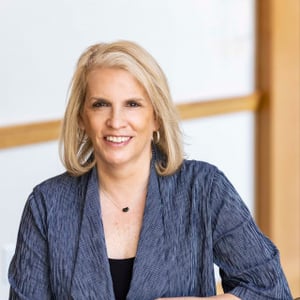
Professor of Practice and Executive Director, Center for Labor and a Just Economy, Harvard Law School
Sharon Block is a Professor of Practice and Executive Director of the Center for Labor and a Just Economy at Harvard Law School. Prior to returning to Harvard, she served as the senior official delegated the duties of the Administrator of the Office of Information and Regulatory Affairs in President Joe Biden’s White House. She also served as a senior advisor to the Biden-Harris Transition team, providing advice to the policy, OMB and Labor Agency Review teams on labor, worker empowerment and regulatory policy and participating in briefing and hearing preparation for nominees.
From 2017 to 2021, Block led the Labor and Worklife Program. During this time, she launched the Clean Slate for Worker Power project, which is a comprehensive policy initiative focused on fundamental redesign of labor law with the aspiration to enable all working people to create the collective economic and political power necessary to build an equitable economy and politics.
For twenty years, Block has held key labor policy positions across the legislative and executive branches of the federal government. In the Obama Administration, she was the Principal Deputy Assistant Secretary for Policy at the U.S. Department of Labor and Senior Counselor to the Secretary of Labor Tom Perez. In 2012, President Obama appointed her to serve as a member of the National Labor Relations Board. While serving in the Obama White House as Senior Public Engagement Advisor for Labor and Working Families, Block led the historic White House Summit on Worker Voice, which explored ways for workers to fully participate in their economic future. At the President’s direction, Block also conducted a series of regional worker voice summits across the country. Prior to the Obama Administration, she was senior counsel to the Senate HELP committee under Senator Edward Kennedy, playing a central role in the debate over the Employee Free Choice Act.
Block writes frequently on labor, employment and administrative law topics. She is a senior contributor to OnLabor.org and her opinion pieces have appeared in the New York Times, Washington Post, Fortune, The American Prospect, The Hill, USA Today, Forbes, and Newsweek.
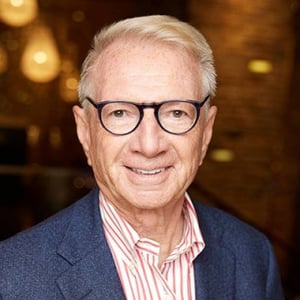
Senior Labor and Employment Counsel, CHRO Association
Roger King is a highly regarded labor relations attorney, whose career spans more than 40 years. Roger recently retired as a partner with Jones Day law firm. He now serves as Senior Labor and Employment counsel for the Association.
Roger specializes in labor and employment, healthcare, collective bargaining, contract administration and representation campaigns. Roger represented the winning side as co-counsel in the landmark U.S. Supreme Court case known as Noel Canning, which successfully challenged President Obama’s authority to make recess appointments to the National Labor Relations Board.
After graduating from Cornell University Law School, he was a Captain and Legal Services Officer in the United States Air Force, on the Staff of United States Senator Robert Taft, Jr. and, subsequently, was appointed as Professional Staff Counsel to the United States Senate Labor Committee.
Roger has testified before both the U.S. Senate and House Labor Committees, is a fellow of the College of Labor and Employment Lawyers, and serves on the Advocacy Committee of the American Society for Healthcare Human Resources Association (ASHHRA) and on the Executive Committee of the Ohio State Bar Association Labor and Employment Law Section Council.
He is a nationally recognized author/speaker on employment matters and has represented employers regarding labor and employment issues both before administrative agencies and in federal and state courts. He has represented the U.S. Chamber of Commerce, the Society for Human Resource Management (SHRM), the HR Policy Association (HRPA), the National Manufactures Association (NAM), the American Hospital Association (AHA), and the Coalition for a Democratic Workplace (CDW) in federal courts regarding numerous labor law issues.
Other clients Roger has represented include the Cleveland Clinic Foundation, Catholic Health Partners, MedStar Health, HCA, Texas Health Resources, Unity Point Health, UHS, Trinity Health, National Beef, General Cable, Orlando Health, ProMedica, Premier Health, Cedars-Sinai, Yale New Haven Health System, McLaren Health Care Corporation, Ohio, California and American Hospital Associations, Bon Secoure Health System, Kaleida Health, Sisters of Levenworth Health System, Lakeland Regional Medical Center, Clarion Clinic, Fisher-Titus Medical Center, Saint Joseph Health System, Benefis Healthcare, Community Health Systems, American Water Works, Macy’s Inc., Verizon and General Motors.
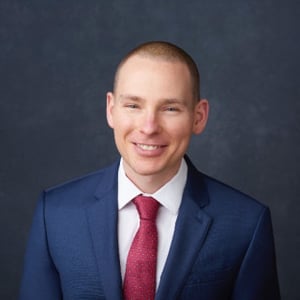
Shareholder & Co-Chair of the Workplace Policy Institute, Littler Mendelson P.C.
Alexander T. MacDonald advises employers on all aspects of the employment and labor landscape, focusing on emerging legislation and regulation. He has extensive experience advising businesses on worker classification, arbitration, the administrative and regulatory process, and the future of work. He frequently writes, publishes, and speaks on these subjects. His work has been cited by scholars and appellate courts. He is a recognized voice for the management perspective.
Alexander is a co-chair of the Workplace Policy Institute (WPI) team. With WPI, he advises employers on legislative, administrative, and regulatory developments at the state and federal level. He advocates for employers in the regulatory and administrative process. He also helps employers protect their businesses by understanding and anticipating cutting-edge legal developments.
Alexander also has extensive experience in traditional labor law. He represents management in all aspects of labor-management relations, including unfair labor practice charges, grievance arbitrations, representation elections, contract negotiations, and related litigation, including litigation in the U.S. courts of appeals.
Before joining Littler, Alexander served as the director, future of work, for a major technology company. He also worked in a national labor and employment law firm and a major public-sector general counsel’s office. He was a law clerk to the senior judges in the District of Columbia Court of Appeals.
He is also a veteran of the U.S. Air Force. He served in Operations Enduring Freedom and Iraqi Freedom. In law school, he graduated first in his class
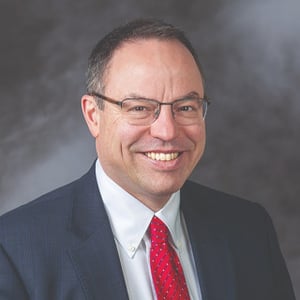
Professor of Law and J. Philip Johnson Faculty Fellow, University of North Dakota School of Law
Michael S. McGinniss is Professor of Law and J. Philip Johnson Faculty Fellow at the University of North Dakota School of Law, where he joined the faculty in 2010 and served as the Dean from 2019 to 2022. He chairs the executive committee for the Federalist Society's Practice Group on Professional Responsibility and Legal Education.
Before entering the legal academy, Professor McGinniss served for twelve years as a Disciplinary Counsel for the Supreme Court of Delaware. He currently teaches courses on Professional Responsibility, Advanced Legal Ethics, Civil Procedure, and Federal Courts. He also serves as Faculty Advisor for the North Dakota Law Review and the UND Law Federalist Society student chapter.
Professor McGinniss’ research and scholarship interests are wide-ranging and include lawyer and judicial ethics, lawyer discipline and regulation of the profession, constitutional law (especially First Amendment, separation of powers, and federalism), and cultural challenges faced by conservatives in the law schools and the legal profession. His most recent law review article, Declaring Independence to Secure Integrity: The Supreme Court Justices' Code of Conduct, was published in the Federalist Society Review. His article Expressing Conscience with Candor: Saint Thomas More and First Freedoms in the Legal Profession, was published in the Harvard Journal of Law & Public Policy.
Professor McGinniss has spoken to Federalist Society lawyer and student chapters across the country about judicial independence and ethics, especially relating to the federal courts and the United States Supreme Court Justices. In addition, he has spoken to several chapters about rising challenges to ideological diversity and targeting of conservative viewpoints in law schools and the legal profession. Although he is very pleased to speak on these and many other topics that may be of interest to lawyer and student chapters, in 2026-2027, he has particular interest in speaking on the topic “Lawyer Discipline as Political ‘Resistance’: Separation of Powers, Federalism, and the Rule of Law,” concerning his work-in-progress on the weaponization of professional disciplinary processes against conservative lawyers for political and ideological purposes.

Professor of Law, Notre Dame Law School
Professor Derek Muller is a nationally-recognized scholar in the field of election law. His research focuses on the role of states in the administration of federal elections, the constitutional contours of voting rights and election administration, the limits of judicial power in the domain of elections, and the Electoral College.
He has published more than two dozen academic works, and his op-eds have appeared in the New York Times, the Los Angeles Times, and the Wall Street Journal. He has testified before Congress, and he is a contributor at the Election Law Blog. He is a co-author on a Federal Courts casebook published by Carolina Academic Press. He is also the co-reporter on a new Restatement of the Law, Election Litigation, an effort led by the American Law Institute.
Professor Muller teaches Election Law, Civil Procedure, and Evidence.
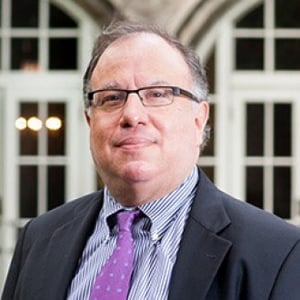
Harold Washington Professor of Law, Northwestern University Pritzker School of Law
Daniel B. Rodriguez, the Harold Washington Professor at the Law School, served as dean of the Law School from January 2012 through August 2018.
His principal academic work is in the areas of administrative law, local government law, statutory interpretation, federal and state constitutional law, and the law-business-technology interface.
Formerly, Professor Rodriguez served as Minerva House Drysdale Regents Chair in Law at the University of Texas-Austin; as a Research Fellow at Rice University’s Baker Institute for Public Policy; as Dean and Warren Distinguished Professor of Law at the University of San Diego School of Law; and, as a Professor of Law at University of California, Berkeley School of Law. He has also served as a visiting professor at several top law schools, including Stanford, Harvard, Columbia, University of Southern California, and Virginia.
Professor Rodriguez was the 2014 President of the Association of American Law Schools (AALS) and is currently serving as chair of the council of the American Bar Association Center for Innovation, a council member of the American Law Institute, and as an advisor to ROSS Intelligence, Inc.
Rodriguez received his law degree, with honors, from Harvard Law School and his undergraduate degree from California State University of Long Beach.

Shareholder, Webber & Thies PC
Mr. Thies has litigated complex commercial disputes and defended class actions throughout the state of Illinois, and in federal courts across the country, including the First, Second, Seventh, and Tenth Circuits. He has represented clients in numerous trials and arbitrations, including serving as part of a trial team winning a $64 million judgment after a jury verdict in the Northern District of New York.
Prior to joining Webber & Thies, Mr. Thies was an associate at Sidley Austin LLP (2013-2018) and clerked for Chief Judge James F. Holderman of the United States District Court for the Northern District of Illinois (2011-2013) and for Judge Jerry Smith of the United States Court of Appeals for the Fifth Circuit (2010-2011).

Assistant Professor of Law, The Ohio State University - Moritz College of Law
Bridget Dooling is a nationally recognized expert on administrative law and regulatory policy. Her scholarship on regulatory matters has been or will be published in leading legal journals including the Duke Law Journal, the Administrative Law Review, the Minnesota Law Review Headnotes, the American University Law Review and The Annals of Health Law.
Professor Dooling teaches courses on legislation and regulation, administrative law and other regulatory topics. She is a Senior Fellow at the Administrative Conference of the United States (ACUS) and recently served on the Council of the American Bar Association’s Section of Administrative Law and Regulatory Practice.
Prior to joining the faculty at Ohio State, Dooling was a research professor with the George Washington University Regulatory Studies Center and a professor of law (by courtesy) at GW Law. Before that, Professor Dooling spent over 10 years in the federal government as a deputy chief, senior policy analyst and attorney for the Office of Information and Regulatory Affairs at the U.S. Office of Management and Budget.

Professor of Law and Associate Dean, Boston College Law School; Nonresident Senior Fellow, American Enterprise Institute, Boston College Law School
Professor Lyons is a Professor and Associate Dean at Boston College Law School. He specializes in telecommunications and tech policy, energy, and administrative law. Before joining the faculty, he practiced at the firm of Munger, Tolles and Olson in Los Angeles. He also clerked for the Judge Cynthia Holcomb Hall of the Ninth Circuit Court of Appeals.
Professor Lyons is also a Nonresident Senior Fellow at the American Enterprise Institute, where he has written over 250 blog posts on tech policy issues, including net neutrality, telecommunications regulation, First Amendment issues with tech regulation, and generative AI.
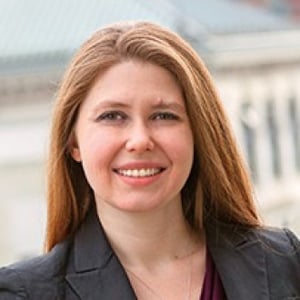
Professor of Law, Brooklyn Law School
Professor Mulligan teaches Internet law, intellectual property law, and trusts & estates. Her research addresses efforts to adapt intellectual property law for the digital age, the relationship between law and technology, and theories of constitutional interpretation. Recently, she has written about the Internet of Things, robot punishment, and early translations of the Constitution.
While at Brooklyn, Professor Mulligan researched as a visiting scholar at the Georgetown Center for the Constitution and taught as a visiting associate professor at Yale Law School. Previously, she taught at the University of Georgia and was a postdoctoral associate and lecturer in law at the Information Society Project at Yale Law School. Her scholarship has been published in a variety of journals and law reviews, including Georgia Law Review, SMU Law Review, and Constitutional Commentary.
Professor Mulligan earned her bachelor’s degree cum laude and her law degree cum laude from Harvard University, where she worked as a production and article editor for the Harvard Journal of Law & Technology. Before entering academia, she served as a law clerk for Judge Charles F. Lettow of the U.S. Court of Federal Claims.

Professor of Law, University of Michigan Law School
Christopher J. Walker is a Professor of Law at the University of Michigan. Prior to joining Michigan law faculty in 2022, he spent a decade teaching at The Ohio State University Moritz College of Law. He previously clerked for Justice Anthony Kennedy of the U.S. Supreme Court, worked on the Civil Appellate Staff at the U.S. Department of Justice, and served on the Senate Judiciary Committee staff for the Gorsuch Supreme Court confirmation. Professor Walker’s research focuses on administrative law, regulation, and law and policy at the agency level. Outside the law school, he chaired the American Bar Association’s Section of Administrative Law and Regulatory Practice in 2020-21 and served as one of forty Public Members of the Administrative Conference of the United States from 2016-2022, and he continues to serve in both organizations in various capacities. He also works of counsel at the U.S. Chamber Litigation Center. In 2022, he received the Federalist Society’s Joseph Story Award.

Professor of Law, Texas A&M University School of Law
Daniel E. Walters is an a Professor of Law at the Texas A&M University School of Law. Prior to joining the Texas A&M faculty, he was an Assistant Professor of Law at Penn State Law, and before that a Regulation Fellow at the University of Pennsylvania Carey School of Law. He earned a JD from the University of Michigan Law School and a PhD in political science from the University of Wisconsin-Madison. He clerked for the Honorable M. Margaret McKeown on the U.S. Court of Appeals for the Ninth Circuit. He is also admitted to practice law (but inactive) in Illinois.
Professor Walters writes about administrative and regulatory law, with a particular focus on the implications of democratic theory for the administrative state, on public participation in administrative processes, on deference doctrines, on empirical studies of administrative behavior, and on the court-agency relationship. He also writes about climate change and energy law, with an emphasis on electric transmission lines, grid governance, the food-climate nexus, and climate legislation. His articles have appeared in many of the top journals in law and public administration, including the Yale Law Journal, the Stanford Law Review, the Michigan Law Review, the Cornell Law Review, the Georgetown Law Journal, the University of Pennsylvania Law Review, the Southern California Law Review, the Emory Law Journal, the Iowa Law Review, the Harvard Environmental Law Review, the Administrative Law Review, Ecology Law Quarterly, and the Journal of Public Administration Research & Theory (JPART), among others. He is a co-editor, with Cary Coglianese, of a forthcoming book: Regulation in a Turbulent Era. He is a former winner of the Richard D. Cudahy Writing Competition on Administrative & Regulatory Law (student category) and the Beryl A. Radin Award for best article in JPART, and his work has been included in the Environmental Law Institute’s Environmental Law & Policy Review’s list of top environmental law review articles.
Professor Walters is an active volunteer in several professional organizations, including the ABA Section of Administrative Law & Regulatory Practice (the Section) and the Foundation for Natural Resources and Energy Law (FNREL). Since 2020, he has served as the Editor-in-Chief of Administrative & Regulatory Law News, the ABA Section’s quarterly magazine, and in 2023 he was recently elected to a three-year term on the Section’s Council of Advisors. He has served since 2022 on the Natural Resources Law Teacher’s Planning Committee within FNREL, and before that he was a Trustee with the organization from 2021-2022.

Partner, Balch & Bingham LLP
General Counsel to the Mississippi Manufacturers Association, Pepper Crutcher advises and advocates for a wide range of Southeast U.S., private sector employers. Pepper regularly defends employment litigation, including class and collective actions, and both defends and prosecutes unfair competition claims. Pepper’s labor law practice involves all types of NLRB proceedings, labor contract negotiation and arbitration. Pepper also helps employers, insurers, brokers, administrators and providers achieve Affordable Care Act compliance and appeal ACA tax assessments.
Mr. Crutcher has been rated "AV" by Martindale Hubbell and since 2004 has been selected to be included in Chambers USA America's Leading Lawyers for Business: The Client's Guide (Employment, Mississippi). He is also listed in The Best Lawyers in America for Intellectual Property Law and Labor & Employment Law.
Shareholder & Co-Chair of the Workplace Policy Institute, Littler Mendelson P.C.
Alexander T. MacDonald advises employers on all aspects of the employment and labor landscape, focusing on emerging legislation and regulation. He has extensive experience advising businesses on worker classification, arbitration, the administrative and regulatory process, and the future of work. He frequently writes, publishes, and speaks on these subjects. His work has been cited by scholars and appellate courts. He is a recognized voice for the management perspective.
Alexander is a co-chair of the Workplace Policy Institute (WPI) team. With WPI, he advises employers on legislative, administrative, and regulatory developments at the state and federal level. He advocates for employers in the regulatory and administrative process. He also helps employers protect their businesses by understanding and anticipating cutting-edge legal developments.
Alexander also has extensive experience in traditional labor law. He represents management in all aspects of labor-management relations, including unfair labor practice charges, grievance arbitrations, representation elections, contract negotiations, and related litigation, including litigation in the U.S. courts of appeals.
Before joining Littler, Alexander served as the director, future of work, for a major technology company. He also worked in a national labor and employment law firm and a major public-sector general counsel’s office. He was a law clerk to the senior judges in the District of Columbia Court of Appeals.
He is also a veteran of the U.S. Air Force. He served in Operations Enduring Freedom and Iraqi Freedom. In law school, he graduated first in his class

Tammy McCutchen is a leading authority on federal and state wage-hour laws and prevailing wage laws. She counsels businesses on wage-hour compliance, including conducting internal audits on independent contractor status, overtime exemptions, and other pay practices. She also represents employers during investigations by the U.S. Department of Labor and serves as an expert witness in wage-hour class actions. She was a founding officer of ComplianceHR, a law and technology company, where she created AI-based applications to evaluate independent contractor and overtime exempt status.
Ms. McCutchen served as Administrator of the U.S. Department of Labor’s Wage and Hour Division, appointed by President Bush and confirmed by the Senate in 2001. She was the primary architect of the 2004 revisions to the overtime exemption regulations, the first major changes to the regulations in 55 years.
Before joining DOL, she was senior counsel for the Hershey Company in Hershey, Pennsylvania.
Ms. McCutchen has been a volunteer leader of the Federalist Society since 1989. She served in leadership roles for the Northwestern Student Chapter and Chicago Lawyers Chapter. She currently serves in leadership for the Labor & Employment Practice Group, the Regulatory Transparency Project, and the Knoxville, TN Lawyers Chapter. She served on the Editorial Advisory Board of Law360, the Labor Committee of the U.S. Chamber of Commerce, the Small Business Legal Advisory Board of the National Federation of Independent Business, and a Policy Fellow at the ACU Foundation.
Ms. McCutchen is a graduate of Western Illinois University and Northwestern University School of Law. She clerked for the Hon. Daniel Manion on the U.S. Court of Appeals for the Seventh Circuit.
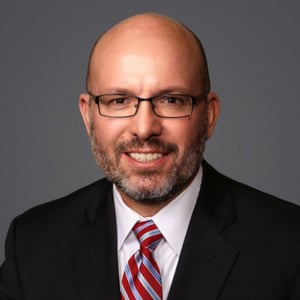
Shareholder, Ogletree, Deakins, Nash, Smoak & Stewart
Chris Murray is Co-Chair of the firm’s Arbitration and Alternative Dispute Resolution Practice Group. In this role, he assists attorneys throughout the firm and clients nationwide to create, roll out, and enforce effective employment arbitration agreements and other ADR programs. Mr. Murray has extensive experience with class/collective action waivers in employment arbitration. Mr. Murray was part of the Ogletree team that successfully defended the use of such waivers in the Fifth Circuit’s landmark decision in D.R. Horton, Inc. v. N.L.R.B. Since then, he has successfully defended the enforceability of class action waivers in numerous subsequent cases and submitted an amicus brief on the subject on behalf of several major employers’ associations in the Supreme Court’s Murphy Oil case. Mr. Murray assists clients and the Firm’s attorneys to draft or revise arbitration programs focused on a client’s specific needs and goals and in light of changing law and evolving best practices.
Executive Director & Secretary, American Civil Rights Project
Dan Morenoff is the executive director at the American Civil Rights Project and an adjunct fellow at the Manhattan Institute.
His work focuses on protecting and, where necessary, restoring the primacy of all Americans' shared civil rights against the identitarian alternative.
Before practicing law, Morenoff served on the legislative staff of Sen. Phil Gramm (R-TX). Morenoff holds a B.A. from Columbia College of Columbia University in the City of New York and a J.D. from the University of Chicago Law School. He has also served as an officer or director of several community organizations in Dallas, Texas.
Senior Labor and Employment Counsel, CHRO Association
Roger King is a highly regarded labor relations attorney, whose career spans more than 40 years. Roger recently retired as a partner with Jones Day law firm. He now serves as Senior Labor and Employment counsel for the Association.
Roger specializes in labor and employment, healthcare, collective bargaining, contract administration and representation campaigns. Roger represented the winning side as co-counsel in the landmark U.S. Supreme Court case known as Noel Canning, which successfully challenged President Obama’s authority to make recess appointments to the National Labor Relations Board.
After graduating from Cornell University Law School, he was a Captain and Legal Services Officer in the United States Air Force, on the Staff of United States Senator Robert Taft, Jr. and, subsequently, was appointed as Professional Staff Counsel to the United States Senate Labor Committee.
Roger has testified before both the U.S. Senate and House Labor Committees, is a fellow of the College of Labor and Employment Lawyers, and serves on the Advocacy Committee of the American Society for Healthcare Human Resources Association (ASHHRA) and on the Executive Committee of the Ohio State Bar Association Labor and Employment Law Section Council.
He is a nationally recognized author/speaker on employment matters and has represented employers regarding labor and employment issues both before administrative agencies and in federal and state courts. He has represented the U.S. Chamber of Commerce, the Society for Human Resource Management (SHRM), the HR Policy Association (HRPA), the National Manufactures Association (NAM), the American Hospital Association (AHA), and the Coalition for a Democratic Workplace (CDW) in federal courts regarding numerous labor law issues.
Other clients Roger has represented include the Cleveland Clinic Foundation, Catholic Health Partners, MedStar Health, HCA, Texas Health Resources, Unity Point Health, UHS, Trinity Health, National Beef, General Cable, Orlando Health, ProMedica, Premier Health, Cedars-Sinai, Yale New Haven Health System, McLaren Health Care Corporation, Ohio, California and American Hospital Associations, Bon Secoure Health System, Kaleida Health, Sisters of Levenworth Health System, Lakeland Regional Medical Center, Clarion Clinic, Fisher-Titus Medical Center, Saint Joseph Health System, Benefis Healthcare, Community Health Systems, American Water Works, Macy’s Inc., Verizon and General Motors.

The Faster Labor Contracts Act: What’s at Stake for Collective Bargaining?
Thomas Beck, Sharon Block, G. Roger King, Daniel Kishi, Alexander T. MacDonald
This summer, the U.S. House of Representatives passed the Faster Labor Contracts Act, a bill...
Plenary Session 4: Federalism with the Feds– Unique Partnerships Between State Executives and Federal Agencies
Featuring: Mr. Louis J. Capozzi III, Solicitor General, Missouri Attorney General's Office Ms. Madeline Clark, Principal...
Moving Away from ABA Accreditation?
Michael S. McGinniss, Derek T. Muller, Daniel B. Rodriguez, Daniel R. Thies
The Council of the ABA's Section of Legal Education and Admissions to the Bar has...
Panel: Abundance and the Law
Bridget Dooling, Daniel Lyons, Christina M. Mulligan, Christopher J. Walker, Daniel E. Walters
Prof. Bridget Dooling, Assistant Professor of Law, Michael E. Moritz College of Law, Ohio State University...
Welcome Remarks by AALS President-Elect Danielle Conway
Event Video: Welcome Remarks by AALS President-Elect Danielle Conway
Are the Credibility Findings of National Labor Relations Board Administrative Law Judges Credible?
R. Pepper Crutcher, Alexander T. MacDonald, Tammy Dee McCutchen, Christopher C. Murray
The Administrative Procedure Act directs federal courts to review and to set aside final agency...
Racially Discriminatory Corporate Policies: Who's Liable?
Dan Morenoff
Laws banning discrimination have been on the books across America for more than a century...
Courthouse Steps Decision: Starbucks Corp. v. McKinney
G. Roger King
Starbucks Corp. v. McKinney sits at an interesting intersection of labor and administrative law. The...
Courthouse Steps Decision: Starbucks Corp. v. McKinney
G. Roger King
Starbucks Corp. v. McKinney sits at an interesting intersection of labor and administrative law. The...
Courthouse Steps Decision: Starbucks Corp. v. McKinney