
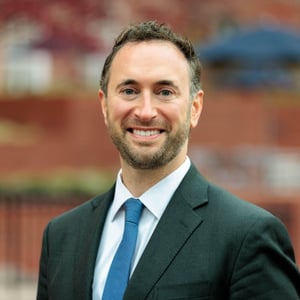
Associate Dean for Academic Affairs, The George Washington University Law School
Aram A. Gavoor is the Associate Dean for Academic Affairs and an internationally recognized scholar in American administrative law, national security, and federal courts. His co-authored work was cited by the U.S. Supreme Court in Department of Commerce v. New York (2019). His scholarship has earned placement in the Florida Law Review, Indiana Law Journal, Ohio State Law Journal, and other law journals. He has briefed and argued over a dozen high-profile public law cases before a majority of the U.S. Courts of Appeals and numerous cases before almost a third of the 94 U.S. District Courts. Associate Dean Gavoor frequently shares his national security, artificial intelligence policy, and federal courts expertise with international news media, including CNN, BBC World News, Wall Street Journal, NBC News, and ABC (Australia) World News. In 2021, the National Law Journal named Associate Dean Gavoor a Rising Star (top 40 under 40) honoree.
Earlier in his career, Associate Dean Gavoor served as Senior Counsel for National Security in the Civil Division of the U.S. Department of Justice, as third-in-rank Counselor to the Administrator of the Office of Information and Regulatory Affairs in the White House Office of Management and Budget, and in private practice. He received the Attorney General's Award for Distinguished Service in 2019, the Civil Division Special Commendation Award in 2020, 2019, and 2018, and a Commendation from the Human Rights and Special Prosecutions Section of the Criminal Division in 2018.
Associate Dean Gavoor previously served on the law school’s part-time faculty from 2008-2017 before accepting a term-limited position as Visiting Associate Professor from 2017-2019. He received GW Law’s Distinguished Adjunct Faculty Teaching Award from the 2020 and 2017 graduating classes. He currently teaches Constitutional Law II, Administrative Law, National Security Law, and Federal Courts.
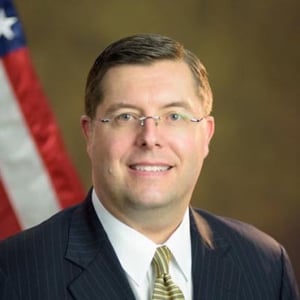
Chief Deputy Attorney General
Ryan Newman is currently Chief Deputy Attorney General for Florida Office of the Attorney General.
During the first Trump Administration, he served as Counselor to the United States Attorney General for national security and international affairs, Deputy General Counsel (Legal Counsel) for the Department of Defense, and Acting Assistant Attorney General for the Office of Legal Policy at the Department of Justice. Prior to serving in the Executive Branch, Ryan was Chief Counsel to United States Senator Ted Cruz during the 114th Congress.
Ryan served as a law clerk to the Honorable Samuel A. Alito, Jr. on the United States Supreme Court, the Honorable Richard J. Leon on the United States District Court for the District of Columbia, and the Honorable J.L. Edmondson on the United States Court of Appeals for the Eleventh Circuit.
Prior to law school, Ryan was an armor officer in the United States Army assigned to the 1st Squadron, 10th U.S. Cavalry Regiment (Buffalo Soldiers). He deployed to Iraq in 2003 for Operation Iraqi Freedom.
Ryan graduated from the United States Military Academy at West Point in 1998. He earned his law degree with high honors from The University of Texas School of Law in 2007.
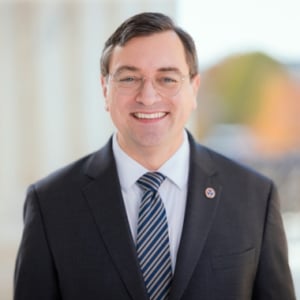
Attorney General of Tennessee
Jonathan Skrmetti was sworn in to an eight-year term as Tennessee’s Attorney General and Reporter on September 1, 2022.
Prior to his current role, General Skrmetti served as Chief Counsel to Governor Bill Lee and as Chief Deputy Attorney General to his predecessor, Tennessee Attorney General Herbert Slatery.
Before working for the State of Tennessee, General Skrmetti was a partner at Butler Snow LLP in Memphis. His legal career began with nearly a decade as a federal prosecutor. He worked at the Civil Rights Division at Main Justice and then at the Memphis U.S. Attorney’s Office and prosecuted sex traffickers, corrupt government officials, and violent white supremacists. In addition, General Skrmetti taught cyberlaw as an adjunct professor at the University of Memphis.
General Skrmetti earned honors degrees from George Washington University, the University of Oxford, and Harvard Law School, where he was editor-in-chief of the Harvard Journal of Law & Public Policy. Following law school, Jonathan clerked for Judge Steven Colloton on the U.S. Court of Appeals for the Eighth Circuit. He lives in Franklin, Tennessee, with his wife and four children.
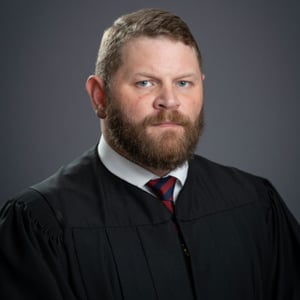
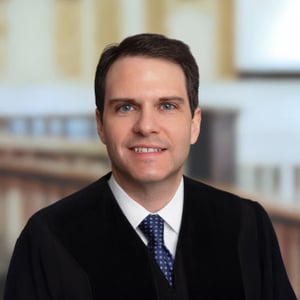
Justice, Texas Supreme Court
James P. Sullivan was appointed to the Texas Supreme Court by Governor Greg Abbott on January 7, 2025, after serving as his General Counsel. He is the proud husband of Alithea and father of Conan. Growing up in Austin, Judge Sully was an extra in the movie "Dazed & Confused." He was a highly unrecruited walk-on at Rice University, until an injury turned him into a debater. Once in law school, he met his wife, Alithea, on the Harvard Law Review. After graduating, he clerked on the D.C. Circuit for Judge Thomas B. Griffith. He also worked under then-Attorney General Abbott in the Office of the Solicitor General, in addition to stints as an adjunct professor at George Mason University and an appellate litigator in private practice.
Associate Justice, Arkansas Supreme Court
Nicholas Bronni was appointed to the Arkansas Supreme Court by Governor Sarah Huckabee Sanders on December 20, 2024, and he began his service on January 1, 2025.
Before being appointed to the bench, Justice Bronni served as the Solicitor General of Arkansas. In that role, he successfully argued two cases in the United States Supreme Court: Delaware v. Pennsylvania, 598 U.S. 115 (2023), an original jurisdiction case concerning unclaimed property; and Rutledge v. PCMA, 592 U.S. 80 (2020), an ERISA preemption case. Justice Bronni also successfully argued numerous cases before federal and state appellate courts, including Arkansas Times v. Waldrip, 37 F.4th 1386 (8th Cir. 2022) (en banc), which upheld Arkansas's law barring state contractors from boycotting Israel; and Arkansas State Conf. NAACP v. Arkansas Bd. of Apportionment, 86 F.4th 1204 (8th Cir. 2023), a landmark case holding that Section 2 of the Voting Rights Act is not privately enforceable. As Solicitor General, Justice Bronni received the National Association of Attorneys General's 2024 Best Supreme Court Brief Award for his multistate amicus brief in Muldrow v. City of St. Louis, Missouri, 601 U.S. 346 (2024).
Justice Bronni received his law degree with magna cum laude honors from the University of Michigan Law School. At Michigan, he was an editor of the Michigan Law Review and was elected to the Order of the Coif. He received his undergraduate degree, summa cum laude, and with special departmental honors from the Elliott School of International Affairs at the George Washington University.
Prior to returning home to Arkansas, Justice Bronni was a Senior Litigation Counsel with the Appellate Litigation Group at the United States Securities and Exchange Commission. He was also an associate with Gibson Dunn and Crutcher LLP in Washington, DC. Justice Bronni clerked for the Honorable Jay S. Bybee of the United States Court of Appeals for the Ninth Circuit.

Tazewell Taylor Professor of Law and William H. Cabell Research Professor, William & Mary Law School
Jonathan H. Adler joined the William & Mary law faculty as the Tazwell Taylor Professor of Law and William H. Cabell Research Professor in 2025. Prior to joining the faculty, he was the inaugural Johan Verheij Memorial Professor of Law and the founding Director of the Coleman P. Burke Center for Environmental Law at the Case Western Reserve University School of Law.
Professor Adler is the author or editor of seven books, including Climate Liberalism: Perspectives on Liberty, Property and Pollution (Palgrave, 2023), Marijuana Federalism: Uncle Sam and Mary Jane (Brookings Institution Press, 2020), Business and the Roberts Court (Oxford University Press, 2016) and Rebuilding the Ark: New Perspectives on Endangered Species Act Reform (AEI Press, 2011).
His articles have appeared in publications ranging from the Harvard Environmental Law Review and Yale Journal on Regulation to the Wall Street Journal, New York Times, and Washington Post. He has testified before Congress a dozen times, and his work has been cited in the U.S. Supreme Court. A 2024 study identified Professor Adler as the seventh most cited legal academic in administrative and environmental law from 2019 to 2023.
Professor Adler is a contributing editor to Civitas Outlook and a regular contributor to the popular legal blog, The Volokh Conspiracy. A regular commentator on constitutional and regulatory issues, he has appeared on numerous radio and television programs, ranging from the PBS Newshour and National Public Radio to the Fox News Channel and Entertainment Tonight.
Professor Adler is a senior fellow at the Property & Environment Research Center in Bozeman, Montana. In 2018, Professor Adler was elected to membership in the American Law Institute and helped co-found the organization Checks and Balances. In 2024, Professor Adler was appointed a public member of the Administrative Conference of the United States.
Professor Adler clerked for the Honorable David B. Sentelle on the U.S. Court of Appeals for the District of Columbia Circuit.
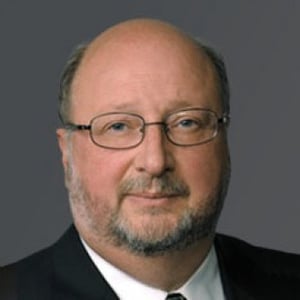
Partner, Mayer Brown LLP
An experienced appellate lawyer, Tim Bishop has argued five cases and briefed more than 60 before the US Supreme Court and has successfully handled dozens of appeals in federal and state appellate courts. He also represents clients in dispositive dismissal, summary judgment, and class certification motions in federal and state trial courts. Tim is co-author of the leading treatise, Supreme Court Practice(9th ed., 2007), a contributor to Federal Appellate Practice (2008), and a prolific author and speaker in the areas of appellate practice, environmental law, and securities law.
Tim has substantial experience in environmental and land use litigation (especially under the Clean Water Act, Endangered Species Act, Clean Air Act, federal and state Takings Clauses, and nuisance law), securities and antitrust litigation, class certification, federal and state tax controversies, labor and employment law, and constitutional appeals and litigation. In the securities area, he has submitted successful party or amicus briefs in most of the Supreme Court’s recent cases, including Dabit, Dura, Tellabs, Billing, Stoneridge, andAmchem, as well as in leading lower-court cases such as In re IPO Securities Litigation and Newton. He has broad experience in defeating class certification in complex litigation.
In the environmental law area Tim has been ranked as a top practitioner by Chambers, Best Lawyers in America, Euromoney's Best of the Best USA, and other publications, which have called him "the go-to guy if you have a serious environmental issue on appeal - he is excellent at spotting issues and is a great appellate advocate" (Chambers 2009). Tim is ranked Band 1 in Chambers USA 2012 in Environmental Law ("sources unanimously consider Bishop to be an exceptionally strong appellate lawyer") and Legal 500 2012 comments, "Bishop is 'superb and provides exemplary service.'" Tim successfully argued Solid Waste Agency of Northern Cook County in the Supreme Court, in which the Court struck down the Corps of Engineer’s "migratory bird rule." One leading environmental law professor and practitioner has written that Tim is "industry’s leading Supreme Court lawyer in environmental cases."
Since 1995, Tim has been a partner in Mayer Brown LLP’s 60-strong Supreme Court and Appellate Litigation Practice (which "stands head and shoulders above its competitors," according to Chambers USA 2008). Previously, he served as Law Clerk to US Supreme Court Justice William J. Brennan, Jr., and to Judge James L. Oakes, US Court of Appeals for the Second Circuit, and was Staff Counsel and Skadden Fellow with the American Civil Liberties Union. Recently, Tim was named one of Benchmark’s 2013 Appellate Illinois Litigation Stars.Chambers USA (2007) notes Tim’s “high visibility” and “incredible reputation for appellate law,” and he has been described in theLawdragon 500 as "a high court superstar" and a "top advocate" (2006).
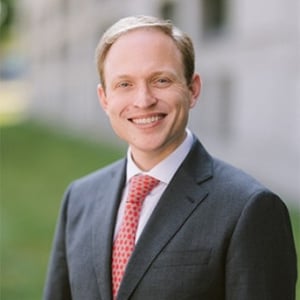
Dean; J. Gilbert Reese Chair in Contract Law, Moritz College of Law, The Ohio State University
Kent Barnett is the 21st dean of the Michael E. Moritz College of Law at The Ohio State University and the J. Gilbert Reese Chair in Contract Law. He is focused on bringing people in—by enriching the College’s inclusive community and increasing financial support for students—and then bringing them up—by focusing on community-building, career development, and rigorous legal training.
As a scholar of separation of powers and administrative law, his scholarship has been published in, among other places, the New York University, Michigan, Duke, Vanderbilt, and Notre Dame Law Reviews. Barnett’s work has been cited by leading administrative law casebooks, federal district and appellate courts, and the U.S. Supreme Court. He has taught contracts and sales, consumer law, legal ethics, and administrative law.
Prior to joining Ohio State, Barnett served as the Associate Dean for Academic Affairs and the J. Alton Hosch Professor at the University of Georgia School of Law. He received the C. Ronald Ellington Award for Excellence in Teaching, the school’s highest teaching honor, and was selected to serve as a faculty marshal by three graduating classes for commencement ceremonies. Barnett also clerked for Judge John Rogers of the U.S. Court of Appeals for the Sixth Circuit and practiced law at Weil, Gotshal & Manges in its complex commercial litigation and appellate groups.
After years as an appointed public member, Barnett is a Senior Fellow of the Administrative Conference of the United States (ACUS) and was the chair of AALS Administrative Law Section.
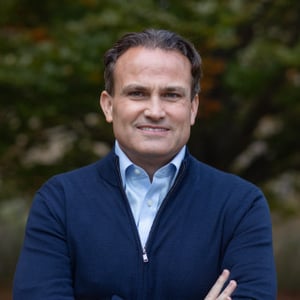
Professor of Law, University of Michigan Law School
Christopher J. Walker is a Professor of Law at the University of Michigan. Prior to joining Michigan law faculty in 2022, he spent a decade teaching at The Ohio State University Moritz College of Law. He previously clerked for Justice Anthony Kennedy of the U.S. Supreme Court, worked on the Civil Appellate Staff at the U.S. Department of Justice, and served on the Senate Judiciary Committee staff for the Gorsuch Supreme Court confirmation. Professor Walker’s research focuses on administrative law, regulation, and law and policy at the agency level. Outside the law school, he chaired the American Bar Association’s Section of Administrative Law and Regulatory Practice in 2020-21 and served as one of forty Public Members of the Administrative Conference of the United States from 2016-2022, and he continues to serve in both organizations in various capacities. He also works of counsel at the U.S. Chamber Litigation Center. In 2022, he received the Federalist Society’s Joseph Story Award.
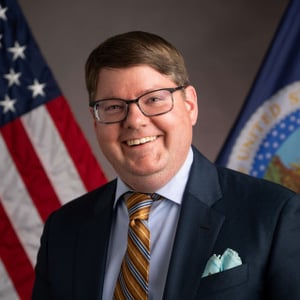
Deputy Secretary of Agriculture, U.S. Department of Agriculture
Judge Stephen Alexander Vaden was appointed as the Deputy Secretary of the U.S. Department of Agriculture on July 7, 2025. Alongside Secretary Brooke L. Rollins, Deputy Secretary Vaden leads the Department’s operations and implements policies that support America’s food and farm systems. A native of Union City, Tennessee, Deputy Secretary Vaden brings expertise in agricultural policy, law, and rural development. Previously, he served as a judge on the U.S. Court of International Trade and as General Counsel of USDA. Throughout Deputy Secretary Vaden’s time as General Counsel, he led successful Supreme Court litigation, advanced regulatory reform, and supported the implementation of the 2018 Farm Bill. He is a graduate of Yale Law School and Vanderbilt University. A public servant with strong agricultural roots, Deputy Secretary Vaden is committed to revitalizing rural America and ensuring an abundant, affordable, and safe U.S. food supply.

Topics
Power to Persuade: The FCC’s Authority to Interpret Section 230 Post-Loper Bright
In a November 21 FedSoc Blog post, the Phoenix Center’s Lawrence J. Spiwak convincingly argued...
Topics
After Chevron, a New Birth of Deference for the Administrative State?
For decades, the judicial doctrine called “Chevron deference” dominated American administrative law. In the aftermath...
Topics
Extending the Logic of The Major Question Doctrine
When the major question exception to Chevron applies, courts do not defer to agency interpretations...
Topics
Has Chevron Step One Stepped to Center Stage?
Unanimous Supreme Court rulings are always less likely to generate headlines. So, in a term...
Chevron and the States: A Conversation with Governors' General Counsel about Judicial Deference to State Administrative Agency Interpretations of State Laws
TeleforumTopics
In the Shadow of Skidmore and Seminole Rock?: Chevron and Auer Deference and Their Conceits
When an agency interprets a statute it administers, a court will defer to the agency’s...
State Court Docket Watch: Myers v. Yamato Kogyo Co.
Nicholas Bronni
When should courts defer to an agency’s interpretation of a statute? At the federal level,...
Deference Doctrines and the Clean Water Act
Jonathan H. Adler, Timothy Bishop
Recently, Justices of the Supreme Court have called the Court’s deference jurisprudence into significant question....
Chevron in the Circuit Courts - Podcast
Kent Barnett, Christopher J. Walker, Stephen Alexander Vaden
Recent opinions from the Supreme Court and policy debates within the halls of Washington have...
Chevron Deference in the Circuit Courts: An Empirical Study
Recent opinions from the Supreme Court and policy debates within the halls of Washington have...