
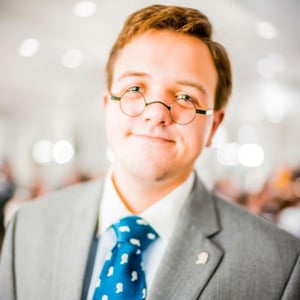
Adam Griffin is a graduate of the University of North Carolina School of Law. During law school, he served as a research assistant to Professor Stephen E. Sachs and UNC Law Dean Martin Brinkley. After law school, Adam spent two years litigating for liberty at the Institute for Justice as an inaugural Law and Liberty Fellow. He then served as a law clerk to Chief Judge Richard E. Myers in the United States District Court for the Eastern District of North Carolina, and previously worked at Pacific Legal Foundation and the Civil Rights Division of the Department of Justice.
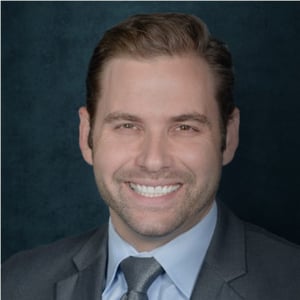
Vice President for the Program on Technology, Criminal Justice and Civil Liberties, Lincoln Network
Arthur Rizer is the Vice President for the Program on Technology, Criminal Justice and Civil Liberties at Lincoln Network. In addition to his work at Lincoln, Arthur is a visiting lecturer at University College London, and an adjunct professor at George Mason University’s Antonin Scalia Law School. Arthur is also a member of Columbia University Justice Lab’s Executive Session for the Future of Justice Policy, the Federalist Society’s Executive Committee of the Criminal Law Practice Group, the Virginia Advisory Committee to the U.S. Commission on Civil Rights, and other advisory bodies.
Before joining Lincoln, Arthur was founding director of the R Street Institute’s program on criminal justice and civil liberties. Prior to that, Arthur taught at West Virginia University’s College of Law, and was a visiting professor at Georgetown University Law Center. He also served as a trial attorney with the U.S. Justice Department, primarily as a federal prosecutor in the Criminal Division, where he targeted command-and-control drug cartel leaders and narco-terrorists. He also served as a prosecutor in the U.S. Attorney’s Office for the Southern District of California and in the civil division. Earlier in his career, Arthur served in the U.S. Army, originally enlisting as a private before later receiving a commission. He served as an armor officer, later becoming the commander of a military police company and a Reserve Officers’ Training Corps assistant professor. He deployed to Fallujah, Iraq, with the mission to train the Iraqi Infantry and served as an MP acting battalion commander and executive officer. He retired as a lieutenant colonel from the U.S. Army (WVNG). During his Army career, Arthur received the Bronze Star, Purple Heart, Meritorious Service and Iraq Campaign medals.
Arthur is the author of three books: Lincoln’s Counsel (2010); The National Security Implications of Immigration Law (2013); and Jefferson’s Pen: The Art of Persuasion (2016).
Arthur earned his bachelor’s degree in political science from Pacific Lutheran University; a master of laws, with distinction, from Georgetown University’s Law Center; and his JD, magna cum laude, from Gonzaga University School of Law. He is also a graduate of the U.S. Marine Corps’ Command Staff College. He is in the final stages of a doctorate at the University of Oxford, Faculty of Law, Centre of Criminology that focuses on policing.

Deputy Assistant Attorney General, Office of Legal Policy, Department of Justice
GianCarlo Canaparo serves as Deputy Assistant Attorney General in the Office of Legal Policy at the Department of Justice. There, he oversees the Office's regulatory work and is the Department's liaison to the Office of Information and Regulatory Affairs. He also assists the White House in the process of selecting nominees for federal judgeships and advises Department leadership on policy and legal matters.
Before joining the Department, Canaparo was a senior legal fellow at The Heritage Foundation’s Edwin Meese III Center for Legal and Judicial Studies where he researched constitutional law, administrative law, and civil rights.
Canaparo’s scholarship has appeared in various law reviews including the Harvard Journal of Law and Public Policy, the Notre Dame Law Review, the Georgetown Journal of Law and Public Policy, the Texas Review of Law and Politics, and the Administrative Law Review. His research has been cited by Justice Neil Gorsuch and featured in the Wall Street Journal and Washington Post. His analysis has appeared in Law & Liberty, Civitas, Fox News, The National Review, Law 360, FedSoc Blog, and other outlets.
Canaparo co-hosted The Heritage Foundation’s SCOTUS 101 podcast, which follows the Supreme Court’s arguments and opinions and features interviews with judges, advocates, and scholars.
After graduating Georgetown law, Canaparo spent three years at the law firm of Skadden, Arps, Slate, Meagher & Flom and two years as a federal law clerk. He earned his bachelor’s degree in economics from the University of California at Davis.
Canaparo is a classical pianist and organist.

Partner, King & Spalding
John Richter is a trial and investigations partner in the Special Matters and Investigations Practice Group, and represents and defends companies, Boards of Directors, Board committees, and individuals facing a variety of white-collar criminal and regulatory enforcement matters, parallel civil litigation, and internal corporate investigations. John previously served as the Acting Assistant Attorney General in charge of the Criminal Division at the U.S. Department of Justice and as the U.S. Attorney for the Western District of Oklahoma, having been nominated by President George W. Bush and confirmed by unanimous consent of the U.S. Senate.
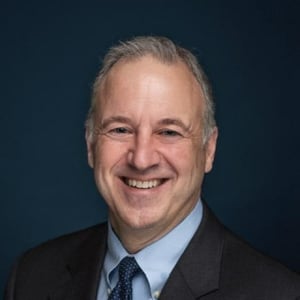
Senior Counsel, Litigation, Defense of Freedom Institute
Don Daugherty is Senior Counsel, Litigation, at the Defense of Freedom Institute for Policy Studies. He previously served as a Senior Counsel at the Institute for Free Speech and the Wisconsin Institute for Law & Liberty. Before that, he was a partner at three of Wisconsin’s largest firms, with nearly 30 years of trial and appellate litigation experience. He has been consistently recognized as among the “Best Lawyers in America,” as well as Wisconsin’s “Super Lawyers.” He received his B.A. from the University of Virginia and his J.D. from Northwestern University Law School. After law school, he served as a clerk to the Honorable Roger J. Miner of the United States Court of Appeals for the Second Circuit.
Don is on the Board of Advisors for the Milwaukee Lawyers’ Chapter of the Federalist Society, and on the Executive Committee of the Federalist Society’s Litigation Practice Group.
Partner, King & Spalding
John Richter is a trial and investigations partner in the Special Matters and Investigations Practice Group, and represents and defends companies, Boards of Directors, Board committees, and individuals facing a variety of white-collar criminal and regulatory enforcement matters, parallel civil litigation, and internal corporate investigations. John previously served as the Acting Assistant Attorney General in charge of the Criminal Division at the U.S. Department of Justice and as the U.S. Attorney for the Western District of Oklahoma, having been nominated by President George W. Bush and confirmed by unanimous consent of the U.S. Senate.
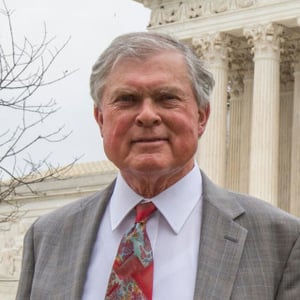
Senior Fellow, Independent Institute
Dr. Stephen P. Halbrook is a Senior Fellow at the Independent Institute. He has taught legal and political philosophy at George Mason University, Howard University, and Tuskegee Institute, and he received his J.D. from the Georgetown University Law Center and Ph.D. in social philosophy from Florida State University.
The winner of three cases before the U.S. Supreme Court (Printz v. United States, United States v. Thompson/Center Arms Company, and Castillo v. United States), he has testified before the Subcommittee on the Constitution of the Senate Judiciary Committee, Senate Subcommittee on the Constitution, Subcommittee on Crime of the House Judiciary Committee, Senate Governmental Affairs Committee, and House Committee on the District of Columbia.
A contributor to numerous scholarly volumes, he is the author of the books, Gun Control in Nazi-Occupied France: Tyranny and Resistance; Gun Control in the Third Reich: Disarming the Jews and “Enemies of the State”; The Founders’ Second Amendment: Origins of the Right to Bear Arms; That Every Man Be Armed: Evolution of a Constitutional Right; A Right to Bear Arms; Firearms Law Deskbook: Federal and State Criminal Practice; Securing Civil Rights: Freedmen, the Fourteenth Amendment, and the Right to Bear Arms; State and Federal Bills of Rights and Constitutional Guarantees; and Target Switzerland: Swiss Armed Neutrality in World War II. Dr. Halbrook’s scholarly articles have appeared in such journals as the Arizona Journal of International and Comparative Law, Drug Law Report, George Mason University Law Review, Journal of Air Law and Commerce, Journal of Law and Policy, Law & Contemporary Problems, National Law Journal, Northern Kentucky Law Review, St. John’s Journal of Legal Commentary; Seton Hall Constitutional Law Journal, Tennessee Law Review, University of Dayton Law Review, Valparaiso University Law Review, Vermont Law Review, and William & Mary Bill of Rights Journal.
Dr. Halbrook's popular articles have appeared in such publications as the Wall Street Journal, Newsday, San Francisco Chronicle, National Review, Investor’s Business Daily, Kansas City Star, Washington Examiner, Shreveport Times, Sacramento Bee, Providence Journal, Tampa Tribune, Pittsburgh Tribune-Review, History News Network, San Antonio Express-News, The Daily Caller, Detroit News, Honolulu Star Advertiser, Birmingham News, Environmental Forum, USA Today, and Washington Times. He has also appeared on numerous national TV/radio programs on CNN, Fox News Channel, Fox Business Network, Court TV, NewsMax TV, CBN, Voice of America, and C-SPAN.
Deputy Assistant Attorney General, Office of Legal Policy, Department of Justice
GianCarlo Canaparo serves as Deputy Assistant Attorney General in the Office of Legal Policy at the Department of Justice. There, he oversees the Office's regulatory work and is the Department's liaison to the Office of Information and Regulatory Affairs. He also assists the White House in the process of selecting nominees for federal judgeships and advises Department leadership on policy and legal matters.
Before joining the Department, Canaparo was a senior legal fellow at The Heritage Foundation’s Edwin Meese III Center for Legal and Judicial Studies where he researched constitutional law, administrative law, and civil rights.
Canaparo’s scholarship has appeared in various law reviews including the Harvard Journal of Law and Public Policy, the Notre Dame Law Review, the Georgetown Journal of Law and Public Policy, the Texas Review of Law and Politics, and the Administrative Law Review. His research has been cited by Justice Neil Gorsuch and featured in the Wall Street Journal and Washington Post. His analysis has appeared in Law & Liberty, Civitas, Fox News, The National Review, Law 360, FedSoc Blog, and other outlets.
Canaparo co-hosted The Heritage Foundation’s SCOTUS 101 podcast, which follows the Supreme Court’s arguments and opinions and features interviews with judges, advocates, and scholars.
After graduating Georgetown law, Canaparo spent three years at the law firm of Skadden, Arps, Slate, Meagher & Flom and two years as a federal law clerk. He earned his bachelor’s degree in economics from the University of California at Davis.
Canaparo is a classical pianist and organist.
Partner, King & Spalding
John Richter is a trial and investigations partner in the Special Matters and Investigations Practice Group, and represents and defends companies, Boards of Directors, Board committees, and individuals facing a variety of white-collar criminal and regulatory enforcement matters, parallel civil litigation, and internal corporate investigations. John previously served as the Acting Assistant Attorney General in charge of the Criminal Division at the U.S. Department of Justice and as the U.S. Attorney for the Western District of Oklahoma, having been nominated by President George W. Bush and confirmed by unanimous consent of the U.S. Senate.

Protecting Economic Liberty in the Federal Courts: Theory, Precedent, Practice
Adam F. Griffin
The 14th Amendment meaningfully protects economic liberty. While this protection was originally housed in the...
State Court Docket Watch: State of Montana v. Mercier
Arthur Rizer
Presently, there is much uncertainty in Sixth Amendment Confrontation Clause jurisprudence in light of differences in tone...
State Court Docket Watch: The Effect of Ramos v. Louisiana
GianCarlo Canaparo
In April of this year, the Supreme Court decided Ramos v. Louisiana, holding that the...
Courthouse Steps Decision Teleforum: Ramos v. Louisiana
John C. Richter
In a decision in Ramos v. Louisiana handed down on April 20, 2020, the Supreme Court...
Topics
Neil Gorsuch, Evangelisto Ramos, and Charles Evan Hughes
Justice Neil Gorsuch’s opinion in Ramos v. Louisiana recalls Chief Justice Charles Evans Hughes’s opinion...
An Imagined Bloc and Other Figments
Donald A. Daugherty
A review of American Justice 2019: The Roberts Court Arrives, by Mark Joseph Stern (University...
Ramos v. Louisiana - Post-Decision SCOTUScast
John C. Richter
On October 7, 2019, the Supreme Court heard oral arguments in Ramos v. Louisiana. In...
Courthouse Steps Decision Teleforum: Ramos v. Louisiana
TeleforumTo Bear Arms for Self-Defense: A “Right of the People” or a Privilege of the Few? Part 1
Stephen P. Halbrook
Note from the Editor: The Federalist Society takes no positions on particular legal and public...
Kahler v. Kansas & Ramos v. Louisiana Post-Argument SCOTUScast
GianCarlo Canaparo
On October 7, 2019, the Supreme Court heard oral arguments in Kahler v. Kansas and Ramos...