
Senior Fellow for Law, Economics, and Technology, The Heritage Foundation; Professor, Florida International University
Mario Loyola is a Senior Fellow for Law, Economics, and Technology at The Heritage Foundation.
Loyola served in the Trump Administration as Associate Director for Regulatory Reform at the White House Council on Environmental Quality. In that role, he was one of the principal drafters of the One Federal Decision policy, which helped to streamline the permitting and environmental review of large infrastructure projects. While at CEQ, he was a member of the U.S. delegation to the USMCA free trade negotiations with Mexico and Canada, as well as the United Nations conference on biodiversity on the high seas. Loyola initially joined the White House in February 2017 as a Presidential Speechwriter, employing his expertise in many areas of foreign and domestic policy.
After beginning his career in M&A and corporate finance law, Loyola served in the Bush 43 Administration as a special assistant to the Undersecretary of Defense for Policy. He left that position to start writing on national defense issues in magazines such as National Review and The Weekly Standard, reporting from the front lines of the war on terrorism in Lebanon, Israel, and Iraq. He finished the Bush Administration as Foreign and Defense Counsel to the U.S. Senate Republican Policy Committee, then under the chairmanship of Senator Kay Bailey Hutchison of Texas. He subsequently moved to Texas and joined the Texas Public Policy Foundation, where he specialized in energy, environment, and federalism.
Loyola is a frequent contributor to The Wall Street Journal, National Review, and The Atlantic, among others. He teaches environmental and administrative law at Florida International University, where he is Founding Director of the Environmental Finance and Risk Management program in FIU’s prestigious Institute of Environment. He received a bachelor’s degree in European history from the University of Wisconsin–Madison and a J.D. from Washington University School of Law.

Deputy Secretary of Transportation, US Department of Transportation
Steven G. Bradbury was sworn in as the Deputy Secretary of Transportation on March 13, 2025, following his confirmation by the U.S. Senate on March 11, 2025. In this role, he oversees the Department’s operating administrations and spearheads initiatives to ensure a safe, efficient, and modern transportation system that strengthens economic productivity and global competitiveness. Deputy Secretary Bradbury also assists Secretary Duffy in managing the Department’s activities, including its workforce of over 58,000 employees and an annual budget exceeding $109 billion.
Bradbury previously served as the 23rd General Counsel of the Department of Transportation from 2017 to 2021, as the Acting Deputy Secretary from 2019, and as Acting Secretary of Transportation in 2021. As General Counsel, he was the chief legal officer, advising on all legal matters and ensuring the integrity and compliance of the Department’s policies and programs.
Before rejoining DOT, Bradbury was a Distinguished Fellow at The Heritage Foundation from December 2022 to March 2025. He has extensive experience in the public and private sector, having served as Principal Deputy and Acting Assistant Attorney General at the U.S. Department of Justice and as a partner at Kirkland & Ellis LLP and Dechert LLP. Earlier in his career, he clerked for Justice Clarence Thomas and Judge James L. Buckley.
Bradbury holds a J.D., magna cum laude, from the University of Michigan Law School and a B.A. in English from Stanford University.
Director, Clean Air, Climate & Clean Energy Program, Natural Resources Defense Council
John Walke has spearheaded the organization’s national clean-air advocacy before Congress, in the courts, at the U.S. Environmental Protection Agency, and before the public since 2000. Before joining NRDC, he spent three years working as an attorney in the EPA’s Office of General Counsel, where he handled cases related to permitting, air toxins, monitoring, and enforcement under the Clean Air Act. Prior to that, he was an associate in a private law firm based in Washington, D.C. Walke is a graduate of Duke University and Harvard Law School. He is based in Washington, D.C.

Laurence H. Silberman Chair in Constitutional Governance, American Enterprise Institute; Executive Director, Antonin Scalia Law School’s C. Boyden Gray Center for the Study of the Administrative State
Adam J. White is the Laurence H. Silberman Chair in Constitutional Governance and senior fellow at the American Enterprise Institute, where he focuses on the Supreme Court and the administrative state. He also directs the Antonin Scalia Law School’s C. Boyden Gray Center for the Study of the Administrative State.
He writes on regulation and constitutional government for a variety of publications. He practiced law in Washington, D.C., after clerking for the D.C. Circuit's Judge David Sentelle. He also has been chairman of the ABA's Administrative Law Section.
In 2021, he served on the Presidential Commission on the Supreme Court of the United States, where he criticized “Court packing” and other efforts to restructure the Supreme Court.
Partner, Johns & Counsel PLLC
Chris Johns advocates for people and causes he believes in. He represents individuals and businesses as they confront powerful interests on the other side: property owners in eminent-domain cases, people and organizations seeking to exercise constitutional rights, and others with a just cause in a civil trial or appeal.
Chris has won cases for clients in courts across the country—from state and federal trial and appellate courts to the United States Supreme Court. He is also an adjunct professor at the University of Texas School of Law, where he teaches the course on eminent domain and private-property rights.
Chris grew up and attended public schools in Buckhannon, West Virginia. He went to Brigham Young University on academic and piano scholarships and, after his first year of college, served for two years as a full-time volunteer for his church in Oakland and San Francisco. Chris spent most of his time in neighborhoods unlike anything he’d ever seen in rural West Virginia. Still, he can’t imagine a better education: speaking with thousands of people about life, hopes, fears, and spiritual paths; becoming fluent in Spanish; observing communities that thrived and others that failed; and making friends with individuals from many countries and many walks of life, from gang members to high-level government officials. Chris decided during his volunteer service that he eventually wanted to become a lawyer and advocate. He studied English upon return to BYU, graduating magna cum laude in 1997.
Chris received his J.D. with high honors from the University of Texas School of Law. There, he was editor in chief of the Texas Law Review, a member of the Chancellors honor society, and a member of the Order of the Coif. He received Dean’s Achievement Awards in several of his classes. After graduation, Chris clerked for the Honorable Phyllis A. Kravitch of the United States Court of Appeals for the Eleventh Circuit.
He then attended the University of Oxford, where he received a postgraduate law degree and authored a frequently cited dissertation analyzing the relationship between property and the law of obligations.
Chris entered private practice at Weil, Gotshal & Manges LLP, where he worked with former Texas Solicitor General Greg Coleman in the firm’s national Supreme Court and appellate practice. He and three of his law-school classmates founded Johns Marrs Ellis & Hodge LLP, a trial and appellate boutique, and practiced together for nearly nine years.
In March 2018, Chris opened Johns & Counsel PLLC with a small, elite team dedicated to the clients and causes that mean most to him and the other members of the firm.
Chris appears on the 2018 and 2019 list of The Best Lawyers in America, a peer-selected honor. Texas Super Lawyers Magazine named him to its 2014, 2015, 2016, 2017, and 2018 lists of “Super Lawyers” and to its 2013 and 2014 lists of “Rising Stars.” He is also a barrister in the Lloyd Lochridge American Inn of Court. Chris has testified about property rights on invitation from the Texas Legislature, is a regular speaker at national and state CLE conferences, has received multiple pro bono service awards, helped train UT’s moot-court teams, and has appeared as a legal commentator on television news programs.
Chris is licensed in Texas and New York and is admitted to practice before the Supreme Court of the United States, the U.S. Courts of Appeals for the Fourth, Fifth, and Federal Circuits, the U.S. Court of Appeals for the Federal Circuit, the U.S. District Courts for the Eastern, Southern, and Western Districts of Texas, the U.S. Court of Federal Claims, several other federal courts across the country, and all state courts in Texas.
Partner, Foley & Lardner LLP
Jeffrey A. Simmons is a partner and member of Foley & Lardner’s Business Litigation & Dispute Resolution Practice, where he focuses on complex litigation matters. Mr. Simmons was lead counsel in one of the largest insurance rehabilitations in U.S. history, In the Matter of the Rehabilitation of Segregated Account of Ambac Assurance Corporation, Case No. 10-cv-1576 (Dane Co., Wis.). A large portion of his practice is also devoted to trademark, copyright, patent and trade secret disputes. He currently serves on the Seventh Circuit Court of Appeals’ subcommittee responsible for rewriting the circuit’s pattern jury instructions for trademark and copyright cases.
Prior to joining Foley, Mr. Simmons served as a law clerk to the Hon. John W. Reynolds, U.S. District Court for the Eastern District of Wisconsin.
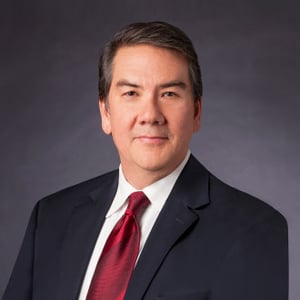
Director of Property Rights Litigation, Pacific Legal Foundation
Robert Thomas is Pacific Legal Foundation’s director of its Property Rights practice group. He is an expert on property rights, takings, land use, and eminent domain issues.
After more than three decades in private practice in Hawaii and California representing property owners in takings, eminent domain, and land use cases, Robert joined PLF’s team of freedom fighters in 2021.
He has litigated cases in both state and federal court. As counsel for the property owners in County of Hawaii v. C&J Coupe Family Limited Partnership, he helped establish the rule that courts are not mere “rubber stamps” when a local government is taking property by eminent domain. Another case, Hamilton ex rel. Lethem v. Lethem, held that a parent’s liberty interest in raising and disciplining his child included a right to fair procedures, including notice and a judicial hearing before the family court could restrict parent-child contact.
Robert is a frequent speaker on property rights, takings, land use, and eminent domain issues nationwide. He also regularly publishes scholarly and practical articles in his area of practice, most recently including, “Hoist the Yellow Flag and Spam® Up: The Separation of Powers Limitation on Hawaii’s Emergency Authority”, 43 U. Haw. L. Rev. 71 (2020) and “Evaluating Emergency Takings: Flattening the Economic Curve”, 29 Wm. & Mary Bill Rts. J. 1145 (2021).
An elected member of the American Law Institute, Robert received his LLM, with honors, from Columbia Law School, where he was a Harlan Fiske Stone Scholar, and his JD from the University of Hawaii School of Law, where he served as editor of the Law Review. He also serves as the inaugural Joseph T. Waldo Visiting Chair in Property Rights Law at William & Mary Law School in Williamsburg, Virginia, where he teaches upper-division courses in eminent domain, land use, property rights, and property law.
When he’s not working, you might find Robert writing and publishing his blog on land use, property, and takings law, inversecondemnation.com, one of the most widely read blogs on those subjects.

Professor of Law and Executive Director, Law and Economics Center, Antonin Scalia Law School, George Mason University
Donald Kochan is Professor of Law and Executive Director of the Law & Economics Center (LEC). Professor Kochan is an elected member of the American Law Institute (ALI) and serves as an Adviser to ALI's Restatement of the Law Fourth, Property project. Professor Kochan is a Nonresident Scholar at the Center for the Constitution at Georgetown University Law Center, where he was a Visiting Scholar in residence during Fall 2018. Before joining the Antonin Scalia Law School faculty, he was the Parker S. Kennedy Professor in Law at Chapman University’s Dale E. Fowler School of Law from 2004 to 2020. From 2003 to 2004, Professor Kochan was an Olin Fellow at the University of Virginia School of Law. During 2002-2003, he was a Visiting Assistant Professor of Law at George Mason’s Scalia Law School.
Professor Kochan’s scholarship focuses on areas of property law, constitutional law, administrative law, local government law, natural resources and environmental law, and law & economics. He has published several books and more than 50 scholarly articles and essays in well-regarded law journals. His work has been cited in more than a dozen state and federal court opinions, in more than 75 briefs filed in state and federal courts including more than 25 filed in the U.S. Supreme Court, in dozens of books and treatises, and in more than 800 scholarly articles.
Professor Kochan received his JD from Cornell Law School, where he was a John M. Olin Scholar in Law and Economics and managing editor of the Cornell International Law Journal. During law school, he also served as editor and executive editor of the Harvard Journal of Law & Public Policy symposium issues in 1997 and 1998. He received his BA from Western Michigan University, magna cum laude, with majors in both political science and philosophy, where he studied as the John W. Gill Medallion Scholar and was honored as the Presidential Scholar (awarded to the top graduate in the political science department).
After graduating from law school, Professor Kochan was a law clerk to The Honorable Richard F. Suhrheinrich of the United States Court of Appeals for the Sixth Circuit. Following his clerkship, Professor Kochan was an associate with the firm of Crowell & Moring LLP in Washington, D.C., where he specialized in natural resources & environmental law as well as tort, products, and consumer civil litigation & legislative affairs.
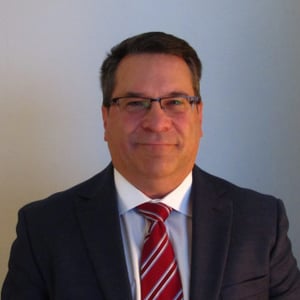
Executive Director and Vice President of Legal Studies , Washington Legal Foundation
Glenn G. Lammi is Executive Director and Vice President of Legal Studies at Washington Legal Foundation (WLF), a national public-interest law firm and policy center. He was a law clerk to WLF’s Legal Studies Division in 1990 and began in January 1992 as the division’s Chief Counsel. Glenn assumed leadership of the Legal Studies Division in 1995, and WLF’s Board appointed him Executive Director in 2021. In his Executive Director role, Glenn has a direct hand in fundraising, donor relations, communications, and the group’s strategic vision. As leader of its publishing and programs division, Glenn monitors legal-policy developments in federal and state courts, regulatory agencies, and legislatures, manages all aspects of WLF’s educational publications and its WLF Legal Pulse blog, and designs and moderates its programming. He is a member of the International Association of Defense Counsel. Glenn earned his bachelor’s degree from Pennsylvania State University in 1988 and graduated from American University’s Washington College of Law in 1991.
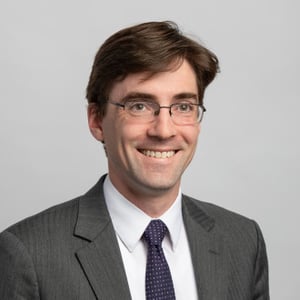
Deputy Litigation Director, Institute for Justice
Robert McNamara serves as Deputy Litigation Director with the Institute for Justice. He joined the Institute in August 2006 and litigates cutting-edge constitutional cases protecting free speech, property rights, economic liberty and other individual liberties in both federal and state courts.
Robert’s work has resulted in court victories for property owners fighting eminent domain abuse, tour guides fighting unconstitutional restrictions on their speech, taxi drivers seeking the right to own their own business, and many others. Robert also litigates in defense of innovation and entrepreneurship in medical care and was co-counsel in Flynn v. Holder, IJ’s landmark challenge to the federal prohibition on compensating bone marrow donors.
Robert’s writing has been published by outlets including The New York Times, The Wall Street Journal, The Washington Post and dozens more nationwide. His opinions and views on legal issues have been featured in radio and television programs ranging from National Public Radio’s All Things Considered to Fox News Channel’s Hannity & Colmes.
Robert is a graduate of Boston University and the New York University School of Law, where he was a founding member and eventual editor-in-chief of the NYU Journal of Law & Liberty. He currently lives in Virginia with his wife and children.
Robert McNamara is a member of the Virginia bar.
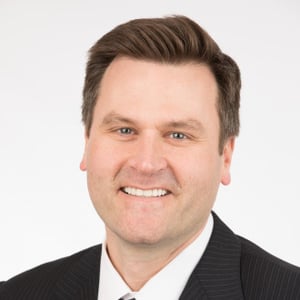
Vice President of Litigation and Deputy General Counsel, National Association of Manufacturers
Peter Tolsdorf is the vice president of litigation and deputy general counsel at the National Association of Manufacturers (NAM). As part of the Manufacturers’ Center for Legal Action, Mr. Tolsdorf works to strengthen the NAM’s ability to promote manufacturing policy objectives through litigation. He also serves as general counsel of The Manufacturing Institute, a nonprofit organization that seeks to help the manufacturing industry attract and develop world-class manufacturing talent.
Mr. Tolsdorf has extensive litigation experience on energy and the environment, labor and employment, product and civil liability, intellectual property, corporate governance and trade issues. At the American Petroleum Institute, he challenged regulatory overreach of the oil and natural gas industry. Mr. Tolsdorf previously served as an attorney at the Federal Energy Regulatory Commission (FERC), where he litigated energy generation and transmission matters. Before the FERC, he litigated cases at major international law firms Bingham McCutchen and McDermott Will & Emery.
Mr. Tolsdorf graduated from The George Washington University Law School, where he served as notes editor of The George Washington Law Review. He lives in Arlington, Virginia, with his wife and two sons.
Partner, Steptoe LLP
Shannen W. Coffin is a partner in Steptoe’s Washington office, where co-chairs the firm’s appellate practice and is a member of the regulatory litigation practice group. He frequently represents clients in trial and appellate courts in matters involving constitutional and administrative law challenges to state and federal government regulatory action.
Mr. Coffin previously served as a senior lawyer in the Executive Branch. He was Counsel to Vice President Cheney in the Office of the Vice President of the United States, where, among other things, he served on the White House’s judicial selection committee. Before that, Mr. Coffin served as Deputy Assistant Attorney General in the US Justice Department’s Civil Division, where he was responsible for overseeing and coordinating trial litigation on behalf of the federal government for constitutional challenges to federal statutes, statutory and constitutional challenges to agency programs, and defense of national security and anti-terrorism programs.
CEO, Pebble Partnership
Tom Collier leads the Pebble Partnership as its CEO. Mr. Collier is the former U.S. Department of the Interior chief of staff during the Clinton administration. He holds extensive experience in navigating the federal environmental permitting process. Prior to joining the Partnership in 2014, Mr. Collier spent 40 years serving as a partner for the law firm Steptoe & Johnson in Washington, D.C. As a senior leader in environmental law and permitting, Mr. Collier has worked on Alaska related projects in his career including development of Alpine, CD-5, and the reauthorization of the Trans-Alaska Pipeline System.
Director, Center for Energy and Environment, Competitive Enterprise Institute
Myron Ebell is director of the Center for Energy and Environment at the Competitive Enterprise Institute. Ebell also chairs the Cooler Heads Coalition, which comprises representatives from more than two dozen non-profit organizations based in the United States and abroad that challenge global warming alarmism and oppose energy rationing policies.
Ebell has worked on energy and environment issues for more than two decades, spending more than 15 years at CEI researching and advocating for sensible energy policies that benefit everyone. Instead of policies that simply reacts to alarmism, Ebell advocates for climate policies that reflect the scientifically-supported view that affordable, plentiful, and reliable energy make the world safer, the environment more livable, and should be should be accessible to those who need it most.
Ebell's writings have appeared in a variety of publications, including the New York Post, Wall Street Journal, USA Today, Washington Post, Forbes, London’s Guardian, Standpoint Magazine, Riverside Press Enterprise, Philadelphia Inquirer, and Environmental Law Forum. He has appeared as a guest on numerous television shows, including the ABC Evening News, NBC Nightly News, PBS News Hour, BBC Newsnight, BBC World, CNBC, CNN, C-SPAN’s Washington Journal, MSNBC, ITN, Voice of America, Televisa, Sky TV, Al Jazeera, PBS’s NOW, Fox News's Special Report with Bret Baier, O'Reilly Factor, and Hannity and Colmes. He has spoken frequently on a variety of BBC radio news programs and on hundreds of radio talk shows.
Ebell holds a Bachelor of Arts from Colorado College and an Master of Science from the London School of Economics. He also did graduate work at the University of California at San Diego and at Peterhouse, Cambridge University.
President, Center for Climate and Energy Solutions
Robert Perciasepe serves as president of the nonprofit Center for Climate and Energy Solutions. He served as the Deputy Administrator of the U.S. Environmental Protection Agency during the administration of Barack Obama. Prior to joining the Obama administration, Perciasepe was Chief Operating Officer for the environmental conservation non-profit National Audubon Society. Before that, he served in the administration of President Bill Clinton as the EPA's Assistant Administrator for clean water and then later as the Assistant Administrator for clean air.

Tazewell Taylor Professor of Law and William H. Cabell Research Professor, William & Mary Law School
Jonathan H. Adler joined the William & Mary law faculty as the Tazwell Taylor Professor of Law and William H. Cabell Research Professor in 2025. Prior to joining the faculty, he was the inaugural Johan Verheij Memorial Professor of Law and the founding Director of the Coleman P. Burke Center for Environmental Law at the Case Western Reserve University School of Law.
Professor Adler is the author or editor of seven books, including Climate Liberalism: Perspectives on Liberty, Property and Pollution (Palgrave, 2023), Marijuana Federalism: Uncle Sam and Mary Jane (Brookings Institution Press, 2020), Business and the Roberts Court (Oxford University Press, 2016) and Rebuilding the Ark: New Perspectives on Endangered Species Act Reform (AEI Press, 2011).
His articles have appeared in publications ranging from the Harvard Environmental Law Review and Yale Journal on Regulation to the Wall Street Journal, New York Times, and Washington Post. He has testified before Congress a dozen times, and his work has been cited in the U.S. Supreme Court. A 2024 study identified Professor Adler as the seventh most cited legal academic in administrative and environmental law from 2019 to 2023.
Professor Adler is a contributing editor to Civitas Outlook and a regular contributor to the popular legal blog, The Volokh Conspiracy. A regular commentator on constitutional and regulatory issues, he has appeared on numerous radio and television programs, ranging from the PBS Newshour and National Public Radio to the Fox News Channel and Entertainment Tonight.
Professor Adler is a senior fellow at the Property & Environment Research Center in Bozeman, Montana. In 2018, Professor Adler was elected to membership in the American Law Institute and helped co-found the organization Checks and Balances. In 2024, Professor Adler was appointed a public member of the Administrative Conference of the United States.
Professor Adler clerked for the Honorable David B. Sentelle on the U.S. Court of Appeals for the District of Columbia Circuit.
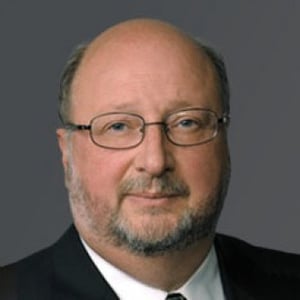
Partner, Mayer Brown LLP
An experienced appellate lawyer, Tim Bishop has argued five cases and briefed more than 60 before the US Supreme Court and has successfully handled dozens of appeals in federal and state appellate courts. He also represents clients in dispositive dismissal, summary judgment, and class certification motions in federal and state trial courts. Tim is co-author of the leading treatise, Supreme Court Practice(9th ed., 2007), a contributor to Federal Appellate Practice (2008), and a prolific author and speaker in the areas of appellate practice, environmental law, and securities law.
Tim has substantial experience in environmental and land use litigation (especially under the Clean Water Act, Endangered Species Act, Clean Air Act, federal and state Takings Clauses, and nuisance law), securities and antitrust litigation, class certification, federal and state tax controversies, labor and employment law, and constitutional appeals and litigation. In the securities area, he has submitted successful party or amicus briefs in most of the Supreme Court’s recent cases, including Dabit, Dura, Tellabs, Billing, Stoneridge, andAmchem, as well as in leading lower-court cases such as In re IPO Securities Litigation and Newton. He has broad experience in defeating class certification in complex litigation.
In the environmental law area Tim has been ranked as a top practitioner by Chambers, Best Lawyers in America, Euromoney's Best of the Best USA, and other publications, which have called him "the go-to guy if you have a serious environmental issue on appeal - he is excellent at spotting issues and is a great appellate advocate" (Chambers 2009). Tim is ranked Band 1 in Chambers USA 2012 in Environmental Law ("sources unanimously consider Bishop to be an exceptionally strong appellate lawyer") and Legal 500 2012 comments, "Bishop is 'superb and provides exemplary service.'" Tim successfully argued Solid Waste Agency of Northern Cook County in the Supreme Court, in which the Court struck down the Corps of Engineer’s "migratory bird rule." One leading environmental law professor and practitioner has written that Tim is "industry’s leading Supreme Court lawyer in environmental cases."
Since 1995, Tim has been a partner in Mayer Brown LLP’s 60-strong Supreme Court and Appellate Litigation Practice (which "stands head and shoulders above its competitors," according to Chambers USA 2008). Previously, he served as Law Clerk to US Supreme Court Justice William J. Brennan, Jr., and to Judge James L. Oakes, US Court of Appeals for the Second Circuit, and was Staff Counsel and Skadden Fellow with the American Civil Liberties Union. Recently, Tim was named one of Benchmark’s 2013 Appellate Illinois Litigation Stars.Chambers USA (2007) notes Tim’s “high visibility” and “incredible reputation for appellate law,” and he has been described in theLawdragon 500 as "a high court superstar" and a "top advocate" (2006).
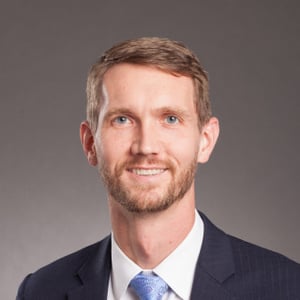
Senior Counsel for Environmental and Regulatory Affairs, Boeing
Adam Gustafson is a Senior Counsel for Environmental and Regulatory Affairs at Boeing.
Prior to joining Boeing, he served as Deputy General Counsel at the Environmental Protection Agency. Prior to that, he was a partner at Boyden Gray & Associates, where he represented States, federal judges, environmental groups, biofuel producers, agricultural interests, and public policy organizations, on such issues as the constitutional separation of powers, the First Amendment, automotive regulations, environmental computer models, healthcare regulation, and judicial deference to federal agencies.
Mr. Gustafson received his J.D. in 2009 from Yale Law School, where he was an editor of the Yale Law Journal, a managing editor of the Yale Journal of Law & the Humanities, and an executive editor of the symposium issue of the Harvard Journal of Law & Public Policy.
Mr. Gustafson served as a Vice President of the Yale Law School Federalist Society. He was a Coker Fellow, and his legal writing won the Joseph A. Chubb Competition Prize and the Edward D. Robbins Memorial Prize.
Mr. Gustafson graduated with high distinction in 2005 from the University of Virginia, where he was an Echols Scholar, a member of the Raven Society, a member of the rowing team, and a Lawn resident.
Before joining Boyden Gray & Associates, Mr. Gustafson was an associate at Cooper & Kirk, where he specialized in appellate litigation. Mr. Gustafson served as a law clerk to Judge Richard R. Clifton of the U.S. Court of Appeals for the Ninth Circuit, and to Judge Janice Rogers Brown of the U.S. Court of Appeals for the D.C. Circuit.
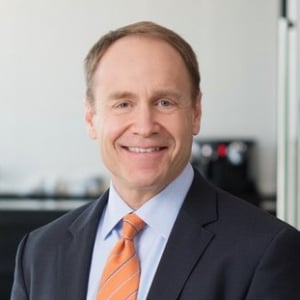
Partner, Bracewell LLP
Jeffrey Holmstead, former assistant administrator of the United States Environmental Protection Agency for Air and Radiation, is one of the nation’s leading climate change lawyers as recognized by Chambers USA (2008-2016) and heads the environmental strategies group (ESG) at Bracewell. The ESG is a multi-disciplinary group that includes environmental and energy attorneys, public policy advocates and strategic communications experts – most of whom have had high-level government experience. Under Jeffrey’s leadership, they work together on a daily basis to advise and defend companies and business groups confronting major environmental and energy-development challenges, both domestically and globally.
From his time in both the government and the private sector, Jeffrey is very familiar with the environmental and energy challenges facing the business community. He advises clients dealing with an increasingly complex regulatory, legal and public relations landscape, drawing on his experience in policy development, administrative and legislative advocacy, litigation and strategic communications. He has worked with clients in a number of industries on issues related to climate change, Clean Air Act policy and enforcement, and energy policy — including the development of new coal-fired power plants, refineries, renewable energy sources, and electric transmission infrastructure.
Jeffrey headed the EPA’s Office of Air and Radiation from 2001 to 2005, longer than anyone in EPA history. During his tenure, he was the architect of several of the agency’s most important initiatives, including the Clean Air Interstate Rule, the Clean Air Diesel Rule, the Mercury Rule for power plants and the reform of the New Source Review program. He also oversaw the development of the Bush Administration’s Clear Skies Legislation and key parts of its Global Climate Change Initiative. Between 1989 and 1993, Jeffrey served on the White House Staff as Associate Counsel to former President George H.W. Bush. In that capacity, he was involved in the passage of the Clean Air Act Amendments of 1990 and the key steps taken to implement those amendments. From 1987 to 1988, he served as a law clerk to Judge Douglas H. Ginsburg on the U.S. Court of Appeals for the District of Columbia.
He received his B.A. from Brigham Young University, summa cum laude, and his J.D. from Yale Law School.
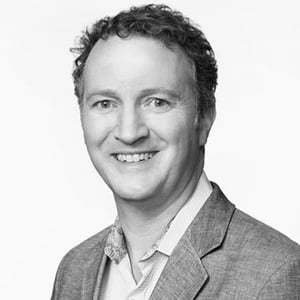
Director, Clean Air Project, Climate & Clean Air Program, Natural Resources Defense Council
John Walke has spearheaded the NRDC’s national clean-air advocacy before Congress, in the courts, at the U.S. Environmental Protection Agency, and before the public since 2000. Before joining NRDC, he spent three years working as an attorney in the EPA’s Office of General Counsel, where he handled cases related to permitting, air toxins, monitoring, and enforcement under the Clean Air Act. Prior to that, he was an associate in a private law firm based in Washington, D.C. Walke is a graduate of Duke University and Harvard Law School. He is based in Washington, D.C.
Professor of Law and Executive Director, Law and Economics Center, Antonin Scalia Law School, George Mason University
Donald Kochan is Professor of Law and Executive Director of the Law & Economics Center (LEC). Professor Kochan is an elected member of the American Law Institute (ALI) and serves as an Adviser to ALI's Restatement of the Law Fourth, Property project. Professor Kochan is a Nonresident Scholar at the Center for the Constitution at Georgetown University Law Center, where he was a Visiting Scholar in residence during Fall 2018. Before joining the Antonin Scalia Law School faculty, he was the Parker S. Kennedy Professor in Law at Chapman University’s Dale E. Fowler School of Law from 2004 to 2020. From 2003 to 2004, Professor Kochan was an Olin Fellow at the University of Virginia School of Law. During 2002-2003, he was a Visiting Assistant Professor of Law at George Mason’s Scalia Law School.
Professor Kochan’s scholarship focuses on areas of property law, constitutional law, administrative law, local government law, natural resources and environmental law, and law & economics. He has published several books and more than 50 scholarly articles and essays in well-regarded law journals. His work has been cited in more than a dozen state and federal court opinions, in more than 75 briefs filed in state and federal courts including more than 25 filed in the U.S. Supreme Court, in dozens of books and treatises, and in more than 800 scholarly articles.
Professor Kochan received his JD from Cornell Law School, where he was a John M. Olin Scholar in Law and Economics and managing editor of the Cornell International Law Journal. During law school, he also served as editor and executive editor of the Harvard Journal of Law & Public Policy symposium issues in 1997 and 1998. He received his BA from Western Michigan University, magna cum laude, with majors in both political science and philosophy, where he studied as the John W. Gill Medallion Scholar and was honored as the Presidential Scholar (awarded to the top graduate in the political science department).
After graduating from law school, Professor Kochan was a law clerk to The Honorable Richard F. Suhrheinrich of the United States Court of Appeals for the Sixth Circuit. Following his clerkship, Professor Kochan was an associate with the firm of Crowell & Moring LLP in Washington, D.C., where he specialized in natural resources & environmental law as well as tort, products, and consumer civil litigation & legislative affairs.

Co-Founder and CEO, Esper
Maleka Momand is co-founder and CEO of Esper, a technology platform for government to evaluate and manage regulatory policy. Prior to founding Esper, she served as President of Argive, a Silicon-Valley based non-profit that works with states on regulatory review best practices. Maleka holds a degree in Political Science & Interdisciplinary Studies from the University of Central Arkansas and resides in San Francisco, California.

40 Years Later: NEPA Regulation Update
Mario Loyola
On July 16, 2020, the White House Council on Environmental Quality published the long-awaited revision...
Executive Orders on Guidance: Implications and Next Steps
Steven Gill Bradbury, John Walke, Adam White
In October of 2019, President Trump issued an executive order that imposed a series of...
Is “Possess Now, Pay Later” Constitutional in Private Pipeline Takings?
Chris Johns, Jeffrey A. Simmons, Robert H. Thomas
The U.S. Supreme Court will soon consider the third of several petitions for certiorari asking...
Percolating in Washington State: Export-Terminal Permit-Denial Suit Implicates Federalism and Foreign Commerce
Donald J. Kochan, Glenn G. Lammi
When state regulators block approval of construction projects, disappointed businesses routinely challenge the decision in...
Pipeline Energy Infrastructure Legal Challenges
Robert J. McNamara, Peter Tolsdorf
The advent of fracking and other technological innovations has unleashed a new era of American...
Topics
Liberty Month Revisited: The Freedom to Speak and Participate in Elections
This month we are sharing a selection of paired pieces from The Federalist Society's Liberty...
Executive Overreach at the EPA? The Pebble Mine Clean Water Act Dispute
Shannen W. Coffin, Tom Collier, Myron Ebell, Robert Perciasepe
Perhaps in no area was President Obama’s expansive approach to executive authority more apparent than...
Deference Doctrines and the Clean Water Act
Jonathan H. Adler, Timothy Bishop
Recently, Justices of the Supreme Court have called the Court’s deference jurisprudence into significant question....
Administrator Pruitt’s First Year at EPA
Adam Gustafson, Jeffrey Holmstead, John Walke
When President Trump nominated Scott Pruitt to be Administrator of the Environmental Protection Agency, environmentalists...
The Commenting Power: Agency Accountability through Public Participation
Donald J. Kochan, Maleka Momand
Did you know that you have a say in the U.S. government’s regulatory process? The...