



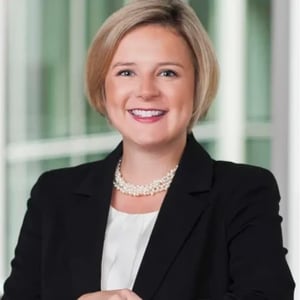
Her client experience in competition and antitrust is wide-scale and includes class action litigation, trade secret disputes, and defending clients in government investigations, grand jury subpoenas, and other proceedings. Lindsey enjoys working with her clients and with a variety of industry groups to help train their professionals regarding antitrust developments such as enforcement in critical areas, including procurement and labor. She is a thought leader regarding the evolution of criminal antitrust prosecution of no-poach agreements, and regularly trains and advises companies that do business with the government regarding increased risks from DOJ’s nascent Procurement Collusion Strike Force. Lindsey also works with clients as they assess competition concerns regarding potential business collaborations, such as teaming agreements and joint ventures.
In addition to representing defendants in cartel investigations and civil litigation, Lindsey also works with clients to prosecute and remedy antitrust harms they may incur. She currently represents 12 large shipping companies asserting claims against four Class I railroad companies in the In re Rail Freight Fuel Surcharge Antitrust Litigation. The V&E team has a leading role in spearheading the multi-district litigation and organizing strategy and discovery efforts across more than 300 plaintiffs.
A national thought leader, Lindsey co-chairs the ABA Antitrust Section’s Cartel & Criminal Practice Committee She often speaks on competition and has authored numerous articles deciphering the newest developments in antitrust enforcement to report on the potential implications.
She has been repeatedly recognized by Global Competition Review’s Who’s Who Legal as a rising star and future leader in Competition.
Lindsey maintains an active pro bono docket, which has included leading roles in several litigation matters, including advocating on behalf of the mother of a minor child in contested custody dispute in D.C. Superior Court, co-chairing a jury trial in a disability discrimination case brought in federal court in the District of Columbia, and leading an evidentiary hearing related to a Section 2255 petition in the Eastern District of Virginia. She regularly supervises V&E teams in cases involving housing conditions, landlord/tenant issues, and asylum.
Topics
United States v. Apple: A Triumph of Politics Over Economic Analysis
The Department of Justice’s recent antitrust suit against Apple has garnered significant attention, but a...
Predistribution, Labor Standards, and Ideological Drift: Why Some Conservatives Are Embracing Labor Unions (and Why They Shouldn't)
Alexander T. MacDonald
Common ground isn’t always a good thing. For example, consider the growing popularity of “predistribution.”...
Topics
DOJ Can’t Prosecute AI for Price Fixing Unless There’s Price Fixing
Among the Biden administration’s attempts to lower the cost of living, actions addressing housing costs have been...
Topics
The Concern for Human Flourishing at the Core of Antitrust Law
Antitrust law did not start in 1890. Though judges, scholars, and government officials often describe...
Topics
The FTC’s Weak Case Against Amazon
Late last year, the Federal Trade Commission (FTC), joined by seventeen state attorneys general, filed...
Topics
Franchise With That? McDonald’s No-Poach Agreements Receive Antitrust Scrutiny
A case from the U.S. Court of Appeals for the Seventh Circuit has brought antitrust...
Topics
The FTC’s Indefensible Position on Collective Bargaining
In remarks last week at the University of Utah School of Law, FTC Commissioner Alvaro...
Topics
The FTC’s Ahistorical Attack on Noncompetes
Earlier this month, the Federal Trade Commission (FTC) proposed a new rule banning most employee...
Criminal Market Allocation or Pro-Competitive Agreement: The Debate over DOJ’s “No Poach” Prosecutions
R. Pepper Crutcher, Bernard A. Nigro, G. Zachary Terwilliger, Lindsey Vaala
No poaching allowed! No, you have not wandered into a Hunter’s Safety Forum, but rather...
Criminal Market Allocation or Pro-Competitive Agreement: The Debate over DOJ’s “No Poach” Prosecutions
Teleforum