
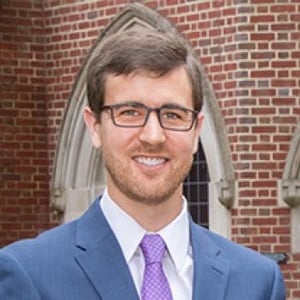
Professor of Law & Helen L. Crocker Faculty Scholar, Stanford Law School
Jud Campbell joined the faculty of Stanford Law School in 2023. He previously served as a professor of law at the University of Richmond School of Law and as a visiting professor of law at the University of Chicago Law School and at Harvard Law School. His academic focus is constitutional history and First Amendment law. His publications include articles in the Stanford Law Review, Yale Law Journal, Harvard Law Review, Texas Law Review, Constitutional Commentary, and Law and History Review. After completing his J.D. at Stanford Law School, he clerked for Judge Diane S. Sykes on the U.S. Court of Appeals for the Seventh Circuit, and for Judge José A. Cabranes on the U.S. Court of Appeals for the Second Circuit. He then served as the Executive Director of the Stanford Constitutional Law Center. He holds a bachelor’s degree from the University of North Carolina at Chapel Hill and two master’s degrees from the London School of Economics, where he studied as a Marshall Scholar.
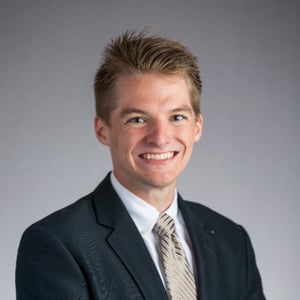
Chief of Staff and Attorney Advisor, FTC Commissioner Mark Meador
John Ehrett is Chief of Staff and Attorney Advisor to FTC Commissioner Mark Meador. He previously served as Senior Counsel at the U.S. Department of Education and Chief Counsel to U.S. Senator Josh Hawley. Prior to that, he was an associate at Gibson Dunn and a law clerk to Judge James Ho on the Fifth Circuit Court of Appeals and Judge Alex Kozinski on the Ninth Circuit Court of Appeals. He is a graduate of Yale Law School and Patrick Henry College.

Partner, Schaerr | Jaffe LLP
Erik Jaffe has been involved in appeals on a broad range of legal issues, including First Amendment challenges to campaign finance reform, Commerce Clause challenges to Health Care Reform and other federal legislation, Equal Protection Clause challenges to affirmative action in education, First Amendment challenges to school vouchers, Fifth Amendment challenges to takings of property, Second Amendment challenges to restrictions on gun ownership, and a wide variety of cases involving patents, copyrights, ERISA, securities fraud, federal preemption, environmental regulation, and other state and federal constitutional and statutory matters. He has represented businesses and non-profit groups, Judges, Senators, former government officials, Nobel Prize winners, and a broad cross-section of private individuals. Mr. Jaffe has been involved in over 120 Supreme Court matters, including filing over 30 cert. petitions, representing half-a-dozen parties on the merits, and filing over 70 amicus briefs at both the cert. and merits stages.
A 1990 graduate of the Columbia University School of Law, Mr. Jaffe was a law clerk to Judge Douglas H. Ginsburg of the United States Court of Appeals for the District of Columbia Circuit from 1990 to 1991. Following that clerkship he spent five years in litigation practice with the Washington, D.C. law firm of Williams & Connolly. In the summer of 1996 he left Williams & Connolly to clerk for Supreme Court Justice Clarence Thomas. At the end of that clerkship he started his own practice, and he was a sole practitioner from 1997 to 2018. He joined the firm of Schaerr | Jaffe LLP in 2018.
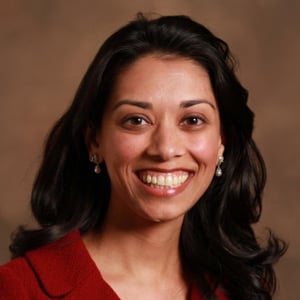
General Counsel, Center for Individual Rights
Darpana Sheth joined CIR as General Counsel in May 2025. She is a nationally recognized constitutional litigator with over two decades of experience serving in in leadership roles at other nonprofit organizations.
Before joining CIR, Darpana served for four years as Vice President of Litigation for the Foundation for Individual Rights and Expression. Prior to that, Darpana was a Senior Attorney with the Institute for Justice, where she also served as Director of the Institute’s National Initiative to End Forfeiture Abuse.
Before finding her calling as a public-interest attorney, Darpana served as an Assistant Attorney General for the State of New York and worked in private practice as a litigation associate at the Manhattan law firm of Chadbourne & Parke, LLP. She also served as law clerk to the Honorable Jerome A. Holmes of the U.S. Court of Appeals for the Tenth Circuit.
A native of Philadelphia, Darpana graduated from the University of Pennsylvania with a Bachelor of Arts in Political Science and History. She earned her law degree from Georgetown University Law Center.

Senior Fellow in Constitutional Jurisprudence, Independence Institute
Professor Robert G. Natelson is a constitutional scholar and author.
Rob’s constitutional scholarship has been cited repeatedly by justices and parties at the U.S. Supreme Court—as well as by federal appeals courts, and at least 18 state supreme courts.
Rob’s research into the Constitution’s original meaning has carried him to libraries throughout the United States and in Britain, including four months at Oxford University. His books and articles span many different parts of the Constitution, including groundbreaking studies of the Necessary and Proper Clause, the Indian Commerce Clause, federalism, Founding-Era interpretation, regulation of elections, and the amendment process of Article V. He created the first-ever online bibliography for 18th century materials used in constitutional research. He is a contributing author to the Encyclopedia of the Supreme Court of the United States (on Magna Carta). He contributed eight essays to the third edition of the Heritage Guide to the Constitution: five on the amendment procedure and one each on the Guarantee Clause, the Postal Clause, and the Recess Appointments Clause.
U.S. Supreme Court justices have relied explicitly on Rob’s research in 41 citations in 13 separate cases.
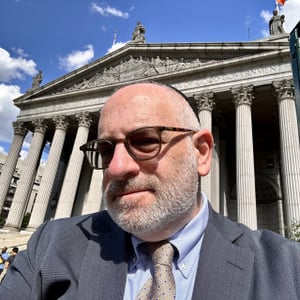
Owner, Coleman Law Firm, PC
Ron Coleman has shaped the law relating to the use and abuse of intellectual property as a tool of competition. A leader in social media for lawyers, his blog about copyright, trademark and free speech, LIKELIHOOD OF CONFUSION®, has since its inception in 2005 become one of the most influential publications in IP law.
Recent representations include:
Author of the first article on Internet law in the ABA Journal (1995), Ron was co-author of the chapter on “Responses to Complaints” in Business and Commercial Litigation in the Federal Courts (ABA / West Group 1998). More recently, his chapter on the interplay of rights of publicity and trademark was included in In the Arena: A Sports Law Handbook. Other publications include the Computer and Internet Law Journal, the NYSBA Journal and the NJ Law Journal. Ron has been a featured speaker at a host of legal conferences. These include the International Trademark Association (INTA), the New Jersey, New York City and New York County Bar Associations, the Copyright Society of the USA, the American Intellectual Property Law Association, the Intellectual Property Owners Association, the Ohio Intellectual Property Law Society, Minnesota CLE and the Berkman Center for Internet and Society at Harvard. He was recently reappointed to the Internet Committee of INTA.
Ron has represented clients of every size in state and federal courts, bench and jury trials, the TTAB and in arbitrations and mediations throughout the country. He has also been retained as an expert on trademark law and practice in professional liability litigation. A graduate of Princeton University, he received his JD from Northwestern University School of Law.

Speech and Censorship in the Age of Algorithms
Jud Campbell, John Ehrett, Erik S. Jaffe, Darpana Sheth Nunziata
As government actors and private litigants seek to regulate AI, social media, online obscenity, and...
The Meaning of "Regulate Commerce" to the Constitution's Ratifiers
Robert G. Natelson
I. Previous Scholarship[1] A. Views of “Commerce”: Traditional and “Mega” The Constitution grants Congress power...
Legislating Morality in the 21st Century
Ronald D. Coleman, David Marshak
[T]he Court … says: “[W]e think that our laws and traditions in the past half...