
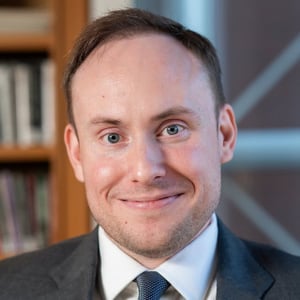
Director, Robert A. Levy Center for Constitutional Studies, Cato Institute
Thomas Berry is the director in the Cato Institute’s Robert A. Levy Center for Constitutional Studies and editor in chief of the Cato Supreme Court Review. Before joining Cato, he was an attorney at Pacific Legal Foundation and clerked for Judge E. Grady Jolly of the U.S. Court of Appeals for the Fifth Circuit. His academic work has appeared in NYU Journal of Law and Liberty, Washington and Lee Law Review Online, and Federalist Society Review. His popular writing has appeared in The Wall Street Journal, National Law Journal, Investor’s Business Daily, National Review Online, and The Hill Online. He has testified before the U.S. Senate, and his work has been cited by the U.S. District Court for the District of Columbia.
Berry holds a J.D. from Stanford Law School, where he was a senior editor on the Stanford Law and Policy Review and a Bradley Student Fellow in the Stanford Constitutional Law Center. He graduated with a B.A. in Liberal Arts from St. John’s College, Santa Fe.
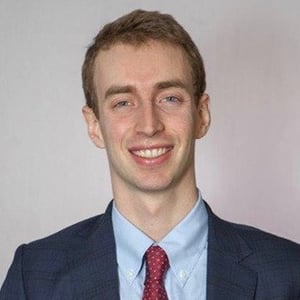
Partner, Boyden Gray PLLC
Jimmy Conde is partner at Boyden Gray PLLC, specializing in energy, environmental, and administrative law, with particular expertise in the Clean Air Act. He has protected clients against agency overreach in cutting-edge and complex legal proceedings, including challenges to EPA, DOE, DOT, and California rules seeking to compel electrification of motor vehicles, the FCC’s universal service fund, Department of Labor Wage & Hour Division rules, and HHS rules interfering with the practice of medicine and sound insurance practices. His written commentary has been published and referenced in the Wall Street Journal, the Washington Examiner, Concurrences (an antitrust publication), and Newsweek, among others.
Mr. Conde began his legal career as an associate with Boyden Gray PLLC. He clerked for Judge Douglas H. Ginsburg in the U.S. Court of Appeals for the D.C. Circuit and Judge David J. Porter in the U.S. Court of Appeals for the Third Circuit.
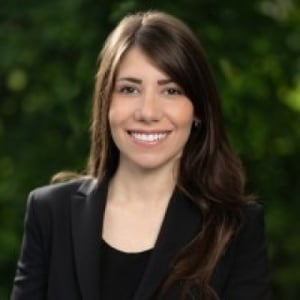
Associate Chief Counsel, U.S. Chamber Litigation Center, U.S. Chamber of Commerce
Maria C. Monaghan is associate chief counsel at the U.S. Chamber Litigation Center, the litigation arm of the U.S. Chamber of Commerce. In this capacity, she handles a variety of litigation matters for the Chamber.
Before joining the Litigation Center, Monaghan practiced as an associate in the D.C. office of Gibson, Dunn & Crutcher LLP. She represented clients in the telecommunications, energy, transportation, and e-commerce sectors, with a focus on appellate litigation and regulatory matters.
Monaghan served as a law clerk to the Honorable Samuel A. Alito of the United States Supreme Court, the Honorable Ed Carnes of the U.S. Court of Appeals for the Eleventh Circuit, and the Honorable Amul R. Thapar of the U.S. Court of Appeals for the Sixth Circuit. She graduated Order of the Coif from the University of Virginia School of Law, where she served as Articles Development Editor for the Virginia Law Review and participated in the Supreme Court Litigation Clinic. She received her undergraduate degree in Human Resource Management and Labor Studies from Rutgers University.
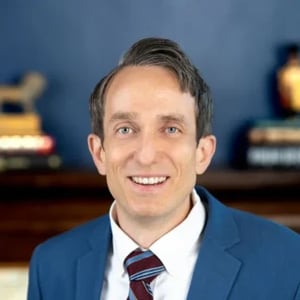
Senior Counsel, America First Legal Foundation
James Rogers is Senior Counsel at America First Legal Foundation, where he litigates in a number of areas, including border security, election integrity, parental rights, and administrative and constitutional law. Before joining America First Legal, from 2021 to 2022, he was Senior Litigation Counsel at the Solicitor General’s Office of the Arizona Attorney General’s Office. While there, he spearheaded lawsuits against the Biden Administration’s destructive open borders policies and its COVID19 vaccine mandates. From 2015 to 2021, James was a Foreign Service Officer at the U.S. Department of State, where he worked in the Office of the Assistant Legal Advisor for Consular Affairs, at the U.S. Consulate in Porto Alegre, Brazil, and at the U.S. Embassy in Windhoek, Namibia.
Prior to joining the Department of State, he was a commercial litigation partner at Osborn Maledon, a Phoenix-based firm with a #1 litigation ranking from Chambers and Partners. James earned a J.D. from Harvard Law School in 2009, an L.L.M. in International Law from the University of Cambridge in 2008, and a B.A., with honors, in International Studies from Brigham Young University in 2005. He is a sixth-generation Arizonan and lives in Mesa, Arizona, with his four children.
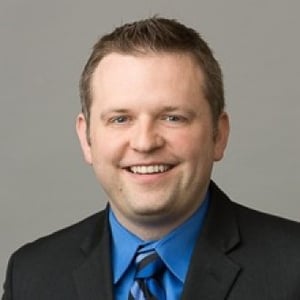
Partner, Marshall, Gerstein & Borun LLP
Ryan Schermerhorn is a registered patent attorney in the firm's Industrial & Mechanical Technologies Practice Group. His engineering background provides him with an understanding of clients’ technologies and enables him to effectively and efficiently provide a range of patent procurement services. He also leverages his experience to assist on intellectual property litigation as well as develop strategies for acquiring and protecting intellectual property.
Since 2017, Ryan has been listed as an "Emerging Lawyer" by Emerging Lawyers Magazine and has been selected for inclusion in the Illinois Rising Stars® lists. Ryan was recognized in Chicago Daily Law Bulletin's 2023 40 Under Forty list. Since 2024, Ryan has been selected for inclusion in The Best Lawyers in America© list in the practice areas of Litigation - Patent and Patent Law. In 2025, Ryan was selected by the Law Bulletin Publishing Company’s Leading Lawyer Network as a “Leading Lawyer.”
Director, Robert A. Levy Center for Constitutional Studies, Cato Institute
Thomas Berry is the director in the Cato Institute’s Robert A. Levy Center for Constitutional Studies and editor in chief of the Cato Supreme Court Review. Before joining Cato, he was an attorney at Pacific Legal Foundation and clerked for Judge E. Grady Jolly of the U.S. Court of Appeals for the Fifth Circuit. His academic work has appeared in NYU Journal of Law and Liberty, Washington and Lee Law Review Online, and Federalist Society Review. His popular writing has appeared in The Wall Street Journal, National Law Journal, Investor’s Business Daily, National Review Online, and The Hill Online. He has testified before the U.S. Senate, and his work has been cited by the U.S. District Court for the District of Columbia.
Berry holds a J.D. from Stanford Law School, where he was a senior editor on the Stanford Law and Policy Review and a Bradley Student Fellow in the Stanford Constitutional Law Center. He graduated with a B.A. in Liberal Arts from St. John’s College, Santa Fe.
Partner, Boyden Gray PLLC
Jimmy Conde is partner at Boyden Gray PLLC, specializing in energy, environmental, and administrative law, with particular expertise in the Clean Air Act. He has protected clients against agency overreach in cutting-edge and complex legal proceedings, including challenges to EPA, DOE, DOT, and California rules seeking to compel electrification of motor vehicles, the FCC’s universal service fund, Department of Labor Wage & Hour Division rules, and HHS rules interfering with the practice of medicine and sound insurance practices. His written commentary has been published and referenced in the Wall Street Journal, the Washington Examiner, Concurrences (an antitrust publication), and Newsweek, among others.
Mr. Conde began his legal career as an associate with Boyden Gray PLLC. He clerked for Judge Douglas H. Ginsburg in the U.S. Court of Appeals for the D.C. Circuit and Judge David J. Porter in the U.S. Court of Appeals for the Third Circuit.
Associate Chief Counsel, U.S. Chamber Litigation Center, U.S. Chamber of Commerce
Maria C. Monaghan is associate chief counsel at the U.S. Chamber Litigation Center, the litigation arm of the U.S. Chamber of Commerce. In this capacity, she handles a variety of litigation matters for the Chamber.
Before joining the Litigation Center, Monaghan practiced as an associate in the D.C. office of Gibson, Dunn & Crutcher LLP. She represented clients in the telecommunications, energy, transportation, and e-commerce sectors, with a focus on appellate litigation and regulatory matters.
Monaghan served as a law clerk to the Honorable Samuel A. Alito of the United States Supreme Court, the Honorable Ed Carnes of the U.S. Court of Appeals for the Eleventh Circuit, and the Honorable Amul R. Thapar of the U.S. Court of Appeals for the Sixth Circuit. She graduated Order of the Coif from the University of Virginia School of Law, where she served as Articles Development Editor for the Virginia Law Review and participated in the Supreme Court Litigation Clinic. She received her undergraduate degree in Human Resource Management and Labor Studies from Rutgers University.
Senior Counsel, America First Legal Foundation
James Rogers is Senior Counsel at America First Legal Foundation, where he litigates in a number of areas, including border security, election integrity, parental rights, and administrative and constitutional law. Before joining America First Legal, from 2021 to 2022, he was Senior Litigation Counsel at the Solicitor General’s Office of the Arizona Attorney General’s Office. While there, he spearheaded lawsuits against the Biden Administration’s destructive open borders policies and its COVID19 vaccine mandates. From 2015 to 2021, James was a Foreign Service Officer at the U.S. Department of State, where he worked in the Office of the Assistant Legal Advisor for Consular Affairs, at the U.S. Consulate in Porto Alegre, Brazil, and at the U.S. Embassy in Windhoek, Namibia.
Prior to joining the Department of State, he was a commercial litigation partner at Osborn Maledon, a Phoenix-based firm with a #1 litigation ranking from Chambers and Partners. James earned a J.D. from Harvard Law School in 2009, an L.L.M. in International Law from the University of Cambridge in 2008, and a B.A., with honors, in International Studies from Brigham Young University in 2005. He is a sixth-generation Arizonan and lives in Mesa, Arizona, with his four children.
Partner, Marshall, Gerstein & Borun LLP
Ryan Schermerhorn is a registered patent attorney in the firm's Industrial & Mechanical Technologies Practice Group. His engineering background provides him with an understanding of clients’ technologies and enables him to effectively and efficiently provide a range of patent procurement services. He also leverages his experience to assist on intellectual property litigation as well as develop strategies for acquiring and protecting intellectual property.
Since 2017, Ryan has been listed as an "Emerging Lawyer" by Emerging Lawyers Magazine and has been selected for inclusion in the Illinois Rising Stars® lists. Ryan was recognized in Chicago Daily Law Bulletin's 2023 40 Under Forty list. Since 2024, Ryan has been selected for inclusion in The Best Lawyers in America© list in the practice areas of Litigation - Patent and Patent Law. In 2025, Ryan was selected by the Law Bulletin Publishing Company’s Leading Lawyer Network as a “Leading Lawyer.”

Associate, Consovoy McCarthy PLLC
Ms. Bates assists clients with a variety of litigation and appellate matters that encompass constitutional law, administrative law, and commercial litigation. Before joining the firm, Ms. Bates was a law clerk to Judge Kyle Duncan of the U.S. Court of Appeals for the Fifth Circuit. She previously served as a Legal Policy Analyst at the Heritage Foundation, where she researched and wrote about the courts, judicial nominations, and various constitutional issues. She also co-hosted Heritage’s SCOTUS 101 podcast. She earned her B.A. magna cum laude in Politics from Hillsdale College, and her J.D. from the Antonin Scalia Law School at George Mason University. Ms. Bates is a member of the Virginia Bar.
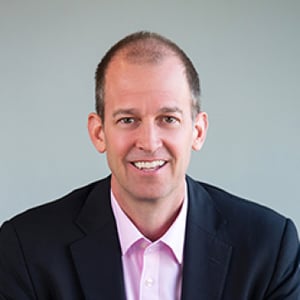
Founding Partner, Benbrook Law Group
Brad has litigated business and public policy matters throughout the United States for over 25 years. He represents businesses of all sizes in civil litigation and disputes with administrative agencies. Brad also regularly represents individuals and groups in constitutional and public policy litigation in the trial and appellate courts. He regularly submits amicus briefs on behalf of clients at the Supreme Court of the United States on significant cases. Brad is often hired as special litigation counsel in complex family law, bankruptcy, and trust and estate litigation.
After graduating from law school, Brad worked as a judicial clerk for Judge J.L. Edmondson of the United States Court of Appeals for the Eleventh Circuit in Atlanta. Brad received his law degree from the University of California at Berkeley after graduating from Stanford University, where he was a four-year letterman on the golf team.
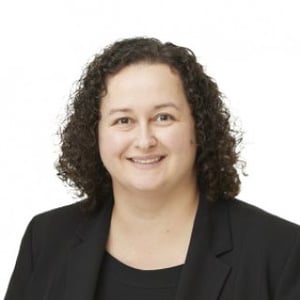
Counsel, Schaerr Jaffe LLP
Stephanie Freudenberg is a litigator who has represented a broad range of public and private clients, including global financial institutions and Fortune 500 companies, in complex commercial litigation matters at all stages of litigation, from discovery at the trial court level through merits briefing on appeal. She has handled a wide range of cases involving securities litigation and enforcement, products liability, contractual disputes, antitrust, white collar defense, and other issues.
After law school, Stephanie clerked for the Honorable Robert B. Kugler on the U.S. District Court for the District of New Jersey and the Honorable Edith Brown Clement on the U.S. Court of Appeals for the Fifth Circuit. Following those clerkships, she spent over five years in litigation practice with the New York and Washington, D.C. offices of the law firm of Sullivan & Cromwell.
Stephanie graduated from Harvard Law School, where she was deputy editor-in-chief for the Harvard Journal of Law and Public Policy and the recipient of five Dean’s Scholar Prizes. She received her undergraduate degree from Princeton University.
She joined Schaerr Jaffe as counsel in November 2024.
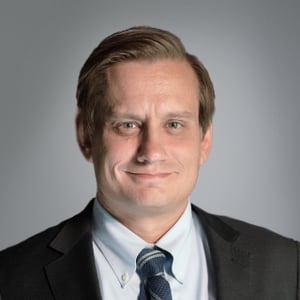
Senior Litigation Counsel, New Civil Liberties Alliance
Jacob Huebert is Senior Litigation Counsel at the New Civil Liberties Alliance. He previously served as President and Director of Litigation of the Liberty Justice Center, where he successfully litigated cases to protect constitutional rights, including the landmark Janus v. AFSCME case, in which the U.S. Supreme Court upheld government employees’ First Amendment right to choose for themselves whether to pay money to a union. Jacob was also previously a Senior Attorney at the Goldwater Institute, where he litigated cases on free speech, property rights, and the Second Amendment.
Jacob and his work have appeared in numerous national media outlets, including the Wall Street Journal, New York Times, and Fox News Channel. He is also the author of a book, Libertarianism Today.
Jacob holds a B.A. in economics from Grove City College and a J.D. from the University of Chicago Law School. After law school, he served as a clerk to Judge Deborah Cook of the U.S. Court of Appeals for the Sixth Circuit. Jacob has served as an adjunct law professor at several law schools, teaching courses in advanced appellate advocacy, the law of payments, legal writing, and jurisprudence. Before working in public interest law, Jacob was a litigator in private practice.
Deputy Attorney General, Legal Strategy, Texas
Ryan serves as Deputy Attorney General for Legal Strategy in the Texas Attorney General's Leadership Team. He most recently acted as Associate Deputy Attorney General for Civil Litigation. For the previous four years, Mr. Walters served in the Special Litigation Division—as Special Counsel, Deputy Chief, and eventually Chief. In those positions, he led the Attorney General's most significant litigation against the Biden Administration, including successful challenges to federal rules weakening immigration enforcement and those imposing gender-identity mandates on Texas's workplaces, schools, and hospitals. Prior to his tenure in the Office of the Attorney General, Mr. Walters served as an attorney with the Texas Public Policy Foundation, as an Assistant Attorney General in the Ohio Attorney General’s Office, and as a commercial litigator at two international law firms. He is a graduate of The Ohio State University and holds law degrees from the University of Michigan Law School and the University of California, Berkeley, School of Law.
Associate, Consovoy McCarthy PLLC
Ms. Bates assists clients with a variety of litigation and appellate matters that encompass constitutional law, administrative law, and commercial litigation. Before joining the firm, Ms. Bates was a law clerk to Judge Kyle Duncan of the U.S. Court of Appeals for the Fifth Circuit. She previously served as a Legal Policy Analyst at the Heritage Foundation, where she researched and wrote about the courts, judicial nominations, and various constitutional issues. She also co-hosted Heritage’s SCOTUS 101 podcast. She earned her B.A. magna cum laude in Politics from Hillsdale College, and her J.D. from the Antonin Scalia Law School at George Mason University. Ms. Bates is a member of the Virginia Bar.
Founding Partner, Benbrook Law Group
Brad has litigated business and public policy matters throughout the United States for over 25 years. He represents businesses of all sizes in civil litigation and disputes with administrative agencies. Brad also regularly represents individuals and groups in constitutional and public policy litigation in the trial and appellate courts. He regularly submits amicus briefs on behalf of clients at the Supreme Court of the United States on significant cases. Brad is often hired as special litigation counsel in complex family law, bankruptcy, and trust and estate litigation.
After graduating from law school, Brad worked as a judicial clerk for Judge J.L. Edmondson of the United States Court of Appeals for the Eleventh Circuit in Atlanta. Brad received his law degree from the University of California at Berkeley after graduating from Stanford University, where he was a four-year letterman on the golf team.
Counsel, Schaerr Jaffe LLP
Stephanie Freudenberg is a litigator who has represented a broad range of public and private clients, including global financial institutions and Fortune 500 companies, in complex commercial litigation matters at all stages of litigation, from discovery at the trial court level through merits briefing on appeal. She has handled a wide range of cases involving securities litigation and enforcement, products liability, contractual disputes, antitrust, white collar defense, and other issues.
After law school, Stephanie clerked for the Honorable Robert B. Kugler on the U.S. District Court for the District of New Jersey and the Honorable Edith Brown Clement on the U.S. Court of Appeals for the Fifth Circuit. Following those clerkships, she spent over five years in litigation practice with the New York and Washington, D.C. offices of the law firm of Sullivan & Cromwell.
Stephanie graduated from Harvard Law School, where she was deputy editor-in-chief for the Harvard Journal of Law and Public Policy and the recipient of five Dean’s Scholar Prizes. She received her undergraduate degree from Princeton University.
She joined Schaerr Jaffe as counsel in November 2024.
Senior Litigation Counsel, New Civil Liberties Alliance
Jacob Huebert is Senior Litigation Counsel at the New Civil Liberties Alliance. He previously served as President and Director of Litigation of the Liberty Justice Center, where he successfully litigated cases to protect constitutional rights, including the landmark Janus v. AFSCME case, in which the U.S. Supreme Court upheld government employees’ First Amendment right to choose for themselves whether to pay money to a union. Jacob was also previously a Senior Attorney at the Goldwater Institute, where he litigated cases on free speech, property rights, and the Second Amendment.
Jacob and his work have appeared in numerous national media outlets, including the Wall Street Journal, New York Times, and Fox News Channel. He is also the author of a book, Libertarianism Today.
Jacob holds a B.A. in economics from Grove City College and a J.D. from the University of Chicago Law School. After law school, he served as a clerk to Judge Deborah Cook of the U.S. Court of Appeals for the Sixth Circuit. Jacob has served as an adjunct law professor at several law schools, teaching courses in advanced appellate advocacy, the law of payments, legal writing, and jurisprudence. Before working in public interest law, Jacob was a litigator in private practice.
Deputy Attorney General, Legal Strategy, Texas
Ryan serves as Deputy Attorney General for Legal Strategy in the Texas Attorney General's Leadership Team. He most recently acted as Associate Deputy Attorney General for Civil Litigation. For the previous four years, Mr. Walters served in the Special Litigation Division—as Special Counsel, Deputy Chief, and eventually Chief. In those positions, he led the Attorney General's most significant litigation against the Biden Administration, including successful challenges to federal rules weakening immigration enforcement and those imposing gender-identity mandates on Texas's workplaces, schools, and hospitals. Prior to his tenure in the Office of the Attorney General, Mr. Walters served as an attorney with the Texas Public Policy Foundation, as an Assistant Attorney General in the Ohio Attorney General’s Office, and as a commercial litigator at two international law firms. He is a graduate of The Ohio State University and holds law degrees from the University of Michigan Law School and the University of California, Berkeley, School of Law.
Senior Counsel, Litigation, Defense of Freedom Institute
Don Daugherty is Senior Counsel, Litigation, at the Defense of Freedom Institute for Policy Studies. He previously served as a Senior Counsel at the Institute for Free Speech and the Wisconsin Institute for Law & Liberty. Before that, he was a partner at three of Wisconsin’s largest firms, with nearly 30 years of trial and appellate litigation experience. He has been consistently recognized as among the “Best Lawyers in America,” as well as Wisconsin’s “Super Lawyers.” He received his B.A. from the University of Virginia and his J.D. from Northwestern University Law School. After law school, he served as a clerk to the Honorable Roger J. Miner of the United States Court of Appeals for the Second Circuit.
Don is on the Board of Advisors for the Milwaukee Lawyers’ Chapter of the Federalist Society, and on the Executive Committee of the Federalist Society’s Litigation Practice Group.
David C. Tryon is the director of litigation at The Buckeye Institute. In this role, he supervises all litigation and outside litigation counsel and actively participates in Buckeye’s cases in both state and federal court.
Immediately prior to joining Buckeye, Tryon served as deputy solicitor general in the West Virginia Attorney General’s office, where he handled both trials and appellate matters, including preparing amicus curiae briefs. Many of the matters either challenged federal laws and regulations that infringed on state’s rights or defended the validity of West Virginia laws against constitutional challenges.
Tryon served as the deputy assistant secretary for policy and development in the Office for Civil Rights in the U.S. Department of Education from 2019-2020. While there, he assisted with developing and implementing new policies and guidance and was responsible for the Civil Rights Data Collection, which covers all primary and secondary schools receiving federal funds.
Nominated as the chief counsel for advocacy at the U.S. Small Business Administration, Tryon was favorably voted out of the Senate Committee on Small Business and Entrepreneurship. In connection with his nomination, he had numerous meetings with small business organizations to learn the concerns and needs of small businesses.
Tryon has had more than 30 years of commercial litigation experience in state and federal courts, including trials and appeals. Several of these cases involved the U.S. Constitution or the Ohio Constitution. In Arnold v. City of Cleveland, he was successful in having the Ohio Supreme Court declare the right to bear arms a fundamental right under the Ohio Constitution.
Tryon has dedicated much of his time to civic affairs. He served on the local school board for four years, two of those as school board president. During his nine years on the Executive Board for the Greater Cleveland Council of the Boy Scouts of America, he organized two major parades, created a personnel committee for leadership training of professional staff, and was involved in restructuring the Council. From 2015 to 2020, he served on the Ohio Advisory Committee to the United States Commission on Civil Rights. He was part of a select group to participate in Leadership Cleveland, Class of 2016. He also led the Cleveland Lawyers Chapter of the Federalist Society for nearly 20 years.
Tryon received a Bachelor of Science Degree (magna cum laude) from Brigham Young University and his Juris Doctorate (cum laude) from the University of Michigan.
Director, Robert A. Levy Center for Constitutional Studies, Cato Institute
Thomas Berry is the director in the Cato Institute’s Robert A. Levy Center for Constitutional Studies and editor in chief of the Cato Supreme Court Review. Before joining Cato, he was an attorney at Pacific Legal Foundation and clerked for Judge E. Grady Jolly of the U.S. Court of Appeals for the Fifth Circuit. His academic work has appeared in NYU Journal of Law and Liberty, Washington and Lee Law Review Online, and Federalist Society Review. His popular writing has appeared in The Wall Street Journal, National Law Journal, Investor’s Business Daily, National Review Online, and The Hill Online. He has testified before the U.S. Senate, and his work has been cited by the U.S. District Court for the District of Columbia.
Berry holds a J.D. from Stanford Law School, where he was a senior editor on the Stanford Law and Policy Review and a Bradley Student Fellow in the Stanford Constitutional Law Center. He graduated with a B.A. in Liberal Arts from St. John’s College, Santa Fe.

Milton R. Underwood Chair in Free Enterprise, Vanderbilt University Law School
Brian Fitzpatrick is the Milton R. Underwood Chair in Free Enterprise and Professor of Law at Vanderbilt Law School, where his research focuses on class action litigation, federal courts, judicial selection, and constitutional law. He is best known for his empirical studies of class action settlements as well as his book The Conservative Case for Class Actions (University of Chicago Press, 2019). Professor Fitzpatrick joined Vanderbilt's law faculty in 2007 after serving as the John M. Olin Fellow at New York University School of Law. He graduated first in his class from Harvard Law School and went on to clerk for Judge Diarmuid O'Scannlain on the U.S. Court of Appeals for the Ninth Circuit and Justice Antonin Scalia on the U.S. Supreme Court. After his clerkships, Professor Fitzpatrick practiced commercial and appellate litigation for several years at Sidley Austin in Washington, D.C., and served as Special Counsel for Supreme Court Nominations to U.S. Senator John Cornyn. Before earning his law degree, Fitzpatrick graduated summa cum laude with a bachelor's of science in chemical engineering from the University of Notre Dame. He has received the Hall-Hartman Outstanding Professor Award, which recognizes excellence in classroom teaching, for his Civil Procedure and Federal Courts courses.
Vice President & Senior Legal Fellow, Defending Education
Sarah Parshall Perry is vice president and senior legal fellow at Defending Education.
Before coming to Defending Education, Sarah served as a Senior Legal Fellow for the Edwin Meese III Center for Legal and Judicial Studies, part of the Institute for Constitutional Government at Heritage, where her work centered on civil rights and the proper role of the courts.
Sarah joined Heritage after serving as Senior Counsel to the Assistant Secretary for Civil Rights at the U.S. Department of Education where she focused on policy reform, technical guidance, and the Office for Civil Rights’ (OCR) annual report to Congress. While at OCR, she was appointed by the Acting Assistant Secretary to co-chair the Employment Engagement, Diversity, & Inclusion Council and, in coordination with the Deputy Assistant Secretary for Enforcement oversee the hiring of dozens of attorneys for OCR’s 12 regional offices nationwide. Prior to her tenure at the Department of Education, she spent six years at the Family Research Council in Washington, D.C. where she was Senior Fellow for Education Reform and later, became the regular substitute host for the “Washington Watch” radio show. Her work at the Family Research Council also included the building and oversight of multiple policy coalitions geared toward the fight against antisemitism in academia, curbing tech censorship, and protecting religious liberty.
Before joining FRC, Sarah was in-house counsel and director of development for a Baltimore advertising agency, providing management of all new business transactions from pitch to contract execution for the multi-million-dollar enterprise. She began her practice at the litigation firm of Simms Showers, LLP where her work included Title VII employment discrimination, maritime/admiralty, and False Claims Act (“Qui Tam”) law. Sarah has a law degree from the University of Virginia School of Law, where she was an editor of the Virginia Journal of International Law, a recipient of the American Jurisprudence award, a Phi Delta Phi honor society member, and a student practitioner in the appellate litigation clinic where she argued before the 4th Circuit Court of Appeals. She holds a B.S. in Journalism with honors from Liberty University.
Her commentary and analysis have appeared in media outlets across the country, including the AP, BBC, Fox News, NPR, The Hill, Washington Post, Washington Times, and the New York Times. She is the mother of three children, and the author of just as many books on the trials and triumphs of parenting children on the autism spectrum. Sarah is a member of the Kirkpatrick Society at the American Enterprise Institute, and makes her home north of Baltimore, Maryland.

General Counsel, United States Senator Jim Banks
Elle Bernstein serves as General Counsel to United States Senator Jim Banks (R-IN). In her capacity as General Counsel, Elle handles immigration policy, pro-life issues, and judicial nominations. Elle has served as counsel for amicus briefs on abortion and the Constitution, Title IX, and religious liberty. Her article, “Beyond Barbara: Towards A Jurisprudence of Nationhood,” is forthcoming in the Notre Dame Journal of Law, Ethics, and Public Policy.
Elle co-founded the Pro-Life Lawyers Caucus and is an executive committee member of the Federalist Society’s Immigration Practice Group. She has also held fellowships with the Claremont Institute, the James Wilson Institute, and Alliance Defending Freedom.
Previously, Elle was an Associate in the Washington, D.C. office of Gibson, Dunn & Crutcher LLP and clerked for the Honorable James C. Ho of the United States Court of Appeals for the Fifth Circuit.
Elle holds a B.A. in Philosophy from the King’s College and a J.D. from the University of Chicago Law School.
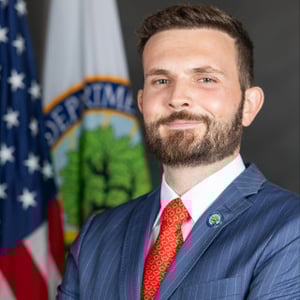
Fellow, Manhattan Institute
Tim Rosenberger serves as Senior Counsel at the United States Department of Education. He was previously a fellow at the Manhattan Institute and Stanford University’s Center for Entrepreneurial Studies. He was also the founding COO of Verbum Labs and serves as a Chaplain with the Cleveland Division of Police. Before matriculating to law school, he was a legal policy fellow at the Cicero Institute, a parish pastor, and a management consultant with McKinsey & Company.
Tim has contributed to a variety of academic, popular, and professional publications, including the Wall Street Journal, The Hill, The New York Post, and City Journal. He also regularly provides commentary for various media outlets, testifies before state legislatures, and files dozens of amicus curiae “friend of the court” briefs in the Supreme Court and various circuit courts.
He holds an AB from Georgetown University, a M.Div. from United Lutheran Seminary, a D.Min from the Rawlings School of Divinity, an LL.M. from Universität Wien, and a JD/MBA from Stanford University, where he was Federalist Society Chapter President and served on Law Review. Tim’s research interests lie at the intersection of law, faith, education and entrepreneurship—with a particular focus on leveraging policy to help America’s overlooked populations build lives of dignity.
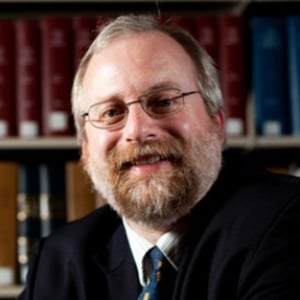
Pio Cardinal Laghi Distinguished Chair in Law, Professor and Co-director of the Terrence J. Murphy Institute for Catholic Thought, Law, and Public Policy, University of St. Thomas School of Law - Minnesota
Professor Gregory Sisk is the Pio Cardinal Laghi Distinguished Chair in Law at the University of St. Thomas School of Law in Minneapolis, Minnesota.
He received his B.A. from Montana State University and his J.D. from the University of Washington School of Law, where he graduated first in his class, was an editor on the law review, and president of the moot court board. Prior to joining the legal academy, he served as a legal advisor in all three branches of the federal government: as a legislative assistant to a U.S. Senator, as a law clerk to a U.S. Court of Appeals judge, and as an appellate attorney with the U.S. Department of Justice representing the United States in the courts of appeals and the Supreme Court. Subsequent to his government service, he was in private practice as the head of the appellate department of a Seattle law firm.
Professor Sisk joined the University of St. Thomas law faculty in 2003, after teaching for twelve years at the Drake University Law School, where he had also been named as the Richard M. & Anita Calkins Distinguished Professor. He teaches Professional Responsibility and Civil Procedure, as well as a new course with original materials on Litigation with the Federal Government. His casebook, "Litigation With the Federal Government: Cases and Materials," was published by Foundation Press in 2000 and has been adopted at several law schools, including Georgetown University, George Washington University, Catholic University, New York University, the University of Pittsburgh, and McGeorge School of Law.
Professor Sisk also is author of the leading treatise on the subject, "Litigation With the Federal Government," published as the fourth edition by ALI-ABA in 2006. He has published nearly three dozen articles on litigation with the federal government, judicial decisionmaking, awards of attorney's fees, professional responsibility, constitutional interpretation, law and religion, and tort reform. His articles have been cited by the United States Supreme Court, several federal courts of appeals, and the supreme courts of several states. His empirical study of judicial decisionmaking and the influence of judicial background, co-authored with Professors Michael Heise and Andrew Morriss, was published in the New York University Law Review and received the 1999 Article Prize from the Law and Society Association.
Professor Sisk has remained active as a member of the legal profession. He served as reporter for the Iowa Rules of Professional Conduct Drafting Committee appointed by the Iowa Supreme Court to draft the new set of ethics rules to govern lawyers in Iowa. He is a member of the American Law Institute, the nation's premier law reform organization. He maintains a limited practice, primarily as an appellate attorney and as an expert witness on professional ethics and conduct. For example, he briefed a leading environmental/federal-common-law case as counsel for amicus curiae and then was invited to argue the central issue before the U.S. Court of Appeals for the Ninth Circuit. More important than success on the merits, however, was the testament that the court gave to the attorneys in the case: "Litigation often produces criticism for its participants. This case, however, was extraordinarily well briefed and argued by consummate professionals on both sides and we are grateful for that." Atchison, Topeka & Santa Fe Railway Co. v. Brown & Bryant, Inc., 132 F.3d 1295, 1303 n.5 (9th Cir. 1997), amended, 159 F.3d 358, 365 n.6 (9th Cir. 1998).
Professor Sisk is also active with the Conference on Catholic Legal Thought, writing and speaking about religion and public life and the role of faith in professional life. He occasionally participates as a member of the Mirror of Justice blog, which present a diverse array of Catholic perspectives on the law, public life, and social justice.
J.D., University of Washington Law School
B.A., Montana State University
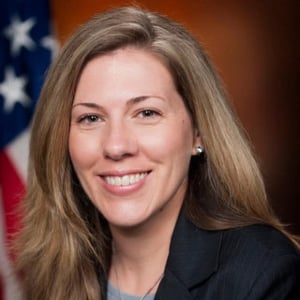
Former Chief, DOJ Tax Division, Appellate Section
Francesca Ugolini spent 22 years in the Appellate Section of DOJ’s Tax Division, where she directed all of the federal government’s civil tax litigation in the courts of appeals and assisted the Solicitor General’s office with tax cases in the Supreme Court. Ms. Ugolini received her JD from the University of Virginia School of Law and her B.S. from the University of Maryland at College Park.
Director, Robert A. Levy Center for Constitutional Studies, Cato Institute
Thomas Berry is the director in the Cato Institute’s Robert A. Levy Center for Constitutional Studies and editor in chief of the Cato Supreme Court Review. Before joining Cato, he was an attorney at Pacific Legal Foundation and clerked for Judge E. Grady Jolly of the U.S. Court of Appeals for the Fifth Circuit. His academic work has appeared in NYU Journal of Law and Liberty, Washington and Lee Law Review Online, and Federalist Society Review. His popular writing has appeared in The Wall Street Journal, National Law Journal, Investor’s Business Daily, National Review Online, and The Hill Online. He has testified before the U.S. Senate, and his work has been cited by the U.S. District Court for the District of Columbia.
Berry holds a J.D. from Stanford Law School, where he was a senior editor on the Stanford Law and Policy Review and a Bradley Student Fellow in the Stanford Constitutional Law Center. He graduated with a B.A. in Liberal Arts from St. John’s College, Santa Fe.
Milton R. Underwood Chair in Free Enterprise, Vanderbilt University Law School
Brian Fitzpatrick is the Milton R. Underwood Chair in Free Enterprise and Professor of Law at Vanderbilt Law School, where his research focuses on class action litigation, federal courts, judicial selection, and constitutional law. He is best known for his empirical studies of class action settlements as well as his book The Conservative Case for Class Actions (University of Chicago Press, 2019). Professor Fitzpatrick joined Vanderbilt's law faculty in 2007 after serving as the John M. Olin Fellow at New York University School of Law. He graduated first in his class from Harvard Law School and went on to clerk for Judge Diarmuid O'Scannlain on the U.S. Court of Appeals for the Ninth Circuit and Justice Antonin Scalia on the U.S. Supreme Court. After his clerkships, Professor Fitzpatrick practiced commercial and appellate litigation for several years at Sidley Austin in Washington, D.C., and served as Special Counsel for Supreme Court Nominations to U.S. Senator John Cornyn. Before earning his law degree, Fitzpatrick graduated summa cum laude with a bachelor's of science in chemical engineering from the University of Notre Dame. He has received the Hall-Hartman Outstanding Professor Award, which recognizes excellence in classroom teaching, for his Civil Procedure and Federal Courts courses.
Vice President & Senior Legal Fellow, Defending Education
Sarah Parshall Perry is vice president and senior legal fellow at Defending Education.
Before coming to Defending Education, Sarah served as a Senior Legal Fellow for the Edwin Meese III Center for Legal and Judicial Studies, part of the Institute for Constitutional Government at Heritage, where her work centered on civil rights and the proper role of the courts.
Sarah joined Heritage after serving as Senior Counsel to the Assistant Secretary for Civil Rights at the U.S. Department of Education where she focused on policy reform, technical guidance, and the Office for Civil Rights’ (OCR) annual report to Congress. While at OCR, she was appointed by the Acting Assistant Secretary to co-chair the Employment Engagement, Diversity, & Inclusion Council and, in coordination with the Deputy Assistant Secretary for Enforcement oversee the hiring of dozens of attorneys for OCR’s 12 regional offices nationwide. Prior to her tenure at the Department of Education, she spent six years at the Family Research Council in Washington, D.C. where she was Senior Fellow for Education Reform and later, became the regular substitute host for the “Washington Watch” radio show. Her work at the Family Research Council also included the building and oversight of multiple policy coalitions geared toward the fight against antisemitism in academia, curbing tech censorship, and protecting religious liberty.
Before joining FRC, Sarah was in-house counsel and director of development for a Baltimore advertising agency, providing management of all new business transactions from pitch to contract execution for the multi-million-dollar enterprise. She began her practice at the litigation firm of Simms Showers, LLP where her work included Title VII employment discrimination, maritime/admiralty, and False Claims Act (“Qui Tam”) law. Sarah has a law degree from the University of Virginia School of Law, where she was an editor of the Virginia Journal of International Law, a recipient of the American Jurisprudence award, a Phi Delta Phi honor society member, and a student practitioner in the appellate litigation clinic where she argued before the 4th Circuit Court of Appeals. She holds a B.S. in Journalism with honors from Liberty University.
Her commentary and analysis have appeared in media outlets across the country, including the AP, BBC, Fox News, NPR, The Hill, Washington Post, Washington Times, and the New York Times. She is the mother of three children, and the author of just as many books on the trials and triumphs of parenting children on the autism spectrum. Sarah is a member of the Kirkpatrick Society at the American Enterprise Institute, and makes her home north of Baltimore, Maryland.
General Counsel, United States Senator Jim Banks
Elle Bernstein serves as General Counsel to United States Senator Jim Banks (R-IN). In her capacity as General Counsel, Elle handles immigration policy, pro-life issues, and judicial nominations. Elle has served as counsel for amicus briefs on abortion and the Constitution, Title IX, and religious liberty. Her article, “Beyond Barbara: Towards A Jurisprudence of Nationhood,” is forthcoming in the Notre Dame Journal of Law, Ethics, and Public Policy.
Elle co-founded the Pro-Life Lawyers Caucus and is an executive committee member of the Federalist Society’s Immigration Practice Group. She has also held fellowships with the Claremont Institute, the James Wilson Institute, and Alliance Defending Freedom.
Previously, Elle was an Associate in the Washington, D.C. office of Gibson, Dunn & Crutcher LLP and clerked for the Honorable James C. Ho of the United States Court of Appeals for the Fifth Circuit.
Elle holds a B.A. in Philosophy from the King’s College and a J.D. from the University of Chicago Law School.
Fellow, Manhattan Institute
Tim Rosenberger serves as Senior Counsel at the United States Department of Education. He was previously a fellow at the Manhattan Institute and Stanford University’s Center for Entrepreneurial Studies. He was also the founding COO of Verbum Labs and serves as a Chaplain with the Cleveland Division of Police. Before matriculating to law school, he was a legal policy fellow at the Cicero Institute, a parish pastor, and a management consultant with McKinsey & Company.
Tim has contributed to a variety of academic, popular, and professional publications, including the Wall Street Journal, The Hill, The New York Post, and City Journal. He also regularly provides commentary for various media outlets, testifies before state legislatures, and files dozens of amicus curiae “friend of the court” briefs in the Supreme Court and various circuit courts.
He holds an AB from Georgetown University, a M.Div. from United Lutheran Seminary, a D.Min from the Rawlings School of Divinity, an LL.M. from Universität Wien, and a JD/MBA from Stanford University, where he was Federalist Society Chapter President and served on Law Review. Tim’s research interests lie at the intersection of law, faith, education and entrepreneurship—with a particular focus on leveraging policy to help America’s overlooked populations build lives of dignity.
Pio Cardinal Laghi Distinguished Chair in Law, Professor and Co-director of the Terrence J. Murphy Institute for Catholic Thought, Law, and Public Policy, University of St. Thomas School of Law - Minnesota
Professor Gregory Sisk is the Pio Cardinal Laghi Distinguished Chair in Law at the University of St. Thomas School of Law in Minneapolis, Minnesota.
He received his B.A. from Montana State University and his J.D. from the University of Washington School of Law, where he graduated first in his class, was an editor on the law review, and president of the moot court board. Prior to joining the legal academy, he served as a legal advisor in all three branches of the federal government: as a legislative assistant to a U.S. Senator, as a law clerk to a U.S. Court of Appeals judge, and as an appellate attorney with the U.S. Department of Justice representing the United States in the courts of appeals and the Supreme Court. Subsequent to his government service, he was in private practice as the head of the appellate department of a Seattle law firm.
Professor Sisk joined the University of St. Thomas law faculty in 2003, after teaching for twelve years at the Drake University Law School, where he had also been named as the Richard M. & Anita Calkins Distinguished Professor. He teaches Professional Responsibility and Civil Procedure, as well as a new course with original materials on Litigation with the Federal Government. His casebook, "Litigation With the Federal Government: Cases and Materials," was published by Foundation Press in 2000 and has been adopted at several law schools, including Georgetown University, George Washington University, Catholic University, New York University, the University of Pittsburgh, and McGeorge School of Law.
Professor Sisk also is author of the leading treatise on the subject, "Litigation With the Federal Government," published as the fourth edition by ALI-ABA in 2006. He has published nearly three dozen articles on litigation with the federal government, judicial decisionmaking, awards of attorney's fees, professional responsibility, constitutional interpretation, law and religion, and tort reform. His articles have been cited by the United States Supreme Court, several federal courts of appeals, and the supreme courts of several states. His empirical study of judicial decisionmaking and the influence of judicial background, co-authored with Professors Michael Heise and Andrew Morriss, was published in the New York University Law Review and received the 1999 Article Prize from the Law and Society Association.
Professor Sisk has remained active as a member of the legal profession. He served as reporter for the Iowa Rules of Professional Conduct Drafting Committee appointed by the Iowa Supreme Court to draft the new set of ethics rules to govern lawyers in Iowa. He is a member of the American Law Institute, the nation's premier law reform organization. He maintains a limited practice, primarily as an appellate attorney and as an expert witness on professional ethics and conduct. For example, he briefed a leading environmental/federal-common-law case as counsel for amicus curiae and then was invited to argue the central issue before the U.S. Court of Appeals for the Ninth Circuit. More important than success on the merits, however, was the testament that the court gave to the attorneys in the case: "Litigation often produces criticism for its participants. This case, however, was extraordinarily well briefed and argued by consummate professionals on both sides and we are grateful for that." Atchison, Topeka & Santa Fe Railway Co. v. Brown & Bryant, Inc., 132 F.3d 1295, 1303 n.5 (9th Cir. 1997), amended, 159 F.3d 358, 365 n.6 (9th Cir. 1998).
Professor Sisk is also active with the Conference on Catholic Legal Thought, writing and speaking about religion and public life and the role of faith in professional life. He occasionally participates as a member of the Mirror of Justice blog, which present a diverse array of Catholic perspectives on the law, public life, and social justice.
J.D., University of Washington Law School
B.A., Montana State University
Former Chief, DOJ Tax Division, Appellate Section
Francesca Ugolini spent 22 years in the Appellate Section of DOJ’s Tax Division, where she directed all of the federal government’s civil tax litigation in the courts of appeals and assisted the Solicitor General’s office with tax cases in the Supreme Court. Ms. Ugolini received her JD from the University of Virginia School of Law and her B.S. from the University of Maryland at College Park.
Director, Robert A. Levy Center for Constitutional Studies, Cato Institute
Thomas Berry is the director in the Cato Institute’s Robert A. Levy Center for Constitutional Studies and editor in chief of the Cato Supreme Court Review. Before joining Cato, he was an attorney at Pacific Legal Foundation and clerked for Judge E. Grady Jolly of the U.S. Court of Appeals for the Fifth Circuit. His academic work has appeared in NYU Journal of Law and Liberty, Washington and Lee Law Review Online, and Federalist Society Review. His popular writing has appeared in The Wall Street Journal, National Law Journal, Investor’s Business Daily, National Review Online, and The Hill Online. He has testified before the U.S. Senate, and his work has been cited by the U.S. District Court for the District of Columbia.
Berry holds a J.D. from Stanford Law School, where he was a senior editor on the Stanford Law and Policy Review and a Bradley Student Fellow in the Stanford Constitutional Law Center. He graduated with a B.A. in Liberal Arts from St. John’s College, Santa Fe.
Partner, Boyden Gray PLLC
Jimmy Conde is partner at Boyden Gray PLLC, specializing in energy, environmental, and administrative law, with particular expertise in the Clean Air Act. He has protected clients against agency overreach in cutting-edge and complex legal proceedings, including challenges to EPA, DOE, DOT, and California rules seeking to compel electrification of motor vehicles, the FCC’s universal service fund, Department of Labor Wage & Hour Division rules, and HHS rules interfering with the practice of medicine and sound insurance practices. His written commentary has been published and referenced in the Wall Street Journal, the Washington Examiner, Concurrences (an antitrust publication), and Newsweek, among others.
Mr. Conde began his legal career as an associate with Boyden Gray PLLC. He clerked for Judge Douglas H. Ginsburg in the U.S. Court of Appeals for the D.C. Circuit and Judge David J. Porter in the U.S. Court of Appeals for the Third Circuit.
Associate Chief Counsel, U.S. Chamber Litigation Center, U.S. Chamber of Commerce
Maria C. Monaghan is associate chief counsel at the U.S. Chamber Litigation Center, the litigation arm of the U.S. Chamber of Commerce. In this capacity, she handles a variety of litigation matters for the Chamber.
Before joining the Litigation Center, Monaghan practiced as an associate in the D.C. office of Gibson, Dunn & Crutcher LLP. She represented clients in the telecommunications, energy, transportation, and e-commerce sectors, with a focus on appellate litigation and regulatory matters.
Monaghan served as a law clerk to the Honorable Samuel A. Alito of the United States Supreme Court, the Honorable Ed Carnes of the U.S. Court of Appeals for the Eleventh Circuit, and the Honorable Amul R. Thapar of the U.S. Court of Appeals for the Sixth Circuit. She graduated Order of the Coif from the University of Virginia School of Law, where she served as Articles Development Editor for the Virginia Law Review and participated in the Supreme Court Litigation Clinic. She received her undergraduate degree in Human Resource Management and Labor Studies from Rutgers University.
Senior Counsel, America First Legal Foundation
James Rogers is Senior Counsel at America First Legal Foundation, where he litigates in a number of areas, including border security, election integrity, parental rights, and administrative and constitutional law. Before joining America First Legal, from 2021 to 2022, he was Senior Litigation Counsel at the Solicitor General’s Office of the Arizona Attorney General’s Office. While there, he spearheaded lawsuits against the Biden Administration’s destructive open borders policies and its COVID19 vaccine mandates. From 2015 to 2021, James was a Foreign Service Officer at the U.S. Department of State, where he worked in the Office of the Assistant Legal Advisor for Consular Affairs, at the U.S. Consulate in Porto Alegre, Brazil, and at the U.S. Embassy in Windhoek, Namibia.
Prior to joining the Department of State, he was a commercial litigation partner at Osborn Maledon, a Phoenix-based firm with a #1 litigation ranking from Chambers and Partners. James earned a J.D. from Harvard Law School in 2009, an L.L.M. in International Law from the University of Cambridge in 2008, and a B.A., with honors, in International Studies from Brigham Young University in 2005. He is a sixth-generation Arizonan and lives in Mesa, Arizona, with his four children.
Partner, Marshall, Gerstein & Borun LLP
Ryan Schermerhorn is a registered patent attorney in the firm's Industrial & Mechanical Technologies Practice Group. His engineering background provides him with an understanding of clients’ technologies and enables him to effectively and efficiently provide a range of patent procurement services. He also leverages his experience to assist on intellectual property litigation as well as develop strategies for acquiring and protecting intellectual property.
Since 2017, Ryan has been listed as an "Emerging Lawyer" by Emerging Lawyers Magazine and has been selected for inclusion in the Illinois Rising Stars® lists. Ryan was recognized in Chicago Daily Law Bulletin's 2023 40 Under Forty list. Since 2024, Ryan has been selected for inclusion in The Best Lawyers in America© list in the practice areas of Litigation - Patent and Patent Law. In 2025, Ryan was selected by the Law Bulletin Publishing Company’s Leading Lawyer Network as a “Leading Lawyer.”
Associate, Consovoy McCarthy PLLC
Ms. Bates assists clients with a variety of litigation and appellate matters that encompass constitutional law, administrative law, and commercial litigation. Before joining the firm, Ms. Bates was a law clerk to Judge Kyle Duncan of the U.S. Court of Appeals for the Fifth Circuit. She previously served as a Legal Policy Analyst at the Heritage Foundation, where she researched and wrote about the courts, judicial nominations, and various constitutional issues. She also co-hosted Heritage’s SCOTUS 101 podcast. She earned her B.A. magna cum laude in Politics from Hillsdale College, and her J.D. from the Antonin Scalia Law School at George Mason University. Ms. Bates is a member of the Virginia Bar.
Founding Partner, Benbrook Law Group
Brad has litigated business and public policy matters throughout the United States for over 25 years. He represents businesses of all sizes in civil litigation and disputes with administrative agencies. Brad also regularly represents individuals and groups in constitutional and public policy litigation in the trial and appellate courts. He regularly submits amicus briefs on behalf of clients at the Supreme Court of the United States on significant cases. Brad is often hired as special litigation counsel in complex family law, bankruptcy, and trust and estate litigation.
After graduating from law school, Brad worked as a judicial clerk for Judge J.L. Edmondson of the United States Court of Appeals for the Eleventh Circuit in Atlanta. Brad received his law degree from the University of California at Berkeley after graduating from Stanford University, where he was a four-year letterman on the golf team.
Counsel, Schaerr Jaffe LLP
Stephanie Freudenberg is a litigator who has represented a broad range of public and private clients, including global financial institutions and Fortune 500 companies, in complex commercial litigation matters at all stages of litigation, from discovery at the trial court level through merits briefing on appeal. She has handled a wide range of cases involving securities litigation and enforcement, products liability, contractual disputes, antitrust, white collar defense, and other issues.
After law school, Stephanie clerked for the Honorable Robert B. Kugler on the U.S. District Court for the District of New Jersey and the Honorable Edith Brown Clement on the U.S. Court of Appeals for the Fifth Circuit. Following those clerkships, she spent over five years in litigation practice with the New York and Washington, D.C. offices of the law firm of Sullivan & Cromwell.
Stephanie graduated from Harvard Law School, where she was deputy editor-in-chief for the Harvard Journal of Law and Public Policy and the recipient of five Dean’s Scholar Prizes. She received her undergraduate degree from Princeton University.
She joined Schaerr Jaffe as counsel in November 2024.
Senior Litigation Counsel, New Civil Liberties Alliance
Jacob Huebert is Senior Litigation Counsel at the New Civil Liberties Alliance. He previously served as President and Director of Litigation of the Liberty Justice Center, where he successfully litigated cases to protect constitutional rights, including the landmark Janus v. AFSCME case, in which the U.S. Supreme Court upheld government employees’ First Amendment right to choose for themselves whether to pay money to a union. Jacob was also previously a Senior Attorney at the Goldwater Institute, where he litigated cases on free speech, property rights, and the Second Amendment.
Jacob and his work have appeared in numerous national media outlets, including the Wall Street Journal, New York Times, and Fox News Channel. He is also the author of a book, Libertarianism Today.
Jacob holds a B.A. in economics from Grove City College and a J.D. from the University of Chicago Law School. After law school, he served as a clerk to Judge Deborah Cook of the U.S. Court of Appeals for the Sixth Circuit. Jacob has served as an adjunct law professor at several law schools, teaching courses in advanced appellate advocacy, the law of payments, legal writing, and jurisprudence. Before working in public interest law, Jacob was a litigator in private practice.
Deputy Attorney General, Legal Strategy, Texas
Ryan serves as Deputy Attorney General for Legal Strategy in the Texas Attorney General's Leadership Team. He most recently acted as Associate Deputy Attorney General for Civil Litigation. For the previous four years, Mr. Walters served in the Special Litigation Division—as Special Counsel, Deputy Chief, and eventually Chief. In those positions, he led the Attorney General's most significant litigation against the Biden Administration, including successful challenges to federal rules weakening immigration enforcement and those imposing gender-identity mandates on Texas's workplaces, schools, and hospitals. Prior to his tenure in the Office of the Attorney General, Mr. Walters served as an attorney with the Texas Public Policy Foundation, as an Assistant Attorney General in the Ohio Attorney General’s Office, and as a commercial litigator at two international law firms. He is a graduate of The Ohio State University and holds law degrees from the University of Michigan Law School and the University of California, Berkeley, School of Law.
General Counsel, United States Senator Jim Banks
Elle Bernstein serves as General Counsel to United States Senator Jim Banks (R-IN). In her capacity as General Counsel, Elle handles immigration policy, pro-life issues, and judicial nominations. Elle has served as counsel for amicus briefs on abortion and the Constitution, Title IX, and religious liberty. Her article, “Beyond Barbara: Towards A Jurisprudence of Nationhood,” is forthcoming in the Notre Dame Journal of Law, Ethics, and Public Policy.
Elle co-founded the Pro-Life Lawyers Caucus and is an executive committee member of the Federalist Society’s Immigration Practice Group. She has also held fellowships with the Claremont Institute, the James Wilson Institute, and Alliance Defending Freedom.
Previously, Elle was an Associate in the Washington, D.C. office of Gibson, Dunn & Crutcher LLP and clerked for the Honorable James C. Ho of the United States Court of Appeals for the Fifth Circuit.
Elle holds a B.A. in Philosophy from the King’s College and a J.D. from the University of Chicago Law School.
Director, Robert A. Levy Center for Constitutional Studies, Cato Institute
Thomas Berry is the director in the Cato Institute’s Robert A. Levy Center for Constitutional Studies and editor in chief of the Cato Supreme Court Review. Before joining Cato, he was an attorney at Pacific Legal Foundation and clerked for Judge E. Grady Jolly of the U.S. Court of Appeals for the Fifth Circuit. His academic work has appeared in NYU Journal of Law and Liberty, Washington and Lee Law Review Online, and Federalist Society Review. His popular writing has appeared in The Wall Street Journal, National Law Journal, Investor’s Business Daily, National Review Online, and The Hill Online. He has testified before the U.S. Senate, and his work has been cited by the U.S. District Court for the District of Columbia.
Berry holds a J.D. from Stanford Law School, where he was a senior editor on the Stanford Law and Policy Review and a Bradley Student Fellow in the Stanford Constitutional Law Center. He graduated with a B.A. in Liberal Arts from St. John’s College, Santa Fe.
Milton R. Underwood Chair in Free Enterprise, Vanderbilt University Law School
Brian Fitzpatrick is the Milton R. Underwood Chair in Free Enterprise and Professor of Law at Vanderbilt Law School, where his research focuses on class action litigation, federal courts, judicial selection, and constitutional law. He is best known for his empirical studies of class action settlements as well as his book The Conservative Case for Class Actions (University of Chicago Press, 2019). Professor Fitzpatrick joined Vanderbilt's law faculty in 2007 after serving as the John M. Olin Fellow at New York University School of Law. He graduated first in his class from Harvard Law School and went on to clerk for Judge Diarmuid O'Scannlain on the U.S. Court of Appeals for the Ninth Circuit and Justice Antonin Scalia on the U.S. Supreme Court. After his clerkships, Professor Fitzpatrick practiced commercial and appellate litigation for several years at Sidley Austin in Washington, D.C., and served as Special Counsel for Supreme Court Nominations to U.S. Senator John Cornyn. Before earning his law degree, Fitzpatrick graduated summa cum laude with a bachelor's of science in chemical engineering from the University of Notre Dame. He has received the Hall-Hartman Outstanding Professor Award, which recognizes excellence in classroom teaching, for his Civil Procedure and Federal Courts courses.
Vice President & Senior Legal Fellow, Defending Education
Sarah Parshall Perry is vice president and senior legal fellow at Defending Education.
Before coming to Defending Education, Sarah served as a Senior Legal Fellow for the Edwin Meese III Center for Legal and Judicial Studies, part of the Institute for Constitutional Government at Heritage, where her work centered on civil rights and the proper role of the courts.
Sarah joined Heritage after serving as Senior Counsel to the Assistant Secretary for Civil Rights at the U.S. Department of Education where she focused on policy reform, technical guidance, and the Office for Civil Rights’ (OCR) annual report to Congress. While at OCR, she was appointed by the Acting Assistant Secretary to co-chair the Employment Engagement, Diversity, & Inclusion Council and, in coordination with the Deputy Assistant Secretary for Enforcement oversee the hiring of dozens of attorneys for OCR’s 12 regional offices nationwide. Prior to her tenure at the Department of Education, she spent six years at the Family Research Council in Washington, D.C. where she was Senior Fellow for Education Reform and later, became the regular substitute host for the “Washington Watch” radio show. Her work at the Family Research Council also included the building and oversight of multiple policy coalitions geared toward the fight against antisemitism in academia, curbing tech censorship, and protecting religious liberty.
Before joining FRC, Sarah was in-house counsel and director of development for a Baltimore advertising agency, providing management of all new business transactions from pitch to contract execution for the multi-million-dollar enterprise. She began her practice at the litigation firm of Simms Showers, LLP where her work included Title VII employment discrimination, maritime/admiralty, and False Claims Act (“Qui Tam”) law. Sarah has a law degree from the University of Virginia School of Law, where she was an editor of the Virginia Journal of International Law, a recipient of the American Jurisprudence award, a Phi Delta Phi honor society member, and a student practitioner in the appellate litigation clinic where she argued before the 4th Circuit Court of Appeals. She holds a B.S. in Journalism with honors from Liberty University.
Her commentary and analysis have appeared in media outlets across the country, including the AP, BBC, Fox News, NPR, The Hill, Washington Post, Washington Times, and the New York Times. She is the mother of three children, and the author of just as many books on the trials and triumphs of parenting children on the autism spectrum. Sarah is a member of the Kirkpatrick Society at the American Enterprise Institute, and makes her home north of Baltimore, Maryland.
Fellow, Manhattan Institute
Tim Rosenberger serves as Senior Counsel at the United States Department of Education. He was previously a fellow at the Manhattan Institute and Stanford University’s Center for Entrepreneurial Studies. He was also the founding COO of Verbum Labs and serves as a Chaplain with the Cleveland Division of Police. Before matriculating to law school, he was a legal policy fellow at the Cicero Institute, a parish pastor, and a management consultant with McKinsey & Company.
Tim has contributed to a variety of academic, popular, and professional publications, including the Wall Street Journal, The Hill, The New York Post, and City Journal. He also regularly provides commentary for various media outlets, testifies before state legislatures, and files dozens of amicus curiae “friend of the court” briefs in the Supreme Court and various circuit courts.
He holds an AB from Georgetown University, a M.Div. from United Lutheran Seminary, a D.Min from the Rawlings School of Divinity, an LL.M. from Universität Wien, and a JD/MBA from Stanford University, where he was Federalist Society Chapter President and served on Law Review. Tim’s research interests lie at the intersection of law, faith, education and entrepreneurship—with a particular focus on leveraging policy to help America’s overlooked populations build lives of dignity.
Pio Cardinal Laghi Distinguished Chair in Law, Professor and Co-director of the Terrence J. Murphy Institute for Catholic Thought, Law, and Public Policy, University of St. Thomas School of Law - Minnesota
Professor Gregory Sisk is the Pio Cardinal Laghi Distinguished Chair in Law at the University of St. Thomas School of Law in Minneapolis, Minnesota.
He received his B.A. from Montana State University and his J.D. from the University of Washington School of Law, where he graduated first in his class, was an editor on the law review, and president of the moot court board. Prior to joining the legal academy, he served as a legal advisor in all three branches of the federal government: as a legislative assistant to a U.S. Senator, as a law clerk to a U.S. Court of Appeals judge, and as an appellate attorney with the U.S. Department of Justice representing the United States in the courts of appeals and the Supreme Court. Subsequent to his government service, he was in private practice as the head of the appellate department of a Seattle law firm.
Professor Sisk joined the University of St. Thomas law faculty in 2003, after teaching for twelve years at the Drake University Law School, where he had also been named as the Richard M. & Anita Calkins Distinguished Professor. He teaches Professional Responsibility and Civil Procedure, as well as a new course with original materials on Litigation with the Federal Government. His casebook, "Litigation With the Federal Government: Cases and Materials," was published by Foundation Press in 2000 and has been adopted at several law schools, including Georgetown University, George Washington University, Catholic University, New York University, the University of Pittsburgh, and McGeorge School of Law.
Professor Sisk also is author of the leading treatise on the subject, "Litigation With the Federal Government," published as the fourth edition by ALI-ABA in 2006. He has published nearly three dozen articles on litigation with the federal government, judicial decisionmaking, awards of attorney's fees, professional responsibility, constitutional interpretation, law and religion, and tort reform. His articles have been cited by the United States Supreme Court, several federal courts of appeals, and the supreme courts of several states. His empirical study of judicial decisionmaking and the influence of judicial background, co-authored with Professors Michael Heise and Andrew Morriss, was published in the New York University Law Review and received the 1999 Article Prize from the Law and Society Association.
Professor Sisk has remained active as a member of the legal profession. He served as reporter for the Iowa Rules of Professional Conduct Drafting Committee appointed by the Iowa Supreme Court to draft the new set of ethics rules to govern lawyers in Iowa. He is a member of the American Law Institute, the nation's premier law reform organization. He maintains a limited practice, primarily as an appellate attorney and as an expert witness on professional ethics and conduct. For example, he briefed a leading environmental/federal-common-law case as counsel for amicus curiae and then was invited to argue the central issue before the U.S. Court of Appeals for the Ninth Circuit. More important than success on the merits, however, was the testament that the court gave to the attorneys in the case: "Litigation often produces criticism for its participants. This case, however, was extraordinarily well briefed and argued by consummate professionals on both sides and we are grateful for that." Atchison, Topeka & Santa Fe Railway Co. v. Brown & Bryant, Inc., 132 F.3d 1295, 1303 n.5 (9th Cir. 1997), amended, 159 F.3d 358, 365 n.6 (9th Cir. 1998).
Professor Sisk is also active with the Conference on Catholic Legal Thought, writing and speaking about religion and public life and the role of faith in professional life. He occasionally participates as a member of the Mirror of Justice blog, which present a diverse array of Catholic perspectives on the law, public life, and social justice.
J.D., University of Washington Law School
B.A., Montana State University
Former Chief, DOJ Tax Division, Appellate Section
Francesca Ugolini spent 22 years in the Appellate Section of DOJ’s Tax Division, where she directed all of the federal government’s civil tax litigation in the courts of appeals and assisted the Solicitor General’s office with tax cases in the Supreme Court. Ms. Ugolini received her JD from the University of Virginia School of Law and her B.S. from the University of Maryland at College Park.

A Seat at the Sitting - April 2026
Thomas Berry, James Conde, Maria Monaghan, James Rogers, Ryan Schermerhorn
Each month, a panel of constitutional experts convenes to discuss the Court’s upcoming docket sitting...
A Seat at the Sitting - April 2026
Thomas Berry, James Conde, Maria Monaghan, James Rogers, Ryan Schermerhorn
Each month, a panel of constitutional experts convenes to discuss the Court’s upcoming docket sitting...
A Seat at the Sitting - April 2026
A Seat at the Sitting - January 2026
Tiffany H. Bates, Bradley A. Benbrook, Stephanie Lee Freudenberg, Jacob H. Huebert, Ryan Daniel Walters
Each month, a panel of constitutional experts convenes to discuss the Court’s upcoming docket sitting...
A Seat at the Sitting - January 2026
Tiffany H. Bates, Bradley A. Benbrook, Stephanie Lee Freudenberg, Jacob H. Huebert, Ryan Daniel Walters
Each month, a panel of constitutional experts convenes to discuss the Court’s upcoming docket sitting...
A Seat at the Sitting - January 2026
The January Docket in 90 Minutes or Less
Structure Over Spectacle: The Supreme Court's 2024 Term
Donald A. Daugherty, David C. Tryon
After several years of headline-grabbing decisions that reshaped national political debate—from abortion and affirmative action...
A Seat at the Sitting - April 2025
Thomas Berry, Brian T. Fitzpatrick, Sarah Parshall Perry, Elle Rogers Bernstein, Tim Rosenberger, Gregory Sisk, Francesca Ugolini
Each month, a panel of constitutional experts convenes to discuss the Court’s upcoming docket sitting...
A Seat at the Sitting - April 2025
Thomas Berry, Brian T. Fitzpatrick, Sarah Parshall Perry, Elle Rogers Bernstein, Tim Rosenberger, Gregory Sisk, Francesca Ugolini
Each month, a panel of constitutional experts convenes to discuss the Court’s upcoming docket sitting...
A Seat at the Sitting - April 2025
The April Docket in 90 Minutes or Less