
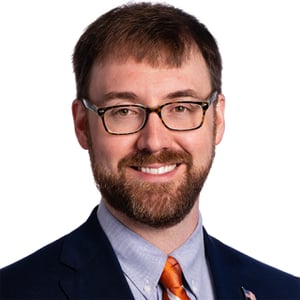
Senior Legal Fellow, Courts and the Constitution, Legal Policy Center, The Heritage Foundation
Zack is a Senior Legal Fellow of Courts and the Constitution at The Heritage Foundation.
He previously served for several years as an Assistant United States Attorney in the Northern District of Florida. Prior to that, he spent two years as an associate in the Washington, D.C. office of Cleary Gottlieb Steen & Hamilton, which he joined after clerking for the Hon. Emmett R. Cox on the United States Court of Appeals for the Eleventh Circuit.
Smith received his undergraduate, master’s, and law degrees from the University of Florida. During law school, Smith served as the Editor in Chief of the Florida Law Review and served on the executive boards of several student organizations, including the UF Chapter of the Federalist Society.
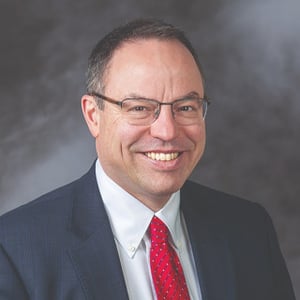
Professor of Law and J. Philip Johnson Faculty Fellow, University of North Dakota School of Law
Michael S. McGinniss is Professor of Law and J. Philip Johnson Faculty Fellow at the University of North Dakota School of Law, where he joined the faculty in 2010 and served as the Dean from 2019 to 2022. He chairs the executive committee for the Federalist Society's Practice Group on Professional Responsibility and Legal Education.
Before entering the legal academy, Professor McGinniss served for twelve years as a Disciplinary Counsel for the Supreme Court of Delaware. He currently teaches courses on Professional Responsibility, Advanced Legal Ethics, Civil Procedure, and Federal Courts. He also serves as Faculty Advisor for the North Dakota Law Review and the UND Law Federalist Society student chapter.
Professor McGinniss’ research and scholarship interests are wide-ranging and include lawyer and judicial ethics, lawyer discipline and regulation of the profession, constitutional law (especially First Amendment, separation of powers, and federalism), and cultural challenges faced by conservatives in the law schools and the legal profession. His most recent law review article, Declaring Independence to Secure Integrity: The Supreme Court Justices' Code of Conduct, was published in the Federalist Society Review. His article Expressing Conscience with Candor: Saint Thomas More and First Freedoms in the Legal Profession, was published in the Harvard Journal of Law & Public Policy.
Professor McGinniss has spoken to Federalist Society lawyer and student chapters across the country about judicial independence and ethics, especially relating to the federal courts and the United States Supreme Court Justices. In addition, he has spoken to several chapters about rising challenges to ideological diversity and targeting of conservative viewpoints in law schools and the legal profession. Although he is very pleased to speak on these and many other topics that may be of interest to lawyer and student chapters, in 2026-2027, he has particular interest in speaking on the topic “Lawyer Discipline as Political ‘Resistance’: Separation of Powers, Federalism, and the Rule of Law,” concerning his work-in-progress on the weaponization of professional disciplinary processes against conservative lawyers for political and ideological purposes.
Eric Criss is an independent scholar who recently published The Boss of New Orleans: Martin Behrman and Machine Politics in the Crescent City with the LSU Press. He taught advanced public policy at Florida State University, where he earned his PhD in history. Eric earned his MA in Government at John's Hopkins University and BA in Political Science at the University of Florida. Eric began his career with U.S. Senators Don Nickles of Oklahoma and Phil Gramm of Texas at the National Republican Senatorial Committee in Washington, D.C. He later served as staff member or consultant to Fortune 500 corporations, political parties, and presidential, congressional, and gubernatorial campaigns.

Senior Legal Fellow, Advancing American Freedom
Amy Swearer is a leading national expert on a wide range of public policy, legal, and constitutional issues, including the Second Amendment, criminal justice, and mental health policy. She has long been a respected conservative voice on gun policy and is routinely asked to testify before state and federal legislative bodies. Her work on birthright citizenship, meanwhile, has been featured extensively in litigation over the meaning of the Fourteenth Amendment’s Citizenship Clause.
Swearer was formerly a Senior Legal Fellow in the Edwin Meese III Center for Legal & Judicial Studies at the Heritage Foundation. At Heritage, she ran the Defensive Gun Use Database and was the primary author of the e-book “The Essential Second Amendment.” She was also a driving force behind the organization’s School Safety Initiative.
She was the 2022 recipient of the Heritage Foundation’s Joseph Shattan Award for “writing that presents conservative ideas in a powerful and compelling fashion to policymakers and the American people.” She was also named the Second Amendment Institute’s 2022 Gun Rights Champion.
Swearer received her law degree from the University of Nebraska College of Law and was a member of the Nebraska Law Review. She holds a B.S. in Criminology & Criminal Justice from the University of Nebraska, where she was a Chancellor’s Scholar and a goalkeeper on the women’s soccer team

Samuel H. McCoy II Professor of Law, University of Virginia School of Law
John F. Duffy is the Samuel H. McCoy II Professor of Law and Class of 1966 Research Professor of Law at the University of Virginia School of Law, where he teaches administrative law, torts and intellectual property. Professor Duffy has published articles on a wide range of administrative law and regulatory issues in journals such as University of Chicago Law Review, Yale Law Journal, Stanford Law Review, Virginia Law Review, Columbia Law Review, Texas Law Review, Northwestern University Law Review, NYU Law Review, University of Pennsylvania Law Review and the Supreme Court Review. His 1998 article Administrative Common Law in Judicial Review, 77 Tex. L. Rev. 113 (1998), was one of the first articles to criticize the Chevron doctrine as being irreconcilable with § 706 of the APA; it won the American Bar Association’s Scholarship Award in Administrative Law. His 2008 article “Are Administrative Patent Judges Unconstitutional?” was covered on National Public Radio), in the New York Times (Adam Liptak, In One Flaw, Questions on Validity of 46 Judges, May 6, 2008), and in the Wall Street Journal (Dan Slater, Patently Unconstitutional, May 6, 2008). The NYT and WSJ agreed that he was “a different kind of law professor,” “one of the lucky few” whose “writings actually wind up changing the law.”
As an attorney in the courts, Duffy has twice successfully convinced the Supreme Court to overturn lower court doctrines that had been applied in many cases over decades but that were unanimously held to be irreconcilable with Supreme Court precedents. See TC Heartland v. Kraft Foods Group Brands, 581 U.S. 258 (2017); KSR v. Teleflex, 550 U.S. 398 (2007).
Prior to entering legal academics, Duffy clerked on the D.C. Circuit for Stephen Williams and on the Supreme Court for Antonin Scalia. While clerking, he became known as Justice Scalia’s “hapless law clerk,” who had been tasked with unearthing three-quarters of a century of legislative history that made “no difference” to the outcome in an otherwise forgettable case. See Conroy v. Aniskoff, 507 U.S. 511, 527-28 (1993) (Scalia, J., concurring in the judgment).
In earlier days, Duffy enjoyed being a professional blackjack player unwelcome in all Atlantic City casinos and a semi-professional road runner (best marathon time 2:24:33). He holds an A.B. in physics from Harvard and a J.D. from the University of Chicago.
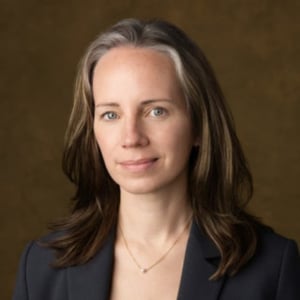
Senior Fellow in Executive Power, Cato Institute
Molly Nixon is a senior fellow at the Cato Institute, where she focuses on the scope, use, and history of executive power as well as its limits under the Constitution. Molly was previously an attorney with Pacific Legal Foundation’s separation of powers practice, where she litigated cases challenging congressional delegations of legislative power and executive branch overreach. Before that, she served as an Attorney-Advisor at the Department of the Interior and as Legislative Counsel for Congressman Justin Amash.
Molly holds a J.D. from New York University School of Law and a B.A. in History and International Relations from Boston University. She clerked for the U.S. District Court for the District of Alaska and practiced law at a firm in New York City for several years before moving to Washington, D.C.
Samuel H. McCoy II Professor of Law, University of Virginia School of Law
John F. Duffy is the Samuel H. McCoy II Professor of Law and Class of 1966 Research Professor of Law at the University of Virginia School of Law, where he teaches administrative law, torts and intellectual property. Professor Duffy has published articles on a wide range of administrative law and regulatory issues in journals such as University of Chicago Law Review, Yale Law Journal, Stanford Law Review, Virginia Law Review, Columbia Law Review, Texas Law Review, Northwestern University Law Review, NYU Law Review, University of Pennsylvania Law Review and the Supreme Court Review. His 1998 article Administrative Common Law in Judicial Review, 77 Tex. L. Rev. 113 (1998), was one of the first articles to criticize the Chevron doctrine as being irreconcilable with § 706 of the APA; it won the American Bar Association’s Scholarship Award in Administrative Law. His 2008 article “Are Administrative Patent Judges Unconstitutional?” was covered on National Public Radio), in the New York Times (Adam Liptak, In One Flaw, Questions on Validity of 46 Judges, May 6, 2008), and in the Wall Street Journal (Dan Slater, Patently Unconstitutional, May 6, 2008). The NYT and WSJ agreed that he was “a different kind of law professor,” “one of the lucky few” whose “writings actually wind up changing the law.”
As an attorney in the courts, Duffy has twice successfully convinced the Supreme Court to overturn lower court doctrines that had been applied in many cases over decades but that were unanimously held to be irreconcilable with Supreme Court precedents. See TC Heartland v. Kraft Foods Group Brands, 581 U.S. 258 (2017); KSR v. Teleflex, 550 U.S. 398 (2007).
Prior to entering legal academics, Duffy clerked on the D.C. Circuit for Stephen Williams and on the Supreme Court for Antonin Scalia. While clerking, he became known as Justice Scalia’s “hapless law clerk,” who had been tasked with unearthing three-quarters of a century of legislative history that made “no difference” to the outcome in an otherwise forgettable case. See Conroy v. Aniskoff, 507 U.S. 511, 527-28 (1993) (Scalia, J., concurring in the judgment).
In earlier days, Duffy enjoyed being a professional blackjack player unwelcome in all Atlantic City casinos and a semi-professional road runner (best marathon time 2:24:33). He holds an A.B. in physics from Harvard and a J.D. from the University of Chicago.
Senior Fellow in Executive Power, Cato Institute
Molly Nixon is a senior fellow at the Cato Institute, where she focuses on the scope, use, and history of executive power as well as its limits under the Constitution. Molly was previously an attorney with Pacific Legal Foundation’s separation of powers practice, where she litigated cases challenging congressional delegations of legislative power and executive branch overreach. Before that, she served as an Attorney-Advisor at the Department of the Interior and as Legislative Counsel for Congressman Justin Amash.
Molly holds a J.D. from New York University School of Law and a B.A. in History and International Relations from Boston University. She clerked for the U.S. District Court for the District of Alaska and practiced law at a firm in New York City for several years before moving to Washington, D.C.

Appellate Counsel, Theodore Cooperstein PLLC
Theodore Cooperstein currently is an appellate attorney in the boutique law firm of Theodore Cooperstein PLLC, available for criminal and civil appeals in both state and federal courts. A former career prosecutor with twenty five years of service in the US Department of Justice, he was an Assistant United States Attorney for the Southern District of Florida and the Southern District of Mississippi, and has served as a Military Intelligence Officer in the Army Reserves from 1989 to 2011, retiring with the rank of Lieutenant Colonel. During the Trump Administration, he was appointed and served as the General Counsel of the U.S. Office of Personnel Management. Prior to joining the Southern District of Florida, Mr. Cooperstein served as a Special Assistant U.S. Attorney in the U.S. Attorney's Office for the District of Maryland. He previously had served as Counsel to the Deputy Attorney General at the Department of Justice, and as Assistant General Counsel in the FBI Office of the General Counsel.
A.B., Dartmouth College; J.D., Stanford University; LL.M., Comparative and International Law, Georgetown University Law Center; Masters of Strategic Studies, U.S. Army War College
Appellate Counsel, Theodore Cooperstein PLLC
Theodore Cooperstein currently is an appellate attorney in the boutique law firm of Theodore Cooperstein PLLC, available for criminal and civil appeals in both state and federal courts. A former career prosecutor with twenty five years of service in the US Department of Justice, he was an Assistant United States Attorney for the Southern District of Florida and the Southern District of Mississippi, and has served as a Military Intelligence Officer in the Army Reserves from 1989 to 2011, retiring with the rank of Lieutenant Colonel. During the Trump Administration, he was appointed and served as the General Counsel of the U.S. Office of Personnel Management. Prior to joining the Southern District of Florida, Mr. Cooperstein served as a Special Assistant U.S. Attorney in the U.S. Attorney's Office for the District of Maryland. He previously had served as Counsel to the Deputy Attorney General at the Department of Justice, and as Assistant General Counsel in the FBI Office of the General Counsel.
A.B., Dartmouth College; J.D., Stanford University; LL.M., Comparative and International Law, Georgetown University Law Center; Masters of Strategic Studies, U.S. Army War College

Senior Fellow and Director of Constitutional Studies, Manhattan Institute
Ilya Shapiro is a senior fellow and director of constitutional studies at the Manhattan Institute and a contributing editor of City Journal. Previously he was executive director and senior lecturer at the Georgetown Center for the Constitution, and before that a vice president of the Cato Institute.
Shapiro is the author of Lawless: The Miseducation of America’s Elites (2025) and Supreme Disorder: Judicial Nominations and the Politics of America’s Highest Court (2020), coauthor of Religious Liberties for Corporations? (2014), and editor of 11 volumes of the Cato Supreme Court Review (2008-18). He has contributed to a variety of academic, popular, and professional publications, including the Wall Street Journal, Harvard Journal of Law & Public Policy, Washington Post, Los Angeles Times, USA Today, National Review, and Newsweek. He also regularly provides commentary for various media outlets, writes the Shapiro’s Gavel newsletter on Substack, and once appeared on the Colbert Report.
Shapiro has testified many times before Congress and state legislatures and has filed more than 500 amicus curiae “friend of the court” briefs in the Supreme Court. He lectures regularly on behalf of the Federalist Society, is a member of the board of fellows of the Jewish Policy Center, was an inaugural Washington Fellow at the National Review Institute, and has been an adjunct law professor at the George Washington University and University of Mississippi. He is also the chairman of the board of advisers of the Mississippi Justice Institute, a barrister in the Edward Coke Appellate Inn of Court, and a former member of the Virginia Advisory Committee to the U.S. Commission on Civil Rights.
Earlier in his career, Shapiro was a special assistant/adviser to the Multi-National Force in Iraq on rule-of-law issues and practiced at Patton Boggs and Cleary Gottlieb. Before entering private practice, he clerked for Judge E. Grady Jolly of the U.S. Court of Appeals for the Fifth Circuit. He holds an AB from Princeton University, an MSc from the London School of Economics, and a JD from the University of Chicago Law School.
Samuel H. McCoy II Professor of Law, University of Virginia School of Law
John F. Duffy is the Samuel H. McCoy II Professor of Law and Class of 1966 Research Professor of Law at the University of Virginia School of Law, where he teaches administrative law, torts and intellectual property. Professor Duffy has published articles on a wide range of administrative law and regulatory issues in journals such as University of Chicago Law Review, Yale Law Journal, Stanford Law Review, Virginia Law Review, Columbia Law Review, Texas Law Review, Northwestern University Law Review, NYU Law Review, University of Pennsylvania Law Review and the Supreme Court Review. His 1998 article Administrative Common Law in Judicial Review, 77 Tex. L. Rev. 113 (1998), was one of the first articles to criticize the Chevron doctrine as being irreconcilable with § 706 of the APA; it won the American Bar Association’s Scholarship Award in Administrative Law. His 2008 article “Are Administrative Patent Judges Unconstitutional?” was covered on National Public Radio), in the New York Times (Adam Liptak, In One Flaw, Questions on Validity of 46 Judges, May 6, 2008), and in the Wall Street Journal (Dan Slater, Patently Unconstitutional, May 6, 2008). The NYT and WSJ agreed that he was “a different kind of law professor,” “one of the lucky few” whose “writings actually wind up changing the law.”
As an attorney in the courts, Duffy has twice successfully convinced the Supreme Court to overturn lower court doctrines that had been applied in many cases over decades but that were unanimously held to be irreconcilable with Supreme Court precedents. See TC Heartland v. Kraft Foods Group Brands, 581 U.S. 258 (2017); KSR v. Teleflex, 550 U.S. 398 (2007).
Prior to entering legal academics, Duffy clerked on the D.C. Circuit for Stephen Williams and on the Supreme Court for Antonin Scalia. While clerking, he became known as Justice Scalia’s “hapless law clerk,” who had been tasked with unearthing three-quarters of a century of legislative history that made “no difference” to the outcome in an otherwise forgettable case. See Conroy v. Aniskoff, 507 U.S. 511, 527-28 (1993) (Scalia, J., concurring in the judgment).
In earlier days, Duffy enjoyed being a professional blackjack player unwelcome in all Atlantic City casinos and a semi-professional road runner (best marathon time 2:24:33). He holds an A.B. in physics from Harvard and a J.D. from the University of Chicago.
Senior Fellow in Executive Power, Cato Institute
Molly Nixon is a senior fellow at the Cato Institute, where she focuses on the scope, use, and history of executive power as well as its limits under the Constitution. Molly was previously an attorney with Pacific Legal Foundation’s separation of powers practice, where she litigated cases challenging congressional delegations of legislative power and executive branch overreach. Before that, she served as an Attorney-Advisor at the Department of the Interior and as Legislative Counsel for Congressman Justin Amash.
Molly holds a J.D. from New York University School of Law and a B.A. in History and International Relations from Boston University. She clerked for the U.S. District Court for the District of Alaska and practiced law at a firm in New York City for several years before moving to Washington, D.C.

Originalism, Ballot Initiatives, and Abortion in Florida
Zack Smith
With its June 2022 Dobbs v. Jackson Women’s Health Organization decision, the U.S. Supreme Court...
Declaring Independence to Secure Integrity: The Supreme Court Justices' Code of Conduct
Michael S. McGinniss
[T]he judiciary is beyond comparison the weakest of the three departments of power; that it...
Integrity or Interference?: Evaluating the Constitutionality of Georgia's Election Integrity Act
Eric Criss
Recent political earthquakes such as the assassination attempt against former president Donald Trump and President...
Hawaii Supreme Court Rejects Bruen as Inconsistent With “Aloha Spirit”
Amy E. Swearer
In a recent opinion, the Supreme Court of Hawaii held that the Hawaii state constitution...
Litigation Update: AAER v. Fearless Fund
Courthouse Steps Decision: Corner Post, Inc. v. Board of Governors of the Federal Reserve System
John F. Duffy, Molly Nixon
On July 1, 2024, the U.S. Supreme Court issued their opinion in Corner Post, Inc....
Courthouse Steps Decision: Corner Post, Inc. v. Board of Governors of the Federal Reserve System
John F. Duffy, Molly Nixon
On July 1, 2024, the U.S. Supreme Court issued their opinion in Corner Post, Inc....
Courthouse Steps Decision: Corner Post, Inc. v. Board of Governors of the Federal Reserve System
Courthouse Steps Decision: Fischer v. United States
Theodore Cooperstein
Fischer v. United States concerned whether to prove a violation of 18 U.S.C. § 1512(c)(2)...
Courthouse Steps Decision: Fischer v. United States
Theodore Cooperstein
Fischer v. United States concerned whether to prove a violation of 18 U.S.C. § 1512(c)(2)...