
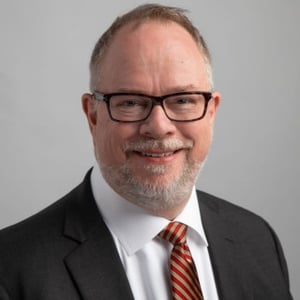
Managing Attorney of the Washington Office, Institute for Justice
William R. Maurer is the Managing Attorney of the Washington state office of the Institute for Justice, which engages in litigation in the areas of economic liberty, private property rights, educational choice, & freedom of speech.
Maurer is an advocate against the criminalization of poverty and the governmental use of the criminal and civil enforcement systems to raise revenue. He was lead counsel in a class action challenging the use of tickets to raise revenue in the city of Pagedale, Missouri. The suit resulted in a federal consent decree that reformed the city’s ticketing and municipal court system. He regularly speaks, teaches, and writes about the abuse of fines and fees in the criminal justice system. He was a participant in summits on taxation by citation put on by the White House and Department of Justice during the Obama Administration. His work on the issue includes serving as an advisory board member of the Fines and Fees Justice Center.
In addition to his work on criminal and civil justice reform, Maurer is a First Amendment litigator. In 2011, he successfully argued before the U.S. Supreme Court that Arizona’s punitive campaign financing regime was unconstitutional. Before the Washington Supreme Court, he successfully argued against efforts to classify radio commentary as a contribution under the state’s campaign finance law.
His cases and advocacy have been covered in the Washington Post, the New York Times, the Economist, the Wall Street Journal, and other major media outlets.
Maurer was named a “Washington Superlawyer” by Washington Law & Politics Magazine for several years. He is a chapter author in numerous legal reference works and has written several articles for law reviews and legal publications across the country.
Prior to joining IJ-WA, Maurer clerked for Washington Supreme Court Justice Richard Sanders and then practiced law at Perkins Coie LLP. Maurer received his law degree in 1994 from the University of Wisconsin – Madison, where he was an editor of the Wisconsin Law Review. He received his BA from Bard College in 1989.
Partner, Ford & Harrison LLP
Robin W. Hutton has successfully litigated numerous employment matters in both state and federal courts and achieved favorable results before numerous administrative boards and agencies in numerous states. Robbin works with clients in developing and implementing employment policies, as well as training on the major areas of employment and labor law. She has conducted training and seminars on various employment-related topics to include sexual harassment/discrimination, FMLA, FLSA, immigration issues, union issues, and ADA, as well as conducted many work-related investigations for clients, as well as HR audits for employers.
Prior to joining Ford & Harrison, Robbin was Of Counsel in the Memphis office of a national labor and employment law firm where she worked the areas of employment and labor law, insurance defense, and civil litigation.

Partner, Baker Hostetler LLP
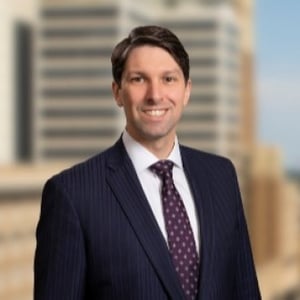
David Rivkin is a member of the firm's litigation, international and environmental teams and is co-leader of the firm's national appellate practice. He has extensive experience in constitutional, administrative and international law litigation and has been involved in numerous high-profile cases. With his prior experience in the government sector, David draws on a wealth of knowledge when providing compliance advice to companies and handling enforcement proceedings before government agencies on issues arising out of multilateral and unilateral sanctions, the Foreign Corrupt Practices Act (FCPA), anti-boycott issues, bankruptcy and financial fraud matters, and environmental and energy issues.
David has developed and implemented legislative, regulatory and litigation initiatives for two presidential administrations. Over the years, he has published hundreds of articles, op-eds, book reviews and book chapters on a variety of international, legal, constitutional, defense, arms control, foreign policy, environmental and energy issues for various newspapers and magazines, including The Wall Street Journal, The Washington Post, The New York Times, USA Today and The Los Angeles Times, and has been a frequent commentator and guest on TV and radio shows including ABC, CBS, NBC, CNN, Fox News, NPR and PBS.
Shareholder and Director, GableGotwals
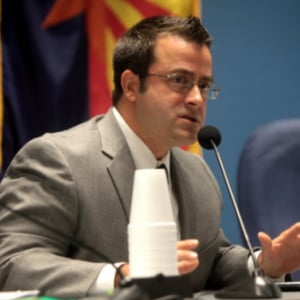
General Counsel, Prospera Group
Dranias serves as NeWay Capital LLC’s General Counsel, handling all corporate legal matters. Prior to this, he was Senior Litigation Counsel with the Government Accountability & Special Litigation Unit of the Arizona Attorney General. He also serves as Policy Advisor and Research Fellow with the Heartland Institute, as an expert and Speaker’s Bureau member with the Federalist Society, a Law and Civil Liberties Speaker for Students for Liberty, a Council of Scholars member with Compact for America Educational Foundation, as well as an Adjunct Instructor teaching Business Ethics and Law at Grand Canyon University.
Previously, Dranias served as President & Executive Director of Compact for America Educational Foundation where he led national efforts to organize the states to propose and ratify a federal Balanced Budget Amendment. Prior to that, Dranias was General Counsel, Policy Development Director and Constitutional Policy Director at the Goldwater Institute. Dranias led the Institute’s successful challenge to Arizona’s system of government campaign financing to the U.S. Supreme Court. Prior to that, he was an attorney with the Institute for Justice for three years and an attorney in private practice in Chicago for eight years, where he served as Young Lawyers Section co-editor of the Chicago Bar Association Record and earned the Oliver Wendell Holmes Award for his service.
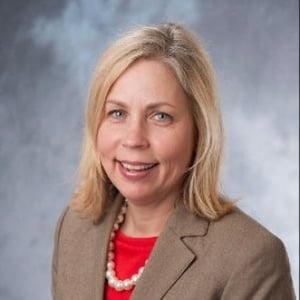
Senior Executive Counsel, NFIB Small Business Legal Center
Elizabeth Milito serves as Senior Executive Counsel with the National Federation of Independent Business, a position she has held since March 2004. Ms. Milito came to NFIB from the U.S. Department of Veteran's Affairs where she defended the agency in employment and labor lawsuits and was responsible for training and counseling managers on fair employment and HR practices. She has an extensive background in tort, medical malpractice and employment law.
Prior to serving as an attorney at the Department of Veteran's Affairs, Ms. Milito worked as a trial attorney at Nationwide Insurance Company. At Nationwide, she completed over 100 trials to verdict. Ms. Milito was the editor of notes and comments for the Maryland Law Review at the University of Maryland School of Law where she earned her Juris Doctor degree in May of 1996. Following her education, she served as a clerk to the Honorable Alan M. Wilner on the Maryland Court of Appeals, the state's highest court.
Ms. Milito is responsible for managing litigation and amicus work for NFIB. She has testified before Congress, federal agencies, and state legislatures on the small business impact of labor and employment issues. She also comments and writes regularly on small business cases before federal and state courts. Ms. Milito frequently counsels businesses facing employment discrimination charges, wage and hour claims, wrongful termination lawsuits, and in most other areas of human resources law. She also provides and develops on-line and on-site training on a variety of employment law matters and is a frequent media spokesperson on employment and labor matters.
Partner, Gladstone Michel Weisberg Willner & Sloane
Arthur Willner is a partner at Gladstone Michel Weisberg Willner & Sloane in Los Angeles. His practice involves the representation of corporate clients in wrongful death, catastrophic injury and business litigation as well as college faculty and students in First Amendment and due process cases.
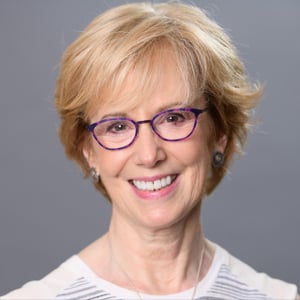
Director, GW Regulatory Studies Center & Distinguished Professor of Practice, Trachtenberg School of Public Policy & Public Administration, The George Washington University
Susan Dudley is the Founder and Director of the George Washington University Regulatory Studies Center, established in 2009 to raise awareness of regulations’ effects and improve regulatory policy through research, education, and outreach. She is also a distinguished professor of practice in the Trachtenberg School of Public Policy and Public Administration. She is past-president of the Society for Benefit Cost Analysis, a senior fellow of the Administrative Conference of the United States, and on the Regulatory Transparency Project Regulatory Practice Working Group. Her book, Regulation: A Primer, with Jerry Brito, is available on Amazon.com.
From April 2007 through January 2009, Professor Dudley served as the Presidentially-appointed Administrator of the Office of Information and Regulatory Affairs in the U.S. Office of Management and Budget and was responsible for the review of draft executive branch regulations under Executive Order 12866, the collection of federal-government-wide information under the Paperwork Reduction Act, the development and implementation of government-wide policies in the areas of information policy, privacy, and statistical policy, and international regulatory cooperation efforts.
Prior to OIRA, she directed the Regulatory Studies Program at the Mercatus Center at George Mason University, and taught courses on regulation at the George Mason University School of Law. Earlier in her career, Professor Dudley served as an economist at OIRA, as well as the Environmental Protection Agency and the Commodity Futures Trading Commission. She was also a consultant to government and private clients at Economists Incorporated. She holds a Master of Science degree from the Sloan School of Management at MIT and a Bachelor of Science degree (summa cum laude) in Resource Economics from the University of Massachusetts, Amherst.
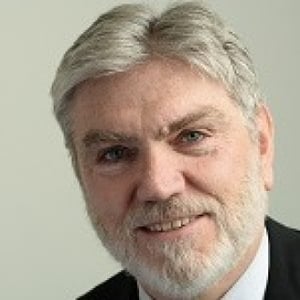
Research Professor, Regulatory Studies Center, The George Washington University
Brian Mannix is a Research Professor at George Washington University’s Regulatory Studies Center. From 2005 – 2009 he was the EPA’s Associate Administrator for Policy, Economics, and Innovation. Earlier he served as the Deputy Secretary of Natural Resources for the Commonwealth of Virginia. Brian was an economist at OIRA from 1981 – 1987, and then served as managing editor of Regulation magazine at the American Enterprise Institute.
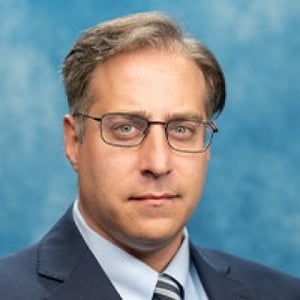
Interim Dean, Florida International University College of Law
Dan Epstein was Vice President at America First Legal and an Associate Professor of Law at St. Thomas University in Miami, Florida. He also advises individuals and small businesses in affirmative and defensive actions against government overreach. Previously, he advised startups on regulatory matters as Director at a venture capital firm. His federal service includes being a Special Assistant to and Senior Associate Counsel to the President and a counsel for the House of Representatives Committee on Oversight and Government Reform. Earlier in his career, Mr. Epstein founded and ran Cause of Action, where he represented clients in government investigations and litigated regulatory, constitutional, political, and public law matters.
He holds a Ph.D. from George Washington University in Political Economy, a J.D. from Emory University School of Law, and a B.A. from Kenyon College. He is active in the Palm Beach community as a member of the Fourth Court of Appeals Judicial Nominating Commission in Florida, a transition team member to Florida Attorney General James Uthmeier, and the Chairman and Trustee of Palm Beach State College.

Partner, HWG LLP
Patricia Paoletta is a partner with the law firm of HWG LLP, where she specializes in telecommunications, trade and technology policy. Ms. Paoletta provides advice on regulatory, trade and legislative policy to clients before the FCC, Congress and the Administration. Her clients include providers of content, cloud, mobile broadband, VoIP, international telecommunications, small cells, cognitive radio, public safety and homeland security solutions. She serves on Advisory Boards for several entities engaged in information services, communications and technology.
Ms. Paoletta has accrued considerable experience with telecommunications trade and policy in the public sector. From 1990 to 1995, she was senior advisor to the International Bureau Chief and Office Director at the Federal Communications Commission. In the mid 1990s, Ms. Paoletta served as Director of Telecommunications Trade Policy in the Office of the U.S. Trade Representative, Executive Office of the President, where she worked on the WTO Information Technology Agreement (ITA) and the Basic Telecommunications Agreement. After USTR, Ms. Paoletta served as Majority Counsel to the House Energy and Commerce Committee. She then moved to Level 3 Communications, as Vice President, Government Relations.
Ms. Paoletta is on the Steering Committee of the Transatlantic Roundtable on Telecommunications and Information Technology of the European Institute. She is a member of the USTR Alumni Association, Washington International Trade Association, the Federal Communications Bar Association (FCBA), and Women in Technology. Ms. Paoletta has served on the Board of Advisors for the Inter-American Dialogue's Latin America Telecom Advisor, Co-Chairman of the American Bar Association International Communications Committee, and as a member of the U.S. Chamber of Commerce's Technology Policy Committee.
Ms. Paoletta served as a delegate in 2012 to the ITU-R's Study Group 6 Working Party 6A Meeting and in 2009 and 2010 to the ITU-R's Study Group I Working Party IB Meetings; the 2009 meetings of CITEL (the Committee on International Telecommunications at the Organization of American States) PCC-II; the International Telecommunication Union (ITU) World Telecommunications Standards Assembly (2000); the ITU Internet Protocol Telephony Experts Group and the ITU World Telecommunications Policy Forum in 2001; as Chairman of the National Reliability and Interoperability Council (NRIC) Steering Committee (2000-2001); as Board Member for the Voice on the Net Coalition (2001); as Co-Chairman of the FCBA's Annual Seminar Committee (2009-2011); as a member of the FCBA's Ad Hoc Speakers Committee (2006-2007); as Co-Chairman for the FCBA International Practice Committee (2001-2002 and 2005-2006); and as a Co-Chairman of the FCBA Legislative Practice Committee (1999-2000).
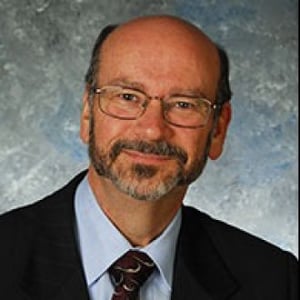
Clinical Professor of Law, Dale E. Fowler School of Law, Chapman University

Should Judges Judge?: The Affordable Care Act, Subsidies, and Judicial Engagement
William R. Maurer
Note from the Editor: This article is about D.C. Circuit’s decision in Halbig v. Burwell...
Religious Accommodation in the Workplace: Current Trends Under Title VII
Robbin W. Hutton
Arecent survey of American workers suggests that religious discrimination is a growing workplace concern.1 Indeed,...
Do Sue and Settle Practices Undermine Congressional Intent for Cooperative Federalism on Environmental Matters?
David B. Rivkin, Adam Carl Doverspike
Note from the Editor: This article is about whether sue and settle practices undermine congressional...
Introducing “Article V 2.0”: The Compact for a Balanced Budget
Nicholas C. Dranias
This article discusses the use of interstate compacts to advance Article V amendments to the U.S....
Asserting Influence and Power in the 21st Century: The NLRB Focuses on Assisting Non-Union Employees
Elizabeth Milito
Note from the Editor: This article is a discussion about the National Labor Relations Board’s relationship...
Ninth Circuit Upholds Professor’s First Amendment Claim in Demers v. Austin
Arthur Willner
Note from the Editor: This article is about the Ninth Circuit’s decision in Demers v. Austin. ...
The Social Cost of Carbon
Susan E. Dudley, Brian F. Mannix
In May 2013, the White House released a revised Technical Support Document (TSD) with a...
Redressing Politicized Spending
Daniel Z. Epstein
Note from the Editor: This article is about politicized spending in the federal discretionary budget. ...
The Cybersecurity Overreach: A Few Harsh Words About the President’s Cybersecurity Executive Order, Along with a Better Solution
Patricia J. Paoletta
Note from the Editor: This article is a discussion about Executive Order 13636 on cybersecurity...
Part II: Can States Require Proof of Citizenship for Voter Registration?: Arizona v. Inter Tribal Council of Arizona
Anthony (Tom) Caso
Note from the Editor: This article discusses the Arizona v. Inter Tribal Council of Arizona...