
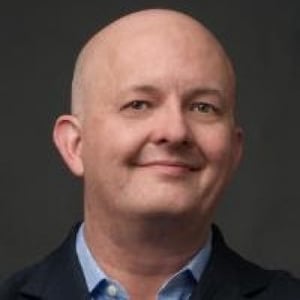
Department Chair, Associate Professor of Politics, Dean of Social Sciences, Wheaton College
Dr. McGraw has always had an interest in the normative and philosophical aspects of politics and started learning about political theory in graduate school. He is particularly interested in the ways modern states seek to establish and enforce their own normative visions and how religion plays into that process. He has taught previously at the University of Georgia, Notre Dame, and Pepperdine University. His first book was published by Cambridge University Press, and he is beginning a project on pluralism, law and religion, and political theology. Professor McGraw and his wife Martha, a practicing neurologist, live in Wheaton with their three children. They enjoy gardening, all manners of outdoor activities, and perfecting the art of pulled-pork BBQ sandwiches.
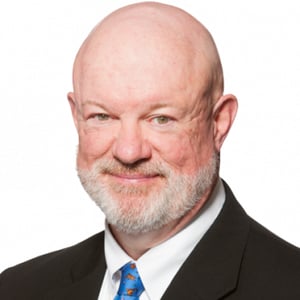
Senior Legal Fellow, the Meese Institute for the Rule of Law, Advancing American Freedom
Paul J. Larkin is a Senior Legal Fellow in the Meese Institute for the Rule of Law at Advancing American Freedom. Paul has held various positions in the federal and state governments throughout his career, such as being an attorney in the Organized Crime and Racketeering Section of the Criminal Division at the U.S. Department of Justice, an Assistant to the Solicitor General in the Office of the Solicitor General at the U.S. Department of Justice, Special Agent-in-Charge and Acting Director of the Criminal Investigation Division at the Environmental Protection Agency, and a member of the Parole Abolition and Sentencing Reform Commission and of the Juvenile Justice Reform Commission in the Office of Virginia Governor George Allen.
He has also worked at Verizon Communications and two law firms in Washington, D.C. His current research is principally in the fields of drug policy, criminal justice policy, and administrative law and policy. He has published numerous articles in law and public policy journals, both in print and online.
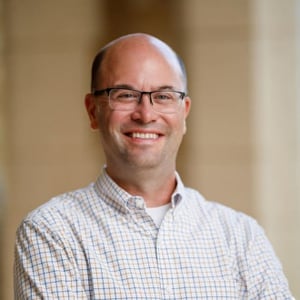
Paul J. Schierl Professor of Law, University of Notre Dame Law School
Professor Richard W. Garnett teaches and writes in the areas of constitutional law, criminal law, the First Amendment, and law and religion. He is a leading authority on questions and debates regarding religious freedom and church-state relations, and is the founding director of Notre Dame Law School’s Program on Church, State, and Society.
Garnett clerked for the late Chief Justice of the United States, William H. Rehnquist, and also for the late Chief Judge of the United States Court of Appeals for the Eighth Circuit, Richard S. Arnold. He earned his J.D. from Yale Law School in 1995 and his B.A., summa cum laude, from Duke University in 1990. He joined the faculty in 1999 after practicing law in Washington, D.C. with Miller, Cassidy, Larroca & Lewin.
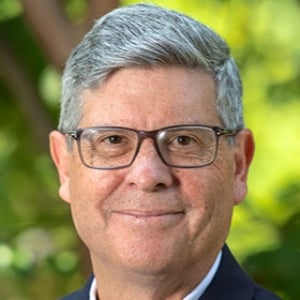
E. Claiborne Robins Distinguished Chair in Law, University of Richmond School of Law
Professor Kurt Lash teaches and writes about constitutional law. Founder and director of the Richmond Program on the American Constitution, Professor Lash has published widely on the subjects of constitutional law and constitutional history, including The Fourteenth Amendment and the Privileges or Immunities of American Citizenship (Cambridge University Press, 2014), The Lost History of the Ninth Amendment (Oxford University Press, 2009), and The American First Amendment in the Twenty-first Century: Cases and Materials(with William W. Van Alstyne) (5th ed., Foundation Press, 2014). An elected member of the American Law Institute, Professor Lash’s work has appeared in numerous legal journals including the Stanford Law Journal, Georgetown Law Journal, Virginia Law Review, andNotre Dame Law Review. He has been a visiting professor at Northwestern University School of Law and is the former director of the University of Illinois College of Law Program in Constitutional Theory, History, and Law.
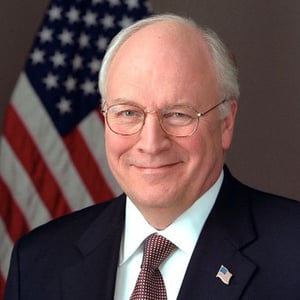
Former Vice President of the United States
Vice President Richard B. Cheney has had a distinguished career as a businessman and public servant, serving four Presidents and as an elected official. Throughout his service, Mr. Cheney served with duty, honor, and unwavering leadership, gaining him the respect of the American people during trying military times.
Mr. Cheney was born in Lincoln, Nebraska, on January 30, 1941 and grew up in Casper, Wyoming. He earned his bachelor's and master's of arts degrees from the University of Wyoming. His career in public service began in 1969 when he joined the Nixon Administration, serving in a number of positions at the Cost of Living Council, at the Office of Economic Opportunity, and within the White House.
When Gerald Ford assumed the Presidency in August 1974, Mr. Cheney served on the transition team and later as Deputy Assistant to the President. In November 1975, he was named Assistant to the President and White House Chief of Staff, a position he held throughout the remainder of the Ford Administration.

Publius: A FedSoc Reading Group - The Role of the Executive
Atlanta Young Lawyers Chapter - Online Event
Professionals, Amateurs, and Rape: How Colleges Are Failing Their Students
Paul James Larkin
A Review of: The Campus Rape Frenzy: The Attack on Due Process at America’s Universities,...
The Establishment Clause
Richard W. Garnett, Kurt T. Lash
Most of you don’t remember—I am embarrassed that I do—the 1988 presidential election. One day,...
Remarks of Vice President Richard Cheney
Richard B. Cheney
Thank you very much. I appreciate the warm welcome. I realize you've adjusted your schedule...
Book Review: God Is My Broker: A Monk-Tycoon Reveals the 7 1/2 Laws of Spiritual and Financial Growth by Brother Ty with Christopher Buckley and John Tierney
John Pickering
It's been said that God helps those who help themselves. God Himself never said so,...