
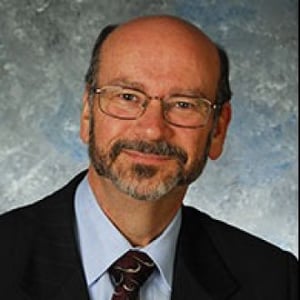
Clinical Professor of Law, Dale E. Fowler School of Law, Chapman University
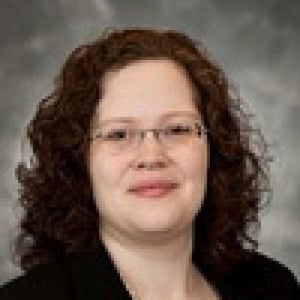
Professor of Law, Belmont University College of Law
Prior to joining Belmont University College of Law, Amy Moore taught at Faulkner University’s Thomas Goode Jones School of Law as an Assistant Professor. She taught classes in Administrative Law, Criminal Law, Education Law, Immigration Law, and International Law. She was also active in the moot court program, including coaching the National Moot Court Competition Team and the National Appellate Advocacy Competition teams.
Before teaching law school, Professor Moore worked as a litigation associate at Kirkland & Ellis LLP in Chicago, Illinois. While at Kirkland, she practiced in securities fraud and credit card privacy cases. She is a member of both the Missouri and Illinois bar associations. She is also a member of the American Bar Association.
Professor Moore received her Bachelor of Arts degree from Harding University and received her Juris Doctor degree from the University of Chicago Law School. While at the University of Chicago, Professor Moore worked as a research assistant for Professor Lisa Bernstein and Judge Richard Posner. During her last year of law school, she was active in the appellate advocacy clinic and represented a client before the Seventh Circuit Court of Appeals.
For Belmont’s charter year, Professor Moore will teach Torts and Civil Procedure. Her research interests include the study of how process affects rights in varied areas.
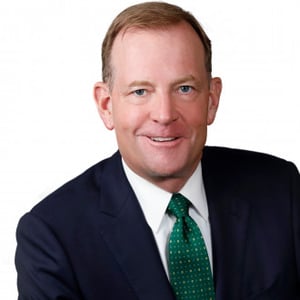
Partner, King & Spalding LLP
Former U.S. Attorney for the Eastern District of California, a 34-county district with an area that stretches from the Oregon border to Bakersfield, Greg Scott is an experienced trial lawyer who represents major companies facing government investigations and litigation, with a focus in the healthcare, retail, and construction industries. He has extensive knowledge on matters involving consumer protection, construction disputes, the Foreign Corrupt Practices Act (FCPA) and the False Claims Act (FCA).
Greg represents corporations under investigation by state district attorneys concerning potential violations of consumer protection laws, as well as corporations operating senior assisted livingfacilities under investigation by the state attorney general regarding potential violations of elder abuse laws. In addition, he represents construction companies under investigation by state district attorneys when employees are involved in serious accidents at worksites.
A retired Lieutenant Colonel after serving more than 20 years in the California Army National Guard & United States Army Reserve, Greg went on to become a deputy district attorney in Contra Costa County and twice-elected District Attorney of Shasta County. He also served as an Adjunct Professor of National Security Law at the University of the Pacific, McGeorge School of Law following his first term as U.S. Attorney for the E.D. of California. Between his two terms as U.S. Attorney for the E.D. of California, Greg was the vice chair of the white-collar defense and corporate investigations practice at an AmLaw 50 firm.
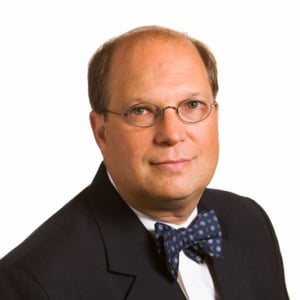
Professorial Lecturer in Law, The George Washington University
Paul Rosenzweig is an accomplished writer and speaker with a national reputation in cyber security and homeland security. He is the founder of Red Branch Consulting PLLC, a homeland security consulting company. He is also a Senior Advisor to The Chertoff Group. Mr. Rosenzweig formerly served as Deputy Assistant Secretary for Policy in the Department of Homeland Security.
He is a Professorial Lecturer in Law at George Washington University, and a Senior Fellow in the Tech, Law & Security Program at the American University, Washington College of Law. He serves as an advisor to and former member of the American Bar Association Standing Committee on Law and National Security, and a Contributing Editor of the Lawfare blog. He is a member of the ABA Cybersecurity Legal Task Force and of the United States Court of Appeals for the District of Columbia Circuit Advisory Committee on Admissions and Grievances. He serves, as well, as a Hearing Committee Member of the District of Columbia Board of Professional Responsibility. In 2011 he was a Carnegie Fellow in National Security Journalism at the Medill School of Journalism, Northwestern University.
Mr. Rosenzweig is a cum laude graduate of the University of Chicago Law School. He has an M.S. in Chemical Oceanography from the Scripps Institution of Oceanography, University of California at San Diego and a B.A from Haverford College. Following graduation from law school he served as a law clerk to the Honorable R. Lanier Anderson, III of the United States Court of Appeals for the Eleventh Circuit.
He is the author of Cyber Warfare: How Conflicts in Cyberspace are Challenging America and Changing the World and of three video lecture series from The Great Courses, Thinking About Cybersecurity: From Cyber Crime to Cyber Warfare; The Surveillance State: Big Data, Freedom, and You; and Investigating American Presidents.
He is the co-author (with James Jay Carafano) of Winning the Long War: Lessons from the Cold War for Defeating Terrorism and Preserving Freedom and co-editor (with Jill D. Rhodes and Robert S. Litt) of the Cybersecurity Handbook (3rd ed.). He is also co-editor (with Timothy McNulty and Ellen Shearer) of two books, Whistleblowers, Leaks and the Media: The First Amendment and National Security, and National Security Law in the News: A Guide for Journalists, Scholars, and Policymakers. Mr. Rosenzweig is a member of the Literary Society of Washington.
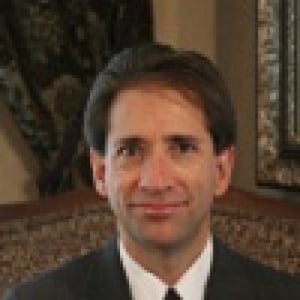
Deputy Attorney General, California Department of Justice
Brian Means is a nationally recognized expert in the area of postconviction review. He graduated with Great Distinction, Order of the Coif, and Order of the Barristers from the University of the Pacific, McGeorge School of Law. He was the recipient of seven American Jurisprudence Awards. Following graduation, he clerked for the Honorable Garland E. Burrell, Jr., federal judge. There, he worked on several high-profile cases, including the criminal action against the Unabomber, Theodore Kackynski. For the past fourteen years he has worked as a Deputy Attorney General with the California Department of Justice, and has held the position of supervisor of the federal habeas corpus team. He works almost exclusively on federal habeas corpus litigation, practicing in the Eastern District of California, the Ninth Circuit Court of Appeals, and the United States Supreme Court. He has appeared as a legal analyst on CNN, MSNBC, and the California Channel. He writes the Federal Habeas Manual: A Guide to Habeas Corpus Litigation, published by Westlaw, and the Federal Habeas Practitioner Note, a quarterly publication distributed nationally to habeas practitioners and members of the judiciary.
Supervising Deputy Attorney General, California Department of Justice.
Ward Campbell is the Supervising Deputy Attorney General and Sacramento Capital Case Coordinator, as well as the Supervising Deputy Attorney General, at the California Department of Justice.
Mr. Campbell is the recipient of the Attorney General’s Awards for Excellence (1999 and 2006), the William James Award for Distinguished Service from the California District Attorneys Association (2003), the Appellate Award for Outstanding Advocacy in Capital Cases (2005) and the William Schafer Award for Distinguished Service (2011).
Mr. Campbell received his law degree from the University of California at Davis.
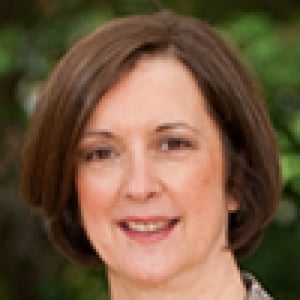
Assistant District Attorney, Philadelphia District Attorney
Sarah Hart has worked for over three decades in the criminal justice field at the federal, state and local levels.
From 1979-95, she served as a prosecutor in Philadelphia where (for 9 years) she represented the District Attorney in federal prison litigation involving mass releases of pretrial detainees. During this time, she provided substantial assistance to the U.S. Congress in drafting the Federal Prison Litigation Reform Act (PLRA).
From 1995-2001, Mrs. Hart served as the Chief Counsel for the Pennsylvania Department of Corrections where she successfully defended the constitutionality of the PLRA in the federal courts.
From 2001-2005, following unanimous Senate confirmation, she served as the Director of the National Institute of Justice (the research and evaluation arm of the U.S. Department of Justice) where, among other things, she developed the national $1 billion DNA initiative.
After an appointment as a Visiting Professor teaching graduate school courses at Rutgers University, she returned to Philadelphia to represent Philadelphia District Attorney in class action litigation concerning the Philadelphia Prison System. During this time she represented the Pennsylvania District Attorney’s Association in crafting comprehensive, bipartisan prison reform legislation in Pennsylvania that enacted sweeping changes in sentencing and parole practices. (Acts 81-84 of 2008).
Mrs. Hart previously served as Vice Chair of the Legal Affairs Committee of the American Corrections Association, a member of the Executive Committee of the Criminal Law Practice Group of the Federalist Society, a member of the Board of Directors of the Crime Victims Law Institute, and as a member of the Pennsylvania Supreme Court’s Appellate Procedural Rules Committee. She has also provided extensive training on the PLRA and corrections issues to the National Institute of Corrections, the National Association of Attorneys General, and the Association of State Correctional Administrators.
Mrs. Hart has published articles relating to corrections, forensics, and domestic violence. A recent publication focuses on the benefits and costs of prisoner class actions.
S. Hart, Evaluating Institutional Prisoners’ Rights Litigation: Costs and Benefits and Federalism Considerations, 11 U. Penn. J. Const. L. 73 (2008).
She is a graduate of Rutgers Law School and the University of Delaware.


Christopher v. SmithKline Beecham Corp. - Post-Decision SCOTUScast
Anthony (Tom) Caso
On June 18, 2012 the Supreme Court announced its decision in Christopher v. SmithKline Beecham Corp....
Reichle v. Howards - Post-Decision SCOTUScast
D Broyles
On June 4, 2012, the Supreme Court announced its decision in Reichle v. Howards. This case...
Holder v. Gutierrez and Holder v. Sawyers; Vartelas v. Holder - Post-Decision SCOTUScast
Amy Moore
On May 21, 2012, the Supreme Court announced its decision in Holder v. Gutierrez and Holder v. Sawyers....
Hall v. United States - Post-Decision SCOTUScast
On May 14, 2012, the Supreme Court announced its decision in Hall v. United States. The...
Blueford v. Arkansas - Post-Decision SCOTUScast
McGregor W. Scott
On May 24, 2012, the Supreme Court announced its decision in Blueford v. Arkansas. This case...
United States v. Jones - Post-Decision SCOTUScast
Paul Rosenzweig
On January 23, 2012, the Supreme Court announced its decision in United States v. Jones. The...
Wood v. Milyard - Post-Decision SCOTUScast
Brian Means
On April 24, 2012, the Supreme Court announced its decision in Wood v. Milyard. The question...
Martinez v. Ryan - Post-Decision SCOTUScast
Ward Campbell
On March 20, 2012 the Supreme Court announced its decision in Martinez v. Ryan. The question...
Coleman v. Maryland Court of Appeals - Post-Decision SCOTUScast
Elizabeth Price Foley
On March 20, 2012, the Supreme Court announced its decision in Coleman v. Maryland Court of...
Florence v. Board of Chosen Freeholders - Post-Decision SCOTUScast
Sarah V. Hart
On April 2, 2012 the Supreme Court announced its decision in Florence v. Board of Chosen...