
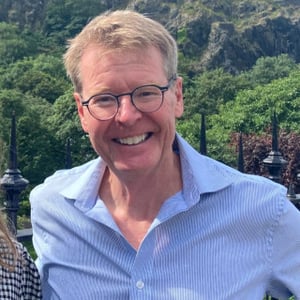
Distinguished University Chair and Professor of Law, University of St. Thomas School of Law
Michael Stokes Paulsen is Distinguished University Chair & Professor of Law at the University of St. Thomas, where he has taught since 2007. Professor Paulsen was previously the McKnight Presidential Professor of Law & Public Policy and Associate Dean at the University of Minnesota Law School, where he taught from 1991-2007. He is a graduate of Northwestern University, Yale Law School, and Yale Divinity School. He has served as a federal prosecutor, as Attorney-Advisor in the Office of Legal Counsel of the U.S. Department of Justice, and as counsel for the Center for Law & Religious Freedom.
Paulsen has taught as a visiting professor at Princeton University, Pepperdine University, Georgetown University, Bethel University, Uppsala University (Sweden), Daystar University (Kenya), and University of the Andes (Chile). He has been a guest lecturer at universities around the nation, including Harvard, Yale, Columbia, Princeton, Penn, NYU, Georgetown, Virginia, Stanford, Berkeley, Michigan, University of Chicago, and Northwestern.
Professor Paulsen is the author of more than ninety scholarly articles and book chapters on a wide variety of constitutional law topics, published in law journals including the Harvard Law Review, the Yale Law Journal, the Stanford Law Review, the University of Chicago Law Review, the Michigan Law Review, the Georgetown Law Journal, and the Northwestern University Law Review. He is the author or co-author of three books, including The Constitution: An Introduction (Basic Books, 2015) (co-authored with Luke Paulsen) and the casebook The Constitution of the United States, now in its fifth edition with Foundation Press, co-authored with Michael McConnell, Samuel Bray, and Will Baude.
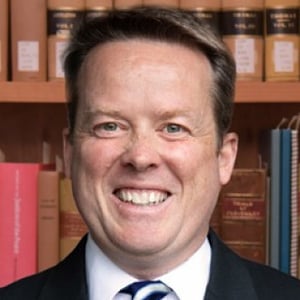
Knights of Columbus Professor of Law and the Catholic Tradition, The Catholic University of America Columbus School of Law
Kevin C. Walsh teaches and writes in the areas of federal jurisdiction, constitutional law, and the U.S. Supreme Court. His scholarship explores the doctrines that define—and delimit—the scope of federal judicial power.
Professor Walsh graduated from Harvard Law School, where he was Articles Chair for Volume 115 of the Harvard Law Review. After graduation, he clerked for Judge Paul V. Niemeyer of the United States Court of Appeals for the Fourth Circuit and Associate Justice Antonin Scalia of the Supreme Court of the United States. He then practiced law at Hunton & Williams LLP and taught as a visiting assistant professor at Villanova University School of Law. Walsh received his A.B. from Dartmouth College, and an M.A. in Theological Studies from the University of Notre Dame. He taught at the University of Richmond School of Law for thirteen years prior to joining The Catholic University of America, where he currently resides.
In early 2011, Professor Walsh filed two amicus curiae briefs addressing jurisdictional issues in the State challenges to the individual mandate in the federal healthcare reform legislation: a brief in Virginia v. Sebelius (United States Court of Appeals for the Fourth Circuit), and a brief in Florida v. HHS (United States Court of Appeals for the Eleventh Circuit).
President, The Ethics and Public Policy Center
Ryan T. Anderson, Ph.D., is the President of the Ethics and Public Policy Center. In May 2025, Anderson was appointed by President Trump to the Religious Liberty Commission.
He is the author or co-author of five books, including the just-released Tearing Us Apart: How Abortion Harms Everything and Solves Nothing. Previous books include When Harry Became Sally: Responding to the Transgender Moment, Truth Overruled: The Future of Marriage and Religious Freedom, What Is Marriage? Man and Woman: A Defense, and Debating Religious Liberty and Discrimination. He is the co-editor of A Liberalism Safe for Catholicism? Perspectives from “The Review of Politics.”
Anderson’s research has been cited by two U.S. Supreme Court justices, Justice Samuel Alito and Justice Clarence Thomas, in two Supreme Court cases.
He received his bachelor of arts degree from Princeton University, graduating Phi Beta Kappa and magna cum laude, and he received his doctoral degree in political philosophy from the University of Notre Dame. His dissertation was titled: “Neither Liberal Nor Libertarian: A Natural Law Approach to Social Justice and Economic Rights.”
Anderson has made appearances on ABC, CNN, CNBC, MSNBC, and Fox News. His work has been published by the New York Times, the Washington Post, the Wall Street Journal, Oxford University Press, Cambridge University Press, the Harvard Journal of Law and Public Policy, the Harvard Health Policy Review, the Georgetown Journal of Law and Public Policy, First Things, the Claremont Review of Books, and National Review.
He is the John Paul II Teaching Fellow in Social Thought at the University of Dallas, a member of the James Madison Society at Princeton University, and a Fellow of the Institute for Human Ecology at the Catholic University of America, as well as the Founding Editor of Public Discourse, the online journal of the Witherspoon Institute of Princeton, New Jersey.
For 9 years he was the William E. Simon senior research fellow at The Heritage Foundation, and has served as an adjunct professor of philosophy and political science at Christendom College, and a Visiting Fellow at the Veritas Center at Franciscan University. He has also served as an assistant editor of First Things.
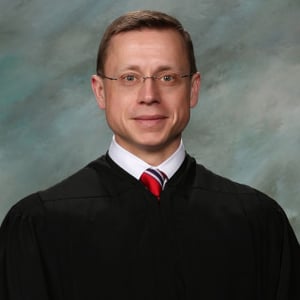
Judge, United States Court of Appeals, Fifth Circuit
Andrew Oldham is a Circuit Judge on the United States Court of Appeals for the Fifth Circuit. Before ascending to the bench, Judge Oldham served as General Counsel to Texas Governor Greg Abbott, where he advised the Governor on a range of issues under federal and state law and managed litigation in which the Governor was an interested party. Before that he served as Deputy Solicitor General for the State of Texas, where he represented Texas in federal courts across the country, including twice before the United States Supreme Court. Before moving to Texas, Judge Oldham was an attorney at Kellogg Hansen Todd Figel & Frederick in Washington, D.C. His practice focused on appellate litigation in federal courts of appeals throughout the country. Before entering private practice, Judge Oldham served as a law clerk to Justice Samuel A. Alito, Jr., at the Supreme Court of the United States and to Judge David B. Sentelle of the U.S. Court of Appeals for the District of Columbia Circuit. He also worked as an attorney-adviser in the Office of Legal Counsel at the U.S. Department of Justice from 2006 to 2008. Judge Oldham earned a B.A. from the University of Virginia with highest honors, a Truman Scholarship for graduate school, an M. Phil., first class (with distinction), from Cambridge University, and a J.D., magna cum laude, from Harvard Law School.
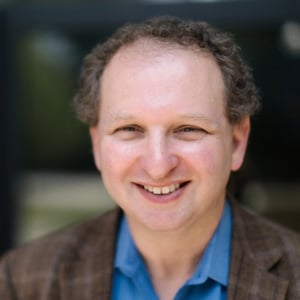
Assistant Professor of Law, Emory University School of Law
Alexander "Sasha" Volokh is an assistant professor of law, joining the Emory Law faculty in Fall 2009.
Professor Volokh earned his B.S. from UCLA and his J.D. and Ph.D. in economics from Harvard University. He clerked for Judge Alex Kozinski of the Ninth Circuit and for Supreme Court Justices Sandra Day O'Connor and Samuel Alito. Before coming to Emory, he was a visiting associate professor at Georgetown University Law Center and a visiting assistant professor at University of Houston Law Center.
His interests include law and economics, administrative law and the regulatory process, environmental law and policy, and legal history. His current research topics include the private management of government services, medieval law, judicial decisionmaking and statutory interpretation.
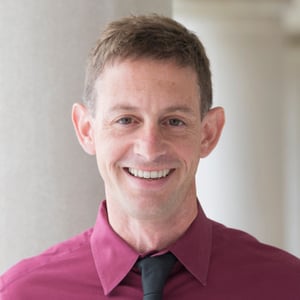
Professor of Law, University of North Carolina School of Law
Andy Hessick joined the Carolina Law faculty in 2016 and serves Judge John J. Parker Distinguished Professor of Law and Associate Dean for Strategy. His teaching and research interests include federal courts, administrative law, remedies, and criminal sentencing. His work has appeared in, among other places, the California Law Review, the Cornell Law Review, the Northwestern University Law Review, the Notre Dame Law Review, and the William and Mary Law Review. His work has been cited by the Supreme Courts of Connecticut, Iowa, Missouri, Tennessee, and Utah; various federal district and circuit courts; and the U.S. Supreme Court.
Hessick received his J.D. from Yale Law School, at which he was an editor of the Yale Law Journal. After law school, he clerked for Judge Reena Raggi on the United States Court of Appeals for the Second Circuit and Judge A. Raymond Randolph on the United States Court of Appeals for the D.C. Circuit. He then served as a Bristow Fellow in the U.S. Solicitor General’s office and practiced litigation at Kellogg Huber Hansen Todd Evans & Figel PLLC in Washington, D.C. He previously taught at the University of Utah and Arizona State University and was a visiting assistant professor at Boston University.
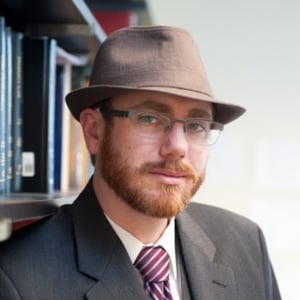
Professor of Law and Associate Dean, Boston College Law School; Nonresident Senior Fellow, American Enterprise Institute, Boston College Law School
Professor Lyons is a Professor and Associate Dean at Boston College Law School. He specializes in telecommunications and tech policy, energy, and administrative law. Before joining the faculty, he practiced at the firm of Munger, Tolles and Olson in Los Angeles. He also clerked for the Judge Cynthia Holcomb Hall of the Ninth Circuit Court of Appeals.
Professor Lyons is also a Nonresident Senior Fellow at the American Enterprise Institute, where he has written over 250 blog posts on tech policy issues, including net neutrality, telecommunications regulation, First Amendment issues with tech regulation, and generative AI.
President, Society for the Rule of Law
George T. Conway III has been a partner in the Litigation Department of Wachtell, Lipton, Rosen & Katz since January 1994. He joined the firm in September 1988. His litigation experience has included a variety of high-profile matters spanning many areas of law in federal and state courts throughout the country. He has extensive experience in securities litigation, mergers and acquisitions litigation, contract litigation, antitrust litigation, and other litigation, both at the trial and appellate levels.
In the area of securities litigation, he recently briefed and argued the case for respondents in Morrison v. National Australia Bank, in which the Supreme Court of the United States held that Section 10(b) of the Securities Exchange Act of 1934 does not apply extraterritorially to claims of so-called "foreign-cubed" plaintiffs -- foreign investors who purchased securities of foreign issuers on foreign exchanges. He also recently argued and won a precedent-setting motion to dismiss so-called "foreign-squared" claims against European Aeronautic Defence & Space Co. brought by American plaintiffs who purchased that foreign company's shares on foreign exchanges.
Mr. Conway also recently argued and won an important appeal under the Visual Artists Rights Act of 1990 on behalf of the Swiss installation artist Christoph Büchel in the artist’s highly publicized dispute with the Massachusetts Museum of Contemporary Art. He also successfully represented the Chief Judge of the State of New York and the New York Unified Court System in historic constitutional litigation over the State of New York’s extended failure to adjust judicial salaries. Mr. Conway also played a substantial role in the successful defense of Kenneth Langone’s Invemed Associates in a disciplinary proceeding before the NASD (now FINRA) that resulted in what the New York Times called a "withering," "high-profile defeat" for the regulators.
Mr. Conway’s work in mergers and acquisitions litigation includes the representation of Rohm and Haas Co. and ADVO, Inc., in, respectively, Rohm and Haas v. Dow Chemical Co., and Valassis Communications v. ADVO, two Delaware Chancery Court cases involving claims to enforce merger agreements, as well as two historic cases in the development of Delaware corporate law governing mergers and acquisitions, QVC v. Paramount Communications and Paramount Communications v. Time Inc. and Warner Communications, in addition to many other cases involving contests for corporate control in the Delaware courts and elsewhere over the past two decades.
In addition, Mr. Conway played a substantial role in prosecuting one of the most prominent defamation cases in recent memory (Philip Morris v. American Broadcasting Cos.). He has extensive experience in merger-related private antitrust litigation and government antitrust investigations, including the defense of Cardinal Health in the preliminary injunction proceedings before the United States District Court for the District of Columbia in FTC v. Cardinal Health. He also represented the National Football League in trademark and antitrust litigation against the Dallas Cowboys in NFL Properties v. Dallas Cowboys Football Club. His pro bono work includes his successful representation in the Second Circuit of crime victims and public-interest groups as amici curiae in opposing claims that federal law requires the State of New York to allow felons to vote while still incarcerated.
Mr. Conway is a graduate of Harvard College, where in 1984 he received an A.B. magna cum laude in biochemical sciences. He received his J.D. in 1987 from Yale Law School, where he was an editor of the Yale Law Journal. In 1987 and 1988, he served as a law clerk to Circuit Judge Ralph K. Winter, Jr. of the United States Court of Appeals for the Second Circuit.
Professor and Director, Prolife Center, University of St. Thomas School of Law
Teresa Collett, J.D., is professor at the University of St. Thomas School of Law, where she serves as director of the school's Prolife Center. Collett received her doctorate at the University of Oklahoma College of Law. As a well-known advocate for the protection of human life and the family, Collett specializes in the subjects of marriage, religion and bioethics in her research.
Collett has published numerous legal articles and is the co-author of a law casebook on professional responsibility and co-editor of a collection of essays exploring “catholic” and “Catholic” perspectives on American law. She is an elected member of the American Law Institute, and has testified before committees of the U.S. Senate and House of Representatives, as well as before legislative committees in several states.
In 2009, Pope Benedict XVI appointed Collett to a five-year term on the Pontifical Council for the Family. Her appointment was renewed by His Holiness Pope Francis until 2016 when the responsibilities of the Council were assumed by the Dicastery for the Laity, Family and Life. In 2013, she served as a delegate to the International Conference on Population and Development (ICPD) for the Mission of the Holy See to the United Nations.
She represented Congressman Ron Paul and various medical groups in the defense of the U.S. federal ban of partial-birth abortion, and the governors of Minnesota and North Dakota defending the N.H. requirement of state parental involvement prior to performance of an abortion on a minor before the U.S. Supreme Court. Collett is often asked to represent the interests of government officials before federal appellate courts. She has served as special attorney general for the states of Oklahoma and Kansas, as well as assisting other state attorneys general in defending laws protecting human life and marriage. Prior to joining St. Thomas in 2003, Collett taught at the South Texas College of Law, where she established the nation's first annual symposium on legal ethics.
Assistant Professor of Law, Emory University School of Law
Alexander "Sasha" Volokh is an assistant professor of law, joining the Emory Law faculty in Fall 2009.
Professor Volokh earned his B.S. from UCLA and his J.D. and Ph.D. in economics from Harvard University. He clerked for Judge Alex Kozinski of the Ninth Circuit and for Supreme Court Justices Sandra Day O'Connor and Samuel Alito. Before coming to Emory, he was a visiting associate professor at Georgetown University Law Center and a visiting assistant professor at University of Houston Law Center.
His interests include law and economics, administrative law and the regulatory process, environmental law and policy, and legal history. His current research topics include the private management of government services, medieval law, judicial decisionmaking and statutory interpretation.
General Counsel - International, Willis Towers Watson
Todd F. Braunstein is General Counsel - International as well as Head of Global Investigations at Willis Towers Watson, an insurance broking and consulting firm with $9 billion in revenues, 45,000 employees, and business in 140+ countries. He previously worked as a federal prosecutor, at two DC law firms, and in the White House.
A.B., Harvard College; J.D., Harvard Law School

The Constitution: An Introduction
TeleforumPerez v. Mortgage Bankers Association - Post-Decision SCOTUScast
F. Andrew Hessick
On March 9, 2015, the Supreme Court issued its decision in Perez v. Mortgage Bankers...
Oneok v. Learjet - Post-Decision SCOTUScast
Daniel Lyons
On April 21, 2015, the Supreme Court decided Oneok, Inc. v. Learjet. The question in...
Omnicare v. Laborers District Council Construction Industry Pension Fund - Post-Decision SCOTUScast
George T. Conway, George ConwayI
On March 24, 2015, the Supreme Court decided Omnicare v. Laborers District Council Construction Industry...
Obergefell v. Hodges: Same-Sex Marriage and the 14th Amendment
Fort Worth, TexasYoung v. United Parcel Service - Post-Decision SCOTUScast
Teresa Stanton Collett
On March 25, 2015, the Supreme Court issued its decision in Young v. United Parcel...
When Can the Executive Decide Not to Enforce the Law?
Dallas, TexasDepartment of Transportation v. Association of American Railroads - Post-Decision SCOTUScast
Alexander Volokh
On March 9, 2015, the Supreme Court decided Department of Transportation v. Association of American...
Overview of the 2014-2015 U.S. Supreme Court Term
Richmond, VirginiaYates v. United States - Post-Decision SCOTUScast
Todd F. Braunstein
On February 25, 2015, the Supreme Court issued its decision in Yates v. United States....