

Associate Professor of Political Science, Public Policy and Public Administration, and International Affairs, George Washington University
Steven Balla is Associate Professor of Political Science, Public Policy and Public Administration, and International Affairs, and a Senior Scholar at the George Washington Regulatory Studies Center. He researches government consultation and public participation in policymaking in the United States and China. He has on two occasions served as a consultant to the Administrative Conference of the United States, drawing on his research on public commenting in the U.S. rulemaking process to make recommendations for how to improve regulatory policymaking. He has twice served as a Fulbright Scholar in China, at Peking University in Beijing and Nankai University in Tianjin. He is currently working on projects on congressional oversight of regulatory policymaking, polarization in public commenting on proposed rules, and the responsiveness of Chinese government officials to public feedback on draft laws and regulations.
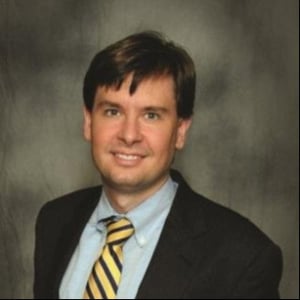
Policy Director, Fulcrum Foundation
Reeve T. Bull is the Policy Director of the Fulcrum Foundation. In this role, he promotes executive and legislative reforms designed to update and streamline the regulatory system. These reforms draw upon the work Mr. Bull undertook in his previous role as the Director of the Virginia Office of Regulatory Management (ORM). During his time at ORM, he led the Commonwealth's efforts related to regulatory streamlining and permitting transparency and the development and implementation of artificial intelligence policy.
Previously, Mr. Bull served as the Research Director of the Administrative Conference of the United States (ACUS). At ACUS, he worked on projects related to international regulatory cooperation, the use of science by administrative agencies, presidential review of agency rulemaking, cost-benefit analysis, government contractor ethics, and e-rulemaking, among other things. Mr. Bull has also served as an Adjunct Professor at the Antonin Scalia Law School and the George Washington University, teaching courses on Administrative Law. Mr. Bull has published numerous articles in highly regarded law journals, including the Administrative Law Review, George Washington Law Review, and Law and Contemporary Problems. Mr. Bull is an Elected Member of the American Law Institute and a Public Member of the Administrative Conference of the United States.
Earlier in his career, Mr. Bull worked in the private sector as an associate with the law firm Gibson, Dunn & Crutcher LLP and in government service as a law clerk to the Honorable Alvin A. Schall of the Federal Circuit Court of Appeals. During his time as an associate with Gibson Dunn, Mr. Bull worked on a variety of litigation and regulatory matters. He participated in cases appearing before the United States Supreme Court, several federal Courts of Appeals, and numerous federal district courts and state trial courts. His experience spanned a variety of practice areas, including administrative, constitutional, intellectual property, antitrust, environmental, securities, and white collar criminal law. During his clerkship for Judge Schall, Mr. Bull assisted with appeals in cases spanning a variety of areas, with particular emphasis on administrative and patent law.
Mr. Bull attended law school at Duke University, where he graduated with highest honors and was inducted into the Order of the Coif. He was one of two recipients of the Willis Smith Award for compiling the most outstanding academic record in the graduating class and the recipient of the James S. Bidlake Memorial Award for achieving the highest grade in his first year legal writing section. Mr. Bull also served as a Note Editor on the Duke Law Journal. Prior to law school, Mr. Bull attended the University of Oklahoma, where he graduated summa cum laude with a Bachelors in Chemistry and was inducted into Phi Beta Kappa.

Director, GW Regulatory Studies Center & Distinguished Professor of Practice, Trachtenberg School of Public Policy & Public Administration, The George Washington University
Susan Dudley is the Founder and Director of the George Washington University Regulatory Studies Center, established in 2009 to raise awareness of regulations’ effects and improve regulatory policy through research, education, and outreach. She is also a distinguished professor of practice in the Trachtenberg School of Public Policy and Public Administration. She is past-president of the Society for Benefit Cost Analysis, a senior fellow of the Administrative Conference of the United States, and on the Regulatory Transparency Project Regulatory Practice Working Group. Her book, Regulation: A Primer, with Jerry Brito, is available on Amazon.com.
From April 2007 through January 2009, Professor Dudley served as the Presidentially-appointed Administrator of the Office of Information and Regulatory Affairs in the U.S. Office of Management and Budget and was responsible for the review of draft executive branch regulations under Executive Order 12866, the collection of federal-government-wide information under the Paperwork Reduction Act, the development and implementation of government-wide policies in the areas of information policy, privacy, and statistical policy, and international regulatory cooperation efforts.
Prior to OIRA, she directed the Regulatory Studies Program at the Mercatus Center at George Mason University, and taught courses on regulation at the George Mason University School of Law. Earlier in her career, Professor Dudley served as an economist at OIRA, as well as the Environmental Protection Agency and the Commodity Futures Trading Commission. She was also a consultant to government and private clients at Economists Incorporated. She holds a Master of Science degree from the Sloan School of Management at MIT and a Bachelor of Science degree (summa cum laude) in Resource Economics from the University of Massachusetts, Amherst.
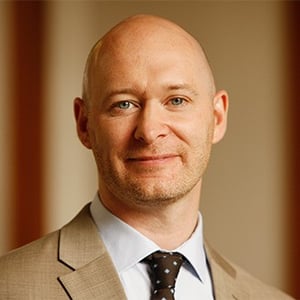
Edward F. Howrey Professor of Law, University of Virginia
Michael Livermore joined the faculty in 2013. He teaches environmental law, administrative law, regulatory law and policy, and advanced seminars on these topics. His research focuses on environmental law, regulation, bureaucratic oversight and the computational analysis of law. He frequently collaborates on interdisciplinary projects with researchers in other academic fields, including economics, computer science and neurology. His work has appeared in leading law journals, including the Yale Law Journal, University of Chicago Law Review, New York University Law Review, Georgetown Law Journal and Duke Law Journal. Livermore is a leading expert on the use of cost-benefit analysis to evaluate environmental regulation, and he is the co-author of Retaking Rationality: How Cost-Benefit Analysis Can Better Protect the Environment and Our Health (Oxford University Press, 2008) and co-editor of The Globalization of Cost-Benefit Analysis in Environmental Policy (Oxford University Press, 2013).
Prior to joining the faculty, Livermore was the founding executive director of the Institute for Policy Integrity at New York University School of Law, a think tank dedicated to improving the quality of government decision-making. In that capacity, he participated in dozens of regulatory proceedings on a diverse set of issues ranging from climate change to prison safety. He remains an active participant in environmental policy discussions. Livermore earned his J.D. magna cum laude from NYU Law, where he was a Furman Scholar, was elected to the Order of the Coif, and served as a managing editor of the Law Review. After law school, he spent a year as a fellow at NYU Law’s Center on Environmental and Land Use Law before clerking for Judge Harry T. Edwards on the U.S. Court of Appeals for the D.C. Circuit.
During the 2018-19 academic year, Livermore is leading an Online Workshop on the Computational Analysis of Law.
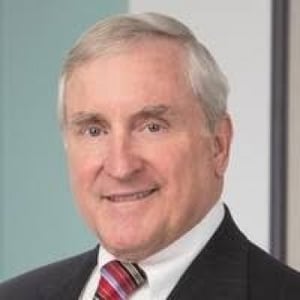
Senior Counsel, Caplin & Drysdale; Adjunct Professor of Law, Georgetown Law
Professor Carney is a Senior Counsel with Caplin & Drysdale, Cht’d. in Washington, D.C. He served as a Trial Attorney for the Tax Division of the U.S. Department of Justice for six years, and was in private (law firm) tax practice for many years, specializing in IRS administrative practice, tax controversies (audit and IRS Appeals Office), and tax litigation. He also advised clients in a similar capacity as a partner in the National Tax Office of Ernst & Young LLP in Washington. He is a member of the District of Columbia bar, as well as the bars of the U.S. Tax Court, U.S. Court of Federal Claims, U.S. District Court for the District of Columbia, and the U.S. Courts of Appeals for the Federal Circuit, D.C Circuit, and Eleventh Circuit.

Professor of Law, University of Baltimore School of Law (on leave); Senior Counsel, U.S. Department of Justice
Professor Dolin’s scholarship centers on patent law with a specific focus on how the patent regime affects innovation, especially in bio-pharmaceutical areas. His work in these areas includes a number of scholarly articles, presentations, amicus briefs, and congressional testimony.
Dr. Dolin is currently on leave from his academic duties while he serves as Senior Counsel in the Civil Rights Division of the United States Department of Justice.
From January 2020 to January 2022, Professor Dolin served as a resident Associate Justice of the Supreme Court of the Republic of Palau. In this role, he (together with other members of the Court) heard appeals in civil, criminal, administrative, and constitutional law matters.
Prior to joining the University of Baltimore School of Law, Professor Dolin held visiting appointments in other law schools. He also served as a law clerk to the Hon. Pauline Newman, of the U.S. Court of Appeals for the Federal Circuit and the late Hon. H. Emory Widener Jr., of the U.S. Court of Appeals for the Fourth Circuit.
Rumors that he has a real Russian bear in his office are entirely true.

Associate Dean for Research and Intellectual Life, McKnight Presidential Professor in Law, Distinguished McKnight University Professor, Harlan Albert Rogers Professor in Law, Associate Director, Corporate Institute, University of Minnesota Law School
Professor Kristin E. Hickman is the McKnight Presidential Professor in Law, a Distinguished McKnight University Professor, and Harlan Albert Rogers Professor in Law at the University of Minnesota Law School. She also has taught at Harvard Law School and Northwestern University School of Law. Professor Hickman teaches and writes primarily in the areas of administrative law, tax administration, and statutory interpretation. Her articles on these topics have appeared in the Columbia Law Review, Cornell Law Review, Virginia Law Review, Duke Law Journal, and other publications. She also co-authors the Administrative Law Treatise with Richard J. Pierce, Jr., and a casebook on federal administrative law with Pierce and Christopher J. Walker. Her scholarly work has been cited several times in opinions of the United States Supreme Court as well as regularly in lower court judicial opinions and court briefs.
In 2018-19, Professor Hickman served as Special Adviser to the Administrator of the Office of Information and Regulatory Affairs in Washington, D.C. She presently serves as a Senior Fellow, and previously served as a public member and chair of the judicial review committee, for the Administrative Conference of the United States. She also is a Fellow of the American College of Tax Counsel.
Professor Hickman received her B.S. degree in business administration with a concentration in accounting and a secondary major in history from Trinity University in San Antonio, Texas. After practicing for several years as a certified public accountant, Professor Hickman earned her J.D. degree, magna cum laude, from Northwestern University School of Law, where she was awarded the Raoul Berger Prize and the Lowden Wigmore Prize for her scholarly writings. Following law school, Professor Hickman clerked for The Honorable David B. Sentelle of the United States Court of Appeals for the District of Columbia Circuit and practiced law as an associate with the Chicago office of Skadden, Arps, Slate, Meagher & Flom, concentrating on corporate and international tax transactions and matters.
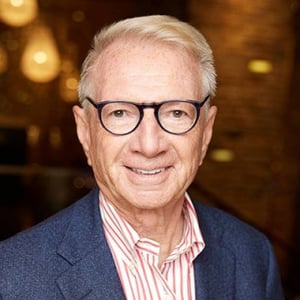
Senior Labor and Employment Counsel, CHRO Association
Roger King is a highly regarded labor relations attorney, whose career spans more than 40 years. Roger recently retired as a partner with Jones Day law firm. He now serves as Senior Labor and Employment counsel for the Association.
Roger specializes in labor and employment, healthcare, collective bargaining, contract administration and representation campaigns. Roger represented the winning side as co-counsel in the landmark U.S. Supreme Court case known as Noel Canning, which successfully challenged President Obama’s authority to make recess appointments to the National Labor Relations Board.
After graduating from Cornell University Law School, he was a Captain and Legal Services Officer in the United States Air Force, on the Staff of United States Senator Robert Taft, Jr. and, subsequently, was appointed as Professional Staff Counsel to the United States Senate Labor Committee.
Roger has testified before both the U.S. Senate and House Labor Committees, is a fellow of the College of Labor and Employment Lawyers, and serves on the Advocacy Committee of the American Society for Healthcare Human Resources Association (ASHHRA) and on the Executive Committee of the Ohio State Bar Association Labor and Employment Law Section Council.
He is a nationally recognized author/speaker on employment matters and has represented employers regarding labor and employment issues both before administrative agencies and in federal and state courts. He has represented the U.S. Chamber of Commerce, the Society for Human Resource Management (SHRM), the HR Policy Association (HRPA), the National Manufactures Association (NAM), the American Hospital Association (AHA), and the Coalition for a Democratic Workplace (CDW) in federal courts regarding numerous labor law issues.
Other clients Roger has represented include the Cleveland Clinic Foundation, Catholic Health Partners, MedStar Health, HCA, Texas Health Resources, Unity Point Health, UHS, Trinity Health, National Beef, General Cable, Orlando Health, ProMedica, Premier Health, Cedars-Sinai, Yale New Haven Health System, McLaren Health Care Corporation, Ohio, California and American Hospital Associations, Bon Secoure Health System, Kaleida Health, Sisters of Levenworth Health System, Lakeland Regional Medical Center, Clarion Clinic, Fisher-Titus Medical Center, Saint Joseph Health System, Benefis Healthcare, Community Health Systems, American Water Works, Macy’s Inc., Verizon and General Motors.
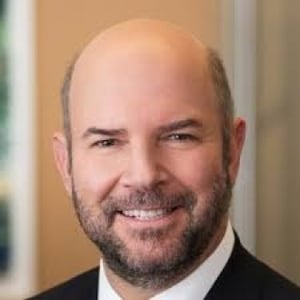
Partner, Morgan, Lewis & Bockius LLP
Philip A. Miscimarra is the former Chairman of the National Labor Relations Board (NLRB). Phil leads the firm’s NLRB special appeals practice and is co-leader of Morgan Lewis Workforce Change, which manages all employment, labor, benefits, and related issues arising from mergers, acquisitions, startups, workforce reductions, and other types of business restructuring. He represents clients on a wide range of labor and employment issues, with a focus on labor-management relations, business acquisitions and restructuring, and employment litigation. Phil is also a Senior Fellow at the University of Pennsylvania's Wharton School and the Wharton Center for Human Resources. He is admitted in Illinois only, and his practice is supervised by DC Bar members.
Phil was named Chairman of the NLRB by President Donald J. Trump on April 24, 2017, after previously serving as Acting Chairman and a Board Member. He was appointed to the NLRB by President Barack Obama on April 9, 2013, and was approved unanimously by the Senate Committee on Health, Education, Labor, and Pensions on May 22, 2013. He was confirmed by voice vote in the US Senate on July 30, 2013, and served from August 7, 2013, to December 16, 2017. Upon the completion of his term, Phil served on the NLRB longer than 26 other board members over the past 30 years.
Phil is the author or co-author of several books involving labor law issues, including The NLRB and Managerial Discretion: Subcontracting, Relocations, Closings, Sales, Layoffs, and Technological Change (2d ed. 2010) (by Miscimarra, Turner, Friedman, Callahan, Conrad, Lignowski and Scroggins); The NLRB and Secondary Boycotts (3d ed. 2002) (by Miscimarra, Berkowitz, Wiener and Ditelberg); and Government Protection of Employees Involved in Mergers and Acquisitions (1989 and 1997 supp.) (by Northrup and Miscimarra); and other publications. He has also testified on labor and employment law issues in the United States Congress.
Chambers USA named Phil one of the leading lawyers for employment law in the United States from 2004 to 2012, based on the views of clients, peers, and other industry professionals. He has been described as a "fantastic lawyer" and "prolific writer," with clients admiring his "multilayered abilities and business savvy" and his "high level of integrity."
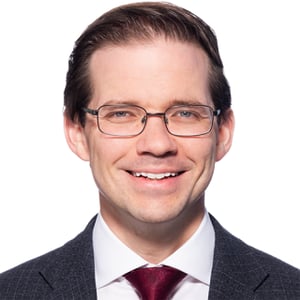
Of Counsel, Covington & Burling LLP
The Honorable Paul J. Ray is currently Of Counsel at Covington & Burling LLP where he advises clients on regulatory opportunities and challenges and helps them formulate and execute advocacy strategies for their regulatory policy priorities before the executive branch and Congress.
During the first Trump Administration, Paul held various senior positions at the Office of Information and Regulatory Affairs (OIRA) within the White House’s Office of Management and Budget, including as acting, and then Senate-confirmed, head of the office. As OIRA Administrator (the "regulations czar"), Paul supervised the review of hundreds of regulations from across the government, drafted numerous executive orders governing the regulatory process, and led the Administration’s regulatory reform effort. As a result of this experience, Paul is well-positioned to help clients understand and achieve regulatory policy priorities in the context of the government’s regulatory agenda and ongoing reform efforts.
Most recently, Paul was also the Director of the Roe Institute for Economic Policy Studies at The Heritage Foundation. In that role, he supervised the formulation of the Foundation’s economic and regulatory policy recommendations and provided technical assistance to congressional committees and staff regarding legislative changes to the regulatory process. In addition to his role at The Heritage Foundation, Paul also served as a Senior Advisor at a strategic advisory firm. Before his time in government, Paul practiced law at a law firm in Washington, specializing in administrative law matters.
Prior to his role at the White House, Paul was Counselor to the Secretary at the U.S. Department of Labor. There he led departmental efforts in high-profile rulemakings and helped formulate the Department’s legal positions and strategy.
Paul served as a law clerk to Supreme Court Justice Samuel Alito and as a law clerk to the Honorable Debra Livingston of the U.S. Court of Appeals for the Second Circuit.
Paul is a thought leader in the conservative legal movement and is a frequent commentator and speaker on regulatory policy and reform matters, including at law schools, professional gatherings, and other venues. He is the Chairman of Innovations in Peacebuilding International and the Regulatory Process Working Group of the Federalist Society’s Regulatory Transparency Project and a public member of the Administrative Conference of the United States. Paul is also an adjunct lecturer at the Hillsdale College School of Government.
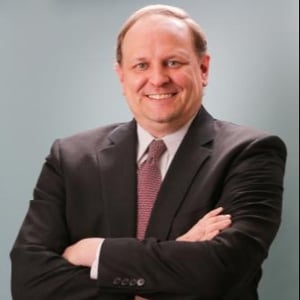
Director, Center for Legal Policy, Manhattan Institute for Policy Research
James R. Copland is a senior fellow at the Manhattan Institute and director of Legal Policy. In those roles, he develops and communicates novel, sound ideas on how to improve America’s civil- and criminal-justice systems. His forthcoming book, The Unelected: How an Unaccountable Elite is Governing America (Encounter Books) will be released on September 8, 2020. He has testified before Congress as well as state and municipal legislatures; and has authored many policy briefs, book chapters, articles and opinion pieces in a variety of publications, including the Harvard Business Law Review and Yale Journal on Regulation, the Wall Street Journal, National Law Journal, and USA Today. Copland speaks regularly on civil- and criminal-justice issues; has made hundreds of media appearances in such outlets as PBS, Fox News, MSNBC, CNBC, Fox Business, Bloomberg, C-Span, and NPR; and is frequently cited in news articles in the New York Times, Washington Post, The Economist, and Forbes. In 2011 and 2012, he was named to the National Association of Corporate Directors “Directorship 100” list, which designates the individuals most influential over U.S. corporate governance.
Prior to joining MI, Copland was a management consultant with McKinsey and Company in New York. Earlier, he was a law clerk for Ralph K. Winter on the U.S. Court of Appeals for the Second Circuit. Copland has been a director of two privately held manufacturing companies since 1997 and has served on many public and nonprofit boards. He holds a J.D. and an M.B.A. from Yale, where he was an Olin Fellow in Law and Economics; an M.Sc. in the politics of the world economy from the London School of Economics; and a B.A. in economics from the University of North Carolina at Chapel Hill, where he was a Morehead Scholar.
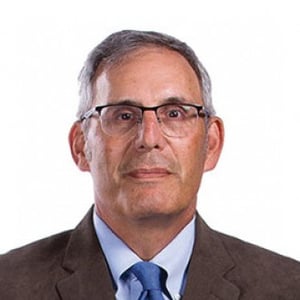
Harry Elwood Warren Scholar and Professor of Law, Boston University Law School
Jack Beermann’s scholarship focuses on two areas: civil rights litigation and administrative law. He is an authority on the circumstances under which state and local officials, and local governments, should be held liable for their constitutional violations. “What particularly fascinates me is studying the values underlying our public law system and how social movements and history have affected those values,” he says.
Professor Beermann has authored or co-authored four books on administrative law, including a widely-used casebook and the Emanuel Law Outline on the subject. He has also written extensively on the degree to which federal courts should defer to the legal determinations of federal agencies, on the problem of midnight rulemaking, in which outgoing administrations promulgate dozens of regulations at the end of their administrations and on the legal aspects of the funding crisis facing public employee pension funds in the United States.
His articles have appeared in prominent American journals such as the Stanford Law Review, UCLA Law Review, Duke Law Journal, and Boston University Law Review, and in foreign law journals including Germany’s Rechtstheorie and China’s Administrative Law Review. Recent articles include “The Public Pension Crisis” in the Washington & Lee Law Review, “Congressional Administration” in the San Diego Law Review and the “Constitutional Law of Presidential Transition” in the North Carolina Law Review. In 1998, he co-authored an article that examined civil rights violations in the popular television drama NYPD Blue and in 1993 he wrote “The Supreme Court’s Narrow View on Civil Rights” for the prestigious Supreme Court Review.
Before joining the Boston University faculty in 1984, Professor Beermann clerked for Judge Richard Cudahy of the United States Court of Appeals for the Seventh Circuit. In 2017, he was appointed as a public member of the Administrative Conference of the United States. In 2008, 2011 and 2014 he was visiting professor at Harvard Law School and in 1997, he was distinguished visiting professor at DePaul Law School. In 2004, 2005 and 2007, he taught at the Interdisciplinary Center in Herzliya, Israel, and in 2002, he taught at the China University of Political Science and Law in Beijing. He has lectured in Israel, Germany, Australia, Morocco, Portugal and Canada. At BU Law, Professor Beermann teaches administrative law, civil rights litigation, and constitutional law. In recent years, he has also taught introduction to American law (for foreign LLM students) and local government law.
Senior Policy Analyst, GW Regulatory Studies Center
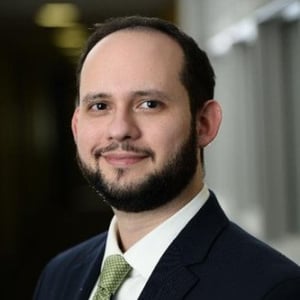
Daniel is a senior policy analyst at the GW Regulatory Studies Center. His professional experience includes work as a private sector energy analyst, where he studied the outcomes and regulatory environment of state-owned oil companies. Daniel’s research interests include privacy, effects of regulation on international trade and investment, the international energy market, and national security. Daniel is also a PhD. student at the Trachtenberg School of Public Policy & Public Administration.

Laurence H. Silberman Chair in Constitutional Governance, American Enterprise Institute; Executive Director, Antonin Scalia Law School’s C. Boyden Gray Center for the Study of the Administrative State
Adam J. White is the Laurence H. Silberman Chair in Constitutional Governance and senior fellow at the American Enterprise Institute, where he focuses on the Supreme Court and the administrative state. He also directs the Antonin Scalia Law School’s C. Boyden Gray Center for the Study of the Administrative State.
He writes on regulation and constitutional government for a variety of publications. He practiced law in Washington, D.C., after clerking for the D.C. Circuit's Judge David Sentelle. He also has been chairman of the ABA's Administrative Law Section.
In 2021, he served on the Presidential Commission on the Supreme Court of the United States, where he criticized “Court packing” and other efforts to restructure the Supreme Court.

Deputy Secretary of Transportation, US Department of Transportation
Steven G. Bradbury was sworn in as the Deputy Secretary of Transportation on March 13, 2025, following his confirmation by the U.S. Senate on March 11, 2025. In this role, he oversees the Department’s operating administrations and spearheads initiatives to ensure a safe, efficient, and modern transportation system that strengthens economic productivity and global competitiveness. Deputy Secretary Bradbury also assists Secretary Duffy in managing the Department’s activities, including its workforce of over 58,000 employees and an annual budget exceeding $109 billion.
Bradbury previously served as the 23rd General Counsel of the Department of Transportation from 2017 to 2021, as the Acting Deputy Secretary from 2019, and as Acting Secretary of Transportation in 2021. As General Counsel, he was the chief legal officer, advising on all legal matters and ensuring the integrity and compliance of the Department’s policies and programs.
Before rejoining DOT, Bradbury was a Distinguished Fellow at The Heritage Foundation from December 2022 to March 2025. He has extensive experience in the public and private sector, having served as Principal Deputy and Acting Assistant Attorney General at the U.S. Department of Justice and as a partner at Kirkland & Ellis LLP and Dechert LLP. Earlier in his career, he clerked for Justice Clarence Thomas and Judge James L. Buckley.
Bradbury holds a J.D., magna cum laude, from the University of Michigan Law School and a B.A. in English from Stanford University.

Director, Clean Air, Climate & Clean Energy Program, Natural Resources Defense Council
John Walke has spearheaded the organization’s national clean-air advocacy before Congress, in the courts, at the U.S. Environmental Protection Agency, and before the public since 2000. Before joining NRDC, he spent three years working as an attorney in the EPA’s Office of General Counsel, where he handled cases related to permitting, air toxins, monitoring, and enforcement under the Clean Air Act. Prior to that, he was an associate in a private law firm based in Washington, D.C. Walke is a graduate of Duke University and Harvard Law School. He is based in Washington, D.C.
Laurence H. Silberman Chair in Constitutional Governance, American Enterprise Institute; Executive Director, Antonin Scalia Law School’s C. Boyden Gray Center for the Study of the Administrative State
Adam J. White is the Laurence H. Silberman Chair in Constitutional Governance and senior fellow at the American Enterprise Institute, where he focuses on the Supreme Court and the administrative state. He also directs the Antonin Scalia Law School’s C. Boyden Gray Center for the Study of the Administrative State.
He writes on regulation and constitutional government for a variety of publications. He practiced law in Washington, D.C., after clerking for the D.C. Circuit's Judge David Sentelle. He also has been chairman of the ABA's Administrative Law Section.
In 2021, he served on the Presidential Commission on the Supreme Court of the United States, where he criticized “Court packing” and other efforts to restructure the Supreme Court.

Deep Dive Episode 151 – Public Input in Agency Rulemaking
Steven Balla, Reeve T. Bull, Susan E. Dudley, Michael Livermore
When the FCC put forward its proposed repeal of the net neutrality rule, it received...
The Implications and Importance of CIC Services, LLC v. Internal Revenue Service
Robert T. Carney, Gregory Dolin, Kristin E. Hickman
On December 1st, the Supreme Court heard oral arguments in the case CIC Services, LLC v....
Topics
Full Disclosure: The Unitary Executive Theory’s Recent Cameo at Supreme Court Oral Argument in a FOIA Case
The Federalist Society is pleased to announce its Student Blog Initiative, a project of the...
The NLRB: What’s the Latest, and What to Expect for 2021?
G. Roger King, Philip A. Miscimarra
The National Labor Relations Board has been busy, with new standards about offensive workplace conduct,...
Topics
The House Staff Antitrust Report Will Negatively Affect More Than the Tech Industry
That's Debatable is a new blog initiative bringing together legal and policy experts with differing perspectives...
Topics
Section 230 Legal Issues: The FCC's Authority and the First Amendment
That's Debatable is a new blog initiative bringing together legal and policy experts with differing perspectives...
Capital Conversations: Hon. Paul J. Ray, OIRA Administrator
Paul J. Ray
Join us as Paul Ray, the Administrator of the Office of Information and Regulatory Affairs at...
Race and Policing
James R. Copland
In this teleforum, James R. Copland will discuss competing legislative proposals in Congress, in the...
Minutes to Midnight, or Teeing Up a Second Term?
Jack Beermann, Daniel R. Pérez, Adam White
The next presidential inauguration will be on January 20, 2021. The six months between then...
Executive Orders on Guidance: Implications and Next Steps
Steven Gill Bradbury, John Walke, Adam White
In October of 2019, President Trump issued an executive order that imposed a series of...