
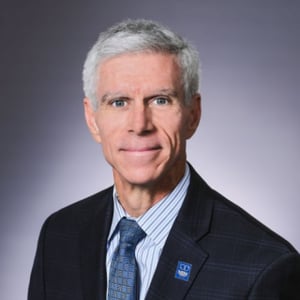
Professor of Law and Former President and Dean, South Texas College of Law Houston
Michael F. Barry was the 11th president and dean of Houston’s oldest law school, South Texas College of Law Houston.
For more than two decades, he has provided confident leadership, innovative strategies, actionable recommendations, and practical management to Fortune 200 clients, in higher education, and in community service.
Barry joined South Texas in fall 2019 after serving as assistant dean and practitioner in residence at St. Mary’s University School of Law in San Antonio, Texas. Among his responsibilities were developing new programs; increasing outreach to partners, donors, employers, and alumni; supporting and fundraising for initiatives that benefited St. Mary’s University and its students and alumni; managing law school operations to support faculty and student needs; and developing and teaching courses and extracurricular programs. Bringing business acumen, budgeting, change management, and leadership skills from his years in legal practice and in business, Barry initially designed St. Mary’s University School of Law’s comprehensive Law Success academic support program, became a leader in using data to support student success, and directed operations and budget for the School of Law. An engaged teacher, Barry excels at bringing real-world experiences into the legal classroom.

Judge, United States Court of Appeals, Ninth Circuit
Judge Carlos Bea serves as a judge on the United States Court of Appeals for the Ninth Circuit. He received his Bachelor's Degree from Stanford University in 1956 and his J.D. from Stanford Law School in 1958. Judge Bea was born in San Sebastian, Spain, and immigrated with his family to Cuba in 1939. In 1952, he represented Cuba on the Cuban National basketball team in the Helsinki Olympics. Judge Bea became a naturalized citizen of the United States in 1958. He engaged in private practice in San Francisco, principally in the area of civil trials (jury and non-jury), from 1959-75 at Dunne, Phelps & Mills and from 1975-90 at Carlos Bea, A Law Corporation. He taught courses in civil litigation advocacy at Hastings College of Law and Stanford Law School. From 1990 to 2003, Judge Bea served as a judge of the San Francisco Superior Court. He was nominated by President George W. Bush to the United States Court of Appeals for the Ninth Circuit and was confirmed in 2003.
Judge Bea and his wife Louise reside in San Francisco, where they raised their four sons, Sebastian, Alexander, Nicholas, and Dominic.
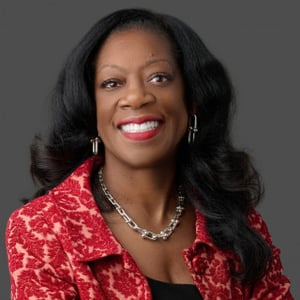
Dean and Harold H. Greene Professor of Law, George Washington University
Dean Matthew joined GW Law in August 2020, to become the first woman to lead the law school as dean in the school’s 158-year history.
Prior to her tenure at UVA, she served as professor of law, vice dean and associate dean of academic affairs at the University of Colorado Law School, where she co-founded and directed The Colorado Health Equity Project, an incubator for medical-legal partnerships that removed legal barriers to good health for underrepresented patients.
Dean Matthew has once again founded her third research organization – a new research institute at GW. She is the founder and inaugural faculty director of GW’s newly chartered Equity Institute, an interdisciplinary research hub dedicated to addressing racial, ethnic, and socioeconomic injustice in the United States and globally.
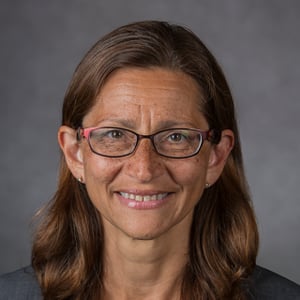
Managing Director, Accreditation and Legal Education, ABA
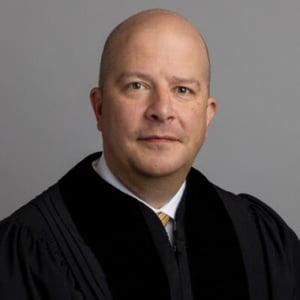
Chief Justice, Supreme Court of Georgia
Chief Justice Nels Peterson was appointed to the Georgia Supreme Court in 2016, and was elected to full six-year terms in 2018 and 2024. He previously served in a variety of other roles in Georgia state government, including as judge on the Georgia Court of Appeals, general counsel for the University System of Georgia, Georgia’s first solicitor general in the Attorney General’s Office, and executive counsel to the Governor.
Before entering state government, Nels practiced at King & Spalding LLP in Atlanta and clerked for Chief Judge William H. Pryor Jr. of the United States Court of Appeals for the Eleventh Circuit. He is a graduate of Kennesaw State University and Harvard Law School. Nels and his wife Jennifer have two children and live in Cobb County, where they teach adult Sunday school at Johnson Ferry Baptist Church.
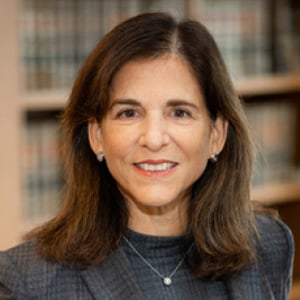
Professor of Clinical Law, Brooklyn Law School
Jodi S. Balsam is Professor of Clinical Law at Brooklyn Law School and a nationally recognized expert on Sports Law. She directs the BLS Sports Law Clinic and Sports Law Externship Program. She teaches Sports Law at both BLS and NYU School of Law, and has also taught the subject at New York Law School, University of New Hampshire School of Law, Bucerius Law School in Hamburg, Germany, Mathias Corvinus Collegium in Budapest, Hungary, and the MESGO Executive Masters Program in Global Sport Governance. Professor Balsam has served as an arbitrator for the National Collegiate Athletic Association on complex infractions cases, and now serves as a neutral for FAIR Sports, which hears cases involving college athletics.
Professor Balsam frequently writes and speaks on sports law topics, including as co-author of Weiler’s Sports and the Law, a leading casebook in the field. Her publications and presentations have addressed antitrust challenges to sports leagues and organizing bodies, sports trademarks, athletes’ rights of free expression and name/image/likeness exploitation, sports gambling and integrity, sports league governance, and the role of the sports agent. She frequently appears in the media on legal issues in sports, including NBC Sports/The Golf Channel, ESPN, Law360 Sports and Betting, The Athletic, Front Office Sports, USA Today, and the Wall Street Journal. She is on the editorial boards of Law360-Sports & Betting, the Journal of Legal Aspects of Sport, and the international sports law newsletter LawInSport.
Before joining academia, Professor Balsam was the National Football League's Counsel for Operations and Litigation, where she managed litigation in all areas of law, oversaw a variety of policy and operational matters, negotiated and drafted contracts for League special events including the Super Bowl, and administered the League's internal dispute resolution processes and compliance program. Prior to the NFL she was a litigator with the New York office of Simpson Thacher & Bartlett, where she represented sports and entertainment clients in antitrust matters and complex commercial litigation. She served as a law clerk for Judge Dennis Jacobs of the U.S. Court of Appeals for the Second Circuit and for Judge Charles Brieant of the U.S. District Court for the Southern District of New York. A graduate of Yale College, Professor Balsam received her law degree from NYU School of Law.

Senior Vice President for Legal Studies, Cato Institute
Clark Neily is senior vice president for legal studies at the Cato Institute. His areas of interest include constitutional law, overcriminalization, civil forfeiture, police accountability, and gun rights. Neily is the author of Terms of Engagement: How Our Courts Should Enforce the Constitution’s Promise of Limited Government. His writing has appeared in the Wall Street Journal, Forbes, and National Review Online, as well as various law reviews, including the Harvard Journal of Law and Public Policy, George Mason Law Review, Georgetown Journal of Law and Public Policy, NYU Journal of Law and Liberty, and Texas Review of Law and Politics. Neily is a frequent guest speaker and lecturer for the Federalist Society, Institute for Humane Studies, and American Constitution Society.
Before joining Cato in 2017, Neily was a senior attorney and constitutional litigator at the Institute for Justice and director of the Institute’s Center for Judicial Engagement. He is also an adjunct professor at the University of Texas School of Law, where he teaches constitutional litigation and public-interest law.
Neily served as co-counsel in District of Columbia v. Heller, the historic case in which the Supreme Court held for the first time that the Second Amendment protects an individual right to own a gun for self-defense.
Neily began his legal career as a law clerk to Judge Royce Lamberth on the U.S. District Court for the District of Columbia. After that he spent four years in the trial department of the Dallas-based firm Thompson & Knight. Neily received his undergraduate and law degrees from the University of Texas, where he was Chief Articles Editor of the Texas Law Review.
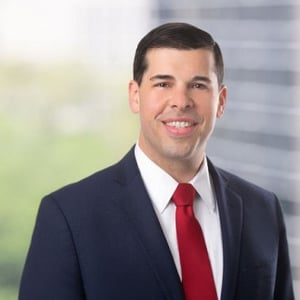
Partner, Boies Schiller Flexner LLP
Jesse, the former third-ranking official at the U.S. Department of Justice, helps clients with their most difficult litigation and regulatory issues─whether that means defending against an enforcement action, pursuing high-stakes litigation and appeals, navigating regulatory thickets at federal and state agencies, or crafting a comprehensive strategy to manage a crisis. He approaches these problems with the knowledge gained both from his broad private-practice experience and from having served at the highest levels of federal and state government.
Jesse has experience across a range of substantive and regulatory areas. He has sued the federal government and has also been one of its top law-enforcement officials; he has represented states and has also navigated their regulatory agencies on behalf of clients; and he has represented companies in business disputes, both as defendants and plaintiffs.
Before joining the firm, Jesse was the Acting Associate Attorney General at the United States Department of Justice. In that role, he oversaw the civil and criminal work of the Antitrust, Civil, Civil Rights, Environment and Natural Resources, and Tax Divisions. During Jesse’s tenure, the Associate’s office closely managed the Department’s most significant litigation, including matters involving large financial institutions, healthcare companies, automakers, energy companies, and state and local governments. In addition, Jesse served as Chair of DOJ’s Regulatory Reform Task Force and Vice Chair of DOJ’s Task Force on Market Integrity and Consumer Fraud. Jesse regularly provided legal and strategic advice to the highest-level decision makers in the federal government, including the Attorney General and Deputy Attorney General, general counsels across the spectrum of federal agencies, and White House officials.
Jesse served for three years as the secretary of Florida’s labor, economic-development, and land-use agency, the Florida Department of Economic Opportunity. Before that, he served as Governor (now Senator) Rick Scott’s general counsel.
Jesse maintains offices in both Washington D.C. and Florida. From Washington, he focuses on federal litigation and crisis management. In Florida, in addition to federal litigation, Jesse employs his knowledge of state government and regulation to help clients in courts across the state, from trial through the Florida Supreme Court.
Jesse currently serves on the Florida Supreme Court Judicial Nominating Commission, the body that provides the governor with nominees for appointment to the Florida Supreme Court. Jesse is also a fellow at the Center for the Study of the Administrative State at the Scalia Law School at George Mason University, where he writes and speaks about administrative law.
Chairman, Cato Institute
Robert A. Levy is chairman of the Cato Institute's board of directors. He joined Cato as senior fellow in constitutional studies in 1997 after 25 years in business. He also sits on boards of the Institute for Justice, the Federalist Society, and the George Mason University School of Law. He founded CDA Investment Technologies, a major provider of financial information and software, and was its CEO until 1991. Levy clerked for Judge Royce C. Lamberth on the U.S. District Court in Washington, D.C., and for Judge Douglas H. Ginsburg on the U.S. Court of Appeals for the D.C. Circuit. From 1997 until 2004, Levy was an adjunct professor of law at Georgetown University. He has written numerous articles on investments, law, and public policy. His writing has appeared in the New York Times, Wall Street Journal, USA Today,Washington Post, National Review, and many other publications. Levy has also discussed public policy on national radio and TV programs, including ABC's Nightline, CNN's Crossfire, Fox's The O'Reilly Factor, MSNBC's Hardball, and NBC's Today Show. His latest book, co-authored with William Mellor, is The Dirty Dozen: How Twelve Supreme Court Cases Radically Expanded Government and Eroded Freedom. Levy received his Ph.D. in business from the American University and his J.D. degree from the George Mason University School of Law.
Senior Vice President for Legal Studies, Cato Institute
Clark Neily is senior vice president for legal studies at the Cato Institute. His areas of interest include constitutional law, overcriminalization, civil forfeiture, police accountability, and gun rights. Neily is the author of Terms of Engagement: How Our Courts Should Enforce the Constitution’s Promise of Limited Government. His writing has appeared in the Wall Street Journal, Forbes, and National Review Online, as well as various law reviews, including the Harvard Journal of Law and Public Policy, George Mason Law Review, Georgetown Journal of Law and Public Policy, NYU Journal of Law and Liberty, and Texas Review of Law and Politics. Neily is a frequent guest speaker and lecturer for the Federalist Society, Institute for Humane Studies, and American Constitution Society.
Before joining Cato in 2017, Neily was a senior attorney and constitutional litigator at the Institute for Justice and director of the Institute’s Center for Judicial Engagement. He is also an adjunct professor at the University of Texas School of Law, where he teaches constitutional litigation and public-interest law.
Neily served as co-counsel in District of Columbia v. Heller, the historic case in which the Supreme Court held for the first time that the Second Amendment protects an individual right to own a gun for self-defense.
Neily began his legal career as a law clerk to Judge Royce Lamberth on the U.S. District Court for the District of Columbia. After that he spent four years in the trial department of the Dallas-based firm Thompson & Knight. Neily received his undergraduate and law degrees from the University of Texas, where he was Chief Articles Editor of the Texas Law Review.

Professional Responsibility: Oversight or Micromanagement? The ABA & Law Schools
Michael F. Barry, Carlos T. Bea, Dayna Bowen Matthew, Jennifer Rosato Perea, Nels S.D. Peterson
In 2022, the ABA updated its Standard 303, Curriculum which relates to “cross-cultural competency” and...
Topics
Sunshine Week Event With Judge Royce Lamberth
Each year, the National Archives and its Office of Government Information Services holds a series...
Ex-Prosecutors And The Federal Judiciary
Jodi S. Balsam, Clark Neily, Jesse Panuccio
Amongst the many studies of the makeup of the Federal Judiciary, one particularly noticeable characteristic is the...
The Great Wedding Cake Debate: Anti-Discrimination Law & the First Amendment
Charlotte, NCTopics
Supreme Court Refusal to Review the “Net Worth Sweep” Does Not Totally Sweep Away Investors’ Claims
On February 20, the Supreme Court denied the petitions for a writ of certiorari filed...
The D.C. Circuit Decision On The "Net Worth Sweep" Was Not A Clean Sweep For The Government
Overlooked by much of the commentary on the D.C. Circuit’s recent decision on the Treasury...
The War on Economic Liberty: An Update from the Front
IrvineFrom Obamacare to Cat Care: Is There Anything the Feds Can't Do?
From Obamacare to Cat Care: Is There Anything the Feds Can't Do?
Jacksonville, FloridaTerms of Engagement
Houston, Texas