
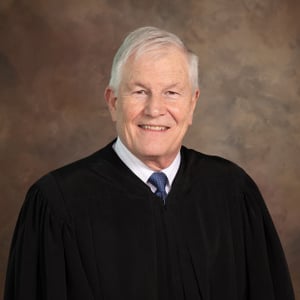
Judge, United States Court of Appeals, Eighth Circuit
Judge William Duane Benton is a federal judge on the United States Court of Appeals for the 8th Circuit. He joined the court in 2004 after being nominated by former President George W. Bush. Prior to his appointment, Judge Benton served as the chief justice of the Missouri Supreme Court. During his service on the court he received his masters of laws from the University of Virginia, completed the senior executives program at Harvard University’s John F Kennedy School of Government, and completed a post-graduate appellate judges course at New York University’s Institute of Judicial Administration.
Prior to serving on the Supreme Court of Missouri, Judge Benton was appointed by then-Governor John Ashcroft as director of the state’s department of revenue. Judge Benton also worked as a judge advocate general for the United States Navy, during which time he received his master’s degree in business administration and accountancy from the University of Memphis.
Judge Benton earned his law degree from Yale Law School and was the managing editor of the Yale Law Journal.
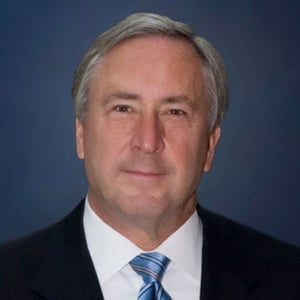
Senior Judge, United States District Court for the Eastern District of Missouri
Stephen N. Limbaugh, Jr., is a Senior U. S. District Judge for the Eastern District of Missouri. He formerly served as prosecuting attorney of Cape Girardeau County, as Circuit Judge for the 32nd Judicial Circuit, and as a judge and chief justice on the Supreme Court of Missouri. He was appointed to the federal bench in 2008 by President George W. Bush, and has since served as the resident district judge in the Rush Hudson Limbaugh, Sr. United States Courthouse in Cape Girardeau, named after his grandfather. Judge Limbaugh's father, Stephen N. Limbaugh, Sr., is a retired U. S. District Judge, and his son, Christopher K. Limbaugh, is a judge on the Circuit Court of Cole County.
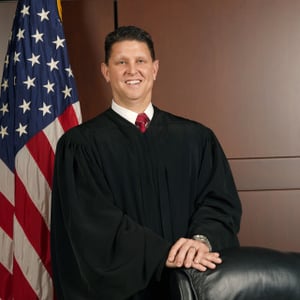
Judge, United States District Court, Eastern District of Missouri.
Matthew T. Schelp serves as a United States District Judge for Eastern District of Missouri. Schelp began his tenure In August 2020 when he replaced District Judge Stephen N. Limbaugh, Jr.
Before being sworn in, Schelp served in a variety of roles in both the public and private sector. Most recently, he was a partner at the firm of Husch Blackwell, where he chaired the firm’s government compliance, investigations and litigation practice group. Prior to his time at Husch Blackwell, Schelp served as an Assistant United States Attorney, and as a Judge Advocate in the United States Navy’s Judge Advocate General Corps. Schelp received both his bachelor's and law degrees from the University of Missouri.
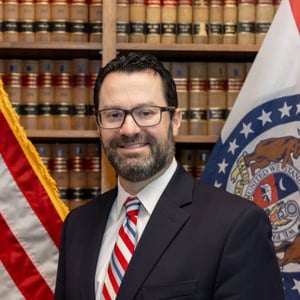
Judge, U.S. District Court, Eastern District of Missouri
Judge Cristian M. Stevens was appointed by Governor Mike Parson to the Missouri Court of Appeals-Eastern District in October 2021. Before taking the bench, Judge Stevens was the First Assistant Attorney General to Missouri Attorney General Eric Schmitt. He is a sixth-generation Missourian, raised in St. Charles County, and a graduate of the University of Missouri-Columbia School of Law, where he was editor-in-chief of the Missouri Law Review. Upon graduation, he served as law clerk to the Honorable Pasco M. Bowman II, Chief Judge of the Eighth Circuit U.S. Court of Appeals, in Kansas City, Missouri. He has practiced law at several large law firms in St. Louis. He was a federal prosecutor for 15 years at the U.S. Attorney’s Office for the Eastern District of Missouri, where he led the investigation of the August 9, 2014, officer-involved shooting in Ferguson, Missouri. Judge Stevens is married with three children, a parishioner of the Catholic Church, and a member of the Federalist Society.
Missouri Court of Appeals, Eastern District of Missouri
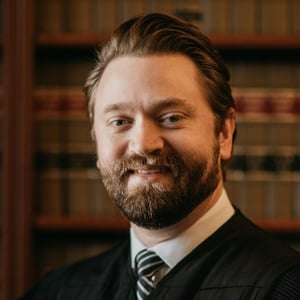
John P. Torbitzky is a judge on the Missouri Court of Appeals, Eastern District. Torbitzky served as a law clerk to the Honorable Zel M. Fischer on the Supreme Court of Missouri before entering private practice. He was appointed to the court in 2021 by Governor Michael L. Parson.

Justice, Supreme Court of Arizona
Clint Bolick was appointed by Governor Doug Ducey in January 2016 to serve on the Arizona Supreme Court and was retained by the voters in 2018 and 2024.
Prior to joining the Court, Justice Bolick litigated constitutional cases in state and federal courts from coast to coast, including the U.S. Supreme Court. Among other positions, he served as Vice President for Litigation at the Goldwater Institute and as Co-founder and Vice President for Litigation at the Institute for Justice. He has litigated in support of school choice, freedom of enterprise, private property rights, freedom of speech, and federalism, and against racial classifications and government subsidies.
Justice Bolick received his Juris Doctor degree from the University of California at Davis, where he has been recognized as a distinguished alumnus, and his Bachelor of Arts degree magna cum laude from Drew University. He serves as a research fellow with the Hoover Institution. Among other honors, he was named one of the 90 Greatest DC Lawyers in the Last 30 Years by Legal Times in 2008, received a Bradley Prize in 2006, and was recognized as one of the nation’s three lawyers of the year by American Lawyer in 2002 for his successful defense of school vouchers in Zelman v. Simmons-Harris.
Justice Bolick is a prolific author of a dozen books and hundreds of articles. Among his most recent books are Unshackled: Freeing America’s K-12 Education System: Immigration Wars: Forging an American Solution, co-authored with former Florida Governor Jeb Bush; and David’s Hammer: The Case for an Activist Judiciary. Bolick serves as an adjunct professor of constitutional law at Arizona State University’s Sandra Day O’Connor School of Law and has served as a lecturer at Harvard University’s John F. Kennedy School of Government.
Judge, United States District Court for the Southern District of Ohio
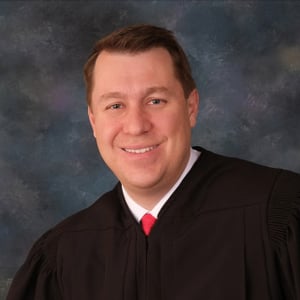
Judge Matthew R. Byrne was nominated to serve on the United States District Court for the Southern District of Ohio by President Donald J. Trump on June 15, 2026. The nomination was confirmed by the United States Senate on September 15, 2026, and Judge Byrne began his federal judicial service on October 2, 2026.
For nearly six years, beginning in 2021, Judge Byrne served as an elected Judge on Ohio’s Twelfth District Court of Appeals, where he heard civil and criminal appeals from trial courts in eight southwest Ohio counties. Judge Byrne served as the Twelfth District Court of Appeals’ Presiding Judge in 2026 and as its Administrative Judge in 2024 and 2025. In his time at the appeals court, Judge Byrne authored 237 majority opinions and a number of concurring and dissenting opinions.
While at the appeals court, Judge Byrne was appointed to serve as Vice Chairman and Member of the Supreme Court of Ohio’s Commission on the Rules of Practice and Procedure in Ohio Courts (where he also served as chair of the Appellate Rules Committee) and as Member of the Board of Commissioners on Character and Fitness. Chief Justice Sharon L. Kennedy appointed Judge Byrne to serve as a visiting judge on the Supreme Court of Ohio in five cases.
From January 2010 to December 2020, Judge Byrne practiced law at the national law firm of Jackson Lewis P.C. He was a member of the firm's General Employment Litigation Practice Group and the Wage and Hour Practice Group. From 2007 to 2010 he practiced at Taft Stettinius & Hollister LLP. At both firms, Judge Byrne represented clients ranging from small businesses to international corporations in state and federal trial and appellate litigation, including multiple class and collective actions. He also represented clients in arbitration and before numerous administrative agencies, including the Equal Employment Opportunity Commission, the National Labor Relations Board, and the Ohio Civil Rights Commission. Judge Byrne's litigation and administrative agency experience included matters in fourteen states.
Judge Byrne earned his law degree, cum laude, from The Ohio State University Moritz College of Law. During law school he was symposium editor of the Ohio State Law Journal and the winner of the Donald S. Teller Memorial Award for student writing contributing most significantly to the Ohio State Law Journal. During law school he working as an Honors Summer Clerk for the Acting General Counsel of the United States Department of the Treasury.
Prior to law school, Judge Byrne served as a member of the White House Staff in the Office of Presidential Personnel. In that role Judge Byrne was responsible for preparing documents submitted to President George W. Bush concerning his selection and nomination of appointees for high-level federal government positions, and for coordinating with the Offices of White House Counsel, Press Secretary, and Executive Clerk regarding candidate background clearances, press announcements, and the status of appointments/nominations.
Judge Byrne earned his bachelor's degree, magna cum laude, from Xavier University, where he majored in International Affairs (Business) and Political Science.
Judge Byrne has been active in numerous community, civic, and religious organizations. He has been a member of the Federalist Society since law school and he served for five years as the president of the Federalist Society's Cincinnati Lawyers Chapter. At various times he has been a member of the Ohio State Bar Association, the Cincinnati Bar Association, the Butler County Bar Association, the Warren County Bar Association, and the Clermont County Bar Association. He is also a former board member and board president of the Saint Thomas More Lawyers Guild of Greater Cincinnati.
Justice, Ohio Supreme Court
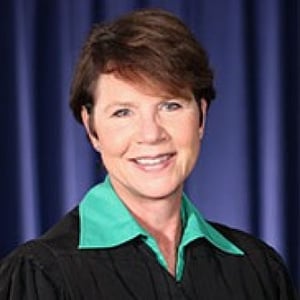
On November 4, 2014, Justice Sharon L. Kennedy was re-elected to a full term on the Supreme Court of Ohio in a decisive victory winning all 88 counties and garnering 73 percent of the vote. Justice Kennedy first joined the court in 2012, having been elected to fill an unexpired term.
Prior to her term on the Ohio Supreme Court, Justice Kennedy served at the Butler County Court of Common Pleas, Domestic Relations Division beginning in 1999. From 2005 until December of 2012, Justice Kennedy served as the administrative judge of that division. During her time as administrative judge, she improved the case management system to ensure the timely resolution of cases for families and children. Working with state legislators she championed a "common sense" family law initiative to reduce multiple-forum litigation for Butler County families.
When Butler County faced tough economic times, Justice Kennedy organized concerned elected officials in a county-wide Budget Work Group. Seeing the need to bring private sector financial know-how to the government, she worked to create the Advisory Committee to the Budget Work Group. Justice Kennedy served as the facilitator and led discussions between county officials and private sector leaders to analyze county finances, study and implement cost saving measures, and present business driven fiscal policy to the county commissioners.
In 1991, after obtaining her law degree from the University of Cincinnati College of Law, Justice Kennedy ran a small business of her own as a solo practitioner. While in private practice she served the legal needs of families, juveniles, and the less fortunate. As special counsel for Attorney General Betty D. Montgomery, Justice Kennedy fought on behalf of Ohio’s taxpayers to collect monies due the State of Ohio. As a part-time magistrate in the Butler County Area Courts, Justice Kennedy presided over a wide array of civil litigation and assisted law enforcement officers and private citizens seeking the issuance of criminal warrants for arrest.
Justice Kennedy began her career in the justice system as a police officer at the Hamilton Police Department. She was assigned to a rotating shift, single-officer road patrol unit working to protect and serve the citizens of the City of Hamilton. From the routine, to the heart-pounding, to the heart-breaking, she has seen it all. During her time as an officer, Justice Kennedy also worked undercover operations, implemented crime prevention programs, and later, as a civil assistant, assisted in drafting police policy and procedure for the Accreditation Program.
Throughout her career Justice Kennedy has served on numerous boards, developed and facilitated programs to address the needs of young people, and worked with judges across the state. As a dedicated jurist she has received multiple awards of recognition including: Leadership Ohio Community Leadership Award, 2016; The University of Cincinnati College of Law Nicholas Longworth, III Alumni Achievement Award, May 17, 2014; Northwest High School Distinguished Alumnus Award, April 25, 2014; named one of 13 professional women to watch by The Cincinnati Enquirer, March 17, 2013; Excellence in Public Service, June 2009; Judge of the Year, 2006; Above the Fold Award, 2002; and the Furtherance of Justice Award, 2001. Justice Kennedy was also featured in Trends in the Judiciary: Interviews with Judges Across the Globe, Volume II, published by CRC Press in February 2015.

Partner, Shumaker, Loop & Kendrick, LLP
Larry builds on a wide range of experiences – including as an accomplished attorney, a former President of the Ohio Senate, and a legal academic – to help solve his clients’ most challenging legal problems. Larry focuses on complex litigation, including high-stakes appeals.
Larry is a Partner in the firm’s Litigation practice. He focuses his practice on litigation at both the trial and appellate levels and has experience in a variety of matters involving antitrust, fiduciary duties, torts, contracts, securities, and employment law. These range from standard contract disputes to constitutional challenges against federal statutes to defending against complex class actions.
In addition to his litigation practice, Larry served as a member of the Ohio Senate for nearly a decade. His colleagues unanimously elected him to serve as Senate President, the presiding officer of the 33-member chamber, from 2017-2020. During his time in the Senate, Larry successfully sponsored legislation on a wide range of topics, including education, tax law, elections administration, criminal law, and corporate law. These included a comprehensive update to Ohio’s corporate code and limited liability company law, including the sections setting out fiduciary duties for officers and shareholders. Larry also sponsored significant updates to Ohio’s Control Share Acquisition Act (which governs corporate takeovers). In 2018, he received the Ohio State Bar Association’s Lawyer-Legislator Distinguished Service Award.
Larry has also taught courses on Civil Procedure and Legislation as an adjunct law professor at Case Western Reserve University School of Law. He has published legal scholarship on a range of issues including constitutional law, education, law and economics, and securities. He has been cited in roughly 75 law journals throughout the country and by a member of the United States Supreme Court.
Larry began his legal career as a law clerk to Judge Alice M. Batchelder of the United States Court of Appeals for the Sixth Circuit. He has worked at some of the nation’s largest law firms and began his private practice by spending more than five years with Chicago-based Kirkland & Ellis LLP.
From 2018-2020, Larry was a Rodel Fellow at the Aspen Institute, a program designed to bring greater civility to public discourse. He is active in the Federalist Society and is a former board member of the Ohio Legal Assistance Foundation (now known as the Ohio Access to Justice Foundation), the statewide umbrella organization for legal aid.

Chief Judge, United States Court of Appeals, Sixth Circuit
JEFFREY S. SUTTON is the Chief Judge of the United States Court of Appeals for the Sixth Circuit. He has served as Chair of the Federal Judicial Conference Committee on Rules of Practice and Procedure, Chair of the Advisory Committee on Appellate Rules, and Chair of the Supreme Court Fellows Commission. He currently serves as Chair of the Executive Committee of the Judicial Conference of the United States. Since 1993, Chief Judge Sutton has been an adjunct professor at The Ohio State University College of Law, where he teaches seminars on State Constitutional Law, the United States Supreme Court, and Appellate Advocacy. He also teaches a class on State Constitutional Law at Harvard Law School. Among other publications, he is the author of Who Decides? States as Laboratories of Constitutional Experimentation and 51 Imperfect Solutions: States and the Making of American Constitutional Law. He is the co-author of a casebook, State Constitutional Law: The Modern Experience, as well as The Law of Judicial Precedent. He is also the co-editor of The Essential Scalia: On the Constitution, the Courts, and the Rule of Law. In 2006, Chief Judge Sutton was elected to the American Law Institute, and in 2017 he was elected to its Council.

Constitutional Scholarship Director and Senior Legal Analyst, Pacific Legal Foundation
Anastasia Boden is Director of Constitutional Scholarship at Pacific Legal Foundation, where she leads the organization’s Supreme Court commentary and directs scholarly analysis in support of the firm’s litigation. She has represented entrepreneurs and small businesses nationwide in challenges to onerous licensing regimes, anti-competitive titling restrictions, Certificate of Need (“competitor’s veto”) laws, and other forms of unnecessary red tape that block economic opportunity.
Prior to this role, Anastasia developed nearly a dozen constitutional challenges to Certificate of Need laws across the country, helping spur legislative reform in Montana, Pennsylvania, and West Virginia. Her victories include a ruling invalidating Houston’s busking restrictions, multiple appellate decisions expanding access to the courts for civil rights plaintiffs, and the legislative repeal of Virginia’s happy-hour advertising ban.
Her writings on law and liberty have been featured in USA Today, The Washington Post, The Wall Street Journal, the Los Angeles Times, the Chicago Tribune, Forbes, and more, and she has appeared on Headline News, CBS News, Fox News, ReasonTV, Newsmax, and John Stossel. In 2020, she was featured on Libertarian Party presidential candidate Jo Jorgensen’s Supreme Court shortlist.
Anastasia earned her BA with dean’s honors from the University of California, Santa Barbara, and her JD from Georgetown University Law Center, where she was research assistant to Professor Randy E. Barnett—the “intellectual godfather” of the constitutional challenge to Obamacare. She is the co-creator of the podcast Dissed, about infamous Supreme Court dissents. She authors the biweekly newsletter SCOTUS Scoop and the column, “In Dissent” for SCOTUSblog.

Professor of Law, South Texas College of Law Houston
Josh Blackman is a national thought leader on constitutional law and the United States Supreme Court. Josh’s work was quoted during two presidential impeachment trials. He has testified before Congress and advises federal and state lawmakers. Josh regularly appears on TV, including NBC, CBS, ABC, Fox, and the BBC. Josh is also a frequent guest on NPR and other syndicated radio programs. He has published commentaries in the New York Times, Wall Street Journal, Washington Post, and leading national publications.
Since 2012, Josh has served as a professor at the South Texas College of Law Houston. He holds the Centennial Chair of Constitutional Law. Josh is an Adjunct Fellow at the Manhattan Institute. Josh has written more than seven dozen law review articles that have been cited more than a thousand times. Josh was selected as the Jurist of the Year by the Texas Journal of Law & Public Policy, received the inaugural Meese III Originalism Award, and was awarded the Inaugural Joseph Story Award. Josh was selected by Forbes Magazine for the “30 Under 30” in Law and Policy. Josh is the President of the Harlan Institute, and founded FantasySCOTUS, the Internet’s Premier Supreme Court Fantasy League. He blogs at the Volokh Conspiracyand posts@JoshMBlackman.
Presiding Judge, Georgia Court of Appeals
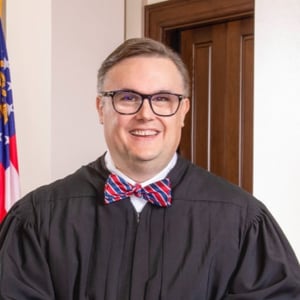
Presiding Judge Stephen Louis A. Dillard was appointed as the 73rd judge of the Court of Appeals of the State of Georgia on November 1, 2010 by Governor Sonny Perdue. Prior to his appointment, Judge Dillard was in private practice with James, Bates, Pope & Spivey in Macon, serving as chairman of the firm’s appellate practice group. Judge Dillard was elected and then reelected by his fellow Georgians in 2012, 2018, and 2024. On July 1, 2017, Judge Dillard was sworn in as the 30th Chief Judge of the Court of Appeals of Georgia for a two-year term that ended on June 30, 2019. He currently serves as the presiding judge of the Court’s Fourth Division, and will begin serving as the presiding judge of the Court’s Third Division in 2026.
Judge Dillard was born in Nashville, Tennessee on November 13, 1969. He attended and graduated from Hillwood High School in Nashville, Tennessee; Samford University (B.A. 1992); Mississippi College School of Law (J.D., cum laude, 1996); and Duke University School of Law (LL.M., Judicial Studies, 2025). In college, Judge Dillard was a member of The Sigma Chi Fraternity and Omicron Delta Kappa. He was also given the Evelyn Meadows Historical Essay Award, as well as the William McMillian Rogers Colonial Dames Overall Essay Award, for “The Tempting of America to be America: Alexander Hamilton and the Federalist Papers.” During law school, Judge Dillard was a member of the Moot Court Board and received the Judge Robert G. Gillespie Outstanding Achievement in Appellate Advocacy Award, as well as the American Jurisprudence Award in Appellate Advocacy. He also served as president of the Mississippi College Chapter of the Federalist Society for Law and Public Policy Studies.
After graduating from law school, Judge Dillard joined the Macon law firm of Stone and Baxter, where he practiced from 1996 until 2001. In September 2001, he left private practice for a two-year period to serve as a law clerk at the U.S. Court of Appeals for the Seventh Circuit for Judge Daniel A. Manion (who was appointed by President Ronald W. Reagan in 1986 and served until 2022). In September 2003, Judge Dillard joined James Bates as of counsel, specialized in appellate practice and complex litigation, and served as chairperson of the firm’s appellate practice group. While in practice, he received an AV® Preeminent™ Peer-Review Rating from Martindale-Hubbell and was named by Super Lawyers as one of Georgia’s “rising stars.”
Additionally, Judge Dillard was appointed by Governor Sonny Perdue to the Judicial Nominating Commission and the Public Defender Selection Panel for the Macon Judicial Circuit. He has published scholarly essays in the Encyclopedia of Civil Liberties, the Encyclopedia of Great American Judges, the Encyclopedia of Great American Lawyers, Judicature, the Green Bag Almanac & Reader, the Journal of Appellate Practice & Process, as well as two articles in the Mercer Law Review regarding the inner workings and culture of the Court of Appeals of the State of Georgia. He was also a participating lawyer with the Criminal Justice Act Appellate Panel for the U.S. Court of Appeals for the Eleventh Circuit, handling pro bono publico appeals for indigent individuals. Judge Dillard is a member of the State Bar of Georgia’s Appellate Practice and Judicial Sections, the Macon Bar Association, the Atlanta Bar Association, the Lawyers Club of Atlanta, the Saint Thomas More Society, the Judge Clarence Cooper American Inn of Court, the Logan E. Bleckley American Inn of Court, the William Augustus Bootle American Inn of Court, the Federalist Society for Law and Public Policy Studies, the Palaver Club of Macon, and the Samford Bulldog Club. He also has served as a mentor for The Appellate Project, which is “focused on empowering law students of color to pursue appellate work.”
Since joining the Court of Appeals, Judge Dillard has spoken to numerous organizations, participated in countless state and national seminars, held a wide variety of leadership positions, and received many awards. In 2025, one of Judge Dillard’s opinions—his concurrence in Board of Commissioners of Brantley County v. Brantley County Development Partners LLC et al.—was selected by The Green Bag Almanac and Reader as one of its works of “exemplary writing.” Judge Dillard was also named as the Milvain Chair in Advocacy by the University of Calgary Law Faculty that year, and he is the first American jurist and 43rd person to ever receive this honor. In 2024, Judge Dillard was appointed by Chief Justice Michael P. Boggs as co-chair of the Supreme Court of Georgia’s Study Committee on Legal Regulatory Reform, joined The Legal Accountability Project’s Advisory Board, and also gave the “Last Senior Lecture” to the Samford University Class of 2024. In 2023, Judge Dillard began serving his second term on Samford University’s Board of Overseers, and started the L.L.M. program for Judicial Studies at the Duke University School of Law. In 2022, he began serving on the Communications Committee of the Council of Chief Judges of the State Courts of Appeal. In 2021, Judge Dillard was given the “Significant Sig” award by The Sigma Chi Fraternity (one of its highest honors), which “recognizes those alumni members whose exemplary achievements in their fields of endeavor have brought great honor and prestige to the name of Sigma Chi.” He also began serving that year on the Dean Search Committee for Samford University’s Cumberland School of Law, and completed his work on that committee in April 2022. In 2020, Judge Dillard began serving his second two-year term as the president of the Samford University Alumni Association, a three-year term on Samford University’s Board of Overseers, as an advisor to the Pi Chapter of The Sigma Chi Fraternity at Samford University, and as a member of the Samford University Presidential Search Committee and the Samford University Task Force on Racial Justice. He was also given the Distinguished Judicial Service Award that year by the Young Lawyers Division of the State Bar of Georgia for the second time in his career. In 2019, Judge Dillard began teaching Appellate Practice and Procedure at Mercer University Law School and joined the National Advisory Board for The Constitutional Sources Project (“ConSource”), an organization dedicated to increasing access to and understanding of the United States Constitution and its history and creation. He was also named that year as the “Tweeter Laureate” of Georgia by the Georgia House of Representatives, as one of Atlanta’s 500 most powerful leaders by Atlanta Magazine, and as “Best Social Mediator” by the Fulton County Daily Report. In 2018, Judge Dillard began serving his first two-year term as president of the Samford University Alumni Association, as well as a member of the Samford University Athletic Director’s Cabinet. He also began his service that year as a member of the Supreme Court of Georgia’s Justice for Children Committee. In 2017, Judge Dillard was named Samford University’s “Alumnus of the Year,” which is the highest honor the university bestows on its graduates. In 2016, Judge Dillard began serving a two-year term as president of Samford University’s Atlanta Alumni chapter. He was also appointed that year as the co-chairperson of the Georgia Judicial Council’s Strategic Plan Standing Committee, and as a member of the Council’s Standing Committee on Technology. Finally, he was also named Samford University’s 2016 “Featured Alumnus” for the Howard College of Arts and Sciences. In 2015, Judge Dillard was appointed by Governor Nathan Deal to the Georgia Appellate Jurisdiction Review Commission. He was also appointed that year to serve on the Georgia Judicial Council, and as the chairperson of the Court Reporting Matters Committee. In 2014, Judge Dillard was named the “State Judge of the Year” by his alma mater, the Mississippi College School of Law, for his outstanding judicial service; and he also received the “Fastcase 50” award, which honors leaders in the world of law, scholarship, and legal technology. In 2013, Judge Dillard was awarded the Distinguished Judicial Service Award by the Young Lawyers Division of the State Bar of Georgia, recognizing his outstanding service on the bench and commitment to improving the practice of law. In 2012, Judge Dillard was appointed to the Code of Judicial Conduct Review Committee by Chief Judge John J. Ellington, and he also began serving as the special consultant to the Georgia High School Mock Trial Committee.
Among his many accomplishments in leadership at the Court of Appeals, Judge Dillard restructured the Court’s Central Staff Attorney Office, advocated for and implemented livestreaming and archiving of the Court’s oral arguments, helped design and shepherd a complete overhaul of the Court’s operational structure, had the primary responsibility for overseeing the Court’s move to the Nathan Deal Judicial Center (during his time as chief judge), drafted numerous Court rules (including the rule abolishing “physical precedent”) and IOM revisions, and lead the implementation of the Court’s transition to its first typography change in twenty years (i.e., the “Equity” font). Finally, he created, designed, and continues to oversee the Judge Herbert E. Phipps Fellowship program in partnership with Morehouse College.
Judge Dillard is married to the former Krista McDaniel, and they have three children. He is a parishioner of Saint Joseph Catholic Church and the former president of the School Board for Saint Joseph’s Catholic School.
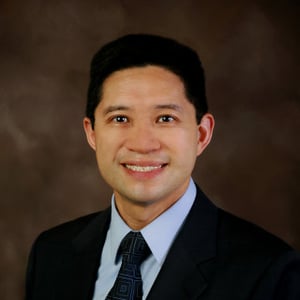
Founder, Original Jurisdiction
David Lat is a lawyer turned writer. He publishes Original Jurisdiction, a newsletter on Substack about law and legal affairs, and he writes for newspapers and magazines, including the New York Times, Washington Post, and Wall Street Journal. Prior to launching Original Jurisdiction, David founded Above the Law, one of the nation's most widely read legal news websites, and Underneath Their Robes, a popular blog about federal judges that he wrote under a pseudonym. He is also the author of a novel set in the world of the federal courts, Supreme Ambitions. Before entering the media world, David worked as a federal prosecutor in Newark, New Jersey; a litigation associate at Wachtell, Lipton, Rosen & Katz, in New York; and a law clerk to Judge Diarmuid F. O’Scannlain of the U.S. Court of Appeals for the Ninth Circuit. David graduated from Harvard College and Yale Law School, where he served as an editor of the Yale Law Journal.
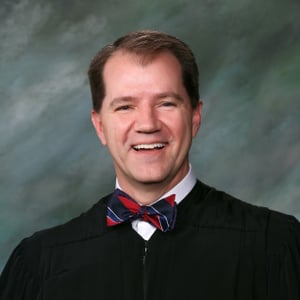
Judge, U.S. Court of Appeals, Fifth Circuit
Don Willett serves on the United States Court of Appeals for the Fifth Circuit. Before joining the federal bench, he served 13 years on the Supreme Court of Texas. His career spans decades of public service, including roles as legal counsel to a Texas Attorney General, a Texas Governor, a U.S. Attorney General, and the President of the United States. Raised by a heroic, widowed mom in a town of 32 people, Judge Willett is his family’s first college graduate. He earned a triple-major B.B.A. from Baylor University (where he serves on the Board of Regents) and three degrees from Duke University (where he served on the Board of Visitors): a J.D. with honors, an M.A. in political science, and an LL.M. in judicial studies. After law school, he clerked on the Fifth Circuit and practiced at Haynes and Boone before entering public service. Judge Willett writes and speaks widely on law, judging, and civic life. He serves on the Advisory Board of the School of Civic Leadership at the University of Texas at Austin, was the longtime editor-in-chief of Judicature: The Scholarly Journal for Judges, teaches at various law schools, and publishes in leading law journals and the popular press. He has received more than a dozen Green Bag honors for “exemplary legal writing,” was named Distinguished Jurist of the Year by the Texas Review of Law & Politics and is a member of the American Law Institute and a Life Fellow of the American, Texas, and Austin Bar Foundations. A former rodeo bull rider and professional drummer, Judge Willett was named “Tweeter Laureate of Texas” in 2015. He is the namesake of Don R. Willett Elementary School—home of mighty Willett Wranglers—located barely a mile from where the Willett family doublewide once stood. He and his radiant wife, Tiffany have three children—Jacob, Shane-David, and Geneviève—plus the family pup, Amicus.
Former Adjunct Professor of Law; former Special Counsel to the President; former federal prosecutor, Georgetown Law (ret.)
Bill Otis is a former Adjunct Professor of Law at Georgetown University, a one-time federal prosecutor, and a former Special White House Counsel for President George H. W. Bush. After graduating from Stanford Law School, he started his career in the Criminal Division of the Justice Department, then became chief of appeals for the US Attorney's Office for the Eastern District of Virginia. In the 1980's he served on the Department's "Train the Trainer" team, which taught US Attorneys Offices across the county how to implement the then-new Sentencing Reform Act. He has held several posts in the federal government, including Special Assistant to the Secretary of Energy and Counselor to the head of the Drug Enforcement Administration, in addition to the White House post. He has testified before Congress on issues in criminal procedure, illegal drugs, the US Sentencing Commission, and the death penalty, and has given numerous media interviews on those and other subjects. He currently teaches a seminar at Georgetown Law titled "Conservatism in Law in America" with his wife, Federalist Society co-founder Lee Liberman Otis.
Death Penalty Policy Director of the ACLU of Northern California
Natasha Minsker is the Death Penalty Policy Director of the ACLU of Northern California. In this position, Ms. Minsker uses a multi-disciplinary approach to promote the goal of reforming capital sentencing procedures and the eventually ending the death penalty in California. Previously, Ms. Minsker spent five years at the Alameda County Public Defender’s Office, the first year as a research attorney in the Capital Defense Unit and the remaining four years as a Deputy Public Defender, handling all types of misdemeanor, felony, and juvenile cases. Ms. Minsker also served as staff attorney to the Judicial Council of California’s Task Force on Criminal Jury Instructions, helping the committee research and draft more than 700 new criminal jury instructions. She clerked for the Honorable Martha Vazquez, Chief Judge of the Federal District Court of New Mexico, and is a graduate of Stanford Law School.
The ACLU of Northern California is the largest of the ACLU affiliates, representing more than 55,000 members.

Legal Director & General Counsel, Criminal Justice Legal Foundation
Kent S. Scheidegger has been the Legal Director of the Criminal Justice Legal Foundation since December 1986. He also served as Chairman of the Criminal Law Practice Group of the Federalist Society 2003 to 2005. His articles on criminal and constitutional law have been published in law reviews, national legal publications, and congressional reports. Legal arguments authored by Mr. Scheidegger have been cited and incorporated in several precedent-setting United States Supreme Court decisions.
After receiving a degree in physics with honors from New Mexico State University in 1976, Mr. Scheidegger served for six years in the United States Air Force as a Nuclear Research Officer. He took his law degree with distinction from the University of the Pacific, McGeorge School of Law in 1982 and practiced civil law in Northern California. He was general counsel of California Cooler, Inc. from 1984 until 1986, when he joined the Foundation.
University Distinguished Professor, University of Houston Law Center
Professor Dow joined the University of Houston Law Center faculty in 1988. He graduated with a B.A. in History from Rice University, and earned his M.A. in History and his law degree from Yale. Upon graduation, he clerked for the Honorable Carolyn Dineen King, judge on the Fifth Circuit Court of Appeals.
Professor Dow has handled more than fifty appeals, including more than 25 death penalty appeals. His areas of expertise include contracts, constitutional law, and death penalty law. He has written extensively on these subjects as well as on equal protection, law and literature, and federal jurisdiction.

Panel 2: The Role of a Judge - A Conversation with Federal and State Appellate Judges and Federal District Court Judges
Duane Benton, Stephen N. Limbaugh, Matthew T. Schelp, Cristian M. Stevens, John Torbitzky
Our distinguished panel of judges discussed the unique roles of both appellate judges and trial...
Interpreting State Constitutions
Clint Bolick, Matthew R. Byrne, Sharon L. Kennedy, Larry J. Obhof, Jeffrey S. Sutton
On May 7, 2021, the Federalist Society's Ohio lawyers chapters hosted the 2021 Ohio Chapters...
California Statute Requiring Female Board Directors
Anastasia P. Boden
In 2018, Governor Jerry Brown of California signed a bill that made California the first...
Topics
Is there such a thing as TMI when it comes to financial disclosures?
TMI, which is short for “too much information,” is one of those online shorthands that...
Technology, Social Media and Professional Ethics
Josh Blackman, John Browning, Stephen Louis A. Dillard, David Lat, Don R. Willett
To what extent can the legal community engage in social media: a critical means to...
Ethical Considerations: A View from the Appellate Bench
Montgomery, AlabamaDeath Penalty
William G. Otis, Natasha Minsker, Kent Scheidegger, David Dow
On June 25, 2008 the Supreme Court decided Kennedy v. Louisiana, holding that the Eighth...
Putting Shareholders First
Al Dunlap
I would like to touch on four points that generate a great deal of controversy...