
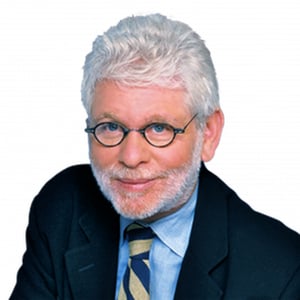
Columnist, The Washington Post
Richard Cohen writes a weekly political column for The Washington Post. He also contributes to the PostPartisan blog. Cohen joined The Post in 1968 as a reporter and covered night police, city hall, education, state government and national politics. As the paper’s chief Maryland correspondent, he was one of two reporters who broke the story of the investigation of former Vice President Agnew. In 1976, he began writing a column that ran on the front of the Metro section. His columns have appeared on the op-ed page of The Post since 1984. He is the author, with Jules Witcover, of “A Heartbeat Away: The Investigation and Resignation of Spiro T. Agnew ” (1974). He has received the Sigma Delta Chi and Washington-Baltimore Newspaper Guild Awards for his investigative reporting.
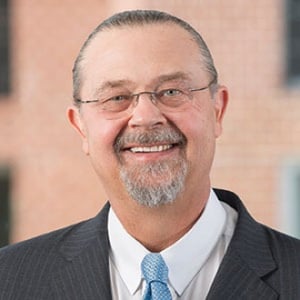
Managing Director and Co-Chair, Communications, Media, and Internet Practice, NERA Economic Consulting
Dr. Eisenach is a Managing Director and Co-Chair of NERA's Communications, Media, and Internet Practice, and also serves on the firm’s Board of Directors. He is also an Adjunct Professor at George Mason University Law School, where he teaches Regulated Industries, and a Visiting Scholar at the American Enterprise Institute. Previously, Dr. Eisenach has served in senior policy positions at the US Federal Trade Commission and the White House Office of Management and Budget, and taught at Harvard University's Kennedy School of Government and Virginia Polytechnic Institute and State University.
Dr. Eisenach's consulting practice focuses on economic analysis of competition, regulatory, intellectual property and consumer protection issues. He has submitted expert reports and testified in US federal court as well before the Antitrust Division of the U.S. Department of Justice, the Federal Trade Commission, the Copyright Royalty Board, the Federal Communications Commission, the International Trade Commission, US Tax Court, several state public utility commissions, and courts and regulatory bodies in Australia, Canada, the United Kingdom, the Caribbean, and South America. He has also advised clients in some of the world’s largest information technology sector mergers.
He has written or edited 19 books and monographs, including Broadband Competition in the Internet Ecosystem and Competition, Innovation and the Microsoft Monopoly: Antitrust in the Digital Marketplace. His writings have also appeared in scholarly journals such as The Review of Network Economics, as well as in popular outlets like Forbes, The New York Times, and The Wall Street Journal.
Prior to joining NERA, Dr. Eisenach was a managing director and principal at Navigant Economics, and before that he served as Chairman of Empiris LLC, Criterion Economics, and CapAnalysis, LLC. Among his other previous affiliations, Dr. Eisenach has served as President and Senior Fellow at The Progress & Freedom Foundation; as a scholar the Heritage Foundation, and the Hudson Institute; as a member of the 1980-81 Reagan-Bush Transition Team on the Federal Trade Commission, the 2000-2001 Bush-Cheney Transition Team on the Federal Communications Commission, the Virginia Governor's Commission on E-Communities, and the Virginia Attorney General's Task Force on Identity Theft. In 2016-2017 he led the Trump-Pence Transition Team for the Federal Communications Commission.
Dr. Eisenach received his PhD in economics from the University of Virginia and his BA in economics from Claremont McKenna College.
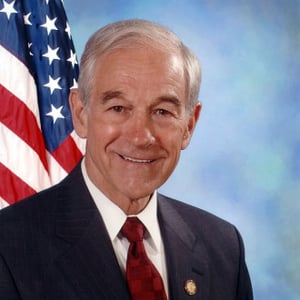
Former United States Representative, 14th Congressional District of Texas
PAUL, Ronald Ernest, (father of Rand Paul), a Representative from Texas; born in Pittsburgh, Allegheny County, Pa., August 20, 1935; graduated from Dormont High School, Dormont, Pa., 1953; B.A., Gettysburg College, Gettysburg, Pa., 1957; M.D., Duke University Medical Center, Durham, N.C., 1961; internship and residency training, Henry Ford Hospital, Detroit, Mich., 1961 and 1962; obstetrics and gynecology training, University of Pittsburgh, Pittsburgh, Pa., 1965-1968; medical doctor; United States Air Force, 1963-1965; United States Air National Guard, 1965-1968; delegate, Texas state Republican convention, 1974; unsuccessful candidate for election to the Ninety-fourth Congress in 1974; elected as a Republican to the Ninety-fourth Congress, by special election to fill the vacancy created by the resignation of United States Representative Robert R. Casey (April 3, 1976-January 3, 1977); unsuccessful candidate for reelection to the Ninety-fifth Congress in 1976; elected to the Ninety-sixth and to the two succeeding Congresses (January 3, 1979-January 3, 1985); was not a candidate for reelection to the House of Representatives in 1984, but was an unsuccessful candidate for nomination to the United States Senate; author; unsuccessful Libertarian Party candidate for election for President of the United States in 1988; elected as a Republican to the One Hundred Fifth and to the seven succeeding Congresses (January 3, 1997-January 3, 2013); unsuccessful candidate for the Republican presidential nomination in 2008; unsuccessful candidate for the Republican presidential nomination in 2012; was not a candidate for reelection to the One Hundred Thirteenth Congress in 2012.
Former Assistant Attorney General, U.S. Department of Justice, Civil Division
During the Reagan Administration, Richard Willard served as Assistant Attorney General in charge of the Civil Division, the largest litigation division of the US Department of Justice. There, he chaired the Reagan Administration's Tort Policy Working Group and developed its proposals for reforming civil litigation, workplace drug testing, and preventing unauthorized disclosure of classified information.
More recently, he served as senior vice president and general counsel for Bristol-Myers Squibb Co. and Gillette Company, where he led large worldwide legal departments, advised on strategic transactions, and enabled launch of new products with strong intellectual property protection.
Mr. Willard's private practice involved corporate counseling and litigation of cases raising public policy concerns. He served as lead counsel in complex litigation involving multiple claims, parties, and jurisdictions. He frequently appeared in trial and appellate courts around the country, including six arguments in the Supreme Court.
Columnist, The Washington Post
Richard Cohen writes a weekly political column for The Washington Post. He also contributes to the PostPartisan blog. Cohen joined The Post in 1968 as a reporter and covered night police, city hall, education, state government and national politics. As the paper’s chief Maryland correspondent, he was one of two reporters who broke the story of the investigation of former Vice President Agnew. In 1976, he began writing a column that ran on the front of the Metro section. His columns have appeared on the op-ed page of The Post since 1984. He is the author, with Jules Witcover, of “A Heartbeat Away: The Investigation and Resignation of Spiro T. Agnew ” (1974). He has received the Sigma Delta Chi and Washington-Baltimore Newspaper Guild Awards for his investigative reporting.
Managing Director and Co-Chair, Communications, Media, and Internet Practice, NERA Economic Consulting
Dr. Eisenach is a Managing Director and Co-Chair of NERA's Communications, Media, and Internet Practice, and also serves on the firm’s Board of Directors. He is also an Adjunct Professor at George Mason University Law School, where he teaches Regulated Industries, and a Visiting Scholar at the American Enterprise Institute. Previously, Dr. Eisenach has served in senior policy positions at the US Federal Trade Commission and the White House Office of Management and Budget, and taught at Harvard University's Kennedy School of Government and Virginia Polytechnic Institute and State University.
Dr. Eisenach's consulting practice focuses on economic analysis of competition, regulatory, intellectual property and consumer protection issues. He has submitted expert reports and testified in US federal court as well before the Antitrust Division of the U.S. Department of Justice, the Federal Trade Commission, the Copyright Royalty Board, the Federal Communications Commission, the International Trade Commission, US Tax Court, several state public utility commissions, and courts and regulatory bodies in Australia, Canada, the United Kingdom, the Caribbean, and South America. He has also advised clients in some of the world’s largest information technology sector mergers.
He has written or edited 19 books and monographs, including Broadband Competition in the Internet Ecosystem and Competition, Innovation and the Microsoft Monopoly: Antitrust in the Digital Marketplace. His writings have also appeared in scholarly journals such as The Review of Network Economics, as well as in popular outlets like Forbes, The New York Times, and The Wall Street Journal.
Prior to joining NERA, Dr. Eisenach was a managing director and principal at Navigant Economics, and before that he served as Chairman of Empiris LLC, Criterion Economics, and CapAnalysis, LLC. Among his other previous affiliations, Dr. Eisenach has served as President and Senior Fellow at The Progress & Freedom Foundation; as a scholar the Heritage Foundation, and the Hudson Institute; as a member of the 1980-81 Reagan-Bush Transition Team on the Federal Trade Commission, the 2000-2001 Bush-Cheney Transition Team on the Federal Communications Commission, the Virginia Governor's Commission on E-Communities, and the Virginia Attorney General's Task Force on Identity Theft. In 2016-2017 he led the Trump-Pence Transition Team for the Federal Communications Commission.
Dr. Eisenach received his PhD in economics from the University of Virginia and his BA in economics from Claremont McKenna College.
Former United States Representative, 14th Congressional District of Texas
PAUL, Ronald Ernest, (father of Rand Paul), a Representative from Texas; born in Pittsburgh, Allegheny County, Pa., August 20, 1935; graduated from Dormont High School, Dormont, Pa., 1953; B.A., Gettysburg College, Gettysburg, Pa., 1957; M.D., Duke University Medical Center, Durham, N.C., 1961; internship and residency training, Henry Ford Hospital, Detroit, Mich., 1961 and 1962; obstetrics and gynecology training, University of Pittsburgh, Pittsburgh, Pa., 1965-1968; medical doctor; United States Air Force, 1963-1965; United States Air National Guard, 1965-1968; delegate, Texas state Republican convention, 1974; unsuccessful candidate for election to the Ninety-fourth Congress in 1974; elected as a Republican to the Ninety-fourth Congress, by special election to fill the vacancy created by the resignation of United States Representative Robert R. Casey (April 3, 1976-January 3, 1977); unsuccessful candidate for reelection to the Ninety-fifth Congress in 1976; elected to the Ninety-sixth and to the two succeeding Congresses (January 3, 1979-January 3, 1985); was not a candidate for reelection to the House of Representatives in 1984, but was an unsuccessful candidate for nomination to the United States Senate; author; unsuccessful Libertarian Party candidate for election for President of the United States in 1988; elected as a Republican to the One Hundred Fifth and to the seven succeeding Congresses (January 3, 1997-January 3, 2013); unsuccessful candidate for the Republican presidential nomination in 2008; unsuccessful candidate for the Republican presidential nomination in 2012; was not a candidate for reelection to the One Hundred Thirteenth Congress in 2012.
Former Assistant Attorney General, U.S. Department of Justice, Civil Division
During the Reagan Administration, Richard Willard served as Assistant Attorney General in charge of the Civil Division, the largest litigation division of the US Department of Justice. There, he chaired the Reagan Administration's Tort Policy Working Group and developed its proposals for reforming civil litigation, workplace drug testing, and preventing unauthorized disclosure of classified information.
More recently, he served as senior vice president and general counsel for Bristol-Myers Squibb Co. and Gillette Company, where he led large worldwide legal departments, advised on strategic transactions, and enabled launch of new products with strong intellectual property protection.
Mr. Willard's private practice involved corporate counseling and litigation of cases raising public policy concerns. He served as lead counsel in complex litigation involving multiple claims, parties, and jurisdictions. He frequently appeared in trial and appellate courts around the country, including six arguments in the Supreme Court.
United States Senator, Arizona
Former Governor, Massachusetts
Former Massachusetts Governor Mitt Romney has been widely recognized for his leadership and accomplishments as a public servant and in private enterprise.
Elected in 2002, Governor Romney presided over a dramatic reversal of state fortunes and a period of sustained economic expansion. Without raising taxes or increasing debt, Governor Romney balanced the budget every year of his administration, closing a $3 billion budget gap inherited when he took office. By eliminating waste, streamlining the government, and enacting comprehensive economic reforms to stimulate growth in Massachusetts, Romney got the economy moving again and transformed deficits into surpluses.
At the beginning of Governor Romney's term, Massachusetts was losing thousands of jobs every month. Today, the unemployment rate is lower, hundreds of companies have expanded or moved to Massachusetts and the state has added approximately 60,000 jobs in the last two years.
One of Governor Romney's top priorities was reforming the education system so that young people could compete for good paying jobs in the global economy of the future. In 2004, Governor Romney established the John and Abigail Adams Scholarship Program to reward the top 25 percent of Massachusetts high school students with a four-year, tuition-free scholarship to any Massachusetts public university or college. He has also championed a package of education reforms, including merit pay, an emphasis on math and science instruction, important new intervention programs for failing schools and English immersion for foreign-speaking students.
In 2006, Governor Romney proposed and signed into law a private, market-based reform that ensures every Massachusetts citizen will have health insurance, without a government takeover and without raising taxes.
Governor Romney was elected to the Chairmanship of the Republican Governors Association by his fellow Governors for the 2006 election cycle, and raised a record $27 million for candidates running in State House contests around the country.
Romney first gained national recognition for his role in turning around the 2002 Winter Olympics. With the 2002 Games mired in controversy and facing a financial crisis, Romney left behind a successful career as an entrepreneur to take over as President and CEO of the Salt Lake Organizing Committee.
Governor Romney has said he felt compelled to assume the seemingly impossible task of rescuing the Games by both the urgings of his wife, Ann, and by the memory of his father, George Romney, who had been a successful businessman, three-term Governor of Michigan, and a tireless advocate of volunteerism in America.
In his three years at the helm in Salt Lake, Romney erased a $379 million operating deficit, organized 23,000 volunteers, galvanized community spirit and oversaw an unprecedented security mobilization just months after the September 11th attacks, leading to one of the most successful Olympics in our country's history.
Prior to his Olympic service, Mitt Romney enjoyed a successful career helping businesses grow and improve their operations. From 1978 to 1984, Mr. Romney was a Vice President at Bain & Company, Inc., a leading management consulting firm. In 1984, Romney founded Bain Capital, one of the nation's most successful venture capital and investment companies. Bain Capital helped launch hundreds of companies on a successful course, including Staples, Bright Horizons Family Solutions, Domino's Pizza, Sealy, Brookstone, and The Sports Authority. He was asked to return to Bain & Company as CEO several years later in order to lead a financial restructuring of the organization. Today, Bain & Company employs more than 2,000 people in 25 offices worldwide.
Governor Romney has been deeply involved in community and civic affairs, serving extensively in his church and numerous charities including City Year, the Boy Scouts, and the Points of Light Foundation. He was also the Republican nominee for U.S. Senate in 1994.
Former Governor, Arkansas
Former Arkansas governor Mike Huckabee recently formed HuckPac to assist Republicans running for office nationwide. Mike Huckabee believes conservative leadership is best suited to lead America forward in the 21st Century.
In the past year, Huckabee campaigned for the Republican nomination for President — and to share his message of vertical politics that he says reflects American values and priorities.
From 1996-2007, Huckabee served as the 44th Governor of Arkansas. When he left office on January 9, 2007, he set out on a nationwide tour to promote his fifth book, "From Hope to Higher Ground: 12 STOPS to Restoring America's Greatness." The book reveals his optimistic vision for what America can become with the right kind of leadership and a clear direction.
Huckabee is recognized as a national leader, having been honored by several renowned publications and organizations for his numerous accomplishments. Governing Magazine named him as one of its 'Public Officials of the Year' for 2005, Time Magazine honored him as one of the five best governors in America, and later in the same year, Huckabee received the American Association of Retired Person's Impact Award. In 2007, he was presented with the Music for Life Award by the National Association of Music Merchants (NAMM) for his commitment to music education.
Huckabee became governor in July 1996 when his predecessor resigned. He was one of the youngest governors in the country at the time. Huckabee was elected to a full four-year term as governor in 1998, attracting the largest percentage of the vote ever received by a Republican gubernatorial nominee in Arkansas, and was re-elected to another four-year term in November 2002.
Huckabee first was elected lieutenant governor in a 1993 special election and was elected to a full four-year term in 1994. He was only the fourth Republican to be elected to statewide office since Reconstruction.
A significant part of his adult life was spent as a pastor and denominational leader. He became the youngest president ever of the Arkansas Baptist State Convention, the largest denomination in Arkansas. Huckabee led rapidly growing congregations in Pine Bluff and Texarkana. He said those experiences gave him a deep sense of the problems faced by individuals and families.
Huckabee's efforts to improve his own health have received national attention. Diagnosed with Type II diabetes in 2003, he lost 110 pounds. Barely two years later, he has completed four marathons: The 2005 and 2006 Little Rock Marathons, the Marine Corps Marathon and the ING New York City Marathon. As a result of his accomplishments, The Road Runners Club of America named him its 'Southern Region Runner of the Year' and USA Track & Field has named him their 'Athlete of the Week' for the country.
Continuing to call for a national emphasis on living a healthy lifestyle, Huckabee completed his fourth book, "Quit Digging Your Grave With A Knife and Fork." This 12-stop program is a no-nonsense approach to managing one's health through lifestyle change rather than a simple diet and exercise plan.
Huckabee, 52, enjoys playing bass guitar in his rock-n-roll band, Capitol Offense, which has opened for artists such as Willie Nelson and the Charlie Daniels Band, and has played the House of Blues in New Orleans, the Red Rocks Amphitheater in Denver, CO and for two presidential inauguration balls.
The former governor and his wife, Janet, live in North Little Rock. They have three grown children: John Mark, David and Sarah.
Former United States Representative, 14th Congressional District of Texas
PAUL, Ronald Ernest, (father of Rand Paul), a Representative from Texas; born in Pittsburgh, Allegheny County, Pa., August 20, 1935; graduated from Dormont High School, Dormont, Pa., 1953; B.A., Gettysburg College, Gettysburg, Pa., 1957; M.D., Duke University Medical Center, Durham, N.C., 1961; internship and residency training, Henry Ford Hospital, Detroit, Mich., 1961 and 1962; obstetrics and gynecology training, University of Pittsburgh, Pittsburgh, Pa., 1965-1968; medical doctor; United States Air Force, 1963-1965; United States Air National Guard, 1965-1968; delegate, Texas state Republican convention, 1974; unsuccessful candidate for election to the Ninety-fourth Congress in 1974; elected as a Republican to the Ninety-fourth Congress, by special election to fill the vacancy created by the resignation of United States Representative Robert R. Casey (April 3, 1976-January 3, 1977); unsuccessful candidate for reelection to the Ninety-fifth Congress in 1976; elected to the Ninety-sixth and to the two succeeding Congresses (January 3, 1979-January 3, 1985); was not a candidate for reelection to the House of Representatives in 1984, but was an unsuccessful candidate for nomination to the United States Senate; author; unsuccessful Libertarian Party candidate for election for President of the United States in 1988; elected as a Republican to the One Hundred Fifth and to the seven succeeding Congresses (January 3, 1997-January 3, 2013); unsuccessful candidate for the Republican presidential nomination in 2008; unsuccessful candidate for the Republican presidential nomination in 2012; was not a candidate for reelection to the One Hundred Thirteenth Congress in 2012.
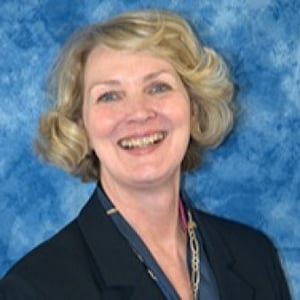
Professor and Director, Prolife Center, University of St. Thomas School of Law
Teresa Collett, J.D., is professor at the University of St. Thomas School of Law, where she serves as director of the school's Prolife Center. Collett received her doctorate at the University of Oklahoma College of Law. As a well-known advocate for the protection of human life and the family, Collett specializes in the subjects of marriage, religion and bioethics in her research.
Collett has published numerous legal articles and is the co-author of a law casebook on professional responsibility and co-editor of a collection of essays exploring “catholic” and “Catholic” perspectives on American law. She is an elected member of the American Law Institute, and has testified before committees of the U.S. Senate and House of Representatives, as well as before legislative committees in several states.
In 2009, Pope Benedict XVI appointed Collett to a five-year term on the Pontifical Council for the Family. Her appointment was renewed by His Holiness Pope Francis until 2016 when the responsibilities of the Council were assumed by the Dicastery for the Laity, Family and Life. In 2013, she served as a delegate to the International Conference on Population and Development (ICPD) for the Mission of the Holy See to the United Nations.
She represented Congressman Ron Paul and various medical groups in the defense of the U.S. federal ban of partial-birth abortion, and the governors of Minnesota and North Dakota defending the N.H. requirement of state parental involvement prior to performance of an abortion on a minor before the U.S. Supreme Court. Collett is often asked to represent the interests of government officials before federal appellate courts. She has served as special attorney general for the states of Oklahoma and Kansas, as well as assisting other state attorneys general in defending laws protecting human life and marriage. Prior to joining St. Thomas in 2003, Collett taught at the South Texas College of Law, where she established the nation's first annual symposium on legal ethics.
Columnist, The Washington Post
Richard Cohen writes a weekly political column for The Washington Post. He also contributes to the PostPartisan blog. Cohen joined The Post in 1968 as a reporter and covered night police, city hall, education, state government and national politics. As the paper’s chief Maryland correspondent, he was one of two reporters who broke the story of the investigation of former Vice President Agnew. In 1976, he began writing a column that ran on the front of the Metro section. His columns have appeared on the op-ed page of The Post since 1984. He is the author, with Jules Witcover, of “A Heartbeat Away: The Investigation and Resignation of Spiro T. Agnew ” (1974). He has received the Sigma Delta Chi and Washington-Baltimore Newspaper Guild Awards for his investigative reporting.
Managing Director and Co-Chair, Communications, Media, and Internet Practice, NERA Economic Consulting
Dr. Eisenach is a Managing Director and Co-Chair of NERA's Communications, Media, and Internet Practice, and also serves on the firm’s Board of Directors. He is also an Adjunct Professor at George Mason University Law School, where he teaches Regulated Industries, and a Visiting Scholar at the American Enterprise Institute. Previously, Dr. Eisenach has served in senior policy positions at the US Federal Trade Commission and the White House Office of Management and Budget, and taught at Harvard University's Kennedy School of Government and Virginia Polytechnic Institute and State University.
Dr. Eisenach's consulting practice focuses on economic analysis of competition, regulatory, intellectual property and consumer protection issues. He has submitted expert reports and testified in US federal court as well before the Antitrust Division of the U.S. Department of Justice, the Federal Trade Commission, the Copyright Royalty Board, the Federal Communications Commission, the International Trade Commission, US Tax Court, several state public utility commissions, and courts and regulatory bodies in Australia, Canada, the United Kingdom, the Caribbean, and South America. He has also advised clients in some of the world’s largest information technology sector mergers.
He has written or edited 19 books and monographs, including Broadband Competition in the Internet Ecosystem and Competition, Innovation and the Microsoft Monopoly: Antitrust in the Digital Marketplace. His writings have also appeared in scholarly journals such as The Review of Network Economics, as well as in popular outlets like Forbes, The New York Times, and The Wall Street Journal.
Prior to joining NERA, Dr. Eisenach was a managing director and principal at Navigant Economics, and before that he served as Chairman of Empiris LLC, Criterion Economics, and CapAnalysis, LLC. Among his other previous affiliations, Dr. Eisenach has served as President and Senior Fellow at The Progress & Freedom Foundation; as a scholar the Heritage Foundation, and the Hudson Institute; as a member of the 1980-81 Reagan-Bush Transition Team on the Federal Trade Commission, the 2000-2001 Bush-Cheney Transition Team on the Federal Communications Commission, the Virginia Governor's Commission on E-Communities, and the Virginia Attorney General's Task Force on Identity Theft. In 2016-2017 he led the Trump-Pence Transition Team for the Federal Communications Commission.
Dr. Eisenach received his PhD in economics from the University of Virginia and his BA in economics from Claremont McKenna College.
Former United States Representative, 14th Congressional District of Texas
PAUL, Ronald Ernest, (father of Rand Paul), a Representative from Texas; born in Pittsburgh, Allegheny County, Pa., August 20, 1935; graduated from Dormont High School, Dormont, Pa., 1953; B.A., Gettysburg College, Gettysburg, Pa., 1957; M.D., Duke University Medical Center, Durham, N.C., 1961; internship and residency training, Henry Ford Hospital, Detroit, Mich., 1961 and 1962; obstetrics and gynecology training, University of Pittsburgh, Pittsburgh, Pa., 1965-1968; medical doctor; United States Air Force, 1963-1965; United States Air National Guard, 1965-1968; delegate, Texas state Republican convention, 1974; unsuccessful candidate for election to the Ninety-fourth Congress in 1974; elected as a Republican to the Ninety-fourth Congress, by special election to fill the vacancy created by the resignation of United States Representative Robert R. Casey (April 3, 1976-January 3, 1977); unsuccessful candidate for reelection to the Ninety-fifth Congress in 1976; elected to the Ninety-sixth and to the two succeeding Congresses (January 3, 1979-January 3, 1985); was not a candidate for reelection to the House of Representatives in 1984, but was an unsuccessful candidate for nomination to the United States Senate; author; unsuccessful Libertarian Party candidate for election for President of the United States in 1988; elected as a Republican to the One Hundred Fifth and to the seven succeeding Congresses (January 3, 1997-January 3, 2013); unsuccessful candidate for the Republican presidential nomination in 2008; unsuccessful candidate for the Republican presidential nomination in 2012; was not a candidate for reelection to the One Hundred Thirteenth Congress in 2012.
Former Assistant Attorney General, U.S. Department of Justice, Civil Division
During the Reagan Administration, Richard Willard served as Assistant Attorney General in charge of the Civil Division, the largest litigation division of the US Department of Justice. There, he chaired the Reagan Administration's Tort Policy Working Group and developed its proposals for reforming civil litigation, workplace drug testing, and preventing unauthorized disclosure of classified information.
More recently, he served as senior vice president and general counsel for Bristol-Myers Squibb Co. and Gillette Company, where he led large worldwide legal departments, advised on strategic transactions, and enabled launch of new products with strong intellectual property protection.
Mr. Willard's private practice involved corporate counseling and litigation of cases raising public policy concerns. He served as lead counsel in complex litigation involving multiple claims, parties, and jurisdictions. He frequently appeared in trial and appellate courts around the country, including six arguments in the Supreme Court.

Improving National Drug Policy [Archive Collection]
Richard Cohen, Jeffrey Eisenach, Ron Paul, Richard K. Willard
On September 9, 1988, then-presidential candidate Ron Paul spoke on a panel at the Federalist...
Improving National Drug Policy [Archive Collection]
Richard Cohen, Jeffrey Eisenach, Ron Paul, Richard K. Willard
On September 9, 1988, then-presidential candidate Ron Paul spoke on a panel at the Federalist...
PC and the Legal Landscape
Tampa, FLLunch with Teresa Stanton
Montgomery, AlabamaPresidential Candidates on Judicial Philosophy
John McCain, Mitt Romney, Mike Huckabee, Ron Paul
On November 4, 2008 American voters will elect the forty-fourth President of the United States....
Money Laundering and Terrorism: A Failed Past and a Bleak Future
John Pickering
By: John PickeringNow more than ever, national security requires that the people of the United...
Improving National Drug Policy [Archive Collection]
Second Annual National Lawyers Convention
Washington, DC