



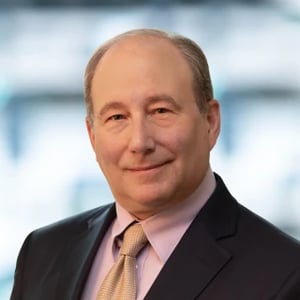
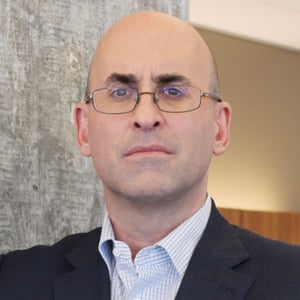
Brad Watts, senior vice president at the U.S. Chamber of Commerce’s Global Innovation Policy Center (GIPC), oversees the center’s day-to-day operations. He also leads the development and implementation of the Chamber’s U.S. and global intellectual property (IP) agenda to foster a political, legal, and economic environment where innovators and creators can invest in the next big thing for the benefit of Americans and the world.
Watts previously served as the Republican chief counsel on the Senate Judiciary Committee Subcommittee on Intellectual Property. There he was responsible for planning and implementing Senator Thom Tillis’ (R-NC) and the Republican party’s legislative portfolio on all aspects of IP law.
In the 116th Congress, when Senator Tillis was chairman of the subcommittee, Watts served as majority chief counsel and staff director for the Senate Judiciary Committee Subcommittee on Intellectual Property. He was responsible for implementing the senator’s legislative and oversight agenda on all aspects of America’s innovation economy.
During Watts’ tenure as majority chief counsel, the subcommittee held 17 legislative and oversight hearings and multiple staff briefings on IP issues, ranging from the state of patent eligibility law in America to reforming the Digital Millennium Copyright Act of 1998. Under his leadership, the subcommittee passed the CASE Act, the Trademark Modernization Act, and the Protecting Lawful Streaming Act, three landmark bills that collectively represent the largest changes to IP law since the Leahy-Smith America Invents Act.
Earlier, Watts was chief immigration counsel to then-Senate Judiciary Committee Chairman Chuck Grassley (R-IA). He began his career with former Senator Jeff Sessions (R-AL) as a legislative counsel on the Subcommittee on Immigration and the National Interest, handling civil rights and civil liberties law, general tort law, bankruptcy, telecommunications, and IP issues for the senator.








Medicare's New Drug Price Mandate: Healthcare & Innovation Implications
Lisa Larrimore Ouellette, Adam Mossoff, Dan Troy, Brad Watts
On January 17, the Biden-Harris Administration added 15 new drugs, including Ozempic, to the list of...
Explainer Episode 65 - Reviewing Michael Cannon's Book "Recovery"
Michael F. Cannon, Christina Sandefur
In this RTP explainer episode 65, we are joined by Michael Cannon, Director of Health...
Litigation: Are MDL Judges Too Powerful?
Elizabeth Chamblee Burch, Brian T. Fitzpatrick, Britt C. Grant, Christopher A. Seeger
On November 10, 2020, The Federalist Society's Litigation Practice Group hosted a virtual panel for...
It Can Be Done Live: The Future of Our Health
Julie Allickson, Nathan Kaczmarek, Betsy McCaughey, Christina Sandefur, Joshua Sharfstein, Dan Troy
The creators of the award-winning documentary, They Say It Can't Be Done, in partnership with the...
Deep Dive Episode 136 – It Can Be Done Live: The Future of Our Health
Julie Allickson, Betsy McCaughey, Joshua Sharfstein, Dan Troy, Christina Sandefur
The creators of the award-winning documentary, They Say It Can’t Be Done, in partnership with...
Book Review: Marijuana Federalism: Uncle Sam and Mary Jane
Jonathan H. Adler, Paul James Larkin
A majority of states have legalized the sale and possession of marijuana for medicinal purposes....
Mass Tort Deals: Backroom Bargaining in Multidistrict Litigation?
Elizabeth Chamblee Burch, Douglas Geoffrey Smith
Multidistrict litigation has been the subject of much controversy in recent years. Defendants lament the...
Roundup Weedkiller Litigation
David Bernstein
In a series of recent decisions, both federal and state courts have allowed the admission...
Trying Cases and Settlement
John H. Beisner, Jeffrey Bossert Clark, G. Brian Jackson, Christopher A. Seeger, Jonathan D. Selbin
Multidistrict litigation (“MDL”) accounts for nearly half of all civil cases in federal courts. Although...
Eliminating Meritless Claims
David M. Bernick, Eduardo Robreno, Christopher A. Seeger, Andrew Trask
Multidistrict litigation (“MDL”) accounts for nearly half of all civil cases in federal courts. Although...