
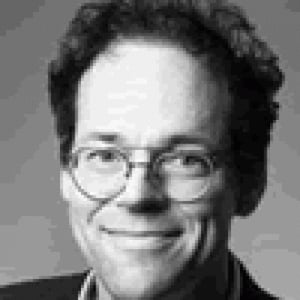
Professor of Law, Cornell University Law School
Robert C. Hockett joined the Cornell Law School faculty in 2004. His principal research and teaching interests lie in the fields of organizational and financial law and economics, particularly as these bear upon and are borne upon by economic "globalization" and distributive justice concerns. Prior to entering full-time academe he worked for the International Monetary Fund and clerked for the Hon. Deanell Reece Tacha, then Circuit Judge, now Chief Judge of the U.S. Court of Appeals for the 10th Circuit. While a graduate student and as a judicial clerk he taught respectively at Yale, Harvard, the University of Connecticut, and the University of Kansas.
Professor of Law, Cornell University Law School
Robert C. Hockett joined the Cornell Law School faculty in 2004. His principal research and teaching interests lie in the fields of organizational and financial law and economics, particularly as these bear upon and are borne upon by economic "globalization" and distributive justice concerns. Prior to entering full-time academe he worked for the International Monetary Fund and clerked for the Hon. Deanell Reece Tacha, then Circuit Judge, now Chief Judge of the U.S. Court of Appeals for the 10th Circuit. While a graduate student and as a judicial clerk he taught respectively at Yale, Harvard, the University of Connecticut, and the University of Kansas.
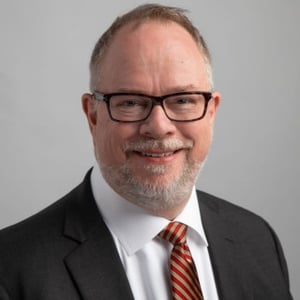
Managing Attorney of the Washington Office, Institute for Justice
William R. Maurer is the Managing Attorney of the Washington state office of the Institute for Justice, which engages in litigation in the areas of economic liberty, private property rights, educational choice, & freedom of speech.
Maurer is an advocate against the criminalization of poverty and the governmental use of the criminal and civil enforcement systems to raise revenue. He was lead counsel in a class action challenging the use of tickets to raise revenue in the city of Pagedale, Missouri. The suit resulted in a federal consent decree that reformed the city’s ticketing and municipal court system. He regularly speaks, teaches, and writes about the abuse of fines and fees in the criminal justice system. He was a participant in summits on taxation by citation put on by the White House and Department of Justice during the Obama Administration. His work on the issue includes serving as an advisory board member of the Fines and Fees Justice Center.
In addition to his work on criminal and civil justice reform, Maurer is a First Amendment litigator. In 2011, he successfully argued before the U.S. Supreme Court that Arizona’s punitive campaign financing regime was unconstitutional. Before the Washington Supreme Court, he successfully argued against efforts to classify radio commentary as a contribution under the state’s campaign finance law.
His cases and advocacy have been covered in the Washington Post, the New York Times, the Economist, the Wall Street Journal, and other major media outlets.
Maurer was named a “Washington Superlawyer” by Washington Law & Politics Magazine for several years. He is a chapter author in numerous legal reference works and has written several articles for law reviews and legal publications across the country.
Prior to joining IJ-WA, Maurer clerked for Washington Supreme Court Justice Richard Sanders and then practiced law at Perkins Coie LLP. Maurer received his law degree in 1994 from the University of Wisconsin – Madison, where he was an editor of the Wisconsin Law Review. He received his BA from Bard College in 1989.
Professor of Law, Cornell University Law School
Robert C. Hockett joined the Cornell Law School faculty in 2004. His principal research and teaching interests lie in the fields of organizational and financial law and economics, particularly as these bear upon and are borne upon by economic "globalization" and distributive justice concerns. Prior to entering full-time academe he worked for the International Monetary Fund and clerked for the Hon. Deanell Reece Tacha, then Circuit Judge, now Chief Judge of the U.S. Court of Appeals for the 10th Circuit. While a graduate student and as a judicial clerk he taught respectively at Yale, Harvard, the University of Connecticut, and the University of Kansas.
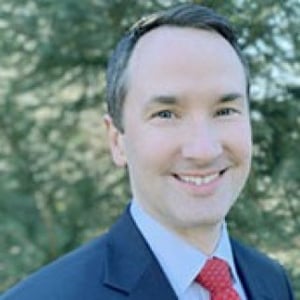
Chief Counsel, U.S. Chamber Litigation Center
Steven P. Lehotsky has significant experience developing and executing litigation strategies to help businesses and trade associations address their most important regulatory and public-policy challenges.
Before founding Lehotsky Keller LLP, Mr. Lehotsky directed the litigation strategy of the U.S. Chamber of Commerce, the world's leading business federation, where he worked from 2013-2021. While at the U.S. Chamber’s Litigation Center, he served as chief litigation counsel. Mr. Lehotsky led the Chamber's efforts to bring successful challenges to federal, state, and local regulations of business. He also directed the U.S. Chamber's efforts to defend pro-growth regulatory reforms. Mr. Lehotsky also led and implemented the U.S. Chamber’s strategies for filing hundreds of amicus curiae briefs in the U.S. Supreme Court, federal appellate and district courts, and state supreme and appellate courts. He is a frequent speaker at events and conferences on litigation and regulatory trends.
Mr. Lehotsky previously was an attorney at WilmerHale LLP in both the Washington D.C. and Boston offices, where he practiced government and regulatory litigation, appellate litigation, and counseling on constitutional, statutory, and regulatory issues for clients across a wide variety of industry sectors. He also previously practiced as a commercial litigator at Goodwin Procter LLP in Boston.
In addition, Mr. Lehotsky was an Attorney-Adviser in the Office of Legal Counsel of the U.S. Department of Justice from 2006-2009, advising the White House and executive departments and agencies on constitutional and statutory issues relating to national security, immigration, international sanctions under the International Emergency Economic Powers Act and other programs, the response to the 2008 financial crisis, pandemic influenza and infectious-disease mitigation, cybersecurity, and congressional investigations, among many other subjects.
Mr. Lehotsky was a law clerk for Justice Antonin Scalia of the Supreme Court of the United States and Chief Judge Douglas H. Ginsburg of the U.S. Court of Appeals for the District of Columbia Circuit.
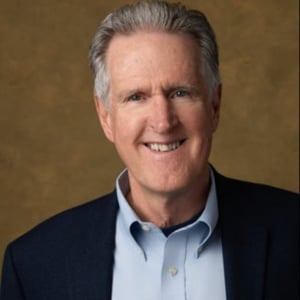
Senior Legal Counsel, Pacific Legal Foundation
Before becoming an attorney, James had been a productive member of society working as an exploration geologist in the late 1970s throughout the southwestern United States. However, after several years of dealing with irrational government bureaucrats and environmental policies untethered from reality, James decided that what the world needs is more lawyers — if they are willing to fight for rationality in regulatory regimes, property rights, and liberty.
James attended the University of Arizona College of Law in Tucson, where he served as an editor for the Law Review and received a J.D. degree in 1983. He had previously received a Masters degree in geological sciences from Brown University and an undergraduate degree from Hamilton College in New York. James received the Professional Achievement Award from the University of Arizona Alumni Association in 2018.
James has worked with Pacific Legal Foundation since 1983, litigating cases from Alaska to Florida. He is a member of the Federalist Society’s Environmental Law and Property Rights Practice Group’s Executive Committee, a member of the American College of Real Estate Lawyers, and an honorary member of Owners Counsel of America, an organization comprised of eminent domain attorneys who represent property owners. The Owners Counsel awarded James its Crystal Eagle award in 2013. In 2022, James was awarded the Brigham-Kanner Property Rights Prize at the William & Mary College of Law. The prize is awarded annually to an individual whose work has advanced the cause of property rights and has contributed to the overall awareness of the important role property rights occupy in the broader scheme of individual liberty.
In 2001, James successfully argued a major property rights case, Palazzolo v. Rhode Island, before the United States Supreme Court, a case which affirmed that rights in regulated property do not disappear when land is bought and sold. He has written extensively on all aspects of property rights and environmental law and frequently speaks on these subjects throughout the nation.
When James is not suing the government he enjoys skiing faster than he should, bicycling, hiking, swimming, and spending quality time with his wife, family, and grandchild.
Mr. Burling’s book Nowhere to Live: The Hidden Story of America’s Housing Crisis is available now on Amazon.
James is a member of the bar only in the states of Alaska and California.
Managing Director and Head of Securitisation, Securities Industry and Financial Markets Association
Since April 2010, Richard Dorfman has been Managing Director and Head of Securitization for the Securities Industry and Financial Markets Assocation(SIFMA). Prior to assuming his position with SIFMA, he was President and Chief Executive Officer of the Federal Home Loan Bank of Atlanta, a nearly $200 billion wholesale financial institution that operates in seven states and the District of Columbia. The Bank’s primary business is to provide mortgage related funding to more than 1,200 retail financial institutions in support of housing and community development.
Before taking up his role with FHLBank Atlanta in June 2007,
Mr. Dorfman provided strategic and operational consulting and advisory work to several Federal Home Loan Banks nationwide, as well as the Federal Home Loan Bank System’s Office of Finance. Prior to these engagements, he was the Managing Director & Head of U.S. Agencies and Mortgages at ABN Amro, Inc. from 1997 until 2005.
From 1983 until 1996, Mr. Dorfman held a number of senior executive positions with Lehman Brothers Inc., including the role as Head of Origination, U.S. Government and Agency Business. Under his leadership, the group was consistently recognized as one of the top managers of global securities offerings and was responsible for advising clients that included Canada Mortgage and Housing Corporation, Fannie Mae, Freddie Mac, and the Federal Home Loan Banks.
Before becoming an investment banker, Mr. Dorfman was an attorney with the Federal Deposit Insurance Corporation as well as a regulatory counsel for the New York Bank for Savings. He obtained his J.D. from Syracuse University and B.A. from Hofstra University.
Professor of Law, George Mason University School of Law
With his work in regulatory takings and other aspects of property law, professor of law Steven Eagle plays an important role in the ongoing dialogue among American legal scholars, lawyers, and judges on the proper interpretation of property rights in the Constitution. He is the author of a leading property treatise and scholarly and popular articles and teaches in programs for judges and the practicing bar.
Professor Eagle came to George Mason in 1987 and also has taught at the law schools of Vanderbilt University, the University of Toledo, and Pace University. He earned his B.B.A. from the City College of New York (1965) and his J.D. from Yale Law School (1970). Professor Eagle teaches the first-year course, Property, Land Use Planning, and an advanced constitutional law seminar on property rights.
Professor of Law, Cornell University Law School
Robert C. Hockett joined the Cornell Law School faculty in 2004. His principal research and teaching interests lie in the fields of organizational and financial law and economics, particularly as these bear upon and are borne upon by economic "globalization" and distributive justice concerns. Prior to entering full-time academe he worked for the International Monetary Fund and clerked for the Hon. Deanell Reece Tacha, then Circuit Judge, now Chief Judge of the U.S. Court of Appeals for the 10th Circuit. While a graduate student and as a judicial clerk he taught respectively at Yale, Harvard, the University of Connecticut, and the University of Kansas.

Do We Really Need Central Banking?
Cornell Student Chapter
Ithaca, NYCriminalizing Poverty?
Cornell Student Chapter
Ithaca, NYEminent Bailouts? Can the Government Use Eminent Domain to Seize Underwater Mortgages?
Are There Limits to Mortgage Condemnation?