
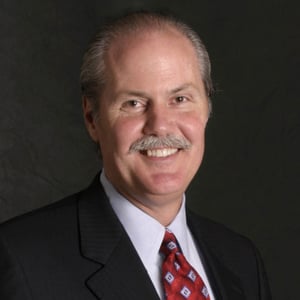
Chairman and Founding General Counsel, Institute for Justice
William H. (Chip) Mellor serves as chairman and founding general counsel of the Institute for Justice, which he co-founded in 1991. He was IJ’s president and general counsel from 1991 to 2015. He has litigated cutting-edge constitutional cases nationwide protecting economic liberty, property rights, school choice and the First Amendment, notably achieving the first federal appellate court victory for economic liberty under the 14th Amendment since the New Deal by overturning Tennessee’s prohibition on retail casket sales.
Under Mellor’s leadership IJ pioneered a new approach to strategic public interest litigation that combines courtroom advocacy with award-winning media relations, activism and strategic research to secure constitutional protection for individual rights. He grew IJ from a five-person startup into the National Law Firm for Liberty with a staff of nearly 100, including over 40 attorneys, and an annual budget of $20 million. IJ is headquartered in Arlington, Virginia, and has offices in Arizona, Florida, Illinois, Minnesota, Texas and Washington state.
While Mellor was president, IJ litigated five U.S. Supreme Court cases, winning all but one: In Zelman v. Simmons-Harris, IJ successfully defended Cleveland’s school choice program from a lawsuit brought by the teachers’ unions and other school choice opponents, establishing the constitutionality of school vouchers. In Granholm v. Heald, the Supreme Court struck down New York’s ban on interstate wine sales, allowing small wineries and consumers represented by IJ to successfully challenge a government-imposed wholesale wine and liquor monopoly. In Kelo v. City of New London, the Supreme Court ruled against IJ in a controversial 5–4 decision that held private property can be taken for private development. IJ mobilized unprecedented public outrage over the decision to secure legislative reforms or state supreme court decisions in 46 states that strengthened protection for property rights. In Arizona Christian School Tuition Organization v. Winn, the Supreme Court dismissed an Establishment Clause challenge to Arizona’s scholarship tax credit program because the Court recognized that individuals who donate to private, nonprofit scholarship-granting organizations spend their own money—not state funds. In Arizona Freedom Club PAC v. Bennett, the Supreme Court struck down a key provision of Arizona’s system of government-funded campaigns, which showered money on campaigns that took government funding when privately financed and independent speakers opposing them spoke more than the government wanted.
Mellor co-authored with the Cato Institute’s Robert Levy The Dirty Dozen: How Twelve Supreme Court Cases Radically Expanded Government and Eroded Freedom, which examines 12 Supreme Court cases that effectively amended the Constitution and profoundly reshaped the role of government in America. In The Dirty Dozen, Mellor and Levy argue for judicial engagement and for a Supreme Court that will protect individual rights and restore limits on government power.
Mellor launched the Institute for Justice Clinic on Entrepreneurship at the University of Chicago in 1998 and IJ’s Center for Judicial Engagement in 2011.
Mellor’s work has appeared in the Wall Street Journal, Washington Post, New York Times, USA Today, Financial Times, Los Angeles Times, Chicago Tribune, Philadelphia Inquirer, Boston Globe, New York Post, National Law Journal, Reason, National Review, Investor’s Business Daily, and all the major television and radio networks. In a 2012 broadcast of his Fox Business show Stossel, John Stossel named Mellor a “Champion of Freedom.”
Prior to founding IJ, Mellor served as president of the Pacific Research Institute for Public Policy, a nationally recognized think tank located in San Francisco. Under his leadership, the Institute commissioned and published path-breaking books on economic liberty, property rights, and technology and the First Amendment that formed the long-term, strategic litigation blueprint for the Institute for Justice.
Mellor also served in the Reagan Administration as deputy general counsel for legislation and regulations in the Department of Energy, and from 1979 to 1983 he practiced public interest law with Mountain States Legal Foundation in Denver. Mellor received his J.D. from the University of Denver School of Law in 1977. He graduated from Ohio State University in 1973.
Read Mellor’s speech launching the Institute for Justice: “The Quest for Justice: Natural Rights and the Future of Public Interest Law.”
Mellor was awarded the Bradley Prize in 2012, was recognized by the American Bar Association as a Legal Rebel – an individual who remakes their corner of the legal profession – and was profiled in the Wall Street Journal Weekend Interview on January 7, 2012, as well as in Reason magazine in March 2008.
Chairman and Founding General Counsel, Institute for Justice
William H. (Chip) Mellor serves as chairman and founding general counsel of the Institute for Justice, which he co-founded in 1991. He was IJ’s president and general counsel from 1991 to 2015. He has litigated cutting-edge constitutional cases nationwide protecting economic liberty, property rights, school choice and the First Amendment, notably achieving the first federal appellate court victory for economic liberty under the 14th Amendment since the New Deal by overturning Tennessee’s prohibition on retail casket sales.
Under Mellor’s leadership IJ pioneered a new approach to strategic public interest litigation that combines courtroom advocacy with award-winning media relations, activism and strategic research to secure constitutional protection for individual rights. He grew IJ from a five-person startup into the National Law Firm for Liberty with a staff of nearly 100, including over 40 attorneys, and an annual budget of $20 million. IJ is headquartered in Arlington, Virginia, and has offices in Arizona, Florida, Illinois, Minnesota, Texas and Washington state.
While Mellor was president, IJ litigated five U.S. Supreme Court cases, winning all but one: In Zelman v. Simmons-Harris, IJ successfully defended Cleveland’s school choice program from a lawsuit brought by the teachers’ unions and other school choice opponents, establishing the constitutionality of school vouchers. In Granholm v. Heald, the Supreme Court struck down New York’s ban on interstate wine sales, allowing small wineries and consumers represented by IJ to successfully challenge a government-imposed wholesale wine and liquor monopoly. In Kelo v. City of New London, the Supreme Court ruled against IJ in a controversial 5–4 decision that held private property can be taken for private development. IJ mobilized unprecedented public outrage over the decision to secure legislative reforms or state supreme court decisions in 46 states that strengthened protection for property rights. In Arizona Christian School Tuition Organization v. Winn, the Supreme Court dismissed an Establishment Clause challenge to Arizona’s scholarship tax credit program because the Court recognized that individuals who donate to private, nonprofit scholarship-granting organizations spend their own money—not state funds. In Arizona Freedom Club PAC v. Bennett, the Supreme Court struck down a key provision of Arizona’s system of government-funded campaigns, which showered money on campaigns that took government funding when privately financed and independent speakers opposing them spoke more than the government wanted.
Mellor co-authored with the Cato Institute’s Robert Levy The Dirty Dozen: How Twelve Supreme Court Cases Radically Expanded Government and Eroded Freedom, which examines 12 Supreme Court cases that effectively amended the Constitution and profoundly reshaped the role of government in America. In The Dirty Dozen, Mellor and Levy argue for judicial engagement and for a Supreme Court that will protect individual rights and restore limits on government power.
Mellor launched the Institute for Justice Clinic on Entrepreneurship at the University of Chicago in 1998 and IJ’s Center for Judicial Engagement in 2011.
Mellor’s work has appeared in the Wall Street Journal, Washington Post, New York Times, USA Today, Financial Times, Los Angeles Times, Chicago Tribune, Philadelphia Inquirer, Boston Globe, New York Post, National Law Journal, Reason, National Review, Investor’s Business Daily, and all the major television and radio networks. In a 2012 broadcast of his Fox Business show Stossel, John Stossel named Mellor a “Champion of Freedom.”
Prior to founding IJ, Mellor served as president of the Pacific Research Institute for Public Policy, a nationally recognized think tank located in San Francisco. Under his leadership, the Institute commissioned and published path-breaking books on economic liberty, property rights, and technology and the First Amendment that formed the long-term, strategic litigation blueprint for the Institute for Justice.
Mellor also served in the Reagan Administration as deputy general counsel for legislation and regulations in the Department of Energy, and from 1979 to 1983 he practiced public interest law with Mountain States Legal Foundation in Denver. Mellor received his J.D. from the University of Denver School of Law in 1977. He graduated from Ohio State University in 1973.
Read Mellor’s speech launching the Institute for Justice: “The Quest for Justice: Natural Rights and the Future of Public Interest Law.”
Mellor was awarded the Bradley Prize in 2012, was recognized by the American Bar Association as a Legal Rebel – an individual who remakes their corner of the legal profession – and was profiled in the Wall Street Journal Weekend Interview on January 7, 2012, as well as in Reason magazine in March 2008.
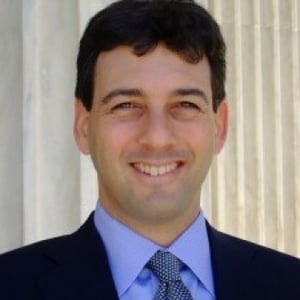
Vice President for Litigation, Institute for Free Speech
Alan joined the Institute for Free Speech as Vice President for Litigation in February 2021. In this role, Alan directs the Institute’s litigation and legal advocacy, leads our in-house legal team, and manages and works to expand our network of volunteer attorneys.
Prior to joining the Institute, Alan litigated complex federal matters for twenty years, in his own practice and as a partner in various Washington-area firms. He argued and won landmark constitutional cases in the United States Supreme Court and has appeared before numerous appellate and district courts throughout the country. Alan often speaks at law schools and continuing legal education seminars. He also teaches strategic/public interest litigation as an adjunct professor at the Georgetown University Law Center.
Alan began his career clerking for the Hon. Terrence W. Boyle, United States District Judge for the Eastern District of North Carolina. He has also served as a Deputy Attorney General for the State of California, a litigation associate at the Washington office of Sidley Austin, and as counsel to the United States Senate Judiciary Committee.
Alan earned his J.D. at Georgetown (1995) and his B.A. at Cornell University (1992). He is an active member in good standing of the Virginia, District of Columbia, and California bars, the Bar of the United States Supreme Court, and various federal appellate and district court bars.

Aftermath of District of Columbia v. Heller
The Second Amendment and the Heller
The Dirty Dozen
MineolaThe Dirty Dozen
Austin, TexasThe Dirty Dozen: How Twelve Supreme Court Cases Radically Expanded Government and Eroded Freedom
Seattle, WashingtonDistrict of Columbia v. Heller: D.C. Gun Ban in the Cross-Hairs
Charlotte, North CarolinaThe D.C. Handgun Ban: District of Columbia v. Heller
The D.C. Gun Ban in the Cross-Hairs: A Discussion of District of Columbia v. Heller
The Supreme Court Sets Its Sights on the Second Amendment: District of Columbia v. Heller
An Evening with Robert Levy: An Insider's Perspective on the D.C. Gun Ban Case