
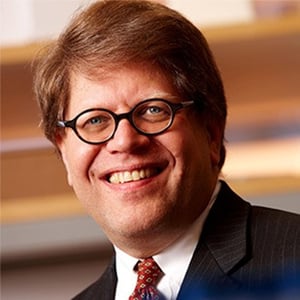
Faculty Fellow, Center for Law, Science & Innovation, Sandra Day O'Connor College of Law, Arizona State University
Dr. Klein is a Faculty Fellow at the Center for Law, Science & Innovation at the Sandra Day O'Connor College of Law at Arizona State University. He is also Principal at Roger D. Klein, MD JD Consulting and Klein & Klein Co., L.P.A. He was formerly Chief Medical Officer at OmniSeq, an oncology focused genomic profiling company that was recently acquired by LabCorp. Previously, Roger was the Medical Director at the Molecular Oncology division at the Cleveland Clinic. He was also the Chair of the Professional Relations Committee at the Association for Molecular Pathology. Prior to joining the Cleveland Clinic, he served as Medical Director of Molecular Oncology at the BloodCenter of Wisconsin where he led the center’s Diagnostic Laboratories’ initiative focused on DNA- and RNA-based testing for evaluation of cancer patients.
Dr. Klein has been an advisor to the Department of Health and Human Services (HHS), the Food and Drug Administration (FDA), the Centers for Medicare and Medicaid Services (CMS), and the Centers for Disease Control and Prevention (CDC). He has participated in and assumed leadership roles in many professional society committees and corporate advisory boards and is a policy advisor to the Heartland Institute.
Dr. Klein is licensed to practice medicine in Ohio, Florida, and Wisconsin. Additionally, he is licensed to practice law in the District of Columbia and Ohio. Roger obtained his Molecular Genetic Pathology certification at Mayo Medical School following completion of his M.D. Yale University School of Medicine. He obtained his J.D. from Yale Law School.

Partner, Sullivan & Cromwell LLP
Andrei Iancu is a partner at Sullivan & Cromwell and one of the leading voices in intellectual property law and innovation policy. He is a former Undersecretary of Commerce for Intellectual Property and Director of the U.S. Patent and Trademark Office (USPTO), a position to which he was confirmed unanimously by the Senate. Andrei has decades of experience representing plaintiffs and defendants in IP matters across the technical and scientific spectra, including medical devices, genetic testing, therapeutics, the Internet, telephony, TV broadcasting, video game systems and computer peripherals. He represents clients in litigation and trials before the district courts, the U.S. International Trade Commission and the USPTO, the Federal Circuit and U.S. Supreme Court, and also counsels clients on obtaining, licensing, enforcing and defending against IP rights globally.
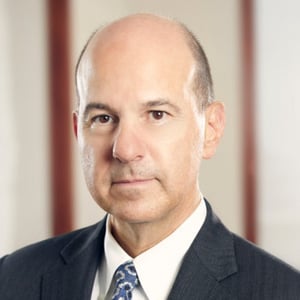
Partner, Cravath Swaine & Moore LLP
David J. Kappos is a partner at Cravath. He is widely recognized as one of the world’s foremost leaders in the field of intellectual property, including intellectual property management and strategy, the development of global intellectual property norms, laws and practices as well as commercialization and enforcement of innovation-based assets. Mr. Kappos supports the Firm’s clients with a wide range of their most complex intellectual property issues, including those pertaining to blockchain and financial technology (FinTech).
From August 2009 to January 2013, Mr. Kappos served as Under Secretary of Commerce and Director of the United States Patent and Trademark Office (USPTO). In that role, he advised the President, the Secretary of Commerce and the Administration on intellectual property policy matters. As Director of the USPTO, he led the Agency in dramatically re-engineering its entire management and operational systems as well as its engagement with the global innovation community. He was instrumental in achieving the greatest legislative reform of the U.S. patent system in generations through passage and implementation of the Leahy‑Smith America Invents Act, signed into law by President Obama in September 2011.
Prior to leading the USPTO, Mr. Kappos held several executive posts in the legal department of IBM, the world’s largest patent holder. From 2003 to 2009, he served as the company’s chief intellectual property lawyer. In that capacity, he managed global intellectual property activities for IBM, including all aspects of patent, trademark, copyright and trade secret protection. Mr. Kappos joined IBM as a development engineer. During his more than 25 years at IBM, he served in a variety of roles including litigation counsel and Asia Pacific IP counsel, based in Tokyo, Japan, where he led all aspects of intellectual property protection, including licensing, transactions support and mergers and acquisitions activity for the Asia/Pacific region.
Mr. Kappos has received numerous accolades for his contributions to the field of intellectual property, including, among others, the 2014 Global Agenda Council Vision Award for the Intellectual Property Council’s pro bono initiative from the World Economic Forum, the 2014 Jefferson Medal from the New Jersey Intellectual Property Law Association (NJIPLA), the 2013 Board of Director’s Excellence Award from the American Intellectual Property Law Association (AIPLA), the 2013 Champion of Intellectual Property Award from the District of Columbia Bar Association and the 2013 North America Government Leadership Award from Semiconductor Equipment and Materials International (SEMI). He was named one of the “Top 25 Icons of IP” by Law360, one of the “50 Most Influential People in Intellectual Property” and the “Outstanding Practitioner of the Year in IP Transactions” by Managing IP, one of the “Top 50 Intellectual Property Trailblazers & Pioneers” and one of the “100 Most Influential Lawyers in America” by The National Law Journal, “Intellectual Property Professional of the Year” by the Intellectual Property Owners Association and inducted into the Intellectual Property Hall of Fame by Intellectual Asset Management Magazine in 2012. Mr. Kappos was also recognized as a leading lawyer by IAM Strategy 300, IAM Patent 1000, World IP Review, The Legal 500 US, Who’s Who Legal: Patents, Lawdragon, Super Lawyers and The Best Lawyers in America. He is a frequent speaker and has authored many published articles on various intellectual property, innovation and leadership topics.
Mr. Kappos serves on the Boards of Directors of the Partnership for Public Service, the Center for Global Enterprise and the Intellectual Property Owners Education Foundation. He is the Chair of the Advisory Council of the Naples Roundtable, and the U.S. Chair of the U.S.-China IP Cooperation Dialogue. He is also an Adjunct Professor at Columbia Law School, where he teaches copyright litigation, and Cornell Law School, where he teaches legal advising for the start-up general counsel.
Mr. Kappos was born in Palos Verdes, California. He received a B.S. summa cum laude in Electrical and Computer Engineering from the University of California, Davis in 1983 and a J.D. from the University of California, Berkeley in 1990.

Elvin R. Latty Professor of Law, Duke University School of Law
Arti Rai, Elvin R. Latty Professor of Law and co-Director, Duke Law Center for Innovation Policy, is an internationally recognized expert in intellectual property (IP) law, administrative law, and health policy. Rai has also taught at Harvard, Yale, and the University of Pennsylvania law schools. Rai's research on IP law and policy in biotechnology, pharmaceuticals, and software has been funded by NIH, the Kauffman Foundation, and the Woodrow Wilson Center. She has published over 50 articles, essays, and book chapters on IP law, administrative law, and health policy. Her publications have appeared in both peer-reviewed journals and law reviews, including Science, the New England Journal of Medicine, the Journal of Legal Studies, Nature Biotechnology, and the Columbia, Georgetown, and Northwestern law reviews. She is the editor of Intellectual Property Law and Biotechnology: Critical Concepts (Edward Elgar, 2011) and the co-author of a 2012 Kauffman Foundation monograph on cost-effective health care innovation.
From 2009-2010, Rai served as the Administrator of the Office of External Affairs at the U.S. Patent and Trademark Office (USPTO). As External Affairs Administrator, Rai led policy analysis of the patent reform legislation that ultimately became the America Invents Act and worked to establish the USPTO’s Office of the Chief Economist. Prior to that time, she had served on President-Elect Obama’s transition team reviewing the USPTO. Prior to entering academia, Rai clerked for the Honorable Marilyn Hall Patel of the U.S. District Court for the Northern District of California; was a litigation associate at Jenner & Block (doing patent litigation as well as other litigation); and was a litigator at the Federal Programs Branch of the U.S. Department of Justice's Civil Division.
Rai regularly testifies before Congress and relevant administrative bodies on IP law and policy issues and regularly advises federal agencies on IP policy issues raised by the research that they fund. She is a member of the National Advisory Council for Human Genome Research and of an Expert Advisory Council to the Defense Advanced Projects Research Agency (DARPA). Rai is a public member of the Administrative Conference of the United States, a member of the American Law Institute, and co-chair of the IP Committee of the Administrative Law Section of the ABA. Rai is currently a member of the Institute of Medicine Committee on Strategies for Responsible Sharing of Clinical Trial Data and has served on, or as a reviewer for, numerous National Academies of Science committees. In 2011, Rai won the World Technology Network Award for Law.
Rai graduated from Harvard College, magna cum laude, with a degree in biochemistry and history (history and science), attended Harvard Medical School for the 1987-1988 academic year, and received her J.D., cum laude, from Harvard Law School in 1991. Rai's moot court team at Harvard Law School won Best Brief and Team honors at the school's prestigious Ames Moot Court Competition.

Professor of Law and Director, Intellectual Property and Information Law Program, Benjamin N. Cardozo School of Law, Yeshiva University
Saurabh Vishnubhakat is a Professor of Law and Director of the Intellectual Property and Information Law Program at Cardozo Law. He is also a Research Fellow at the Duke Law Center for Innovation Policy and a Senior Scholar at the George Mason University Center for IP and Innovation Policy. Previously, he held joint appointments as a Professor of Law and Professor of Engineering at Texas A&M University.
Professor Vishnubhakat’s expertise is in intellectual property, administrative law and federal litigation, especially from an empirical perspective. His legal writings have been cited in federal judicial opinions, agency regulations and over two dozen Supreme Court briefs. His latest work is published or forthcoming in the Indiana Law Journal, the Washington and Lee Law Review and the Iowa Law Review as well as the peer-reviewed Journal of the Copyright Society of the USA and the Journal of Economic Perspectives.
His research explores the interaction of the U.S. intellectual property system with federal courts and agencies, among other topics. With a background in the natural sciences, Professor Vishnubhakat brings a scientific mindset to legal thinking and is dedicated to teaching students how to build arguments with analytical rigor.
Prior to his appointment at Texas A&M, Professor Vishnubhakat served in the United States Patent and Trademark Office as principal legal advisor to that agency’s first two chief economists. He was also a faculty fellow at Duke Law School, where he co-taught patent law and was a postdoctoral associate at the Duke Center for Public Genomics, where he researched law and policy issues surrounding innovation in genetics and biomedicine.
Professor Vishnubhakat holds both a J.D. and LL.M. in intellectual property from the University of New Hampshire Franklin Pierce School of Law, where he was an editor of the Law Review. He also holds a B.S. in chemistry from the Georgia Institute of Technology. He is admitted to the bars of Texas, Illinois, the U.S. Court of Appeals for the Federal Circuit and the Supreme Court of the United States.

Partner, Pillsbury Winthrop Shaw Pittman LLP
Richard Blaylock’s practice covers financing, M&A, licensing, collaboration and partnering arrangements, and intellectual property counseling for start-up and established companies whose value derives from innovative technology.
Richard is well-versed in a wide array of technologies, including those germane to both life sciences (pharmaceuticals, biologics, and diagnostics) as well as high technology (software, robotics, wireless, novel materials, and pollution control). He has counseled companies across a wide range of technologies with respect to company formation, licensing, partnering and collaborations, financing and intellectual property strategy, as well as patent, license, trademark, trade secrets and unfair competition disputes.

Former Chief Judge, United States Court of Appeals for the Federal Circuit
Judge Michel served for more than 22 years on the Federal Circuit, retiring on May 31, 2010. From December 25, 2004 until his retirement, he also discharged the duties of Chief Judge of this national court, serving simultaneously on the U.S. Judicial Conference -- the Judiciary's governing body -- and by appointment of the Chief Justice on its seven-judge Executive Committee.
He judged several thousand appeals and authored more than 800 opinions, one third concerning intellectual property law. Intellectual Asset Management magazine inducted him into its Hall of Fame and he was designated one of the 50 most influential leaders in intellectual property law in the world. His contributions were also recognized by lifetime achievement and similar awards by the American Intellectual Property Law Association (AIPLA); Intellectual Property Owners Education Foundation (IPO); the American Bar Association's Intellectual Property Section; Managing Intellectual Property magazine; the Sedona Conference; the Patent and Trademark Office Society (PTOS); the New York, Chicago, Philadelphia, and Los Angeles Intellectual Property Law Associations; and the William C. Connor, the Giles S. Rich, and the Richard Linn Intellectual Property American Inns of Court. In 2010 the Los Angeles IP Inn was renamed in his honor as the Paul R. Michel IP Inn.
Judge Michel received the Jefferson Medal, the Eli Whitney Award, and the Katz-Kiley Prize as well as Honorary Doctor of Law degrees from the Catholic University of America and the John Marshall Law School. He is a lifetime Member of Honore of FICPI, the international association of private practitioners of intellectual property law. Williams College granted him the Kellogg Award for "outstanding leadership in law and public service."
Judge Michel has written numerous articles on patent law and advocacy, taught related courses and master classes at George Washington University, the University of Akron, and John Marshall law schools, serving as well on their IP advisory boards and on counterpart boards at the universities of California (Berkley), Washington, and Maryland. He co-authored a casebook, Patent Litigation and Strategy (West, 1999) and an August 2010 editorial in the New York Times on strengthening the patent system to promote prosperity and create new jobs.
A frequent speaker at conferences and law schools during his judicial tenure and since, he retired from a lifetime appointment to be free to speak out on the national need for better patent policy and protection of intellectual property and the vital, unmet resource needs of the courts, the PTO, the International Trade Commission, and other IP-related agencies. He was appointed Distinguished Scholar in Residence by IPO, following his retirement. Judge Michel also consults for law firms and their clients in intellectual property litigations, conducting moot courts, mock trials, case evaluations, editing briefs, advising on strategy and providing mediation and arbitration services.

Dinsmore & Shohl LLP, Partner
Brian is chair of Dinsmore’s IP Transactions and Licensing Group. He is a past president of the Licensing Executives Society (USA and Canada), Inc. (LES), the leading professional society devoted to commercial transactions and licensing of intangible property. He continues to serve LES as senior vice president for public policy. He has extensive experience in a wide variety of commercial transactions involving intangible property, and is known for creative licensing strategies to promote collaboration and resolve IP-related disputes.
He is a registered patent attorney with more than 30 years of experience before the U.S. Patent and Trademark Office and in structuring global IP portfolios and strategies. He has extensive experience in contested proceedings before the USPTO Patent Trial and Appeal Board (interferences, Inter Partes Reviews and Post Grant Reviews), as well as contested matters in federal courts and the International Trade Commission. His wide-ranging experience affords a broad, informed perspective and facilitates creative approaches to intellectual property management, licensing, and enforcement.
In addition to his leadership of LES, Brian served on the LES Board of Directors 2007 – 2018. In his ongoing role as senior vice president for public policy he is responsible for coordinating the society’s public policy positions, amicus briefs, and congressional outreach. He works with legislators, the executive branch, and the courts toward consistent, reliable, and prudent IP laws and policies that advance innovation and economic development. He has also served LES as trustee for education, and has long served as an author, editor, and faculty member of LES educational programs focusing on best practices in IP licensing.
He is also active in the global society, LES International (LESI). Among his various roles in LESI, he has served as co-chair of the External Relations Committee, coordinating public policy and advocacy for effective IP laws and policies among the 33 regional LES societies, and with various non-governmental organizations such as WIPO and EPO. In 2019, he received the LES International President’s Service Recognition Award.
Brian also serves as Chair of the Board of Directors of the Bayh Dole Coalition, a 501(c)(4) corporation dedicated to promoting and preserving the Bayh Dole Act. He is a member of the Founding Board of Directors of the United States Intellectual Property Alliance (USIPA), an organization dedicated to raising public awareness of, and appreciation for, the role of IP in fostering innovation for the public good; and he has served on the DC Bar Intellectual Property Section Steering Committee (2013 – 2016).
In 2016, Brian testified before the U.S. Senate Committee on Small Business and Entrepreneurship on the effects of the America Invents Act on small business and entrepreneurs in a hearing entitled “An Examination of Changes to the U.S. Patent System & Impacts on America's Small Businesses.”
With his longstanding and diverse patent practice, in both private practice and in-house, Brian advises corporate leaders and entrepreneurs in effective IP procurement practices, and in maximizing value from IP assets. He has been retained as a testifying witness in IP and licensing disputes by the U.S. Department of Justice, the U.S. Department of the Treasury, and by various private enterprises.
Brian has been acknowledged by IAM magazine as among its “IAM Strategy 300”, the world’s leading IP strategists, and among “The World's Leading Patent and Technology Licensing Lawyers.”
He earned B.S. and M.S. degrees from the Department of Chemistry, Rochester Institute of Technology, Rochester, NY; and Juris Doctor from Syracuse University, College of Law, Syracuse, NY (1986).
Brian has served his alma mater as president of the RIT Alumni Association 2005 – 2009; and now serves on the RIT Board of Trustees as a member of its Executive Committee, chair of its Student Life Committee, and vice-chair of its Committee on Trustees. In 2013, Brian was awarded RIT’s Outstanding Alumnus Award, and in 2005 he was awarded the Distinguished Alumnus Award by RIT’s College of Science.

Deputy General Counsel and Vice President for Intellectual Property, Biotechnology Industry Organization
Hans Sauer is Deputy General Counsel for Intellectual Property for the Biotechnology Industry Organization, a major trade association representing over 1,100 biotechnology companies from the medical, agricultural, environmental and industrial sectors in the United States and 31 other countries. At BIO, Dr. Sauer advises the organization’s board of directors, amicus committee, and various staff committees on patent and other intellectual property-related matters. Prior to taking his current position at BIO in 2006, he was Chief Patent Counsel for MGI Pharma, Inc. in Bloomington MN, and Senior Patent Counsel for Guilford Pharmaceuticals Inc. in Baltimore, MD. Hans has 18 years of in-house experience in the biotechnology industry, first as a research scientist and later as a lawyer. His scientific work was in the area of age-related neurological disorders; after becoming a lawyer he worked on several drug development programs, being responsible for patent prosecution and portfolio oversight, clinical trial health information privacy, and sales and marketing legal compliance. He did his postdoc at Genentech in South San Francisco, and holds a M.S. degree from the University of Ulm in his native Germany; a Ph.D. in Neuroscience from the University of Lund, Sweden; and a J.D. degree from Georgetown University, where he serves as adjunct professor.
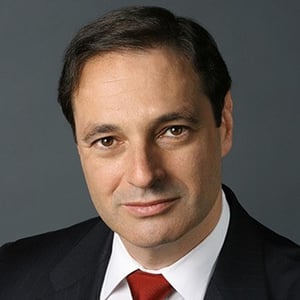
Senior Fellow, Competitive Enterprise Institute
Joel M. Zinberg, M.D., J.D. is a senior fellow with the Competitive Enterprise Institute. He is a native New Yorker who recently completed two years as General Counsel and Senior Economist at the Council of Economic Advisers in the Executive Office of the President. He practiced general and oncologic surgery in New York for nearly 30 years at the Mount Sinai Hospital and Icahn School of Medicine where he is an Associate Clinical Professor of Surgery. He has been involved with health policy issues and the interaction between law and medicine for his entire career. Dr. Zinberg taught for 10 years at the Columbia University Law School as a Lecturer in Law where he created a course on the legal, policy and ethical issues surrounding organ transplantation. He served for many years on the New York State Board of Professional Medical Conduct and on Mount Sinai's Ethics Committee and Institutional Review Board. He is past President and Trustee of the New York County Medical Society. Between 2015 and 2017 he was a Visiting Scholar at the American Enterprise Institute.
Dr. Zinberg has written for publications as varied as the Journal of the American Medical Association, the Bulletin of the American College of Surgeons, the Wall Street Journal, City Journal and law reviews. He is the author of book chapters on legal and policy issues in organ transplantation.
He received his J.D. degree from the Yale Law School, his M.D. from the Columbia University College of Physicians and Surgeons and his B.A. in economics with High Honors, Phi Beta Kappa, from Swarthmore College.

Explainer Episode 55 - 10 Years On: The Impact and Effects of AMP vs. Myriad
Roger D. Klein
On June 13, 2013, the Supreme Court issued its unanimous decision in Association for Molecular...
Intellectual Property in a Pandemic: The Proposed COVID-19 WTO Waiver
Andrei Iancu, David J. Kappos, Arti K. Rai, Saurabh Vishnubhakat
In October 2020, India and South Africa filed a request at the World Trade Organization...
Topics
Jacobson v. Massachusetts Lends Questionable Support to Covid-19 Executive Orders Imposing Criminal Penalties for Non-Compliance
Across the nation, in response to the Covid-19 virus, state and local leaders have issued...
Deep Dive Episode 177 – Patents and Pandemics: Innovation Policy and the Patent Waiver Petition at the WTO
Richard Blaylock, Paul Redmond Michel, Brian O'Shaughnessy, Hans Sauer
India and South Africa have submitted a petition to the World Trade Organization seeking a...
Explainer Episode 20 – COVID-19 Vaccine Approval and Distribution
Joel Zinberg
Joel Zinberg joins the podcast to discuss a range of COVID-19 vaccine questions. How has the development...