

Laurence A. Tisch Professor of Law and Director, Classical Liberal Institute, New York University School of Law; Director, Classical Liberal Institute, Civitas Institute University of Texas at Austin
Richard A. Epstein is the Laurence A. Tisch Professor of Law, at New York University, a senior research fellow at the Civitas Institute at the University of Texas Austin, and a senior Lecturer, the University of Chicago. He received an LL.D., h.c . from the University of Ghent, 2003 , and an LLD h.c . from the University of Siegen in 2018 and the Bradley Prize in 2011. He has been a member of the American Academy of Arts and Sciences since 1985. He has edited both the Journal of Legal Studies (1981-1991) and the Journal of Law and Economics (1991-2001). He is also a founder and director of the Classical Liberal Institute at NYU Law School. His most recent book is The Classical Liberal Constitution: The Uncertain Quest for Limited Government (2014). His other books include Takings: Private Property and the Power of Eminent Domain ( 1985); Bargaining with the State (1993); Simple Rules for a Complex World (1995); Principles for a Free Society: Reconciling Individual Liberty and the Common Good (1998); Skepticism and Freedom: A Modern Theory of Classical Liberalism (2003); Design for Liberty: Private Property, Public Administration and the Rule of Law (2011), and most recently, The Myth of Birthright citizenship—and Beyond (2026). He has taught courses in , administrative law, antitrust, constitutional, contracts, environmental law, land use planning; real property, torts and water law. He has written and spoken extensively on a wide range of topics, and is writes a regular column for Defining Ideas.
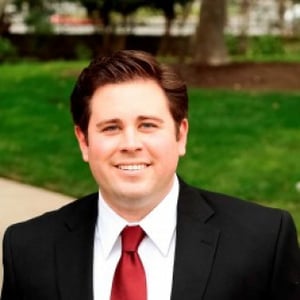
Managing Partner, Bigley Ranish, LLP
Sean M. Bigley is a national security attorney and managing partner of Bigley Ranish, LLP. Mr. Bigley’s practice primarily encompasses defending federal employees and contractors in security clearance denial cases. He also provides personnel security consulting to major international defense and aerospace corporations, and prosecutes intelligence community whistle-blower retaliation cases.
Since first opening his firm in 2013, Mr. Bigley has grown it from a solo practice to a five-attorney partnership with employees in three states. Bigley Ranish, LLP attorneys regularly appear before administrative tribunals at agencies ranging from the CIA to the Department of State, representing in excess of 200 American intelligence officers, diplomats, armed forces personnel, and other security clearance holders each year around the world. In 2016 alone, Mr. Bigley and his colleagues represented clients in roughly forty states and a dozen countries.
The idea for this unique practice was borne out of Mr. Bigley’s prior service as a federal background investigator. Prior to and during law school, Mr. Bigley was an investigator for the U.S. Office of Personnel Management, where he conducted some of that agency’s most sensitive security investigations in the Los Angeles metropolitan area. Mr. Bigley has also served on the faculty of Chapman University, teaching national security and criminal justice courses with an emphasis in U.S.-European security cooperation. Earlier in his career, Mr. Bigley worked for several years in the White House and Department of Homeland Security under President George W. Bush.
A recognized expert in national security law, Mr. Bigley’s commentary on the topic is frequently sought by major media outlets such as Fox News, The New York Times, and CNN. He is a contributing writer for Clearancejobs.com and GovExec.com.
Mr. Bigley earned his Juris Doctorate from Chapman University School of Law. He holds a Bachelor’s Degree from Washington D.C.’s American University and a Master’s Degree from Boston University.
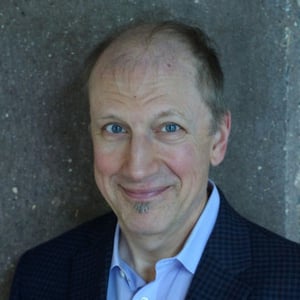
James L. Oberstar Professor of Law and Public Policy, University of St. Thomas School of Law
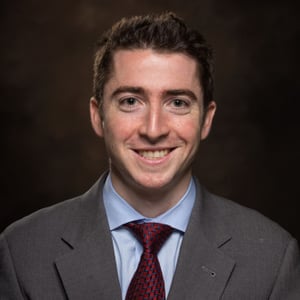
Associate Professor, Northern Illinois University
Evan Bernick joined the NIU Law faculty in 2021. He teaches courses in constitutional law, criminal law, criminal procedure, administrative law and legislation.
From 2020 to 2021, Professor Bernick was a visiting professor at the Georgetown University Law Center and the executive director of the Georgetown Center for the Constitution. Before that, he served as a clerk to Judge Diane S. Sykes of the United States Court of Appeals for the Seventh Circuit. From April 2017 to April 2019, he was a visiting lecturer at Georgetown and a resident fellow of the Center for the Constitution.
His scholarship covers a range of topics, from constitutional law, to philosophy of law, to social movements, to law enforcement. He has published with the Georgetown Law Journal, the Notre Dame Law Review, the William and Mary Law Review and the George Mason Law Review, among other journals. His book, The Original Meaning of the Fourteenth Amendment: Its Letter and Spirit (2021), with Randy E. Barnett, was published by Harvard University Press under its Belknap imprint "for books of long-lasting importance, superior in scholarship and physical production, chosen whether or not they might be profitable."
Professor Bernick received his bachelor's degree in 2008 from the University of Chicago, where he studied philosophy and graduated with honors. He received his juris doctorate in 2011 from the University of Chicago Law School.
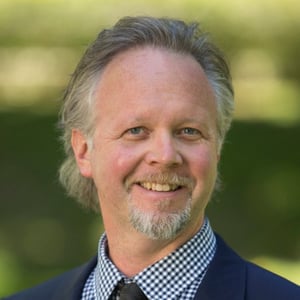
Senior Attorney, Pacific Legal Foundation
Brian Hodges is a Senior Attorney at PLF’s Pacific Northwest office in Bellevue, Washington. Brian focuses his practice on defending of the right of individuals to make reasonable use of their property, free of unnecessary and oppressive regulations.
In 2013, Brian second-chaired Koontz v. St. Johns River Water Management District before the U.S. Supreme Court, a case that placed constitutional limits on the government’s common practice of demanding that landowners fund unrelated public projects in exchange for a permit approval. And in the 2008 case, Citizens’ Alliance for Property Rights v. Sims, Brian successfully challenged a Seattle-area ordinance that required all rural property owners to dedicate at least half their land as conservation areas as a mandatory condition of any new development without any showing that rural development would impact the environment.
Brian graduated from Seattle University of Law in 2001 with honors. After which, he served as a judicial clerk at the Washington State Court of Appeals, then entered private practice where he focused on appellate advocacy for several years before joining PLF in 2006.
Brian came to the liberty movement by an uncommon route: the arts. Brian played guitar and keyboards in several Seattle-area bands before eventually studying music composition and literature at the University of Washington—earning two Bachelor’s Degrees and a Master of Arts. Through that experience, he came to firmly believe that the goal of art—indeed, the goal of any creative ambition—is to maximize individual freedom and expression, tempered by personal responsibility and ownership, rather than outside oversight or arbitrary restriction. Carrying that philosophy into law school naturally led him to fight for individual rights.
Senior Attorney, Pacific Legal Foundation
Chris Kieser practices in PLF’s property rights and equality before the law practice groups.
His property rights clients include Cedar Point Nursery, which challenged a California regulation requiring them to allow union organizers to invade their private property, as well as Randall and Kimberley Pavlock, who are fighting back against Indiana’s beachfront land grab along Lake Michigan.
Under equality before the law, Chris represents coalitions of Asian-American parents challenging discriminatory admissions policies for selective K-12 schools in New York City; Montgomery County, Maryland; and Fairfax County, Virginia. He also represents a parent organization in Connecticut challenging a racial quota that prevents many Black and Hispanic students from enrolling at the state’s magnet schools.
Chris has published law review articles in the William & Mary Environmental Law Review and the Federalist Society Review. His op-eds have appeared in the New York Daily News, National Review, The Blaze, the Daily Journal, and SCOTUSblog.
Chris clerked for the Honorable Daniel A. Manion of the United States Court of Appeals for the Seventh Circuit and the Honorable Thomas D. Schroeder of the United States District Court for the Middle District of North Carolina. He holds a B.A., cum laude, from the University of Notre Dame, and graduated magna cum laude from Notre Dame Law School in 2013. At Notre Dame, he was an articles editor of the Notre Dame Law Review.
Growing up on Long Island, Chris developed a deep passion for limited government and individual liberty, arguing with his more numerous progressive classmates. This experience made him deeply skeptical that government tinkering at the expense of individual rights ever works, whether it be denying a property owner the use of his land or a student a seat at her desired school because of her race. He chose PLF because it is the national leader in litigation that furthers individual liberty.
When he’s not working, you’re likely to find Chris rooting for the Mets and Fighting Irish or debating some arcane point of law (because apparently that doesn’t happen enough at work).
Chris is currently licensed to practice in California and admitted to practice before the Supreme Court of the United States, the United States Courts of Appeal for the Second, Seventh, and Ninth Circuits, and the U.S. District Courts for the Eastern and Central Districts of California, the Northern District of Indiana, and the Northern District of Illinois.

The Supreme Court Tackles Patent Reform: Why the Supreme Court Should End Inter Partes Review in Oil States
Richard A. Epstein
Note from the Editor: This article argues that the Supreme Court should find unconstitutional the...
Topics
The Supreme Court Tackles Patent Reform
Click here to download a PDF version of this blog post. Oil States Energy Services,...
Presidential Nominees and Foreign Influence: Mitigating National Security Risks
Sean M. Bigley
Note from the Editor: This article describes the procedures involved in determining whether to grant...
Religious Exemptions and Third-Party Harms
Thomas C. Berg
Note from the Editor: This article discusses the effect that third-party harms should have on religious...
Judge O'Scannlain's Tribute to Justice Scalia
Following the death of Justice Scalia, there have been numerous tributes – from articles and...
Topics
The Public Contract Basis of Intellectual Property Rights
The Constitution’s Article I, Section 8 Intellectual Property Clause grants to Congress the power “To...
Book Review: The Right to Try
Evan D. Bernick
Note from the Editor: This book review discusses the controversial concept of the constitutional “right...
Topics
The Copyright Alliance That Shaped Our Constitution
Congress is considering reforms to our copyright laws, including some that involve compensation for copyrighted...
Horne v. United States Department of Agriculture: The Takings Clause and the Administrative State
Brian T. Hodges, Christopher M. Kieser
Note from the Editor: This article discusses and praises Horne v. United States Department of...
Topics
America's Great Charter
Eight hundred years and a few weeks ago, a group of rebellious barons forced King...