
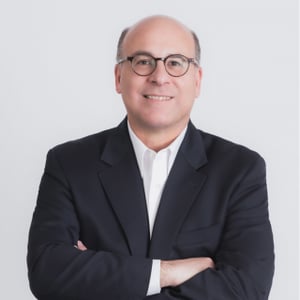
Partner, Wiley
Lee served as Chairman and Commissioner of the Federal Election Commission (FEC), where he successfully led the rulemaking to conform the agency's regulations to the Supreme Court's Citizens United and McCutcheon decisions and championed free speech on the Internet and free press rights. He previously had served as legal counsel and policy advisor to the Governor of Virginia and Attorney General of Virginia, associate general counsel of the University of Virginia, and general counsel to numerous political organizations. His experience covers a broad range of policy-oriented subjects, including federal and state campaign finance and ethics laws, First Amendment rights of political speech and association, political action on the Internet, taxation of the Internet, interstate regulation, and academic freedom. He has extensive experience in all aspects of election administration, having litigated state, local and congressional recounts, election contests, ballot access, voting rights, late poll openings, and delegate credentials.
He has been named a "Top Campaign & Elections Lawyer" by Washingtonian magazine. The Washington Examiner called Lee “a leading voice among conservative regulators in Washington” (2016) and “a tireless voice for First Amendment rights on the Internet” (2018); the Richmond Times-Dispatch dubbed him a “free-speech champion” (2018); The Hill labeled him “a happy warrior for the First Amendment” (2018); and the Washington Post called him a “sharp policy wonk” (1999). He is a frequent lecturer at law schools, universities, civic organizations, and continuing legal education programs. He has authored numerous articles on election law and a chapter on regulation of political speech on the Internet in Law and Election Politics: The Rules of the Game (Routledge 2013), and his writings have appeared in The Wall Street Journal, Richmond Times-Dispatch, Washington Examiner, Washington Times, Politico and other publications. He has served on the boards of several educational, cultural, and political non-profit organizations.
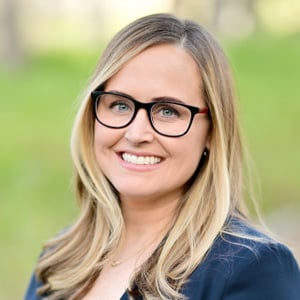
Partner, Lex Politico
Audrey Perry Martin is a national and California political law expert with nearly 20 years of experience. Her practice is focused on advising corporations, candidates, political action committees (PACs), political parties, and major campaign donors in the areas of political and election law.
Prior to joining The Gober Group, Audrey gained extensive knowledge and experience working at the Federal Election Commission, for Congress, a think tank, and at private law firms in Washington, D.C. and California. Audrey had previously worked as Deputy Campaign Manager and General Counsel for Insurance Commissioner Steve Poizner’s 2010 California Gubernatorial race. She has extensive presidential election experience, serving as FEC counsel for McCain-Palin 2008, Deputy General Counsel for Romney for President in 2008, and as a consultant for Romney’s 2012 campaign. Audrey also worked as Legal Counsel to the Committee on House Administration of the U.S. House of Representatives, where she focused on issues such as HAVA implementation, election integrity, congressional ethics, and campaign finance.
Audrey has taught election law at Brigham Young University law school and serves as the Vice President of Judicial Affairs for the Republican National Lawyers Association (RNLA). Audrey has appeared on numerous media outlets, including Fox News and NPR. Audrey is very active on social media and frequently posts about current political law issues on her blog, www.legallypolitical.com. She received her law degree from Georgetown University Law Center and a bachelor’s degree in political science and journalism from Brigham Young University.
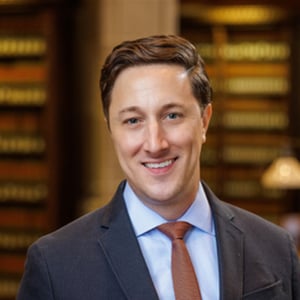
Professor of Law, Notre Dame Law School
Professor Derek Muller is a nationally-recognized scholar in the field of election law. His research focuses on the role of states in the administration of federal elections, the constitutional contours of voting rights and election administration, the limits of judicial power in the domain of elections, and the Electoral College.
He has published more than two dozen academic works, and his op-eds have appeared in the New York Times, the Los Angeles Times, and the Wall Street Journal. He has testified before Congress, and he is a contributor at the Election Law Blog. He is a co-author on a Federal Courts casebook published by Carolina Academic Press. He is also the co-reporter on a new Restatement of the Law, Election Litigation, an effort led by the American Law Institute.
Professor Muller teaches Election Law, Civil Procedure, and Evidence.
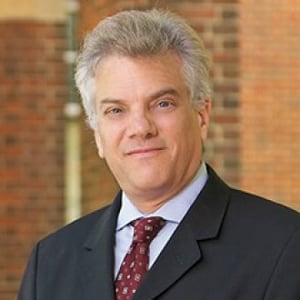
Sudler Family Professor of Constitutional Law, New York University School of Law
Richard H. Pildes is one of the nation’s leading scholars of constitutional law and a specialist in legal issues affecting democracy. He is a Member of the American Academy of Arts and Sciences and the American Law Institute, and has received recognition as a Guggenheim Fellow and a Carnegie Scholar. His acclaimed casebook, The Law of Democracy: Legal Structure of the Political Process (now in its fourth edition), helped create an entirely new field of study in the law schools. The Law of Democracy systematically explores legal and policy issues concerning the structure of democratic elections and institutions, such as the role of money in politics, the design of election districts, the regulation of political parties, the design of voting systems, the representation of minority interests in democratic institutions, and similar issues. He has written extensively on the rise of political polarization in the United States, the Voting Rights Act, the dysfunction of America’s political processes, the role of the Supreme Court in overseeing American democracy, the powers of the American President and Congress, and he has criticized excessively “romantic” understandings of democracy. In addition to his scholarship on these issues, he has written on national-security law, the design of the regulatory state, and American constitutional history and theory.
Respect for his expertise in these areas is reflected in frequent citations of his work in U.S. Supreme Court opinions, the translation of his work into many languages, and his frequent public lectures and appearances around the world, including his nomination with the NBC News Team for an Emmy Award for coverage of the 2000 Presidential election litigation.
His work has been translated and published in Chinese, French, Spanish, and Portuguese. In addition to his scholarship, Professor Pildes plays an active role litigating in these areas. He has won two cases before the United States Supreme Court, including a 2015 victory in Alabama Democratic Conference v. Alabama, a case involving race and redistricting. He served as counsel to a group of former chairmen of the Securities and Exchange Commission in litigation defending the constitutionality of the Sarbanes-Oxley Act; as counsel in election litigation to the Puerto Rico Electoral Commission; as counsel to the government of Puerto Rico; as a federal court-appointed independent expert on voting rights litigation; and as counsel in successful Supreme Court litigation that challenged the way the United States Tax Court operated. He was also a senior legal advisor to the 2008 and 2012 campaigns of President Obama.
Pildes received his A.B. in physical chemistry summa cum laude from Princeton, and his J.D. magna cum laude from Harvard, where he served as Supreme Court Note Editor on the Harvard Law Review. He clerked for Judge Abner J. Mikva of the U.S. Court of Appeals for the District of Columbia Circuit and for Justice Thurgood Marshall of the U.S. Supreme Court. After practicing law in Boston, he began his academic career at the University of Michigan Law School, before joining the NYU School of Law in 2001.
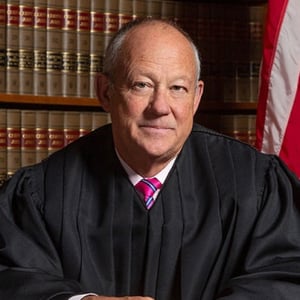
Judge, United States Court of Appeals, Tenth Circuit
Judge Tymkovich, of Denver, Colorado, was nominated to the Tenth Circuit Court of Appeals by President George W. Bush, and confirmed in April 2003. On October 1, 2015 he became Chief Circuit Judge and held this position until October 2022. He was Chair of the US Judicial Conference’s Committee on Judicial Resources from 2011 to 2015. Since 2008 he has been an adjunct professor of law at the University of Colorado School of Law, teaching Election Law. He is a member of the Doyle Inn of Court, the American Law Institute, and the International Society of Barristers. Since he joined the Circuit, Judge Tymkovich has hosted judicial delegations from Russia, Kazakhstan, and Afghanistan, and has also represented the United States in programs at Kiev and Yalta in Ukraine.
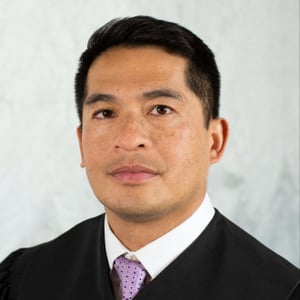
Judge, United States Court of Appeals, Ninth Circuit
Patrick J. Bumatay was confirmed as a U.S. Circuit Judge for the U.S. Court of Appeals for the Ninth Circuit in December 2019. He is based in San Diego, California.
Prior to his appointment, Judge Bumatay served as an Assistant United States Attorney in the U.S. Attorney’s Office for the Southern District of California, where he was a member of the Appellate and Narcotics Sections. He also served as a Counselor to the Attorney General on criminal law issues, including on national opioid strategy and combating transnational organized crime. Judge Bumatay has also worked in the Office of the Deputy Attorney General, the Office of the Associate Attorney General, and the Office of Legal Policy at the U.S. Department of Justice. Judge Bumatay has twice received the Attorney General’s Distinguished Service Award.
Judge Bumatay previously worked as an associate at Morvillo, Abramowitz, Grand, Iason, and Bohrer in New York, New York. Judge Bumatay clerked for the Honorable Timothy M. Tymkovich of the U.S. Court of Appeals for the Tenth Circuit and the Honorable Sandra L. Townes of the U.S. District Court for the Eastern District of New York. Judge Bumatay earned his B.A., cum laude, from Yale University and his J.D. from Harvard Law School.
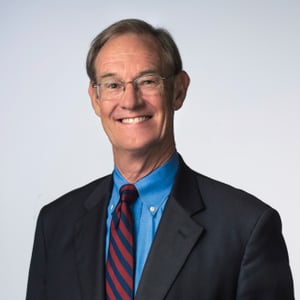
Former Attorney General, Arizona
During 8 years as Arizona Attorney General (2003-2011), Terry Goddard focused on protecting consumers and fighting trans-national organized crime. In 2010, he received the Kelly-Wyman Award, the highest recognition given by his fellow state Attorneys General.
As Mayor of Phoenix from 1984 to 1990, Terry increased citizen participation in government culminating in the Phoenix Futures Forum and the Billion Dollar Bond Issue in 1988. He was elected president of the National League of Cities in 1988 and recognized as Municipal Leader of the Year.
Recently, Terry’s political activity has been focused on getting a nonpartisan initiative to stop dark money from purchasing political ads in Arizona on the November ballot and approved by 72% of Arizona voters.
Terry retired as a commander after 27 years in the Naval Reserve. He practices law, works to revitalize and return to public use an historic church and teaches at the ASU College of Law. He is President of the Central Arizona Project board, the elected administrators of the canal system bringing water from the Colorado River to central Arizona. He lives in downtown Phoenix with his wife Monica, a tortoise, many cats and (occasionally) their recent ASU graduate son.
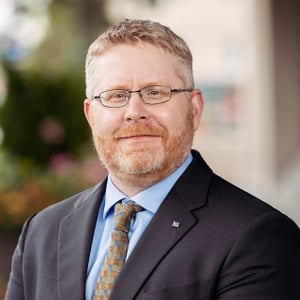
Of Counsel, Cashion Gilmore & Lindemuth
In addition to his experience as a litigator and appellate advocate, Scott Kendall offers a depth of expertise as a strategic consultant. He is well known for his work across all levels of government, across jurisdictions, and across political parties to design approaches that bring his clients positive results and disrupt negative outcomes.
Scott’s practice also includes providing guidance in matters related to strategic communications, as well as campaign and election law. He has represented organizations and individuals in proceedings before the Alaska Public Offices Commission and the Federal Elections Commission.
Scott’s campaign and election clients have included candidates for local, statewide, and national office as well as industry coalitions, non-profits, ballot measure groups, and independent campaign expenditure organizations (known as “superPACs”). In 2010, Scott was counsel to U.S. Senator Lisa Murkowski’s historic, and successful, write-in campaign for reelection. In 2014, Scott drafted a successful statewide ballot measure aimed at protecting the world famous Bristol Bay salmon fishery.
From 2015 to 2016, Scott left the practice of law to serve as Campaign Coordinator for Senator Murkowski’s successful 2016 reelection campaign. And from 2016 to 2018 Scott served as Chief of Staff to Alaska Governor Bill Walker, providing him with a keen understanding of state government operations, as well as the complex relationships between state, federal, and local jurisdictions. During that time, Scott helped execute Governor Walker’s legislative strategy including the passage of landmark legislation transforming the way Alaska finances state government into an endowment or “POMV” model to protect the Alaska Permanent Fund in perpetuity.
More recently Scott authored, litigated, and advised the successful ballot measure campaign to improve Alaska’s statewide election system. The new system—which features a Top 4 open primary election along with Ranked Choice Voting in the general—has become a national model for election reform.
Early in his career, from 2003 to 2005, Scott served as law clerk to the Hon. Chief Judge of the Alaska Court of Appeals, Robert G. Coats.
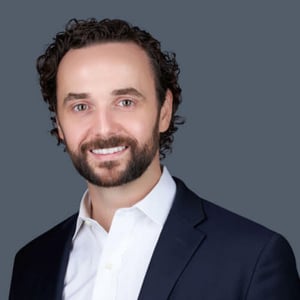
Managing Partner, Statecraft
Kory Langhofer is the Managing Attorney at Statecraft PLLC, a law firm focusing on government and political law. His practice is concentrated in campaign finance, constitutional litigation, and political matters. He has previously worked as a federal prosecutor, as litigation counsel to the presidential campaigns for Mitt Romney and Donald Trump, and as general counsel for the 2016-2017 presidential transition team.
Kory received his A.B. in political science, summa cum laude, from the University of Illinois at Urbana-Champaign. He received his J.D. from Yale Law School, where he served as an Editor of The Yale Law Journal.
Sudler Family Professor of Constitutional Law, New York University School of Law
Richard H. Pildes is one of the nation’s leading scholars of constitutional law and a specialist in legal issues affecting democracy. He is a Member of the American Academy of Arts and Sciences and the American Law Institute, and has received recognition as a Guggenheim Fellow and a Carnegie Scholar. His acclaimed casebook, The Law of Democracy: Legal Structure of the Political Process (now in its fourth edition), helped create an entirely new field of study in the law schools. The Law of Democracy systematically explores legal and policy issues concerning the structure of democratic elections and institutions, such as the role of money in politics, the design of election districts, the regulation of political parties, the design of voting systems, the representation of minority interests in democratic institutions, and similar issues. He has written extensively on the rise of political polarization in the United States, the Voting Rights Act, the dysfunction of America’s political processes, the role of the Supreme Court in overseeing American democracy, the powers of the American President and Congress, and he has criticized excessively “romantic” understandings of democracy. In addition to his scholarship on these issues, he has written on national-security law, the design of the regulatory state, and American constitutional history and theory.
Respect for his expertise in these areas is reflected in frequent citations of his work in U.S. Supreme Court opinions, the translation of his work into many languages, and his frequent public lectures and appearances around the world, including his nomination with the NBC News Team for an Emmy Award for coverage of the 2000 Presidential election litigation.
His work has been translated and published in Chinese, French, Spanish, and Portuguese. In addition to his scholarship, Professor Pildes plays an active role litigating in these areas. He has won two cases before the United States Supreme Court, including a 2015 victory in Alabama Democratic Conference v. Alabama, a case involving race and redistricting. He served as counsel to a group of former chairmen of the Securities and Exchange Commission in litigation defending the constitutionality of the Sarbanes-Oxley Act; as counsel in election litigation to the Puerto Rico Electoral Commission; as counsel to the government of Puerto Rico; as a federal court-appointed independent expert on voting rights litigation; and as counsel in successful Supreme Court litigation that challenged the way the United States Tax Court operated. He was also a senior legal advisor to the 2008 and 2012 campaigns of President Obama.
Pildes received his A.B. in physical chemistry summa cum laude from Princeton, and his J.D. magna cum laude from Harvard, where he served as Supreme Court Note Editor on the Harvard Law Review. He clerked for Judge Abner J. Mikva of the U.S. Court of Appeals for the District of Columbia Circuit and for Justice Thurgood Marshall of the U.S. Supreme Court. After practicing law in Boston, he began his academic career at the University of Michigan Law School, before joining the NYU School of Law in 2001.
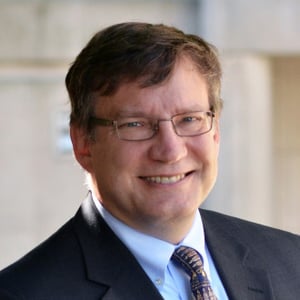
Chairman and Founder, Institute for Free Speech; Josiah H. Blackmore II/Shirley M. Nault Designated Professor of Law, Capital University Law School
Smith has authored over 40 articles on campaign finance reform, appearing in academic publications such as the Yale Law Journal and Georgetown Law Journal, and popular publications such as The Wall Street Journal, USA Today, and National Review. He has appeared on The O’Reilly Factor, Hardball with Chris Matthews, Bill Moyers Journal, the Lehrer News Hour, Fox News Special Report, ABC News, Washington Journal, and numerous other national and local television and radio programs.
As an FEC Commissioner, Smith won plaudits for his integrity and refusal to put partisan interests ahead of his duties, as well as his steadfast support for free speech. For his honesty and integrity, the Wall Street Journal dubbed him, “the only honorable man in this bordello.” Smith now serves as the Josiah H. Blackmore II/Shirley M. Nault Designated Professor of Law at Capital University Law School. He has won numerous awards for his scholarship and teaching, and is a past member of the Advisory Committee to the American Bar Association’s Standing Committee on Election Law. He currently serves on the Editorial Board of the Election Law Journal, and the Editorial Advisory Board of the Harvard Journal of Law and Public Policy. Smith also serves on the Board of Trustees of the Buckeye Institute for Public Policy Studies, is a senior fellow at the Goldwater Institute and is a member of the Board of Scholars of the Mackinac Center for Public Policy. Smith is a cum laude graduate of Harvard Law School and Kalamazoo College and holds an honorary doctorate from Augustana College.
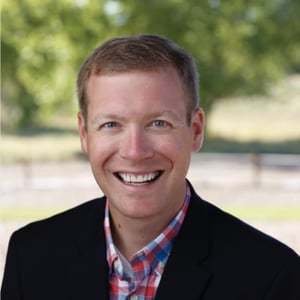
President, Center for American Rights
Daniel Suhr serves as president of the Center for American Rights, where he spends every day on the front lines of the fight to preserve our rights and liberties. The Center's mission is to advance free speech, free enterprise, and parental freedom in education through strategic, precedent-setting litigation.
Daniel formerly worked as policy director for Wisconsin Governor Scott Walker, as chief of staff for Wisconsin Lieutenant Governor Rebecca Kleefisch, and as a law clerk for Judge Diane Sykes of the U.S. Court of Appeals for the Seventh Circuit. He holds a B.A. and J.D. from Marquette University, and master’s degrees from Georgetown and the University of Missouri.
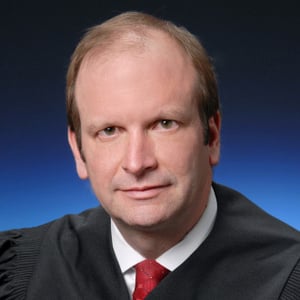
Associate Justice, Supreme Court of Ohio
Justice Pat DeWine began his six-year term on the Supreme Court of Ohio on Jan. 2, 2017, following his statewide election in November 2016. An excellent writer, Justice DeWine is known for the quality and thoroughness of his legal opinions. His opinions reflect his strong belief in judicial restraint and his respect for the constitutional roles of the other coequal branches of government.
Justice DeWine has served at all levels of the Ohio judiciary. Prior to his election to the Supreme Court, Justice DeWine served for four years on the First District Court of Appeals, and prior to that, for four years on the Hamilton County Common Pleas Court.
Justice DeWine has a strong commitment to furthering the rule of law through education. He is an adjunct professorat the University of Cincinnati College of Law where he teaches Appellate Practice and Procedure. In addition, he has taught undergraduate courses at the University of Cincinnati in Ohio Government & Politics and American Courts.
Justice DeWine has strong academic credentials. He graduated from the University of Michigan Law School in the top ten percent of his class with Order of the Coif honors. As an undergraduate student at Miami University, he maintained a perfect 4.0 grade point average and received summa cum laude honors. He was also a member of the Varsity Track and Cross Country teams.
After law school, he was selected for a clerkship on United States Court of Appeals for the Sixth Circuit. He served under the Honorable David A. Nelson, who had been appointed to the Sixth Circuit by President Ronald Reagan.
Justice DeWine understands the litigant’s perspective, having practiced law for 13 years with one of Cincinnati’s top law firms, Keating, Muething & Klekamp. He represented clients in appellate matters in Ohio and in federal courts across the country. He handled a diverse range of litigation matters, including mass tort bankruptcies, securities fraud litigation, and constitutional issues.
Other Public Service
Justice DeWine brings a unique perspective to the bench because of his public service as a County Commissioner and a member of Cincinnati City Council.
As a member of the Hamilton County Board of Commissioners, he focused on reforming County government, lowering the tax burden, eliminating unnecessary bureaucracy and promoting public safety. He led the citizens referendum that ultimately repealed the nearly $1 billion sales tax increase that was enacted by his colleagues on the Commission. The Reason Foundation named him an “Innovator in Action,” along with such leaders as Rudy Giuliani and Jeb Bush, for his efforts to reform County government.
On Cincinnati City Council, he was known as a taxpayer watchdog, successfully rooting out wasteful spending and abuse in city government. He helped eliminate unnecessary regulations, led the effort to crack down on quality of life issues affecting city neighborhoods and created a development fund that leveraged private capital to spur new housing development downtown and across city neighborhoods. He also led the Issue Four charter change that created a more accountable city government by allowing the city to hire the most qualified individuals for key positions in city government.
He was a founder of the Build Cincinnati reform group that successfully passed a charter amendment to allow Cincinnati voters to directly elect the Mayor.athon.
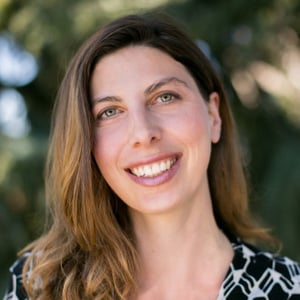
Senior Fellow, Democracy, Conflict, and Governance Program, Carnegie Endowment for International Peace
Dr. Rachel Kleinfeld is a senior fellow at the Carnegie Endowment for International Peace, where she focuses on issues of rule of law, security, and governance in post-conflict countries, fragile states, and states in transition.
As the founding CEO of the Truman National Security Project, she spent nearly a decade leading a movement of national security, political, and military leaders working to promote people and policies that strengthen security, stability, rights, and human dignity in America and around the world. In 2011, former secretary of state Hillary Clinton appointed Kleinfeld to the Foreign Affairs Policy Board, which advises the secretary of state quarterly, a role she served through 2014.
Kleinfeld has consulted on rule of law reform for the World Bank, the European Union, the OECD, the Open Society Institute, and other institutions, and has briefed multiple government agencies in the United States and abroad. She is the author of Advancing the Rule of Law Abroad: Next Generation Reform (Carnegie, 2012), which was chosen by Foreign Affairs magazine as one of the best foreign policy books of 2012. Her writings have appeared in Relocating the Rule of Law (Hart, 2009), Promoting Democracy and the Rule of Law: American and European Strategies (Palgrave, 2009), The Future of Human Rights (Philadelphia UP, 2008), Promoting the Rule of Law: The Problem of Knowledge (Carnegie Endowment, 2006), With All Our Might (Rowen and Littlefield, 2006) and other publications. She has also co-authored Let There Be Light: Electrifying the Developing World with Markets and Distributed Generation (Truman Institute, 2012).
Named one of the top 40 Under 40 Political Leaders in America by Time magazine in 2010, Kleinfeld has been featured in the New York Times, the Wall Street Journal, Fox News, and other national television, radio, and print media. You can find out more about her work and activities on her website, rachelkleinfeld.com.
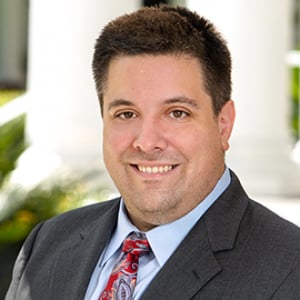
Sheila M. McDevitt Professor of Law and Faculty Director of the Election Law Center, Florida State University College of Law
Professor Morley joined FSU Law in 2018, and teaches and writes in the areas of election law, constitutional law, remedies, and the federal courts. He is best known for his work on election emergencies and post-election litigation, nationwide and other defendant-oriented injunctions, the jurisdiction of the federal courts and their equitable powers more generally. He has testified before congressional committees, made presentations to election officials for the U.S. Election Assistance Commission and participated in bipartisan blue-ribbon groups to develop election reforms. The governor of Florida also appointed Professor Morley to the Criminal Punishment Code Task Force, to propose potential revisions to the legislature.
The U.S. Supreme Court has cited several of his articles, and he was counsel of record for the successful Petitioner in a landmark campaign finance case. Professor Morley has appeared on C-SPAN, Court TV, Fox News and numerous local news programs, and has been quoted in the Washington Post, Los Angeles Times, Roll Call, Politico, U.S. News and World Report, and a wide range of other national publications. His work has been published in many of the nation’s top law reviews, including the Georgetown Law Journal, Northwestern University Law Review, Boston University Law Review and Emory Law Journal.
Before joining FSU Law, Professor Morley was a Climenko Fellow and Lecturer in Law at Harvard Law School. Prior to his experience in academia, he served in government as special assistant to the General Counsel of the Army at the Pentagon, as well as a law clerk for Judge Gerald B. Tjoflat of the U.S. Court of Appeals for the Eleventh Circuit. During his tenure with the Army General Counsel’s office, he was awarded the Meritorious Civilian Service Award and the Army Staff Lapel Pin. He also worked as an associate at Williams & Connolly LLP and the Supreme Court & Appellate group of Winston & Strawn, LLP, both in Washington, D.C.
Professor Morley earned his J.D. from Yale Law School in 2003, where he was a senior editor on the Yale Law Journal; served on the moot court board; and received the Thurman Arnold Prize for Best Oralist in the Morris Tyler Moot Court of Appeals.
Sudler Family Professor of Constitutional Law, New York University School of Law
Richard H. Pildes is one of the nation’s leading scholars of constitutional law and a specialist in legal issues affecting democracy. He is a Member of the American Academy of Arts and Sciences and the American Law Institute, and has received recognition as a Guggenheim Fellow and a Carnegie Scholar. His acclaimed casebook, The Law of Democracy: Legal Structure of the Political Process (now in its fourth edition), helped create an entirely new field of study in the law schools. The Law of Democracy systematically explores legal and policy issues concerning the structure of democratic elections and institutions, such as the role of money in politics, the design of election districts, the regulation of political parties, the design of voting systems, the representation of minority interests in democratic institutions, and similar issues. He has written extensively on the rise of political polarization in the United States, the Voting Rights Act, the dysfunction of America’s political processes, the role of the Supreme Court in overseeing American democracy, the powers of the American President and Congress, and he has criticized excessively “romantic” understandings of democracy. In addition to his scholarship on these issues, he has written on national-security law, the design of the regulatory state, and American constitutional history and theory.
Respect for his expertise in these areas is reflected in frequent citations of his work in U.S. Supreme Court opinions, the translation of his work into many languages, and his frequent public lectures and appearances around the world, including his nomination with the NBC News Team for an Emmy Award for coverage of the 2000 Presidential election litigation.
His work has been translated and published in Chinese, French, Spanish, and Portuguese. In addition to his scholarship, Professor Pildes plays an active role litigating in these areas. He has won two cases before the United States Supreme Court, including a 2015 victory in Alabama Democratic Conference v. Alabama, a case involving race and redistricting. He served as counsel to a group of former chairmen of the Securities and Exchange Commission in litigation defending the constitutionality of the Sarbanes-Oxley Act; as counsel in election litigation to the Puerto Rico Electoral Commission; as counsel to the government of Puerto Rico; as a federal court-appointed independent expert on voting rights litigation; and as counsel in successful Supreme Court litigation that challenged the way the United States Tax Court operated. He was also a senior legal advisor to the 2008 and 2012 campaigns of President Obama.
Pildes received his A.B. in physical chemistry summa cum laude from Princeton, and his J.D. magna cum laude from Harvard, where he served as Supreme Court Note Editor on the Harvard Law Review. He clerked for Judge Abner J. Mikva of the U.S. Court of Appeals for the District of Columbia Circuit and for Justice Thurgood Marshall of the U.S. Supreme Court. After practicing law in Boston, he began his academic career at the University of Michigan Law School, before joining the NYU School of Law in 2001.
Chairman and Founder, Institute for Free Speech; Josiah H. Blackmore II/Shirley M. Nault Designated Professor of Law, Capital University Law School
Smith has authored over 40 articles on campaign finance reform, appearing in academic publications such as the Yale Law Journal and Georgetown Law Journal, and popular publications such as The Wall Street Journal, USA Today, and National Review. He has appeared on The O’Reilly Factor, Hardball with Chris Matthews, Bill Moyers Journal, the Lehrer News Hour, Fox News Special Report, ABC News, Washington Journal, and numerous other national and local television and radio programs.
As an FEC Commissioner, Smith won plaudits for his integrity and refusal to put partisan interests ahead of his duties, as well as his steadfast support for free speech. For his honesty and integrity, the Wall Street Journal dubbed him, “the only honorable man in this bordello.” Smith now serves as the Josiah H. Blackmore II/Shirley M. Nault Designated Professor of Law at Capital University Law School. He has won numerous awards for his scholarship and teaching, and is a past member of the Advisory Committee to the American Bar Association’s Standing Committee on Election Law. He currently serves on the Editorial Board of the Election Law Journal, and the Editorial Advisory Board of the Harvard Journal of Law and Public Policy. Smith also serves on the Board of Trustees of the Buckeye Institute for Public Policy Studies, is a senior fellow at the Goldwater Institute and is a member of the Board of Scholars of the Mackinac Center for Public Policy. Smith is a cum laude graduate of Harvard Law School and Kalamazoo College and holds an honorary doctorate from Augustana College.
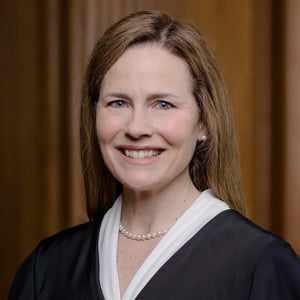
Associate Justice, United States Supreme Court
The Honorable Amy Coney Barrett is an Associate Justice of the Supreme Court of the United States. She was nominated by President Donald Trump and was confirmed on October 27, 2020. She is the fifth woman to serve on the Court.
Justice Barrett earned her J.D., summa cum laude, from Notre Dame, where she was a Kiley Fellow, earned the Hoynes Prize, the Law School’s highest honor, and served as executive editor of the Notre Dame Law Review. She clerked for Judge Laurence H. Silberman of the U.S. Court of Appeals for the D.C. Circuit and for Associate Justice Antonin Scalia of the U.S. Supreme Court. As an associate at Miller, Cassidy, Larroca & Lewin in Washington, D.C., she litigated constitutional, criminal, and commercial cases in both trial and appellate courts.
In 2002, Justice Barrett joined the faculty of Notre Dame Law School. She continued to teach following her appointment to the U.S. Court of Appeals for the Seventh Circuit in November 2017. Justice Barrett also served by appointment of the Chief Justice on the Advisory Committee for the Federal Rules of Appellate Procedure from 2010 to 2016.
Justice Barrett has published widely in the areas of federal courts, constitutional law, and statutory interpretation. Her scholarship in these fields has been published in leading journals, including the Columbia, Virginia, and Texas Law Reviews.
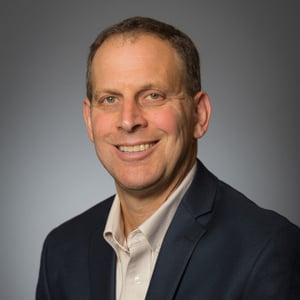
Robert S. Stevens Professor of Law, Cornell Law School
Michael C. Dorf, the Robert S. Stevens Professor of Law at Cornell Law School, has been teaching law since 1992. He has authored or co-authored six books and over one hundred scholarly articles and essays for law journals and peer-reviewed science and social science journals. He also frequently writes for non-lawyers. In addition to occasional contributions to The New York Times, USA Today, CNN.com, The Los Angeles Times, and other wide-circulation publications, Professor Dorf has been writing a bi-weekly column since 2000 and publishes a popular blog, Dorf on Law. He received his undergraduate and law degrees from Harvard. After law school, Dorf served as a law clerk for Judge Stephen Reinhardt of the U.S. Court of Appeals for the Ninth Circuit and then for Justice Anthony M. Kennedy of the U.S. Supreme Court. He has worked with several law firms and maintains an active pro bono practice mostly consisting of writing Supreme Court briefs. Before joining the Cornell faculty, Professor Dorf taught at Rutgers-Camden Law School for three years and at Columbia Law School for thirteen years.

Judge, United States Court of Appeals, Third Circuit
Judge Hardiman was appointed to the United States Court of Appeals for the Third Circuit on January 9, 2007 and was confirmed by the Senate (95-0) on March 15, 2007. Prior to becoming an appellate judge, Judge Hardiman served as a trial judge on the United States District Court for the Western District of Pennsylvania as of November 1, 2003. In 2008, Chief Justice John Roberts appointed Judge Hardiman to the Information Technology Committee of the Judicial Conference of the United States. Judge Hardiman was appointed Chairman of the IT Committee in 2013 and served in that capacity until September 2021. In 2021 he was appointed by the Director of the Administrative Office of the United States Courts to serve as Chair of the Judiciary IT Security Task Force, which completed its work in fall 2023. Chief Justice Roberts appointed Judge Hardiman to the Board of the Federal Judicial Center to serve from March 2020 until March 2024. As part of his work with the Center, Judge Hardiman now serves as Editor in Chief for the Manual for Complex Civil Litigation, Fifth.
Before entering judicial service, Judge Hardiman handled a wide variety of litigation matters in state and federal trial and appellate courts as a partner at Reed Smith LLP (1999-2003), a partner at Titus & McConomy LLP (1996-1999), and as an associate with its predecessor firm, Cindrich & Titus (1992-1996). Judge Hardiman began his legal career as an associate in the Washington, D.C. office of Skadden, Arps, Slate, Meagher & Flom (1990-1992).
A 1987 honors graduate of the University of Notre Dame, Judge Hardiman received his law degree in 1990 from the Georgetown University Law Center, where he served as a Notes and Comments Editor on the Georgetown Law Journal. In 2012, Judge Hardiman was elected as a member of the American Law Institute and was elected to its Council in 2019 and its Executive Committee in 2025. Judge Hardiman regularly teaches a seminar on Advanced Constitutional Law at Duquesne University School of Law and a one-week course entitled “Constitutional Law: the First and Second Amendments” at Georgetown University Law Center.
A native of Waltham, Massachusetts, Judge Hardiman has chambers in Pittsburgh, Pennsylvania. He and his wife Lori married in 1992 and have three children.
Sudler Family Professor of Constitutional Law, New York University School of Law
Richard H. Pildes is one of the nation’s leading scholars of constitutional law and a specialist in legal issues affecting democracy. He is a Member of the American Academy of Arts and Sciences and the American Law Institute, and has received recognition as a Guggenheim Fellow and a Carnegie Scholar. His acclaimed casebook, The Law of Democracy: Legal Structure of the Political Process (now in its fourth edition), helped create an entirely new field of study in the law schools. The Law of Democracy systematically explores legal and policy issues concerning the structure of democratic elections and institutions, such as the role of money in politics, the design of election districts, the regulation of political parties, the design of voting systems, the representation of minority interests in democratic institutions, and similar issues. He has written extensively on the rise of political polarization in the United States, the Voting Rights Act, the dysfunction of America’s political processes, the role of the Supreme Court in overseeing American democracy, the powers of the American President and Congress, and he has criticized excessively “romantic” understandings of democracy. In addition to his scholarship on these issues, he has written on national-security law, the design of the regulatory state, and American constitutional history and theory.
Respect for his expertise in these areas is reflected in frequent citations of his work in U.S. Supreme Court opinions, the translation of his work into many languages, and his frequent public lectures and appearances around the world, including his nomination with the NBC News Team for an Emmy Award for coverage of the 2000 Presidential election litigation.
His work has been translated and published in Chinese, French, Spanish, and Portuguese. In addition to his scholarship, Professor Pildes plays an active role litigating in these areas. He has won two cases before the United States Supreme Court, including a 2015 victory in Alabama Democratic Conference v. Alabama, a case involving race and redistricting. He served as counsel to a group of former chairmen of the Securities and Exchange Commission in litigation defending the constitutionality of the Sarbanes-Oxley Act; as counsel in election litigation to the Puerto Rico Electoral Commission; as counsel to the government of Puerto Rico; as a federal court-appointed independent expert on voting rights litigation; and as counsel in successful Supreme Court litigation that challenged the way the United States Tax Court operated. He was also a senior legal advisor to the 2008 and 2012 campaigns of President Obama.
Pildes received his A.B. in physical chemistry summa cum laude from Princeton, and his J.D. magna cum laude from Harvard, where he served as Supreme Court Note Editor on the Harvard Law Review. He clerked for Judge Abner J. Mikva of the U.S. Court of Appeals for the District of Columbia Circuit and for Justice Thurgood Marshall of the U.S. Supreme Court. After practicing law in Boston, he began his academic career at the University of Michigan Law School, before joining the NYU School of Law in 2001.
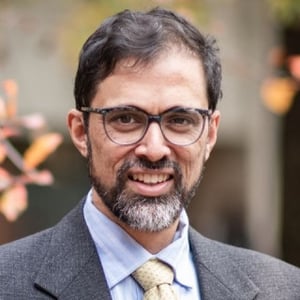
James Monroe Distinguished Professor of Law and Albert Clark Tate, Jr., Professor of Law, University of Virginia School of Law
Professor Saikrishna Prakash’s scholarship focuses on separation of powers, particularly executive powers. He teaches Constitutional Law, Foreign Relations Law and Presidential Powers at the Law School.
Prakash’s most recent book, “The Living Presidency: An Originalist Argument Against Its Ever-Expanding Powers,” was published by Harvard Belknap Press in 2020. He also authored “Imperial from the Beginning: The Constitution of the Original Executive” (Yale University Press, 2015). The former book focuses on the modern presidency while the latter considers the presidency of the Founders.
Prakash has authored over 75 law review articles. Among them are “Of Synchronicity and Supreme Law” in the Harvard Law Review, “The Indefensible Duty to Defend” in the Columbia Law Review, and “50 States, 50 Attorneys General and 50 Approaches to the Duty to Defend” and “The Executive Power Over Foreign Affairs” in the Yale Law Journal.
Prakash has published op-eds in The New York Times, The Wall Street Journal and the Los Angeles Times. At the request of Democrats and Republicans, he has testified before Congress on matters of presidential removal, the Mueller Report and how Congress might better check the presidency. He is currently a Miller Center Senior Fellow. In 2015, he received the Roger Traynor award for faculty scholarship. In the same year, he received an honorable mention from the American Society of Legal Writers for his book “Imperial from the Beginning.” He has given named lectures at William & Mary Law School, Princeton University and Toledo Law School, and keynote addresses at several conferences.
Prakash majored in economics and political science at Stanford University. At Yale Law School, he served as senior editor of the Yale Law Journal and received the John M. Olin Fellowship in Law, Economics and Public Policy. He subsequently clerked for Judge Laurence H. Silberman of the U.S. Court of Appeals for the District of Columbia Circuit and for Justice Clarence Thomas of the U.S. Supreme Court. After practicing in New York for two years, he served as a visiting professor at the University of Illinois College of Law and as an associate professor at Boston University School of Law. He then spent several years at the University of San Diego School of Law as the Herzog Research Professor of Law. Prakash has been a visiting professor at Northwestern University and the University of Chicago. He also has served as a James Madison Fellow at Princeton University and Visiting Research Fellow at the Hoover Institution of War & Peace at Stanford University.
Associate Justice, Supreme Court of Ohio
Justice Pat DeWine began his six-year term on the Supreme Court of Ohio on Jan. 2, 2017, following his statewide election in November 2016. An excellent writer, Justice DeWine is known for the quality and thoroughness of his legal opinions. His opinions reflect his strong belief in judicial restraint and his respect for the constitutional roles of the other coequal branches of government.
Justice DeWine has served at all levels of the Ohio judiciary. Prior to his election to the Supreme Court, Justice DeWine served for four years on the First District Court of Appeals, and prior to that, for four years on the Hamilton County Common Pleas Court.
Justice DeWine has a strong commitment to furthering the rule of law through education. He is an adjunct professorat the University of Cincinnati College of Law where he teaches Appellate Practice and Procedure. In addition, he has taught undergraduate courses at the University of Cincinnati in Ohio Government & Politics and American Courts.
Justice DeWine has strong academic credentials. He graduated from the University of Michigan Law School in the top ten percent of his class with Order of the Coif honors. As an undergraduate student at Miami University, he maintained a perfect 4.0 grade point average and received summa cum laude honors. He was also a member of the Varsity Track and Cross Country teams.
After law school, he was selected for a clerkship on United States Court of Appeals for the Sixth Circuit. He served under the Honorable David A. Nelson, who had been appointed to the Sixth Circuit by President Ronald Reagan.
Justice DeWine understands the litigant’s perspective, having practiced law for 13 years with one of Cincinnati’s top law firms, Keating, Muething & Klekamp. He represented clients in appellate matters in Ohio and in federal courts across the country. He handled a diverse range of litigation matters, including mass tort bankruptcies, securities fraud litigation, and constitutional issues.
Other Public Service
Justice DeWine brings a unique perspective to the bench because of his public service as a County Commissioner and a member of Cincinnati City Council.
As a member of the Hamilton County Board of Commissioners, he focused on reforming County government, lowering the tax burden, eliminating unnecessary bureaucracy and promoting public safety. He led the citizens referendum that ultimately repealed the nearly $1 billion sales tax increase that was enacted by his colleagues on the Commission. The Reason Foundation named him an “Innovator in Action,” along with such leaders as Rudy Giuliani and Jeb Bush, for his efforts to reform County government.
On Cincinnati City Council, he was known as a taxpayer watchdog, successfully rooting out wasteful spending and abuse in city government. He helped eliminate unnecessary regulations, led the effort to crack down on quality of life issues affecting city neighborhoods and created a development fund that leveraged private capital to spur new housing development downtown and across city neighborhoods. He also led the Issue Four charter change that created a more accountable city government by allowing the city to hire the most qualified individuals for key positions in city government.
He was a founder of the Build Cincinnati reform group that successfully passed a charter amendment to allow Cincinnati voters to directly elect the Mayor.athon.
Sheila M. McDevitt Professor of Law and Faculty Director of the Election Law Center, Florida State University College of Law
Professor Morley joined FSU Law in 2018, and teaches and writes in the areas of election law, constitutional law, remedies, and the federal courts. He is best known for his work on election emergencies and post-election litigation, nationwide and other defendant-oriented injunctions, the jurisdiction of the federal courts and their equitable powers more generally. He has testified before congressional committees, made presentations to election officials for the U.S. Election Assistance Commission and participated in bipartisan blue-ribbon groups to develop election reforms. The governor of Florida also appointed Professor Morley to the Criminal Punishment Code Task Force, to propose potential revisions to the legislature.
The U.S. Supreme Court has cited several of his articles, and he was counsel of record for the successful Petitioner in a landmark campaign finance case. Professor Morley has appeared on C-SPAN, Court TV, Fox News and numerous local news programs, and has been quoted in the Washington Post, Los Angeles Times, Roll Call, Politico, U.S. News and World Report, and a wide range of other national publications. His work has been published in many of the nation’s top law reviews, including the Georgetown Law Journal, Northwestern University Law Review, Boston University Law Review and Emory Law Journal.
Before joining FSU Law, Professor Morley was a Climenko Fellow and Lecturer in Law at Harvard Law School. Prior to his experience in academia, he served in government as special assistant to the General Counsel of the Army at the Pentagon, as well as a law clerk for Judge Gerald B. Tjoflat of the U.S. Court of Appeals for the Eleventh Circuit. During his tenure with the Army General Counsel’s office, he was awarded the Meritorious Civilian Service Award and the Army Staff Lapel Pin. He also worked as an associate at Williams & Connolly LLP and the Supreme Court & Appellate group of Winston & Strawn, LLP, both in Washington, D.C.
Professor Morley earned his J.D. from Yale Law School in 2003, where he was a senior editor on the Yale Law Journal; served on the moot court board; and received the Thurman Arnold Prize for Best Oralist in the Morris Tyler Moot Court of Appeals.
Sudler Family Professor of Constitutional Law, New York University School of Law
Richard H. Pildes is one of the nation’s leading scholars of constitutional law and a specialist in legal issues affecting democracy. He is a Member of the American Academy of Arts and Sciences and the American Law Institute, and has received recognition as a Guggenheim Fellow and a Carnegie Scholar. His acclaimed casebook, The Law of Democracy: Legal Structure of the Political Process (now in its fourth edition), helped create an entirely new field of study in the law schools. The Law of Democracy systematically explores legal and policy issues concerning the structure of democratic elections and institutions, such as the role of money in politics, the design of election districts, the regulation of political parties, the design of voting systems, the representation of minority interests in democratic institutions, and similar issues. He has written extensively on the rise of political polarization in the United States, the Voting Rights Act, the dysfunction of America’s political processes, the role of the Supreme Court in overseeing American democracy, the powers of the American President and Congress, and he has criticized excessively “romantic” understandings of democracy. In addition to his scholarship on these issues, he has written on national-security law, the design of the regulatory state, and American constitutional history and theory.
Respect for his expertise in these areas is reflected in frequent citations of his work in U.S. Supreme Court opinions, the translation of his work into many languages, and his frequent public lectures and appearances around the world, including his nomination with the NBC News Team for an Emmy Award for coverage of the 2000 Presidential election litigation.
His work has been translated and published in Chinese, French, Spanish, and Portuguese. In addition to his scholarship, Professor Pildes plays an active role litigating in these areas. He has won two cases before the United States Supreme Court, including a 2015 victory in Alabama Democratic Conference v. Alabama, a case involving race and redistricting. He served as counsel to a group of former chairmen of the Securities and Exchange Commission in litigation defending the constitutionality of the Sarbanes-Oxley Act; as counsel in election litigation to the Puerto Rico Electoral Commission; as counsel to the government of Puerto Rico; as a federal court-appointed independent expert on voting rights litigation; and as counsel in successful Supreme Court litigation that challenged the way the United States Tax Court operated. He was also a senior legal advisor to the 2008 and 2012 campaigns of President Obama.
Pildes received his A.B. in physical chemistry summa cum laude from Princeton, and his J.D. magna cum laude from Harvard, where he served as Supreme Court Note Editor on the Harvard Law Review. He clerked for Judge Abner J. Mikva of the U.S. Court of Appeals for the District of Columbia Circuit and for Justice Thurgood Marshall of the U.S. Supreme Court. After practicing law in Boston, he began his academic career at the University of Michigan Law School, before joining the NYU School of Law in 2001.
Chairman and Founder, Institute for Free Speech; Josiah H. Blackmore II/Shirley M. Nault Designated Professor of Law, Capital University Law School
Smith has authored over 40 articles on campaign finance reform, appearing in academic publications such as the Yale Law Journal and Georgetown Law Journal, and popular publications such as The Wall Street Journal, USA Today, and National Review. He has appeared on The O’Reilly Factor, Hardball with Chris Matthews, Bill Moyers Journal, the Lehrer News Hour, Fox News Special Report, ABC News, Washington Journal, and numerous other national and local television and radio programs.
As an FEC Commissioner, Smith won plaudits for his integrity and refusal to put partisan interests ahead of his duties, as well as his steadfast support for free speech. For his honesty and integrity, the Wall Street Journal dubbed him, “the only honorable man in this bordello.” Smith now serves as the Josiah H. Blackmore II/Shirley M. Nault Designated Professor of Law at Capital University Law School. He has won numerous awards for his scholarship and teaching, and is a past member of the Advisory Committee to the American Bar Association’s Standing Committee on Election Law. He currently serves on the Editorial Board of the Election Law Journal, and the Editorial Advisory Board of the Harvard Journal of Law and Public Policy. Smith also serves on the Board of Trustees of the Buckeye Institute for Public Policy Studies, is a senior fellow at the Goldwater Institute and is a member of the Board of Scholars of the Mackinac Center for Public Policy. Smith is a cum laude graduate of Harvard Law School and Kalamazoo College and holds an honorary doctorate from Augustana College.
Senior Fellow, Democracy, Conflict, and Governance Program, Carnegie Endowment for International Peace
Dr. Rachel Kleinfeld is a senior fellow at the Carnegie Endowment for International Peace, where she focuses on issues of rule of law, security, and governance in post-conflict countries, fragile states, and states in transition.
As the founding CEO of the Truman National Security Project, she spent nearly a decade leading a movement of national security, political, and military leaders working to promote people and policies that strengthen security, stability, rights, and human dignity in America and around the world. In 2011, former secretary of state Hillary Clinton appointed Kleinfeld to the Foreign Affairs Policy Board, which advises the secretary of state quarterly, a role she served through 2014.
Kleinfeld has consulted on rule of law reform for the World Bank, the European Union, the OECD, the Open Society Institute, and other institutions, and has briefed multiple government agencies in the United States and abroad. She is the author of Advancing the Rule of Law Abroad: Next Generation Reform (Carnegie, 2012), which was chosen by Foreign Affairs magazine as one of the best foreign policy books of 2012. Her writings have appeared in Relocating the Rule of Law (Hart, 2009), Promoting Democracy and the Rule of Law: American and European Strategies (Palgrave, 2009), The Future of Human Rights (Philadelphia UP, 2008), Promoting the Rule of Law: The Problem of Knowledge (Carnegie Endowment, 2006), With All Our Might (Rowen and Littlefield, 2006) and other publications. She has also co-authored Let There Be Light: Electrifying the Developing World with Markets and Distributed Generation (Truman Institute, 2012).
Named one of the top 40 Under 40 Political Leaders in America by Time magazine in 2010, Kleinfeld has been featured in the New York Times, the Wall Street Journal, Fox News, and other national television, radio, and print media. You can find out more about her work and activities on her website, rachelkleinfeld.com.
Associate Justice, Supreme Court of Ohio
Justice Pat DeWine began his six-year term on the Supreme Court of Ohio on Jan. 2, 2017, following his statewide election in November 2016. An excellent writer, Justice DeWine is known for the quality and thoroughness of his legal opinions. His opinions reflect his strong belief in judicial restraint and his respect for the constitutional roles of the other coequal branches of government.
Justice DeWine has served at all levels of the Ohio judiciary. Prior to his election to the Supreme Court, Justice DeWine served for four years on the First District Court of Appeals, and prior to that, for four years on the Hamilton County Common Pleas Court.
Justice DeWine has a strong commitment to furthering the rule of law through education. He is an adjunct professorat the University of Cincinnati College of Law where he teaches Appellate Practice and Procedure. In addition, he has taught undergraduate courses at the University of Cincinnati in Ohio Government & Politics and American Courts.
Justice DeWine has strong academic credentials. He graduated from the University of Michigan Law School in the top ten percent of his class with Order of the Coif honors. As an undergraduate student at Miami University, he maintained a perfect 4.0 grade point average and received summa cum laude honors. He was also a member of the Varsity Track and Cross Country teams.
After law school, he was selected for a clerkship on United States Court of Appeals for the Sixth Circuit. He served under the Honorable David A. Nelson, who had been appointed to the Sixth Circuit by President Ronald Reagan.
Justice DeWine understands the litigant’s perspective, having practiced law for 13 years with one of Cincinnati’s top law firms, Keating, Muething & Klekamp. He represented clients in appellate matters in Ohio and in federal courts across the country. He handled a diverse range of litigation matters, including mass tort bankruptcies, securities fraud litigation, and constitutional issues.
Other Public Service
Justice DeWine brings a unique perspective to the bench because of his public service as a County Commissioner and a member of Cincinnati City Council.
As a member of the Hamilton County Board of Commissioners, he focused on reforming County government, lowering the tax burden, eliminating unnecessary bureaucracy and promoting public safety. He led the citizens referendum that ultimately repealed the nearly $1 billion sales tax increase that was enacted by his colleagues on the Commission. The Reason Foundation named him an “Innovator in Action,” along with such leaders as Rudy Giuliani and Jeb Bush, for his efforts to reform County government.
On Cincinnati City Council, he was known as a taxpayer watchdog, successfully rooting out wasteful spending and abuse in city government. He helped eliminate unnecessary regulations, led the effort to crack down on quality of life issues affecting city neighborhoods and created a development fund that leveraged private capital to spur new housing development downtown and across city neighborhoods. He also led the Issue Four charter change that created a more accountable city government by allowing the city to hire the most qualified individuals for key positions in city government.
He was a founder of the Build Cincinnati reform group that successfully passed a charter amendment to allow Cincinnati voters to directly elect the Mayor.athon.
Senior Fellow, Democracy, Conflict, and Governance Program, Carnegie Endowment for International Peace
Dr. Rachel Kleinfeld is a senior fellow at the Carnegie Endowment for International Peace, where she focuses on issues of rule of law, security, and governance in post-conflict countries, fragile states, and states in transition.
As the founding CEO of the Truman National Security Project, she spent nearly a decade leading a movement of national security, political, and military leaders working to promote people and policies that strengthen security, stability, rights, and human dignity in America and around the world. In 2011, former secretary of state Hillary Clinton appointed Kleinfeld to the Foreign Affairs Policy Board, which advises the secretary of state quarterly, a role she served through 2014.
Kleinfeld has consulted on rule of law reform for the World Bank, the European Union, the OECD, the Open Society Institute, and other institutions, and has briefed multiple government agencies in the United States and abroad. She is the author of Advancing the Rule of Law Abroad: Next Generation Reform (Carnegie, 2012), which was chosen by Foreign Affairs magazine as one of the best foreign policy books of 2012. Her writings have appeared in Relocating the Rule of Law (Hart, 2009), Promoting Democracy and the Rule of Law: American and European Strategies (Palgrave, 2009), The Future of Human Rights (Philadelphia UP, 2008), Promoting the Rule of Law: The Problem of Knowledge (Carnegie Endowment, 2006), With All Our Might (Rowen and Littlefield, 2006) and other publications. She has also co-authored Let There Be Light: Electrifying the Developing World with Markets and Distributed Generation (Truman Institute, 2012).
Named one of the top 40 Under 40 Political Leaders in America by Time magazine in 2010, Kleinfeld has been featured in the New York Times, the Wall Street Journal, Fox News, and other national television, radio, and print media. You can find out more about her work and activities on her website, rachelkleinfeld.com.
Sheila M. McDevitt Professor of Law and Faculty Director of the Election Law Center, Florida State University College of Law
Professor Morley joined FSU Law in 2018, and teaches and writes in the areas of election law, constitutional law, remedies, and the federal courts. He is best known for his work on election emergencies and post-election litigation, nationwide and other defendant-oriented injunctions, the jurisdiction of the federal courts and their equitable powers more generally. He has testified before congressional committees, made presentations to election officials for the U.S. Election Assistance Commission and participated in bipartisan blue-ribbon groups to develop election reforms. The governor of Florida also appointed Professor Morley to the Criminal Punishment Code Task Force, to propose potential revisions to the legislature.
The U.S. Supreme Court has cited several of his articles, and he was counsel of record for the successful Petitioner in a landmark campaign finance case. Professor Morley has appeared on C-SPAN, Court TV, Fox News and numerous local news programs, and has been quoted in the Washington Post, Los Angeles Times, Roll Call, Politico, U.S. News and World Report, and a wide range of other national publications. His work has been published in many of the nation’s top law reviews, including the Georgetown Law Journal, Northwestern University Law Review, Boston University Law Review and Emory Law Journal.
Before joining FSU Law, Professor Morley was a Climenko Fellow and Lecturer in Law at Harvard Law School. Prior to his experience in academia, he served in government as special assistant to the General Counsel of the Army at the Pentagon, as well as a law clerk for Judge Gerald B. Tjoflat of the U.S. Court of Appeals for the Eleventh Circuit. During his tenure with the Army General Counsel’s office, he was awarded the Meritorious Civilian Service Award and the Army Staff Lapel Pin. He also worked as an associate at Williams & Connolly LLP and the Supreme Court & Appellate group of Winston & Strawn, LLP, both in Washington, D.C.
Professor Morley earned his J.D. from Yale Law School in 2003, where he was a senior editor on the Yale Law Journal; served on the moot court board; and received the Thurman Arnold Prize for Best Oralist in the Morris Tyler Moot Court of Appeals.
Sudler Family Professor of Constitutional Law, New York University School of Law
Richard H. Pildes is one of the nation’s leading scholars of constitutional law and a specialist in legal issues affecting democracy. He is a Member of the American Academy of Arts and Sciences and the American Law Institute, and has received recognition as a Guggenheim Fellow and a Carnegie Scholar. His acclaimed casebook, The Law of Democracy: Legal Structure of the Political Process (now in its fourth edition), helped create an entirely new field of study in the law schools. The Law of Democracy systematically explores legal and policy issues concerning the structure of democratic elections and institutions, such as the role of money in politics, the design of election districts, the regulation of political parties, the design of voting systems, the representation of minority interests in democratic institutions, and similar issues. He has written extensively on the rise of political polarization in the United States, the Voting Rights Act, the dysfunction of America’s political processes, the role of the Supreme Court in overseeing American democracy, the powers of the American President and Congress, and he has criticized excessively “romantic” understandings of democracy. In addition to his scholarship on these issues, he has written on national-security law, the design of the regulatory state, and American constitutional history and theory.
Respect for his expertise in these areas is reflected in frequent citations of his work in U.S. Supreme Court opinions, the translation of his work into many languages, and his frequent public lectures and appearances around the world, including his nomination with the NBC News Team for an Emmy Award for coverage of the 2000 Presidential election litigation.
His work has been translated and published in Chinese, French, Spanish, and Portuguese. In addition to his scholarship, Professor Pildes plays an active role litigating in these areas. He has won two cases before the United States Supreme Court, including a 2015 victory in Alabama Democratic Conference v. Alabama, a case involving race and redistricting. He served as counsel to a group of former chairmen of the Securities and Exchange Commission in litigation defending the constitutionality of the Sarbanes-Oxley Act; as counsel in election litigation to the Puerto Rico Electoral Commission; as counsel to the government of Puerto Rico; as a federal court-appointed independent expert on voting rights litigation; and as counsel in successful Supreme Court litigation that challenged the way the United States Tax Court operated. He was also a senior legal advisor to the 2008 and 2012 campaigns of President Obama.
Pildes received his A.B. in physical chemistry summa cum laude from Princeton, and his J.D. magna cum laude from Harvard, where he served as Supreme Court Note Editor on the Harvard Law Review. He clerked for Judge Abner J. Mikva of the U.S. Court of Appeals for the District of Columbia Circuit and for Justice Thurgood Marshall of the U.S. Supreme Court. After practicing law in Boston, he began his academic career at the University of Michigan Law School, before joining the NYU School of Law in 2001.
Chairman and Founder, Institute for Free Speech; Josiah H. Blackmore II/Shirley M. Nault Designated Professor of Law, Capital University Law School
Smith has authored over 40 articles on campaign finance reform, appearing in academic publications such as the Yale Law Journal and Georgetown Law Journal, and popular publications such as The Wall Street Journal, USA Today, and National Review. He has appeared on The O’Reilly Factor, Hardball with Chris Matthews, Bill Moyers Journal, the Lehrer News Hour, Fox News Special Report, ABC News, Washington Journal, and numerous other national and local television and radio programs.
As an FEC Commissioner, Smith won plaudits for his integrity and refusal to put partisan interests ahead of his duties, as well as his steadfast support for free speech. For his honesty and integrity, the Wall Street Journal dubbed him, “the only honorable man in this bordello.” Smith now serves as the Josiah H. Blackmore II/Shirley M. Nault Designated Professor of Law at Capital University Law School. He has won numerous awards for his scholarship and teaching, and is a past member of the Advisory Committee to the American Bar Association’s Standing Committee on Election Law. He currently serves on the Editorial Board of the Election Law Journal, and the Editorial Advisory Board of the Harvard Journal of Law and Public Policy. Smith also serves on the Board of Trustees of the Buckeye Institute for Public Policy Studies, is a senior fellow at the Goldwater Institute and is a member of the Board of Scholars of the Mackinac Center for Public Policy. Smith is a cum laude graduate of Harvard Law School and Kalamazoo College and holds an honorary doctorate from Augustana College.
Associate Justice, United States Supreme Court
The Honorable Amy Coney Barrett is an Associate Justice of the Supreme Court of the United States. She was nominated by President Donald Trump and was confirmed on October 27, 2020. She is the fifth woman to serve on the Court.
Justice Barrett earned her J.D., summa cum laude, from Notre Dame, where she was a Kiley Fellow, earned the Hoynes Prize, the Law School’s highest honor, and served as executive editor of the Notre Dame Law Review. She clerked for Judge Laurence H. Silberman of the U.S. Court of Appeals for the D.C. Circuit and for Associate Justice Antonin Scalia of the U.S. Supreme Court. As an associate at Miller, Cassidy, Larroca & Lewin in Washington, D.C., she litigated constitutional, criminal, and commercial cases in both trial and appellate courts.
In 2002, Justice Barrett joined the faculty of Notre Dame Law School. She continued to teach following her appointment to the U.S. Court of Appeals for the Seventh Circuit in November 2017. Justice Barrett also served by appointment of the Chief Justice on the Advisory Committee for the Federal Rules of Appellate Procedure from 2010 to 2016.
Justice Barrett has published widely in the areas of federal courts, constitutional law, and statutory interpretation. Her scholarship in these fields has been published in leading journals, including the Columbia, Virginia, and Texas Law Reviews.
Robert S. Stevens Professor of Law, Cornell Law School
Michael C. Dorf, the Robert S. Stevens Professor of Law at Cornell Law School, has been teaching law since 1992. He has authored or co-authored six books and over one hundred scholarly articles and essays for law journals and peer-reviewed science and social science journals. He also frequently writes for non-lawyers. In addition to occasional contributions to The New York Times, USA Today, CNN.com, The Los Angeles Times, and other wide-circulation publications, Professor Dorf has been writing a bi-weekly column since 2000 and publishes a popular blog, Dorf on Law. He received his undergraduate and law degrees from Harvard. After law school, Dorf served as a law clerk for Judge Stephen Reinhardt of the U.S. Court of Appeals for the Ninth Circuit and then for Justice Anthony M. Kennedy of the U.S. Supreme Court. He has worked with several law firms and maintains an active pro bono practice mostly consisting of writing Supreme Court briefs. Before joining the Cornell faculty, Professor Dorf taught at Rutgers-Camden Law School for three years and at Columbia Law School for thirteen years.
Judge, United States Court of Appeals, Third Circuit
Judge Hardiman was appointed to the United States Court of Appeals for the Third Circuit on January 9, 2007 and was confirmed by the Senate (95-0) on March 15, 2007. Prior to becoming an appellate judge, Judge Hardiman served as a trial judge on the United States District Court for the Western District of Pennsylvania as of November 1, 2003. In 2008, Chief Justice John Roberts appointed Judge Hardiman to the Information Technology Committee of the Judicial Conference of the United States. Judge Hardiman was appointed Chairman of the IT Committee in 2013 and served in that capacity until September 2021. In 2021 he was appointed by the Director of the Administrative Office of the United States Courts to serve as Chair of the Judiciary IT Security Task Force, which completed its work in fall 2023. Chief Justice Roberts appointed Judge Hardiman to the Board of the Federal Judicial Center to serve from March 2020 until March 2024. As part of his work with the Center, Judge Hardiman now serves as Editor in Chief for the Manual for Complex Civil Litigation, Fifth.
Before entering judicial service, Judge Hardiman handled a wide variety of litigation matters in state and federal trial and appellate courts as a partner at Reed Smith LLP (1999-2003), a partner at Titus & McConomy LLP (1996-1999), and as an associate with its predecessor firm, Cindrich & Titus (1992-1996). Judge Hardiman began his legal career as an associate in the Washington, D.C. office of Skadden, Arps, Slate, Meagher & Flom (1990-1992).
A 1987 honors graduate of the University of Notre Dame, Judge Hardiman received his law degree in 1990 from the Georgetown University Law Center, where he served as a Notes and Comments Editor on the Georgetown Law Journal. In 2012, Judge Hardiman was elected as a member of the American Law Institute and was elected to its Council in 2019 and its Executive Committee in 2025. Judge Hardiman regularly teaches a seminar on Advanced Constitutional Law at Duquesne University School of Law and a one-week course entitled “Constitutional Law: the First and Second Amendments” at Georgetown University Law Center.
A native of Waltham, Massachusetts, Judge Hardiman has chambers in Pittsburgh, Pennsylvania. He and his wife Lori married in 1992 and have three children.
Sudler Family Professor of Constitutional Law, New York University School of Law
Richard H. Pildes is one of the nation’s leading scholars of constitutional law and a specialist in legal issues affecting democracy. He is a Member of the American Academy of Arts and Sciences and the American Law Institute, and has received recognition as a Guggenheim Fellow and a Carnegie Scholar. His acclaimed casebook, The Law of Democracy: Legal Structure of the Political Process (now in its fourth edition), helped create an entirely new field of study in the law schools. The Law of Democracy systematically explores legal and policy issues concerning the structure of democratic elections and institutions, such as the role of money in politics, the design of election districts, the regulation of political parties, the design of voting systems, the representation of minority interests in democratic institutions, and similar issues. He has written extensively on the rise of political polarization in the United States, the Voting Rights Act, the dysfunction of America’s political processes, the role of the Supreme Court in overseeing American democracy, the powers of the American President and Congress, and he has criticized excessively “romantic” understandings of democracy. In addition to his scholarship on these issues, he has written on national-security law, the design of the regulatory state, and American constitutional history and theory.
Respect for his expertise in these areas is reflected in frequent citations of his work in U.S. Supreme Court opinions, the translation of his work into many languages, and his frequent public lectures and appearances around the world, including his nomination with the NBC News Team for an Emmy Award for coverage of the 2000 Presidential election litigation.
His work has been translated and published in Chinese, French, Spanish, and Portuguese. In addition to his scholarship, Professor Pildes plays an active role litigating in these areas. He has won two cases before the United States Supreme Court, including a 2015 victory in Alabama Democratic Conference v. Alabama, a case involving race and redistricting. He served as counsel to a group of former chairmen of the Securities and Exchange Commission in litigation defending the constitutionality of the Sarbanes-Oxley Act; as counsel in election litigation to the Puerto Rico Electoral Commission; as counsel to the government of Puerto Rico; as a federal court-appointed independent expert on voting rights litigation; and as counsel in successful Supreme Court litigation that challenged the way the United States Tax Court operated. He was also a senior legal advisor to the 2008 and 2012 campaigns of President Obama.
Pildes received his A.B. in physical chemistry summa cum laude from Princeton, and his J.D. magna cum laude from Harvard, where he served as Supreme Court Note Editor on the Harvard Law Review. He clerked for Judge Abner J. Mikva of the U.S. Court of Appeals for the District of Columbia Circuit and for Justice Thurgood Marshall of the U.S. Supreme Court. After practicing law in Boston, he began his academic career at the University of Michigan Law School, before joining the NYU School of Law in 2001.
James Monroe Distinguished Professor of Law and Albert Clark Tate, Jr., Professor of Law, University of Virginia School of Law
Professor Saikrishna Prakash’s scholarship focuses on separation of powers, particularly executive powers. He teaches Constitutional Law, Foreign Relations Law and Presidential Powers at the Law School.
Prakash’s most recent book, “The Living Presidency: An Originalist Argument Against Its Ever-Expanding Powers,” was published by Harvard Belknap Press in 2020. He also authored “Imperial from the Beginning: The Constitution of the Original Executive” (Yale University Press, 2015). The former book focuses on the modern presidency while the latter considers the presidency of the Founders.
Prakash has authored over 75 law review articles. Among them are “Of Synchronicity and Supreme Law” in the Harvard Law Review, “The Indefensible Duty to Defend” in the Columbia Law Review, and “50 States, 50 Attorneys General and 50 Approaches to the Duty to Defend” and “The Executive Power Over Foreign Affairs” in the Yale Law Journal.
Prakash has published op-eds in The New York Times, The Wall Street Journal and the Los Angeles Times. At the request of Democrats and Republicans, he has testified before Congress on matters of presidential removal, the Mueller Report and how Congress might better check the presidency. He is currently a Miller Center Senior Fellow. In 2015, he received the Roger Traynor award for faculty scholarship. In the same year, he received an honorable mention from the American Society of Legal Writers for his book “Imperial from the Beginning.” He has given named lectures at William & Mary Law School, Princeton University and Toledo Law School, and keynote addresses at several conferences.
Prakash majored in economics and political science at Stanford University. At Yale Law School, he served as senior editor of the Yale Law Journal and received the John M. Olin Fellowship in Law, Economics and Public Policy. He subsequently clerked for Judge Laurence H. Silberman of the U.S. Court of Appeals for the District of Columbia Circuit and for Justice Clarence Thomas of the U.S. Supreme Court. After practicing in New York for two years, he served as a visiting professor at the University of Illinois College of Law and as an associate professor at Boston University School of Law. He then spent several years at the University of San Diego School of Law as the Herzog Research Professor of Law. Prakash has been a visiting professor at Northwestern University and the University of Chicago. He also has served as a James Madison Fellow at Princeton University and Visiting Research Fellow at the Hoover Institution of War & Peace at Stanford University.
Associate Justice, United States Supreme Court
The Honorable Amy Coney Barrett is an Associate Justice of the Supreme Court of the United States. She was nominated by President Donald Trump and was confirmed on October 27, 2020. She is the fifth woman to serve on the Court.
Justice Barrett earned her J.D., summa cum laude, from Notre Dame, where she was a Kiley Fellow, earned the Hoynes Prize, the Law School’s highest honor, and served as executive editor of the Notre Dame Law Review. She clerked for Judge Laurence H. Silberman of the U.S. Court of Appeals for the D.C. Circuit and for Associate Justice Antonin Scalia of the U.S. Supreme Court. As an associate at Miller, Cassidy, Larroca & Lewin in Washington, D.C., she litigated constitutional, criminal, and commercial cases in both trial and appellate courts.
In 2002, Justice Barrett joined the faculty of Notre Dame Law School. She continued to teach following her appointment to the U.S. Court of Appeals for the Seventh Circuit in November 2017. Justice Barrett also served by appointment of the Chief Justice on the Advisory Committee for the Federal Rules of Appellate Procedure from 2010 to 2016.
Justice Barrett has published widely in the areas of federal courts, constitutional law, and statutory interpretation. Her scholarship in these fields has been published in leading journals, including the Columbia, Virginia, and Texas Law Reviews.
Robert S. Stevens Professor of Law, Cornell Law School
Michael C. Dorf, the Robert S. Stevens Professor of Law at Cornell Law School, has been teaching law since 1992. He has authored or co-authored six books and over one hundred scholarly articles and essays for law journals and peer-reviewed science and social science journals. He also frequently writes for non-lawyers. In addition to occasional contributions to The New York Times, USA Today, CNN.com, The Los Angeles Times, and other wide-circulation publications, Professor Dorf has been writing a bi-weekly column since 2000 and publishes a popular blog, Dorf on Law. He received his undergraduate and law degrees from Harvard. After law school, Dorf served as a law clerk for Judge Stephen Reinhardt of the U.S. Court of Appeals for the Ninth Circuit and then for Justice Anthony M. Kennedy of the U.S. Supreme Court. He has worked with several law firms and maintains an active pro bono practice mostly consisting of writing Supreme Court briefs. Before joining the Cornell faculty, Professor Dorf taught at Rutgers-Camden Law School for three years and at Columbia Law School for thirteen years.
Judge, United States Court of Appeals, Third Circuit
Judge Hardiman was appointed to the United States Court of Appeals for the Third Circuit on January 9, 2007 and was confirmed by the Senate (95-0) on March 15, 2007. Prior to becoming an appellate judge, Judge Hardiman served as a trial judge on the United States District Court for the Western District of Pennsylvania as of November 1, 2003. In 2008, Chief Justice John Roberts appointed Judge Hardiman to the Information Technology Committee of the Judicial Conference of the United States. Judge Hardiman was appointed Chairman of the IT Committee in 2013 and served in that capacity until September 2021. In 2021 he was appointed by the Director of the Administrative Office of the United States Courts to serve as Chair of the Judiciary IT Security Task Force, which completed its work in fall 2023. Chief Justice Roberts appointed Judge Hardiman to the Board of the Federal Judicial Center to serve from March 2020 until March 2024. As part of his work with the Center, Judge Hardiman now serves as Editor in Chief for the Manual for Complex Civil Litigation, Fifth.
Before entering judicial service, Judge Hardiman handled a wide variety of litigation matters in state and federal trial and appellate courts as a partner at Reed Smith LLP (1999-2003), a partner at Titus & McConomy LLP (1996-1999), and as an associate with its predecessor firm, Cindrich & Titus (1992-1996). Judge Hardiman began his legal career as an associate in the Washington, D.C. office of Skadden, Arps, Slate, Meagher & Flom (1990-1992).
A 1987 honors graduate of the University of Notre Dame, Judge Hardiman received his law degree in 1990 from the Georgetown University Law Center, where he served as a Notes and Comments Editor on the Georgetown Law Journal. In 2012, Judge Hardiman was elected as a member of the American Law Institute and was elected to its Council in 2019 and its Executive Committee in 2025. Judge Hardiman regularly teaches a seminar on Advanced Constitutional Law at Duquesne University School of Law and a one-week course entitled “Constitutional Law: the First and Second Amendments” at Georgetown University Law Center.
A native of Waltham, Massachusetts, Judge Hardiman has chambers in Pittsburgh, Pennsylvania. He and his wife Lori married in 1992 and have three children.
Sudler Family Professor of Constitutional Law, New York University School of Law
Richard H. Pildes is one of the nation’s leading scholars of constitutional law and a specialist in legal issues affecting democracy. He is a Member of the American Academy of Arts and Sciences and the American Law Institute, and has received recognition as a Guggenheim Fellow and a Carnegie Scholar. His acclaimed casebook, The Law of Democracy: Legal Structure of the Political Process (now in its fourth edition), helped create an entirely new field of study in the law schools. The Law of Democracy systematically explores legal and policy issues concerning the structure of democratic elections and institutions, such as the role of money in politics, the design of election districts, the regulation of political parties, the design of voting systems, the representation of minority interests in democratic institutions, and similar issues. He has written extensively on the rise of political polarization in the United States, the Voting Rights Act, the dysfunction of America’s political processes, the role of the Supreme Court in overseeing American democracy, the powers of the American President and Congress, and he has criticized excessively “romantic” understandings of democracy. In addition to his scholarship on these issues, he has written on national-security law, the design of the regulatory state, and American constitutional history and theory.
Respect for his expertise in these areas is reflected in frequent citations of his work in U.S. Supreme Court opinions, the translation of his work into many languages, and his frequent public lectures and appearances around the world, including his nomination with the NBC News Team for an Emmy Award for coverage of the 2000 Presidential election litigation.
His work has been translated and published in Chinese, French, Spanish, and Portuguese. In addition to his scholarship, Professor Pildes plays an active role litigating in these areas. He has won two cases before the United States Supreme Court, including a 2015 victory in Alabama Democratic Conference v. Alabama, a case involving race and redistricting. He served as counsel to a group of former chairmen of the Securities and Exchange Commission in litigation defending the constitutionality of the Sarbanes-Oxley Act; as counsel in election litigation to the Puerto Rico Electoral Commission; as counsel to the government of Puerto Rico; as a federal court-appointed independent expert on voting rights litigation; and as counsel in successful Supreme Court litigation that challenged the way the United States Tax Court operated. He was also a senior legal advisor to the 2008 and 2012 campaigns of President Obama.
Pildes received his A.B. in physical chemistry summa cum laude from Princeton, and his J.D. magna cum laude from Harvard, where he served as Supreme Court Note Editor on the Harvard Law Review. He clerked for Judge Abner J. Mikva of the U.S. Court of Appeals for the District of Columbia Circuit and for Justice Thurgood Marshall of the U.S. Supreme Court. After practicing law in Boston, he began his academic career at the University of Michigan Law School, before joining the NYU School of Law in 2001.
James Monroe Distinguished Professor of Law and Albert Clark Tate, Jr., Professor of Law, University of Virginia School of Law
Professor Saikrishna Prakash’s scholarship focuses on separation of powers, particularly executive powers. He teaches Constitutional Law, Foreign Relations Law and Presidential Powers at the Law School.
Prakash’s most recent book, “The Living Presidency: An Originalist Argument Against Its Ever-Expanding Powers,” was published by Harvard Belknap Press in 2020. He also authored “Imperial from the Beginning: The Constitution of the Original Executive” (Yale University Press, 2015). The former book focuses on the modern presidency while the latter considers the presidency of the Founders.
Prakash has authored over 75 law review articles. Among them are “Of Synchronicity and Supreme Law” in the Harvard Law Review, “The Indefensible Duty to Defend” in the Columbia Law Review, and “50 States, 50 Attorneys General and 50 Approaches to the Duty to Defend” and “The Executive Power Over Foreign Affairs” in the Yale Law Journal.
Prakash has published op-eds in The New York Times, The Wall Street Journal and the Los Angeles Times. At the request of Democrats and Republicans, he has testified before Congress on matters of presidential removal, the Mueller Report and how Congress might better check the presidency. He is currently a Miller Center Senior Fellow. In 2015, he received the Roger Traynor award for faculty scholarship. In the same year, he received an honorable mention from the American Society of Legal Writers for his book “Imperial from the Beginning.” He has given named lectures at William & Mary Law School, Princeton University and Toledo Law School, and keynote addresses at several conferences.
Prakash majored in economics and political science at Stanford University. At Yale Law School, he served as senior editor of the Yale Law Journal and received the John M. Olin Fellowship in Law, Economics and Public Policy. He subsequently clerked for Judge Laurence H. Silberman of the U.S. Court of Appeals for the District of Columbia Circuit and for Justice Clarence Thomas of the U.S. Supreme Court. After practicing in New York for two years, he served as a visiting professor at the University of Illinois College of Law and as an associate professor at Boston University School of Law. He then spent several years at the University of San Diego School of Law as the Herzog Research Professor of Law. Prakash has been a visiting professor at Northwestern University and the University of Chicago. He also has served as a James Madison Fellow at Princeton University and Visiting Research Fellow at the Hoover Institution of War & Peace at Stanford University.

Panel II: The Democratic Election Process: What is Fair and Who Decides Fairness?
2023 National Student Symposium
Austin, TXPanel 2: Recent Developments in Election Law
2023 Western Chapters Conference
Simi Valley, CACOVID-19 and the 2020 Elections
Pat DeWine, Michael T. Morley, Richard H. Pildes, Bradley A. Smith, Rachel Kleinfeld
The second day of the Federalist Society's COVID-19 & the Law Conference commenced with a...
COVID-19 and the 2020 Elections
Pat DeWine, Rachel Kleinfeld, Michael T. Morley, Richard H. Pildes, Bradley A. Smith
The second day of the Federalist Society's COVID-19 & the Law Conference commenced with a...
COVID-19 and the 2020 Elections
COVID-19 & the Law Conference
COVID-19 and the 2020 Elections
COVID-19 & the Law Conference
Virtual Conference
Showcase Panel II: Why, or Why Not, Be an Originalist?
Amy Coney Barrett, Michael C. Dorf, Thomas M. Hardiman, Richard H. Pildes, Saikrishna Prakash
On November 15, 2019, the Federalist Society hosted the second showcase panel of the 2019...
Showcase Panel II: Why, or Why Not, Be an Originalist?
Amy Coney Barrett, Michael C. Dorf, Thomas M. Hardiman, Richard H. Pildes, Saikrishna Prakash
On November 15, 2019, the Federalist Society hosted the second showcase panel of the 2019...
Showcase Panel II: Why, or Why Not, Be an Originalist?
2019 National Lawyers Convention
Washington, DC