

Milton R. Underwood Chair in Free Enterprise, Vanderbilt University Law School
Brian Fitzpatrick is the Milton R. Underwood Chair in Free Enterprise and Professor of Law at Vanderbilt Law School, where his research focuses on class action litigation, federal courts, judicial selection, and constitutional law. He is best known for his empirical studies of class action settlements as well as his book The Conservative Case for Class Actions (University of Chicago Press, 2019). Professor Fitzpatrick joined Vanderbilt's law faculty in 2007 after serving as the John M. Olin Fellow at New York University School of Law. He graduated first in his class from Harvard Law School and went on to clerk for Judge Diarmuid O'Scannlain on the U.S. Court of Appeals for the Ninth Circuit and Justice Antonin Scalia on the U.S. Supreme Court. After his clerkships, Professor Fitzpatrick practiced commercial and appellate litigation for several years at Sidley Austin in Washington, D.C., and served as Special Counsel for Supreme Court Nominations to U.S. Senator John Cornyn. Before earning his law degree, Fitzpatrick graduated summa cum laude with a bachelor's of science in chemical engineering from the University of Notre Dame. He has received the Hall-Hartman Outstanding Professor Award, which recognizes excellence in classroom teaching, for his Civil Procedure and Federal Courts courses.
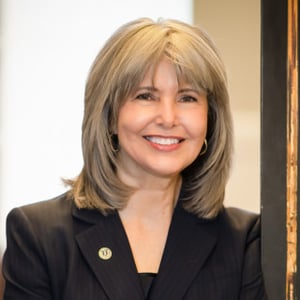
Associate Justice, Tennessee Supreme Court
Sworn in by Governor Bill Haslam in September 2014, Tennessee Supreme Court Justice Holly Kirby is the first graduate of the University of Memphis ever to sit on Tennessee’s highest court. A career jurist, Justice Kirby has authored well over a thousand opinions from appeals all across the state.
Prior to her appointment to the Supreme Court, Justice Kirby served for almost 19 years on the Tennessee Court of Appeals, Tennessee’s intermediate appellate court for civil cases. She represented a gender milestone on the Court of Appeals—when she was appointed in 1995, she became the first woman ever to sit on that Court.
A lifelong Tennessean, Justice Kirby was born in Memphis and graduated from high school in Columbia, Tennessee. As an undergraduate at the University of Memphis, she held a number of student leadership positions and graduated in 1979 with high honors, with a B.S. in mechanical engineering.
In 1982, Justice Kirby graduated from the University of Memphis School of Law with high honors. Upon graduation, she served as a judicial law clerk on the U.S. Court of Appeals for the Sixth Circuit.
After her clerkship, Justice Kirby joined the Memphis law firm of Burch, Porter & Johnson, where she was active in politics and community service. When she was selected as partner in 1990, she became the firm’s first female partner.
From the time of her appointment to the Court of Appeals in 1995 to the present, Justice Kirby has won 5 statewide elections, in 1996, 1998, 2006, 2014, and 2016.
Justice Kirby was chosen as Outstanding Young Alumna for the University of Memphis in 1996, Outstanding Alumna for the University of Memphis College of Engineering in 2002, and Special Distinguished Alumna for the School of Law in 2016. She is married to Memphis businessman Russell Ingram and has two grown children. The family belongs to Idlewild Presbyterian Church.
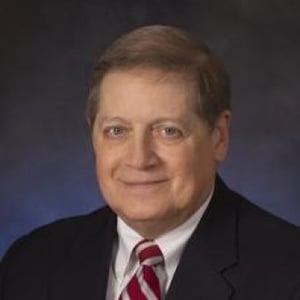
JOHN L. RYDER concentrates his practice in the areas of bankruptcy and commercial litigation. He has represented secured lenders, unsecured creditor's committees, trustees and debtors in the bankruptcy process. He has participated in a number of major bankruptcies including: The Julien Companies, Microwave Products, Wexner & Jacobson, Wang's, XpertTune, Braniff and others.
He served as Shelby County Delinquent Tax Attorney (1990-1994) and was a member of the Shelby County Home Rule Charter Commission (1984-1985). He is a member of the Memphis (Chairman, Bankruptcy Section, 1985) and Tennessee (Chairman, Commercial, Banking and Bankruptcy Section, 1986) Bar Associations, and the American Bankruptcy Institute and Mid-South Commercial Law Institute (Director, 1989-Present). He also serves as an Assistant County Attorney. Mr. Ryder is listed in the Best Lawyers in America. He has also been recognized by Business Tennessee as being among 101 Best Lawyers in Tennessee.
Vanderbilt University (J.D., 1974)
Wabash College (A.B., 1971)
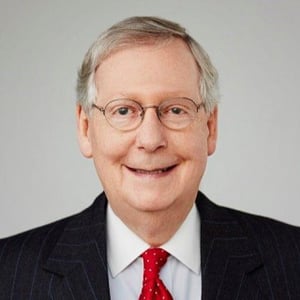
United States Senator, Kentucky
Mitch McConnell is the Senate Majority Leader. Elected to that position unanimously by his Republican colleagues first in 2014 and again in 2016, he is only the second Kentuckian to ever serve as Majority Leader in the U.S. Senate. The first, Senator Alben Barkley, led the Democrats from 1937 to 1949.
Senator McConnell has served, again by the unanimous vote of his colleagues, as the Republican Leader since the 110th Congress. He is the longest-serving Senate Republican Leader in the history of the United States. McConnell previously served in leadership as the Majority Whip in the 108th and 109th Congresses and as chairman of the National Republican Senatorial Committee during the 1998 and 2000 election cycles.
McConnell has been called “the most conservative leader of either party in the history of the Senate.” He has also earned a reputation as a “master tactician” for permanently locking in critical tax relief for working families and small businesses, and putting in place the most significant spending reduction legislation in a generation.
He has received praise from numerous media outlets for his work as Senate Majority Leader, and in 2015 TIME Magazine named McConnell one of the 100 Most Influential People in the World.
First elected to the Senate in 1984, McConnell is Kentucky’s longest-serving senator. He made history that year as the only Republican challenger in the country to defeat an incumbent Democrat and as the first Republican to win a statewide Kentucky race since 1968. On November 4, 2014, he was elected to a record sixth term by receiving broad support across Kentucky, winning 110 of the Commonwealth’s 120 counties.
McConnell graduated with honors from the University of Louisville College of Arts and Sciences, where he served as student body president. He also is a graduate of the University of Kentucky College of Law, where he was elected president of the Student Bar Association.
McConnell worked as an intern on Capitol Hill for Senator John Sherman Cooper before serving as chief legislative assistant to Senator Marlow Cook and as Deputy Assistant Attorney General to President Gerald Ford.
Before his election to the Senate, he served as judge-executive of Jefferson County, Kentucky, from 1978 until he commenced his Senate term on January 3, 1985.
McConnell currently serves as a senior member of the Appropriations, Agriculture and Rules Committees. He is the proud father of three daughters.
McConnell is married to Secretary Elaine L. Chao, the 18th U.S. Secretary of Transportation. Previously, Secretary Chao served for eight years as President George W. Bush’s U.S. Secretary of Labor. She is also a former president of the United Way of America and director of the Peace Corps.
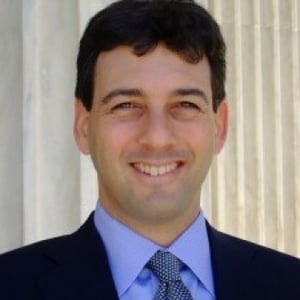
Vice President for Litigation, Institute for Free Speech
Alan joined the Institute for Free Speech as Vice President for Litigation in February 2021. In this role, Alan directs the Institute’s litigation and legal advocacy, leads our in-house legal team, and manages and works to expand our network of volunteer attorneys.
Prior to joining the Institute, Alan litigated complex federal matters for twenty years, in his own practice and as a partner in various Washington-area firms. He argued and won landmark constitutional cases in the United States Supreme Court and has appeared before numerous appellate and district courts throughout the country. Alan often speaks at law schools and continuing legal education seminars. He also teaches strategic/public interest litigation as an adjunct professor at the Georgetown University Law Center.
Alan began his career clerking for the Hon. Terrence W. Boyle, United States District Judge for the Eastern District of North Carolina. He has also served as a Deputy Attorney General for the State of California, a litigation associate at the Washington office of Sidley Austin, and as counsel to the United States Senate Judiciary Committee.
Alan earned his J.D. at Georgetown (1995) and his B.A. at Cornell University (1992). He is an active member in good standing of the Virginia, District of Columbia, and California bars, the Bar of the United States Supreme Court, and various federal appellate and district court bars.
Professor of Law, Fordham University School of Law
Professor Johnson is currently a Professor of Law at Fordham University School of Law, and teaches in the areas of Contracts, Environmental Law, and Gun Control/Gun Rights. He was previously Professor of Legal Studies in Business at Franklin and Marshall College (1988-93), Of Counsel at Kirkpatrick and Lockhard (1990-93), Vice President and Co-owner Westar Environmental Corporation (1988-90), and an Associate at Morgan, Lewis and Bockius (1985-88).
Executive Vice President and Dean of the Law Center; Paul Regis Dean Leadership Chair; Professor of Law, Georgetown University Law Center
William M. Treanor is the Executive Vice President of Georgetown University, Dean of the Law Center, and Paul Regis Dean Leadership Chair. Treanor joined Georgetown in 2010 and was reappointed to serve a third term as Dean and Executive Vice President on July 1, 2020.
Under Treanor’s leadership, Georgetown Law has hired 75 new faculty members; tripled the number of experiential offerings for students in its clinical, externship, and practicum programs; transformed its law and technology offerings into a world class program with 19 full-time faculty experts and over 80 courses in this area; and experienced its most successful era of fundraising, culminating in nearly $67 million in giving in the last fiscal year.
Treanor has also advanced Georgetown Law’s commitment to affordability and access. During his tenure, Georgetown has more than doubled financial aid; raised nearly $25 million dollars for the Law Center’s scholarship program for exceptional students with significant financial need; and launched the RISE program, which provides academic support for students from historically underrepresented groups. The Law Center also created the Early Outreach Initiative, which brings the Law Center’s dean of admissions, current law students, and alumni together to encourage students in underserved high schools to consider pursuing careers as lawyers.
In keeping with Georgetown Law’s motto, “Law is but the means; justice is the end,” Treanor has focused on increasing opportunities for students to pursue careers in public interest law. He is proud that nearly 1 in 4 graduates move straight into public service jobs – a ratio higher than any other top law school in America. The Law Center supports post-graduate fellowships that have enabled more than 400 graduates to work in public interest jobs, and, in combination with the law firms ArentFox Schiff and DLA Piper, it has launched the D.C. Affordable Law Firm, a “low bono” law firm where recent Georgetown Law graduates provide legal representation to people of limited means.
The National Jurist magazine has named Treanor one of the most influential people in legal education five times. He is a member of the Morristown (N.J.) High School Hall of Fame. In 2020, he was elected into the American Academy of Arts & Sciences for law and education. Most recently, he was selected for the inaugural Honorable Robert A. Katzmann Award for Academic Excellence by the Burton Awards.
Treanor’s areas of academic expertise include constitutional law, property law, criminal law, intellectual property, and legal history. At Georgetown Law, he has taught a first-year legal justice seminar, an upper-level course on the drafting of the U.S. Constitution, and leadership courses. His writings have principally been in the area of constitutional history, and he has been recognized as one of the 10 most-cited legal history scholars in the United States by the University of Chicago Law School’s Brian Leiter. His early work largely focused on the history of constitutional protections of private property. His article “The Original Understanding of the Takings Clause and the Political Process,” 95 Colum. L. Rev. 782 (1995), was recognized by the Land Use Professors Blog as the most cited land use article of the past 30 years. Treanor’s article, “Judicial Review before Marbury” was cited in the Moore v. Harper (2023) majority opinion written by Chief Justice Roberts. His recent article, “The Case of the Dishonest Scrivener: Gouverneur Morris and the Creation of the Federalist Constitution,” examined the changes that Gouverneur Morris and the Committee of Style made in preparing the Constitution’s final draft. W.W. Norton will publish his upcoming book, Fathers of the Constitution: Triumph, Tragedy, and the Creation of the American Republic.
Before coming to Georgetown, Treanor was Dean and Paul Fuller Professor of Law at Fordham Law School. He also served in a variety of positions in the government, including Deputy Assistant Attorney General in the Office of Legal Counsel, U.S. Department of Justice; Associate Counsel, Office of Independent Counsel during the Iran/Contra investigation. He was law clerk to the Honorable James L. Oakes, U.S. Court of Appeals for the Second Circuit. Treanor has a Ph.D. in history from Harvard University, a J.D. from Yale Law School, and a B.A., summa cum laude, from Yale College.

Executive Director, Justice and Society Program, The Aspen Institute
Meryl Justin Chertoff is Executive Director of The Aspen Institute’s Justice and Society Program. She directs its summer seminar in Aspen, its speaker series in New York, Washington and Aspen, and the Inclusive America Project, on religious pluralism in America. She is also an adjunct professor of law at Georgetown Law, where she teaches about state government. She is an opinion contributor for The Hill, and also writes for the Huffington Post and the Aspen Idea.
From 2006-2009, Ms. Chertoff was Director of the Sandra Day O’Connor Project on the State of the Judiciary at Georgetown Law, studying and educating the public about federal and state courts. At Georgetown Law, she developed educational programs for visiting judges and other government officials from overseas.
She served in the Office of Legislative Affairs at the Federal Emergency Management Agency (FEMA), participating in the agency’s transition into the Department of Homeland Security in 2003. Ms. Chertoff has been a legislative relations professional, Director of New Jersey’s Washington, D.C. Office under two governors, and legislative counsel to the Chair of the New Jersey State Assembly Appropriations Committee.
Her undergraduate and law degrees are from Harvard. She and her husband have two adult children.
Associate Dean and Associate Professor of Law, University of Notre Dame Law School
William K. Kelley teaches constitutional law and administrative law, and focuses on public law issues in his scholarship. He serves as Associate Dean with responsibility for coordinating special projects. During Spring 2008 semester, he will act as Associate Dean for Faculty Research. From 2005-2007, he served in the White House as Deputy Counsel to the President. In that capacity, he was responsible for advising the President of the United States on all legal matters affecting the Executive Branch. He joined the faculty in 1995 after practicing with two major law firms, and serving from 1991-1994 as assistant to the solicitor general at the Department of Justice in Washington, D.C. Professor Kelley began his legal career by serving as law clerk to the Honorable Kenneth W. Starr on the U.S. Court of Appeals for the District of Columbia Circuit (1987-88), as well as for Chief Justice Warren E. Burger and Associate Justice Antonin Scalia (1988-89). He earned his B.A. from Marquette University in 1984, where he was a member of Phi Beta Kappa, and his J.D. from Harvard Law School in 1987, where he served as Supreme Court editor of the Harvard Law Review.
William Rand Kenan, Jr. Distinguished Professor of Law, University of North Carolina School of Law
William (Bill) Marshall joined the Carolina Law faculty in 2001 and serves as the William R. Kenan Jr. Distinguished Professor of Law. His teaching and research interests include the first amendment, presidential power, election law, federal jurisdiction, federal judicial selection, civil procedure, and media law. Marshall is the author of numerous book chapters, articles, and essays on free speech, separation of powers, the Establishment Clause, and the Free Exercise Clause. His work has appeared in the Harvard Law Review, the Yale Law Journal, the Supreme Court Review, and the University of Chicago Law Review, among others.
Marshall received his law degree from the University of Chicago and his undergraduate degree from the University of Pennsylvania. Marshall was Deputy Counsel to the President and Deputy Assistant to the President during the Clinton Administration and also served as the Solicitor General for the State of Ohio. He has taught at the Northwestern, Boston University, Vanderbilt, Ohio State, DePaul, Case Western Reserve, William and Mary, and the University Connecticut law schools. Prior to beginning his teaching career, Marshall was a Special Assistant Attorney General for the State of Minnesota.
Justice, Supreme Court of Alabama (Retired); Professor of Law, Belmont University College of Law?
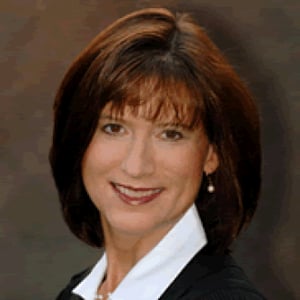
Judge, United States Court of Appeals, Seventh Circuit
Judge Sykes was nominated to the Seventh Circuit by President George W. Bush and confirmed by the Senate in 2004. Prior to her appointment to the federal bench, Judge Sykes served as a justice on the Wisconsin Supreme Court. Governor Tommy G. Thompson appointed her in September 1999 to fill a mid-term vacancy on the state supreme court, and she was elected to a full ten-year term in April 2000. From 1992-1999, Judge Sykes served on the state trial bench in Milwaukee County (elected in 1992 and re-elected in 1998). From 1985-1992, Judge Sykes practiced law with the Milwaukee firm of Whyte & Hirschboeck, S.C., and from 1984-1985, was a law clerk to Federal Judge Terence T. Evans.
Born and raised in the Milwaukee area, Judge Sykes earned a bachelor’s degree in journalism from Northwestern University in 1980 and a law degree from Marquette University Law School in 1984. Between college and law school, Judge Sykes worked as a reporter for The Milwaukee Journal.
Judge Sykes has two sons.

Executive Director, Ohio Dental Association
David J. Owsiany is the executive director of the Ohio Dental Association and a past president of the Columbus Lawyers Chapter of the Federalist Society.
He has served as CEO of a statewide health care association, president of the Buckeye Institute, chief of policy for the Ohio Department of Insurance, judicial law clerk for the Illinois Appellate Court, and staffer on the United State Senate Judiciary Committee.
Mr. Owsiany has written dozens of articles on legal and public policy issues for various publications, including the University of Toledo Law Review, the Federalist Society's State Court Docket Watch, Columbus Dispatch, Cincinnati Enquirer, Crain’s Cleveland Business, and Akron Beacon Journal.
Owsiany received his J.D. from Washington University School of Law in St. Louis and B.A. from the University of Michigan in Ann Arbor.
Vice President for Litigation, Institute for Free Speech
Alan joined the Institute for Free Speech as Vice President for Litigation in February 2021. In this role, Alan directs the Institute’s litigation and legal advocacy, leads our in-house legal team, and manages and works to expand our network of volunteer attorneys.
Prior to joining the Institute, Alan litigated complex federal matters for twenty years, in his own practice and as a partner in various Washington-area firms. He argued and won landmark constitutional cases in the United States Supreme Court and has appeared before numerous appellate and district courts throughout the country. Alan often speaks at law schools and continuing legal education seminars. He also teaches strategic/public interest litigation as an adjunct professor at the Georgetown University Law Center.
Alan began his career clerking for the Hon. Terrence W. Boyle, United States District Judge for the Eastern District of North Carolina. He has also served as a Deputy Attorney General for the State of California, a litigation associate at the Washington office of Sidley Austin, and as counsel to the United States Senate Judiciary Committee.
Alan earned his J.D. at Georgetown (1995) and his B.A. at Cornell University (1992). He is an active member in good standing of the Virginia, District of Columbia, and California bars, the Bar of the United States Supreme Court, and various federal appellate and district court bars.
Professor of Law, Fordham University School of Law
Professor Johnson is currently a Professor of Law at Fordham University School of Law, and teaches in the areas of Contracts, Environmental Law, and Gun Control/Gun Rights. He was previously Professor of Legal Studies in Business at Franklin and Marshall College (1988-93), Of Counsel at Kirkpatrick and Lockhard (1990-93), Vice President and Co-owner Westar Environmental Corporation (1988-90), and an Associate at Morgan, Lewis and Bockius (1985-88).
Executive Vice President and Dean of the Law Center; Paul Regis Dean Leadership Chair; Professor of Law, Georgetown University Law Center
William M. Treanor is the Executive Vice President of Georgetown University, Dean of the Law Center, and Paul Regis Dean Leadership Chair. Treanor joined Georgetown in 2010 and was reappointed to serve a third term as Dean and Executive Vice President on July 1, 2020.
Under Treanor’s leadership, Georgetown Law has hired 75 new faculty members; tripled the number of experiential offerings for students in its clinical, externship, and practicum programs; transformed its law and technology offerings into a world class program with 19 full-time faculty experts and over 80 courses in this area; and experienced its most successful era of fundraising, culminating in nearly $67 million in giving in the last fiscal year.
Treanor has also advanced Georgetown Law’s commitment to affordability and access. During his tenure, Georgetown has more than doubled financial aid; raised nearly $25 million dollars for the Law Center’s scholarship program for exceptional students with significant financial need; and launched the RISE program, which provides academic support for students from historically underrepresented groups. The Law Center also created the Early Outreach Initiative, which brings the Law Center’s dean of admissions, current law students, and alumni together to encourage students in underserved high schools to consider pursuing careers as lawyers.
In keeping with Georgetown Law’s motto, “Law is but the means; justice is the end,” Treanor has focused on increasing opportunities for students to pursue careers in public interest law. He is proud that nearly 1 in 4 graduates move straight into public service jobs – a ratio higher than any other top law school in America. The Law Center supports post-graduate fellowships that have enabled more than 400 graduates to work in public interest jobs, and, in combination with the law firms ArentFox Schiff and DLA Piper, it has launched the D.C. Affordable Law Firm, a “low bono” law firm where recent Georgetown Law graduates provide legal representation to people of limited means.
The National Jurist magazine has named Treanor one of the most influential people in legal education five times. He is a member of the Morristown (N.J.) High School Hall of Fame. In 2020, he was elected into the American Academy of Arts & Sciences for law and education. Most recently, he was selected for the inaugural Honorable Robert A. Katzmann Award for Academic Excellence by the Burton Awards.
Treanor’s areas of academic expertise include constitutional law, property law, criminal law, intellectual property, and legal history. At Georgetown Law, he has taught a first-year legal justice seminar, an upper-level course on the drafting of the U.S. Constitution, and leadership courses. His writings have principally been in the area of constitutional history, and he has been recognized as one of the 10 most-cited legal history scholars in the United States by the University of Chicago Law School’s Brian Leiter. His early work largely focused on the history of constitutional protections of private property. His article “The Original Understanding of the Takings Clause and the Political Process,” 95 Colum. L. Rev. 782 (1995), was recognized by the Land Use Professors Blog as the most cited land use article of the past 30 years. Treanor’s article, “Judicial Review before Marbury” was cited in the Moore v. Harper (2023) majority opinion written by Chief Justice Roberts. His recent article, “The Case of the Dishonest Scrivener: Gouverneur Morris and the Creation of the Federalist Constitution,” examined the changes that Gouverneur Morris and the Committee of Style made in preparing the Constitution’s final draft. W.W. Norton will publish his upcoming book, Fathers of the Constitution: Triumph, Tragedy, and the Creation of the American Republic.
Before coming to Georgetown, Treanor was Dean and Paul Fuller Professor of Law at Fordham Law School. He also served in a variety of positions in the government, including Deputy Assistant Attorney General in the Office of Legal Counsel, U.S. Department of Justice; Associate Counsel, Office of Independent Counsel during the Iran/Contra investigation. He was law clerk to the Honorable James L. Oakes, U.S. Court of Appeals for the Second Circuit. Treanor has a Ph.D. in history from Harvard University, a J.D. from Yale Law School, and a B.A., summa cum laude, from Yale College.
Vice President for Litigation, Institute for Free Speech
Alan joined the Institute for Free Speech as Vice President for Litigation in February 2021. In this role, Alan directs the Institute’s litigation and legal advocacy, leads our in-house legal team, and manages and works to expand our network of volunteer attorneys.
Prior to joining the Institute, Alan litigated complex federal matters for twenty years, in his own practice and as a partner in various Washington-area firms. He argued and won landmark constitutional cases in the United States Supreme Court and has appeared before numerous appellate and district courts throughout the country. Alan often speaks at law schools and continuing legal education seminars. He also teaches strategic/public interest litigation as an adjunct professor at the Georgetown University Law Center.
Alan began his career clerking for the Hon. Terrence W. Boyle, United States District Judge for the Eastern District of North Carolina. He has also served as a Deputy Attorney General for the State of California, a litigation associate at the Washington office of Sidley Austin, and as counsel to the United States Senate Judiciary Committee.
Alan earned his J.D. at Georgetown (1995) and his B.A. at Cornell University (1992). He is an active member in good standing of the Virginia, District of Columbia, and California bars, the Bar of the United States Supreme Court, and various federal appellate and district court bars.
Professor of Law, Fordham University School of Law
Professor Johnson is currently a Professor of Law at Fordham University School of Law, and teaches in the areas of Contracts, Environmental Law, and Gun Control/Gun Rights. He was previously Professor of Legal Studies in Business at Franklin and Marshall College (1988-93), Of Counsel at Kirkpatrick and Lockhard (1990-93), Vice President and Co-owner Westar Environmental Corporation (1988-90), and an Associate at Morgan, Lewis and Bockius (1985-88).
Executive Vice President and Dean of the Law Center; Paul Regis Dean Leadership Chair; Professor of Law, Georgetown University Law Center
William M. Treanor is the Executive Vice President of Georgetown University, Dean of the Law Center, and Paul Regis Dean Leadership Chair. Treanor joined Georgetown in 2010 and was reappointed to serve a third term as Dean and Executive Vice President on July 1, 2020.
Under Treanor’s leadership, Georgetown Law has hired 75 new faculty members; tripled the number of experiential offerings for students in its clinical, externship, and practicum programs; transformed its law and technology offerings into a world class program with 19 full-time faculty experts and over 80 courses in this area; and experienced its most successful era of fundraising, culminating in nearly $67 million in giving in the last fiscal year.
Treanor has also advanced Georgetown Law’s commitment to affordability and access. During his tenure, Georgetown has more than doubled financial aid; raised nearly $25 million dollars for the Law Center’s scholarship program for exceptional students with significant financial need; and launched the RISE program, which provides academic support for students from historically underrepresented groups. The Law Center also created the Early Outreach Initiative, which brings the Law Center’s dean of admissions, current law students, and alumni together to encourage students in underserved high schools to consider pursuing careers as lawyers.
In keeping with Georgetown Law’s motto, “Law is but the means; justice is the end,” Treanor has focused on increasing opportunities for students to pursue careers in public interest law. He is proud that nearly 1 in 4 graduates move straight into public service jobs – a ratio higher than any other top law school in America. The Law Center supports post-graduate fellowships that have enabled more than 400 graduates to work in public interest jobs, and, in combination with the law firms ArentFox Schiff and DLA Piper, it has launched the D.C. Affordable Law Firm, a “low bono” law firm where recent Georgetown Law graduates provide legal representation to people of limited means.
The National Jurist magazine has named Treanor one of the most influential people in legal education five times. He is a member of the Morristown (N.J.) High School Hall of Fame. In 2020, he was elected into the American Academy of Arts & Sciences for law and education. Most recently, he was selected for the inaugural Honorable Robert A. Katzmann Award for Academic Excellence by the Burton Awards.
Treanor’s areas of academic expertise include constitutional law, property law, criminal law, intellectual property, and legal history. At Georgetown Law, he has taught a first-year legal justice seminar, an upper-level course on the drafting of the U.S. Constitution, and leadership courses. His writings have principally been in the area of constitutional history, and he has been recognized as one of the 10 most-cited legal history scholars in the United States by the University of Chicago Law School’s Brian Leiter. His early work largely focused on the history of constitutional protections of private property. His article “The Original Understanding of the Takings Clause and the Political Process,” 95 Colum. L. Rev. 782 (1995), was recognized by the Land Use Professors Blog as the most cited land use article of the past 30 years. Treanor’s article, “Judicial Review before Marbury” was cited in the Moore v. Harper (2023) majority opinion written by Chief Justice Roberts. His recent article, “The Case of the Dishonest Scrivener: Gouverneur Morris and the Creation of the Federalist Constitution,” examined the changes that Gouverneur Morris and the Committee of Style made in preparing the Constitution’s final draft. W.W. Norton will publish his upcoming book, Fathers of the Constitution: Triumph, Tragedy, and the Creation of the American Republic.
Before coming to Georgetown, Treanor was Dean and Paul Fuller Professor of Law at Fordham Law School. He also served in a variety of positions in the government, including Deputy Assistant Attorney General in the Office of Legal Counsel, U.S. Department of Justice; Associate Counsel, Office of Independent Counsel during the Iran/Contra investigation. He was law clerk to the Honorable James L. Oakes, U.S. Court of Appeals for the Second Circuit. Treanor has a Ph.D. in history from Harvard University, a J.D. from Yale Law School, and a B.A., summa cum laude, from Yale College.
Executive Director, Justice and Society Program, The Aspen Institute
Meryl Justin Chertoff is Executive Director of The Aspen Institute’s Justice and Society Program. She directs its summer seminar in Aspen, its speaker series in New York, Washington and Aspen, and the Inclusive America Project, on religious pluralism in America. She is also an adjunct professor of law at Georgetown Law, where she teaches about state government. She is an opinion contributor for The Hill, and also writes for the Huffington Post and the Aspen Idea.
From 2006-2009, Ms. Chertoff was Director of the Sandra Day O’Connor Project on the State of the Judiciary at Georgetown Law, studying and educating the public about federal and state courts. At Georgetown Law, she developed educational programs for visiting judges and other government officials from overseas.
She served in the Office of Legislative Affairs at the Federal Emergency Management Agency (FEMA), participating in the agency’s transition into the Department of Homeland Security in 2003. Ms. Chertoff has been a legislative relations professional, Director of New Jersey’s Washington, D.C. Office under two governors, and legislative counsel to the Chair of the New Jersey State Assembly Appropriations Committee.
Her undergraduate and law degrees are from Harvard. She and her husband have two adult children.
Associate Dean and Associate Professor of Law, University of Notre Dame Law School
William K. Kelley teaches constitutional law and administrative law, and focuses on public law issues in his scholarship. He serves as Associate Dean with responsibility for coordinating special projects. During Spring 2008 semester, he will act as Associate Dean for Faculty Research. From 2005-2007, he served in the White House as Deputy Counsel to the President. In that capacity, he was responsible for advising the President of the United States on all legal matters affecting the Executive Branch. He joined the faculty in 1995 after practicing with two major law firms, and serving from 1991-1994 as assistant to the solicitor general at the Department of Justice in Washington, D.C. Professor Kelley began his legal career by serving as law clerk to the Honorable Kenneth W. Starr on the U.S. Court of Appeals for the District of Columbia Circuit (1987-88), as well as for Chief Justice Warren E. Burger and Associate Justice Antonin Scalia (1988-89). He earned his B.A. from Marquette University in 1984, where he was a member of Phi Beta Kappa, and his J.D. from Harvard Law School in 1987, where he served as Supreme Court editor of the Harvard Law Review.
William Rand Kenan, Jr. Distinguished Professor of Law, University of North Carolina School of Law
William (Bill) Marshall joined the Carolina Law faculty in 2001 and serves as the William R. Kenan Jr. Distinguished Professor of Law. His teaching and research interests include the first amendment, presidential power, election law, federal jurisdiction, federal judicial selection, civil procedure, and media law. Marshall is the author of numerous book chapters, articles, and essays on free speech, separation of powers, the Establishment Clause, and the Free Exercise Clause. His work has appeared in the Harvard Law Review, the Yale Law Journal, the Supreme Court Review, and the University of Chicago Law Review, among others.
Marshall received his law degree from the University of Chicago and his undergraduate degree from the University of Pennsylvania. Marshall was Deputy Counsel to the President and Deputy Assistant to the President during the Clinton Administration and also served as the Solicitor General for the State of Ohio. He has taught at the Northwestern, Boston University, Vanderbilt, Ohio State, DePaul, Case Western Reserve, William and Mary, and the University Connecticut law schools. Prior to beginning his teaching career, Marshall was a Special Assistant Attorney General for the State of Minnesota.
Justice, Supreme Court of Alabama (Retired); Professor of Law, Belmont University College of Law?
Judge, United States Court of Appeals, Seventh Circuit
Judge Sykes was nominated to the Seventh Circuit by President George W. Bush and confirmed by the Senate in 2004. Prior to her appointment to the federal bench, Judge Sykes served as a justice on the Wisconsin Supreme Court. Governor Tommy G. Thompson appointed her in September 1999 to fill a mid-term vacancy on the state supreme court, and she was elected to a full ten-year term in April 2000. From 1992-1999, Judge Sykes served on the state trial bench in Milwaukee County (elected in 1992 and re-elected in 1998). From 1985-1992, Judge Sykes practiced law with the Milwaukee firm of Whyte & Hirschboeck, S.C., and from 1984-1985, was a law clerk to Federal Judge Terence T. Evans.
Born and raised in the Milwaukee area, Judge Sykes earned a bachelor’s degree in journalism from Northwestern University in 1980 and a law degree from Marquette University Law School in 1984. Between college and law school, Judge Sykes worked as a reporter for The Milwaukee Journal.
Judge Sykes has two sons.
Executive Director, Justice and Society Program, The Aspen Institute
Meryl Justin Chertoff is Executive Director of The Aspen Institute’s Justice and Society Program. She directs its summer seminar in Aspen, its speaker series in New York, Washington and Aspen, and the Inclusive America Project, on religious pluralism in America. She is also an adjunct professor of law at Georgetown Law, where she teaches about state government. She is an opinion contributor for The Hill, and also writes for the Huffington Post and the Aspen Idea.
From 2006-2009, Ms. Chertoff was Director of the Sandra Day O’Connor Project on the State of the Judiciary at Georgetown Law, studying and educating the public about federal and state courts. At Georgetown Law, she developed educational programs for visiting judges and other government officials from overseas.
She served in the Office of Legislative Affairs at the Federal Emergency Management Agency (FEMA), participating in the agency’s transition into the Department of Homeland Security in 2003. Ms. Chertoff has been a legislative relations professional, Director of New Jersey’s Washington, D.C. Office under two governors, and legislative counsel to the Chair of the New Jersey State Assembly Appropriations Committee.
Her undergraduate and law degrees are from Harvard. She and her husband have two adult children.
Associate Dean and Associate Professor of Law, University of Notre Dame Law School
William K. Kelley teaches constitutional law and administrative law, and focuses on public law issues in his scholarship. He serves as Associate Dean with responsibility for coordinating special projects. During Spring 2008 semester, he will act as Associate Dean for Faculty Research. From 2005-2007, he served in the White House as Deputy Counsel to the President. In that capacity, he was responsible for advising the President of the United States on all legal matters affecting the Executive Branch. He joined the faculty in 1995 after practicing with two major law firms, and serving from 1991-1994 as assistant to the solicitor general at the Department of Justice in Washington, D.C. Professor Kelley began his legal career by serving as law clerk to the Honorable Kenneth W. Starr on the U.S. Court of Appeals for the District of Columbia Circuit (1987-88), as well as for Chief Justice Warren E. Burger and Associate Justice Antonin Scalia (1988-89). He earned his B.A. from Marquette University in 1984, where he was a member of Phi Beta Kappa, and his J.D. from Harvard Law School in 1987, where he served as Supreme Court editor of the Harvard Law Review.
William Rand Kenan, Jr. Distinguished Professor of Law, University of North Carolina School of Law
William (Bill) Marshall joined the Carolina Law faculty in 2001 and serves as the William R. Kenan Jr. Distinguished Professor of Law. His teaching and research interests include the first amendment, presidential power, election law, federal jurisdiction, federal judicial selection, civil procedure, and media law. Marshall is the author of numerous book chapters, articles, and essays on free speech, separation of powers, the Establishment Clause, and the Free Exercise Clause. His work has appeared in the Harvard Law Review, the Yale Law Journal, the Supreme Court Review, and the University of Chicago Law Review, among others.
Marshall received his law degree from the University of Chicago and his undergraduate degree from the University of Pennsylvania. Marshall was Deputy Counsel to the President and Deputy Assistant to the President during the Clinton Administration and also served as the Solicitor General for the State of Ohio. He has taught at the Northwestern, Boston University, Vanderbilt, Ohio State, DePaul, Case Western Reserve, William and Mary, and the University Connecticut law schools. Prior to beginning his teaching career, Marshall was a Special Assistant Attorney General for the State of Minnesota.
Justice, Supreme Court of Alabama (Retired); Professor of Law, Belmont University College of Law?
Judge, United States Court of Appeals, Seventh Circuit
Judge Sykes was nominated to the Seventh Circuit by President George W. Bush and confirmed by the Senate in 2004. Prior to her appointment to the federal bench, Judge Sykes served as a justice on the Wisconsin Supreme Court. Governor Tommy G. Thompson appointed her in September 1999 to fill a mid-term vacancy on the state supreme court, and she was elected to a full ten-year term in April 2000. From 1992-1999, Judge Sykes served on the state trial bench in Milwaukee County (elected in 1992 and re-elected in 1998). From 1985-1992, Judge Sykes practiced law with the Milwaukee firm of Whyte & Hirschboeck, S.C., and from 1984-1985, was a law clerk to Federal Judge Terence T. Evans.
Born and raised in the Milwaukee area, Judge Sykes earned a bachelor’s degree in journalism from Northwestern University in 1980 and a law degree from Marquette University Law School in 1984. Between college and law school, Judge Sykes worked as a reporter for The Milwaukee Journal.
Judge Sykes has two sons.

Barwatch Bulletin for March 2009
ABA ONCE AGAIN PRE-VETTING JUDICIAL CANDIDATES On Tuesday, March 17, American Bar Association President H. Thomas...
Judicial Selection in Tennessee
Memphis, TennesseeThe Rise and Fall of Lead Paint Litigation in Ohio
David J. Owsiany
Over the last four years, Ohio has experienced a significant amount of activity related to...
Senator Mitch McConnell
DC v. Heller and the Future of Gun Control Legislation
Alan Gura, Nicholas Johnson, William M. Treanor
The Fordham Student Chapter co-hosted this event on January 22, 2009 with the American Constitution...
DC v. Heller and the Future of Gun Control Legislation
Alan Gura, Nicholas Johnson, William M. Treanor
The Fordham Student Chapter co-hosted this event on January 22, 2009 with the American Constitution...
DC v. Heller and the Future of Gun Control Legislation
Fordham Student Chapter, the American Constitution Society, and Fordham Law School Republicans
New York, NYShowcase Panel I: Judicial Selection: Federal and State
Meryl J. Chertoff, William K. Kelley, William P. Marshall, Harold F. See, Diane S. Sykes
Is the process we use for selecting judges broken at both the federal and the...
Showcase Panel I: Judicial Selection: Federal and State
Meryl J. Chertoff, William K. Kelley, William P. Marshall, Harold F. See, Diane S. Sykes
Is the process we use for selecting judges broken at both the federal and the...
Showcase Panel I: Judicial Selection: Federal and State
2008 National Lawyers Convention
Washington, DC