

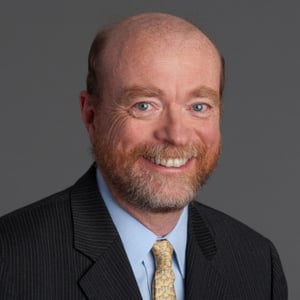
President, Harned Strategies LLC
Karen Harned is President at Harned Strategies LLC. Previously, she served as Executive Director of the National Federation of Independent Business Small Business Legal Center, a post she held from 2002-2022. Prior to joining the Legal Center, Ms. Harned was an attorney at a Washington, D.C. law firm specializing in food and drug law, where she represented several small and large businesses and their respective trade associations before Congress and federal agencies. She also served as Assistant Press Secretary to U.S. Senator Don Nickles of Oklahoma from August of 1989 to March of 1993. Ms. Harned received her B.A. from the University of Oklahoma in 1989 and her J.D. from The George Washington University National Law Center in 1995. She is admitted to practice in the District of Columbia.
As Executive Director of the NFIB Small Business Legal Center, Ms. Harned commented regularly on small business cases before federal and state courts, as well as the U.S. Supreme Court. She has appeared on Fox News, Fox Business, NBC Nightly News, CNN, CNBC and MSNBC, as well as National Public Radio, CBS Radio, and radio outlets across the country. Her opinion editorials and articles regarding healthcare, lawsuit abuse, regulation, and other issues important to small business have been published in newspapers and other publications nationwide.
Ms. Harned has testified before Congress on the small business impact of regulation and the civil justice system. Additionally, she has conducted numerous webinars and legal compliance seminars for small business owners across the country on issues relating to employment law, including unionization and immigration.
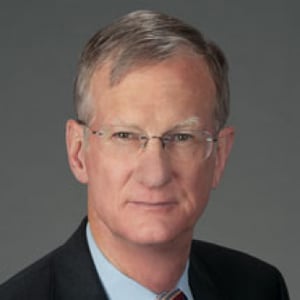
Executive Vice President and Dean of the Law Center; Paul Regis Dean Leadership Chair; Professor of Law, Georgetown University Law Center
William M. Treanor is the Executive Vice President of Georgetown University, Dean of the Law Center, and Paul Regis Dean Leadership Chair. Treanor joined Georgetown in 2010 and was reappointed to serve a third term as Dean and Executive Vice President on July 1, 2020.
Under Treanor’s leadership, Georgetown Law has hired 75 new faculty members; tripled the number of experiential offerings for students in its clinical, externship, and practicum programs; transformed its law and technology offerings into a world class program with 19 full-time faculty experts and over 80 courses in this area; and experienced its most successful era of fundraising, culminating in nearly $67 million in giving in the last fiscal year.
Treanor has also advanced Georgetown Law’s commitment to affordability and access. During his tenure, Georgetown has more than doubled financial aid; raised nearly $25 million dollars for the Law Center’s scholarship program for exceptional students with significant financial need; and launched the RISE program, which provides academic support for students from historically underrepresented groups. The Law Center also created the Early Outreach Initiative, which brings the Law Center’s dean of admissions, current law students, and alumni together to encourage students in underserved high schools to consider pursuing careers as lawyers.
In keeping with Georgetown Law’s motto, “Law is but the means; justice is the end,” Treanor has focused on increasing opportunities for students to pursue careers in public interest law. He is proud that nearly 1 in 4 graduates move straight into public service jobs – a ratio higher than any other top law school in America. The Law Center supports post-graduate fellowships that have enabled more than 400 graduates to work in public interest jobs, and, in combination with the law firms ArentFox Schiff and DLA Piper, it has launched the D.C. Affordable Law Firm, a “low bono” law firm where recent Georgetown Law graduates provide legal representation to people of limited means.
The National Jurist magazine has named Treanor one of the most influential people in legal education five times. He is a member of the Morristown (N.J.) High School Hall of Fame. In 2020, he was elected into the American Academy of Arts & Sciences for law and education. Most recently, he was selected for the inaugural Honorable Robert A. Katzmann Award for Academic Excellence by the Burton Awards.
Treanor’s areas of academic expertise include constitutional law, property law, criminal law, intellectual property, and legal history. At Georgetown Law, he has taught a first-year legal justice seminar, an upper-level course on the drafting of the U.S. Constitution, and leadership courses. His writings have principally been in the area of constitutional history, and he has been recognized as one of the 10 most-cited legal history scholars in the United States by the University of Chicago Law School’s Brian Leiter. His early work largely focused on the history of constitutional protections of private property. His article “The Original Understanding of the Takings Clause and the Political Process,” 95 Colum. L. Rev. 782 (1995), was recognized by the Land Use Professors Blog as the most cited land use article of the past 30 years. Treanor’s article, “Judicial Review before Marbury” was cited in the Moore v. Harper (2023) majority opinion written by Chief Justice Roberts. His recent article, “The Case of the Dishonest Scrivener: Gouverneur Morris and the Creation of the Federalist Constitution,” examined the changes that Gouverneur Morris and the Committee of Style made in preparing the Constitution’s final draft. W.W. Norton will publish his upcoming book, Fathers of the Constitution: Triumph, Tragedy, and the Creation of the American Republic.
Before coming to Georgetown, Treanor was Dean and Paul Fuller Professor of Law at Fordham Law School. He also served in a variety of positions in the government, including Deputy Assistant Attorney General in the Office of Legal Counsel, U.S. Department of Justice; Associate Counsel, Office of Independent Counsel during the Iran/Contra investigation. He was law clerk to the Honorable James L. Oakes, U.S. Court of Appeals for the Second Circuit. Treanor has a Ph.D. in history from Harvard University, a J.D. from Yale Law School, and a B.A., summa cum laude, from Yale College.
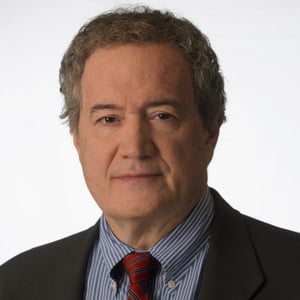
Legal Scholar and Solo Practitioner
Jack received his B.A. in History from the University of Virginia in 1977, graduating with Highest Distinction. After graduating Yale Law School in 1980, he served active duty in the U.S. Army's JAG Corps, rising to the rank of Major, where he represented the United States in more than 250 cases.
He practiced for a decade as an Associate for Bradley Arant in Birmingham, Alabama. He proudly served the State of Alabama in the Office of the Attorney General, both as Deputy and Assistant Attorney General, handling complex civil and criminal litigation cases for the people of Alabama. In 2000, he won the "Best Brief Award" from the National Association of Attorneys General for his brief in a case decided by the U.S. Supreme Court, James Alexander v. Martha Sandoval – a case he won. He was Special Assistant to the Inspector General for the Corporation for National and Community Service, Visiting Legal Fellow for the Center for Judicial and Legal Studies for the Heritage Foundation, Of Counsel at Strickland Brockington Lewis, a solo practitioner, and General Counsel for Indigo Energy.
Most recently, he "re-upped" for military service, volunteering his legal services to the Georgia State Defense Force where twice each month he provided legal services for National Guardsmen who were being deployed. He wore his military uniform for the last time in October 2024.
Jack Park passed away on March 16, 2026.
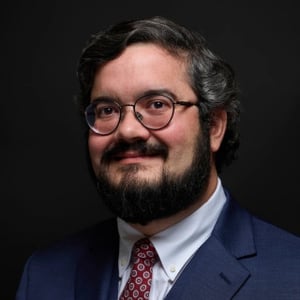
Director of the Program in Human Rights, Catholic University of America
William L. Saunders is Chair Emeritus of the Religious Liberties Practice Group of the Federalist Society. He is also a religious liberty and human rights scholar as well as director of the Center for Human rights at The Catholic University of America. He is Law Fellow with the Institute for Human Ecology, Professor and Director of the Program in Human Rights in the School of Arts & Sciences and Co-director of the Center for Religious Liberty at the Columbus School of Law. Before joining The Catholic University of America, Mr. Saunders served as Senior Vice President and Senior Counsel with Americans United for Life for ten years. From 1999 to 2009, he was Senior Fellow in Bioethics and Human Rights Counsel at the Family Research Council.
Mr. Saunders attended the University of North Carolina at Chapel Hill on a Morehead scholarship. He obtained his degree in law from the Harvard Law School.
Mr. Saunders was featured in Harvard’s first Guide to Conservative Public Interest Law in 2003 and again in the 2008 edition. He served on Harvard’s Advisory Committee for its 2008 celebration of public interest law. A member of the Supreme Court bar, he has authored numerous legal briefs in state, federal, foreign, and international courts.
Mr. Saunders’ book, Unborn Human Life and Fundamental Rights: Leading Constitutional Cases Under Scrutiny, was published in 2019. His articles and book chapters have been published by the university presses of Harvard, Villanova, Brigham Young, Fordham, Georgetown, Houston, Scranton, and the Catholic University of America, as well as by the Intercollegiate Studies Institute, Freedom House, Greenhaven Press, Rowan & Littlefield, Praeger, St. Augustine’s, and Intervarsity press. He has given lectures and participated in debates at many colleges, universities, and law schools, including Princeton, Harvard, Georgetown, and Notre Dame. He delivered the annual J. Michael Miller Lecture at the University of St. Thomas (on international law) in February 2007, the annual R. Wayne Kraft Memorial Lecture (on bioethics) at DeSales University in February 2004 and the annual James Moore Lecture (on human rights violations in Sudan) at Millikin University in 1999. He has also lectured, and/or has been published, in many foreign countries, including Italy, Germany, Poland, Austria, Spain, Greece, Slovakia, Mexico, Qatar, Malaysia, Romania, the Philippines, Hong Kong, and the United Kingdom.
In addition to speaking and writing frequently on bioethics topics, Mr. Saunders has submitted testimony to the President’s Council on Bioethics, as well as to UNESCO’s Committee on Bioethics, and has briefed Congressional staff and state legislatures. He is a regular columnist for the National Catholic Bioethics Quarterly.
Mr. Saunders has appeared often in the media, including BBC World News, CNN, Fox News, Vatican Radio, and National Public Radio. His articles on issues have appeared in a variety of journals, such as First Things, Human Events, Human Life Review, The Legal Times, Communio, The Family in America: A Journal of Public Policy, Ethics & Medics, and Touchstone.
Mr. Saunders served on the official United States delegation to the UN Special Session on Children in 2001/02. In 2011, he was a speaker at an official briefing at the UN, addressing the topic, why euthanasia is not a human right.
In 2004, he served on the NGO Working Committee in connection with the Doha Intergovernmental Conference for the Family.
Mr. Saunders is Senior Fellow with the Religious Freedom Institute, and Affiliated Scholar with the Pellegrino Center for Clinical Ethics at the Georgetown University School of Medicine. He is President of the Fellowship of Catholic Scholars and a member of the boards of the International Association of Catholic Bioethicists, the International Right to Life Federation, the Institute on Religion and Democracy, and the Society of Catholic Social Scientists.
In 1999, Mr. Saunders founded Sudan Relief and Rescue, Inc., to aid the persecuted church in Sudan. He has worked for and written on behalf of the persecuted church for many years.
Partner, Torridon Law PLLC
Mike Fragoso is an experienced legal and policy strategist who represents clients before all three branches of the federal government. Most recently he served as chief counsel to the Senate Republican Leader, Mitch McConnell (R-KY). He has negotiated consequential legislation, managed successful congressional oversight, and prepared individuals for the most contentious Senate hearings.
As chief counsel to Leader McConnell, Mike was the Leader’s primary legal advisor and managed the “last mile” of any legislation touching on the Senate Judiciary Committee. He ran the 2024 reauthorization of FISA Section 702 and was involved at the highest levels of the appropriations and budget-reconciliation processes. Mike also repeatedly represented Leader McConnell as counsel of record at the Supreme Court. Leader McConnell said of Mike that he’s “equally at home in the high-minded philosophical discourse of the legal community and the urgent pragmatism of congressional dealmaking,” and that he “maintains a firm grasp on the realm of the possible” but “knows which screws to twist.” He observed that Mike “is so exceptionally competent that he often produces from his desk the work that would normally require, literally, teams of outside counsel.”
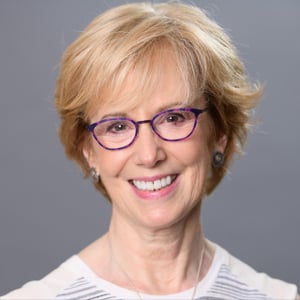
Director, GW Regulatory Studies Center & Distinguished Professor of Practice, Trachtenberg School of Public Policy & Public Administration, The George Washington University
Susan Dudley is the Founder and Director of the George Washington University Regulatory Studies Center, established in 2009 to raise awareness of regulations’ effects and improve regulatory policy through research, education, and outreach. She is also a distinguished professor of practice in the Trachtenberg School of Public Policy and Public Administration. She is past-president of the Society for Benefit Cost Analysis, a senior fellow of the Administrative Conference of the United States, and on the Regulatory Transparency Project Regulatory Practice Working Group. Her book, Regulation: A Primer, with Jerry Brito, is available on Amazon.com.
From April 2007 through January 2009, Professor Dudley served as the Presidentially-appointed Administrator of the Office of Information and Regulatory Affairs in the U.S. Office of Management and Budget and was responsible for the review of draft executive branch regulations under Executive Order 12866, the collection of federal-government-wide information under the Paperwork Reduction Act, the development and implementation of government-wide policies in the areas of information policy, privacy, and statistical policy, and international regulatory cooperation efforts.
Prior to OIRA, she directed the Regulatory Studies Program at the Mercatus Center at George Mason University, and taught courses on regulation at the George Mason University School of Law. Earlier in her career, Professor Dudley served as an economist at OIRA, as well as the Environmental Protection Agency and the Commodity Futures Trading Commission. She was also a consultant to government and private clients at Economists Incorporated. She holds a Master of Science degree from the Sloan School of Management at MIT and a Bachelor of Science degree (summa cum laude) in Resource Economics from the University of Massachusetts, Amherst.
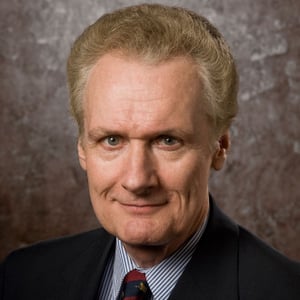
Vice President for Legal Affairs, Cato Institute
Roger Pilon is the Cato’s Institute’s vice president for legal affairs, the founding director of Cato’s Robert A. Levy Center for Constitutional Studies, the inaugural holder of Cato’s B. Kenneth Simon Chair in Constitutional Studies, and the founding publisher of the Cato Supreme Court Review.
Prior to joining Cato, Pilon held five senior posts in the Reagan administration, including at State and Justice, and was a national fellow at Stanford’s Hoover Institution. In 1989 the Bicentennial Commission presented him with its Benjamin Franklin Award for excellence in writing on the U.S. Constitution. In 2001 Columbia University’s School of General Studies awarded him its Alumni Medal of Distinction. Pilon lectures and debates at universities and law schools across the country and testifies often before Congress.
His writing has appeared in the Wall Street Journal, the Washington Post, the New York Times, the Los Angeles Times, Legal Times, National Law Journal, Harvard Journal of Law and Public Policy, Stanford Law and Policy Review, and elsewhere. He has appeared on ABC’s Nightline, CBS’s 60 Minutes II, Fox News Channel, NPR, CNN, MSNBC, CNBC, C-SPAN, and other media.
Pilon holds a BA from Columbia University, an MA and a PhD from the University of Chicago, and a JD from the George Washington University School of Law.
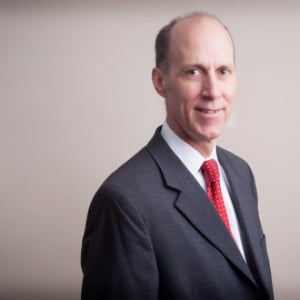
Distinguished Senior Fellow and Antonin Scalia Chair in Constitutional Studies, Ethics and Public Policy Center
Edward Whelan is a Distinguished Senior Fellow of the Ethics and Public Policy Center and holds EPPC’s Antonin Scalia Chair in Constitutional Studies. He is the longest-serving President in EPPC’s history, having held that position from March 2004 through January 2021.
Mr. Whelan directs EPPC’s program on The Constitution, the Courts, and the Culture. His areas of expertise include constitutional law and the judicial confirmation process. As a contributor to National Review Online’s Bench Memos blog, he has been a leading commentator on nominations to the Supreme Court and the lower courts and on issues of constitutional law. He has written essays and op-eds for leading newspapers—including the Wall Street Journal, the New York Times, and the Washington Post—opinion journals, and academic symposia and law reviews. The National Law Journal has named Mr. Whelan among its “Champions and Visionaries” in the practice of law in D.C.
Mr. Whelan is co-editor of three volumes of Supreme Court Justice Antonin Scalia’s work: Scalia Speaks: Reflections on Law, Faith, and Life Well Lived (Crown Forum, 2017), a New York Times bestselling collection of speeches by Justice Scalia; On Faith: Lessons from an American Believer (Crown Forum, 2019), a collection of Justice Scalia’s writings on faith and religion; and The Essential Scalia: On the Constitution, the Courts, and the Rule of Law (Crown Forum, 2020), a collection of Justice Scalia’s views on legal issues.
Mr. Whelan, a lawyer and a former law clerk to Justice Scalia, has served in positions of responsibility in all three branches of the federal government. From just before the terrorist attacks of September 11, 2001, until joining EPPC in 2004, Mr. Whelan was the Principal Deputy Assistant Attorney General for the Office of Legal Counsel in the U.S. Department of Justice. In that capacity, he advised the White House Counsel’s Office, the Attorney General and other senior DOJ officials, and departments and agencies throughout the executive branch on difficult and sensitive legal questions. Mr. Whelan previously served on Capitol Hill as General Counsel to the U.S. Senate Committee on the Judiciary. In addition to clerking for Justice Scalia, he was a law clerk to Judge J. Clifford Wallace of the U.S. Court of Appeals for the Ninth Circuit.
In 1981 Mr. Whelan graduated with honors from Harvard College and was inducted into Phi Beta Kappa. He received his J.D. magna cum laude in 1985 from Harvard Law School, where he was a member of the Board of Editors of the Harvard Law Review.
For more on Mr. Whelan’s background, see this interview.

Tazewell Taylor Professor of Law and William H. Cabell Research Professor, William & Mary Law School
Jonathan H. Adler joined the William & Mary law faculty as the Tazwell Taylor Professor of Law and William H. Cabell Research Professor in 2025. Prior to joining the faculty, he was the inaugural Johan Verheij Memorial Professor of Law and the founding Director of the Coleman P. Burke Center for Environmental Law at the Case Western Reserve University School of Law.
Professor Adler is the author or editor of seven books, including Climate Liberalism: Perspectives on Liberty, Property and Pollution (Palgrave, 2023), Marijuana Federalism: Uncle Sam and Mary Jane (Brookings Institution Press, 2020), Business and the Roberts Court (Oxford University Press, 2016) and Rebuilding the Ark: New Perspectives on Endangered Species Act Reform (AEI Press, 2011).
His articles have appeared in publications ranging from the Harvard Environmental Law Review and Yale Journal on Regulation to the Wall Street Journal, New York Times, and Washington Post. He has testified before Congress a dozen times, and his work has been cited in the U.S. Supreme Court. A 2024 study identified Professor Adler as the seventh most cited legal academic in administrative and environmental law from 2019 to 2023.
Professor Adler is a contributing editor to Civitas Outlook and a regular contributor to the popular legal blog, The Volokh Conspiracy. A regular commentator on constitutional and regulatory issues, he has appeared on numerous radio and television programs, ranging from the PBS Newshour and National Public Radio to the Fox News Channel and Entertainment Tonight.
Professor Adler is a senior fellow at the Property & Environment Research Center in Bozeman, Montana. In 2018, Professor Adler was elected to membership in the American Law Institute and helped co-found the organization Checks and Balances. In 2024, Professor Adler was appointed a public member of the Administrative Conference of the United States.
Professor Adler clerked for the Honorable David B. Sentelle on the U.S. Court of Appeals for the District of Columbia Circuit.
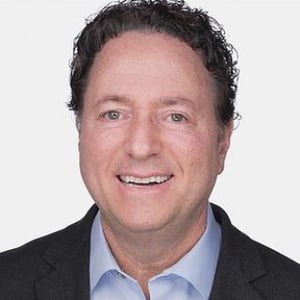
President, Committee for Justice
Curt Levey is President of the Committee For Justice, an organization devoted to advancing constitutionally limited government and individual liberty. He is a veteran of Supreme Court and other judicial confirmation battles and serves on the executive committee of the Federalist Society's Civil Rights Practice Group.
After graduating Harvard Law School with honors and clerking for the U.S. Court of Appeals for the Sixth Circuit, Mr. Levey served as Director of Legal & Public Affairs at the Center for Individual Rights (CIR). There he worked on landmark Supreme Court cases, including the University of Michigan affirmative action cases and the successful constitutional challenge to the Violence Against Women Act. After CIR, Mr. Levey headed the Title IX policy group at the U.S. Department of Education.
Before attending law school, Mr. Levey earned an M.S. and B.A. in computer science from Brown University and worked in the field of artificial intelligence (AI). He invented a new type of AI technology, for which he wrote a successful patent application.
Investment Company Institute

Partner, Baker Hostetler LLP
David Rivkin is a member of the firm's litigation, international and environmental teams and is co-leader of the firm's national appellate practice. He has extensive experience in constitutional, administrative and international law litigation and has been involved in numerous high-profile cases. With his prior experience in the government sector, David draws on a wealth of knowledge when providing compliance advice to companies and handling enforcement proceedings before government agencies on issues arising out of multilateral and unilateral sanctions, the Foreign Corrupt Practices Act (FCPA), anti-boycott issues, bankruptcy and financial fraud matters, and environmental and energy issues.
David has developed and implemented legislative, regulatory and litigation initiatives for two presidential administrations. Over the years, he has published hundreds of articles, op-eds, book reviews and book chapters on a variety of international, legal, constitutional, defense, arms control, foreign policy, environmental and energy issues for various newspapers and magazines, including The Wall Street Journal, The Washington Post, The New York Times, USA Today and The Los Angeles Times, and has been a frequent commentator and guest on TV and radio shows including ABC, CBS, NBC, CNN, Fox News, NPR and PBS.
Professor of Law, Case Western Reserve University School of Law
Michael Scharf is Professor of Law and Director of the Frederick K. Cox International Law Center at Case Western Reserve University School of Law. From October 2004-March 2005, Professor Scharf served as a member of the elite international team of experts which provided training to the judges and prosecutors of the Iraqi Special Tribunal. In February 2005, Professor Scharf and the Public International Law and Policy Group, a Non-Governmental Organization he co-founded, were nominated for the Nobel Peace Prize by six governments and the Prosecutor of an International Criminal Tribunal for the work they have done to help in the prosecution of major war criminals, such as Slobodan Milosevic, Charles Taylor, and Saddam Hussein.
During the first Bush and Clinton Administrations, Professor Scharf served in the Office of the Legal Adviser of the U.S. Department of State, where he held the positions of Counsel to the Counter-Terrorism Bureau, Attorney-Adviser for Law Enforcement and Intelligence, Attorney-Adviser for United Nations Affairs, and delegate to the United Nations General Assembly and to the United Nations Human Rights Commission. In 1993, he was awarded the State Department's Meritorious Honor Award "in recognition of superb performance and exemplary leadership" in relation to his role in the establishment of the International Criminal Tribunal for the former Yugoslavia.
A graduate of Duke University School of Law, Professor Scharf is the author of over fifty scholarly articles and seven books, including Balkan Justice, which was nominated for the Pulitzer Prize in 1998, The International Criminal Tribunal for Rwanda, which was awarded the American Society of International Law's Certificate of Merit for the Outstanding book in International Law in 1999, Peace with Justice, which won the International Association of Penal Law Book of the Year Award for 2003, and casebooks on The Law of International Organizations and International Criminal Law.
Professor Scharf has testified as an expert before the U.S. Senate Foreign Relations Committee; his Op Eds have been published by the Washington Post, Los Angeles Times, Boston Globe, Christian Science Monitor, and International Herald Tribune; and he has appeared on ABC World News Tonight with Peter Jennings, Nightline with Ted Koppel, The O'Reilly Factor, The NewsHour with Jim Lehrer, The Charlie Rose Show, the BBC's The World, CNN, and National Public Radio.
In 2002, Professor Scharf established the War Crimes Research Office at Case Western Reserve University School of Law, which provides research assistance to the Prosecutors of the International Criminal Tribunal for Rwanda, the Special Court for Sierra Leone, the International Criminal Court, and the Iraqi Special Tribunal on issues pending before those international tribunals. Copies of over seventy of these research memos are available on the Frederick K. Cox International Law Center War Crimes Research Portal, at: http://law.case.edu/war-crimes-research-portal.
Retired Partner, Sullivan & Cromwell LLP
Upon his resignation as the Legal Adviser of the U.S. Department of State in January 1993, Mr. Williamson rejoined Sullivan & Cromwell's Washington, D.C. office. He originally joined the Firm in 1964 after graduating from New York University School of Law, where he was an editor of the Law Review. He became a partner of the Firm in 1971, moved to its London office in 1976, returned to its New York office in 1979, moved to its Washington, D.C. office in 1988 and became Of Counsel in 2007. In 2018, he retired from the firm.
At Sullivan & Cromwell, Mr. Williamson engaged in a broad and wide-ranging domestic and international financing and transactions practice, as well as advice with respect to corporate governance issues, the United States’ economic sanctions laws, the ethics rules applicable to government officials and the immunities of foreign sovereigns and international organizations.
Mr. Williamson has been an active participant on panels and other forums involving public international law and national security issues, such as the domestic and international bases for the use of force, the role of the United States with respect to the International Criminal Court, the law of the sea and the application of international legal principles in the war against terrorism.
Mr. Williamson is a member of the Council on Foreign Relations and a former member of the Executive Council of the American Society of International Law, the Executive Committees of the Business and Advisory Committee (BIAC) to the OECD and the U.S. Council for International Business, the United States Advisory Board of NTT DoCoMo, Inc. and the Board of Directors of Triton Oil & Gas Limited.
Mr. Williamson has served on the Boards of Regents and Trustees of the University of the South and as chair of the Board of Regents. He is currently a member of the Board of Directors of the American Council of Trustees and Alumni, a higher education watchdog.
Edward B. Burling Professor of International Law and Diplomacy, Johns Hopkins University School of Advanced International Studies
Member of the World Bank International Centre for Settlement of Investment Disputes; served on the U.S. Secretary of State’s advisory committees on private and public international law and on the CIA historical review panel; U.S. delegate to the U.N. Human Rights Committee (Geneva and New York, 2003–11); member of U.S. delegations to the Organization for Security and Co-operation in Europe and the Wehrkunde security conference; member of the Pentagon Defense Policy Advisory Board (2003–09) and the Hart-Rudman Commission on National Security in the 21st Century; was independent expert for U.N. criminal tribunal for the former Yugoslavia; formerly director of studies at Hague Academy for International Law, tenured professor at Yale Law School, visiting professor at the University of Paris (Sorbonne) and Charles H. Stockton professor at the U.S. Naval War College; named Berlin Prize Fellow of the American Academy; was vice president of the American Society of International Law, serves as president of the American branch of the International Law Association and vice chair of Freedom House and is on the board of editors for American Journal of International Law, Journal of Strategic Studies, American Interest, World Policy Journal, National Defense University Prism and National Interest; was law clerk to Judge Henry Friendly of the U.S. Court of Appeals (Second Circuit) and U.S. Supreme Court Justice Harry Blackmun; commentator for BBC, NPR and PBS; J.D., Yale University.
Partner, Baker & Hostetler LLP
Lee A. Casey focuses on federal environmental, constitutional and international law and Alien Tort Statute issues. He also advises clients on compliance issues under the Foreign Corrupt Practices Act (FCPA), U.S. trade sanctions regimes, and federal ethics requirements. Mr. Casey’s practice includes federal, district and appellate court litigation, as well as matters before federal agencies. Prior to joining BakerHostetler, Mr. Casey was an associate with Hunton & Williams, practicing in international, environmental and constitutional law. From 2004 through 2007 he served as an member of the United Nations Subcommission on the Promotion and Protection of Human Rights.
From 1986 to 1993, Mr. Casey served in various capacities in the federal government, including the Office of Legal Policy (1986-90) and the Office of Legal Counsel (1992-93) at the U.S. Department of Justice and served as Deputy Associate General Counsel at the U.S. Department of Energy (1990-92). The Office of Legal Counsel is responsible for advising the Attorney General and the White House on issues of constitutional law and statutory interpretation. The Office of Legal Policy served as a strategic “think tank” for the Reagan Justice Department and was responsible for reviewing candidates for appointments to the federal bench.
Before joining the government in 1986, Mr. Casey was an associate in the Los Angeles firm of Mitchell, Silberberg & Knupp, practicing in the litigation section, with an emphasis on copyright, contract and First Amendment issues. From 1984 to 1985, Mr. Casey served as Law Clerk to the Honorable Alex Kozinski, then Chief Judge of the United States Claims Court. From 1982 to 1984, he practiced at the Detroit firm of Dykema Gossett, focusing on corporate, securities, commercial and intellectual property litigation, and from 1990 through 1994, he served as an Adjunct Professor of Law at George Mason University School of Law in Arlington, Virginia.
Among the chapters, articles and papers that Mr. Casey has authored or co-authored are: “International Law and the Nation-State at the U.N.,” Reclaiming the Language of Freedom at the United Nations: A Guide for U.S. Policymakers, The Heritage Foundation (2006) (with David B. Rivkin, Jr.); “The Dangerous Myth of Universal Jurisdiction,” A Country I Do Not Recognize (ed. Robert H. Bork) (2005) (with David B. Rivkin, Jr.); “Leashing the Dogs of War,” The National Interest (Fall 2003) (with David B. Rivkin, Jr.); “The Limits of Legitimacy: The Rome Statute’s Unlawful Application to Non-State Parties,” 44 Va.J.Int’l L. 63 (Fall 2003) (with David B. Rivkin, Jr.); “Devil’s Advocates: The Danger of Judging Lawyers By Their Clients,” Policy Review (Feb. and Mar. 2002) (with David B. Rivkin, Jr.); “The Case Against the International Criminal Court,” 25 Fordham Int’l L.J. 840 (2002); “Europe in the Balance: The Alarmingly Undemocratic Drift of the European Union,” Policy Review (June and July 2001) (with David B. Rivkin Jr.); “Against an International Criminal Court,” Commentary, May 1998 (with David B. Rivkin, Jr.); “Federalism (Cont’d.),” Commentary, December 1996 (with David B. Rivkin, Jr.); “Presidents and War Powers: Another View,” Common Sense, Winter 1996 (with David B. Rivkin, Jr.); “How Binding Are Contracts?” The American Enterprise, Nov./Dec. 1993 (with David B. Rivkin, Jr.); and “Pirate Constitutionalism: An Essay in Self-Government,” 8 J. of L. & Politics 477 (1992).
Mr. Casey is a member of the California, Michigan and District of Columbia Bar Associations.
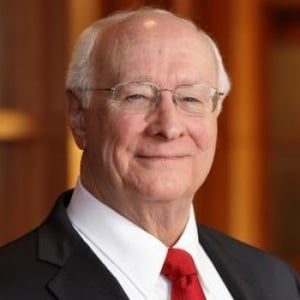
Walter L. Brown Professor of Law, University of Virginia School of Law
John Norton Moore, who joined the faculty in 1966, is an authority on international law, national security law and the law of the sea. He also teaches advanced topics in national security law and the rule of law. Moore taught the first course in the country on national security law and conceived and co-authored the first casebook on the subject. From 1991-93, during the Gulf War and its aftermath, Moore was the principal legal adviser to the Ambassador of Kuwait to the United States and to the Kuwait delegation to the U.N. Iraq-Kuwait Boundary Demarcation Commission.
From 1985 to 1991, he chaired the board of directors of the U.S. Institute of Peace, one of six presidential appointments he has held. From 1973 to 1976, he was chair of the National Security Council Interagency Task Force on the Law of the Sea and ambassador and deputy special representative of the president to the law of the sea conference. Previously he served as the counselor on international law to the State Department. With the deputy attorney general of the United States, he was co-chair in March 1990 of the U.S.-USSR talks in Moscow and Leningrad on the rule of law. As a consultant to the Arms Control and Disarmament Agency, he was honored by the director for his work on the ABM Treaty Interpretation Project. He has been a frequent witness before congressional committees on maritime policy, legal aspects of foreign policy, national security, war and treaty powers, and democracy and human rights. He has been a fellow of the Woodrow Wilson International Center for Scholars at the Smithsonian Institution.
Moore is a member of advisory and editorial boards for nine journals and numerous professional organizations, and he has published many articles on oceans policy, national security and international law.

Florida Constitutional Challenge to Obamacare: It All Comes Down to Broccoli
Karen Harned
Note from the Editor: This paper provides an update on the litigation dealing with the...
Regulatory Takings
William M. Treanor
The following article is Dean Treanor’s portion of a debate with Professor Richard Epstein during...
Urban Land Use and Transportation: Solutions Without Government Regulation
Houston, TexasExecutive Order on Preemption
John J. Park
Brought to you by the Federalism & Separation of Powers Practice GroupOn May 20, 2009, President Obama...
Conscience Protection in Health and Human Services
William L. Saunders, Michael Fragoso
On August 21, 2008, Secretary of Health and Human Services (HHS) Mike Leavitt proposed regulations...
Executive Order Concerning Regulatory Planning and Review
Susan E. Dudley
Brought to you by the Administrative Law & Regulation Practice GroupEvery president since Ronald Reagan has relied...
Abigail Alliance v. von Eschenbach
Roger Pilon, Edward Whelan, Jonathan H. Adler, Curt Levey
In May 2006, a panel of the U.S. Court of Appeals for the District of...
International Law and the Use of Force
Paul Schott Stevens, Burrus M. Carnahan, David B. Rivkin, Michael Scharf, Edwin D. Williamson, Ruth J. Wedgwood, Lee A. Casey, John Norton Moore
Proceedings are from May 2000 Federalist Society conference. Jus ad bellum Mr. Paul Schott Stevens,...
Administrative Law Group Members Participate in Forum on State Regulatory Policy
Scott Pattison
The Federalist Society's Administrative Law Practice Group participated in the State Policy Network's Seventh Annual...
Blame for Ballooning Bankruptcies
Vern McKinley
As a period of historically low unemployment approaches the seventh year of economic expansion, the...