



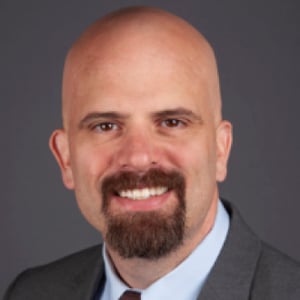










Brad Watts, senior vice president at the U.S. Chamber of Commerce’s Global Innovation Policy Center (GIPC), oversees the center’s day-to-day operations. He also leads the development and implementation of the Chamber’s U.S. and global intellectual property (IP) agenda to foster a political, legal, and economic environment where innovators and creators can invest in the next big thing for the benefit of Americans and the world.
Watts previously served as the Republican chief counsel on the Senate Judiciary Committee Subcommittee on Intellectual Property. There he was responsible for planning and implementing Senator Thom Tillis’ (R-NC) and the Republican party’s legislative portfolio on all aspects of IP law.
In the 116th Congress, when Senator Tillis was chairman of the subcommittee, Watts served as majority chief counsel and staff director for the Senate Judiciary Committee Subcommittee on Intellectual Property. He was responsible for implementing the senator’s legislative and oversight agenda on all aspects of America’s innovation economy.
During Watts’ tenure as majority chief counsel, the subcommittee held 17 legislative and oversight hearings and multiple staff briefings on IP issues, ranging from the state of patent eligibility law in America to reforming the Digital Millennium Copyright Act of 1998. Under his leadership, the subcommittee passed the CASE Act, the Trademark Modernization Act, and the Protecting Lawful Streaming Act, three landmark bills that collectively represent the largest changes to IP law since the Leahy-Smith America Invents Act.
Earlier, Watts was chief immigration counsel to then-Senate Judiciary Committee Chairman Chuck Grassley (R-IA). He began his career with former Senator Jeff Sessions (R-AL) as a legislative counsel on the Subcommittee on Immigration and the National Interest, handling civil rights and civil liberties law, general tort law, bankruptcy, telecommunications, and IP issues for the senator.

FTC v. Qualcomm: The Ninth Circuit on Tech Antitrust
John Shu
Please join us for a teleforum discussing the Ninth Circuit’s recent opinion in this important case,...
The Deterioration of Appropriate Remedies in Patent Disputes
Geoffrey A. Manne, Kristian Stout, Julian Morris, Dirk Auer
Note from the Editor: The Federalist Society takes no positions on particular legal and public...
Deep Dive Episode 120 – FTC Rulemaking: Underutilized Tool or National Nanny Renewed?
James C. Cooper, Svetlana Gans, William C. MacLeod, Noah Joshua Phillips, Joshua D. Wright, Nathan Kaczmarek
This expert panel examined recent calls for the Federal Trade Commission (FTC) to engage in...
An Update on Patents and Antitrust
Makan Delrahim, Andrei Iancu
Join us as our experts give an update on the intersection of patent and antitrust...
Deep Dive Episode 89 – The New DOJ-USPTO-NIST Policy Statement on Remedies for Infringement of Standard-Essential Patents
David Jones, Adam Mossoff, Kristen Osenga, Brad Watts
In December 2019, the Department of Justice, the U.S. Patent & Trademark Office, and the...
Litigation Update: FTC v. Qualcomm
F. Scott Kieff, Kristen Osenga
In January 2017, the Federal Trade Commission (FTC) filed an antitrust complaint against Qualcomm in...
Litigation Update: FTC v. Qualcomm
F. Scott Kieff, John Shu
On May 21, 2019, the U.S. District Court for the Northern District of California ruled...
Division of Authority: DOJ Antitrust; the FTC; the FCC; USPTO
Makan Delrahim, Andrei Iancu
The seventh annual Executive Branch Review Conference took place on May 8, 2019, at the...
Topics
A Bargaining Model v. Reality in FTC v. Qualcomm: A Reply to Kattan & Muris
Introduction In a recent article[1] Joe Kattan and Tim Muris (K&M) criticize our article[2] on...
Topics
An Evidentiary Cornerstone of the FTC’s Antitrust Case Against Qualcomm May Have Rested on Manipulated Data
The courtroom trial in the Federal Trade Commission’s (FTC’s) antitrust case against Qualcomm ended in...