
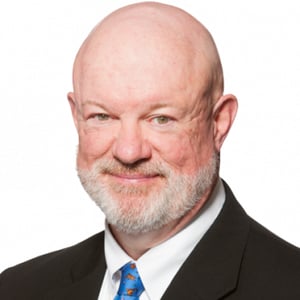
Senior Legal Fellow, the Meese Institute for the Rule of Law, Advancing American Freedom
Paul J. Larkin is a Senior Legal Fellow in the Meese Institute for the Rule of Law at Advancing American Freedom. Paul has held various positions in the federal and state governments throughout his career, such as being an attorney in the Organized Crime and Racketeering Section of the Criminal Division at the U.S. Department of Justice, an Assistant to the Solicitor General in the Office of the Solicitor General at the U.S. Department of Justice, Special Agent-in-Charge and Acting Director of the Criminal Investigation Division at the Environmental Protection Agency, and a member of the Parole Abolition and Sentencing Reform Commission and of the Juvenile Justice Reform Commission in the Office of Virginia Governor George Allen.
He has also worked at Verizon Communications and two law firms in Washington, D.C. His current research is principally in the fields of drug policy, criminal justice policy, and administrative law and policy. He has published numerous articles in law and public policy journals, both in print and online.
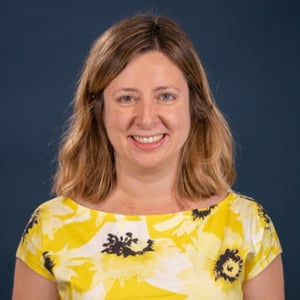
Legal Fellow, Center for the Separation of Powers, Pacific Legal Foundation
Alison Somin joined Pacific Legal Foundation in May 2020 as a legal fellow in the Center for the Separation of Powers and part of the equality before the law practice group.
Before joining the Pacific Legal Foundation team, Alison was a special assistant and counsel for over a decade to Gail Heriot, a member of the bipartisan United States Commission on Civil Rights. She also has deep roots in the liberty movement. Alison was a Koch Associate at the National Federation for Independent Business Legal Foundation and, during law school, completed summer clerkships at the Institute for Justice and the Charles G. Koch Charitable Foundation. She holds a J.D. from Emory University School of Law and an A.B. in history from Dartmouth College.
Her work has been published in the San Francisco Chronicle, the Daily Journal, Texas Journal of Law and Politics, and The Federalist Society’s Engage magazine and blog.
She lives in northern Virginia with her husband Ilya; two children; and golden retriever Willow. In her spare time, she enjoys reading, baking and cooking, children’s art projects, and training and exercising Willow.
Senior Attorney, U.S. Commission on Civil Rights
Mr. Byrnes is a senior attorney at the United States Commission on Civil Rights and has served as an attorney to the Office of the Assistant Secretary for Civil Rights in the Department of Education.
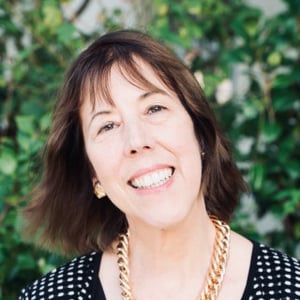
Professor of Law, University of San Diego School of Law (Retired)
Gail Heriot is a recently retired law professor from the University of San Diego. She also served as a member of the U.S. Commission on Civil Rights from 2007 to 2025. She is also the chairman of the board of the American Civil Rights Project and the chair emerita of the Civil Rights practice group at the Federalist Society for Law & Public Policy.
Professor Heriot is a prolific writer in the area of civil rights. She is the author of many law review articles. She is also the editor (along with Maimon Schwarzschild) of the 2021 anthology, A Dubious Expediency: How Race Preferences Damage Higher Education. Her upcoming book is entitled, Why We Walk on Eggshell: How Our Civil Rights Laws Helped Bring About the Woke Era—And the Trump Era, Too.
Her writings for a general audience have appeared in the Wall Street Journal, the San Diego Union-Tribune, the National Review and many other newspapers and magazines.
In 1996, she co-chaired the successful “Yes on Proposition 209” campaign, which amended the California Constitution to prohibit state-sponsored discrimination or preferential treatment based on race, sex, color, ethnicity or national origin. In 2020, she co-chaired the “No on Proposition 16” campaign, which successfully prevented Proposition 209’s repeal.
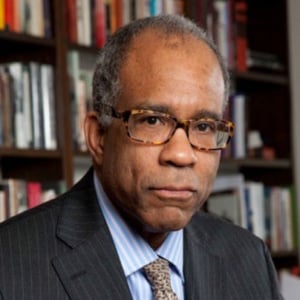
Michael R. Klein Professor of Law, Harvard Law School
Randall Kennedy is Michael R. Klein Professor at Harvard Law School where he teaches courses on contracts, criminal law, and the regulation of race relations. He was born in Columbia, South Carolina. For his education he attended St. Albans School, Princeton University, Oxford University, and Yale Law School. He served as a law clerk for Judge J. Skelly Wright of the United States Court of Appeals and for Justice Thurgood Marshall of the United States Supreme Court. He is a member of the bar of the District of Columbia and the Supreme Court of the United States. Awarded the 1998 Robert F. Kennedy Book Award for Race, Crime, and the Law, Mr Kennedy writes for a wide range of scholarly and general interest publications. His other books are For Discrimination: Race, Affirmative Action, and the Law (2013), The Persistence of the Color Line: Racial Politics and the Obama Presidency (2011), Sellout: The Politics of Racial Betrayal (2008), Interracial Intimacies: Sex, Marriage, Identity, and Adoption (2003), and Nigger: The Strange Career of a Troublesome Word (2002). A member of the American Law Institute, the American Academy of Arts and Sciences, and the American Philosophical Association, Mr. Kennedy is also a Trustee emeritus of Princeton University.
Professor of Law, UCLA School of Law
Sander has been working on questions of social and economic inequality for nearly all of his career. He was born in Washington, D.C., but spent most of his childhood in small towns in northwest Indiana. After earning a B.A. in Social Studies at Harvard, Sander in 1978 joined the federal Vista program and worked for a small neighborhood housing group on Chicago's south side. While organizing tenant unions and building receiverships, he was deeply impressed with the work of the South Shore Bank, an experimental, community-development bank owned by churches and foundations. Sander secured funding from three federal agencies and, with the Woodstock Institute, completed the first detailed study of the bank. South Shore Bank was widely imitated as an instrument for community revitalization in other urban areas over the next two decades.
Sander attended graduate school at Northwestern University from 1983 to 1988, earning degrees in law (J.D., 1988) and economics (M.A. 1985, Ph.D., 1990). In his law review comment and his dissertation, Sander sought to understand why fair housing laws had seemingly produced widespread integration in some American metropolitan areas, but very little integration in most. During much of this period, Sander served on the board of the Rogers Park Tenants Committee, and worked on the election effort and subsequent transition team of Harold Washington, Chicago’s first black mayor.
In 1989, Sander joined the faculty of the UCLA School of Law. During this period, he continued his work on housing segregation, but also pursued two new interests: the reasons behind the American legal profession’s explosive growth since the mid-1960s, and the structure and effects of law school admissions policies. With Kris Knaplund, he published in 1995 the first comparative evaluation of academic support programs used in legal education. After California voters approved Propostion 209 in 1996 – banning the use of race in various government programs, including admissions at the University of California – Sander successfully argued for the adoption of class-based preferences in the law school’s admissions, and published a study on the results of this experiment in 1997.
During the 1990s, Sander was involved in several Los Angeles civic initiatives. He served as President of the Fair Housing Congress of Southern California from 1984 to 1996; founded the Fair Housing Institute in 1996, and helped the City of Los Angeles design and implement in 1997 what was, at the time, the nation's most ambitious living wage law. Sander also persuaded regional authorities to develop outreach programs that sharply increased local usage of the Earned Income Tax Credit, generating tens of millions of dollars annually for LA's poorest working families.
Sander was one of seven UCLA faculty members and staff who launched the Program in Public Interest Law and Policy, which created a distinct curriculum aimed at public interest students. From 1998 to 2004, Sander helped to steer the "After the JD" study, the first national panel study of law school graduates. In 1998-99, Sander and others at the School of Law launched the Empirical Research Group (ERG), an entity designed to help faculty members undertake ambitious empirical projects and introduce more quantitative and methodological sophistication into their policy-related work.
In 2004, Sander published a comprehensive study of affirmative action in American law schools, focusing particularly on the ways in which large preferences imposed unexpected but substantial costs on their intended beneficiaries.
Sander teaches courses in Property, Quantitative Methods, Urban Housing, and Policy Analysis. He is married to astrophysicist Fiona Harrison, and has a son, Robert. He lives in the Los Feliz neighborhood of Los Angeles.
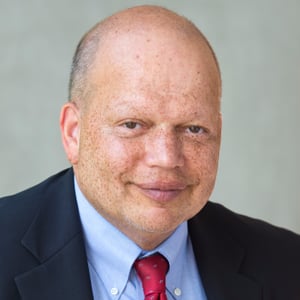
Julius L. Chambers Distinguished Professor of Law and Director of the Center for Civil Rights, University of North Carolina School of Law
Theodore M. Shaw is the Julius L. Chambers Distinguished Professor of Law and Director of the Center for Civil Rights at the University of North Carolina School of Law at Chapel Hill. Professor Shaw teaches Civil Procedure and Advanced Constitutional Law/Fourteenth Amendment. Before joining the faculty of UNC Law School, from 2008-2014 Professor Shaw taught at Columbia University Law School, where he was Professor of Professional Practice. During that time he was also “Of Counsel” to the law firm of Norton Rose Fulbright (formerly Fulbright & Jaworski, LLP). His practice involved civil litigation and representation of institutional clients on matters concerning diversity and civil rights.
Professor Shaw was the fifth Director-Counsel and President of the NAACP Legal Defense and Educational Fund, Inc., for which he worked in various capacities over the span of twenty-six years. He has litigated education, employment, voting rights, housing, police misconduct, capital punishment and other civil rights cases in trial and appellate courts, and in the United States Supreme Court.From 1982 until 1987, he litigated education, housing, and capital punishment cases and directed LDF's education litigation docket. In 1987, under the direction of LDF's third Director-Counsel, Julius Chambers, Mr. Shaw relocated to Los Angeles to establish LDF's Western Regional Office. In 1990, Mr. Shaw left LDF to join the faculty of the University of Michigan Law School, where he taught Constitutional Law, Civil Procedure and Civil Rights. While at Michigan, he played a key role in initiating a review of the law school's admissions practices and policies, and served on the faculty committee that promulgated the admissions program that was upheld by the U.S. Supreme Court in 2003 in Grutter v. Bollinger.
In 1993, Mr. Shaw returned to LDF as Associate Director-Counsel, and in 2004, he became LDF's fifth Director-Counsel. Mr. Shaw's legal career began as a Trial Attorney in the Honors Program of the United States Department of Justice, Civil Rights Division in Washington, D.C., where he worked from 1979 until 1982.
Mr. Shaw has testified on numerous occasions before Congress and before state and local legislatures. His human rights work has taken him to Africa, Asia, Europe, and South America. In addition to teaching at Columbia and at Michigan Law School, Professor Shaw held the 1997-1998 Haywood Burns Chair at CUNY School of Law at Queens College and the 2003 Phyllis Beck Chair at Temple Law School. He was a visiting scholar at the Constitution Center in Philadelphia in 2008-2009. He is a member of the faculty of the Practicing Law Institute (PLI).
Mr. Shaw served on the Obama Transition Team after the 2008 presidential election, as team leader for the Civil Rights Division of the Justice Department.
A. W. Walker Centennial Chair in Law, University of Texas at Austin School of Law
Professor Graglia has written widely in constitutional law--especially on judicial review, constitutional interpretation, race discrimination, and affirmative action--and also teaches and writes in the area of antitrust. He is the author of Disaster by Decree: The Supreme Court Decisions on Race and the Schools (Cornell, 1976) and many articles, including recently "Church of the Lukumi Babalu Aye: Of Animal Sacrifice and Religious Persecution" (Georgetown Law Journal, 1996). He has been a Visiting Professor at the University of Virginia School of Law.
Michael R. Klein Professor of Law, Harvard Law School
Randall Kennedy is Michael R. Klein Professor at Harvard Law School where he teaches courses on contracts, criminal law, and the regulation of race relations. He was born in Columbia, South Carolina. For his education he attended St. Albans School, Princeton University, Oxford University, and Yale Law School. He served as a law clerk for Judge J. Skelly Wright of the United States Court of Appeals and for Justice Thurgood Marshall of the United States Supreme Court. He is a member of the bar of the District of Columbia and the Supreme Court of the United States. Awarded the 1998 Robert F. Kennedy Book Award for Race, Crime, and the Law, Mr Kennedy writes for a wide range of scholarly and general interest publications. His other books are For Discrimination: Race, Affirmative Action, and the Law (2013), The Persistence of the Color Line: Racial Politics and the Obama Presidency (2011), Sellout: The Politics of Racial Betrayal (2008), Interracial Intimacies: Sex, Marriage, Identity, and Adoption (2003), and Nigger: The Strange Career of a Troublesome Word (2002). A member of the American Law Institute, the American Academy of Arts and Sciences, and the American Philosophical Association, Mr. Kennedy is also a Trustee emeritus of Princeton University.
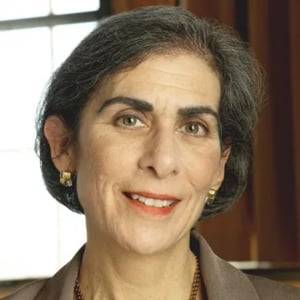
Robert Mundheim Professor of Law, University of Pennsylvania Law School
Amy Wax's work addresses issues in social welfare law and policy as well as the relationship of the family, the workplace, and labor markets. By bringing to bear her training in biomedical sciences and appellate practice as well as her interest in economic analysis, Wax has developed a uniquely insightful approach to problems in her areas of expertise.
Wax's career has been stellar. As an Assistant to the Solicitor General in the Office of the Solicitor General at the U.S. Department of Justice in the late 1980s and early 1990s, Wax argued 15 cases before the United States Supreme Court. She taught for seven years at the University of Virginia Law School before joining the Penn Law faculty in 2001.
Wax has published widely in law journals, including Chicago, Virginia, Villanova, Indiana, Emory, the Virginia Journal of Social Policy and Law, Yale Journal on Regulation and the Michigan Journal of Race and Law. Papers in press address liberal theory and welfare work requirements as well as the economics of federal disability laws. Current work in progress includes articles on law and evolutionary psychology, the political psychology of social security reform, and economic models of the family-friendly workplace. Wax has also received the A. Leo Levin Award for Excellence in an Introductory Course.
Michael R. Klein Professor of Law, Harvard Law School
Randall Kennedy is Michael R. Klein Professor at Harvard Law School where he teaches courses on contracts, criminal law, and the regulation of race relations. He was born in Columbia, South Carolina. For his education he attended St. Albans School, Princeton University, Oxford University, and Yale Law School. He served as a law clerk for Judge J. Skelly Wright of the United States Court of Appeals and for Justice Thurgood Marshall of the United States Supreme Court. He is a member of the bar of the District of Columbia and the Supreme Court of the United States. Awarded the 1998 Robert F. Kennedy Book Award for Race, Crime, and the Law, Mr Kennedy writes for a wide range of scholarly and general interest publications. His other books are For Discrimination: Race, Affirmative Action, and the Law (2013), The Persistence of the Color Line: Racial Politics and the Obama Presidency (2011), Sellout: The Politics of Racial Betrayal (2008), Interracial Intimacies: Sex, Marriage, Identity, and Adoption (2003), and Nigger: The Strange Career of a Troublesome Word (2002). A member of the American Law Institute, the American Academy of Arts and Sciences, and the American Philosophical Association, Mr. Kennedy is also a Trustee emeritus of Princeton University.
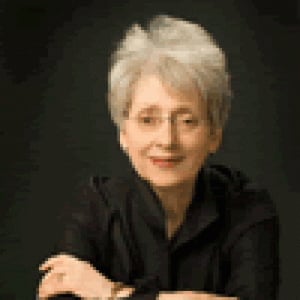
Vice-chair, U.S. Commission on Civil Rights, and Adjunct Scholar, American Enterprise Institute
Abigail Thernstrom is the vice-chair of the U.S. Commission on Civil Rights, and an adjunct scholar at the American Enterprise Institute. She was a senior fellow at the Manhattan Institute in New York from 1993 to 2009, and a member of the Massachusetts State Board of Education for more than a decade until her third term ended in November 2006. She also serves on the board of advisors of the U.S. Election Assistance Commission. She received her Ph.D. in 1975 from the Department of Government, Harvard University.
In 2007 she and her husband, Stephan Thernstrom, along with James Q. Wilson, Martin Feldstein, and John Bolton, were the recipients of a Bradley Foundation prizes for Outstanding Intellectual Achievement.
Thernstrom and her husband, Harvard historian Stephan Thernstrom, are the co-authors of No Excuses: Closing the Racial Gap in Learning (Simon & Schuster, October 2003), which has been awarded the 2007 Fordham Foundation prize for “for distinguished scholarship,” and was named by both the Los Angeles Times and the American School Board Journal as one of the best books of 2003.
They also collaborated on America in Black and White: One Nation, Indivisible (Simon & Schuster), which the New York Times Book Review, in its annual end-of-the-year issue, named as one of the notable books of 1997.
They are the editors of a Beyond the Color Line: New Perspectives on Race and Ethnicity. Their lengthy review of William G. Bowen and Derek Bok's much-noticed work, The Shape of the River, appeared in the June 1999 issue of the UCLA Law Review.
Whose Votes Count? Affirmative Action and Minority Voting Rights (Harvard University Press) won four awards, including the American Bar Association's Certificate of Merit, and the Anisfield-Wolf prize for the best book on race and ethnicity. It was named the best policy studies book of that year by the Policy Studies Organization (an affiliate of the American Political Science Association), and won the Benchmark Book Award from the Center for Judicial Studies. Along with her husband, she also won the 2004 Peter Shaw Memorial Award given by National Association of Scholars.
She is currently completing a book entitled Voting Rights and Wrongs: The Elusive Quest for Racially Fair Elections, and is working, as well, with her husband on another book with the tentative title of Don’t Call it Segregation: The Myth of Contemporary Apartheid. She (and two co-authors) submitted an amicus brief in Parents Involved in Community Schools v. Seattle, challenging the constitutionality of Seattle's racial balancing plan.
Her frequent media appearances have included Fox News Sunday, Good Morning America, and This Week with George Stephanopoulos. For some years, she was a stringer for The Economist, and continues to write for a variety of journals and newspapers, including the Wall Street Journal, the Los Angeles Times, the New York Times and the (London) Times Literary Supplement.
She serves on several boards, and from 1992 to 1997 was a member of the Aspen Institute's Domestic Strategy Group.
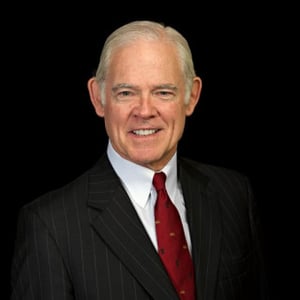
Founding Partner, Cooper & Kirk PLLC
Charles J. Cooper is a founding member and the chairman of Cooper & Kirk, PLLC, “one of the Nation’s leading litigation boutiques” (Above The Law 2017). The National Law Journal recently wrote that Mr. Cooper’s “brilliant legal career has so far spanned five decades and thrust Cooper into the spotlight in some of the most historic moments of the country’s modern history.” He has argued nine cases before the United States Supreme Court and scores of appeals before each of the 13 federal courts of appeals and several state supreme courts. He has been lead trial counsel in numerous complex, weeks-long trials in federal courts throughout the country. Named by the National Law Journal as one of the 10 best litigators in Washington D.C., Mr. Cooper’s work has been reported in numerous press accounts, and he has been called a “powerhouse attorney” (Fortune 2015), “a hard-nosed litigator” (Washington Post 2017), and “one of the country’s most in-demand civil litigators and a Washington legal institution unto himself” (The American Spectator 2014).
After graduating from the University of Alabama School of Law in 1977, where he ranked first in his class and served as Editor-in-Chief of the Alabama Law Review, Mr. Cooper began his career as a law clerk to Judge Paul Roney on the Fifth Circuit Court of Appeals and to Justice William H. Rehnquist in 1978–79. He then practiced law in Atlanta for two years before joining the Civil Rights Division of the U.S. Department of Justice, where he served as the Deputy Assistant Attorney General in charge of, among other things, appellate matters. In 1985 President Reagan appointed him to the position of Assistant Attorney General for the Office of Legal Counsel, which is the office responsible for providing legal opinions and advice to the White House, the Attorney General, and Executive Branch departments and agencies on issues covering the full spectrum of federal constitutional, statutory, and regulatory law.
In 1988 he returned to private practice as a litigation partner in the Washington, D.C. office of McGuireWoods. From 1990 until the founding of Cooper & Kirk in 1996, he was a partner at Shaw Pittman (now Pillsbury Winthrop Shaw Pittman), where he headed the firm’s Constitutional and Government Litigation Group.
Mr. Cooper has represented a wide range of public and private clients in highly complex constitutional, civil rights, antitrust, healthcare, banking, intellectual property, elections, campaign finance, administrative, commercial, and government contract cases. He has led trial teams in cases that have won judgments and settlements valued in the billions of dollars and that have established ground-breaking constitutional precedents.
Much of Mr. Cooper’s practice has involved representing high-profile clients in nationally prominent matters, including: the State of Florida in a First Amendment suit brought by the Disney Company concerning its autonomous regulatory authority over its Disney World property; the Commonwealth of Virginia in a suit seeking to enjoin the removal of noncitizens from its voter rolls; 38 members of the Duke Lacrosse team falsely accused of rape by officials of Duke University and the City of Durham; Harper Lee in a copyright dispute with the heirs of Gregory Peck; high-ranking former government officials such as former Attorneys General John Ashcroft, Jeff Sessions, and William Barr, and Ambassador John Bolton; several Governors and United States Senators; over 100 Members of Congress; and many state, territorial, and local government bodies and officials. He has also represented and advised government officials and public figures in connection with sensitive private issues that needed to be, and were, resolved discreetly without becoming matters of public record.
In 1998 Chief Justice Rehnquist appointed Mr. Cooper to the Standing Committee on Rules of Practice and Procedure of the Judicial Conference of the United States, where he served for three terms. He also served as a Public Member, appointed by President George H.W. Bush, of the National Commission on Judicial Discipline and Removal. He is a member of numerous professional associations, including the American Law Institute (since 1993) and the American Academy of Appellate Lawyers (since 1996). He is also an active member of the Federalist Society and the Republican National Lawyers Association, which in 2010 named him Republican Lawyer of the Year and in 2016 honored him with its Edwin Meese III Award.
Mr. Cooper has published scores of articles and spoken extensively on constitutional and legal policy topics. He has appeared before congressional committees on 26 occasions, testifying as an expert on a wide variety of legal issues, including the Chevron doctrine of judicial deference to administrative agencies, the diversity of citizenship jurisdiction of federal courts, statehood bills for Puerto Rico and the District of Columbia, and the impeachment of President Clinton.
A. W. Walker Centennial Chair in Law, University of Texas at Austin School of Law
Professor Graglia has written widely in constitutional law--especially on judicial review, constitutional interpretation, race discrimination, and affirmative action--and also teaches and writes in the area of antitrust. He is the author of Disaster by Decree: The Supreme Court Decisions on Race and the Schools (Cornell, 1976) and many articles, including recently "Church of the Lukumi Babalu Aye: Of Animal Sacrifice and Religious Persecution" (Georgetown Law Journal, 1996). He has been a Visiting Professor at the University of Virginia School of Law.
Michael R. Klein Professor of Law, Harvard Law School
Randall Kennedy is Michael R. Klein Professor at Harvard Law School where he teaches courses on contracts, criminal law, and the regulation of race relations. He was born in Columbia, South Carolina. For his education he attended St. Albans School, Princeton University, Oxford University, and Yale Law School. He served as a law clerk for Judge J. Skelly Wright of the United States Court of Appeals and for Justice Thurgood Marshall of the United States Supreme Court. He is a member of the bar of the District of Columbia and the Supreme Court of the United States. Awarded the 1998 Robert F. Kennedy Book Award for Race, Crime, and the Law, Mr Kennedy writes for a wide range of scholarly and general interest publications. His other books are For Discrimination: Race, Affirmative Action, and the Law (2013), The Persistence of the Color Line: Racial Politics and the Obama Presidency (2011), Sellout: The Politics of Racial Betrayal (2008), Interracial Intimacies: Sex, Marriage, Identity, and Adoption (2003), and Nigger: The Strange Career of a Troublesome Word (2002). A member of the American Law Institute, the American Academy of Arts and Sciences, and the American Philosophical Association, Mr. Kennedy is also a Trustee emeritus of Princeton University.

2020 National Lawyers Convention
The Rule of Law and the Current Crisis
Professionals, Amateurs, and Rape: How Colleges Are Failing Their Students
Paul James Larkin
A Review of: The Campus Rape Frenzy: The Attack on Due Process at America’s Universities,...
Affirmative Action on Campus Does More Harm than Good
A Lady or a Tiger?: Thoughts on Fisher v. University of Texas and the Future of Race Preferences in America
Alison E. Somin
Note from the Editor: This article is about the U.S. Supreme Court’s decision in Fisher...
Race Preference in University Admissions
Voting Rights Act
Proposals to Eliminate Sentencing Disparities between Crack and Powder Cocaine Offenses
Christopher Byrnes
Brought to you by the Civil Rights Practice GroupEDITOR’S NOTE: On March 17, 2010, the...
Interracial Adoption: The Institute for Justice Takes the Fight for Colorblind Law to Texas
Donna G. Matias
During the spring of 1995, the Institute for Justice filed a class action lawsuit in...
Panel III: The Effects Test—Quotas or Elimination of Racism?
1990 National Student Symposium
Stanford, CA