
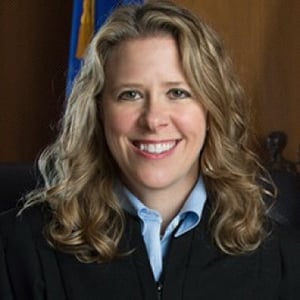
Justice, Wisconsin Supreme Court
Justice Rebecca Grassl Bradley, a Milwaukee native, was elected to the Supreme Court in 2016 after being appointed by Gov. Scott Walker in 2015. She is the first Wisconsin Supreme Court Justice to have served as an intermediate appellate court judge as well as a circuit court judge. Before joining the Supreme Court, Justice Bradley served as a District I Court of Appeals judge (appointed 2015), a Milwaukee County Circuit Court Judge (appointed 2012, elected 2013) and worked as an attorney in private practice (1996-2012), including serving as vice president of legal operations for a global software company.
Justice Bradley graduated from Marquette University in 1993 with an honors B.S. in Business Administration and Business Economics and received her juris doctor from the University of Wisconsin Law School in 1996.
Justice Bradley is a member of the Supreme Court Finance Committee and chairs the Supreme Court Legislative Committee as the Chief Justice's designee. She is a member of the Board of Advisors and past president of the Milwaukee Lawyers Chapter of the Federalist Society; serves on the Wisconsin State Advisory Committee of the U.S. Commission on Civil Rights; and is a member of the Bench and Bar Committee of the Wisconsin State Bar. She previously served on the Board of Governors of the St. Thomas More Lawyers Society; the Wisconsin Juvenile Jury Instructions Committee; the Wisconsin Juvenile Benchbook Committee; and as a member of the Milwaukee Trial Judges Association and the Wisconsin Trial Judges Association. While in private practice, Justice Bradley served as an American Arbitration Association Arbitrator and Chairman of the State Bar Business Law Section.
Justice Bradley's current term expires July 31, 2026.
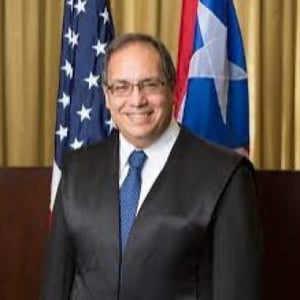
Supreme Court of Puerto Rico
El Honorable Rafael L. Martínez Torres nació el 14 de febrero de 1959 en Humacao, Puerto Rico. Es el menor de los dos hijos procreados el señor Luis Martínez y la señora Áurea Torres. Está casado con la Dra. Sandra S. Rodríguez Cruz, pediatra. El juez tiene dos hijos, Christopher y Ricardo.
Producto de nuestras escuelas públicas (en 1976 se graduó, con altos honores, de la Escuela Superior Ana Roqué, de Humacao), el juez Martínez Torres obtuvo en 1980 su Bachillerato en Artes (con calificación de Magna Cum Laude) con concentración en Ciencias Políticas de la Universidad de Puerto Rico, Recinto de Río Piedras. En 1983 obtuvo el grado de Juris Doctor con calificación de Cum Laude de la Facultad de Derecho de la Universidad de Puerto Rico, Recinto de Río Piedras, donde, además, fue Director Auxiliar de la Revista Jurídica. El juez Martínez Torres comenzó su vida profesional precisamente en el Tribunal Supremo de Puerto Rico, en el cual laboró durante tres años, hasta 1986, como asesor legal en el Secretariado de la Conferencia Judicial y, más adelante, en el Panel Central.
Posteriormente, el juez Martínez Torres se dedicó durante nueve años a la práctica privada de su profesión, particularmente en el campo de la litigación civil y apelativa; así, laboró en la firma Rivera Cestero & Marchand Quintero, en la División de Litigios del bufete Fiddler, González & Rodríguez y, finalmente, por su cuenta. Además, entre 1988 y 1993, enseñó el curso de Paralegal que ofrecía la División de Educación Continua del Recinto de Río Piedras de la Universidad de Puerto Rico.
En 1993, el juez Martínez Torres regresó al servicio público, esta vez como Director Ejecutivo de la Comisión de Gobierno de la Cámara de Representantes. En tal cargo colaboró y participó en el proceso de evaluación jurídica y en otros trámites relacionados con las leyes de reforma gubernamental que aprobó la Asamblea Legislativa, incluso la Reforma Judicial de 1994. Además, participó en la etapa inicial de la evaluación legislativa de las enmiendas propuestas a las Reglas de Procedimiento Civil y Criminal aún vigentes.
En febrero de 1995 fue nombrado juez del recién creado Tribunal de Circuito de Apelaciones. Con 36 años de edad recién cumplidos, el juez Martínez Torres se convirtió en el más joven de la plantilla de jueces de dicho foro apelativo intermedio. Durante los catorce años que laboró en el Tribunal de Apelaciones, se destacó por su laboriosidad y por la claridad de sus decisiones. Además, colaboró con el Tribunal Supremo en la preparación del Reglamento del Tribunal de Apelaciones que estuvo vigente entre 1996 y 2004. El 4 de febrero de 2009, el Gobernador de Puerto Rico, Hon. Luis Fortuño Burset, lo nombró Juez Asociado del Tribunal Supremo. Tomó posesión el 10 de marzo de 2009.
Además de su labor como Juez Asociado, el juez Martínez Torres ha ofrecido cursos en las escuelas de derecho de la Universidad de Puerto Rico y la Universidad Interamericana.

Professor of Law, University of Minnesota Law School
Professor James W. Coleman is a scholar of energy law. He specializes in North American energy infrastructure, transport, and trade. He is also a nonresident senior fellow at the American Enterprise Institute focused on energy policy.
Professor Coleman has testified before Congress on steps to speed up energy infrastructure permits. He also worked with a team of experts as part of Alberta's Royalty Review to revise the Canadian province's management of its vast oil and gas resources.
Before joining Minnesota, Professor Coleman taught at Southern Methodist University's Dedman School of Law, the University of Calgary’s law and business schools, and Harvard Law School. Earlier, he practiced environmental and appellate law at Sidley Austin in Washington, D.C., and clerked for the Honorable Steven M. Colloton of the U.S. Court of Appeals for the Eighth Circuit.
Professor Coleman received two degrees from Harvard University—a J.D. (cum laude) and B.A. in biology (magna cum laude with highest honors in the field). As a result of his undergraduate thesis on butterfly genetics, which required fieldwork in Central Asia, a species of lycaenid butterfly was named after him—Agrodiaetus ripartii colemani.

Chairman and CEO, NTELX
As Chairman and CEO, Rob sets the vision and direction for NTELX. Rob is a former member of the US Federal Maritime Commission and an internationally recognized expert in maritime and US transportation policy; his experience spans energy, transportation, safety and environmental regulation, and other public policy issues. Rob is a prolific writer and speaker, frequently cited in the media and called upon for expert testimony. He has been a senior policy advisor to numerous public figures and to Congress. He received his undergraduate degree in biology at Rice University and his Master’s in public and private management from Yale University’s School of Organization and Management. He is a member of the Council on Foreign Relations and other public policy and security advisory bodies.
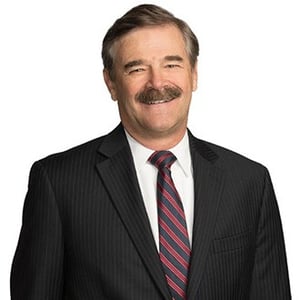
Partner, Blank Rome
Jonathan Waldron concentrates his practice in maritime, international, and environmental law, including maritime security. Jon counsels clients, both domestically and internationally, in areas such as:
Jon served in the U.S. Coast Guard for 20 years, attaining the rank of commander, and was senior counsel to the Marine Spill Response Corporation, where he provided on-scene legal advice at major spill events.
He is ranked by Chambers USA as a leading attorney for shipping regulatory matters, with Chambers sources stating that he has a “deep knowledge of maritime and environmental laws” and is “iconic when it comes to D.C. regulatory matters.” Chambers has also noted that Jon is “knowledgeable but practical” and is “known for his prominence in matters relating to the Coast Guard.” Sources say that he is “the ultimate professional,” “knowledgeable, wise, well known in the industry and a pleasure to work with,” and particularly appreciate that he is “very well connected within the Coast Guard.”
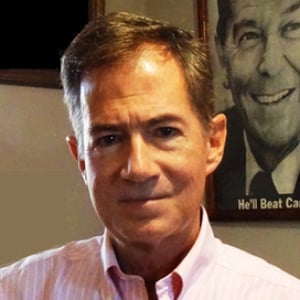
Former General Counsel of the U.S. Immigration and Naturalization, Former United States Ambassador to East Timor
Grover Joseph Rees is a Louisiana native whose family has lived in the Breaux Bridge/Lafayette area since the 1700s.
His first job after college was as an assistant to Congressman Dave Treen (R-LA3), who had just been elected as the first Republican Congressman from Louisiana since Reconstruction.
Rees graduated with honors from LSU Law School, where he served as Editor-in-Chief of the Louisiana Law Review. While in law school he worked on Ronald Reagan’s 1976 presidential campaign and was a Reagan delegate from Louisiana to the Republican National Convention. He also served as a member of the Lafayette Parish Republican Executive Committee and as a board member of Acadiana Right to Life.
In 1979, when Congressman Treen ran successfully for Governor, he asked Rees to write his authorized biography. The book, Dave Treen of Louisiana, was read and discussed widely during the campaign and after Treen’s election.
In 1985-86 Rees served as Special Counsel for Judicial Selection in President Reagan’s Justice Department, working closely with Attorney General Ed Meese to reorganize the judicial selection process to make it more philosophically oriented. These efforts resulted in the appointment of over 100 federal judges and were widely credited with transforming the federal judiciary.
From 1986 through 1991 Rees served as Chief Justice of the High Court of American Samoa, an Article I federal judicial position.
From 1991 through 1993 he was General Counsel of the U.S. Immigration and Naturalization Service.
In 1995 Rees went to work for the new Republican Congress as staff director and chief counsel of the Subcommittee on International Operations and Human Rights. He worked with subcommittee chairman Chris Smith (R.-N.J.) to cut U.S. funding for the International Planned Parenthood Federation and other organizations that perform and promote abortions overseas. Rees also worked on the drafting and enactment of the International Religious Freedom Act, the Trafficking Victims Protection Act, and other legislation that has helped to bring U.S. foreign policy into closer alignment not only with our national interests but also with our values.
In 2001-2002 Rees worked for Congressman Henry Hyde (R.-Ill.), who was then serving as Chairman of the House International Relations Committee.
From 2002 until 2006 Rees served as the first United States Ambassador to newly independent East Timor.
From 2006 until 2009 Ambassador Rees was the United States Special Representative for Social Issues, responsible for representing the United States on issues relating to vulnerable persons and the family within the United Nations system.
Ambassador Rees retired from government service in January 2009 and returned to Lafayette. He is married to Lan Dai Nguyen Rees and is a member of St. Genevieve’s Catholic parish in Lafayette. He was recently elected to serve as a member of the Louisiana Republican State Central Committee.
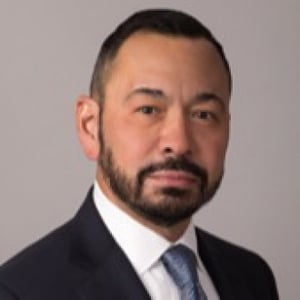
Partner, Gibson Dunn & Crutcher LLP
Miguel A. Estrada is a partner in the Washington, D.C. office of Gibson, Dunn & Crutcher.
Mr. Estrada has represented clients before federal and state courts throughout the country in a broad range of matters. He has argued 24 cases before the United States Supreme Court, and briefed many others. He has also argued dozens of appeals in the lower federal courts.
Best Lawyers® recognized Mr. Estrada as a 2020 Lawyer of the Year in Intellectual Property Litigation and as a Lawyer of the Year in Appellate Practice. He has been recognized by Benchmark Litigation as a 2020 U.S. Appellate Litigation “Star”. In 2014, The American Lawyer named Mr. Estrada a “Litigator of the Year,” praising his “brains and tenacity” and noting he is the lawyer to call for “a tough, potentially unwinnable case.” From 2014-2021, Chambers & Partners has named him as one of a handful of attorneys that it ranked in the top tier among the nation’s leading appellate lawyers. Chambers & Partners noted that “clients are impressed by his intellect and ability, with one saying, ‘His papers are just blindingly clear in what they say and devastating in how they marshal the arguments.’” The Atlantic described his oral argument in a 2014 high-profile separation-of-powers case as “one of the most dazzling arguments the marble chamber has heard in many years.”
Mr. Estrada was selected by his peers for inclusion in the 2020 edition of The Best Lawyers in America® in the area of Appellate Law, in addition to previous recognition by the publication in the specialties of Bet-the-Company Litigation, Commercial Litigation and Criminal Defense: White Collar, Intellectual Property Litigation, and Regulatory Enforcement Litigation in the areas of SEC, Telecom, and Energy. In 2017, he was elected as a member of the American Law Institute. In 2021, Mr. Estrada was named among the Lawdragon 500 Leading Lawyers in America. In 2004, Legal Times named him one of the top 12 appellate litigators in the D.C. area, noting that “people who follow appellate practice in Washington have known for several years that Estrada . . . is one of the best around.” Also in 2004, Washingtonian Magazine named him one of the top constitutional law lawyers “who could become one of the legends of the Supreme Court bar.”
Mr. Estrada joined Gibson Dunn in 1997, after serving for five years as Assistant to the Solicitor General of the United States. He previously served as Assistant U.S. Attorney and Deputy Chief of the Appellate Section, U.S. Attorney’s Office, Southern District of New York. In those capacities, Mr. Estrada represented the government in numerous jury trials and in many appeals before the U.S. Court of Appeals for the Second Circuit. Before joining the U.S. Attorney’s Office, Mr. Estrada practiced corporate law in New York with Wachtell, Lipton, Rosen & Katz.
Mr. Estrada is a Trustee of the Supreme Court Historical Society. He was formerly a member of the Board of Visitors of Harvard Law School.
Mr. Estrada served as a law clerk to the Honorable Anthony M. Kennedy in the U.S. Supreme Court from 1988 to 1989 and to the Honorable Amalya L. Kearse in the U.S. Court of Appeals for the Second Circuit from 1986 to 1987. He received a J.D. degree magna cum laude in 1986 from Harvard Law School, where he was editor of the Harvard Law Review. Mr. Estrada graduated with an A.B. degree magna cum laude and Phi Beta Kappa in 1983 from Columbia College, New York. He is fluent in Spanish and proficient in French.
Representative Supreme Court matters include:
In 2011, the Supreme Court appointed Mr. Estrada to brief and argue two criminal cases –Dorsey v. United States and Hill v. United States – in which the Solicitor General declined to defend the judgments of the court of appeals. Mr. Estrada was appointed to argue the position that the Solicitor General had declined to defend.
Mr. Estrada was also part of the team that successfully presented then Governor Bush’s position to the Supreme Court in Bush v. Gore (2000). Other cases that Mr. Estrada handled in the Supreme Court include Granholm v. Heald (2005) (dormant Commerce Clause and Twenty-First Amendment), Vermont Agency of Natural Resources v. United States ex rel. Stevens (2000) (False Claims Act, Article III standing and Eleventh Amendment immunity), Old Chief v. United States (1997) (rules of evidence), United States v. Mezzanatto (1995) (evidence and plea bargaining), United States v. Robertson (1995) (constitutional limits on Congress’s Commerce Clause powers), Citizens Bank of Maryland v. Strumpf (1995) (bankruptcy law), and NOW, Inc. v. Scheidler (1994) (RICO).
Recent Court of Appeals matters include:
In addition, Mr. Estrada is lead appellate counsel to Vivendi S.A. in two securities-fraud appeals from jury verdicts that are currently pending in the Second Circuit, and to the National Association of Broadcasters in a challenge to certain procedures promulgated by the FCC in connection with the upcoming Spectrum Auction. Mr. Estrada also recently presented argument before the D.C. Circuit on behalf of the tobacco industry in a first amendment challenge to certain compelled disclosures that were imposed as part of the government’s long-running civil RICO case against the industry.
Other matters:

President, Committee for Justice
Curt Levey is President of the Committee For Justice, an organization devoted to advancing constitutionally limited government and individual liberty. He is a veteran of Supreme Court and other judicial confirmation battles and serves on the executive committee of the Federalist Society's Civil Rights Practice Group.
After graduating Harvard Law School with honors and clerking for the U.S. Court of Appeals for the Sixth Circuit, Mr. Levey served as Director of Legal & Public Affairs at the Center for Individual Rights (CIR). There he worked on landmark Supreme Court cases, including the University of Michigan affirmative action cases and the successful constitutional challenge to the Violence Against Women Act. After CIR, Mr. Levey headed the Title IX policy group at the U.S. Department of Education.
Before attending law school, Mr. Levey earned an M.S. and B.A. in computer science from Brown University and worked in the field of artificial intelligence (AI). He invented a new type of AI technology, for which he wrote a successful patent application.
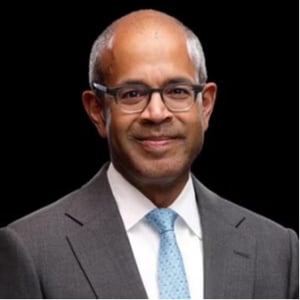
Partner, Davis Polk & Wardwell LLP
Kannon is the head of our Supreme Court & Appellate practice. He has argued 39 cases before the U.S. Supreme Court and has argued more than 150 appeals in courts across the country, including every federal court of appeals and numerous state courts.
Kannon is ranked as a “Star Individual” in appellate law by Chambers USA, where a client notes, “It’s hard to think of enough superlatives to describe his talent, his judgment, his ability, his experience – he is as good as it gets.” Legal 500 U.S. recognizes Kannon in its Hall of Fame for appellate work. A client shares, “His work is the best in the business, and he is a wonderful human being in addition to being a world-class appellate litigator.”
In 2024 and 2022, Kannon was a finalist for the American Lawyer’s “Litigator of the Year” award. He was named “Appellate Litigator of the Year” by Benchmark Litigation in 2021 and was a 2026 finalist for that recognition.
Before entering private practice, Kannon served as an Assistant to the Solicitor General at the U.S. Department of Justice.
Professor of Law, University of Minnesota Law School
Professor James W. Coleman is a scholar of energy law. He specializes in North American energy infrastructure, transport, and trade. He is also a nonresident senior fellow at the American Enterprise Institute focused on energy policy.
Professor Coleman has testified before Congress on steps to speed up energy infrastructure permits. He also worked with a team of experts as part of Alberta's Royalty Review to revise the Canadian province's management of its vast oil and gas resources.
Before joining Minnesota, Professor Coleman taught at Southern Methodist University's Dedman School of Law, the University of Calgary’s law and business schools, and Harvard Law School. Earlier, he practiced environmental and appellate law at Sidley Austin in Washington, D.C., and clerked for the Honorable Steven M. Colloton of the U.S. Court of Appeals for the Eighth Circuit.
Professor Coleman received two degrees from Harvard University—a J.D. (cum laude) and B.A. in biology (magna cum laude with highest honors in the field). As a result of his undergraduate thesis on butterfly genetics, which required fieldwork in Central Asia, a species of lycaenid butterfly was named after him—Agrodiaetus ripartii colemani.
Chairman and CEO, NTELX
As Chairman and CEO, Rob sets the vision and direction for NTELX. Rob is a former member of the US Federal Maritime Commission and an internationally recognized expert in maritime and US transportation policy; his experience spans energy, transportation, safety and environmental regulation, and other public policy issues. Rob is a prolific writer and speaker, frequently cited in the media and called upon for expert testimony. He has been a senior policy advisor to numerous public figures and to Congress. He received his undergraduate degree in biology at Rice University and his Master’s in public and private management from Yale University’s School of Organization and Management. He is a member of the Council on Foreign Relations and other public policy and security advisory bodies.
Partner, Blank Rome
Jonathan Waldron concentrates his practice in maritime, international, and environmental law, including maritime security. Jon counsels clients, both domestically and internationally, in areas such as:
Jon served in the U.S. Coast Guard for 20 years, attaining the rank of commander, and was senior counsel to the Marine Spill Response Corporation, where he provided on-scene legal advice at major spill events.
He is ranked by Chambers USA as a leading attorney for shipping regulatory matters, with Chambers sources stating that he has a “deep knowledge of maritime and environmental laws” and is “iconic when it comes to D.C. regulatory matters.” Chambers has also noted that Jon is “knowledgeable but practical” and is “known for his prominence in matters relating to the Coast Guard.” Sources say that he is “the ultimate professional,” “knowledgeable, wise, well known in the industry and a pleasure to work with,” and particularly appreciate that he is “very well connected within the Coast Guard.”
President, Committee for Justice
Curt Levey is President of the Committee For Justice, an organization devoted to advancing constitutionally limited government and individual liberty. He is a veteran of Supreme Court and other judicial confirmation battles and serves on the executive committee of the Federalist Society's Civil Rights Practice Group.
After graduating Harvard Law School with honors and clerking for the U.S. Court of Appeals for the Sixth Circuit, Mr. Levey served as Director of Legal & Public Affairs at the Center for Individual Rights (CIR). There he worked on landmark Supreme Court cases, including the University of Michigan affirmative action cases and the successful constitutional challenge to the Violence Against Women Act. After CIR, Mr. Levey headed the Title IX policy group at the U.S. Department of Education.
Before attending law school, Mr. Levey earned an M.S. and B.A. in computer science from Brown University and worked in the field of artificial intelligence (AI). He invented a new type of AI technology, for which he wrote a successful patent application.
Olin-Darling Fellow, Stanford Law School
Lance Sorenson is currently the Olin-Darling Fellow at Stanford Law School.. He has a law degree from Pepperdine University and is a PhD candidate in Legal History at the University of Nevada Las Vegas. He is interested in legal systems and structures, particularly in the American West. His dissertation analyzes iterations of United States’ federalism as part of westward expansion.

Reflections on Originalism: From Wisconsin to Puerto Rico
San Juan, PRTime to Reform the Jones Act?
James W. Coleman, Rob Quartel, Jonathan Waldron
Section 27 of the Merchant Marine Act of 1920, colloquially known as the Jones Act,...
Time to Reform the Jones Act?
Regulatory Transparency Project Co-Sponsored Event
Washington, DCTopics
Jones Act Waived for Puerto Rico – RTP Expert Argues for Complete Repeal
Today, President Donald J. Trump waived the requirements of the Merchant Marine Act of 1920...
Reflections on Immigration and Refugee Law in the "Travel Ban" Era
San Juan, Puerto RicoSupreme Court Term Review
Puerto RicoCourthouse Steps: Sessions v. Morales-Santana Update - Podcast
Curt Levey
On November 9, 2016, the Supreme Court heard oral argument in Lynch v. Morales-Santana. Morales-Santana’s father was born...
Courthouse Steps: Sessions v. Morales-Santana Update
TeleforumLegal Writing and Appellate Pointers from Top Supreme Court Litigator
San Juan, Puerto RicoPuerto Rico v. Sanchez Valle - Post-Decision SCOTUScast
Lance Sorenson
On June 9, 2016, the Supreme Court decided Puerto Rico v. Sanchez Valle. Sanchez Valle...