
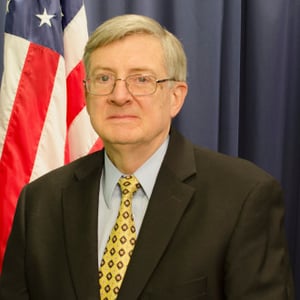
Senior Research Fellow, Mercatus Center, George Mason University; Former General Counsel at the Federal Trade Commission (FTC)
Alden Abbott is a Senior Research Fellow at the Mercatus Center. Prior to joining Mercatus, he served as the General Counsel of the Federal Trade Commission (FTC). As the Commission’s chief legal officer and adviser, he represented the agency in court and provides legal counsel to the Commission and its bureaus and offices.
Prior to rejoining the FTC in April 2018, Mr. Abbott served in executive positions at the Heritage Foundation (2014-2018) and BlackBerry (2012-2014). He also held a variety of senior positions in the U.S. federal government (in the FTC, the Commerce Department, and the Justice Department's Office of Legal Counsel and the Antitrust Division).
He speaks French, Spanish, and Italian.
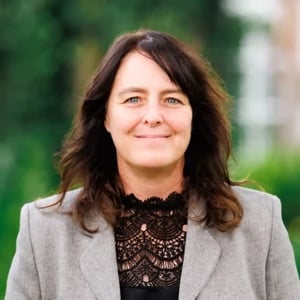
Professor of Law and Journalism, University of Florida
Professor Jane Bambauer is the Brechner Eminent Scholar at the Levin College of Law and at the College of Journalism and Communications. She teaches Torts, First Amendment, Media Law, Criminal Procedure, and Privacy Law.
Professor Bambauer’s research assesses the social costs and benefits of Big Data, AI, and predictive algorithms. Her work analyzes how the regulation of these new information technologies will affect free speech, privacy, law enforcement, health and safety, competitive markets, and government accountability. Professor Bambauer’s research has been featured in over 20 scholarly publications, including the Stanford Law Review, the Michigan Law Review, the California Law Review, and the Journal of Empirical Legal Studies. Her work has also been featured in media outlets, including the Washington Post, the New York Times, Fox News, and Lawfare, where she is a contributing editor.
Professor Bambauer currently serves as the Chair of the National AI Advisory Committee Subcommittee on Law Enforcement, and she has previously served as the deputy director of the Center for Quantum Networks, a multi-institutional engineering research center funded by the National Science Foundation. She holds a B.S. in Mathematics from Yale College and a J.D. from Yale Law School.
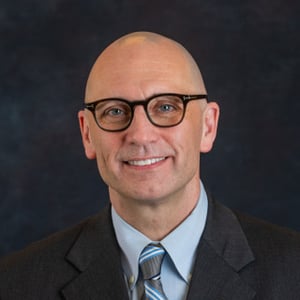
Senior Counsel for Law and Policy, Committee for Justice
Jeff is a registered patent attorney and an intellectual property and innovation policy professional with a unique combination of training and real-world experience. Jeff is also currently a PhD candidate at the University of Pittsburgh Graduate School of Public and International Affairs (GSPIA). His dissertation is entitled “An Inquiry into the Nature and Causes of American Innovation: An Austrian Economics Perspective.”
Jeff maintains an active intellectual property law practice in the life sciences space. While counseling clients and working on his dissertation and other scholarship, Jeff remains active in the policy analysis and advocacy space. He currently serves as the President of the Association for American Innovation and a member and former Chair of the Public Policy Legal Task Force (PPLTF) for the Association of University of Technology Managers (AUTM).
Jeff has a bachelor’s degree chemical and biomedical engineering with concentrations in molecular biology and fermentation technology and from Carnegie Mellon. He also has a master’s degree in industrial administration (business) from Carnegie Mellon where he concentrated on international management, marketing and finance. He earned his law degree from the Duquesne University School of Law with a focus on intellectual property law.
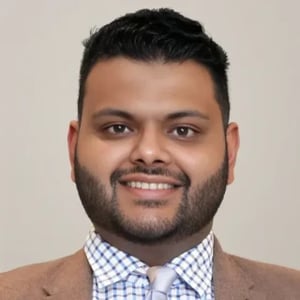
Postgraduate Research Fellow, Mercatus Center, George Mason University
Satya Marar is a Research Fellow at the Mercatus Center at George Mason University where he was formerly an MA Fellow. He holds an MA in Economics from George Mason University and a BA in writing and an LLB with Honors in law from Macquarie University in Sydney, Australia. He is currently pursuing an LLM in US law at George Mason University. He has previously worked at Reason Foundation and the Australian Taxpayers’ Alliance. His research interests include antitrust & competition policy, intellectual property, trade and technology policy.
Senior Research Fellow, Mercatus Center, George Mason University; Former General Counsel at the Federal Trade Commission (FTC)
Alden Abbott is a Senior Research Fellow at the Mercatus Center. Prior to joining Mercatus, he served as the General Counsel of the Federal Trade Commission (FTC). As the Commission’s chief legal officer and adviser, he represented the agency in court and provides legal counsel to the Commission and its bureaus and offices.
Prior to rejoining the FTC in April 2018, Mr. Abbott served in executive positions at the Heritage Foundation (2014-2018) and BlackBerry (2012-2014). He also held a variety of senior positions in the U.S. federal government (in the FTC, the Commerce Department, and the Justice Department's Office of Legal Counsel and the Antitrust Division).
He speaks French, Spanish, and Italian.
Professor of Law and Journalism, University of Florida
Professor Jane Bambauer is the Brechner Eminent Scholar at the Levin College of Law and at the College of Journalism and Communications. She teaches Torts, First Amendment, Media Law, Criminal Procedure, and Privacy Law.
Professor Bambauer’s research assesses the social costs and benefits of Big Data, AI, and predictive algorithms. Her work analyzes how the regulation of these new information technologies will affect free speech, privacy, law enforcement, health and safety, competitive markets, and government accountability. Professor Bambauer’s research has been featured in over 20 scholarly publications, including the Stanford Law Review, the Michigan Law Review, the California Law Review, and the Journal of Empirical Legal Studies. Her work has also been featured in media outlets, including the Washington Post, the New York Times, Fox News, and Lawfare, where she is a contributing editor.
Professor Bambauer currently serves as the Chair of the National AI Advisory Committee Subcommittee on Law Enforcement, and she has previously served as the deputy director of the Center for Quantum Networks, a multi-institutional engineering research center funded by the National Science Foundation. She holds a B.S. in Mathematics from Yale College and a J.D. from Yale Law School.
Senior Counsel for Law and Policy, Committee for Justice
Jeff is a registered patent attorney and an intellectual property and innovation policy professional with a unique combination of training and real-world experience. Jeff is also currently a PhD candidate at the University of Pittsburgh Graduate School of Public and International Affairs (GSPIA). His dissertation is entitled “An Inquiry into the Nature and Causes of American Innovation: An Austrian Economics Perspective.”
Jeff maintains an active intellectual property law practice in the life sciences space. While counseling clients and working on his dissertation and other scholarship, Jeff remains active in the policy analysis and advocacy space. He currently serves as the President of the Association for American Innovation and a member and former Chair of the Public Policy Legal Task Force (PPLTF) for the Association of University of Technology Managers (AUTM).
Jeff has a bachelor’s degree chemical and biomedical engineering with concentrations in molecular biology and fermentation technology and from Carnegie Mellon. He also has a master’s degree in industrial administration (business) from Carnegie Mellon where he concentrated on international management, marketing and finance. He earned his law degree from the Duquesne University School of Law with a focus on intellectual property law.
Postgraduate Research Fellow, Mercatus Center, George Mason University
Satya Marar is a Research Fellow at the Mercatus Center at George Mason University where he was formerly an MA Fellow. He holds an MA in Economics from George Mason University and a BA in writing and an LLB with Honors in law from Macquarie University in Sydney, Australia. He is currently pursuing an LLM in US law at George Mason University. He has previously worked at Reason Foundation and the Australian Taxpayers’ Alliance. His research interests include antitrust & competition policy, intellectual property, trade and technology policy.
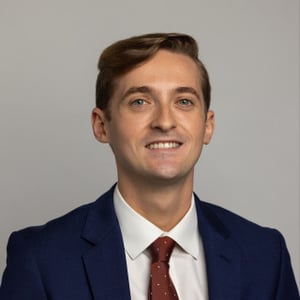
Litigation Fellow, Institute for Justice
Matt Liles is a Litigation Fellow at the Institute for Justice. He returns to IJ after having worked as both a law clerk and intern in IJ’s Arlington, Virginia office. In his role as a Litigation Fellow, Matt litigates cutting-edge constitutional cases protecting Americans' property rights and economic liberty.
Matt received his J.D. from the University of Texas School of Law, where he served on the executive board of the Texas Federalist Society and as Submissions Editor for the Texas Review of Law & Politics. He also received his B.A. in Government from the University of Texas. As an undergraduate, Matt was a plaintiff in a successful First Amendment lawsuit on behalf of campus free speech.
After completing the Fellowship, Matt will serve as a law clerk in the U.S. District Court for the Northern District of Texas. He is a member of the District of Columbia bar.
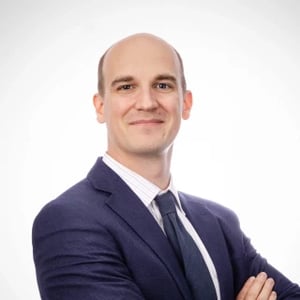
Managing Partner, Boyden Gray PLLC
Michael Buschbacher is the managing partner of Boyden Gray PLLC. He represents public and private companies, trade associations, non-profits, and individuals in high-stakes litigation and administrative proceedings, with a particular focus on environmental and energy matters.
In addition to trial-level work, Mr. Buschbacher maintains an active appellate practice, both as merits counsel and as counsel for amici curiae. He has written amicus briefs quoted by the Seventh and Ninth Circuits. And his Supreme Court advocacy has been cited by The New Yorker, The New York Times, and E&E News. Mr. Buschbacher’s commentary on legal issues has been published in The Wall Street Journal, Newsweek, and The American Conservative.
Before joining the firm, Mr. Buschbacher served at the U.S. Department of Justice as counsel to the Assistant Attorney General for the Environment and Natural Resources Division. There, he advised senior Department leadership, served as the lead attorney on several lawsuits, and helped draft policy memoranda for the Department on the proper scope and procedure for environmental enforcement. Prior to serving in the government, Mr. Buschbacher was an associate in the D.C. office of Sidley Austin.
Mr. Buschbacher is a former clerk to Judge Alice M. Batchelder of the U.S. Court of Appeals for the Sixth Circuit and to Magistrate Judge Paul R. Cherry of the U.S. District Court for the Northern District of Indiana.
Mr. Buschbacher holds a B.A. in Music and Germanic Studies from Indiana University and a J.D., magna cum laude, from Notre Dame Law School.
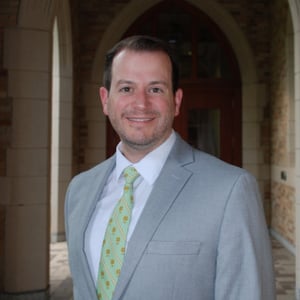
2L, Notre Dame Law School
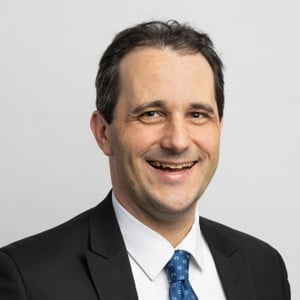
Director, Center for Judicial Engagement, Institute for Justice
Anthony Sanders is the Director of the Center for Judicial Engagement (CJE) at the Institute for Justice and a senior attorney. He joined IJ in 2010. As CJE’s director, he educates the public about the proper role of judges in enforcing constitutional limits on the size and scope of government. As a senior attorney he litigates cutting-edge constitutional cases protecting economic liberty, private property, freedom of speech and other individual liberties in both federal and state courts across the country.
One area of Anthony’s expertise is on using state constitutions to protect individual rights. He is the author of the book, published by University of Michigan Press, Baby Ninth Amendments: How Americans Embraced Unenumerated Rights and Why It Matters. He has also written several law review articles on state constitutional law, unenumerated rights, judicial review, economic liberty, property rights, international law, and other subjects. His work has appeared in publications such as the Iowa Law Review, Minnesota Law Review, American University Law Review, and Rutgers Law Review, and he has published opinion pieces in leading media outlets across the country. Further, he frequently speaks to various audiences on these matters and others, including judicial engagement, free speech, civil forfeiture, and the continuing importance of Magna Carta. Additionally, he hosts the weekly Short Circuit podcast, which often records live in front of law student audiences.
Anthony has litigated several cases in various state courts on state constitutional protections, as well as in federal courts on matters such as economic liberty, free speech, administrative law, and fines and fees abuse. Prior to joining IJ, Anthony served as a law clerk to Justice W. William Leaphart on the Montana Supreme Court. Anthony also worked for several years in private practice in Chicago where he was an active member of the Chicago Bar Association and chaired its Civil Rights Committee.
Anthony received his law degree cum laude from the University of Minnesota Law School in 2004, where he served as an articles submission editor for the Minnesota Law Review. He received his undergraduate degree from Hamline University in St. Paul, Minnesota, and his master’s degree from the University of Wisconsin-Madison. A dual U.S. and U.K. citizen, Anthony grew up on the islands of Vashon in Washington State, and Alderney in the British Channel Islands.
Attorney, Institute for Justice
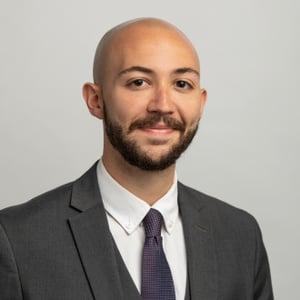
John Wrench is a Constitutional Law Fellow at the Institute for Justice.
John grew up outside of Ithaca, New York, and received his law degree from the Case Western Reserve University School of Law in 2019. During law school, he served as editor in chief of the Case Western Reserve Journal of International Law and was a member of the Federalist Society. John interned in his law school’s First Amendment Litigation Clinic and was a judicial extern to the Honorable Paul E. Davison in the Southern District of New York. John graduated from Pace University in 2015 with a Bachelor of Arts in Philosophy and Religious Studies.
Senior Research Fellow, Mercatus Center, George Mason University; Former General Counsel at the Federal Trade Commission (FTC)
Alden Abbott is a Senior Research Fellow at the Mercatus Center. Prior to joining Mercatus, he served as the General Counsel of the Federal Trade Commission (FTC). As the Commission’s chief legal officer and adviser, he represented the agency in court and provides legal counsel to the Commission and its bureaus and offices.
Prior to rejoining the FTC in April 2018, Mr. Abbott served in executive positions at the Heritage Foundation (2014-2018) and BlackBerry (2012-2014). He also held a variety of senior positions in the U.S. federal government (in the FTC, the Commerce Department, and the Justice Department's Office of Legal Counsel and the Antitrust Division).
He speaks French, Spanish, and Italian.
Professor of Law and Journalism, University of Florida
Professor Jane Bambauer is the Brechner Eminent Scholar at the Levin College of Law and at the College of Journalism and Communications. She teaches Torts, First Amendment, Media Law, Criminal Procedure, and Privacy Law.
Professor Bambauer’s research assesses the social costs and benefits of Big Data, AI, and predictive algorithms. Her work analyzes how the regulation of these new information technologies will affect free speech, privacy, law enforcement, health and safety, competitive markets, and government accountability. Professor Bambauer’s research has been featured in over 20 scholarly publications, including the Stanford Law Review, the Michigan Law Review, the California Law Review, and the Journal of Empirical Legal Studies. Her work has also been featured in media outlets, including the Washington Post, the New York Times, Fox News, and Lawfare, where she is a contributing editor.
Professor Bambauer currently serves as the Chair of the National AI Advisory Committee Subcommittee on Law Enforcement, and she has previously served as the deputy director of the Center for Quantum Networks, a multi-institutional engineering research center funded by the National Science Foundation. She holds a B.S. in Mathematics from Yale College and a J.D. from Yale Law School.
Senior Counsel for Law and Policy, Committee for Justice
Jeff is a registered patent attorney and an intellectual property and innovation policy professional with a unique combination of training and real-world experience. Jeff is also currently a PhD candidate at the University of Pittsburgh Graduate School of Public and International Affairs (GSPIA). His dissertation is entitled “An Inquiry into the Nature and Causes of American Innovation: An Austrian Economics Perspective.”
Jeff maintains an active intellectual property law practice in the life sciences space. While counseling clients and working on his dissertation and other scholarship, Jeff remains active in the policy analysis and advocacy space. He currently serves as the President of the Association for American Innovation and a member and former Chair of the Public Policy Legal Task Force (PPLTF) for the Association of University of Technology Managers (AUTM).
Jeff has a bachelor’s degree chemical and biomedical engineering with concentrations in molecular biology and fermentation technology and from Carnegie Mellon. He also has a master’s degree in industrial administration (business) from Carnegie Mellon where he concentrated on international management, marketing and finance. He earned his law degree from the Duquesne University School of Law with a focus on intellectual property law.
Postgraduate Research Fellow, Mercatus Center, George Mason University
Satya Marar is a Research Fellow at the Mercatus Center at George Mason University where he was formerly an MA Fellow. He holds an MA in Economics from George Mason University and a BA in writing and an LLB with Honors in law from Macquarie University in Sydney, Australia. He is currently pursuing an LLM in US law at George Mason University. He has previously worked at Reason Foundation and the Australian Taxpayers’ Alliance. His research interests include antitrust & competition policy, intellectual property, trade and technology policy.
U.S. Court of Federal Claims and Jurist-In-Residence Professor of Law, The University of Akron School of Law
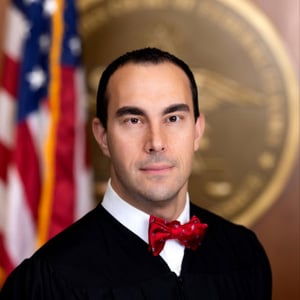
Judge Ryan T. Holte was sworn in as a judge on the United States Court of Federal Claims in July 2019. Prior to confirmation he served as the David L. Brennan Professor of Law and Director of the Center for Intellectual Property Law and Technology at The University of Akron School of Law (2017-2019) and an assistant professor of law at Southern Illinois University School of Law (2013-2017). Judge Holte has written and presented widely on patent law subjects and empirical legal studies of Federal Circuit and district court patent law cases. His most recent articles were published in the Iowa Law Review (2019), George Mason Law Review (2018), and Washington Law Review (2017).
In practice, Judge Holte served for six years as general counsel and partner of an electrical engineering technology company and is co-inventor of multiple patents related to Systems and Methods for Countering Satellite-Navigated Munitions. Prior to entering academia, Judge Holte practiced as a litigation attorney at the Federal Trade Commission and an associate in the Intellectual Property Practice Group at Jones Day. Prior to practice, he served as a law clerk to Judge Stanley F. Birch, Jr. on the United States Court of Appeals for the Eleventh Circuit and as a law clerk to Judge Loren A. Smith on the United States Court of Federal Claims.
Judge Holte received his JD from the University of California Davis School of Law and his BS, magna cum laude, in engineering from the California Maritime Academy where he was a First Class graduate of the Corps of Cadets Third Engineering Division and sailed as a U.S. Merchant Marine oiler.

Professor of Law and Executive Director, Law and Economics Center, Antonin Scalia Law School, George Mason University
Donald Kochan is Professor of Law and Executive Director of the Law & Economics Center (LEC). Professor Kochan is an elected member of the American Law Institute (ALI) and serves as an Adviser to ALI's Restatement of the Law Fourth, Property project. Professor Kochan is a Nonresident Scholar at the Center for the Constitution at Georgetown University Law Center, where he was a Visiting Scholar in residence during Fall 2018. Before joining the Antonin Scalia Law School faculty, he was the Parker S. Kennedy Professor in Law at Chapman University’s Dale E. Fowler School of Law from 2004 to 2020. From 2003 to 2004, Professor Kochan was an Olin Fellow at the University of Virginia School of Law. During 2002-2003, he was a Visiting Assistant Professor of Law at George Mason’s Scalia Law School.
Professor Kochan’s scholarship focuses on areas of property law, constitutional law, administrative law, local government law, natural resources and environmental law, and law & economics. He has published several books and more than 50 scholarly articles and essays in well-regarded law journals. His work has been cited in more than a dozen state and federal court opinions, in more than 75 briefs filed in state and federal courts including more than 25 filed in the U.S. Supreme Court, in dozens of books and treatises, and in more than 800 scholarly articles.
Professor Kochan received his JD from Cornell Law School, where he was a John M. Olin Scholar in Law and Economics and managing editor of the Cornell International Law Journal. During law school, he also served as editor and executive editor of the Harvard Journal of Law & Public Policy symposium issues in 1997 and 1998. He received his BA from Western Michigan University, magna cum laude, with majors in both political science and philosophy, where he studied as the John W. Gill Medallion Scholar and was honored as the Presidential Scholar (awarded to the top graduate in the political science department).
After graduating from law school, Professor Kochan was a law clerk to The Honorable Richard F. Suhrheinrich of the United States Court of Appeals for the Sixth Circuit. Following his clerkship, Professor Kochan was an associate with the firm of Crowell & Moring LLP in Washington, D.C., where he specialized in natural resources & environmental law as well as tort, products, and consumer civil litigation & legislative affairs.

When Should We Recognize Something as a Property Right?
Alden F. Abbott, Jane Bambauer, Jeffrey E. Depp, Satya Marar
America has historically led the way in intangible property rights. We were the first country...
When Should We Recognize Something as a Property Right?
Alden F. Abbott, Jane Bambauer, Jeffrey E. Depp, Satya Marar
America has historically led the way in intangible property rights. We were the first country...
When Should We Recognize Something as a Property Right?
A Conversation with Judge Holte: the Property Clause and the Court of Federal Claims
George Mason Student Chapter
Arlington, VATopics
SCOTUS Clarifies Scope of RICO’s Civil Cause of Action in Medical Marijuana, Inc. v. Horn
In Medical Marijuana, Inc. v. Horn, the Supreme Court held that RICO’s civil cause of...
Unrecorded Deeds and Adverse Possession at the Tennessee Supreme Court
Matt Liles
You may remember the typical requirements for making an adverse possession claim from law...
Utah Supreme Court Grapples With Public Recreational Access to Public Waters via Private Property
Michael Buschbacher, Andrew Olson
In Utah Stream Access Coalition v. VR Acquisitions, LLC (USAC II), the Utah Supreme Court...
State Court Docket Watch: Ohio v. O'Malley
Anthony Sanders
In 2019, in Timbs v. Indiana, the U.S. Supreme Court declared that the Excessive Fines...
Topics
On Oysters, Property, John Locke, and the Court of Federal Claims: Campo v. United States
Oyster farming is hard work. The often-muddy estuary bottoms must be prepared with rocks to...
State Court Docket Watch: State of Iowa v. Wright
John Wrench
Note from the Editor: The Federalist Society takes no positions on particular legal and public...