
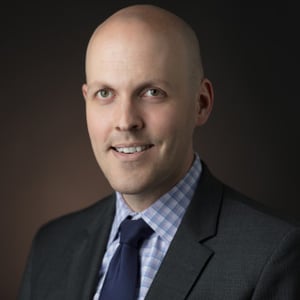
Partner, Barr & Klein PLLC
Steve Klein, a partner at Barr & Klein PLLC, is an experienced free speech attorney who has successfully fought for the First Amendment rights of his clients against local, state and federal regulators. As a lobbyist, Steve’s advocacy has led to the successful amendment of state laws to respect political engagement and prevented the enactment of laws that burden it. Steve has published articles in several legal journals, and his commentary has appeared in The Wall Street Journal, The Washington Times, The Detroit News, and other outlets. Steve earned a bachelors degree in politics at Hillsdale College and a law degree from Ave Maria School of Law, where he served as Managing Editor of the Ave Maria Law Review. He is licensed to practice law in the District of Columbia, Illinois and Michigan.
Senior Fellow, Governance Studies, The Brookings Institution
Jonathan Rauch, a contributing editor of National Journal and The Atlantic, is the author of several books and many articles on public policy, culture, and economics. He is winner of the 2005 National Magazine Award for columns and commentary and the 2010 National Headliner Award for magazine columns.
His latest book is Gay Marriage: Why It Is Good for Gays, Good for Straights, and Good for America, published in 2004 by Times Books (Henry Holt). It makes the case that same-sex marriage would benefit not only gay people but society and the institution of marriage itself. Although much of his writing has been on public policy, he has also written on topics as widely varied as adultery, agriculture, economics, gay marriage, height discrimination, biological rhythms, number inflation, and animal rights.
His multiple-award-winning column, “Social Studies,” was published in National Journal (a Washington-based weekly on government, politics, and public policy) from 1998 to 2010, and his features appeared regularly both there and in The Atlantic. Among the many other publications for which he has written are The New Republic, The Economist, Reason, Harper’s, Fortune, Reader’s Digest, U.S. News & World Report, The New York Times newspaper and magazine, The Wall Street Journal, The Washington Post, The Los Angeles Times, The New York Post, Slate, The Chronicle of Higher Education, The Public Interest, The Advocate, The Daily, and others.
Mr. Rauch was born and raised in Phoenix, Arizona, and graduated in 1982 from Yale University. He went on to become a reporter for the Winston-Salem Journal in North Carolina before moving to Washington in 1984. From 1984-89 he covered fiscal and economic policy for National Journal. In 1990 he spent six months in Japan as a fellow of the Japan Society Leadership Program, and in 1996 he was awarded the Premio Napoli alla Stampa Estera for his coverage, in The Economist, of the European Parliament. His articles appear in The Best American Magazine Writing 2005 and The Best American Science and Nature Writing 2004 and 2007. In 2011 he won the National Lesbian and Gay Journalists Association prize for excellence in opinion writing. He has also won two second-place prizes (2000 and 2001) in the National Headliner Awards. He has appeared as a guest on many television and radio programs.
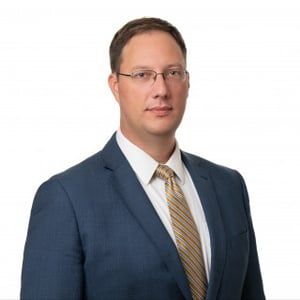
Laurence H. Silberman Chair in Constitutional Governance, American Enterprise Institute; Executive Director, Antonin Scalia Law School’s C. Boyden Gray Center for the Study of the Administrative State
Adam J. White is the Laurence H. Silberman Chair in Constitutional Governance and senior fellow at the American Enterprise Institute, where he focuses on the Supreme Court and the administrative state. He also directs the Antonin Scalia Law School’s C. Boyden Gray Center for the Study of the Administrative State.
He writes on regulation and constitutional government for a variety of publications. He practiced law in Washington, D.C., after clerking for the D.C. Circuit's Judge David Sentelle. He also has been chairman of the ABA's Administrative Law Section.
In 2021, he served on the Presidential Commission on the Supreme Court of the United States, where he criticized “Court packing” and other efforts to restructure the Supreme Court.

Maurice and Hilda Friedman Professor of Law, Columbia Law School; CEO, New Civil Liberties Alliance
Philip Hamburger is the Maurice and Hilda Friedman Professor of Law at Columbia Law School, and Chief Executive Officer at the New Civil Liberties Alliance. Before coming to Columbia, he was the John P. Wilson Professor at the University of Chicago Law School.
He writes on constitutional law and its history—with particular emphasis on religious liberty, freedom of speech and the press, judicial office, administrative power, and unconstitutional conditions.
His books are Separation of Church and State (Harvard 2002), Law and Judicial Duty (Harvard 2008), Is Administrative Law Unlawful? (Chicago 2014), The Administrative Threat (Encounter 2017), and Liberal Suppression: Section 501(c)(3) and the Taxation of Speech (Chicago 2018). A forthcoming book is Purchasing Submission: Conditions, Power, and Freedom (Harvard 2021).
He is a member of the American Academy of Arts and Sciences, and he has served on the board of directors of the American Society for Legal History. He has twice received the Sutherland Prize for the most significant contribution to English legal history, and has been awarded the Henry Paolucci - Walter Bagehot Book Award, the Hayek Book Prize, and the Bradley Prize.
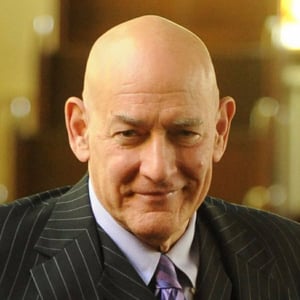
Raoul Berger Professor of Legal History at Northwestern University School of Law
Stephen Presser is a leading American legal historian and expert on shareholder liability for corporate debts. He is frequently an invited witness before committees of the U.S. Senate and House of Representatives on issues of constitutional law. He holds a joint appointment with the J. L. Kellogg Graduate School of Management and also teaches in Northwestern's history department.
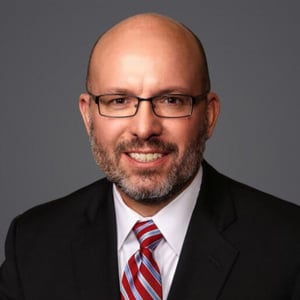
Shareholder, Ogletree, Deakins, Nash, Smoak & Stewart
Chris Murray is Co-Chair of the firm’s Arbitration and Alternative Dispute Resolution Practice Group. In this role, he assists attorneys throughout the firm and clients nationwide to create, roll out, and enforce effective employment arbitration agreements and other ADR programs. Mr. Murray has extensive experience with class/collective action waivers in employment arbitration. Mr. Murray was part of the Ogletree team that successfully defended the use of such waivers in the Fifth Circuit’s landmark decision in D.R. Horton, Inc. v. N.L.R.B. Since then, he has successfully defended the enforceability of class action waivers in numerous subsequent cases and submitted an amicus brief on the subject on behalf of several major employers’ associations in the Supreme Court’s Murphy Oil case. Mr. Murray assists clients and the Firm’s attorneys to draft or revise arbitration programs focused on a client’s specific needs and goals and in light of changing law and evolving best practices.
Founder & Partner, John L. Dodd and Associates
John L. Dodd has been in private practice for over 20 years, is a former staff attorney at the California Court of Appeal, and has handled over 1,000 appellate matters, including several landmark parental rights and adoption cases decided by the California Supreme Court. He has served as a member of the Orange County Bar Association Board of Directors, the California Commission on Judicial Nominees Evaluation and has Chaired the Committee of Bar Examiners of the State of California.

Mark Pulliam, a longtime member of the Federalist Society (and former President of the San Diego Lawyers Chapter), is a lawyer and writer in Austin, Texas. He is a contributing editor of Law and Liberty, and also writes for a variety of publications, including his blog, Misrule of Law.
Paula Stannard is a former deputy general counsel and acting general counsel of the U.S. Department of Health and Human Services (HHS), where she oversaw the Food and Drug, Civil Rights and Legislation divisions of the 450-attorney HHS Office of the General Counsel and provided legal advice and counsel to senior HHS officials, including the Secretary of the department, on the issues arising in their respective areas.
At Alston & Bird, Paula advises clients on regulatory questions that arise out of the on-going health care reform effort and focuses her practice on HIPAA and health information technology (including certified EHR and meaningful use issues), food and drug and other regulatory issues in the health care sector. Her HHS experience provides clients substantive knowledge of, and experience in, FDA, HIPAA, e-health and health IT, federal health insurance regulation, patient safety, and public health preparedness and emergency response issues.
Paula received her J.D. from Stanford Law School in 1990, where she was an executive editor of the Stanford Law Review, and her B.A., magna cum laude, in political science and Latin from Amherst College, where she was elected to Phi Beta Kappa. She clerked for the Honorable J.L. Edmondson of the United States Court of Appeals for the Eleventh Circuit.
Stanford University
(J.D., 1990)
Amherst College
(B.A., 1987)
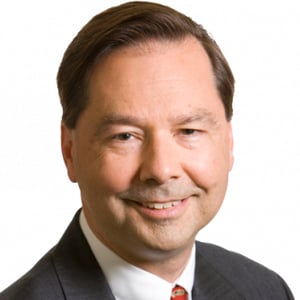
Senior Legal Fellow, Edwin Meese III Institute for the Rule of Law, Advancing American Freedom
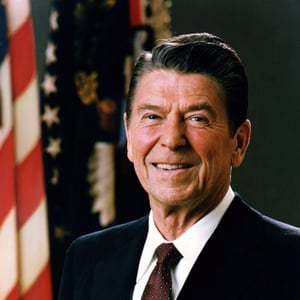
40th President of the United States
Ronald Wilson Reagan was an American actor and politician. He was the 40th President of the United States (1981–89). Prior to his presidency, he served as the 33rd Governor of California (1967–75).
Partner, Barr & Klein PLLC
Steve Klein, a partner at Barr & Klein PLLC, is an experienced free speech attorney who has successfully fought for the First Amendment rights of his clients against local, state and federal regulators. As a lobbyist, Steve’s advocacy has led to the successful amendment of state laws to respect political engagement and prevented the enactment of laws that burden it. Steve has published articles in several legal journals, and his commentary has appeared in The Wall Street Journal, The Washington Times, The Detroit News, and other outlets. Steve earned a bachelors degree in politics at Hillsdale College and a law degree from Ave Maria School of Law, where he served as Managing Editor of the Ave Maria Law Review. He is licensed to practice law in the District of Columbia, Illinois and Michigan.
Senior Fellow, Governance Studies, The Brookings Institution
Jonathan Rauch, a contributing editor of National Journal and The Atlantic, is the author of several books and many articles on public policy, culture, and economics. He is winner of the 2005 National Magazine Award for columns and commentary and the 2010 National Headliner Award for magazine columns.
His latest book is Gay Marriage: Why It Is Good for Gays, Good for Straights, and Good for America, published in 2004 by Times Books (Henry Holt). It makes the case that same-sex marriage would benefit not only gay people but society and the institution of marriage itself. Although much of his writing has been on public policy, he has also written on topics as widely varied as adultery, agriculture, economics, gay marriage, height discrimination, biological rhythms, number inflation, and animal rights.
His multiple-award-winning column, “Social Studies,” was published in National Journal (a Washington-based weekly on government, politics, and public policy) from 1998 to 2010, and his features appeared regularly both there and in The Atlantic. Among the many other publications for which he has written are The New Republic, The Economist, Reason, Harper’s, Fortune, Reader’s Digest, U.S. News & World Report, The New York Times newspaper and magazine, The Wall Street Journal, The Washington Post, The Los Angeles Times, The New York Post, Slate, The Chronicle of Higher Education, The Public Interest, The Advocate, The Daily, and others.
Mr. Rauch was born and raised in Phoenix, Arizona, and graduated in 1982 from Yale University. He went on to become a reporter for the Winston-Salem Journal in North Carolina before moving to Washington in 1984. From 1984-89 he covered fiscal and economic policy for National Journal. In 1990 he spent six months in Japan as a fellow of the Japan Society Leadership Program, and in 1996 he was awarded the Premio Napoli alla Stampa Estera for his coverage, in The Economist, of the European Parliament. His articles appear in The Best American Magazine Writing 2005 and The Best American Science and Nature Writing 2004 and 2007. In 2011 he won the National Lesbian and Gay Journalists Association prize for excellence in opinion writing. He has also won two second-place prizes (2000 and 2001) in the National Headliner Awards. He has appeared as a guest on many television and radio programs.
Maurice and Hilda Friedman Professor of Law, Columbia Law School; CEO, New Civil Liberties Alliance
Philip Hamburger is the Maurice and Hilda Friedman Professor of Law at Columbia Law School, and Chief Executive Officer at the New Civil Liberties Alliance. Before coming to Columbia, he was the John P. Wilson Professor at the University of Chicago Law School.
He writes on constitutional law and its history—with particular emphasis on religious liberty, freedom of speech and the press, judicial office, administrative power, and unconstitutional conditions.
His books are Separation of Church and State (Harvard 2002), Law and Judicial Duty (Harvard 2008), Is Administrative Law Unlawful? (Chicago 2014), The Administrative Threat (Encounter 2017), and Liberal Suppression: Section 501(c)(3) and the Taxation of Speech (Chicago 2018). A forthcoming book is Purchasing Submission: Conditions, Power, and Freedom (Harvard 2021).
He is a member of the American Academy of Arts and Sciences, and he has served on the board of directors of the American Society for Legal History. He has twice received the Sutherland Prize for the most significant contribution to English legal history, and has been awarded the Henry Paolucci - Walter Bagehot Book Award, the Hayek Book Prize, and the Bradley Prize.
Maurice and Hilda Friedman Professor of Law, Columbia Law School; CEO, New Civil Liberties Alliance
Philip Hamburger is the Maurice and Hilda Friedman Professor of Law at Columbia Law School, and Chief Executive Officer at the New Civil Liberties Alliance. Before coming to Columbia, he was the John P. Wilson Professor at the University of Chicago Law School.
He writes on constitutional law and its history—with particular emphasis on religious liberty, freedom of speech and the press, judicial office, administrative power, and unconstitutional conditions.
His books are Separation of Church and State (Harvard 2002), Law and Judicial Duty (Harvard 2008), Is Administrative Law Unlawful? (Chicago 2014), The Administrative Threat (Encounter 2017), and Liberal Suppression: Section 501(c)(3) and the Taxation of Speech (Chicago 2018). A forthcoming book is Purchasing Submission: Conditions, Power, and Freedom (Harvard 2021).
He is a member of the American Academy of Arts and Sciences, and he has served on the board of directors of the American Society for Legal History. He has twice received the Sutherland Prize for the most significant contribution to English legal history, and has been awarded the Henry Paolucci - Walter Bagehot Book Award, the Hayek Book Prize, and the Bradley Prize.
Laurence H. Silberman Chair in Constitutional Governance, American Enterprise Institute; Executive Director, Antonin Scalia Law School’s C. Boyden Gray Center for the Study of the Administrative State
Adam J. White is the Laurence H. Silberman Chair in Constitutional Governance and senior fellow at the American Enterprise Institute, where he focuses on the Supreme Court and the administrative state. He also directs the Antonin Scalia Law School’s C. Boyden Gray Center for the Study of the Administrative State.
He writes on regulation and constitutional government for a variety of publications. He practiced law in Washington, D.C., after clerking for the D.C. Circuit's Judge David Sentelle. He also has been chairman of the ABA's Administrative Law Section.
In 2021, he served on the Presidential Commission on the Supreme Court of the United States, where he criticized “Court packing” and other efforts to restructure the Supreme Court.

Political Realism: How Hacks, Machines, Big Money, and Back-Room Deals Can Strengthen American Democracy - Podcast
Stephen R. Klein, Jonathan Rauch
“Political Realism: How Hacks, Machines, Big Money, and Back-Room Deals Can Strengthen American Democracy” (available...
Political Realism: How Hacks, Machines, Big Money, and Back-Room Deals Can Strengthen American Democracy
TeleforumIs Administrative Law Unlawful?
Morristown, NJ, New JerseyIs Administrative Law Unlawful? - Podcast
Adam White, Philip A. Hamburger
In his new book, Is Administrative Law Unlawful?, Professor Philip Hamburger answers the provocative question...
Is Administrative Law Unlawful?
TeleforumThe Case for Judicial Appointments
Stephen B. Presser, Christopher C. Murray, John L. Dodd, Mark S. Pulliam, Alfred W. Putnam, Paula M. Stannard
Views expressed in this paper are those of the authors only, and do not necessarily...
Voter Fraud in Our Republic
Hans A. Von Spakovsky
Most Americans that I speak with who are aware of America's past history of voter...
The Great Debate: President Ronald Reagan - September 26, 1986
Ronald Reagan
President Ronald Reagan At the investiture of Chief Justice William H. Rehnquist and Associate Justice...