

Richard and Frances Mallery Professor of Law and Faculty Director, Constitutional Law Center, Stanford Law School
Michael W. McConnell is the Richard and Frances Mallery Professor and Faculty Director of the Constitutional Law Center at Stanford Law School, and a Senior Fellow at the Hoover Institution. From 2002 to 2009, he served as a Circuit Judge on the United States Court of Appeals for the Tenth Circuit. He was nominated by President George W. Bush, a Republican, and confirmed by a Democratic Senate by unanimous consent. McConnell has previously held chaired professorships at the University of Chicago and the University of Utah, and visiting professorships at Harvard and NYU. He teaches courses on constitutional law, constitutional history, First Amendment, and interpretive theory. He has published widely in the fields of constitutional law and theory, especially church and state, equal protection, and separation of powers. His book, “The President Who Would Not Be King: Executive Power Under the Constitution,” was published by Princeton University Press in 2020, based on the Tanner Lectures in Human Values, which he delivered at Princeton in 2019. His latest book, co-authored with Nathan Chapman, “Agreeing to Disagree: How the Establishment Clause Protects Religious Diversity and Freedom of Conscience,” was published by Oxford University Press in mid-2023. McConnell has argued sixteen cases in the United States Supreme Court, most recently Carney v. Adams (2020). defending a provision of the Delaware Constitution requiring political balance on that state’s courts. More recently, he was co-counsel in Gonzalez v. Google. He earned his B.A. from Michigan State University and his J.D. from the University of Chicago, and has received honorary degrees from Notre Dame University and Michigan State. He served as law clerk to Supreme Court Justice William J. Brennan, Jr. and D.C. Circuit Chief Judge J. Skelly Wright. He has been Assistant General Counsel of the Office of Management & Budget, Assistant to the Solicitor General of the Department of Justice, and a member of the President’s Intelligence Oversight Board. He is Senior of Counsel to the law firm Wilson, Sonsini, Goodrich & Rosati, and is co-chair of Meta’s Oversight Review Board.

Sterling Professor of Law and Political Science, Yale Law School
Akhil Reed Amar is Sterling Professor of Law and Political Science at Yale University, where he teaches constitutional law in both Yale College and Yale Law School. After graduating from Yale College, summa cum laude, in 1980 and from Yale Law School in 1984, and clerking for Judge (later Justice) Stephen Breyer, Amar joined the Yale faculty in 1985 at the age of 26. He is Yale’s only living professor to have won the University’s unofficial triple crown — the Sterling Chair for scholarship, the DeVane Medal for teaching, and the Lamar Award for alumni service.
Amar’s work has won awards from both the American Bar Association and the Federalist Society, and he has been cited by Supreme Court justices across the spectrum in more than 50 cases — tops among scholars under age 70. According to both Fred Shapiro’s landmark 2021 study of lifetime scholarly citations and Heinonline’s most recent tabulation of lifetime law-review citations, Amar is America’s second most-cited legal scholar still under age 70. He is a member of the American Academy of Arts and Sciences and has written widely for popular publications, including The New York Times, The Washington Post, The Wall Street Journal, Time, and The Atlantic. He was an informal consultant to the popular TV show The West Wing and his scholarship has been showcased on many broadcasts, including The Colbert Report, Morning Joe, AC360, Velshi, Fox News @ Night with Shannon Bream, Fareed Zakaria GPS, Erin Burnett Outfront, and Constitution USA with Peter Sagal.
He is the author of more than a hundred law review articles and several books, including The Bill of Rights (1998 — winner of the Yale University Press Governors’ Award), America’s Constitution (2005 — winner of the ABA’s Silver Gavel Award), America’s Unwritten Constitution (2012 — named one of the year’s 100 best nonfiction books by The Washington Post), and The Constitution Today (2016 — named one of the year’s top ten nonfiction books by Time magazine). The first volume of his ambitious trilogy on American constitutional history from the Founding to the present, The Words That Made Us: America’s Constitutional Conversation, 1760-1840, came out in May 2021. The second volume, Born Equal: Remaking America’s Constitution, 1840-1920, will be published in September 2025 and is already available for pre-order. All together, his nonfiction books have won two starred reviews from Publishers Weekly and three starred reviews from Kirkus—tops, it is believed, among legal scholars under age 70. Together with Vikram David Amar (YLS ’88), he has a bi-weekly column on the Supreme Court on the distinguished website SCOTUSblog. Along with Andy Lipka, he co-hosts a popular and free weekly podcast, Amarica’s Constitution, whose listeners are eligible for CLE credit in most American jurisdictions. A wide assortment of his articles and op-eds and video links to many of his public lectures and free online courses may be found at akhilamar.com.

Professor of Law and Centennial Chair, South Texas College of Law Houston
Josh Blackman is a national thought leader on constitutional law and the United States Supreme Court. Josh’s work was quoted during two presidential impeachment trials. He has testified before Congress and advises federal and state lawmakers. Josh regularly appears on TV, including NBC, CBS, ABC, Fox, and the BBC. Josh is also a frequent guest on NPR and other syndicated radio programs. He has published commentaries in the New York Times, Wall Street Journal, Washington Post, and leading national publications.
Since 2012, Josh has served as a professor at the South Texas College of Law Houston. He holds the Centennial Chair of Constitutional Law. Josh is an Adjunct Fellow at the Manhattan Institute. Josh has written more than seven dozen law review articles that have been cited more than a thousand times. Josh was selected as the Jurist of the Year by the Texas Journal of Law & Public Policy, received the inaugural Meese III Originalism Award, and was awarded the Inaugural Joseph Story Award. Josh was selected by Forbes Magazine for the “30 Under 30” in Law and Policy. Josh is the President of the Harlan Institute, and founded FantasySCOTUS, the Internet’s Premier Supreme Court Fantasy League. He blogs at the Volokh Conspiracyand posts@JoshMBlackman.
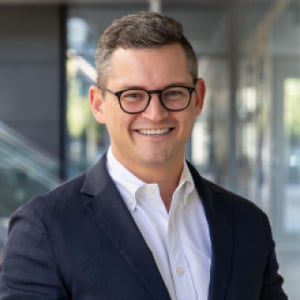
Associate Professor of Law, Sandra Day O'Connor College of Law, Arizona State University
Jonathan Green is an Associate Professor of Law at Arizona State University teaching Civil Procedure and Statutory Interpretation. His scholarship focuses on the history of political and legal thought. He is especially interested in the history of constitutionalism, theories of interpretation, and the concept of judicial power. His research has been published in the Arizona State Law Journal, the Journal of the History of Ideas, Modern Intellectual History, and the Historical Journal.
Prior to joining the ASU faculty in 2024, Professor Green was a Harry A. Bigelow Fellow at the University of Chicago. He previously clerked for Judge Neomi Rao of the U.S. Court of Appeals for the District of Columbia Circuit, and worked as a litigation associate at DLA Piper in Philadelphia.
Professor Green holds a J.D. from Yale Law School, where he was an editor of the Yale Law Journal. He received his PhD from the University of Cambridge, where he was a joint recipient of Prince Consort & Thirwall Prize, awarded annually for the best dissertation in the Cambridge History Faculty. He also received his MPhil from Cambridge, and earned his B.A., summa cum laude, from Northwestern University.
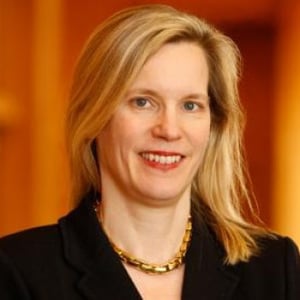
John S. Battle Professor of Law, University of Virginia School of Law
Julia D. Mahoney teaches courses in property, government finance, constitutional law and nonprofit organizations. A graduate of Yale Law School, she joined the University of Virginia faculty as an associate professor in 1999 and is now John S. Battle Professor of Law. She has also taught at the University of Southern California Law School and the University of Chicago Law School, and before entering the legal academy, practiced law at the New York firm Wachtell, Lipton, Rosen & Katz. Her scholarly articles include works on land preservation, eminent domain, health care reform and property rights in human biological materials.
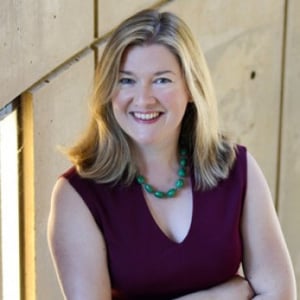
Carl and Shelia Spaeth Professor of Law; Associate Dean for Research and Intellectual Life, Stanford Law School
Bernadette Meyler, JD ’03, is a scholar of British and American constitutional law and of law and the humanities. She returned in 2013 to Stanford Law School, where she had previously served as Leah Kaplan Visiting Professor in Human Rights. Her research and teaching bring together the sometimes surprisingly divided fields of legal history and law and literature. They also examine the long history of constitutionalism, reaching back into the English common law ancestry of the U.S. Constitution. Professor Meyler’s current book projects stem from these respective areas of her scholarship. Theaters of Pardoning (Cornell UP, forthcoming 2019) demonstrates that the representation of pardoning tracks changing conceptions of sovereignty within the plays and politics of seventeenth-century England. In doing so, the book considers how the shared audiences of dramatic and historical tragicomedy—whether Kings, students at the Inns of Court, or potential jurors—brought concepts from the literary into the legal arena and back again. Common Law Originalism shifts to the American context, looking at the multiple eighteenth-century common law meanings—both colonial and English—of various constitutional terms and phrases. Based on this variety, as well as on the practices of common law interpretation with which members of the Founding generation were familiar, the book argues that we should, in large part, reject the pursuit of a singular and determinate original meaning; instead, it contends, we must embrace a more vigorous debate in the present over contested constitutional meanings. Professor Meyler is also the co-editor of several collections of essays in law and the humanities designed to introduce scholars and students to the field, including, with Elizabeth Anker, New Directions in Law and Literature (Oxford UP, 2017) and, with Simon Stern and Maksymilian Del Mar, The Oxford Handbook of Law and the Humanities (Oxford UP, forthcoming 2019).
After receiving her BA in Literature with a focus on Classics at Harvard University, Professor Meyler obtained her JD from Stanford Law School and completed a PhD in English at UC, Irvine as a Mellon Fellow in Humanistic Studies and a Chancellor’s Fellow. Following law school, Professor Meyler clerked for the Hon. Robert A. Katzmann of the U.S. Court of Appeals for the Second Circuit.
Professor Meyler previously taught at Cornell University, where she served, most recently, as Professor of Law and English and Faculty Director of Research at the Cornell Law School. She also visited Princeton University as the inaugural Mellon/LAPA Fellow in Law and the Humanities.

Sheila M. McDevitt Professor of Law and Faculty Director of the Election Law Center, Florida State University College of Law
Professor Morley joined FSU Law in 2018, and teaches and writes in the areas of election law, constitutional law, remedies, and the federal courts. He is best known for his work on election emergencies and post-election litigation, nationwide and other defendant-oriented injunctions, the jurisdiction of the federal courts and their equitable powers more generally. He has testified before congressional committees, made presentations to election officials for the U.S. Election Assistance Commission and participated in bipartisan blue-ribbon groups to develop election reforms. The governor of Florida also appointed Professor Morley to the Criminal Punishment Code Task Force, to propose potential revisions to the legislature.
The U.S. Supreme Court has cited several of his articles, and he was counsel of record for the successful Petitioner in a landmark campaign finance case. Professor Morley has appeared on C-SPAN, Court TV, Fox News and numerous local news programs, and has been quoted in the Washington Post, Los Angeles Times, Roll Call, Politico, U.S. News and World Report, and a wide range of other national publications. His work has been published in many of the nation’s top law reviews, including the Georgetown Law Journal, Northwestern University Law Review, Boston University Law Review and Emory Law Journal.
Before joining FSU Law, Professor Morley was a Climenko Fellow and Lecturer in Law at Harvard Law School. Prior to his experience in academia, he served in government as special assistant to the General Counsel of the Army at the Pentagon, as well as a law clerk for Judge Gerald B. Tjoflat of the U.S. Court of Appeals for the Eleventh Circuit. During his tenure with the Army General Counsel’s office, he was awarded the Meritorious Civilian Service Award and the Army Staff Lapel Pin. He also worked as an associate at Williams & Connolly LLP and the Supreme Court & Appellate group of Winston & Strawn, LLP, both in Washington, D.C.
Professor Morley earned his J.D. from Yale Law School in 2003, where he was a senior editor on the Yale Law Journal; served on the moot court board; and received the Thurman Arnold Prize for Best Oralist in the Morris Tyler Moot Court of Appeals.
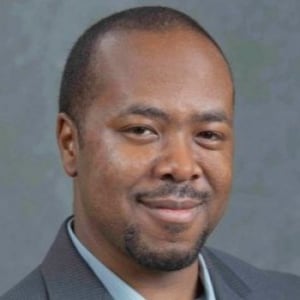
Justice Thurgood Marshall Distinguished Professor of Law, University of Virginia Law
Bertrall Ross joined the law faculty in 2021. He teaches and writes in the areas of constitutional law, constitutional theory, election law, administrative law and statutory interpretation.
Ross’ research is driven by a concern about democratic responsiveness and accountability, as well as the inclusion of marginalized communities in administrative and political processes. His past scholarship has been published in several books and journals, including the Columbia Law Review, New York University Law Review and the University of Chicago Law Review. Two of his articles were selected by the Yale/Harvard/Stanford Junior Faculty Forum.
Ross earned his undergraduate degree in international affairs and history from the University of Colorado, Boulder; his graduate degrees from the London School of Economics and Princeton University’s School of Public and International Affairs; and his law degree from Yale Law School. After law school, he clerked for Judge Dorothy Nelson of the U.S. Court of Appeals for the Ninth Circuit and Judge Myron Thompson of the U.S. District Court for the Middle District of Alabama.

University of Minnesota Law School
Ilan Wurman is a professor at the University of Minnesota, where he teaches administrative law and constitutional law. He is also the co-host of the new legal podcast, Rationally BASED.
Professor Wurman previously taught at Arizona State University. He writes primarily on the Fourteenth Amendment, administrative law, separation of powers, and constitutionalism. His academic writing has appeared in the Yale Law Journal, the Stanford Law Review, the University of Chicago Law Review, the University of Pennsylvania Law Review, the Virginia Law Review, the Duke Law Journal, the Minnesota Law Review, the Notre Dame Law Review, and the Texas Law Review among other journals.
Professor Wurman is the author of the new book The Constitution of 1789: A New Introduction (Cambridge 2026). His previous books include A Debt Against the Living: An Introduction to Originalism (Cambridge 2017), and The Second Founding: An Introduction to the Fourteenth Amendment (Cambridge 2020). He is also the author of the casebook, Administrative Law Theory and Fundamentals: An Integrated Approach (Foundation Press 3d ed. 2025).
Professor Wurman has also litigated a variety of administrative law and constitutional law cases, including cases involving COVID-19 restrictions, transmission lines, and Appointments Clause challenges. He also devised winning public nuisance theories to force city governments to address the increasingly challenging public camping crises throughout the country.
Sterling Professor of Law and Political Science, Yale Law School
Akhil Reed Amar is Sterling Professor of Law and Political Science at Yale University, where he teaches constitutional law in both Yale College and Yale Law School. After graduating from Yale College, summa cum laude, in 1980 and from Yale Law School in 1984, and clerking for Judge (later Justice) Stephen Breyer, Amar joined the Yale faculty in 1985 at the age of 26. He is Yale’s only living professor to have won the University’s unofficial triple crown — the Sterling Chair for scholarship, the DeVane Medal for teaching, and the Lamar Award for alumni service.
Amar’s work has won awards from both the American Bar Association and the Federalist Society, and he has been cited by Supreme Court justices across the spectrum in more than 50 cases — tops among scholars under age 70. According to both Fred Shapiro’s landmark 2021 study of lifetime scholarly citations and Heinonline’s most recent tabulation of lifetime law-review citations, Amar is America’s second most-cited legal scholar still under age 70. He is a member of the American Academy of Arts and Sciences and has written widely for popular publications, including The New York Times, The Washington Post, The Wall Street Journal, Time, and The Atlantic. He was an informal consultant to the popular TV show The West Wing and his scholarship has been showcased on many broadcasts, including The Colbert Report, Morning Joe, AC360, Velshi, Fox News @ Night with Shannon Bream, Fareed Zakaria GPS, Erin Burnett Outfront, and Constitution USA with Peter Sagal.
He is the author of more than a hundred law review articles and several books, including The Bill of Rights (1998 — winner of the Yale University Press Governors’ Award), America’s Constitution (2005 — winner of the ABA’s Silver Gavel Award), America’s Unwritten Constitution (2012 — named one of the year’s 100 best nonfiction books by The Washington Post), and The Constitution Today (2016 — named one of the year’s top ten nonfiction books by Time magazine). The first volume of his ambitious trilogy on American constitutional history from the Founding to the present, The Words That Made Us: America’s Constitutional Conversation, 1760-1840, came out in May 2021. The second volume, Born Equal: Remaking America’s Constitution, 1840-1920, will be published in September 2025 and is already available for pre-order. All together, his nonfiction books have won two starred reviews from Publishers Weekly and three starred reviews from Kirkus—tops, it is believed, among legal scholars under age 70. Together with Vikram David Amar (YLS ’88), he has a bi-weekly column on the Supreme Court on the distinguished website SCOTUSblog. Along with Andy Lipka, he co-hosts a popular and free weekly podcast, Amarica’s Constitution, whose listeners are eligible for CLE credit in most American jurisdictions. A wide assortment of his articles and op-eds and video links to many of his public lectures and free online courses may be found at akhilamar.com.
Professor of Law and Centennial Chair, South Texas College of Law Houston
Josh Blackman is a national thought leader on constitutional law and the United States Supreme Court. Josh’s work was quoted during two presidential impeachment trials. He has testified before Congress and advises federal and state lawmakers. Josh regularly appears on TV, including NBC, CBS, ABC, Fox, and the BBC. Josh is also a frequent guest on NPR and other syndicated radio programs. He has published commentaries in the New York Times, Wall Street Journal, Washington Post, and leading national publications.
Since 2012, Josh has served as a professor at the South Texas College of Law Houston. He holds the Centennial Chair of Constitutional Law. Josh is an Adjunct Fellow at the Manhattan Institute. Josh has written more than seven dozen law review articles that have been cited more than a thousand times. Josh was selected as the Jurist of the Year by the Texas Journal of Law & Public Policy, received the inaugural Meese III Originalism Award, and was awarded the Inaugural Joseph Story Award. Josh was selected by Forbes Magazine for the “30 Under 30” in Law and Policy. Josh is the President of the Harlan Institute, and founded FantasySCOTUS, the Internet’s Premier Supreme Court Fantasy League. He blogs at the Volokh Conspiracyand posts@JoshMBlackman.
Associate Professor of Law, Sandra Day O'Connor College of Law, Arizona State University
Jonathan Green is an Associate Professor of Law at Arizona State University teaching Civil Procedure and Statutory Interpretation. His scholarship focuses on the history of political and legal thought. He is especially interested in the history of constitutionalism, theories of interpretation, and the concept of judicial power. His research has been published in the Arizona State Law Journal, the Journal of the History of Ideas, Modern Intellectual History, and the Historical Journal.
Prior to joining the ASU faculty in 2024, Professor Green was a Harry A. Bigelow Fellow at the University of Chicago. He previously clerked for Judge Neomi Rao of the U.S. Court of Appeals for the District of Columbia Circuit, and worked as a litigation associate at DLA Piper in Philadelphia.
Professor Green holds a J.D. from Yale Law School, where he was an editor of the Yale Law Journal. He received his PhD from the University of Cambridge, where he was a joint recipient of Prince Consort & Thirwall Prize, awarded annually for the best dissertation in the Cambridge History Faculty. He also received his MPhil from Cambridge, and earned his B.A., summa cum laude, from Northwestern University.
John S. Battle Professor of Law, University of Virginia School of Law
Julia D. Mahoney teaches courses in property, government finance, constitutional law and nonprofit organizations. A graduate of Yale Law School, she joined the University of Virginia faculty as an associate professor in 1999 and is now John S. Battle Professor of Law. She has also taught at the University of Southern California Law School and the University of Chicago Law School, and before entering the legal academy, practiced law at the New York firm Wachtell, Lipton, Rosen & Katz. Her scholarly articles include works on land preservation, eminent domain, health care reform and property rights in human biological materials.
Richard and Frances Mallery Professor of Law and Faculty Director, Constitutional Law Center, Stanford Law School
Michael W. McConnell is the Richard and Frances Mallery Professor and Faculty Director of the Constitutional Law Center at Stanford Law School, and a Senior Fellow at the Hoover Institution. From 2002 to 2009, he served as a Circuit Judge on the United States Court of Appeals for the Tenth Circuit. He was nominated by President George W. Bush, a Republican, and confirmed by a Democratic Senate by unanimous consent. McConnell has previously held chaired professorships at the University of Chicago and the University of Utah, and visiting professorships at Harvard and NYU. He teaches courses on constitutional law, constitutional history, First Amendment, and interpretive theory. He has published widely in the fields of constitutional law and theory, especially church and state, equal protection, and separation of powers. His book, “The President Who Would Not Be King: Executive Power Under the Constitution,” was published by Princeton University Press in 2020, based on the Tanner Lectures in Human Values, which he delivered at Princeton in 2019. His latest book, co-authored with Nathan Chapman, “Agreeing to Disagree: How the Establishment Clause Protects Religious Diversity and Freedom of Conscience,” was published by Oxford University Press in mid-2023. McConnell has argued sixteen cases in the United States Supreme Court, most recently Carney v. Adams (2020). defending a provision of the Delaware Constitution requiring political balance on that state’s courts. More recently, he was co-counsel in Gonzalez v. Google. He earned his B.A. from Michigan State University and his J.D. from the University of Chicago, and has received honorary degrees from Notre Dame University and Michigan State. He served as law clerk to Supreme Court Justice William J. Brennan, Jr. and D.C. Circuit Chief Judge J. Skelly Wright. He has been Assistant General Counsel of the Office of Management & Budget, Assistant to the Solicitor General of the Department of Justice, and a member of the President’s Intelligence Oversight Board. He is Senior of Counsel to the law firm Wilson, Sonsini, Goodrich & Rosati, and is co-chair of Meta’s Oversight Review Board.
Carl and Shelia Spaeth Professor of Law; Associate Dean for Research and Intellectual Life, Stanford Law School
Bernadette Meyler, JD ’03, is a scholar of British and American constitutional law and of law and the humanities. She returned in 2013 to Stanford Law School, where she had previously served as Leah Kaplan Visiting Professor in Human Rights. Her research and teaching bring together the sometimes surprisingly divided fields of legal history and law and literature. They also examine the long history of constitutionalism, reaching back into the English common law ancestry of the U.S. Constitution. Professor Meyler’s current book projects stem from these respective areas of her scholarship. Theaters of Pardoning (Cornell UP, forthcoming 2019) demonstrates that the representation of pardoning tracks changing conceptions of sovereignty within the plays and politics of seventeenth-century England. In doing so, the book considers how the shared audiences of dramatic and historical tragicomedy—whether Kings, students at the Inns of Court, or potential jurors—brought concepts from the literary into the legal arena and back again. Common Law Originalism shifts to the American context, looking at the multiple eighteenth-century common law meanings—both colonial and English—of various constitutional terms and phrases. Based on this variety, as well as on the practices of common law interpretation with which members of the Founding generation were familiar, the book argues that we should, in large part, reject the pursuit of a singular and determinate original meaning; instead, it contends, we must embrace a more vigorous debate in the present over contested constitutional meanings. Professor Meyler is also the co-editor of several collections of essays in law and the humanities designed to introduce scholars and students to the field, including, with Elizabeth Anker, New Directions in Law and Literature (Oxford UP, 2017) and, with Simon Stern and Maksymilian Del Mar, The Oxford Handbook of Law and the Humanities (Oxford UP, forthcoming 2019).
After receiving her BA in Literature with a focus on Classics at Harvard University, Professor Meyler obtained her JD from Stanford Law School and completed a PhD in English at UC, Irvine as a Mellon Fellow in Humanistic Studies and a Chancellor’s Fellow. Following law school, Professor Meyler clerked for the Hon. Robert A. Katzmann of the U.S. Court of Appeals for the Second Circuit.
Professor Meyler previously taught at Cornell University, where she served, most recently, as Professor of Law and English and Faculty Director of Research at the Cornell Law School. She also visited Princeton University as the inaugural Mellon/LAPA Fellow in Law and the Humanities.
Sheila M. McDevitt Professor of Law and Faculty Director of the Election Law Center, Florida State University College of Law
Professor Morley joined FSU Law in 2018, and teaches and writes in the areas of election law, constitutional law, remedies, and the federal courts. He is best known for his work on election emergencies and post-election litigation, nationwide and other defendant-oriented injunctions, the jurisdiction of the federal courts and their equitable powers more generally. He has testified before congressional committees, made presentations to election officials for the U.S. Election Assistance Commission and participated in bipartisan blue-ribbon groups to develop election reforms. The governor of Florida also appointed Professor Morley to the Criminal Punishment Code Task Force, to propose potential revisions to the legislature.
The U.S. Supreme Court has cited several of his articles, and he was counsel of record for the successful Petitioner in a landmark campaign finance case. Professor Morley has appeared on C-SPAN, Court TV, Fox News and numerous local news programs, and has been quoted in the Washington Post, Los Angeles Times, Roll Call, Politico, U.S. News and World Report, and a wide range of other national publications. His work has been published in many of the nation’s top law reviews, including the Georgetown Law Journal, Northwestern University Law Review, Boston University Law Review and Emory Law Journal.
Before joining FSU Law, Professor Morley was a Climenko Fellow and Lecturer in Law at Harvard Law School. Prior to his experience in academia, he served in government as special assistant to the General Counsel of the Army at the Pentagon, as well as a law clerk for Judge Gerald B. Tjoflat of the U.S. Court of Appeals for the Eleventh Circuit. During his tenure with the Army General Counsel’s office, he was awarded the Meritorious Civilian Service Award and the Army Staff Lapel Pin. He also worked as an associate at Williams & Connolly LLP and the Supreme Court & Appellate group of Winston & Strawn, LLP, both in Washington, D.C.
Professor Morley earned his J.D. from Yale Law School in 2003, where he was a senior editor on the Yale Law Journal; served on the moot court board; and received the Thurman Arnold Prize for Best Oralist in the Morris Tyler Moot Court of Appeals.
Justice Thurgood Marshall Distinguished Professor of Law, University of Virginia Law
Bertrall Ross joined the law faculty in 2021. He teaches and writes in the areas of constitutional law, constitutional theory, election law, administrative law and statutory interpretation.
Ross’ research is driven by a concern about democratic responsiveness and accountability, as well as the inclusion of marginalized communities in administrative and political processes. His past scholarship has been published in several books and journals, including the Columbia Law Review, New York University Law Review and the University of Chicago Law Review. Two of his articles were selected by the Yale/Harvard/Stanford Junior Faculty Forum.
Ross earned his undergraduate degree in international affairs and history from the University of Colorado, Boulder; his graduate degrees from the London School of Economics and Princeton University’s School of Public and International Affairs; and his law degree from Yale Law School. After law school, he clerked for Judge Dorothy Nelson of the U.S. Court of Appeals for the Ninth Circuit and Judge Myron Thompson of the U.S. District Court for the Middle District of Alabama.
University of Minnesota Law School
Ilan Wurman is a professor at the University of Minnesota, where he teaches administrative law and constitutional law. He is also the co-host of the new legal podcast, Rationally BASED.
Professor Wurman previously taught at Arizona State University. He writes primarily on the Fourteenth Amendment, administrative law, separation of powers, and constitutionalism. His academic writing has appeared in the Yale Law Journal, the Stanford Law Review, the University of Chicago Law Review, the University of Pennsylvania Law Review, the Virginia Law Review, the Duke Law Journal, the Minnesota Law Review, the Notre Dame Law Review, and the Texas Law Review among other journals.
Professor Wurman is the author of the new book The Constitution of 1789: A New Introduction (Cambridge 2026). His previous books include A Debt Against the Living: An Introduction to Originalism (Cambridge 2017), and The Second Founding: An Introduction to the Fourteenth Amendment (Cambridge 2020). He is also the author of the casebook, Administrative Law Theory and Fundamentals: An Integrated Approach (Foundation Press 3d ed. 2025).
Professor Wurman has also litigated a variety of administrative law and constitutional law cases, including cases involving COVID-19 restrictions, transmission lines, and Appointments Clause challenges. He also devised winning public nuisance theories to force city governments to address the increasingly challenging public camping crises throughout the country.
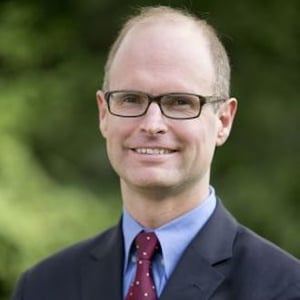
Professor of Law, Temple University Beasley School of Law
Professor Craig Green has taught and written in the fields of Administrative Law, American Legal History, Civil Procedure, Constitutional Law, and Federal Courts; he has also taught in the field of Reproductive Rights. Other teaching interests include Conflicts of Law, Remedies, Civil Procedure II, Complex Civil Litigation, Civil and Political Rights, First Amendment, Separation of Powers, Legislation, Federalism, Constitutional History, History of American Judging, and Sentencing. In 2009 and 2015, Green received Temple Law School’s George P. Williams Award as “Outstanding Professor of the Year,” and in 2010 he received Temple University’s Lindback Award for Distinguished Teaching.
Green’s research has addressed the role of federal courts in overseeing the executive branch, and the significance of iconic cases like Erie v. Tompkins in legal discourse. He has published articles concerning wartime detention, federal common law, judicial activism, precedential interpretation, equal protection, the federal sentencing guidelines, constitutional history, the economic recession of 2008, and customary international law. He has been invited to present research to the Sentencing Commission’s legal staff, as a keynote speaker at the Japanese-American Society for Legal Studies Annual Meeting in Kyoto, as a participant in the Turkish Institute for Justice’s conference “The Balance Between Freedom and Security in Fighting against Terrorism,” and as an organizing panelist for the British Association of Nineteenth-Century Americanists at the University of Warwick. In 2012, Green received Temple Law School’s Friel-Scanlan Award for Outstanding Scholarship.
In 2018, Green received a Ph.D from Princeton University’s History Department for completing his dissertation, “Creating American Land: A Territorial History from the Albany Plan to the U.S. Constitution.” The dissertation seeks to explain (1) how the United States’ imperial legal structure emerged from Revolution’s anti-imperial moment, (2) how American states and statehood emerged from the legal destruction of British colonies, (3) how Native American ideas about territory influenced and were affected by the law of Britain and the United States, and (4) what “law” meant in a context where institutional enforcement was most often impossible.
Green has an active interest in appellate litigation, and has served on moot courts for Supreme Court advocates at the University of Pennsylvania’s Supreme Court Institute, the Georgetown Law Center’s Supreme Court Institute, the National Association of Attorneys General, and law firms in Washington D.C.
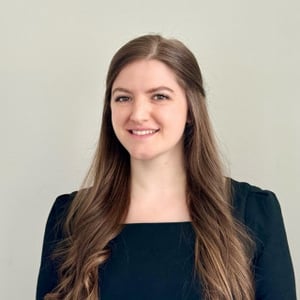
Andrea M. Leelike is working at the intersection of generative AI and the law as a Strategic Business Development Lead at Harvey AI. She previously worked as a Private Credit Associate at Proskauer Rose LLP in New York City and as a Finance Associate at Winston & Strawn LLP in Dallas.
Andrea attended the University of Pennsylvania Law School where she served as President of Penn’s Federalist Society chapter. She also served as an Associate Editor and Community Relations Board Member on the Journal of Law and Innovation. She is a native of eastern Long Island and earned her B.S.B.A. in Business Management and Administration at Boston University’s Questrom School of Business.

James Monroe Distinguished Professor of Law and Albert Clark Tate, Jr., Professor of Law, University of Virginia School of Law
Professor Saikrishna Prakash’s scholarship focuses on separation of powers, particularly executive powers. He teaches Constitutional Law, Foreign Relations Law and Presidential Powers at the Law School.
Prakash’s most recent book, “The Living Presidency: An Originalist Argument Against Its Ever-Expanding Powers,” was published by Harvard Belknap Press in 2020. He also authored “Imperial from the Beginning: The Constitution of the Original Executive” (Yale University Press, 2015). The former book focuses on the modern presidency while the latter considers the presidency of the Founders.
Prakash has authored over 75 law review articles. Among them are “Of Synchronicity and Supreme Law” in the Harvard Law Review, “The Indefensible Duty to Defend” in the Columbia Law Review, and “50 States, 50 Attorneys General and 50 Approaches to the Duty to Defend” and “The Executive Power Over Foreign Affairs” in the Yale Law Journal.
Prakash has published op-eds in The New York Times, The Wall Street Journal and the Los Angeles Times. At the request of Democrats and Republicans, he has testified before Congress on matters of presidential removal, the Mueller Report and how Congress might better check the presidency. He is currently a Miller Center Senior Fellow. In 2015, he received the Roger Traynor award for faculty scholarship. In the same year, he received an honorable mention from the American Society of Legal Writers for his book “Imperial from the Beginning.” He has given named lectures at William & Mary Law School, Princeton University and Toledo Law School, and keynote addresses at several conferences.
Prakash majored in economics and political science at Stanford University. At Yale Law School, he served as senior editor of the Yale Law Journal and received the John M. Olin Fellowship in Law, Economics and Public Policy. He subsequently clerked for Judge Laurence H. Silberman of the U.S. Court of Appeals for the District of Columbia Circuit and for Justice Clarence Thomas of the U.S. Supreme Court. After practicing in New York for two years, he served as a visiting professor at the University of Illinois College of Law and as an associate professor at Boston University School of Law. He then spent several years at the University of San Diego School of Law as the Herzog Research Professor of Law. Prakash has been a visiting professor at Northwestern University and the University of Chicago. He also has served as a James Madison Fellow at Princeton University and Visiting Research Fellow at the Hoover Institution of War & Peace at Stanford University.
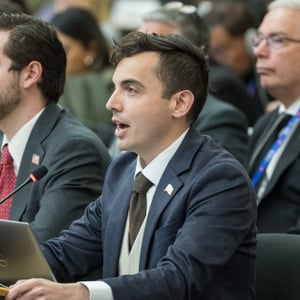
Counselor, Department of Labor
Lorenzo B. Riboni is a counselor at the Department of Labor and a judge advocate in the U.S. Army Reserve. Prior to serving in the Second Trump Administration, he practiced Labor and Employment Law at Littler Mendelson, P.C.
During law school, he was a Law & Public Policy Scholar at Temple University Beasley School of Law, where he served as the President of the Federalist Society. He also served as a law student researcher with the Labor & Employment Law Executive Committee. He is a native of San Diego, California and completed his bachelor’s degree in the administration of justice with Magna Cum Laude honors at the University of Pittsburgh.
Prior to law school, he served in the Military Police Corps. In 2014, he deployed to Afghanistan as a member of the Rule of Law Development Team’s personal security, assisting in their mission of handing over operational and administrative control of the Parwan Detention Facility and Justice Center to the Afghan Government. In 2016, he served at Naval Station Guantanamo Bay where he was a detention specialist in the Behavioral Health Unit ensuring the safe, humane, legal, and transparent care, custody, and control of detainees.
Mr. Riboni is focusing his career on management-side labor and employment law.

Emanuel S. Heller Professor of Law, University of California at Berkeley; Thomas Smith Senior Research Fellow, The Civitas Institute, University of Texas at Austin
John Yoo is the Emanuel Heller Professor of Law at the University of California at Berkeley. He is also the Thomas Smith Senior Research Fellow, Civitas Institute, at the University of Texas at Austin. He is also a Nonresident Senior Fellow at the American Enterprise Institute.
His most recent book, The Politically Incorrect Guide to the Supreme Court, co-authored with Robert Delahunty, was published in 2023. Professor Yoo’s other books include Defender-in-Chief: Trump’s Fight for Presidential Power; Striking Power: How Cyber, Robots, and Space Weapons Change the Rules for War; Point of Attack: Preventive War, International Law, and Global Welfare; and Crisis and Command: A History of Executive Power from George Washington to George Bush.
He is a co-author of volumes 1 and 2 of R. Rossum, G. Tarr, V. Munoz & J. Yoo American Constitution Law (Routledge, 2026), and a co-editor of the eight-volume series on the 250th anniversary of the American Revolution, We Hold These Truths, with Yuval Levin and Adam White of the American Enterprise Institute.
Professor Yoo has published more than 100 articles in academic journals on subjects including national security, constitutional law, international law, and the Supreme Court. He also regularly contributes to the editorial pages of the Wall Street Journal, New York Times, Washington Post, Los Angeles Times, and National Review, among others.
Professor Yoo has served in all three branches of government. He was an official in the U.S. Department of Justice, where he worked on national security and terrorism issues after the 9/11 attacks. He served as general counsel of the U.S. Senate Judiciary Committee. He has been a law clerk for Supreme Court Justice Clarence Thomas and federal appeals Judge Laurence Silberman. He has been a visiting professor at the University of Texas at Austin’s School of Civic Leadership, Seoul National University, the Interdisciplinary Center Herzliya, Keio University, Trento University, the University of Chicago, and the Free University of Amsterdam.
Professor Yoo supervises the Public Law and Policy Program and the California Constitution Center. He also serves on the boards of Founding Forward, the Washington Legal Foundation, the Pacific Legal Foundation, the Ulysses Grant Institute, the Federalist Society’s Separation of Powers and Federalism Division, the Universidad Cientifica del Sur Law School, and the Asia-Pacific Law Institute at Seoul National University. He is a winner of the Federalist Society’s Paul Bator award and the Heritage Foundation’s Edwin Meese III Originalism Lectureship.
Professor Yoo graduated from Yale Law School and summa cum laude from Harvard College.
James Monroe Distinguished Professor of Law and Albert Clark Tate, Jr., Professor of Law, University of Virginia School of Law
Professor Saikrishna Prakash’s scholarship focuses on separation of powers, particularly executive powers. He teaches Constitutional Law, Foreign Relations Law and Presidential Powers at the Law School.
Prakash’s most recent book, “The Living Presidency: An Originalist Argument Against Its Ever-Expanding Powers,” was published by Harvard Belknap Press in 2020. He also authored “Imperial from the Beginning: The Constitution of the Original Executive” (Yale University Press, 2015). The former book focuses on the modern presidency while the latter considers the presidency of the Founders.
Prakash has authored over 75 law review articles. Among them are “Of Synchronicity and Supreme Law” in the Harvard Law Review, “The Indefensible Duty to Defend” in the Columbia Law Review, and “50 States, 50 Attorneys General and 50 Approaches to the Duty to Defend” and “The Executive Power Over Foreign Affairs” in the Yale Law Journal.
Prakash has published op-eds in The New York Times, The Wall Street Journal and the Los Angeles Times. At the request of Democrats and Republicans, he has testified before Congress on matters of presidential removal, the Mueller Report and how Congress might better check the presidency. He is currently a Miller Center Senior Fellow. In 2015, he received the Roger Traynor award for faculty scholarship. In the same year, he received an honorable mention from the American Society of Legal Writers for his book “Imperial from the Beginning.” He has given named lectures at William & Mary Law School, Princeton University and Toledo Law School, and keynote addresses at several conferences.
Prakash majored in economics and political science at Stanford University. At Yale Law School, he served as senior editor of the Yale Law Journal and received the John M. Olin Fellowship in Law, Economics and Public Policy. He subsequently clerked for Judge Laurence H. Silberman of the U.S. Court of Appeals for the District of Columbia Circuit and for Justice Clarence Thomas of the U.S. Supreme Court. After practicing in New York for two years, he served as a visiting professor at the University of Illinois College of Law and as an associate professor at Boston University School of Law. He then spent several years at the University of San Diego School of Law as the Herzog Research Professor of Law. Prakash has been a visiting professor at Northwestern University and the University of Chicago. He also has served as a James Madison Fellow at Princeton University and Visiting Research Fellow at the Hoover Institution of War & Peace at Stanford University.
Professor of Law, Temple University Beasley School of Law
Professor Craig Green has taught and written in the fields of Administrative Law, American Legal History, Civil Procedure, Constitutional Law, and Federal Courts; he has also taught in the field of Reproductive Rights. Other teaching interests include Conflicts of Law, Remedies, Civil Procedure II, Complex Civil Litigation, Civil and Political Rights, First Amendment, Separation of Powers, Legislation, Federalism, Constitutional History, History of American Judging, and Sentencing. In 2009 and 2015, Green received Temple Law School’s George P. Williams Award as “Outstanding Professor of the Year,” and in 2010 he received Temple University’s Lindback Award for Distinguished Teaching.
Green’s research has addressed the role of federal courts in overseeing the executive branch, and the significance of iconic cases like Erie v. Tompkins in legal discourse. He has published articles concerning wartime detention, federal common law, judicial activism, precedential interpretation, equal protection, the federal sentencing guidelines, constitutional history, the economic recession of 2008, and customary international law. He has been invited to present research to the Sentencing Commission’s legal staff, as a keynote speaker at the Japanese-American Society for Legal Studies Annual Meeting in Kyoto, as a participant in the Turkish Institute for Justice’s conference “The Balance Between Freedom and Security in Fighting against Terrorism,” and as an organizing panelist for the British Association of Nineteenth-Century Americanists at the University of Warwick. In 2012, Green received Temple Law School’s Friel-Scanlan Award for Outstanding Scholarship.
In 2018, Green received a Ph.D from Princeton University’s History Department for completing his dissertation, “Creating American Land: A Territorial History from the Albany Plan to the U.S. Constitution.” The dissertation seeks to explain (1) how the United States’ imperial legal structure emerged from Revolution’s anti-imperial moment, (2) how American states and statehood emerged from the legal destruction of British colonies, (3) how Native American ideas about territory influenced and were affected by the law of Britain and the United States, and (4) what “law” meant in a context where institutional enforcement was most often impossible.
Green has an active interest in appellate litigation, and has served on moot courts for Supreme Court advocates at the University of Pennsylvania’s Supreme Court Institute, the Georgetown Law Center’s Supreme Court Institute, the National Association of Attorneys General, and law firms in Washington D.C.
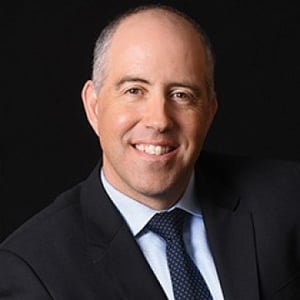
Albert A. Walsh Chair in Real Estate, Land Use, and Property Law; Faculty Director, Urban Law Center, Fordham Law School
Nestor Davidson joined Fordham in 2011 and was named the Albert A. Walsh Professor of Real Estate, Land Use and Property Law in 2017. Professor Davidson is an expert in property, urban law, and affordable housing law and policy, and is the co-author of the casebook Property Law: Rules, Policies and Practices (7th ed. 2017). Professor Davidson founded and serves as the faculty director of the law school’s Urban Law Center and previously served as Associate Dean for Academic Affairs.
Professor Davidson practiced with the firm of Latham and Watkins, focusing on commercial real estate and affordable housing, and served as Special Counsel and Principal Deputy General Counsel at the U.S. Department of Housing and Urban Development. He currently serves as a Member of the Board of the New York State Housing Finance Agency.
Professor Davidson earned his AB from Harvard College and his JD from Columbia Law School. After law school, he clerked for Judge David S. Tatel of the United States Court of Appeals for the District of Columbia Circuit and Justice David H. Souter of the Supreme Court of the United States.
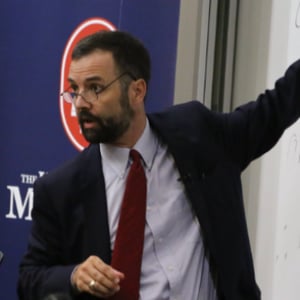
Professor of Law and Jamie L. Whitten Chair in Law and Government, University of Mississippi School of Law
Christopher Green (https://law.olemiss.edu/faculty-directory/christopher-green/) is Professor of Law and Jamie L. Whitten Chair in Law and Government at the University of Mississippi, where he has taught since 2006. He is a graduate of Princeton University and Yale Law School, and has a PhD in philosophy from the University of Notre Dame. He clerked for Judge Rhesa H. Barksdale on the Fifth Circuit and is the author of Equal Citizenship, Civil Rights, and the Constitution: The Original Sense of the Privileges or Immunities Clause (2015) and a large number of articles and essays on constitutional theory and the Fourteenth Amendment, including the two-part Original Sense of the (Equal) Protection Clause and Clarity and Reasonable Doubt in Early State-Constitutional Judicial Review. He is an affiliated scholar with the University of San Diego Center for the Study of Constitutional Originalism.
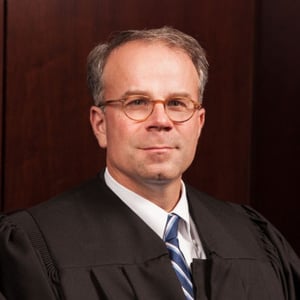
U.S. Court of Appeals, Seventh Circuit
Born 1971 in Fort Wayne, IN
Federal Judicial Service:
Judge, U.S. Court of Appeals for the Seventh Circuit
Nominated by Donald J. Trump on February 15, 2018, to a seat vacated by Richard Allen Posner. Confirmed by the Senate on May 14, 2018, and received commission on May 21, 2018.
Education:
St. Joseph’s College, Rensselaer, Indiana, B.B.A., 1993
Northwestern University School of Law, J.D., 1998
Professional Career:
Law clerk, Hon. Paul V. Niemeyer, U.S. Court of Appeals for the Fourth Circuit, 1998-1999
Law clerk, Hon. Anthony M. Kennedy, Supreme Court of the United States, 1999-2000
Private practice, Cleveland, Ohio, 2000-2002
Assistant U.S. attorney, Southern District of New York, 2002-2006
Counselor to the deputy attorney general, U.S. Department of Justice, 2006
Associate counsel, President George W. Bush, 2007
General counsel, National Security Council, and senior associate counsel, President George W. Bush, 2007-2009
Private practice, Chicago, Illinois, 2009-2018
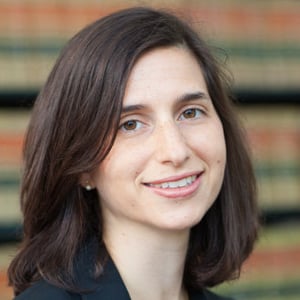
Professor of Law, University of Wisconsin School of Law
Miriam Seifter's research and teaching interests include administrative law, federalism, state and local government law, energy law, and property law. Her recent work focuses on executive power and the separation of powers at the state level, and on the role of states and interest groups in the federal regulatory process. Her publications appear or are forthcoming in the Harvard Law Review, the NYU Law Review, the UCLA Law Review, and the Virginia Law Review, among others. In 2017, UW Law students honored Professor Seifter with the Classroom Teacher of the Year Award, and in 2018, she received one of twelve Distinguished Teaching Awards from the University of Wisconsin-Madison. For her article Gubernatorial Administration, Seifter was named the 2017 winner of the American Constitution Society's Richard D. Cudahy Writing Competition on Regulatory and Administrative Law.
Professor Seifter received a B.A. magna cum laude from Yale University, an M.Sc. with distinction from Oxford University, and a J.D. magna cum laude from Harvard Law School, where she was the Environmental Fellow and an Articles Editor on the Harvard Law Review. After law school, she served as a law clerk for Chief Judge Merrick Garland on the D.C. Circuit and for Justice Ruth Bader Ginsburg at the Supreme Court of the United States. Prior to joining the UW Law faculty, she was a Visiting Researcher and Adjunct Professor of Law at Georgetown University Law Center and worked in private practice at Munger, Tolles & Olson LLP in San Francisco.

Chief Judge, United States Court of Appeals, Sixth Circuit
JEFFREY S. SUTTON is the Chief Judge of the United States Court of Appeals for the Sixth Circuit. He has served as Chair of the Federal Judicial Conference Committee on Rules of Practice and Procedure, Chair of the Advisory Committee on Appellate Rules, and Chair of the Supreme Court Fellows Commission. He currently serves as Chair of the Executive Committee of the Judicial Conference of the United States. Since 1993, Chief Judge Sutton has been an adjunct professor at The Ohio State University College of Law, where he teaches seminars on State Constitutional Law, the United States Supreme Court, and Appellate Advocacy. He also teaches a class on State Constitutional Law at Harvard Law School. Among other publications, he is the author of Who Decides? States as Laboratories of Constitutional Experimentation and 51 Imperfect Solutions: States and the Making of American Constitutional Law. He is the co-author of a casebook, State Constitutional Law: The Modern Experience, as well as The Law of Judicial Precedent. He is also the co-editor of The Essential Scalia: On the Constitution, the Courts, and the Rule of Law. In 2006, Chief Judge Sutton was elected to the American Law Institute, and in 2017 he was elected to its Council.

Judge, United States Court of Appeals, Ninth Circuit
Judge Carlos Bea serves as a judge on the United States Court of Appeals for the Ninth Circuit. He received his Bachelor's Degree from Stanford University in 1956 and his J.D. from Stanford Law School in 1958. Judge Bea was born in San Sebastian, Spain, and immigrated with his family to Cuba in 1939. In 1952, he represented Cuba on the Cuban National basketball team in the Helsinki Olympics. Judge Bea became a naturalized citizen of the United States in 1958. He engaged in private practice in San Francisco, principally in the area of civil trials (jury and non-jury), from 1959-75 at Dunne, Phelps & Mills and from 1975-90 at Carlos Bea, A Law Corporation. He taught courses in civil litigation advocacy at Hastings College of Law and Stanford Law School. From 1990 to 2003, Judge Bea served as a judge of the San Francisco Superior Court. He was nominated by President George W. Bush to the United States Court of Appeals for the Ninth Circuit and was confirmed in 2003.
Judge Bea and his wife Louise reside in San Francisco, where they raised their four sons, Sebastian, Alexander, Nicholas, and Dominic.
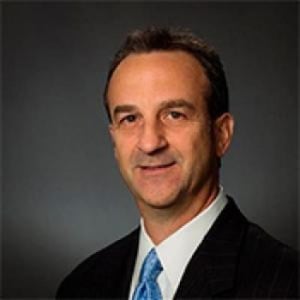
Senior Counsel and Vice President of U.S. Litigation, Alliance Defending Freedom
David A. Cortman, Esq., serves as senior counsel and vice president of U.S. litigation with Alliance Defending Freedom. He joined ADF in 2005 and currently supervises a team of nearly 40 attorneys and legal staff who specialize in constitutional law, focusing on religious freedom, sanctity of life, and marriage and family.
Cortman has successfully litigated over 200 constitutional law cases in both federal and state court at all levels. He has also litigated several U.S. Supreme Court cases, including arguing before the Court in Reed v. Town of Gilbert, which resulted in a 9-0 victory, with the Court holding that the government could not discriminate against religious speech while favoring political speech. He served as lead counsel in Trinity Lutheran Church of Columbia v. Pauley, which was decided in the Church's favor. He has also served as lead or co-counsel in victories at the high court in Conestoga Wood Specialties v. Burwell, successfully challenging the U.S. Department of Health and Human Services abortion pill mandate that forces employers to provide healthcare coverage that includes abortion-inducing drugs in violation of their religious convictions; Town of Greece v. Galloway, successfully defending the freedom of Americans to pray at public meetings.
Cortman earned his J.D. from Regent University School of Law in 1996, graduating magna cum laude. He is a member of the state bar in Georgia, Florida, Arizona, and the District of Columbia, and is admitted to practice in over two dozen federal courts, including the U.S. Supreme Court. He also teaches legal courses on the First Amendment and civil rights litigation.
Senior Director of Strategic Partnerships, First Liberty Institute
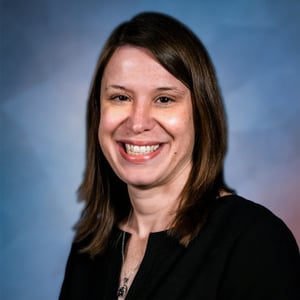
Lisa Budzynski Ezell is the former Vice President and Director of the Federalist Society’s Lawyers Chapters. In this role, she managed a growing network of over 90 lawyers chapters nationwide, including oversight of leadership recruitment, chapter programming, state conferences, civics education outreach, and young lawyers activities. She holds a Bachelor of Arts degree from Saint Mary’s College in Political Science and History and a Master of Public Policy from George Mason University.

Fred H. Paulus Professor of Law, Director of the Center for Reli, Willamette University College of Law
Steven K. Green is the Fred H. Paulus Professor of Law and Affiliated Professor of History at Willamette University where he teaches courses in Constitutional Law, First Amendment, Legal History, Jurisprudence, and Criminal Law in the College of Law, and Legal History and American Religious History in the College of Liberal Arts. In addition, Professor Green directs the interdisciplinary Center for Religion, Law and Democracy, one of Willamette’s Centers of Excellence.
Professor Green joined the Willamette faculty in August 2001, after serving for 10 years as legal director and special counsel for Americans United for Separation of Church and State, a Washington, DC, public interest organization that concentrates on First Amendment issues. Professor Green has extensive litigation and appellate experience in First Amendment law involving issues such as school prayer, public funding of religious institutions, public religious displays, religious discrimination, religious free exercise and freedom of speech. He has participated in several cases before the U.S. Supreme Court, including Zelman v. Simmons-Harris (2002), the Cleveland school vouchers case; Mitchell v. Helms (2000), authorizing state-paid computers and educational equipment to religious schools; and Santa Fe Ind. Sch. Dist. v. Doe (2000), striking prayer at public school football games. He regularly submits amicus curiae (friend-of-the-court) briefs at the U.S. Supreme Court, most recently co-authoring two amicus briefs in the 2013-14 term.
In addition, Professor Green has significant legislative experience, having testified before Congress and several state legislatures. He helped draft federal and state laws affecting religious liberty interests, including the Religious Freedom Restoration Act (1993), the Religious Land-Use and Institutionalized Persons Protection Act (2000), and the Oregon Workplace Religious Freedom Act (2009).
Professor Green is a widely sought speaker at national conferences and a prolific author whose writings have been cited by the U.S. Supreme Court and lower courts. He is the author of Inventing a Christian America: The Myth of the Religious Founding (Oxford University Press, 2015), The Bible, the School, and the Constitution: The Clash that Shaped Modern Church-State Doctrine (Oxford, 2012); The Second Disestablishment: Church and State in Nineteenth Century America (Oxford, 2010), co-author of Religious Freedom and the Supreme Court (Baylor, 2008), and a contributor to the Encyclopedia of American Civil Liberties and the Yale Biographical Dictionary of American Law, among others. He is currently writing a new book on church and state in the middle of the twentieth century. Professor Green holds a PhD in American constitutional history and an MA in American religious history from the University of North Carolina, a JD from the University of Texas, and a BA in history and political science, Phi Beta Kappa, from Texas Christian University. He also took post-graduate study at Duke Law and Divinity Schools.
Professor Green serves on the public policy board of Ecumenical Ministries of Oregon. He also serves on the editorial council of the Journal of Church and State and the legal advisory committee of the National Center for Science Education. He previously served on the religious liberty committee of the National Council of Churches and as recorder for the Oregon Law Commission's study of the faith-based initiative in Oregon.
In 2014 and 2006, Professor Green received the Robert L. Misner Award for Excellence in Scholarship, which was established in memory of former College of Law Dean and Professor Robert L. Misner. Professor Green also received the 2003 Professor of the Year Award for Teaching.

Patrick Hotung Professor of Constitutional Law, Georgetown University Law Center; Faculty Director, Georgetown Center for the Constitution
Randy E. Barnett is the Patrick Hotung Professor of Constitutional Law at the Georgetown University Law Center and is the Faculty Director of the Georgetown Center for the Constitution. After graduating from Northwestern University and Harvard Law School, he tried many felony cases as a prosecutor in the Cook County States’ Attorney’s Office in Chicago. A recipient of a Guggenheim Fellowship in Constitutional Studies and the Bradley Prize, Professor Barnett has been a visiting professor at Penn, Northwestern and Harvard Law School.
Professor Barnett’s publications includes thirteen books, more than one hundred articles and reviews, as well as numerous op-eds. His most recent book is Felony Review: Tales of True Crime and Corruption in Chicago (2026). His other books on the Constitution include: A Life for Liberty: The Making of an American Originalist (2024); The Original Meaning of the Fourteenth Amendment: Its Letter and Spirit (2021) (with Evan Bernick); An Introduction to Constitutional Law: 100 Supreme Court Cases Everyone Should Know (2019) (with Josh Blackman); Restoring the Lost Constitution: The Presumption of Liberty (2nd ed. 2013); Our Republican Constitution: Securing the Liberty and Sovereignty of We the People (2016); and Constitutional Law: Cases in Context (5th ed. forthcoming 2027) (with Josh Blackman). His books on contracts are The Oxford Introductions to U.S. Law: Contracts (2010) and Contracts: Cases and Doctrine (7th ed. 2021) (with Nate Oman). And he is the author of The Structure of Liberty: Justice and the Rule of Law (2nd ed. 2014).
In 2004, he argued the medical marijuana case of Gonzalez v. Raich before the U.S. Supreme Court. In 2012, he was one of the lawyers representing the National Federation of Independent Business in its constitutional challenge to the Affordable Care Act in NFIB v. Sebelius. He’s appeared in numerous documentaries and portrayed a prosecutor in the 2010 science-fiction feature film, InAlienable: The Movie. On X he is @RandyEBarnett
Professor of Law and Jamie L. Whitten Chair in Law and Government, University of Mississippi School of Law
Christopher Green (https://law.olemiss.edu/faculty-directory/christopher-green/) is Professor of Law and Jamie L. Whitten Chair in Law and Government at the University of Mississippi, where he has taught since 2006. He is a graduate of Princeton University and Yale Law School, and has a PhD in philosophy from the University of Notre Dame. He clerked for Judge Rhesa H. Barksdale on the Fifth Circuit and is the author of Equal Citizenship, Civil Rights, and the Constitution: The Original Sense of the Privileges or Immunities Clause (2015) and a large number of articles and essays on constitutional theory and the Fourteenth Amendment, including the two-part Original Sense of the (Equal) Protection Clause and Clarity and Reasonable Doubt in Early State-Constitutional Judicial Review. He is an affiliated scholar with the University of San Diego Center for the Study of Constitutional Originalism.
United States Senator, Missouri
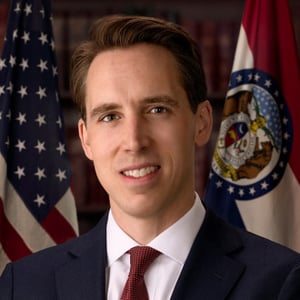
U.S. SENATOR JOSH HAWLEY TOOK OFFICE IN JANUARY 2019.
Raised in rural Missouri, U.S. Senator Josh Hawley previously served as Missouri’s Attorney General. There he earned a reputation for taking on the big and the powerful to protect Missouri workers and families. He has battled big government and big business, special interests, organized crime, and anyone who would threaten the well-being of Missourians.
A native of small town Lexington, Missouri in rural Lafayette County, Senator Hawley graduated from Rockhurst High School in Kansas City. After graduating from Stanford University in 2002 and Yale Law School in 2006, he moved back home to mid-Missouri with his wife, Erin, where they started a family. They are the proud parents of two young boys, Elijah and Blaise.
Senator Hawley is recognized as one of the nation’s leading constitutional lawyers. He has litigated at the Supreme Court of the United States, the federal courts of appeals, and in state court, fighting for the people’s liberties. He previously fought Obamacare at the Supreme Court — and won — as one of the lead attorneys in the landmark Hobby Lobby case. He was also a lead attorney in the Hosanna-Tabor case at the Supreme Court, protecting the rights of churches.
As Attorney General, he fought the Washington overreach threatening farms and family businesses, including the Waters of the United States Rule and the Clean Power Plan. Senator Hawley has also taken on big opioid manufacturers, challenging their unethical marketing practices that helped create an epidemic of opioid abuse. He cracked down on human trafficking in Missouri, leading the largest anti-trafficking bust in Missouri history. And he stood up to big tech, launching investigations of the most powerful companies in the world—Google and Facebook—to protect Missourians, their data, and the First Amendment.
The youngest Senator in America, Senator Hawley serves on the Senate Committees on the Judiciary; Armed Services; Homeland Security and Governmental Affairs; Small Business and Entrepreneurship; and the Special Committee on Aging.

George C. Dix Professor in Constitutional Law, Northwestern University Pritzker School of Law
John O. McGinnis is a graduate of Harvard College and Harvard Law School where he was an editor of the Harvard Law Review. He also has an MA degree from Balliol College, Oxford, in philosophy and theology. Professor McGinnis clerked on the U.S. Court of Appeals for the District of Columbia. From 1987 to 1991, he was deputy assistant attorney general in the Office of Legal Counsel at the Department of Justice. He is the author of Accelerating Democracy: Transforming Government Through Technology (Princeton 2013) and Originalism and the Good Constitution (Harvard 2013) (with M. Rappaport). He is a past winner of the Paul Bator award given by the Federalist Society to an outstanding academic under 40. He has been listed by the United States on the roster of panelists who may be called upon to decide World Trade Organization Disputes.

Executive Vice President and Senior Counselor to the President, The Federalist Society for Law and Public Policy Studies
B.A., Yale; J.D., University of Chicago. Lee Liberman Otis is the Executive Vice President and Senior Counselor to the President at the Federalist Society. She also serves as a member of the American Law Institute (ALI), a senior fellow of the Administrative Conference (ACUS), and as the co-chair of the National Constitution Center's Coalition of Freedom Advisory Board. She previously was a special assistant and an Associate Deputy Attorney General at the U.S. Department of Justice, General Counsel of the Department of Energy, an associate in the appellate section of Jones, Day, Reavis & Pogue, an associate counsel to President George H.W. Bush, and a law clerk to Associate Justice Antonin Scalia. She also served as an assistant professor of law at George Mason, where she taught legislation, federal jurisdiction, constitutional law, civil procedure, and appellate advocacy. Ms. Otis has been an important member of the Federalist Society team since the organization’s beginnings. Together with David McIntosh, she led the effort to start what became the Chicago chapter of the Society. She also helped organize the Society’s first conference at Yale, its second conference at Chicago, and its first Lawyers Division chapter in Washington DC, as well as the effort to incorporate the Society, recruit its permanent staff, and obtain its early funding. She was a Founding Director of the Federalist Society.

Executive Director, Salmon P. Chase Center for Civics, Culture, and Society, The Ohio State University
Professor Lee J. Strang serves as the inaugural executive director of the Salmon P. Chase Center for Civics, Culture, and Society at The Ohio State University.
Initiated in 2023 by the state of Ohio, the Chase Center will be an academic home at Ohio State for teaching, research, and programing on the foundations of the American constitutional order and its impact on society. As executive director, Professor Strang is responsible for organizing the center, overseeing the hiring and appointment of the center’s faculty, developing curriculum, and delivering student and academic programming. He also holds a faculty appointment in the Moritz College of Law at Ohio State.
Professor Strang is a nationally recognized legal scholar who has published dozens of articles in leading journals in the fields of constitutional law and interpretation, property law, and religion and the First Amendment. He co-edits the textbook Federal Constitutional Law, and his most recent book, Originalism’s Promise: A Natural Law Account of the American Constitution is the first book-length, natural law justification for originalism. He currently is writing on civic thought and leadership, and he is finalizing a book on the history of American Catholic legal education (with John M. Breen).
Before joining Ohio State, Professor Strang served as the inaugural director of the University of Toledo’s Institute of American Constitutional Thought & Leadership. He joined the Toledo College of Law faculty in 2008, was granted tenure in 2010, and was named John W. Stoepler Professor of Law & Values in 2015. The University of Toledo awarded Professor Strang its Outstanding Faculty Research and Scholarship Award in 2017. Before that, he was a visiting professor at Michigan State University College of Law. A graduate of the University of Iowa, where he was articles editor of the Iowa Law Review and Order of the Coif, Professor Strang holds an LL.M. degree from Harvard Law School.
Professor Strang has been a visiting scholar at the Georgetown Center for the Constitution and a visiting fellow at the James Madison Program at Princeton University. In 2016, he was appointed to the Ohio Advisory Committee of the U.S. Commission on Civil Rights and reappointed as chair in 2023.
Prior to teaching, Professor Strang served as a judicial clerk for Judge Alice M. Batchelder of the U.S. Court of Appeals for the Sixth Circuit. He was also an associate for Jenner & Block LLP in Chicago, where he practiced in general and appellate litigation.
Professor Strang is a frequent presenter at scholarly conferences. He is the president of the Board of Trustees of Northwest Ohio Classical Academy, Ohio’s first classical charter school. He is also a regular participant in debates at law schools across the country, a contributor to the media, and a speaker to political, civic, and religious groups.


Young Legal Scholars Paper Presentations [Part 2]
Event Video: Young Legal Scholars Paper Presentations [Part 2]
Pre-Symposium Panel: Young Legal Scholars
Michael W. McConnell, Akhil Reed Amar, Josh Blackman, Jonathan Green, Julia D. Mahoney, Bernadette Meyler, Michael T. Morley, Bertrall Ross, Ilan Wurman
Before the National Student Symposium begins, the Federalist Society's Faculty Division will host a panel of young...
Young Legal Scholars Panel
Akhil Reed Amar, Josh Blackman, Jonathan Green, Julia D. Mahoney, Michael W. McConnell, Bernadette Meyler, Michael T. Morley, Bertrall Ross, Ilan Wurman
Before the National Student Symposium begins, the Federalist Society's Faculty Division will host a panel of...
Debate: The True Extent of Presidential Power
Craig Green, Andrea M. Leelike, Saikrishna Prakash, Lorenzo B. Riboni, John C. Yoo
On October 29, 2020, the Penn and Temple Student Chapters of the Federalist Society hosted...
Necessary & Proper Episode 58: Debate: The True Extent of Presidential Power
John C. Yoo, Saikrishna Prakash, Craig Green
On October 29, the Penn and Temple Student Chapters of the Federalist Society hosted former officemates...
Showcase Panel III: The States & Administrative Law
Nestor Davidson, Christopher R. Green, Michael Scudder, Miriam Seifter, Jeffrey S. Sutton
We live in a system where regulators make the rules, investigate alleged violations of the...
Debate—State Blaine Amendments
Carlos T. Bea, David A. Cortman, Lisa Ezell, Steven Green
The Supreme Court has agreed to hear oral arguments in Trinity Lutheran Church of Columbia, Inc. v....
Panel 1: Roundtable on Judicial Deference v. Judicial Engagement
Randy E. Barnett, Elizabeth Price Foley, Christopher R. Green, Josh Hawley, John O. McGinnis, Lee Liberman Otis, Lee J. Strang
The Federalist Society's Facutly Division hosted this roundtable discussion on "Judicial Deference v. Judicial Engagement"...