

Professor of Law, Stanford Law School
Orin S. Kerr is a Professor of Law at Stanford Law School, where he teaches and writes in the areas of criminal procedure and computer crime law. Kerr earned mechanical engineering degrees from Princeton University and Stanford University before graduating with a J.D. from Harvard Law School. He is a former law clerk to Justice Anthony M. Kennedy at the United States Supreme Court and Judge Leonard I. Garth of the U.S. Court of Appeals for the Third Circuit.
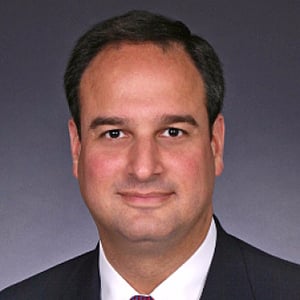
Partner, Perkins Coie LLP
Michael Sussmann, formerly with the U.S. Department of Justice, is a nationally-recognized privacy, cybersecurity and national security lawyer. He is engaged on some of the most sophisticated, high-stakes matters today, such as his representation of the Democratic National Committee and Hillary Clinton’s presidential campaign in their responses to Russian hacking in the 2016 presidential election. This work was most recently discussed in the best-selling book Hacks (2017).
Michael has been ranked as a “Privacy and Data Security Expert” in the Chambers Global and Chambers USAdirectories. As such, he is often quoted in The New York Times, The Washington Post, The Wall Street Journal and other media. His legal work also has been cited by investigative reporters in two other important books: Power Wars (2015) and Dragnet Nation (2015). He has provided Congressional testimony and litigated national security issues in federal court.

Executive in Residence, Wake Forest University School of Business
John Allison is an Executive in Residence at the Wake Forest School of Business. He is a member of the Cato Institute’s Board of Directors and Chairman of the Executive Advisory Council of the Cato Institute’s Center for Monetary and Financial Alternatives. Allison was president and CEO of the Cato Institute from October 2012 to April 2015. Prior to joining Cato, Allison was chairman and CEO of BB&T Corporation, the 10th-largest financial services holding company headquartered in the United States. During his tenure as CEO from 1989 to 2008, BB&T grew from $4.5 billion to $152 billion in assets. He was recognized by theHarvard Business Reviewas one of the top 100 most successful CEOs in the world over the last decade.
Allison has received the Corning Award for Distinguished Leadership, been inducted into the North Carolina Business Hall of Fame, and received the Lifetime Achievement Award from theAmerican Banker. He is the author of The Financial Crisis and the Free Market Cure: Why Pure Capitalism Is the World Economy’s Only Hope and The Leadership Crisis and the Free Market Cure: Why the Future of Business Depends on the Return to Life, Liberty, and the Pursuit of Happiness. In addition, he is a former Distinguished Professor of Practice at Wake Forest University School of Business, and serves on the Board of Visitors at the business schools at Wake Forest, Duke, and the University of North Carolina–Chapel Hill.
Allison is a Phi Beta Kappa graduate of the University of North Carolina–Chapel Hill. He received his master’s degree in management from Duke University and is also a graduate of the Stonier Graduate School of Banking. Allison is the recipient of six honorary doctorate degrees.

Maurice and Hilda Friedman Professor of Law, Columbia Law School; CEO, New Civil Liberties Alliance
Philip Hamburger is the Maurice and Hilda Friedman Professor of Law at Columbia Law School, and Chief Executive Officer at the New Civil Liberties Alliance. Before coming to Columbia, he was the John P. Wilson Professor at the University of Chicago Law School.
He writes on constitutional law and its history—with particular emphasis on religious liberty, freedom of speech and the press, judicial office, administrative power, and unconstitutional conditions.
His books are Separation of Church and State (Harvard 2002), Law and Judicial Duty (Harvard 2008), Is Administrative Law Unlawful? (Chicago 2014), The Administrative Threat (Encounter 2017), and Liberal Suppression: Section 501(c)(3) and the Taxation of Speech (Chicago 2018). A forthcoming book is Purchasing Submission: Conditions, Power, and Freedom (Harvard 2021).
He is a member of the American Academy of Arts and Sciences, and he has served on the board of directors of the American Society for Legal History. He has twice received the Sutherland Prize for the most significant contribution to English legal history, and has been awarded the Henry Paolucci - Walter Bagehot Book Award, the Hayek Book Prize, and the Bradley Prize.
Senior Fellow, Center for American Progress
Kate Martin is a Senior Fellow at American Progress where she works on issues at the intersection of national security, civil liberties, and human rights. The New York Times’ Taking Note blog described her as “an expert on surveillance and detention, and a leading advocate for the rule of law in the so-called ‘war on terror.’” Before coming to American Progress, Ms. Martin served as director of the Center for National Security Studies for more than 20 years. She frequently testifies before Congress on national security and civil liberties issues. She is also a frequent commentator in the national media and has written extensively on these issues for the past 25 years. At the Center for National Security Studies, Martin brought lawsuits that challenged government deprivations of civil liberties. She has taught national security law and served as general counsel to the National Security Archive.
Ms. Martin is a graduate of the University of Virginia School of Law and Pomona College. Before joining the public interest world, she served as a partner at the law firm of Nussbaum, Owen & Webster.

Founder, Libertas-West Project
Karen Lugo is a constitutional law consultant and national security analyst. She was Director of the Center for Tenth Amendment at Texas Public Policy Foundation from 2013 to 2015. When living in California, she was Co-Director of the Center for Constitutional Jurisprudence Center. From 2005 – 2012, she was a clinical visiting and adjunct professor at Chapman University School of Law where she co-taught the advanced Constitutional Law Clinic. Karen has co-authored and written circuit-level and Supreme Court amicus briefs on such issues as FISA Surveillance, Healthcare Reform, Arizona’s Border Security, Gay Marriage, The Ten Commandments, Eminent Domain, Christian Clubs on University Campuses, and Material Support for Terrorists.
Karen is the founder of the Libertas-West Project, a center for study Islamic integration and radicalization issues. In this capacity, she consulted with the Center for Security Policy to write a book on local over-watch of mosque construction and community engagement called: Mosques in America: A Guide to Accountable Permit Hearings and Continuing Citizen Oversight.
Karen writes and speaks for European and American groups on the importance of basing assimilation efforts on principles of Western exceptionalism. She presented a policy brief to the French Conseil d’Etat analyzing the legal implications of banning the burqa. Ms. Lugo has written one of the most comprehensive overviews of sharia law in American courts, American Family Law and Sharia-Compliant Marriages, for the Federalist Society law journal, Engage. She has written several white papers on the American Law for American Courts legislation and sharia tribunals in America.
Ms. Lugo was an appointee to the California Advisory Committee to the U.S. Commission on Civil Rights. She also taught a Human Rights law course on the contrast between French and English Enlightenment theories in Strasbourg, France.
Until moving from California, Ms. Lugo was a member of the David Horowitz Freedom Center Board of Directors. She was also a regular guest on the Orange County PBS local issues debate program, Inside OC, and she is a contributor to Pajamas Media, National Review Online, City Journal, American Spectator, American Greatness, Townhall.com, American Thinker, Daily Caller, and Family Security Matters. She has been interviewed by dozens of radio hosts and has spoken for civic groups on constitutional and cultural concerns.
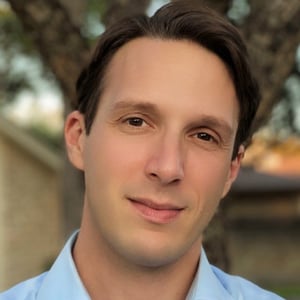
Senior Lecturer; Director, The Robert S. Strauss Center for International Security and Law, The University of Texas at Austin School of Law
Adam Klein is Director of the Strauss Center and Director of Strauss’ Program on Technology, Security, and Global Affairs. Adam also serves as a Senior Lecturer at the School of Law. Before joining the Strauss Center, Adam served as Chairman of the United States Privacy and Civil Liberties Oversight Board, the independent, bipartisan federal agency responsible for overseeing counterterrorism programs at the NSA, FBI, CIA, Department of Homeland Security, and other federal agencies. As the Board’s Senate-confirmed Chairman, he oversaw its oversight and advice engagements with other federal agencies, while also serving as the Board’s chief executive officer.
Before entering government, Adam was the Robert M. Gates Senior Fellow at the Center for a New American Security, a bipartisan national-security research institution in Washington, DC. There, his research focused on government surveillance, intelligence powers, and national security law. Previously, Adam practiced law at Wilmer Cutler Pickering Hale & Dorr, LLP and served as a law clerk to Justice Antonin Scalia of the U.S. Supreme Court and Judge Brett Kavanaugh of the U.S. Court of Appeals for the D.C. Circuit. He has also worked on national-security policy at the RAND Corporation, the 9/11 Public Discourse Project (the non-profit successor to the 9/11 Commission), and in the U.S. Congress. He received his BA from Northwestern University and his JD from Columbia Law School.
Adam is a former Council on Foreign Relations International Affairs Fellow and Robert Bosch Foundation Fellow in Berlin. He speaks German and French.

Partner, Drinker Biddle & Reath LLP
Jeff Jacobson defends consumer, privacy and securities class actions, and represents media, technology and other companies in general commercial litigation. With nearly two decades in private practice and several years of experience at the highest levels of the New Jersey Attorney General’s Office, Mr. Jacobson assists his clients to resolve and minimize the reputational damage and business interruptions that can arise from litigation, particularly costly class actions. In addition, Mr. Jacobson has considerable and proven skills in managing the electronic discovery challenges presented by complex litigation and investigative matters.
During his tenure as director of the New Jersey Division of Law and chief counsel to the New Jersey Attorney General (2014-16), Mr. Jacobson oversaw law enforcement investigations involving consumer protection and data privacy, chaired the Attorney General’s Cyber Working Group, and oversaw more than 500 lawyers who represented all agencies of state government in defensive and affirmative litigation. Throughout his tenure, Jeff personally handled some of the state’s highest profile cases in state and federal court.
Because Mr. Jacobson has chaired both the prosecution and defense of major consumer fraud and privacy litigation, he is able to provide his clients with the benefit of a truly multifaceted and strategic perspective regarding even the highest-stakes claims. Mr. Jacobson has successfully defended consumer fraud and privacy-related class actions for media, electronics and consumer products companies, as well as securities class actions for U.S.-based and foreign private issuers in federal and state trial and appellate courts.
Class actions can be both costly and disruptive, so Mr. Jacobson strives to resolve such matters in his client’s favor as quickly and inexpensively as possible. This may mean moving the court to deny class certification at the earliest stage of a case, seeking quick summary judgment on key issues underlying the class motion, or devising a settlement that costs less than litigating the case. In matters requiring extensive discovery, Mr. Jacobson focuses on avoiding unnecessary tasks and minimizing vendor costs.
Mr. Jacobson has been selected to the Data Protection and Privacy and Securities Litigation lists by US Legal 500, a Legalease Publication. A description of the selection methodology can be found at www.legal500.com/assets/pages/about-us/how-it-works.html#rank. He has also been recognized as a Securities Litigation “Star” in the IFLR Benchmark Litigation Guide. A description of the selection methodology can be found at www.benchmarklitigation.com/general/research. (No aspect of these advertisements have been approved by the Supreme Court of New Jersey.)
Mr. Jacobson has written extensively on class action defense and e-discovery strategies for the New York Law Journal, Class Action Litigation Report, Product Liability Law 360, and other publications. He is also a member of the advisory board of the Association of Certified E-Discovery Specialists, and served on a New Jersey Supreme Court task force to assess attorney ethics issues arising from metadata in electronic documents.
Partner, Sidley Austin LLP
Alan Raul is the founder and leader of Sidley’s highly ranked Privacy, Data Security and Information Law practice. He represents companies on federal, state and international privacy and cybersecurity issues, including global data protection and compliance programs, data breaches, consumer protection issues and Internet law. Mr. Raul advises companies regarding their cybersecurity and information governance and preparedness, and helps them address crisis management for data security incidents. Mr. Raul’s practice involves litigation and counseling regarding consumer class actions and investigations, enforcement actions and policy development by the FTC, State Attorneys General, SEC, Department of Justice and other government agencies.
Mr. Raul provides clients with perspective gained from extensive government service. He previously served as Vice Chairman of the White House Privacy and Civil Liberties Oversight Board, General Counsel of the Office of Management and Budget, General Counsel of the U.S. Department of Agriculture, and Associate Counsel to the President.
Mr. Raul serves as a member of the Data Security, Privacy, and Intellectual Property Litigation Advisory Committee of the U.S. Chamber Litigation Center (affiliated with the U.S. Chamber of Commerce). He also serves ex officio on the American Bar Association’s Cybersecurity Legal Task Force by past appointment of the ABA President, and as a member of the Practicing Law Institute’s (PLI) Privacy Law Advisors Group.
Mr. Raul has represented a Special Cybersecurity Review Committee of the Board of Directors of a major tech company in connection with its independent investigation of the company’s handling of major data breaches.
In addition to leading a “Privacy and Data Security” practice nationally rated by Chambers Global and Chambers USA, Mr. Raul is ranked by Chambers in its top tier of Privacy and Data Security practitioners. Chambers USA has described Mr. Raul as a “true ‘ambassador’ for the privacy sector” who “attracts praise for his deep knowledge of the field. Interviewees stress that ‘he gives invaluable advice’ and is known to be a strong litigator. He also earns plaudits for his regulatory compliance and data protection policy expertise.” He has been named as a leading international Internet and E-Commerce Lawyer in Who’s Who Legal. Mr. Raul was also named to Ethisphere Institute’s “Attorneys Who Matter” in Data Privacy/Security, which recognizes lawyers with the highest commitment to public service, legal community engagement and academic involvement. In 2016, the Washingtonian named Mr. Raul one of Washington, DC’s Best Lawyers: Cybersecurity.
In 1991, Mr. Raul co-founded the “Lawyers Have Heart” 10K run and walk, to benefit the American Heart Association. He continues his active involvement with the event.
Senior Of Counsel, Covington & Burling LLP and Executive Chairma, The Chertoff Group
Michael Chertoff concentrates in the area of White Collar Defense and Investigations. In recent years, he has handled a series of federal investigations, including complex criminal and civil regulatory matters. He has advised major clients on SEC and Justice Department investigations and successfully served as the independent monitor of a major national healthcare company under criminal and civil investigation.
In addition to his legal work, Mr. Chertoff is Founder and Chairman of The Chertoff Group, a security and risk management firm, where he provides high-level strategic counsel to corporate and government leaders on a broad range of security issues, from risk identification and prevention to preparedness, response and recovery.
In April of 2012, Mr. Chertoff was elected as the new Chairman of the Board of Directors of BAE Systems, Inc. He also sits on the board of directors or board of advisors of a number of companies and nonprofits.
Previously, Mr. Chertoff served as Secretary of the Department of Homeland Security. As Secretary, he led a 218,000 person department with a budget of $50 billion. Mr. Chertoff developed and implemented border security and immigration policy; promulgated homeland security regulations; and spearheaded a national cyber security strategy. He also served periodically on the National Security Council and the Homeland Security Council, and on the Committee on Foreign Investment in the United States.
Prior to his appointment to the Cabinet, Mr. Chertoff served from 2003 to 2005 on the U.S. Court of Appeals for the Third Circuit. Before becoming a federal judge, Mr. Chertoff was the Assistant Attorney General for the Criminal Division of the U.S. Department of Justice. In that position, he oversaw the investigation of the 9/11 terrorist attacks, and formed the Enron Task Force, which produced more than 20 convictions, including those of CEOs Jeffrey Skilling and Kenneth Lay.
Mr. Chertoff’s career includes more than a decade as a federal prosecutor, including service as U.S. Attorney for the District of New Jersey, First Assistant U.S. Attorney for the District of New Jersey, and Assistant U.S. Attorney for the Southern District of New York. As a federal prosecutor, Mr. Chertoff investigated and personally prosecuted significant cases of political corruption, organized crime, and corporate fraud.
From 1994-2001, Mr. Chertoff represented major corporations and individuals in numerous white collar investigations and trials. Among other matters, he successfully represented the nation’s largest hospital company in a four year, multi-jurisdictional criminal and civil investigation, represented major corporations in corruption scandals, and obtained acquittals at trial for individual criminal defendants.
Mr. Chertoff has received numerous awards including the Department of Justice Henry E. Petersen Memorial Award (2006); the Department of Justice John Marshall Award for Trial of Litigation (1987); NAACP Benjamin L. Hooks Award for Distinguished Service (2007); European Institute Transatlantic Leadership Award (2008); and two honorary doctorates. His trial experiences have been featured in over half a dozen books and many news articles.
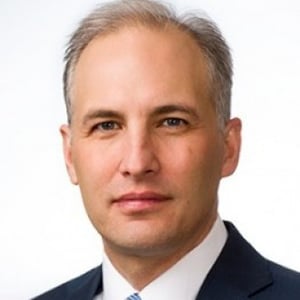
Chief Trust & Security Officer, Uber Technologies, Inc.
Mr. Matthew G. Olsen, also known as Matt, serves as the Chief Trust & Security Officer at Uber Technologies, Inc.
Matt Olsen has served as a leading government official on a range of national security, intelligence and law enforcement issues. He teaches the National Security Law and Practice Seminar at the Law School.
Most recently, Olsen served for three years as the director of the National Counterterrorism Center under President Barack Obama. Created by Congress in response to the attacks of Sept. 11, NCTC is responsible for the integration and analysis of terrorism information and strategic operational planning of counterterrorism activities. Prior to joining NCTC, Olsen was the general counsel for the National Security Agency, serving as NSA’s chief legal officer and focusing on surveillance law and cyber operations.
Olsen worked at the Department of Justice in a number of leadership positions. He served as an associate deputy attorney general, responsible for national security and criminal cases. He also was special counselor to the attorney general and executive director of the Guantanamo Review Task Force, where he led the review of individuals detained at Guantanamo. Olsen served as acting assistant attorney general for National Security and helped establish the National Security Division.
From 1994 to 2006, Olsen was a federal prosecutor in the U.S. Attorney’s Office for the District of Columbia, prosecuting terrorists, violent gang members and white-collar criminals. Olsen served as special counsel to the director of the FBI from 2004 to 2005. He began his public service career as a trial attorney in the Civil Rights Division of the Department of Justice.
Olsen is a lecturer on law at Harvard Law School, a national security analyst for ABC News, and an adjunct senior fellow at the Center for a New American Security. He also is affiliated with the Berkman Klein Center at Harvard, where he helps lead a project on cybersecurity. Olsen is a co-founder of IronNet Cybersecurity, a technology firm based in Washington, D.C., where he leads business development and strategy.
Olsen graduated from Harvard Law School and the University of Virginia and clerked in the U.S. District Court for the District of Columbia.
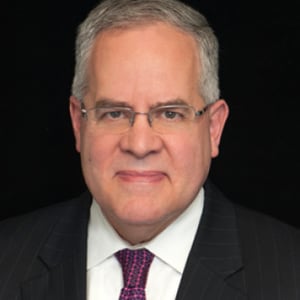
Advisory Board Member, Beacon Global Strategies LLC
Mr. Shedd was named Acting Director of the Defense Intelligence Agency in August 2014 following four years service as Deputy Director. Until January 2015 he led the Defense Intelligence Enterprise workforce comprised of more than 16,500 military and civilian employees worldwide. This workforce spans the Defense Intelligence Enterprise within the Department of Defense with an intelligence mission and/or function, plus all their stakeholders involved in creating, sustaining and enhancing mission capacity.
Mr. Shedd served from May 2007 to August 2010 as the Director of National Intelligence (DNI) Deputy Director for Policy, Plans, and Requirements, where he was responsible for overseeing the formulation and implementation of major Intelligence Community (IC) policies across the full spectrum of issues, from information sharing and IC authorities to analytic standards, among others. In particular, he led the review of Executive Order 12333, the foundational U.S. intelligence policy, which was revised by President George W. Bush in July 2008. Additionally, Mr. Shedd developed and implemented a National Intelligence Strategy, published in August 2009 for the IC and led all strategic planning efforts to determine future intelligence priorities for the Community and the Nation.
From May 2005 to April 2007, Mr. Shedd served as Chief of Staff and, later, Acting Director of the Intelligence Staff to the Director of National Intelligence. Prior to the creation of the Office of the Director of National Intelligence, Mr. Shedd held intelligence policy positions at the National Security Council (NSC) from February 2001 to May 2005. He served as the NSC’s Special Assistant to the President and Senior Director for Intelligence Programs and Reform. Mr. Shedd has been directly involved in the implementation of intelligence reform stemming from the 9/11 Commission report in July 2004, the Intelligence Reform and Terrorism Prevention Act of 2004, and the Weapons of Mass Destruction (WMD) Commission’s report to the President in March 2005.
Between 1984 and 1993, Mr. Shedd served overseas in the U.S. Embassies in Costa Rica and Mexico. Mr. Shedd has also held a variety of senior management assignments at the Central Intelligence Agency, including Chief of Congressional Liaison.
Mr. Shedd is also on the Government Advisory Board of Dataminr, a social media “big data” company that broadly services the Federal Government.
Mr. Shedd holds a B.A. from Geneva College in Beaver Falls, Pennsylvania and a M.A. from Georgetown University’s School of Foreign Service in Latin American Studies. Mr. Shedd was born in Bolivia and grew up in Latin America.

Executive Vice President, Chief Legal Officer, Gates Corporation
Matthew R. A. Heiman joined the Company in May 2026 and has served as the Company’s Chief Legal Officer and Corporate Secretary since June 2026. As Chief Legal Officer, Mr. Heiman is responsible for all legal functions for Gates, including securities and corporate governance, M&A, litigation, commercial, regulatory, compliance, patents and trademarks, real estate, employment and labor, sustainability and environmental matters. Prior to joining Gates, Mr. Heiman held senior legal leadership roles at Waystar, where he served as Chief Legal & Administrative Officer from 2023 to 2025 and as General Counsel and Corporate Secretary from 2020 to 2023. Prior to that, he was with Johnson Controls, where he served as Vice President, Corporate Secretary, and Associate General Counsel. Mr. Heiman has been a Senior Fellow for the National Security Institute at George Mason University’s Antonin Scalia School of Law since 2018.

Founder and Executive Director, National Security Institute; Assistant Professor of Law, Antonin Scalia Law School, George Mason University
Jamil N. Jaffer is the Founder and Executive Director of the National Security Institute at the Antonin Scalia Law School at George Mason University where he also serves as an Assistant Professor of Law, Director of the National Security Law and Policy Program, and Director of the Cyber, Intelligence, and National Security LLM Program. Jamil also teaches classes on counterterrorism, intelligence, surveillance, cybersecurity, and other national security matters, as well as a summer course held abroad with U.S. Supreme Court Justice Neil M. Gorsuch. Jamil is also affiliated with Stanford University’s Center for International Security and Cooperation and previously served as a Visiting Fellow at the Hoover Institution from 2016 to 2019.
Jamil is also a Venture Partner with Paladin Capital Group, where he assists the firm with investments across the full range of its themes and theses, including a focus on dual-use national security technologies. Jamil also serves on the board of directors of RangeForce, a cybersecurity training and readiness platform startup and Tozny, a digital identity startup, and on the advisory boards of U.S. Strategic Metals, North America’s largest primary producer of cobalt, a critical mineral used in EV batteries, aerospace, and other national security applications; and Constella Intelligence, a deep and dark web intelligence startup. Jamil also serves as an advisor to Beacon Global Strategies, a strategic advisory firm and Duco, a technology platform startup that connects corporations with geopolitical and international business experts. Jamil is also the managing director of Trigraph Caveat Capital, a private investment vehicle.
Among other things, Jamil currently serves on the Board of Directors for the Greater Washington Board of Trade, the Board of Advisors for the Global Cyber Alliance, and the Advisory Board of the Foundation for the Defense of Democracies’ Center on Cyber and Tech Innovation, the Executive Committee of the Reagan Institute Strategy Group. Jamil is also a Fellow at the Academy for Judaic, Christian, and Islamic Studies, an advisor to the Concordia Summit, and is a member of the Board of Directors for the Center for Intelligence Policy, the Board of Directors of Speech First, and the Executive Committee of the International Law and National Security Practice Group of the Federalist Society.
Immediately prior to his current positions, from 2015-2021, Jamil served as a senior business leader at IronNet Cybersecurity, helping take the company from a bootstrapped first-year technology products startup through two rounds of venture capital fundraising, growing from 40 employees to over 300, and through its listing on New York Stock Exchange. In his role as IronNet's Senior Vice President for Strategy, Partnerships & Corporate Development, Jamil worked directly for the co-CEOs of the company, Gen (ret.) Keith B. Alexander, the former Director of the National Security Agency and Founding Commander of U.S. Cyber Command, and Bill Welch, the former COO of Zscaler and Duo; in that role, Jamil led all of the company’s strategic and technology partnership efforts, including developing go-to-market and technology integration plans with some of the largest cloud platforms and cybersecurity companies in the market, evaluating potential acquisition targets, and developing overall corporate strategy and thought leadership around collective security and collaborative defense in the cyber arena.
Prior to his time at IronNet, Jamil served on the leadership team of the Senate Foreign Relations Committee as Chief Counsel and Senior Advisor under Chairman Bob Corker (R-TN), where he worked on key national security and foreign policy issues, including leading the drafting of the proposed Authorization for the Use of Military Force against ISIS in 2014 and 2015, the AUMF against Syria in 2013, and revisions to the 9/11 AUMF against al Qaeda. Jamil was also the lead architect of the Iran Nuclear Agreement Review Act and two sanctions laws against Russia for its first intervention in Ukraine.
Prior to joining SFRC, Jamil served as Senior Counsel to the House Permanent Select Committee on Intelligence under Chairman Mike Rogers (R-MI) where he led the committee’s oversight of NSA surveillance, NRO intelligence issues, and NGA analytic and collection matters, as well as intelligence community-wide counterterrorism issues. Jamil was also the lead architect of the Cyber Intelligence Sharing and Protection Act, the nation’s first cyber threat intelligence sharing legislation that was signed into law in 2015.
In the Bush Administration, Jamil served in the White House as an Associate Counsel to the President, handling Defense Department, State Department, and intelligence community matters, and serving as one of the White House Counsel’s primary representatives to the National Security Council Deputies Committee.
Prior to the White House, Jamil served on the leadership team of the Justice Department’s National Security Division as Counsel to the Assistant Attorney General for National Security, where he focused on counterterrorism and intelligence matters. At NSD, Jamil helped lead the division’s work on In re: Directives, the first ever two-party litigated matter in the FISA Court and the second case before the FISA Court of Review in its 30-year history. Jamil also led NSD’s efforts on the President’s Comprehensive National Cybersecurity Initiative (CNCI), including the drafting of NSPD-54/HSPD-23, and related classified matters, and advised the National Security Agency (NSA) and U.S. Cyber Command’s predecessor organization, the Joint Function Component Command for Network Warfare (JFCC-NW), on matters related to cyber intelligence collection and offensive cyber activities. For his work on these matters, Jamil was awarded the Assistant Attorney General’s Award for Special Initiative and was among the group of lawyers awarded the Director of National Intelligence’s 2008 Legal Award (Team of the Year – Cyber Legal).
Jamil also served in other positions in the Justice Department, including in the Office of Legal Policy, where he worked on the confirmations of Chief Justice John G. Roberts, Jr. and Justice Samuel A. Alito, Jr. to the United States Supreme Court.
Jamil also served as a lawyer in private practice at Kellogg Huber, a Washington, DC-based litigation boutique, as a policy advisor to Congressman Bob Goodlatte (R-VA), and as a staff member or senior advisor on a number of political campaigns, including two presidential campaigns and a presidential transition team. While in law school, Jamil was a member of the University of Chicago Law Review, managing editor of the Chicago Journal of International Law, and National Symposium Editor of the Harvard Journal of Law & Public Policy. Following law school, Jamil served as a law clerk to Judge Edith H. Jones of the United States Court of Appeals for the Fifth Circuit and, later in his career, as a law clerk to then-Judge Neil M. Gorsuch when he first joined the United States Court of Appeals for the Tenth Circuit as well as a law clerk to Justice Neil Gorsuch when he joined the U.S. Supreme Court.
Jamil has published multiple op-eds and academic articles on national security, foreign policy, cybersecurity, counterterrorism, encryption, and intelligence matters, and is the co-author of a book chapter with former NSA Director Gen. (Ret.) Keith B. Alexander on national security and the press in National Security, Leaks, and the Freedom of the Press: The Pentagon Papers Fifty Years On (2021) and a book chapter with former CIA Director Gen. (ret.) Mike Hayden on ISIS, al Qaeda, and other international terrorist groups in Choosing to Lead: American Foreign Policy for a Disordered World (2015). Jamil has also written book chapters on cybersecurity and surveillance, as well as op-eds and policy papers with former Attorney General Michael B. Mukasey, former National Counterterrorism Center Director Matt Olsen, and Congressman Mike Waltz (R-FL), among others.
Jamil has previously taught graduate-level courses in intelligence law and policy at George Washington University’s Elliott School of International Affairs and the National Intelligence University, served an outside advisor to the Cyberspace Solarium Commission, and has recently testified before committees of the U.S. Senate and House of Representatives on China, cybersecurity, counterterrorism, and other national security matters. Jamil has also recently appeared on a range of national television and radio outlets including CNN, Fox News, Fox Business, MSNBC, Bloomberg, PBS, Voice of America, and National Public Radio, and in various print and online publications, including the Wall Street Journal, New York Times, and the Washington Post on a range of national security matters including cybersecurity, counterterrorism, surveillance, encryption, privacy, and foreign policy issues.
Jamil holds degrees from UCLA (BA, cum laude), the University of Chicago Law School (JD, with honors), and the United States Naval War College (MA, with distinction).

Professor of Law, Roger Williams University School of Law
As an expert in National Security Law, Professor Peter Margulies focuses on the delicate balance between liberty, equality, and security in issues involving law and terrorism. Professor Margulies has written almost a dozen articles discussing the War on Terror. He currently works with RWU Law Professor Jared Goldstein, along with litigators from the law firm Edwards Angell Palmer & Dodge, in representing two Afghan detainees. Professor Margulies led a national conference entitled “Legal Dilemmas in A Dangerous World: Law, Terrorism and National Security” held at RWU.
Professor Margulies also has an extensive background in immigration law and has represented Haitian refugees and conducted outreach to community legal service providers.
Peter Marguiles teaches Immigration Law, National Security Law and Professional Responsibility. He has filed amicus briefs in high-visibility cases with the U.S. Supreme Court and has been frequently cited in the New York Times, the National Law Journal and other media outlets.
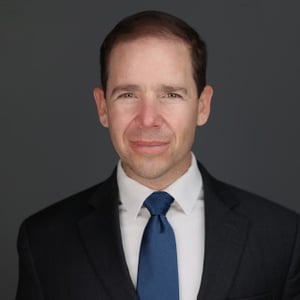
Founder and CEO, Lexpat Global Services
Adam Pearlman is the Founder and Chief Executive Officer of Lexpat Global Services. He is a National Security Law expert and a proven senior leader with experience across the U.S. Departments of Justice, Defense, and State, in the White House, and with the U.S. Federal Judiciary.
Before founding Lexpat, Mr. Pearlman served as the Senior Advisor for Legal Policy in the State Department’s Bureau of Counterterrorism. There, he counseled senior officials on matters covering the entire spectrum of programs and operations to counter terrorism and violent extremism. While participating in sensitive diplomatic engagements and helping to coordinate military operations, he also advised in the development of sanctions policy and initiatives to build legal and operational capacity in partner nations. Mr. Pearlman also managed the Bureau’s participation in federal litigation and led U.S. delegations in multilateral forums concerning criminal justice and rule of law. Separately, Mr. Pearlman supported the State Department’s Bureau of International Narcotics and Law Enforcement Affairs (INL) as the contracted Senior Justice and Rule of Law Advisor in Cabo Verde, Africa. There he was the chief implementer of a Foreign Assistance program that grew eight-fold during his tenure, building host nation capacity across the law enforcement, justice sector, rule of law, anti-money laundering, and corrections disciplines.
A former Associate Deputy General Counsel of the Department of Defense, Mr. Pearlman was agency counsel for complex civil and criminal national security matters in federal and military courts. He also led the Supreme Court and appellate unit of the team dedicated to litigating classified counterterrorism cases. His earlier service in the Department of Justice spanned four litigating divisions and the Office of the Deputy Attorney General. His diverse experience included reviewing complex international transactions and mergers, and advising on immigration removal proceedings, human rights abuses, and terrorist financing investigations. Mr. Pearlman also served with distinction in Iraq as an early advisor to the Iraqi High Tribunal’s prosecution of Saddam Hussein. He was a law clerk for The Honorable Royce C. Lamberth of the U.S. District Court for the District of Columbia, and during law school interned in the White House Counsel’s Office.
Mr. Pearlman is a Senior Fellow at the National Security Institute at George Mason University’s Antonin Scalia Law School, a member of the American Bar Association’s Advisory Committee on Law and National Security, and the Editor-in-Chief of the U.S. Intelligence Community Law Sourcebook. Previously, he has been a Term Member of the Council on Foreign Relations, National Security Fellow at the Foundation for Defense of Democracies, member of the ABA’s Africa Law Initiative Council and of the Center for Strategic & International Studies’ (CSIS) Project on Nuclear Issues, vice chairman of the ABA Section of International Law’s committees on national security, and aerospace and defense, and a liaison to the Board of Directors of the ABA’s Rule of Law Initiative. He has published articles in the Harvard National Security Journal, Stanford Law & Policy Review, Intelligence & National Security, The Foreign Service Journal, Lawfare, and many other outlets.
Mr. Pearlman earned his B.A., with honors, from UCLA, and his J.D., with honors, from The George Washington University Law School, where he was a member of the International Law Review. He also earned a Master of Science of Strategic Intelligence degree from the National Intelligence University, where he was the inaugural recipient of the Kornblum Award for national security law and ethics. Mr. Pearlman is a Certified Financial Crime Specialist and holds certificates in international human rights law from the University of Oxford and in anti-corruption law from American University’s Washington College of Law. He is admitted to the State Bars of California and Virginia, as well as to the Bar of the United States Supreme Court. He speaks and reads Portuguese at the intermediate level.

Fellow, National Security Institute, Antonin Scalia Law School, George Mason University
Vince Vitkowsky chaired the Executive Committee of the Federalist Society’s International and National Security Law and Policy Practice Group for over a decade. He is also a Fellow at the National Security Institute of George Mason University Law School. Vince spent 45 years in private practice, primarily in AmLaw 100/200 firms and their spin-offs. His practice included domestic and international commercial arbitration and litigation, as well as cyber risks and liabilities. Vince's current focus is on national security policy, artificial intelligence, cybersecurity, and counterterrorism. He has often written and spoken on national security and other public policy issues. Among other affiliations, Vince has been an Adjunct Fellow at the Center for Law and Counterterrorism of the Foundation for the Defense of Democracies, a member of the Executive Committee of the American Branch of the International Law Association, and Co-Chair of the Committee on Interventions and Trial Observations of the International Bar Association’s Human Rights Institute. He received his B.A. from Northwestern University and his J.D. from Cornell Law School.

Corporate Vice President & Deputy General Counsel, Microsoft
David Howard is Corporate Vice President and Deputy General Counsel with Microsoft. He joined Microsoft in 2010, after nearly 20 years at Dechert LLP. Howard joined Dechert in 1985, upon completion of a clerkship with the Honorable Marvin Katz of the U.S. District Court for the Eastern District of Pennsylvania. He left the firm in 1987 to take a special assignment with the White House Counsel’s Task Force on the Iran/Contra Matter. In October 1987, Howard became an Assistant U.S. Attorney for the Eastern District of Pennsylvania and served in that position through 1994. He returned to Dechert in 1995. A graduate of Princeton University (A.B., cum laude) and the University of Pennsylvania Law School (J.D., cum laude), Howard is a member of the Pennsylvania Bar and admitted to practice before the U.S. District Court for the Eastern District of Pennsylvania, the Pennsylvania Supreme Court, and the U.S. Courts of Appeal for the Second and Third Circuits.
Partner, Covington & Burling LLP
James Garland is a partner in Covington’s Litigation and White Collar Defense & Investigations practice groups. His practice focuses on complex commercial litigation, internal investigations, white collar criminal defense, and national security.
Mr. Garland has substantial experience litigating high-stakes, multidimensional business disputes for clients across a range of industries, including companies in the high-tech, financial services, defense, transportation, media and entertainment, and pharmaceutical sectors. Many of his civil representations have involved parallel enforcement proceedings in multiple forums, often with significant public relations and policy implications.
In the white collar area, Mr. Garland has represented both corporate and individual clients in large-scale, multi-party criminal investigations and related regulatory enforcement actions. Mr. Garland also regularly advises clients concerning national security-related matters, including with respect to issues involving electronic surveillance, cyber-security, and data privacy.
Mr. Garland returned Covington in 2010 after serving as Deputy Chief of Staff and Counselor to Attorney General Eric Holder at the U.S. Department of Justice. In that role, Mr. Garland advised the Attorney General on a range of enforcement issues, with an emphasis on criminal, antitrust, intellectual property, and cyber-security matters. He worked closely with senior officials at the White House, Main Justice, U.S. Attorneys’ Offices, FBI, SEC, and other federal, state, and local enforcement agencies.
Executive in Residence, Wake Forest University School of Business
John Allison is an Executive in Residence at the Wake Forest School of Business. He is a member of the Cato Institute’s Board of Directors and Chairman of the Executive Advisory Council of the Cato Institute’s Center for Monetary and Financial Alternatives. Allison was president and CEO of the Cato Institute from October 2012 to April 2015. Prior to joining Cato, Allison was chairman and CEO of BB&T Corporation, the 10th-largest financial services holding company headquartered in the United States. During his tenure as CEO from 1989 to 2008, BB&T grew from $4.5 billion to $152 billion in assets. He was recognized by theHarvard Business Reviewas one of the top 100 most successful CEOs in the world over the last decade.
Allison has received the Corning Award for Distinguished Leadership, been inducted into the North Carolina Business Hall of Fame, and received the Lifetime Achievement Award from theAmerican Banker. He is the author of The Financial Crisis and the Free Market Cure: Why Pure Capitalism Is the World Economy’s Only Hope and The Leadership Crisis and the Free Market Cure: Why the Future of Business Depends on the Return to Life, Liberty, and the Pursuit of Happiness. In addition, he is a former Distinguished Professor of Practice at Wake Forest University School of Business, and serves on the Board of Visitors at the business schools at Wake Forest, Duke, and the University of North Carolina–Chapel Hill.
Allison is a Phi Beta Kappa graduate of the University of North Carolina–Chapel Hill. He received his master’s degree in management from Duke University and is also a graduate of the Stonier Graduate School of Banking. Allison is the recipient of six honorary doctorate degrees.
Osborn Maledon
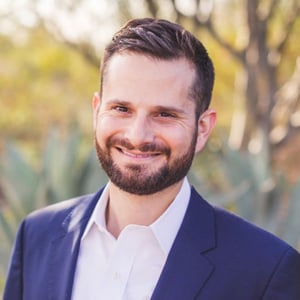
Andrew G. Pappas is an Assistant Solicitor General in the Office of the Attorney General of Arizona. Mr. Pappas is a member of the California Bar, and is admitted to practice before the U.S. Court of Appeals for the Ninth Circuit and the U.S. District Courts for the Central District of California, Southern District of California, and Northern District of Illinois. Before joining the Attorney General's Office, Mr. Pappas was an associate attorney at Gibson, Dunn & Crutcher LLP in Los Angeles. He graduated from Occidental College in 2004, and from the University of Arizona James E. Rogers College of Law in 2009.
Professor of Law, Stanford Law School
Orin S. Kerr is a Professor of Law at Stanford Law School, where he teaches and writes in the areas of criminal procedure and computer crime law. Kerr earned mechanical engineering degrees from Princeton University and Stanford University before graduating with a J.D. from Harvard Law School. He is a former law clerk to Justice Anthony M. Kennedy at the United States Supreme Court and Judge Leonard I. Garth of the U.S. Court of Appeals for the Third Circuit.

Courthouse Steps: Carpenter v. United States
Orin S. Kerr, Michael Sussmann
Arrests made in an armed robbery case occurred because the Federal Bureau of Investigation was...
The Administrative State and The Rule of Law: Are Rollbacks Really Reform?
John A. Allison, Philip A. Hamburger
The Trump administration has taken a number of significant steps to provide the regulatory relief...
Reauthorization of Section 702 - Podcast
Kate Martin, Karen J. Lugo, Adam I. Klein
Section 702 of the Foreign Intelligence Surveillance Act (FISA) is up for reauthorization in 2017....
Spokeo v. Robins: One Year Later - Podcast
Jeffrey S. Jacobson, Alan C. Raul
When is an alleged injury “concrete and particularized” under Article III of the U.S. Constitution?...
Metadata, Surveillance, and Intelligence Collection in the Trump Administration - Podcast
Michael Chertoff
President-elect Trump has made counterterrorism a focal point of his administration. The disciplined use of...
Executive Order 12333 and Foreign Intelligence Collection - Podcast
Matthew G. Olsen, David Shedd, Matthew R. A. Heiman
In 1981, President Reagan signed Executive Order 12333. It assigned foreign intelligence collection responsibilities to...
The International Law and Policy of Counterterrorism
Matthew R. A. Heiman, Jamil N. Jaffer, Peter S. Margulies, Adam R. Pearlman, Vincent Vitkowsky
As ISIS, al Qaeda and its offshoots, and other groups spread terror across the globe,...
The Reach of Federal Warrants - The Microsoft Case - Podcast
David Howard, James M. Garland
In December of 2014, Microsoft filed a brief with the Federal Court of Appeals for...
Luncheon Address by John Allison
John A. Allison, Andrew G. Pappas
John Allison, President and CEO of the Cato Institute, delivered the Keynote Address at the...
Cellphone Searches and the Fourth Amendment – Riley v. California and United States v. Wurie - Podcast
Orin S. Kerr
On Tuesday, April 29, 2014 the Supreme Court held back-to-back hearings on cases testing the...