
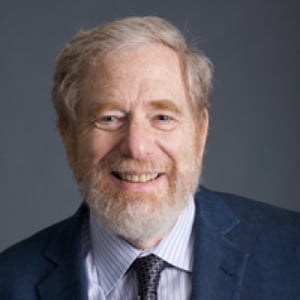
Carmack Waterhouse Professor of Constitutional Law, Georgetown Law
After graduating from Harvard Law School in 1971, Professor Seidman served as a law clerk for J. Skelly Wright of the D.C. Circuit and U.S. Supreme Court Justice Thurgood Marshall. He then was a staff attorney with the D.C. Public Defender Service until joining the Law Center faculty in 1976. He teaches a variety of courses in the fields of constitutional and criminal law. He is co-author of a constitutional law casebook and the author of many articles concerning criminal justice and constitutional law. His most recent books are Silence and Freedom (Stanford 2007), Our Unsettled Constitution: A New Defense of Constitutionalism and Judicial Review (Yale 2001) and Equal Protection of the Laws (Foundation 2002).
Counsel, The Judicial Confirmation Network
Wendy Long is legal counsel to the Judicial Confirmation Network. Until March 2005, she was a litigation partner in the New York office of Kirkland & Ellis LLP. Wendy was a law clerk to U.S. Supreme Court Justice Clarence Thomas and to Judge Ralph Winter of the U.S. Court of Appeals for the Second Circuit in New York. She is a graduate of Northwestern University School of Law, cum laude and Order of the Coif, where she was articles editor of the Northwestern University Law Review, and of Dartmouth College. She previously served as a press secretary in the U.S. Senate, for former U.S. Senator Bill Armstrong (R-Colo.) and former U.S. Senator Gordon Humphrey (R-N.H.).
Partner, Goldstein & Russell PC
Thomas C. Goldstein has argued 28 cases before the Supreme Court, including matters involving federal patent law, class action practice, labor and employment, and disability law. In addition to practicing law, Tom teaches Supreme Court Litigation at Harvard Law School and taught at Stanford Law School as well from 2004-2012.
In the Supreme Court and elsewhere, Mr. Goldstein litigates and advises clients in a broad range of issues. For example, he regularly litigates and lectures on questions of federal patent law. Mr. Goldstein frequently advises clients, litigates, and consults on legislative matters relating to the First Amendment. And he regularly represents parties in questions relating to the game of poker, including its lawfulness as a matter of federal and state law. Tom's clients include plaintiffs, criminal defendants, and major corporations such as BG Group, Home Depot, Humana, IMS Health, Nike, PokerStars, POM Wonderful, and Pemex.
In addition to practicing law, Tom founded, and is the publisher of, SCOTUSblog, which in 2013 became the only weblog ever to receive the Peabody Award for excellence in electronic media. It also won the 2013 Society of Professional Journalists (Sigma Delta Chi) prize for deadline reporting for its coverage of the Supreme Court’s healthcare ruling. In 2010, it became the first blog to receive the American Bar Association’s Silver Gavel Award for fostering the American public’s understanding of law and the legal system.
Tom has been repeatedly recognized as a leading member of the bar. In 2010, The National Law Journal named him one of the 40 most influential lawyers of the decade; Tom notably was ten years younger than any other law firm partner listed. Legal Times named him one of the “90 Greatest Washington Lawyers of the Last 30 Years” and praised him for “transforming the practice” of law before the Supreme Court. He is also included in both of the National Law Journal’s most recent lists of the nation’s 100 most influential lawyers (2006 and 2013). He has been repeatedly recognized as one of the nation’s top appellate advocates. GQ Magazine named him one of the 50 most powerful people in Washington, D.C.
Tom is an elected Fellow of the American Academy of Appellate Lawyers, and a member of the American Law Institute. He is involved with a number of professional organizations. He serves as the vice chair of the Amicus Committee of the ABA’s Intellectual Property Section and previously served for two years on the ABA’s Standing Committee on Amicus Curiae Briefs. In those capacities, he has authored several Supreme Court amicus briefs for the ABA. In addition, Tom serves on the boards of advisors of the Washington Legal Foundation and the Georgetown University Supreme Court Institute.
Before founding Goldstein & Howe in 1999, Tom practiced law at Boies & Schiller, LLP and at Jones Day Reavis & Pogue. Tom left the firm he founded in 2006 to create the Supreme Court Practice at Akin, Gump, Strauss, Hauer & Feld, where he also was a partner and principal co-chair of the firmwide litigation practice. He returned to what is now Goldstein & Russell in 2011.
Tom clerked for the Honorable Patricia M. Wald of the U.S. Court of Appeals for the D.C. Circuit.
Associate Professor of Law, University of Colorado Law School
Scott Moss joined CU Law School in 2007 after six years as an attorney in New York City and three years as a professor at Marquette Law School, where he was the 2007 recipient of the James D. Ghiardi Faculty Award for Outstanding Teaching, Student Body Support, and Scholarship. In New York, Professor Moss was a law clerk to U.S. District Judge Constance Baker Motley and then a plaintiff's employment lawyer at Outten & Golden LLP, the largest plaintiff-side employment law practice in the country, where he litigated individual and class action cases of discrimination, harassment, and minimum/overtime wage violations. He also has argued and briefed appeals of employment cases and has undertaken pro bono projects such as First Amendment right-to-protest litigation with the New York Civil Liberties Union, low-income worker clinics in lower Manhattan, and court-sponsored mediations for pro se litigants. Professor Moss received his J.D. (magna cum laude) in 1998 from Harvard Law School, where he was a Senior Editor of the Harvard Civil Rights-Civil Liberties Law Review; his B.A. (Economics) and M.A. (Media Studies) are from Stanford University. Professor Moss's research interests have included employment law, discrimination, constitutional law, various civil procedure rules, and economic analysis of all of the preceding topics.
B.A., Stanford
M.A., Stanford
J.D., Harvard

Judge, United States Court of Appeals, Eighth Circuit
David Stras became a judge on the United States Court of Appeals for the Eighth Circuit on January 31, 2018. Before serving on the Eighth Circuit, Judge Stras was an Associate Justice of the Minnesota Supreme Court, a position he occupied from July 1, 2010 until his appointment to the Eighth Circuit.
Prior to becoming a judge, Stras was a member of the faculty of the University of Minnesota Law School from 2004 through 2010. He taught and wrote in the areas of federal courts and jurisdiction, constitutional law, criminal law, and law and politics.
Judge Stras received his Bachelor of Arts degree, with highest distinction, in 1995 and his Master of Business Administration in 1999, both from the University of Kansas. He also received his law degree from the University of Kansas School of Law in 1999, where he served as Editor-in-Chief of the Criminal Procedure Edition of the Kansas Law Review.
Following law school, Stras clerked for The Honorable Melvin Brunetti of the United States Court of Appeals for the Ninth Circuit and then for The Honorable J. Michael Luttig of the United States Court of Appeals for the Fourth Circuit.
From 2001 to 2002, he practiced white-collar criminal and appellate litigation with the Washington, D.C., office of Sidley Austin Brown & Wood. Following his year in practice, he clerked for The Honorable Clarence Thomas of the Supreme Court of the United States.
Distinguished Senior Fellow and Antonin Scalia Chair in Constitutional Studies, Ethics and Public Policy Center
Edward Whelan is a Distinguished Senior Fellow of the Ethics and Public Policy Center and holds EPPC’s Antonin Scalia Chair in Constitutional Studies. He is the longest-serving President in EPPC’s history, having held that position from March 2004 through January 2021.
Mr. Whelan directs EPPC’s program on The Constitution, the Courts, and the Culture. His areas of expertise include constitutional law and the judicial confirmation process. As a contributor to National Review Online’s Bench Memos blog, he has been a leading commentator on nominations to the Supreme Court and the lower courts and on issues of constitutional law. He has written essays and op-eds for leading newspapers—including the Wall Street Journal, the New York Times, and the Washington Post—opinion journals, and academic symposia and law reviews. The National Law Journal has named Mr. Whelan among its “Champions and Visionaries” in the practice of law in D.C.
Mr. Whelan is co-editor of three volumes of Supreme Court Justice Antonin Scalia’s work: Scalia Speaks: Reflections on Law, Faith, and Life Well Lived (Crown Forum, 2017), a New York Times bestselling collection of speeches by Justice Scalia; On Faith: Lessons from an American Believer (Crown Forum, 2019), a collection of Justice Scalia’s writings on faith and religion; and The Essential Scalia: On the Constitution, the Courts, and the Rule of Law (Crown Forum, 2020), a collection of Justice Scalia’s views on legal issues.
Mr. Whelan, a lawyer and a former law clerk to Justice Scalia, has served in positions of responsibility in all three branches of the federal government. From just before the terrorist attacks of September 11, 2001, until joining EPPC in 2004, Mr. Whelan was the Principal Deputy Assistant Attorney General for the Office of Legal Counsel in the U.S. Department of Justice. In that capacity, he advised the White House Counsel’s Office, the Attorney General and other senior DOJ officials, and departments and agencies throughout the executive branch on difficult and sensitive legal questions. Mr. Whelan previously served on Capitol Hill as General Counsel to the U.S. Senate Committee on the Judiciary. In addition to clerking for Justice Scalia, he was a law clerk to Judge J. Clifford Wallace of the U.S. Court of Appeals for the Ninth Circuit.
In 1981 Mr. Whelan graduated with honors from Harvard College and was inducted into Phi Beta Kappa. He received his J.D. magna cum laude in 1985 from Harvard Law School, where he was a member of the Board of Editors of the Harvard Law Review.
For more on Mr. Whelan’s background, see this interview.
Editor, The Weekly Standard
William Kristol is the editor of The Weekly Standard. He is also a regular panelist on Fox News Sunday, a contributor for the Fox News Channel, and a monthly columnist for the Washington Post. Before starting the Weekly Standard in 1995, Mr. Kristol led the Project for the Republican Future, where he helped shape the strategy that produced the 1994 Republican congressional victory. Prior to that, Mr. Kristol served as chief of staff to Vice President Dan Quayle during the first Bush Administration, and to Education Secretary William Bennett under President Reagan. Before coming to Washington in 1985, Mr. Kristol was on the faculty of Harvard University’s Kennedy School of Government and the Department of Political Science at the University of Pennsylvania.

Executive Vice President, The Federalist Society
Dean Reuter is Executive Vice President at the Federalist Society for Law and Public Policy Studies. He has served in two federal government agency Offices of the Inspector General, as Counsel to the Inspector General and Deputy Inspector General, responsible for policing the use of federal funds granted and contracted through those agencies. As such, he helped conduct and oversee criminal investigations across the country. He is the principal author of the non-fiction book, The Hidden Nazi: The Untold Story of America's Deal with the Devil, and editor of Liberty’s Nemesis: The Unchecked Expansion of the State and Confronting Terror: 9/11 and the Future of American National Security. He was appointed by the President and served as Vice-Chairman of the Board of Directors of the Corporation for National and Community Service, and recently served as an appointee on the U.S. Commission on Presidential Scholars. He is a graduate of Hood College (BA with Honors) and the University of Maryland School of Law.
Professor of Practice, Cardozo School of Law
Gabor Rona received his B.A. from Brandeis University, J.D. from Vermont Law School and LL.M from Columbia Law School.
As the former International Legal Director of Human Rights First, he advised Human Rights First programs on questions of international law and coordinates international human rights litigation. He also represented Human Rights First with governments, intergovernmental and non-governmental organizations, the media and the public on matters of international human rights and international humanitarian law (the law of armed conflict).
Before Human Rights First, Rona was a Legal Advisor in the Legal Division of the International Committee of the Red Cross (ICRC) in Geneva. At the ICRC he focused on the application of international humanitarian and human rights law in the context of counter-terrorism policies and practices. He represented the ICRC in intergovernmental, nongovernmental, academic and public forums and his articles on the topic have appeared in the Financial Times, the Fletcher Forum on World Affairs and the Chicago Journal of International Law, among other publications. In addition, he represented the ICRC in connection with the establishment of international and other criminal tribunals, including the International Criminal Court. He has also taught International Humanitarian Law, International Human Rights Law and International Criminal Law at the International Institute of Human Rights in Strasbourg, France, the University Centre for International Humanitarian Law in Geneva, Switzerland and Columbia Law School in New York.
Retired Partner, Sullivan & Cromwell LLP
Upon his resignation as the Legal Adviser of the U.S. Department of State in January 1993, Mr. Williamson rejoined Sullivan & Cromwell's Washington, D.C. office. He originally joined the Firm in 1964 after graduating from New York University School of Law, where he was an editor of the Law Review. He became a partner of the Firm in 1971, moved to its London office in 1976, returned to its New York office in 1979, moved to its Washington, D.C. office in 1988 and became Of Counsel in 2007. In 2018, he retired from the firm.
At Sullivan & Cromwell, Mr. Williamson engaged in a broad and wide-ranging domestic and international financing and transactions practice, as well as advice with respect to corporate governance issues, the United States’ economic sanctions laws, the ethics rules applicable to government officials and the immunities of foreign sovereigns and international organizations.
Mr. Williamson has been an active participant on panels and other forums involving public international law and national security issues, such as the domestic and international bases for the use of force, the role of the United States with respect to the International Criminal Court, the law of the sea and the application of international legal principles in the war against terrorism.
Mr. Williamson is a member of the Council on Foreign Relations and a former member of the Executive Council of the American Society of International Law, the Executive Committees of the Business and Advisory Committee (BIAC) to the OECD and the U.S. Council for International Business, the United States Advisory Board of NTT DoCoMo, Inc. and the Board of Directors of Triton Oil & Gas Limited.
Mr. Williamson has served on the Boards of Regents and Trustees of the University of the South and as chair of the Board of Regents. He is currently a member of the Board of Directors of the American Council of Trustees and Alumni, a higher education watchdog.
Senior Fellow, Governance Studies, The Brookings Institution
Benjamin Wittes is a senior fellow in Governance Studies at The Brookings Institution. He co-founded and is the editor-in-chief of the Lawfare blog, which is devoted to sober and serious discussion of "Hard National Security Choices," and is a member of the Hoover Institution's Task Force on National Security and Law. He is the author of Detention and Denial: The Case for Candor After Guantanamo, published in November 2011, co-editor of Constitution 3.0: Freedom and Technological Change, published in December 2011, and editor of Campaign 2012: Twelve Independent Ideas for Improving American Public Policy (Brookings Institution Press, May 2012). He is also writing a book on data and technology proliferation and their implications for security. He is the author of Law and the Long War: The Future of Justice in the Age of Terror, published in June 2008 by The Penguin Press, and the editor of the 2009 Brookings book, Legislating the War on Terror: An Agenda for Reform.
His previous books include Starr: A Reassessment, published in 2002 by Yale University Press, and Confirmation Wars: Preserving Independent Courts in Angry Times, published in 2006 by Rowman & Littlefield and the Hoover Institution.
Between 1997 and 2006, he served as an editorial writer for The Washington Post specializing in legal affairs. Before joining the editorial page staff of The Washington Post, Wittes covered the Justice Department and federal regulatory agencies as a reporter and news editor at Legal Times. His writing has also appeared in a wide range of journals and magazines including The Atlantic, Slate, The New Republic, The Wilson Quarterly, The Weekly Standard, Policy Review, and First Things.
Benjamin Wittes was born in Boston, Massachusetts. He graduated from Oberlin College in 1990, and he has a black belt in taekwondo.
Director of the Program in Human Rights, Catholic University of America
William L. Saunders is Chair Emeritus of the Religious Liberties Practice Group of the Federalist Society. He is also a religious liberty and human rights scholar as well as director of the Center for Human rights at The Catholic University of America. He is Law Fellow with the Institute for Human Ecology, Professor and Director of the Program in Human Rights in the School of Arts & Sciences and Co-director of the Center for Religious Liberty at the Columbus School of Law. Before joining The Catholic University of America, Mr. Saunders served as Senior Vice President and Senior Counsel with Americans United for Life for ten years. From 1999 to 2009, he was Senior Fellow in Bioethics and Human Rights Counsel at the Family Research Council.
Mr. Saunders attended the University of North Carolina at Chapel Hill on a Morehead scholarship. He obtained his degree in law from the Harvard Law School.
Mr. Saunders was featured in Harvard’s first Guide to Conservative Public Interest Law in 2003 and again in the 2008 edition. He served on Harvard’s Advisory Committee for its 2008 celebration of public interest law. A member of the Supreme Court bar, he has authored numerous legal briefs in state, federal, foreign, and international courts.
Mr. Saunders’ book, Unborn Human Life and Fundamental Rights: Leading Constitutional Cases Under Scrutiny, was published in 2019. His articles and book chapters have been published by the university presses of Harvard, Villanova, Brigham Young, Fordham, Georgetown, Houston, Scranton, and the Catholic University of America, as well as by the Intercollegiate Studies Institute, Freedom House, Greenhaven Press, Rowan & Littlefield, Praeger, St. Augustine’s, and Intervarsity press. He has given lectures and participated in debates at many colleges, universities, and law schools, including Princeton, Harvard, Georgetown, and Notre Dame. He delivered the annual J. Michael Miller Lecture at the University of St. Thomas (on international law) in February 2007, the annual R. Wayne Kraft Memorial Lecture (on bioethics) at DeSales University in February 2004 and the annual James Moore Lecture (on human rights violations in Sudan) at Millikin University in 1999. He has also lectured, and/or has been published, in many foreign countries, including Italy, Germany, Poland, Austria, Spain, Greece, Slovakia, Mexico, Qatar, Malaysia, Romania, the Philippines, Hong Kong, and the United Kingdom.
In addition to speaking and writing frequently on bioethics topics, Mr. Saunders has submitted testimony to the President’s Council on Bioethics, as well as to UNESCO’s Committee on Bioethics, and has briefed Congressional staff and state legislatures. He is a regular columnist for the National Catholic Bioethics Quarterly.
Mr. Saunders has appeared often in the media, including BBC World News, CNN, Fox News, Vatican Radio, and National Public Radio. His articles on issues have appeared in a variety of journals, such as First Things, Human Events, Human Life Review, The Legal Times, Communio, The Family in America: A Journal of Public Policy, Ethics & Medics, and Touchstone.
Mr. Saunders served on the official United States delegation to the UN Special Session on Children in 2001/02. In 2011, he was a speaker at an official briefing at the UN, addressing the topic, why euthanasia is not a human right.
In 2004, he served on the NGO Working Committee in connection with the Doha Intergovernmental Conference for the Family.
Mr. Saunders is Senior Fellow with the Religious Freedom Institute, and Affiliated Scholar with the Pellegrino Center for Clinical Ethics at the Georgetown University School of Medicine. He is President of the Fellowship of Catholic Scholars and a member of the boards of the International Association of Catholic Bioethicists, the International Right to Life Federation, the Institute on Religion and Democracy, and the Society of Catholic Social Scientists.
In 1999, Mr. Saunders founded Sudan Relief and Rescue, Inc., to aid the persecuted church in Sudan. He has worked for and written on behalf of the persecuted church for many years.
Partner, Torridon Law PLLC
Mike Fragoso is an experienced legal and policy strategist who represents clients before all three branches of the federal government. Most recently he served as chief counsel to the Senate Republican Leader, Mitch McConnell (R-KY). He has negotiated consequential legislation, managed successful congressional oversight, and prepared individuals for the most contentious Senate hearings.
As chief counsel to Leader McConnell, Mike was the Leader’s primary legal advisor and managed the “last mile” of any legislation touching on the Senate Judiciary Committee. He ran the 2024 reauthorization of FISA Section 702 and was involved at the highest levels of the appropriations and budget-reconciliation processes. Mike also repeatedly represented Leader McConnell as counsel of record at the Supreme Court. Leader McConnell said of Mike that he’s “equally at home in the high-minded philosophical discourse of the legal community and the urgent pragmatism of congressional dealmaking,” and that he “maintains a firm grasp on the realm of the possible” but “knows which screws to twist.” He observed that Mike “is so exceptionally competent that he often produces from his desk the work that would normally require, literally, teams of outside counsel.”
Alexander M. Bickel Professor of Public Law, Yale Law School
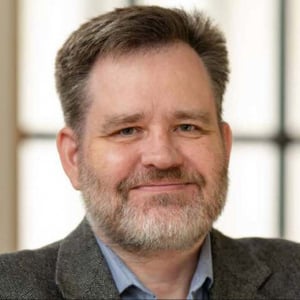
Degrees from Davidson College, B.A. summa cum laude, 1973; Harvard University, M.A., 1974; Yale Law School, J.D, 1978. Clerked for Edward Weinfeld, 1978-79; Attorney at Shea & Gardner, 1979-82; Law Professor since 1982, tenured at Georgetown and Yale, visiting professor at Stanford, NYU, Toronto, Harvard, Columbia, Penn, Fordham, Vanderbilt. Author of casebooks on legislation and sexuality, gender and law, as well as monographs on statutory interpretation and the rights of sexual and gender minorities. Author of dozens of articles, by one empirical count a top ten most cited law professors.
Judge, United States Court of Appeals, Sixth Circuit
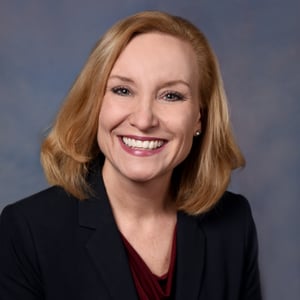
The Honorable Joan L. Larsen is a judge of the United States Court of Appeals for the Sixth Circuit. She was nominated by the President on May 8, 2017 and confirmed by the Senate on November 1, 2017. Before her appointment to the federal bench, Judge Larsen served two terms as a Justice of the Michigan Supreme Court, where she was the court’s liaison to Michigan’s drug, sobriety, mental health and veteran’s courts.
Before becoming a judge, Judge Larsen was a faculty member at the University of Michigan Law School, where she was also Special Counsel to the Dean and received the L. Hart Wright Award for Excellence in Teaching. Judge Larsen's research and teaching interests included constitutional law, criminal procedure, statutory interpretation, and presidential power. Judge Larsen continues to assist the law school as the adviser to the Henry M. Campbell Moot Court Competition.
Judge Larsen began her legal career as a law clerk to the Hon. David B. Sentelle of the United States Court of Appeals for the D.C. Circuit and to Justice Antonin Scalia of the Supreme Court of the United States. Following her clerkships, she joined the law firm of Sidley Austin, where she was a member of the Constitutional, Criminal, and Civil Litigation Section. She later served as Deputy Assistant Attorney General in the United States Department of Justice, Office of Legal Counsel.
Judge Larsen graduated first in her class from Northwestern University School of Law, where she served as articles editor of the Northwestern University Law Review and earned the John Paul Stevens Award for Academic Excellence. She received her B.A., with highest honors, from the University of Northern Iowa.
Charles Evans Hughes Professor of Law, Columbia Law School
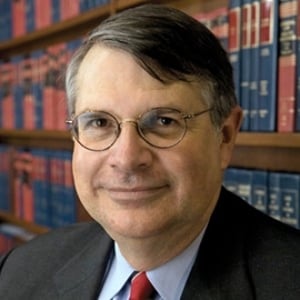
THOMAS W. MERRILL is the Charles Evans Hughes Professor of Law at Columbia Law School. He previously taught at Northwestern University School of Law and Yale Law School. He has undergraduate degrees from Grinnell College and Oxford University, where he studied as a Rhodes Scholar, and a law degree from the University of Chicago. He clerked on the D.C. Circuit (for Chief Judge David Bazelon) and the U.S. Supreme Court (for Justice Harry Blackmun). From 1987-1990 he served as Deputy Solicitor General, U.S. Department of Justice. Professor Merrill’s writings related to property include Property: Principles and Policies (Foundation Press Second Edition, 2012) (with Henry E. Smith); Property: The Oxford Introductions to U.S. Law (Oxford U. Press, 2010); Property: Takings (Foundation Press, 2002)(with David Dana); and numerous articles, including “The Economics of Public Use” (Cornell Law Review 1986); “The Landscape of Constitutional Property” (Virginia Law Review 2000); and “The Character of the Governmental Action” (Vermont Law Review 2012). He is a member of the American Academy of Arts and Sciences.
Nicholas deB. Katzenbach Professor of Law, Yale Law School
Reva Siegel is the Nicholas deB. Katzenbach Professor of Law at Yale University. Professor Siegel’s writing draws on legal history to explore questions of law and inequality, and to analyze how courts interact with representative government and popular movements in interpreting the Constitution. She is currently writing on the role of social movement conflict in guiding constitutional change, addressing this question in recent articles on the enforcement of Brown, originalism and the Second Amendment, the "de facto ERA," and reproductive rights. Her publications include Before Roe v. Wade: Voices That Shaped the Abortion Debate Before the Supreme Court’s Ruling, (with Linda Greenhouse, 2nd ed. 2012); The Constitution in 2020 (edited with Jack Balkin, 2009);Processes of Constitutional Decisionmaking (with Brest, Levinson, Balkin & Amar, 2006) and Directions in Sexual Harassment Law (edited with Catharine A. MacKinnon, 2004). Professor Siegel received her B.A., M.Phil, and J.D. from Yale University, clerked for Judge Spottswood Robinson on the D.C. Circuit, and began teaching at the University of California at Berkeley. She is a member of the American Academy of Arts and Sciences, and is active in the American Society for Legal History, the American Association of Law Schools, and the American Constitution Society, serving on the board of the national organization and as faculty advisor of Yale’s chapter.
David Boies Professor of Law, Yale Law School
Alexander M. Bickel Professor of Public Law, Yale Law School
Degrees from Davidson College, B.A. summa cum laude, 1973; Harvard University, M.A., 1974; Yale Law School, J.D, 1978. Clerked for Edward Weinfeld, 1978-79; Attorney at Shea & Gardner, 1979-82; Law Professor since 1982, tenured at Georgetown and Yale, visiting professor at Stanford, NYU, Toronto, Harvard, Columbia, Penn, Fordham, Vanderbilt. Author of casebooks on legislation and sexuality, gender and law, as well as monographs on statutory interpretation and the rights of sexual and gender minorities. Author of dozens of articles, by one empirical count a top ten most cited law professors.
Judge, United States Court of Appeals, Sixth Circuit
The Honorable Joan L. Larsen is a judge of the United States Court of Appeals for the Sixth Circuit. She was nominated by the President on May 8, 2017 and confirmed by the Senate on November 1, 2017. Before her appointment to the federal bench, Judge Larsen served two terms as a Justice of the Michigan Supreme Court, where she was the court’s liaison to Michigan’s drug, sobriety, mental health and veteran’s courts.
Before becoming a judge, Judge Larsen was a faculty member at the University of Michigan Law School, where she was also Special Counsel to the Dean and received the L. Hart Wright Award for Excellence in Teaching. Judge Larsen's research and teaching interests included constitutional law, criminal procedure, statutory interpretation, and presidential power. Judge Larsen continues to assist the law school as the adviser to the Henry M. Campbell Moot Court Competition.
Judge Larsen began her legal career as a law clerk to the Hon. David B. Sentelle of the United States Court of Appeals for the D.C. Circuit and to Justice Antonin Scalia of the Supreme Court of the United States. Following her clerkships, she joined the law firm of Sidley Austin, where she was a member of the Constitutional, Criminal, and Civil Litigation Section. She later served as Deputy Assistant Attorney General in the United States Department of Justice, Office of Legal Counsel.
Judge Larsen graduated first in her class from Northwestern University School of Law, where she served as articles editor of the Northwestern University Law Review and earned the John Paul Stevens Award for Academic Excellence. She received her B.A., with highest honors, from the University of Northern Iowa.
Charles Evans Hughes Professor of Law, Columbia Law School
THOMAS W. MERRILL is the Charles Evans Hughes Professor of Law at Columbia Law School. He previously taught at Northwestern University School of Law and Yale Law School. He has undergraduate degrees from Grinnell College and Oxford University, where he studied as a Rhodes Scholar, and a law degree from the University of Chicago. He clerked on the D.C. Circuit (for Chief Judge David Bazelon) and the U.S. Supreme Court (for Justice Harry Blackmun). From 1987-1990 he served as Deputy Solicitor General, U.S. Department of Justice. Professor Merrill’s writings related to property include Property: Principles and Policies (Foundation Press Second Edition, 2012) (with Henry E. Smith); Property: The Oxford Introductions to U.S. Law (Oxford U. Press, 2010); Property: Takings (Foundation Press, 2002)(with David Dana); and numerous articles, including “The Economics of Public Use” (Cornell Law Review 1986); “The Landscape of Constitutional Property” (Virginia Law Review 2000); and “The Character of the Governmental Action” (Vermont Law Review 2012). He is a member of the American Academy of Arts and Sciences.
Nicholas deB. Katzenbach Professor of Law, Yale Law School
Reva Siegel is the Nicholas deB. Katzenbach Professor of Law at Yale University. Professor Siegel’s writing draws on legal history to explore questions of law and inequality, and to analyze how courts interact with representative government and popular movements in interpreting the Constitution. She is currently writing on the role of social movement conflict in guiding constitutional change, addressing this question in recent articles on the enforcement of Brown, originalism and the Second Amendment, the "de facto ERA," and reproductive rights. Her publications include Before Roe v. Wade: Voices That Shaped the Abortion Debate Before the Supreme Court’s Ruling, (with Linda Greenhouse, 2nd ed. 2012); The Constitution in 2020 (edited with Jack Balkin, 2009);Processes of Constitutional Decisionmaking (with Brest, Levinson, Balkin & Amar, 2006) and Directions in Sexual Harassment Law (edited with Catharine A. MacKinnon, 2004). Professor Siegel received her B.A., M.Phil, and J.D. from Yale University, clerked for Judge Spottswood Robinson on the D.C. Circuit, and began teaching at the University of California at Berkeley. She is a member of the American Academy of Arts and Sciences, and is active in the American Society for Legal History, the American Association of Law Schools, and the American Constitution Society, serving on the board of the national organization and as faculty advisor of Yale’s chapter.
David Boies Professor of Law, Yale Law School
Editor, The Weekly Standard
William Kristol is the editor of The Weekly Standard. He is also a regular panelist on Fox News Sunday, a contributor for the Fox News Channel, and a monthly columnist for the Washington Post. Before starting the Weekly Standard in 1995, Mr. Kristol led the Project for the Republican Future, where he helped shape the strategy that produced the 1994 Republican congressional victory. Prior to that, Mr. Kristol served as chief of staff to Vice President Dan Quayle during the first Bush Administration, and to Education Secretary William Bennett under President Reagan. Before coming to Washington in 1985, Mr. Kristol was on the faculty of Harvard University’s Kennedy School of Government and the Department of Political Science at the University of Pennsylvania.
Executive Vice President, The Federalist Society
Dean Reuter is Executive Vice President at the Federalist Society for Law and Public Policy Studies. He has served in two federal government agency Offices of the Inspector General, as Counsel to the Inspector General and Deputy Inspector General, responsible for policing the use of federal funds granted and contracted through those agencies. As such, he helped conduct and oversee criminal investigations across the country. He is the principal author of the non-fiction book, The Hidden Nazi: The Untold Story of America's Deal with the Devil, and editor of Liberty’s Nemesis: The Unchecked Expansion of the State and Confronting Terror: 9/11 and the Future of American National Security. He was appointed by the President and served as Vice-Chairman of the Board of Directors of the Corporation for National and Community Service, and recently served as an appointee on the U.S. Commission on Presidential Scholars. He is a graduate of Hood College (BA with Honors) and the University of Maryland School of Law.
Professor of Practice, Cardozo School of Law
Gabor Rona received his B.A. from Brandeis University, J.D. from Vermont Law School and LL.M from Columbia Law School.
As the former International Legal Director of Human Rights First, he advised Human Rights First programs on questions of international law and coordinates international human rights litigation. He also represented Human Rights First with governments, intergovernmental and non-governmental organizations, the media and the public on matters of international human rights and international humanitarian law (the law of armed conflict).
Before Human Rights First, Rona was a Legal Advisor in the Legal Division of the International Committee of the Red Cross (ICRC) in Geneva. At the ICRC he focused on the application of international humanitarian and human rights law in the context of counter-terrorism policies and practices. He represented the ICRC in intergovernmental, nongovernmental, academic and public forums and his articles on the topic have appeared in the Financial Times, the Fletcher Forum on World Affairs and the Chicago Journal of International Law, among other publications. In addition, he represented the ICRC in connection with the establishment of international and other criminal tribunals, including the International Criminal Court. He has also taught International Humanitarian Law, International Human Rights Law and International Criminal Law at the International Institute of Human Rights in Strasbourg, France, the University Centre for International Humanitarian Law in Geneva, Switzerland and Columbia Law School in New York.
Retired Partner, Sullivan & Cromwell LLP
Upon his resignation as the Legal Adviser of the U.S. Department of State in January 1993, Mr. Williamson rejoined Sullivan & Cromwell's Washington, D.C. office. He originally joined the Firm in 1964 after graduating from New York University School of Law, where he was an editor of the Law Review. He became a partner of the Firm in 1971, moved to its London office in 1976, returned to its New York office in 1979, moved to its Washington, D.C. office in 1988 and became Of Counsel in 2007. In 2018, he retired from the firm.
At Sullivan & Cromwell, Mr. Williamson engaged in a broad and wide-ranging domestic and international financing and transactions practice, as well as advice with respect to corporate governance issues, the United States’ economic sanctions laws, the ethics rules applicable to government officials and the immunities of foreign sovereigns and international organizations.
Mr. Williamson has been an active participant on panels and other forums involving public international law and national security issues, such as the domestic and international bases for the use of force, the role of the United States with respect to the International Criminal Court, the law of the sea and the application of international legal principles in the war against terrorism.
Mr. Williamson is a member of the Council on Foreign Relations and a former member of the Executive Council of the American Society of International Law, the Executive Committees of the Business and Advisory Committee (BIAC) to the OECD and the U.S. Council for International Business, the United States Advisory Board of NTT DoCoMo, Inc. and the Board of Directors of Triton Oil & Gas Limited.
Mr. Williamson has served on the Boards of Regents and Trustees of the University of the South and as chair of the Board of Regents. He is currently a member of the Board of Directors of the American Council of Trustees and Alumni, a higher education watchdog.
Senior Fellow, Governance Studies, The Brookings Institution
Benjamin Wittes is a senior fellow in Governance Studies at The Brookings Institution. He co-founded and is the editor-in-chief of the Lawfare blog, which is devoted to sober and serious discussion of "Hard National Security Choices," and is a member of the Hoover Institution's Task Force on National Security and Law. He is the author of Detention and Denial: The Case for Candor After Guantanamo, published in November 2011, co-editor of Constitution 3.0: Freedom and Technological Change, published in December 2011, and editor of Campaign 2012: Twelve Independent Ideas for Improving American Public Policy (Brookings Institution Press, May 2012). He is also writing a book on data and technology proliferation and their implications for security. He is the author of Law and the Long War: The Future of Justice in the Age of Terror, published in June 2008 by The Penguin Press, and the editor of the 2009 Brookings book, Legislating the War on Terror: An Agenda for Reform.
His previous books include Starr: A Reassessment, published in 2002 by Yale University Press, and Confirmation Wars: Preserving Independent Courts in Angry Times, published in 2006 by Rowman & Littlefield and the Hoover Institution.
Between 1997 and 2006, he served as an editorial writer for The Washington Post specializing in legal affairs. Before joining the editorial page staff of The Washington Post, Wittes covered the Justice Department and federal regulatory agencies as a reporter and news editor at Legal Times. His writing has also appeared in a wide range of journals and magazines including The Atlantic, Slate, The New Republic, The Wilson Quarterly, The Weekly Standard, Policy Review, and First Things.
Benjamin Wittes was born in Boston, Massachusetts. He graduated from Oberlin College in 1990, and he has a black belt in taekwondo.

Senior Fellow and Director of Constitutional Studies, Manhattan Institute
Ilya Shapiro is a senior fellow and director of constitutional studies at the Manhattan Institute and a contributing editor of City Journal. Previously he was executive director and senior lecturer at the Georgetown Center for the Constitution, and before that a vice president of the Cato Institute.
Shapiro is the author of Lawless: The Miseducation of America’s Elites (2025) and Supreme Disorder: Judicial Nominations and the Politics of America’s Highest Court (2020), coauthor of Religious Liberties for Corporations? (2014), and editor of 11 volumes of the Cato Supreme Court Review (2008-18). He has contributed to a variety of academic, popular, and professional publications, including the Wall Street Journal, Harvard Journal of Law & Public Policy, Washington Post, Los Angeles Times, USA Today, National Review, and Newsweek. He also regularly provides commentary for various media outlets, writes the Shapiro’s Gavel newsletter on Substack, and once appeared on the Colbert Report.
Shapiro has testified many times before Congress and state legislatures and has filed more than 500 amicus curiae “friend of the court” briefs in the Supreme Court. He lectures regularly on behalf of the Federalist Society, is a member of the board of fellows of the Jewish Policy Center, was an inaugural Washington Fellow at the National Review Institute, and has been an adjunct law professor at the George Washington University and University of Mississippi. He is also the chairman of the board of advisers of the Mississippi Justice Institute, a barrister in the Edward Coke Appellate Inn of Court, and a former member of the Virginia Advisory Committee to the U.S. Commission on Civil Rights.
Earlier in his career, Shapiro was a special assistant/adviser to the Multi-National Force in Iraq on rule-of-law issues and practiced at Patton Boggs and Cleary Gottlieb. Before entering private practice, he clerked for Judge E. Grady Jolly of the U.S. Court of Appeals for the Fifth Circuit. He holds an AB from Princeton University, an MSc from the London School of Economics, and a JD from the University of Chicago Law School.
Senior Fellow and Director of Constitutional Studies, Manhattan Institute
Ilya Shapiro is a senior fellow and director of constitutional studies at the Manhattan Institute and a contributing editor of City Journal. Previously he was executive director and senior lecturer at the Georgetown Center for the Constitution, and before that a vice president of the Cato Institute.
Shapiro is the author of Lawless: The Miseducation of America’s Elites (2025) and Supreme Disorder: Judicial Nominations and the Politics of America’s Highest Court (2020), coauthor of Religious Liberties for Corporations? (2014), and editor of 11 volumes of the Cato Supreme Court Review (2008-18). He has contributed to a variety of academic, popular, and professional publications, including the Wall Street Journal, Harvard Journal of Law & Public Policy, Washington Post, Los Angeles Times, USA Today, National Review, and Newsweek. He also regularly provides commentary for various media outlets, writes the Shapiro’s Gavel newsletter on Substack, and once appeared on the Colbert Report.
Shapiro has testified many times before Congress and state legislatures and has filed more than 500 amicus curiae “friend of the court” briefs in the Supreme Court. He lectures regularly on behalf of the Federalist Society, is a member of the board of fellows of the Jewish Policy Center, was an inaugural Washington Fellow at the National Review Institute, and has been an adjunct law professor at the George Washington University and University of Mississippi. He is also the chairman of the board of advisers of the Mississippi Justice Institute, a barrister in the Edward Coke Appellate Inn of Court, and a former member of the Virginia Advisory Committee to the U.S. Commission on Civil Rights.
Earlier in his career, Shapiro was a special assistant/adviser to the Multi-National Force in Iraq on rule-of-law issues and practiced at Patton Boggs and Cleary Gottlieb. Before entering private practice, he clerked for Judge E. Grady Jolly of the U.S. Court of Appeals for the Fifth Circuit. He holds an AB from Princeton University, an MSc from the London School of Economics, and a JD from the University of Chicago Law School.
Alexander M. Bickel Professor of Public Law, Yale Law School
Degrees from Davidson College, B.A. summa cum laude, 1973; Harvard University, M.A., 1974; Yale Law School, J.D, 1978. Clerked for Edward Weinfeld, 1978-79; Attorney at Shea & Gardner, 1979-82; Law Professor since 1982, tenured at Georgetown and Yale, visiting professor at Stanford, NYU, Toronto, Harvard, Columbia, Penn, Fordham, Vanderbilt. Author of casebooks on legislation and sexuality, gender and law, as well as monographs on statutory interpretation and the rights of sexual and gender minorities. Author of dozens of articles, by one empirical count a top ten most cited law professors.
Judge, United States Court of Appeals, Sixth Circuit
The Honorable Joan L. Larsen is a judge of the United States Court of Appeals for the Sixth Circuit. She was nominated by the President on May 8, 2017 and confirmed by the Senate on November 1, 2017. Before her appointment to the federal bench, Judge Larsen served two terms as a Justice of the Michigan Supreme Court, where she was the court’s liaison to Michigan’s drug, sobriety, mental health and veteran’s courts.
Before becoming a judge, Judge Larsen was a faculty member at the University of Michigan Law School, where she was also Special Counsel to the Dean and received the L. Hart Wright Award for Excellence in Teaching. Judge Larsen's research and teaching interests included constitutional law, criminal procedure, statutory interpretation, and presidential power. Judge Larsen continues to assist the law school as the adviser to the Henry M. Campbell Moot Court Competition.
Judge Larsen began her legal career as a law clerk to the Hon. David B. Sentelle of the United States Court of Appeals for the D.C. Circuit and to Justice Antonin Scalia of the Supreme Court of the United States. Following her clerkships, she joined the law firm of Sidley Austin, where she was a member of the Constitutional, Criminal, and Civil Litigation Section. She later served as Deputy Assistant Attorney General in the United States Department of Justice, Office of Legal Counsel.
Judge Larsen graduated first in her class from Northwestern University School of Law, where she served as articles editor of the Northwestern University Law Review and earned the John Paul Stevens Award for Academic Excellence. She received her B.A., with highest honors, from the University of Northern Iowa.
Charles Evans Hughes Professor of Law, Columbia Law School
THOMAS W. MERRILL is the Charles Evans Hughes Professor of Law at Columbia Law School. He previously taught at Northwestern University School of Law and Yale Law School. He has undergraduate degrees from Grinnell College and Oxford University, where he studied as a Rhodes Scholar, and a law degree from the University of Chicago. He clerked on the D.C. Circuit (for Chief Judge David Bazelon) and the U.S. Supreme Court (for Justice Harry Blackmun). From 1987-1990 he served as Deputy Solicitor General, U.S. Department of Justice. Professor Merrill’s writings related to property include Property: Principles and Policies (Foundation Press Second Edition, 2012) (with Henry E. Smith); Property: The Oxford Introductions to U.S. Law (Oxford U. Press, 2010); Property: Takings (Foundation Press, 2002)(with David Dana); and numerous articles, including “The Economics of Public Use” (Cornell Law Review 1986); “The Landscape of Constitutional Property” (Virginia Law Review 2000); and “The Character of the Governmental Action” (Vermont Law Review 2012). He is a member of the American Academy of Arts and Sciences.
Nicholas deB. Katzenbach Professor of Law, Yale Law School
Reva Siegel is the Nicholas deB. Katzenbach Professor of Law at Yale University. Professor Siegel’s writing draws on legal history to explore questions of law and inequality, and to analyze how courts interact with representative government and popular movements in interpreting the Constitution. She is currently writing on the role of social movement conflict in guiding constitutional change, addressing this question in recent articles on the enforcement of Brown, originalism and the Second Amendment, the "de facto ERA," and reproductive rights. Her publications include Before Roe v. Wade: Voices That Shaped the Abortion Debate Before the Supreme Court’s Ruling, (with Linda Greenhouse, 2nd ed. 2012); The Constitution in 2020 (edited with Jack Balkin, 2009);Processes of Constitutional Decisionmaking (with Brest, Levinson, Balkin & Amar, 2006) and Directions in Sexual Harassment Law (edited with Catharine A. MacKinnon, 2004). Professor Siegel received her B.A., M.Phil, and J.D. from Yale University, clerked for Judge Spottswood Robinson on the D.C. Circuit, and began teaching at the University of California at Berkeley. She is a member of the American Academy of Arts and Sciences, and is active in the American Society for Legal History, the American Association of Law Schools, and the American Constitution Society, serving on the board of the national organization and as faculty advisor of Yale’s chapter.
David Boies Professor of Law, Yale Law School
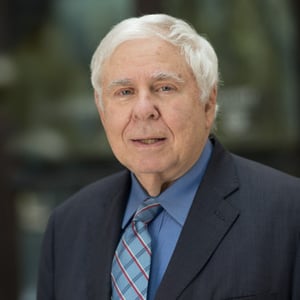
W. St. John Garwood and W. St. John Garwood, Jr. Centennial Chair and Professor of Government, University of Texas at Austin School of Law
Sanford Levinson, who holds the W. St. John Garwood and W. St. John Garwood, Jr. Centennial Chair in Law, joined the University of Texas Law School in 1980. Previously a member of the Department of Politics at Princeton University, he is also a Professor in the Department of Government at the University of Texas. Levinson is the author of approximately 400 articles, book reviews, or commentaries in professional and popular journals--and a regular contributor to the popular blog Balkinization. He has also written six books: Constitutional Faith (1988, winner of the Scribes Award, 2d edition 2011); Written in Stone: Public Monuments in Changing Societies (1998); Wrestling With Diversity (2003); Our Undemocratic Constitution: Where the Constitution Goes Wrong (and How We the People Can Correct It)(2006); Framed: America's 51 Constitutions and the Crisis of Governance (2012); An Argument Open to All: Reading the Federalist in the 21st Century (2015); and, with Cynthia Levinson, Fault Lines in the Constitution: The Framers, Their Fights, and teh Flaws that Affect Us Today (forthcoming, September 2017). Edited or co-edited books include a leading constitutional law casebook, Processes of Constitutional Decisionmaking (6th ed. 2015, with Paul Brest, Jack Balkin, Akhil Amar, and Reva Siegel); Nullification and Secession in Modern Constitutional Thought (2016); Reading Law and Literature: A Hermeneutic Reader (1988, with Steven Mallioux); Responding to Imperfection: The Theory and Practice of Constitutional Amendment (1995); Constitutional Stupidities, Constitutional Tragedies (1998, with William Eskridge); Legal Canons (2000, with Jack Balkin); The Louisiana Purchase and American Expansion (2005, with Batholomew Sparrow); Torture: A Collection (2004, revised paperback edition, 2006); and The Oxford Handbook on the United States Constitution (with Mark Tushnet and Mark Graber, 2015). He received the Lifetime Achievement Award from the Law and Courts Section of the American Political Science Association in 2010.
He has been a visiting faculty member of the Boston University, Georgetown, Harvard, New York University, and Yale law schools in the United States and has taught abroad in programs of law in London; Paris; Jerusalem; Auckland, New Zealand; and Melbourne, Australia. He was a Fellow at the Institute for Advanced Study in Princeton in 1985-86 and a Member of the Ethics in the Professions Program at Harvard in 1991-92. He is also affiliated with the Shalom Hartman Institute of Jewish Philosophy in Jerusalem. A member of the American Law Institute, Levinson was elected to the American Academy of Arts and Sciences in 2001. He is married to Cynthia Y. Levinson, a writer of children's literature, and has two daughters and four grandchildren.
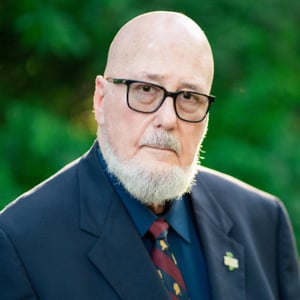
Senior Fellow, National Security Institute, Antonin Scalia School of Law, George Mason University; Retired Professor, Distinguished Fellow and Co-Founder, Center for National Security Law, University of Virginia School of Law (1987-2020)
Robert F. Turner holds both professional and academic doctorates from the University of Virginia School of Law. He co-founded the Center for National Security Law with Professor John Norton Moore in April 1981 and served as its associate director for 39 years, except for two periods of government service in the 1980s and during 1994-95, when he occupied the Charles H. Stockton Chair of International Law at the U.S. Naval War College in Newport, Rhode Island. He retired from UVA in January 2020 and currently serves as a non-resident senior fellow at the GMU National Security Institute. He also served briefly in 2020 as President of the Crime Prevention Research Center—one of the most respected pro-Second Amendment groups in the country—while its founder, Dr. John Lott, was on leave of absence.
A former Army captain and veteran of two tours in Vietnam, Turner served as a research associate and public affairs fellow at Stanford's Hoover Institution on War, Revolution and Peace before spending five years in the mid-1970s as national security adviser to U.S. Senator Robert P. Griffin, a member of the Senate Foreign Relations Committee (where Turner anticipated by seven years the Supreme Court’s landmark INS v. Chadha decision, striking down legislative vetoes). He also served in the executive branch during the Reagan administration as a member of the Senior Executive Service, first in the Pentagon as special assistant to the undersecretary of defense for policy, then in the White House as counsel to the President's Intelligence Oversight Board, and at the State Department as principal deputy and then acting assistant secretary for legislative affairs. In 1986, he became the first president of the congressionally established United States Institute of Peace.
A former three-term chairman of the ABA Standing Committee on Law and National Security (and for many years editor of the ABA National Security Law Report), Turner also chaired the Executive-Congressional Relations Subcommittee of the ABA Section on International Law and Practice and chaired or co-chaired the National Security Law Subcommittee of the Federalist Society’s International and National Security Law Practice Group for several years.
Turner taught undergraduate courses at Virginia on international law, U.S. foreign policy, the Vietnam War and foreign policy and the law in what is now the Woodrow Wilson Department of Politics. In addition, he co-taught National Security Law and advanced national security law seminars on the Indochina War and on war and peace with Moore at the Law School.
The author or editor of 18 books and monographs (including co-editor of the Center's 1,600-page National Security Law & Policy casebook, National Security Law Documents, and Legal Issues in the Struggle Against Terror) and numerous articles in law reviews and other professional journals, Turner has also contributed articles to most of the major U.S. newspapers, including The New York Times and USA Today. In an op-ed published in The International Herald Tribune in September 1990, he and Moore were the first to call for a war-crimes trial for Iraqi dictator Saddam Hussein and for international controls over Iraq's weapons of mass destruction, and the following month he wrote the lead story in The Washington Post Sunday Outlook Section, “Killing Saddam: Would It Be a Crime?,” arguing that Hussein would be a lawful target during Operation Desert Storm. (His reasoning contributed to the modern legal justification for drone strikes targeting specific terrorist leaders.) Three years before the terrorist attacks of September 11, 2001, Turner published an op-ed in USA Today entitled: “In Self-defense, U.S. Has Right to Kill bin Laden.”
In July 2007, he co-authored an article in The Washington Post with former U.S. Marine Corps Commandant General P.X. Kelley, “War Crimes and the White House,” criticizing the use of unlawful “enhanced interrogation techniques” by the Central Intelligence Agency. On the 40th anniversary of the fall of Saigon he authored an article in The Wall Street Journal, “Saigon’s Fall Still Echoes Today,” noting that after the war ended, Hanoi admitted it had made a decision in 1959 to open the Ho Chi Minh Trail and start sending troops, weapons and supplies into South Vietnam to overthrow its government — just as the United States had charged. In 2010 Turner received the first “person of the year” award from SACEI, a major Vietnamese-American human rights organization.
A frequent lecturer and debater, Turner has spoken at more than 100 law schools around the nation and in other fora — taking on as many as four opponents at a time. His debate opponents have included former or future deans of Yale, Stanford, the University of Chicago and Berkeley law schools. Following a 1987 debate against Dean Harlan Cleveland (Rhodes Scholar, U.S. Ambassador to NATO, and Presidential Medal of Freedom recipient) in which Turner defended the legality of U.S. support for the Nicaraguan contras during the Reagan Administration, the host student debating societies awarded Turner the victory by an 85-to-15 percent margin.
Turner has also written and lectured widely on University of Virginia founder and America’s third president Thomas Jefferson. In 2000-2001 he chaired the Jefferson-Hemings Scholars Commission. In his 2012 book Master of the Mountain, Jefferson critic Henry Wiencek described Turner as “Jefferson’s chief scholarly defender."
A former distinguished lecturer at the U.S. Military Academy at West Point, Turner is a member of the Council on Foreign Relations, the Academy of Political Science, the Committee on the Present Danger, The Heterodox Academy, and other professional organizations. He maintained a 4.0 gpa as a graduate student at Stanford in History and Political Science and in the UVA Department of Government and Foreign Affairs and was the first person admitted directly to the UVA academic law doctorate (SJD) program without first being required to earn an LL.M. master’s degree. He was selected for inclusion in Who’s Who in American Law less than two years after graduating from law school and Who’s Who in the World before he reached the age of 40. Turner has testified before more than a dozen different congressional committees on issues of international or constitutional law and other topics.

The Sotomayor Nomination, Part I
Louis Michael Seidman, Wendy Long, Thomas C. Goldstein, Scott Moss, David R. Stras, Edward Whelan
On May 26, President Obama nominated Sonia Sotomayor to replace David Souter as an Associate...
Panel 2: Preventing Attacks through Interrogation and Transfer of Terrorists Suspects
William Kristol, Deborah Pearlstein, Dean Reuter, Gabor Rona, Edwin D. Williamson, Benjamin Wittes
Deborah Pearlstein, Associate Research Scholar, Woodrow Wilson School of Public and International Affairs, Princeton University...
Panel 2: Preventing Attacks through Interrogation and Transfer of Terrorists Suspects
Counterterrorism and the Obama Administration
Washington, DCThe Obama Administration Signals Intent to Change Conscience Clause Rule
William L. Saunders, Michael Fragoso
Brought to you by the Religious Liberties Practice GroupOn March 10, 2009, the United States Department of...
What Does the 2008-09 Term Hold?
Greenville, South CarolinaLibel Tourism: The Next Front in the War on Terror
Orlando, FloridaPanel IV: Tradition and the People's Constitution
William N. Eskridge, Joan Larsen, Thomas W. Merrill, Reva Siegel, Keith E. Whittington
The Federalist Society's Student Division presented this panel at the 2008 Annual Student Symposium on...
Panel IV: Tradition and the People's Constitution
William N. Eskridge, Joan Larsen, Thomas W. Merrill, Reva Siegel, Keith E. Whittington
The Federalist Society's Student Division presented this panel at the 2008 Annual Student Symposium on...
Panel IV: Tradition and the People's Constitution
2008 Annual Student Symposium
Ann Arbor, MICounterterrorism and the Constitution
Austin Lawyers Chapter & the International Law and National Security Practice Group
Austin, TX