
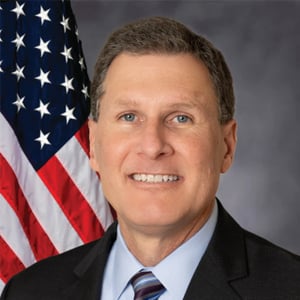
United States Attorney, Eastern District of California
Mr. Grant was appointed by Attorney General Pam Bondi to serve as the United States Attorney for the Eastern District of California beginning on August 11, 2025. Pursuant to 28 U.S.C. § 546(d), he was further appointed by the district court effective December 9, 2025.
Mr. Grant is a veteran of the Department of Justice, having served twice in Washington, D.C.: from 1991 to 1993 as an Attorney-Adviser in the Office of Legal Counsel, and from 2017 to 2021 as a Deputy Assistant Attorney General in the Environment and Natural Resources Division (ENRD). During his tenure at ENRD, he supervised more than a hundred Department litigators advancing the interests of the United States and its agencies in both enforcement and defensive matters, both civil and criminal.
In addition to his service in the Department, Mr. Grant has decades of experience in private practice in Washington, D.C. and Sacramento. That experience includes arguments in the U.S. Supreme Court, the California Supreme Court, and numerous other federal and state courts.
Mr. Grant served as a law clerk to Chief Justice Warren E. Burger (retired) and Associate Justice Clarence Thomas during the Supreme Court’s October 1994 Term. Earlier he served as a law clerk to Judge Edith H. Jones of the U.S. Court of Appeals for the Fifth Circuit in Houston, Texas.
Mr. Grant grew up in Modesto, California and raised his family in Sacramento County. He attended the University of California, Berkeley, from which he earned a bachelor’s degree in economics (1986) and a law degree (1990).
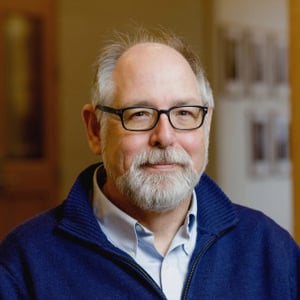
Emmett Visiting Assistant Clinical Professor of Law in Environmental Law, Harvard Law School
Andrew Mergen is a Visiting Assistant Clinical Professor of Law and Faculty Director of the Emmett Environmental Law & Policy Clinic. Prior to joining the Harvard Law School faculty, Andrew Mergen served in the Appellate Section of the Environment & Natural Resources Division (ENRD) at the United States Department of Justice. Professor Mergen began his career at the Justice Department in the Honors Program and concluded his career as Chief of ENRD’s Appellate Section. He has presented oral arguments in all 13 federal courts of appeals, including two en banc courts, and before several state intermediate and supreme courts. He has also worked on over a dozen merits cases in the Supreme Court of the United States. In addition, in 2009, Professor Mergen assisted the Office of White House Counsel on the confirmation of the Honorable Sonia Sotomayor as Associate Justice of the Supreme Court. During his career at the Justice Department, Professor Mergen received the Attorney General’s Award for Distinguished Service three times. He also received ENRD’s Muskee-Chafee Award, honoring his work’s significant contribution to protecting the environment.
Before entering clinical teaching, Professor Mergen taught at several law schools including, Harvard Law School (Advanced Environmental Law), the University of Michigan Law School (Natural Resources Law) and the William S. Richardson School of Law, University of Hawaii-Manoa (Administrative Law). Professor Mergen has written about federal water rights in “A Misplaced Sensitivity: The Draft Opinions in Wyoming v. United States” (68 Colo. L. Rev. 683 (1997), with Sylvia F. Liu); energy development on public lands in “Surface Tension: The Problem of Federal Private Split Estates” (33 Land & Water L. Rev. 419 (1998)); climate change and the Endangered Species Act in “The Role of Climate Change in ESA Listing Decisions” (53 Rocky Mt. Min. L. Fdn. 67 (2016), with Murray Feldman) and the accommodation of Native American sacred sites on federal land in “Finding the Path Forward for Indigenous Sacred and Cultural Spaces on Federal Public Land,” 68 Nat. Resources & Energy L. Inst. 32-1 (2022). Professor Mergen is a graduate of the University of Wisconsin—Madison and the George Washington University Law School.
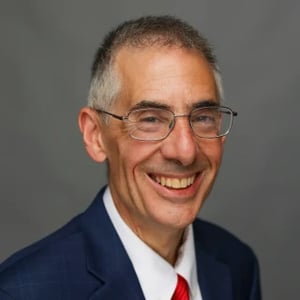
Wendell H. Ford Professor of Law, University of Kentucky J. David Rosenberg College of Law
Paul E. Salamanca graduated from Dartmouth College in 1983 and Boston College Law School in 1989, where he was a note editor for the Boston College Law Review and a member of the Order of the Coif.
Professor Salamanca served as a law clerk to Judge David H. Souter of the U.S. Court of Appeals for the First Circuit, and subsequently clerked for Justice Souter on the U.S. Supreme Court. He practiced law with the firm of Debevoise & Plimpton in New York from 1991 to 1994 and was a visiting assistant professor of law at Loyola University School of Law in New Orleans before joining the faculty at the University of Kentucky College of Law in June 1995.
Professor Salamanca writes in the areas of separation of powers, freedom of speech, freedom of religion, and privacy. He has published articles on these subjects in the University of Cincinnati Law Review, the Missouri Law Review, the Georgia Law Review and the Kentucky Law Journal, among other places.
From 2019 until 2021, Professor Salamanca served as a Senior Counsel and then as a Deputy Assistant Attorney General in the Environment and Natural Resources Division (ENRD) of the United States Department of Justice. His duties included supervision of the Natural Resources and Land Acquisition Sections of ENRD.
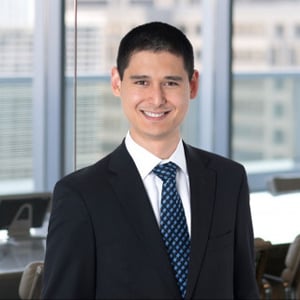
Associate, Winston & Strawn LLP
Spencer draws on his experience as a former trial and appellate clerk to litigate white collar, commercial, administrative law, and constitutional matters at every stage.
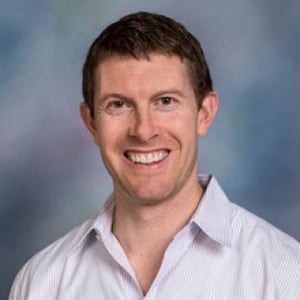
Baker Botts Fellow in Energy & Environmental Regulatory Affairs, Baker Institute for Public Policy, Rice University
Gabriel Collins is the Baker Botts Fellow in Energy & Environmental Regulatory Affairs at Rice University's Baker Institute. He was previously an associate attorney at Baker Hostetler, LLP, and is the co-founder of the China SignPost™ (洞察中国) analysis portal. Collins has worked in the Department of Defense as a China analyst and as a private sector global commodity researcher, authoring more than 100 commodity analysis reports, both for private clients and for publication.
Collins’ research portfolio is global. His work currently focuses on legal, environmental and economic issues relating to water — including the food-water-energy nexus — as well as unconventional oil and gas development, and the intersection between global commodity markets and a range of environmental, legal and national security issues. His analysis draws from a broad swath of geospatial and other data streams, and often incorporates insights from sources in Chinese, Russian and Spanish.
Collins received his B.A. from Princeton University and a J.D. from the University of Michigan Law School. He is licensed to practice law in Texas.
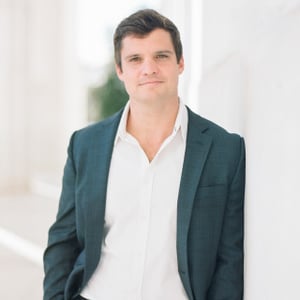
Managing Director, SCF Partners
Daniel G. West invests in energy services, equipment, and technology companies at SCF Partners in Houston, Texas. He provides equity capital and strategic growth assistance to entrepreneurs and leaders of both start-up ventures and established, growing businesses.
Prior to joining the private sector, Mr. West served as an infantry officer in the United States Marine Corps. As a platoon commander with the 22nd Marine Expeditionary Unit aboard the USS Mesa Verde, he led the Tactical Recovery of Aircraft and Personnel force in support of the NATO aerial campaign over Libya. He then served as executive officer of India Company, 3rd Battalion, 9th Marines as it mentored Afghan forces to assume lead security responsibility and executed counter-narcotics missions in Marjah, Helmand Province, Afghanistan. He also served as a clerk for Judge Laurence H. Silberman on the U.S. Court of Appeals for the D.C. Circuit.
Mr. West holds degrees in law, business administration, and economics from Harvard University, where he served as an editor of the Harvard Law Review and taught undergraduate courses in economics and government. He is a member of the Executive Committee of the International & National Security Law Practice Group of the Federalist Society and a term member of the Council on Foreign Relations.
Director of Regulatory and State Affairs, Institute for Energy Research
Daniel Simmons is Director of State Affairs at the Institute for Energy Research. He oversees energy research and outreach at the state level. Before joining IER, Simmons served as the Director of the Natural Resources Task Force at the American Legislative Exchange Council (ALEC). ALEC’s Natural Resources Task Force promotes policy innovations through markets, property rights, and the rule of law in energy, environment, natural resources, and agricultural policy areas.
Prior to working for ALEC, Simmons was a Research Fellow at the Mercatus Center at George Mason University. He analyzed proposed federal regulations and wrote comments to federal agencies during the rulemaking process. He also drafted law review articles based on a current regulatory and legal issues.
Previous to working at the Mercatus Center, Simmons served as Legislative Staff for the Committee on Resources in the U.S. House of Representatives where he handled endangered species and forestry issues.
Simmons holds a B.A. in Economics from Utah State University and a J.D. from George Mason University School of Law. He is a member of the Virginia State Bar.
Professor of Law and Director of the Natural Resources Law Cente, University of Colorado Law School
Professor Mark Squillace is the Director of the Natural Resources Law Center at the University of Colorado Law School. Before coming to Colorado, Professor Squillace taught at the University of Toledo College of Law where he was the Charles Fornoff Professor of Law and Values. Prior to Toledo, Mark taught at the University of Wyoming College of Law where he served a three-year term as the Winston S. Howard Professor of Law. He is a former Fulbright scholar and the author or co-author of numerous articles and books on natural resources and environmental law. In 2000, Professor Squillace took a leave from law teaching to serve as Special Assistant to the Solicitor at the U.S. Department of the Interior. In that capacity he worked directly with the Secretary of the Interior, Bruce Babbitt, on variety of legal and policy issues.

Executive Vice President, The Federalist Society
Dean Reuter is Executive Vice President at the Federalist Society for Law and Public Policy Studies. He has served in two federal government agency Offices of the Inspector General, as Counsel to the Inspector General and Deputy Inspector General, responsible for policing the use of federal funds granted and contracted through those agencies. As such, he helped conduct and oversee criminal investigations across the country. He is the principal author of the non-fiction book, The Hidden Nazi: The Untold Story of America's Deal with the Devil, and editor of Liberty’s Nemesis: The Unchecked Expansion of the State and Confronting Terror: 9/11 and the Future of American National Security. He was appointed by the President and served as Vice-Chairman of the Board of Directors of the Corporation for National and Community Service, and recently served as an appointee on the U.S. Commission on Presidential Scholars. He is a graduate of Hood College (BA with Honors) and the University of Maryland School of Law.

Courthouse Steps Oral Argument: Seven County Infrastructure Coalition v. Eagle County, Colorado
Eric Grant, Andrew Mergen, Paul E. Salamanca
This case concerns the question of whether the National Environmental Policy Act (NEPA) requires an...
LNG Lawfare: "Pause," Permitting, & Policy for American Gas Exports
Spencer Churchill, Gabriel Collins, Daniel G. West
Liquefied natural gas (“LNG”) technology has enabled the United States to become the world’s largest...
The Keystone Pipeline - Podcast
Daniel R. Simmons, Mark Squillace, Dean Reuter
The Keystone Pipeline is designed to transport petroleum products from Northeast Alberta, Canada, to as...