
Associate Professor of History, Ave Maria University
Prof. Michael Breidenbach is an historian of American politics, religion, law, and culture. He is an Associate Professor of History at Ave Maria University and a Senior Affiliate for Legal Humanities at the Program for Research on Religion and Urban Civil Society at the University of Pennsylvania.
He is the author of Our Dear-Bought Liberty: Catholics and Religious Toleration in Early America (Harvard University Press, 2021), runner-up for the 2022 Journal of the American Revolution Book of the Year Award. He is co-editor of The Cambridge Companion to the First Amendment and Religious Liberty (Cambridge University Press, 2020). Breidenbach’s writing has also appeared in The Atlantic, Washington Post, and First Things.
Dr. Breidenbach was elected Fellow of the Royal Historical Society in 2022. He has held research positions at Princeton University; St. John's College, Oxford; Corpus Christi College, Oxford; Rothermere American Institute, Oxford; Wolfson College, Cambridge; McNeil Center for Early American Studies, University of Pennsylvania; University of Florida; Villanova University; and Collegium Institute. He has also appeared on national television and radio programs.
He obtained his Ph.D. in History from King’s College, Cambridge, where he was a Cambridge Overseas Trust Scholar. He was a visiting graduate student in History at the Sorbonne in Paris and earned his M.Phil. with Distinction in Political Thought and Intellectual History at Cambridge. He graduated magna cum laude, Phi Beta Kappa, and with departmental honors from Northwestern University with a B.A. in History and American Studies. He also received a Level 3 Award with Merit in Wines from the London-based Wine & Spirit Education Trust.
He lives in Southwest Florida with his wife, Janice Chik Breidenbach, Associate Professor of Philosophy at Ave Maria University, and their son.

Director of the Program in Human Rights, Catholic University of America
William L. Saunders is Chair Emeritus of the Religious Liberties Practice Group of the Federalist Society. He is also a religious liberty and human rights scholar as well as director of the Center for Human rights at The Catholic University of America. He is Law Fellow with the Institute for Human Ecology, Professor and Director of the Program in Human Rights in the School of Arts & Sciences and Co-director of the Center for Religious Liberty at the Columbus School of Law. Before joining The Catholic University of America, Mr. Saunders served as Senior Vice President and Senior Counsel with Americans United for Life for ten years. From 1999 to 2009, he was Senior Fellow in Bioethics and Human Rights Counsel at the Family Research Council.
Mr. Saunders attended the University of North Carolina at Chapel Hill on a Morehead scholarship. He obtained his degree in law from the Harvard Law School.
Mr. Saunders was featured in Harvard’s first Guide to Conservative Public Interest Law in 2003 and again in the 2008 edition. He served on Harvard’s Advisory Committee for its 2008 celebration of public interest law. A member of the Supreme Court bar, he has authored numerous legal briefs in state, federal, foreign, and international courts.
Mr. Saunders’ book, Unborn Human Life and Fundamental Rights: Leading Constitutional Cases Under Scrutiny, was published in 2019. His articles and book chapters have been published by the university presses of Harvard, Villanova, Brigham Young, Fordham, Georgetown, Houston, Scranton, and the Catholic University of America, as well as by the Intercollegiate Studies Institute, Freedom House, Greenhaven Press, Rowan & Littlefield, Praeger, St. Augustine’s, and Intervarsity press. He has given lectures and participated in debates at many colleges, universities, and law schools, including Princeton, Harvard, Georgetown, and Notre Dame. He delivered the annual J. Michael Miller Lecture at the University of St. Thomas (on international law) in February 2007, the annual R. Wayne Kraft Memorial Lecture (on bioethics) at DeSales University in February 2004 and the annual James Moore Lecture (on human rights violations in Sudan) at Millikin University in 1999. He has also lectured, and/or has been published, in many foreign countries, including Italy, Germany, Poland, Austria, Spain, Greece, Slovakia, Mexico, Qatar, Malaysia, Romania, the Philippines, Hong Kong, and the United Kingdom.
In addition to speaking and writing frequently on bioethics topics, Mr. Saunders has submitted testimony to the President’s Council on Bioethics, as well as to UNESCO’s Committee on Bioethics, and has briefed Congressional staff and state legislatures. He is a regular columnist for the National Catholic Bioethics Quarterly.
Mr. Saunders has appeared often in the media, including BBC World News, CNN, Fox News, Vatican Radio, and National Public Radio. His articles on issues have appeared in a variety of journals, such as First Things, Human Events, Human Life Review, The Legal Times, Communio, The Family in America: A Journal of Public Policy, Ethics & Medics, and Touchstone.
Mr. Saunders served on the official United States delegation to the UN Special Session on Children in 2001/02. In 2011, he was a speaker at an official briefing at the UN, addressing the topic, why euthanasia is not a human right.
In 2004, he served on the NGO Working Committee in connection with the Doha Intergovernmental Conference for the Family.
Mr. Saunders is Senior Fellow with the Religious Freedom Institute, and Affiliated Scholar with the Pellegrino Center for Clinical Ethics at the Georgetown University School of Medicine. He is President of the Fellowship of Catholic Scholars and a member of the boards of the International Association of Catholic Bioethicists, the International Right to Life Federation, the Institute on Religion and Democracy, and the Society of Catholic Social Scientists.
In 1999, Mr. Saunders founded Sudan Relief and Rescue, Inc., to aid the persecuted church in Sudan. He has worked for and written on behalf of the persecuted church for many years.
Andrew J. Coulson was the director of Cato’s Center for Educational Freedom from 2005 to 2015 and a senior fellow from 2015 until his death in February 2016. Previously, he was senior fellow in education policy at the Mackinac Center for Public Policy. He served on the advisory council of the E.G. West Centre for Market Solutions in Education at the University of Newcastle, UK, and contributed to books published by the Fraser Institute and the Hoover Institution.
Coulson was author of Market Education: The Unknown History, the only book to address contemporary education policy questions by drawing on case studies from across the entire span of recorded human history. He also wrote for academic journals, including the Journal of Research in the Teaching of English, the Journal of School Choice, and the Education Policy Analysis Archives and for newspapers such as the Wall Street Journal, the Washington Post, and Canada’s Globe and Mail. His documentary series, School Inc., is scheduled for television broadcast later this year.
Senior Fellow, Independent Institute
Dr. Stephen P. Halbrook is a Senior Fellow at the Independent Institute. He has taught legal and political philosophy at George Mason University, Howard University, and Tuskegee Institute, and he received his J.D. from the Georgetown University Law Center and Ph.D. in social philosophy from Florida State University.
The winner of three cases before the U.S. Supreme Court (Printz v. United States, United States v. Thompson/Center Arms Company, and Castillo v. United States), he has testified before the Subcommittee on the Constitution of the Senate Judiciary Committee, Senate Subcommittee on the Constitution, Subcommittee on Crime of the House Judiciary Committee, Senate Governmental Affairs Committee, and House Committee on the District of Columbia.
A contributor to numerous scholarly volumes, he is the author of the books, Gun Control in Nazi-Occupied France: Tyranny and Resistance; Gun Control in the Third Reich: Disarming the Jews and “Enemies of the State”; The Founders’ Second Amendment: Origins of the Right to Bear Arms; That Every Man Be Armed: Evolution of a Constitutional Right; A Right to Bear Arms; Firearms Law Deskbook: Federal and State Criminal Practice; Securing Civil Rights: Freedmen, the Fourteenth Amendment, and the Right to Bear Arms; State and Federal Bills of Rights and Constitutional Guarantees; and Target Switzerland: Swiss Armed Neutrality in World War II. Dr. Halbrook’s scholarly articles have appeared in such journals as the Arizona Journal of International and Comparative Law, Drug Law Report, George Mason University Law Review, Journal of Air Law and Commerce, Journal of Law and Policy, Law & Contemporary Problems, National Law Journal, Northern Kentucky Law Review, St. John’s Journal of Legal Commentary; Seton Hall Constitutional Law Journal, Tennessee Law Review, University of Dayton Law Review, Valparaiso University Law Review, Vermont Law Review, and William & Mary Bill of Rights Journal.
Dr. Halbrook's popular articles have appeared in such publications as the Wall Street Journal, Newsday, San Francisco Chronicle, National Review, Investor’s Business Daily, Kansas City Star, Washington Examiner, Shreveport Times, Sacramento Bee, Providence Journal, Tampa Tribune, Pittsburgh Tribune-Review, History News Network, San Antonio Express-News, The Daily Caller, Detroit News, Honolulu Star Advertiser, Birmingham News, Environmental Forum, USA Today, and Washington Times. He has also appeared on numerous national TV/radio programs on CNN, Fox News Channel, Fox Business Network, Court TV, NewsMax TV, CBN, Voice of America, and C-SPAN.

Senior Fellow in Constitutional Jurisprudence, Independence Institute
Professor Robert G. Natelson is a constitutional scholar and author.
Rob’s constitutional scholarship has been cited repeatedly by justices and parties at the U.S. Supreme Court—as well as by federal appeals courts, and at least 18 state supreme courts.
Rob’s research into the Constitution’s original meaning has carried him to libraries throughout the United States and in Britain, including four months at Oxford University. His books and articles span many different parts of the Constitution, including groundbreaking studies of the Necessary and Proper Clause, the Indian Commerce Clause, federalism, Founding-Era interpretation, regulation of elections, and the amendment process of Article V. He created the first-ever online bibliography for 18th century materials used in constitutional research. He is a contributing author to the Encyclopedia of the Supreme Court of the United States (on Magna Carta). He contributed eight essays to the third edition of the Heritage Guide to the Constitution: five on the amendment procedure and one each on the Guarantee Clause, the Postal Clause, and the Recess Appointments Clause.
U.S. Supreme Court justices have relied explicitly on Rob’s research in 41 citations in 13 separate cases.

Dr. John Eastman is the former Henry Salvatori Professor of Law & Community Service and former Dean at Chapman University's Dale E. Fowler School of Law, where he had been a member of the faculty since 1999, specializing in Constitutional Law, Legal History, and Property. He is a founding director of the Center for Constitutional Jurisprudence, a public interest law firm affiliated with the Claremont Institute that he founded in 1999. He has a Ph.D. in Government from the Claremont Graduate School and a J.D. from the University of Chicago Law School, and a B.A. in Politics and Economics from the University of Dallas. He serves as the Chairman of the Board of the National Organization for Marriage.
Prior to joining the Chapman law faculty, Dr. Eastman served as a law clerk to the Honorable Clarence Thomas, Associate Justice, Supreme Court of the United States, and to the Honorable J. Michael Luttig, Judge, United States Court of Appeals for the Fourth Circuit and practiced law with the national law firm of Kirkland & Ellis. Dr. Eastman has also represented numerous clients in important constitutional law matters and has argued before the Supreme Court. On behalf of the Claremont Institute Center for Constitutional Jurisprudence, he has participated as amicus curiae before the Supreme Court of the United States, U.S. Courts of Appeals, and State Supreme Courts in more than one hundred cases of constitutional significance, including Boy Scouts of America v. Dale, Zelman v. Simmons-Harris (the school vouchers case), Kelo v. New London, Ct. (eminent domain), and Van Orden v. Perry (the 10 Commandments case). He has also appeared as an expert legal commentator on numerous television and radio programs, including C-SPAN, Fox News, PBS, NewsHour, and The O'Reilly Factor.
Paul J. Schierl Professor of Law, University of Notre Dame Law School
Professor Richard W. Garnett teaches and writes in the areas of constitutional law, criminal law, the First Amendment, and law and religion. He is a leading authority on questions and debates regarding religious freedom and church-state relations, and is the founding director of Notre Dame Law School’s Program on Church, State, and Society.
Garnett clerked for the late Chief Justice of the United States, William H. Rehnquist, and also for the late Chief Judge of the United States Court of Appeals for the Eighth Circuit, Richard S. Arnold. He earned his J.D. from Yale Law School in 1995 and his B.A., summa cum laude, from Duke University in 1990. He joined the faculty in 1999 after practicing law in Washington, D.C. with Miller, Cassidy, Larroca & Lewin.
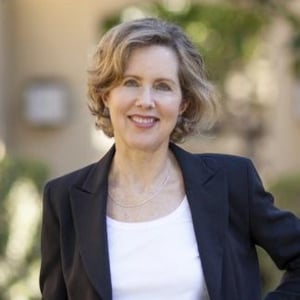
Thomas W. Smith Fellow; Contributing Editor, City Journal, Manhattan Institute
Heather Mac Donald is the Thomas W. Smith Fellow at the Manhattan Institute, a contributing editor of City Journal, and a New York Times bestselling author. She is a recipient of the 2005 Bradley Prize. Mac Donald’s work at City Journal has covered a range of topics, including higher education, immigration, policing, homelessness and homeless advocacy, criminal-justice reform, and race relations. Her writing has appeared in the Wall Street Journal, Washington Post, New York Times, Los Angeles Times, The New Republic, and The New Criterion. Mac Donald's newest book, The Diversity Delusion: How Race and Gender Pandering Corrupt the University and Undermine Our Culture (2018), argues that toxic ideas first spread by higher education have undermined humanistic values, fueled intolerance, and widened divisions in our larger culture.
Mac Donald’s The War on Cops (2016), a New York Times bestseller, warns that raced-based attacks on the criminal-justice system, from the White House on down, are eroding the authority of law and putting lives at risk. Other previous works include The Burden of Bad Ideas (2001), a collection of Mac Donald’s City Journal essays, details the effects of the 1960s counterculture’s destructive march through America’s institutions. In The Immigration Solution: A Better Plan than Today’s (2007), coauthored with Victor Davis Hanson and Steven Malanga, she chronicles the effects of broken immigration laws and proposes a practical solution to securing the country’s porous borders. In Are Cops Racist? (2010), another City Journal anthology, Mac Donald investigates the workings of the police, the controversy over so-called racial profiling, and the anti-profiling lobby’s harmful effects on black Americans.
A nonpracticing lawyer, Mac Donald clerked for the Honorable Stephen Reinhardt, U.S. Court of Appeals for the Ninth Circuit, and was an attorney-advisor in the Office of the General Counsel of the U.S. Environmental Protection Agency and a volunteer with the Natural Resources Defense Council. She has frequently testified before U.S. House and Senate Committees. In 1998, Mac Donald was appointed to Mayor Rudolph Giuliani’s task force on the City University of New York. She has received numerous awards for her writing:
A frequent guest on Fox News and other TV and radio programs, Mac Donald holds a B.A. in English from Yale University, graduating with a Mellon Fellowship to Cambridge University, where she earned an M.A. in English and studied in Italy through a Clare College study grant. She holds a J.D. from Stanford University Law School.
At the Criminal Justice Legal Foundation's 2018 annual meeting in downtown Los Angeles, U.S. Attorney General Jeff Sessions called Mac Donald, “the greatest thinker on criminal justice in America today.”

Professor of Law, Georgetown University Law Center
Nicholas Quinn Rosenkranz teaches constitutional law and federal jurisdiction, and he writes articles for the Harvard Law Review and the Stanford Law Review.
He is currently developing a new theory of constitutional interpretation and judicial review. The first installment, entitledThe Subjects of the Constitution, was published in the Stanford Law Review in May of 2010, and it is among the most downloaded articles about constitutional interpretation, judicial review, and/or federal courts in the history of SSRN. The second installment, The Objects of the Constitution, was published in May of 2011, also in the Stanford Law Review. And the comprehensive version is forthcoming as a book by Oxford University Press.
Rosenkranz has served and advised the federal government in a variety of capacities. He clerked for Judge Frank H. Easterbrook on the U.S. Court of Appeals for the Seventh Circuit (1999-2000) and for Justice Anthony M. Kennedy at the U.S. Supreme Court (October Term 2001). He served as an Attorney-Advisor at the Office of Legal Counsel in the U.S. Department of Justice (November 2002 - July 2004). He often testifies before Congress as a constitutional expert—most recently before the House Financial Services Oversight Subcommittee, regarding the Obama Administration's use of bank settlement agreements to circumvent the Appropriations Clause. He has also filed briefs and presented oral argument before the U.S. Supreme Court. His most recent Supreme Court brief, in Los Angeles v. Patel, was cited by Justice Alito in dissent.
Rosenkranz is a member of the New York Bar and the U.S. Supreme Court Bar. He is a Senior Fellow at the Cato Institute. He serves on the Board of Directors of the Foundation for Individual Rights in Education (FIRE). He is a founding member of Heterodox Academy and a member of its Executive Committee. He also serves on the Board of Directors of the Federalist Society and as the faculty advisor to the Georgetown chapter.
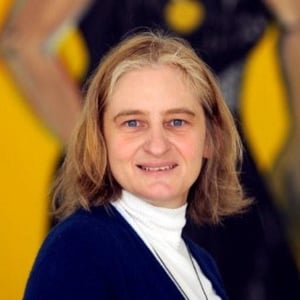
Arnold I. Shure Professor of Law, University of Chicago Law School

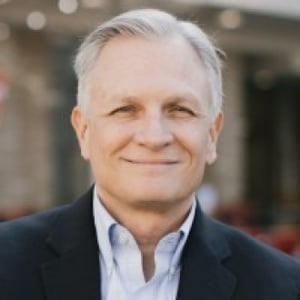
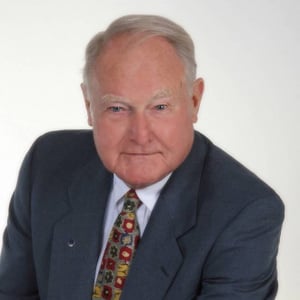
Talks with Authors: Our Dear-Bought Liberty: Catholics and Religious Toleration in Early America
Michael Breidenbach, William L. Saunders
In his new book Our Dear-Bought Liberty: Catholics and Religious Toleration in Early America, Professor Michael...
Panel One: The History and Politics of School Choice [Archive Collection]
Andrew J. Coulson, Douglas Haynes, Dal Lawrence, Richard Leonardi, Fannie Lewis
On March 26, 1999, the Federalist Society co-sponsored the Stranahan National Issues Forum with the...
To Bear Arms for Self-Defense: A “Right of the People” or a Privilege of the Few? Part 1
Stephen P. Halbrook
Note from the Editor: The Federalist Society takes no positions on particular legal and public...
Impeachment: The Constitution’s Fiduciary Meaning of “High . . . Misdemeanors”
Robert G. Natelson
Note from the Editor: This article explores the meaning of the phrase “high . ....
Panel: American Multiculturalism: Its Force and Limits From 1776 to Today
John C. Eastman, Richard W. Garnett, Heather Mac Donald, Nicholas Quinn Rosenkranz, Mary Anne Case
Since before the Revolution, American legal and political traditions have supported many forms of multiculturalism,...