

Partner, Clement & Murphy, PLLC
Paul served as the 43rd Solicitor General of the United States from June 2005 until June 2008. Before his confirmation as Solicitor General, he served as Acting Solicitor General for nearly a year and as Principal Deputy Solicitor General for over three years.
Paul has argued over 100 cases before the United States Supreme Court, including McConnell v. FEC, Tennessee v. Lane, United States v. Booker, MGM v. Grokster, Hobby Lobby v. Burwell, Epic Systems Corp. v. Lewis, Rucho v. Common Cause, Facebook v. Duguid, and TransUnion v. Ramirez. Paul has argued more Supreme Court cases since 2000 than any lawyer in or out of government. He has also argued many important cases in the lower courts, including Walker v. Cheney, United States v. Moussaoui and NFL v. Brady.
Paul’s practice focuses on appellate matters, constitutional litigation and strategic counseling. He represents a broad array of clients in the Supreme Court and in federal and state appellate courts. Last year, for example, he successfully argued Supreme Court cases involving significant issues of energy regulation, statutory interpretation, state sovereign immunity and Article III standing, and successfully argued a trademark appeal in the Fourth Circuit, and a constitutional appeal before the en banc Eleventh Circuit.
Paul focuses on high-stakes appeals. In recent years, he successfully defended a $1.2 billion jury verdict for clients in a Tenth Circuit case, while securing the reversal of an over $2 billion jury verdict for another client in the Seventh Circuit and the approval of a nearly $1 billion dollar class action settlement in the Third Circuit. He has initiated major administrative law challenges and constitutional litigation against the federal government, such as the successful challenge to the HHS drug-pricing rule and threatened challenges that led to the withdrawal of the Treasury Department’s proposed cryptocurrency regulations. He also counsels clients on a variety of strategic legal questions, whether arising from pending legislation, government inquiries or ongoing litigation.
Paul has undertaken substantial pro bono engagements in the Supreme Court, such as twice successfully representing the defendant in Bond v. United States and successfully representing the Omaha Tribe in Nebraska v. Parker, the guardian ad litem in Adoptive Couple v. Baby Girl, the defendant in Sekhar v. United States, a high school football coach in Kennedy v. Bremerton, and the Little Sisters of the Poor. Paul’s pro bono representation also precipitated the federal government’s confession of error in United States v. Rojas.
Following law school, Paul clerked for Judge Laurence H. Silberman of the U.S. Court of Appeals for the D.C. Circuit and for Associate Justice Antonin Scalia of the U.S. Supreme Court. After his clerkships, he went on to serve as Chief Counsel of the U.S. Senate Subcommittee on the Constitution, Federalism and Property Rights.
Paul is a Distinguished Lecturer in Law at the Georgetown University Law Center, where he has taught in various capacities since 1998. He also serves as a Senior Fellow of the Law Center’s Supreme Court Institute. He is the Justice Joseph Story Distinguished Practitioner in Residence at the Gray Center at Scalia Law School.

Deputy Secretary of Agriculture, U.S. Department of Agriculture
Judge Stephen Alexander Vaden was appointed as the Deputy Secretary of the U.S. Department of Agriculture on July 7, 2025. Alongside Secretary Brooke L. Rollins, Deputy Secretary Vaden leads the Department’s operations and implements policies that support America’s food and farm systems. A native of Union City, Tennessee, Deputy Secretary Vaden brings expertise in agricultural policy, law, and rural development. Previously, he served as a judge on the U.S. Court of International Trade and as General Counsel of USDA. Throughout Deputy Secretary Vaden’s time as General Counsel, he led successful Supreme Court litigation, advanced regulatory reform, and supported the implementation of the 2018 Farm Bill. He is a graduate of Yale Law School and Vanderbilt University. A public servant with strong agricultural roots, Deputy Secretary Vaden is committed to revitalizing rural America and ensuring an abundant, affordable, and safe U.S. food supply.
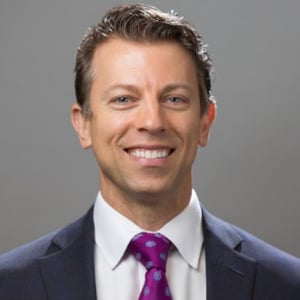
Partner, Johns & Counsel PLLC
Chris Johns advocates for people and causes he believes in. He represents individuals and businesses as they confront powerful interests on the other side: property owners in eminent-domain cases, people and organizations seeking to exercise constitutional rights, and others with a just cause in a civil trial or appeal.
Chris has won cases for clients in courts across the country—from state and federal trial and appellate courts to the United States Supreme Court. He is also an adjunct professor at the University of Texas School of Law, where he teaches the course on eminent domain and private-property rights.
Chris grew up and attended public schools in Buckhannon, West Virginia. He went to Brigham Young University on academic and piano scholarships and, after his first year of college, served for two years as a full-time volunteer for his church in Oakland and San Francisco. Chris spent most of his time in neighborhoods unlike anything he’d ever seen in rural West Virginia. Still, he can’t imagine a better education: speaking with thousands of people about life, hopes, fears, and spiritual paths; becoming fluent in Spanish; observing communities that thrived and others that failed; and making friends with individuals from many countries and many walks of life, from gang members to high-level government officials. Chris decided during his volunteer service that he eventually wanted to become a lawyer and advocate. He studied English upon return to BYU, graduating magna cum laude in 1997.
Chris received his J.D. with high honors from the University of Texas School of Law. There, he was editor in chief of the Texas Law Review, a member of the Chancellors honor society, and a member of the Order of the Coif. He received Dean’s Achievement Awards in several of his classes. After graduation, Chris clerked for the Honorable Phyllis A. Kravitch of the United States Court of Appeals for the Eleventh Circuit.
He then attended the University of Oxford, where he received a postgraduate law degree and authored a frequently cited dissertation analyzing the relationship between property and the law of obligations.
Chris entered private practice at Weil, Gotshal & Manges LLP, where he worked with former Texas Solicitor General Greg Coleman in the firm’s national Supreme Court and appellate practice. He and three of his law-school classmates founded Johns Marrs Ellis & Hodge LLP, a trial and appellate boutique, and practiced together for nearly nine years.
In March 2018, Chris opened Johns & Counsel PLLC with a small, elite team dedicated to the clients and causes that mean most to him and the other members of the firm.
Chris appears on the 2018 and 2019 list of The Best Lawyers in America, a peer-selected honor. Texas Super Lawyers Magazine named him to its 2014, 2015, 2016, 2017, and 2018 lists of “Super Lawyers” and to its 2013 and 2014 lists of “Rising Stars.” He is also a barrister in the Lloyd Lochridge American Inn of Court. Chris has testified about property rights on invitation from the Texas Legislature, is a regular speaker at national and state CLE conferences, has received multiple pro bono service awards, helped train UT’s moot-court teams, and has appeared as a legal commentator on television news programs.
Chris is licensed in Texas and New York and is admitted to practice before the Supreme Court of the United States, the U.S. Courts of Appeals for the Fourth, Fifth, and Federal Circuits, the U.S. Court of Appeals for the Federal Circuit, the U.S. District Courts for the Eastern, Southern, and Western Districts of Texas, the U.S. Court of Federal Claims, several other federal courts across the country, and all state courts in Texas.
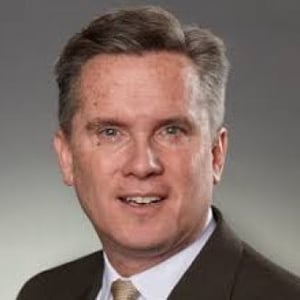
Partner, Foley & Lardner LLP
Jeffrey A. Simmons is a partner and member of Foley & Lardner’s Business Litigation & Dispute Resolution Practice, where he focuses on complex litigation matters. Mr. Simmons was lead counsel in one of the largest insurance rehabilitations in U.S. history, In the Matter of the Rehabilitation of Segregated Account of Ambac Assurance Corporation, Case No. 10-cv-1576 (Dane Co., Wis.). A large portion of his practice is also devoted to trademark, copyright, patent and trade secret disputes. He currently serves on the Seventh Circuit Court of Appeals’ subcommittee responsible for rewriting the circuit’s pattern jury instructions for trademark and copyright cases.
Prior to joining Foley, Mr. Simmons served as a law clerk to the Hon. John W. Reynolds, U.S. District Court for the Eastern District of Wisconsin.
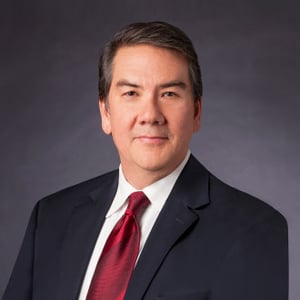
Director of Property Rights Litigation, Pacific Legal Foundation
Robert Thomas is Pacific Legal Foundation’s director of its Property Rights practice group. He is an expert on property rights, takings, land use, and eminent domain issues.
After more than three decades in private practice in Hawaii and California representing property owners in takings, eminent domain, and land use cases, Robert joined PLF’s team of freedom fighters in 2021.
He has litigated cases in both state and federal court. As counsel for the property owners in County of Hawaii v. C&J Coupe Family Limited Partnership, he helped establish the rule that courts are not mere “rubber stamps” when a local government is taking property by eminent domain. Another case, Hamilton ex rel. Lethem v. Lethem, held that a parent’s liberty interest in raising and disciplining his child included a right to fair procedures, including notice and a judicial hearing before the family court could restrict parent-child contact.
Robert is a frequent speaker on property rights, takings, land use, and eminent domain issues nationwide. He also regularly publishes scholarly and practical articles in his area of practice, most recently including, “Hoist the Yellow Flag and Spam® Up: The Separation of Powers Limitation on Hawaii’s Emergency Authority”, 43 U. Haw. L. Rev. 71 (2020) and “Evaluating Emergency Takings: Flattening the Economic Curve”, 29 Wm. & Mary Bill Rts. J. 1145 (2021).
An elected member of the American Law Institute, Robert received his LLM, with honors, from Columbia Law School, where he was a Harlan Fiske Stone Scholar, and his JD from the University of Hawaii School of Law, where he served as editor of the Law Review. He also serves as the inaugural Joseph T. Waldo Visiting Chair in Property Rights Law at William & Mary Law School in Williamsburg, Virginia, where he teaches upper-division courses in eminent domain, land use, property rights, and property law.
When he’s not working, you might find Robert writing and publishing his blog on land use, property, and takings law, inversecondemnation.com, one of the most widely read blogs on those subjects.

Senior Fellow, Texas Public Policy Foundation
As a senior fellow, Jacki brings expertise to the Life: Powered initiative at the Texas Public Policy Foundation. Currently the host of The Jacki Daily Show, she has had an impressive career in energy, law, and politics.
Most recently, Pick served as Chief Operating Officer for a free market think tank specializing in health care policy, entitlement reform, and energy policy. Previously, she served many years as legal counsel on Capitol Hill to the Chairman of the Subcommittee on the Constitution and the former Ranking Member of the Commercial and Administrative Law Subcommittee, advising on the oversight of federal agencies. Prior to her career in Washington, she worked as a litigator and as an Assistant Vice President for a national bank.
Prior to her legal career, Jacki served as the Public Relations Director for a statewide political organization.
Jacki studied Economics, Spanish, and World History at Marshall University (Society of Yeager Scholars), Oxford University in the United Kingdom, and the University of Zaragoza in Spain. She is an alumna of the Vanderbilt University Law School, where she served as the President of the law school’s Federalist Society chapter.
Jacki is from the Ohio River Valley, where the shale runs deep. She descends from a long line of energy workers, including roughnecks, railroaders, coal miners, and nuclear energy specialists.
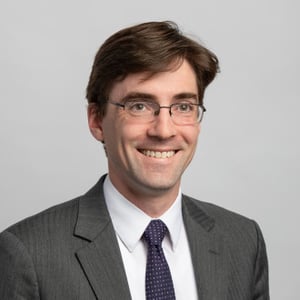
Deputy Litigation Director, Institute for Justice
Robert McNamara serves as Deputy Litigation Director with the Institute for Justice. He joined the Institute in August 2006 and litigates cutting-edge constitutional cases protecting free speech, property rights, economic liberty and other individual liberties in both federal and state courts.
Robert’s work has resulted in court victories for property owners fighting eminent domain abuse, tour guides fighting unconstitutional restrictions on their speech, taxi drivers seeking the right to own their own business, and many others. Robert also litigates in defense of innovation and entrepreneurship in medical care and was co-counsel in Flynn v. Holder, IJ’s landmark challenge to the federal prohibition on compensating bone marrow donors.
Robert’s writing has been published by outlets including The New York Times, The Wall Street Journal, The Washington Post and dozens more nationwide. His opinions and views on legal issues have been featured in radio and television programs ranging from National Public Radio’s All Things Considered to Fox News Channel’s Hannity & Colmes.
Robert is a graduate of Boston University and the New York University School of Law, where he was a founding member and eventual editor-in-chief of the NYU Journal of Law & Liberty. He currently lives in Virginia with his wife and children.
Robert McNamara is a member of the Virginia bar.
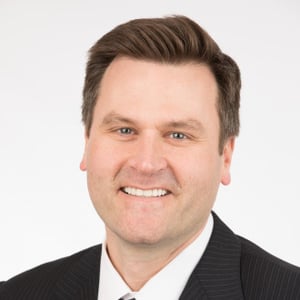
Vice President of Litigation and Deputy General Counsel, National Association of Manufacturers
Peter Tolsdorf is the vice president of litigation and deputy general counsel at the National Association of Manufacturers (NAM). As part of the Manufacturers’ Center for Legal Action, Mr. Tolsdorf works to strengthen the NAM’s ability to promote manufacturing policy objectives through litigation. He also serves as general counsel of The Manufacturing Institute, a nonprofit organization that seeks to help the manufacturing industry attract and develop world-class manufacturing talent.
Mr. Tolsdorf has extensive litigation experience on energy and the environment, labor and employment, product and civil liability, intellectual property, corporate governance and trade issues. At the American Petroleum Institute, he challenged regulatory overreach of the oil and natural gas industry. Mr. Tolsdorf previously served as an attorney at the Federal Energy Regulatory Commission (FERC), where he litigated energy generation and transmission matters. Before the FERC, he litigated cases at major international law firms Bingham McCutchen and McDermott Will & Emery.
Mr. Tolsdorf graduated from The George Washington University Law School, where he served as notes editor of The George Washington Law Review. He lives in Arlington, Virginia, with his wife and two sons.
Distinguished McKnight University Professor, University of Minnesota Law School
Professor Alexandra B. Klass teaches and writes in the areas of energy law, environmental law, natural resources law, tort law, and property law. Her recent scholarly work, published in many of the nation’s leading law journals, addresses regulatory challenges to integrating more renewable energy into the nation’s electric transmission grid, oil and gas transportation infrastructure, and eminent domain issues surrounding interstate electric transmission lines and oil and gas pipelines. She is a co-author of The Practice and Policy of Environmental Law (Foundation Press, 3d ed. 2014) and a co-author of Energy Law and Policy (West Academic Publishing 2015). Professor Klass was named the Stanley V. Kinyon Teacher of the Year for 2009-2010, and she served as Associate Dean for Academic Affairs from 2010-2012. She was a Visiting Professor of Law at Harvard Law School in 2015. She is a Distinguished McKnight University Professor and in prior years was the Julius E. Davis Professor of Law and the Solly Robins Distinguished Research Fellow.
Prior to her teaching career, Professor Klass was a partner at Dorsey & Whitney LLP in Minneapolis, where she specialized in environmental law, natural resources, and land use cases. During her years in private practice from 1993-2004, she handled cases in federal and state trial and appellate courts involving contaminated property, wetlands, environmental review, mining, environmental rights, zoning, eminent domain, and environmental torts. She continues to represent clients pro bono in cases involving environmental, natural resources, and energy law matters. She clerked for the Honorable Barbara B. Crabb, Chief Judge of the U.S. District Court for the Western District of Wisconsin from 1992-1993.
Professor Klass has served in leadership positions in state and national bar organizations. She is currently on the Board of Directors of the Minnesota Center for Environmental Advocacy. She was a member of the Governing Council of the Environmental and Natural Resources Section of the Minnesota State Bar Association from 2005-2013, was a member of the Board of Directors of the Minnesota Chapter of the Federal Bar Association from 2001-2011, and served as co-chair of the Environmental Law Section of the Hennepin County Bar Association from 2000-2006. She is a Member Scholar at the Center for Progressive Reform, and a Resident Fellow at the University of Minnesota’s Institute on the Environment.

Professor of Law, Antonin Scalia Law School, George Mason University
ILYA SOMIN is Professor of Law at George Mason University and the B. Kenneth Simon Chair in Constitutional Studies at the Cato Institute. His research focuses on constitutional law, property law, democratic theory, federalism, and migration rights. He is the author of Free to Move: Foot Voting, Migration, and Political Freedom (Oxford University Press, revised and expanded edition, 2022), Democracy and Political Ignorance: Why Smaller Government is Smarter (Stanford University Press, revised and expanded second edition, 2016), and The Grasping Hand: Kelo v. City of New London and the Limits of Eminent Domain (University of Chicago Press, 2015, rev. paperback ed., 2016), coauthor of A Conspiracy Against Obamacare: The Volokh Conspiracy and the Health Care Case (Palgrave Macmillan, 2013), and co-editor of Eminent Domain: A Comparative Perspective (Cambridge University Press, 2017). Democracy and Political Ignorance has been translated into Italian and Japanese.
Somin’s work has appeared in numerous scholarly journals, including the Yale Law Journal, Stanford Law Review, Northwestern University Law Review, Georgetown Law Journal, Critical Review, and others. Somin has also published articles in a variety of popular press outlets, including the New York Times, Washington Post, Wall Street Journal, Los Angeles Times, CNN, NBC, The Atlantic, USA Today, Boston Globe, US News and World Report, South China Morning Post, National Law Journal and Reason. He has been quoted or interviewed by the New York Times, Washington Post, Wall Street Journal, Time, Newsweek, The Economist, the Christian Science Monitor, the Financial Times, The Guardian, the Associated Press, CBS, MSNBC, NPR, BBC, Reuters, the Canadian Broadcasting Corporation, the Australian Broadcasting Corporation, Radio Free Europe/Radio Liberty, Al Jazeera, and the Voice of America, among other media.
Somin’s writings have been cited in decisions by the United States Supreme Court, multiple state supreme courts and lower federal courts, and the Supreme Court of Israel. He is co-counsel for the plaintiffs in VOS Selections, Inc. v. Trump, a case challenging the constitutionality of President Trump’s “Liberation Day” tariffs. Somin has testified on the use of drones for targeted killing in the War on Terror before the US Senate Judiciary Subcommittee on the Constitution, Civil Rights, and Human Rights. In 2009, he testified on property rights issues at the United States Senate Judiciary Committee confirmation hearings for Supreme Court Justice Sonia Sotomayor. Somin writes regularly for the popular Volokh Conspiracy law and politics blog, now affiliated with Reason magazine (previously affiliated with the Washington Post from 2014 to 2017). From 2006 to 2013, he served as Co-Editor of the Supreme Court Economic Review, one of the country’s top-rated law and economics journals.
Somin has served as a visiting professor at the University of Pennsylvania Law School. He has also been a visiting professor or scholar at the Georgetown University Law Center, the University of Hamburg, Germany, the University of Torcuato Di Tella in Buenos Aires, Argentina, Uriel Reichman University in Israel, and Zhengzhou University in China. He is a University Affiliate of the Schar School of Policy and Government at George Mason University, and an affiliated faculty member of the George Mason University Institute for Immigration Research. Before joining the faculty at George Mason, Somin was the John M. Olin Fellow in Law at Northwestern University Law School in 2002-2003. In 2001-2002, he clerked for the Hon. Judge Jerry E. Smith of the U.S. Court of Appeals for the Fifth Circuit. Professor Somin earned his B.A., Summa Cum Laude, at Amherst College, M.A. in Political Science from Harvard University, and J.D. from Yale Law School.
Partner, Bruning Law Group, LLC
Katie Spohn is a partner at Bruning Law Group in Lincoln, Nebraska. Prior to co-founding Bruning Law Group, Spohn served at the Nebraska Attorney General’s Office for 12 years, with the last 2 years serving as Nebraska’s Deputy Attorney General. In that role, she was tasked with handling the State’s most complex civil litigation cases, specializing in nationally-significant issues of constitutional law. Spohn was an integral part of numerous multi-state challenges to federal regulation and played a critical role in the states’ challenge to the Patient Protection and Affordable Care Act. In September 2014, Spohn led the victory in defending the constitutionality of a law regulating the Keystone XL pipeline before the Nebraska Supreme Court.
Prior to serving as Deputy Attorney General, Spohn was Section Chief for the Agriculture, Environment and Natural Resources Section and Special Counsel to the Attorney General where she gained extensive litigation experience prosecuting environmental violations and defending the constitutionality of state statutes on subjects ranging from a corporate farming prohibition to statutes seeking to protect unborn children.
Spohn earned her B.S. in Agri-Business and J.D. from the University of Nebraska-Lincoln. She is admitted to the Nebraska State Bar; the 8th, 11th and D.C. Circuit Courts of Appeals; and the United States Supreme Court. She lives on a farm outside of Lincoln, Neb., with her husband Scott and three children, Zach, Jacob and Valerie.
Director of Regulatory and State Affairs, Institute for Energy Research
Daniel Simmons is Director of State Affairs at the Institute for Energy Research. He oversees energy research and outreach at the state level. Before joining IER, Simmons served as the Director of the Natural Resources Task Force at the American Legislative Exchange Council (ALEC). ALEC’s Natural Resources Task Force promotes policy innovations through markets, property rights, and the rule of law in energy, environment, natural resources, and agricultural policy areas.
Prior to working for ALEC, Simmons was a Research Fellow at the Mercatus Center at George Mason University. He analyzed proposed federal regulations and wrote comments to federal agencies during the rulemaking process. He also drafted law review articles based on a current regulatory and legal issues.
Previous to working at the Mercatus Center, Simmons served as Legislative Staff for the Committee on Resources in the U.S. House of Representatives where he handled endangered species and forestry issues.
Simmons holds a B.A. in Economics from Utah State University and a J.D. from George Mason University School of Law. He is a member of the Virginia State Bar.
Professor of Law and Director of the Natural Resources Law Cente, University of Colorado Law School
Professor Mark Squillace is the Director of the Natural Resources Law Center at the University of Colorado Law School. Before coming to Colorado, Professor Squillace taught at the University of Toledo College of Law where he was the Charles Fornoff Professor of Law and Values. Prior to Toledo, Mark taught at the University of Wyoming College of Law where he served a three-year term as the Winston S. Howard Professor of Law. He is a former Fulbright scholar and the author or co-author of numerous articles and books on natural resources and environmental law. In 2000, Professor Squillace took a leave from law teaching to serve as Special Assistant to the Solicitor at the U.S. Department of the Interior. In that capacity he worked directly with the Secretary of the Interior, Bruce Babbitt, on variety of legal and policy issues.

Executive Vice President, The Federalist Society
Dean Reuter is Executive Vice President at the Federalist Society for Law and Public Policy Studies. He has served in two federal government agency Offices of the Inspector General, as Counsel to the Inspector General and Deputy Inspector General, responsible for policing the use of federal funds granted and contracted through those agencies. As such, he helped conduct and oversee criminal investigations across the country. He is the principal author of the non-fiction book, The Hidden Nazi: The Untold Story of America's Deal with the Devil, and editor of Liberty’s Nemesis: The Unchecked Expansion of the State and Confronting Terror: 9/11 and the Future of American National Security. He was appointed by the President and served as Vice-Chairman of the Board of Directors of the Corporation for National and Community Service, and recently served as an appointee on the U.S. Commission on Presidential Scholars. He is a graduate of Hood College (BA with Honors) and the University of Maryland School of Law.

Courthouse Steps Decision Teleforum: United States Forest Service v. Cowpasture River Preservation Association
Paul D. Clement, Stephen Alexander Vaden
On June 15, 2020, the Supreme Court released its decision in the case of United States...
Is “Possess Now, Pay Later” Constitutional in Private Pipeline Takings?
Chris Johns, Jeffrey A. Simmons, Robert H. Thomas
The U.S. Supreme Court will soon consider the third of several petitions for certiorari asking...
Pipelines and Eminent Domain [POLICYbrief]
Jacki Pick Deason
How can American oil and gas companies access and transport the valuable resources beneath the...
Pipeline Energy Infrastructure Legal Challenges
Robert J. McNamara, Peter Tolsdorf
The advent of fracking and other technological innovations has unleashed a new era of American...
Pipeline Takings: When Can Your Property Be Taken? - Podcast
Alexandra Klass, Ilya Somin
The use of eminent domain to condemn property for pipelines has become an increasingly controversial...
Keystone XL in the Nebraska Supreme Court - Podcast
Katie Spohn, J Ward
On January 9, 2015, the Nebraska Supreme Court held that the law dictating the potential...
The Keystone Pipeline - Podcast
Daniel R. Simmons, Mark Squillace, Dean Reuter
The Keystone Pipeline is designed to transport petroleum products from Northeast Alberta, Canada, to as...